A bathroom may need replacing for practical reasons long before its style feels dated. Persistent leaks, a poor layout, ageing fittings, accessibility requirements and rising maintenance costs can make repairing the existing room less sensible than starting again.
This UK buyers guide is for homeowners planning a bathroom replacement. It covers planning, costs, product comparisons and decisions about using a professional installer or capable DIYer. It also explains how buying bathroom products online can widen choice and improve price comparisons, while highlighting the checks needed before ordering.
All images used in the guide are clearly labelled as AI-generated and sized to match the text column on desktop and mobile.
Key Takeaways
- Set a realistic bathroom replacement budget covering products, labour, waste removal and a contingency for unexpected work.
- Measure the bathroom carefully before choosing a suite, as door swings, pipe positions, toilet placement and clearance affect the layout.
- Compare online bathroom products by specifications, materials, delivery charges, guarantees and return terms, not price alone.
- Order only after checking dimensions, finish consistency, stock availability and compatibility between fittings.
- Use qualified professionals for bathroom electrical work, major plumbing changes, waterproofing and shower installation. Simpler finishing tasks may suit capable DIYers.
Bathroom Replacement Starts with the Right Plan
A bathroom replacement is easier to price when the room is assessed first. Existing plumbing, waste pipes, electrics, ventilation, walls, flooring and water pressure all affect the work required. Room size also matters in an en suite bathroom or compact cloakroom, where every centimetre can affect the layout. Accurate measurements, photographs and a simple bathroom floor plan reduce the risk of ordering fittings that cannot be installed.
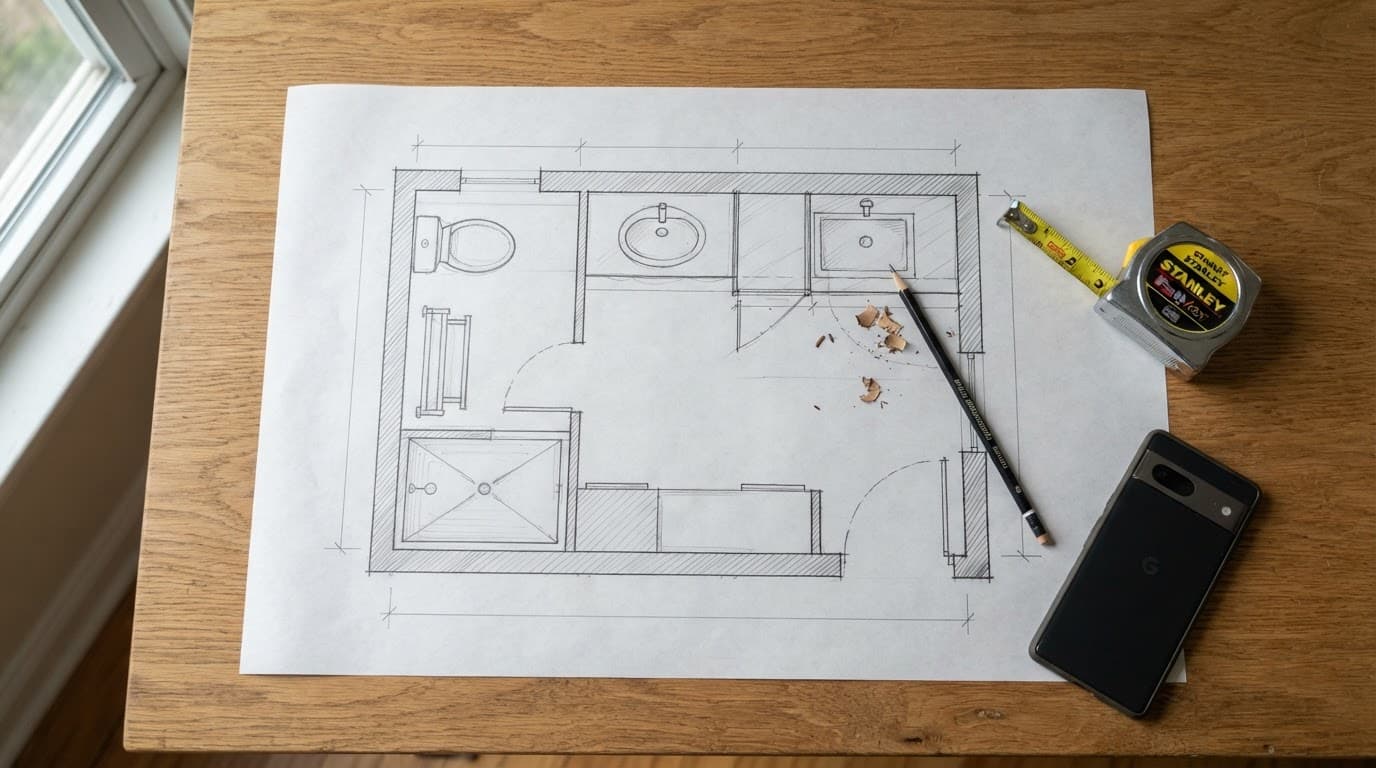
AI-generated image showing a measured bathroom layout prepared before replacement work begins.
Choose Between a Like-for-Like Upgrade and a New Layout
Replacing the toilet, basin, bath or shower in its existing position is usually simpler. Keeping the current plumbing routes can reduce labour and shorten the installation period. It can also limit how much flooring or wall covering needs to be removed.
A like-for-like upgrade doesn’t automatically create the best bathroom. The existing arrangement may leave little storage, create awkward access or place the shower where water reaches the door. A shower enclosure must also suit the available space and control water spread. Moving fittings can improve how the bathroom works, particularly in a small room or one shared by several people.
However, a new layout requires more than drawing fittings in different places. The plan should show:
- The door swing, including space to open it without hitting the toilet or basin.
- The radiator position and whether it restricts access, storage or towel-hanging space.
- Window clearance, especially where a tall cabinet or wall-mounted mirror could obstruct opening.
- Access around each fitting for cleaning, repairs and replacement of valves or traps.
- Sufficient room beside the toilet and in front of the basin, bath and shower for comfortable movement.
Photographs of exposed pipework, stopcocks, sockets, the consumer unit and visible damp give installers useful context. Water pressure should also be checked before specifying a powerful shower. An electric shower may have specific supply and plumbing requirements, so its compatibility should be confirmed early.
A cheaper layout on paper can become expensive if it requires concealed pipework, floor repairs or electrical changes.
Check UK Safety, Installation and Building Requirements
Bathroom design must account for water and electricity sharing a confined space. Electrical installations are divided into zones around baths and showers. Equipment must suit its position and protection against moisture. Bathroom lighting, shaver sockets, switches and heated appliances need careful specification. Electrical work should be completed and certified by a competent, appropriately qualified electrician.
Ventilation is equally important. An extractor should remove humid air effectively, with the outlet and controls installed suitably. Poor ventilation leaves condensation on walls and ceilings. This can encourage mould and damage paint, plaster and sealants.
Waterproofing behind tiles and around shower areas also needs a proper system, rather than relying on grout alone. This is especially important in a wet room, where drainage and moisture protection must work together.
Plumbing and electrical alterations must meet relevant UK requirements. Structural changes, new openings, major drainage alterations or work affecting walls and floors may require professional advice. Building control checks or approval may also apply, depending on the property and scope of the bathroom work.
Neutral guidance from UK public bodies, recognised safety organisations and established news or reference sources is more useful than relying solely on product pages. Retail descriptions rarely explain whether a fitting suits the room’s electrical zone, water pressure or existing waste arrangement. A qualified plumber, electrician or building professional can identify those limits before they become costly changes.
Compare Bathroom Styles, Fittings and Materials by Value
The lowest purchase price rarely gives the lowest overall bathroom cost. A fitting that suits the room, survives daily use and remains easy to repair can offer better value than a fashionable alternative with difficult installation or expensive replacement parts. The household’s routines matter just as much as the room’s appearance.
Select Fittings That Suit the Room and Household
Compact bathroom suites make better use of limited floor space. A short-projection toilet, narrow basin or corner basin can preserve a clear route through a small room. A compact cloakroom benefits especially from these space-saving choices. Wall-mounted bathroom furniture keeps more of the floor visible, which can make cleaning easier and create a less crowded appearance.
A wall-mounted vanity unit can provide useful storage without taking up much floor space. Check the vanity unit’s width, depth and service access before ordering, particularly where pipework runs behind it. A mirrored cabinet can add practical storage without making a smaller bathroom feel crowded. However, a wall hung toilet needs a strong supporting wall, and its concealed cistern may make future repairs less straightforward.
Walk-in showers provide easy access and suit households that rarely use a bath. A shower enclosure needs careful waterproofing, adequate drainage and enough floor area to prevent water spreading across the room. Check that the shower tray suits the available space and waste position. A wet room can offer level access, but it requires particularly careful waterproofing and falls towards the drain.
A shower bath offers greater flexibility where children need a bath but adults prefer a shower. A standard bath may suit regular bathing, while a freestanding bath can become a prominent feature in a larger room. A raised shower bath edge may be less suitable for anyone with limited mobility. The choice of mixer shower should also reflect household water pressure and daily demand.
Comfort-height toilets can make sitting down and standing up easier for older household members. Grab rails, level-access showers, fold-down seats and slip-resistant flooring can also improve safety without making the room look institutional. Children may need a lower step to reach the basin, while a family bathroom benefits from robust bathroom taps, rounded edges and bathroom storage that keeps cleaning products out of reach.
The layout should leave enough space beside and in front of each fitting. Door swings, the radiator position and access for cleaning or maintenance also need attention. Before ordering, the installer should compare the product drawing with the room’s measurements, including:
- The overall width, depth and height of each fitting.
- The position of water inlets, isolation valves, tap holes and compatible wastes.
- The size and direction of waste connections.
- The clearance needed for drawers, doors and shower screens.
- The route required for delivery and installation.
A product can appear suitable online yet fail to connect to existing pipework without additional adaptors or alterations. Those small compatibility issues can quickly reduce the saving shown on the product page. They can also affect the position of a toilet or basin during installation.
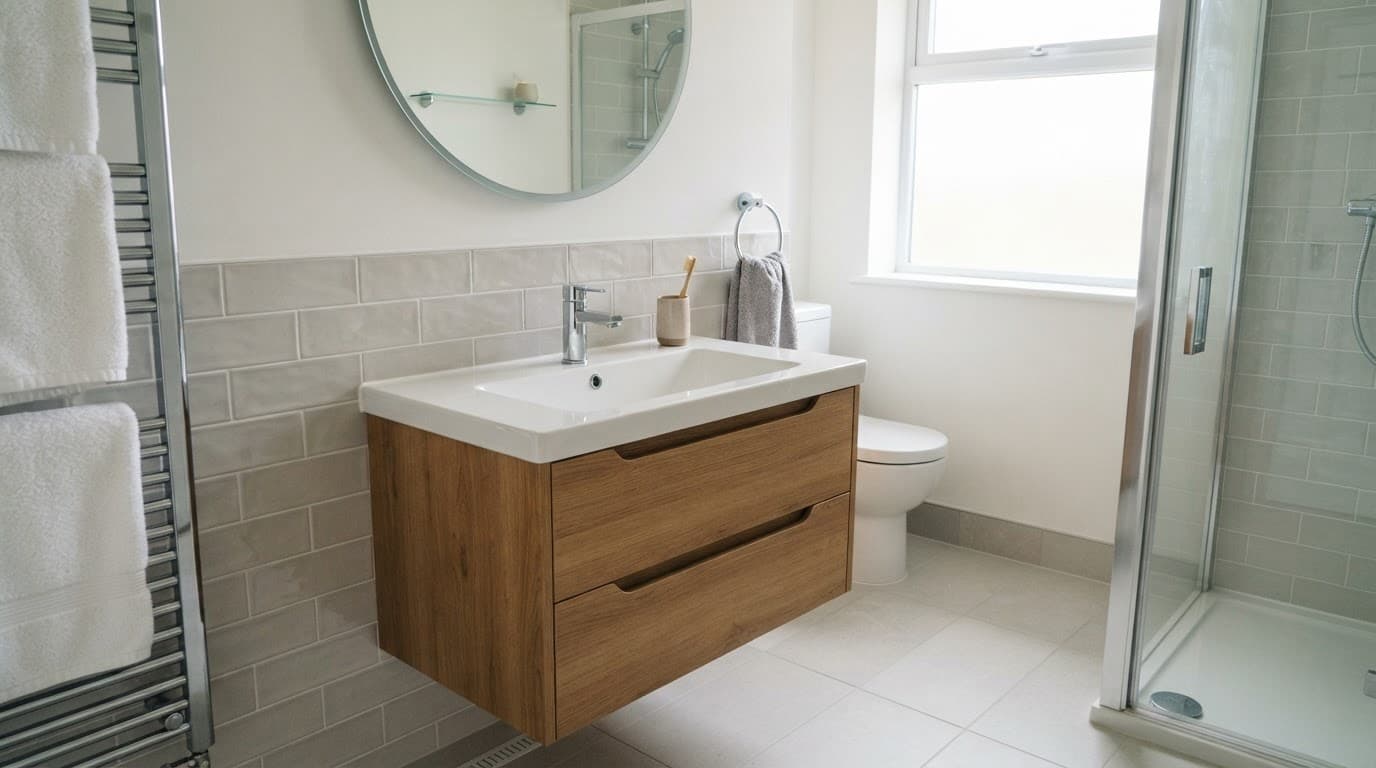
AI-generated image showing bathroom fittings selected for practical everyday use.
Balance Appearance with Durability and Easy Cleaning
Bathroom materials differ in more than colour and finish. Ceramic is widely available, hard-wearing and simple to clean, making it a dependable choice for toilets and basins. Porcelain usually has a denser, smoother surface and can offer a refined finish, although chips and cracks still require care.
Acrylic baths are light, warm to the touch and often less expensive than heavier alternatives. They can scratch more easily, but minor marks may be polishable. Stone-resin trays feel solid and provide a quality finish, yet their weight can increase handling and installation costs. Glass looks clean and modern, although it shows water spots and soap residue more readily.
| Material or finish | Main value | Maintenance point |
|---|---|---|
| Ceramic | Durable and widely repairable | Clean regularly to prevent scale |
| Porcelain | Smooth, refined surface | Chips may be difficult to disguise |
| Acrylic | Affordable and easy to handle | Avoid abrasive cleaners and sharp objects |
| Stone-resin | Stable, substantial shower base | Check support and delivery requirements |
| Glass | Bright, open appearance | Needs frequent wiping to limit water spots |
Slip resistance matters most on shower floors and bathroom flooring. A bathroom tile with fewer grout joints can reduce cleaning, whilst sealed grout helps limit staining. Chrome, brushed finishes and dark taps can all show limescale differently, so water hardness should influence the choice.
A restrained design with standard-sized fittings often remains practical for longer than a purely fashion-led scheme. Widely available taps, replacement toilet seats, cartridges, wastes and bath panels are easier to replace when a small component fails. Durable bathroom furniture can also make long-term maintenance simpler. Warranty length matters, but the terms should be checked for exclusions, installation requirements and whether replacement parts remain available.
Build a Realistic Bathroom Budget Before Ordering
A bathroom replacement budget needs to cover the room behind the fittings, not just the suite shown in an online advert. Products, delivery, labour, waste removal, plumbing alterations, electrics, wall finishes, flooring and decoration can all affect the final figure. A realistic budget also separates confirmed prices from allowances for work that cannot be assessed until the old suite has been removed.
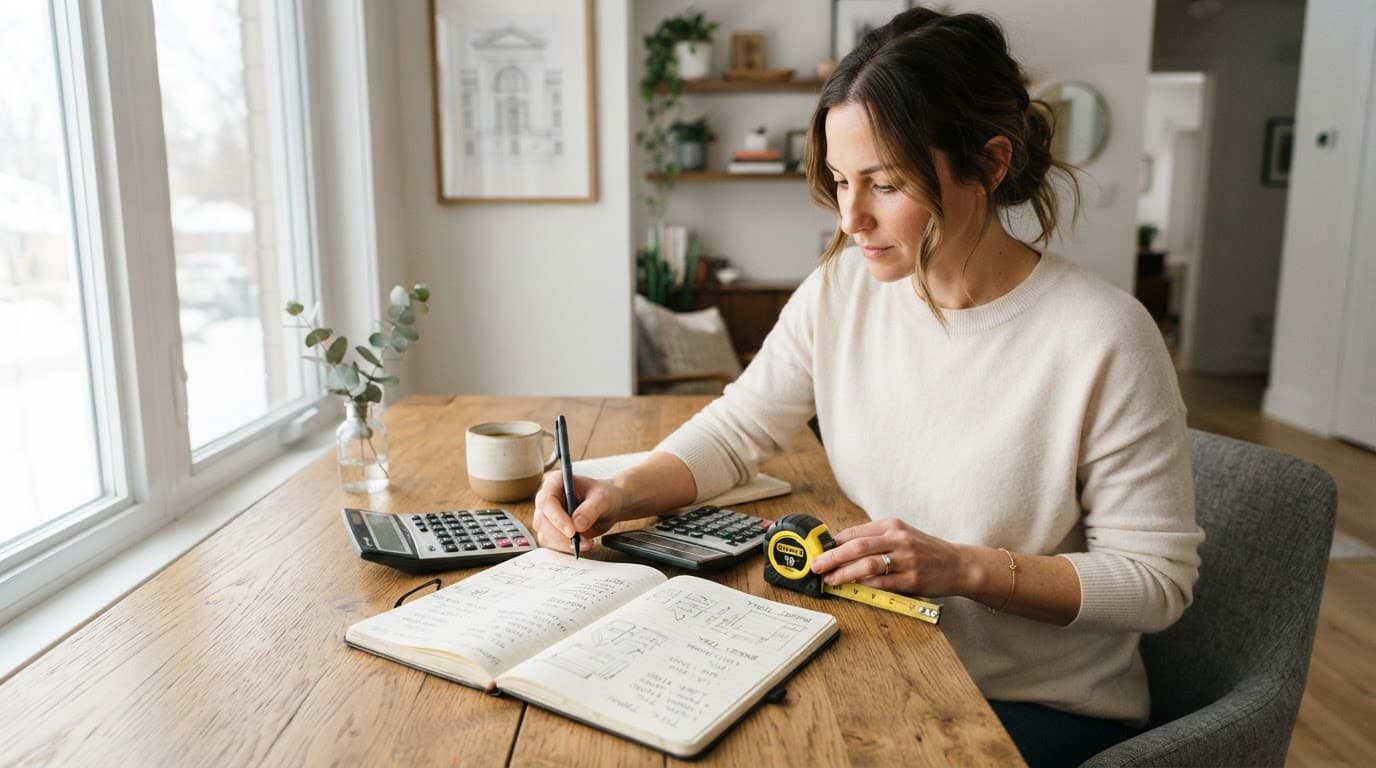
AI-generated image showing the practical tools used to prepare a bathroom replacement budget.
Where Bathroom Costs Commonly Rise
The advertised bathroom suite price often covers only the main fittings. Tiles or wall panels, adhesive, grout, sealant, flooring, taps, wastes, shower equipment, screens, furniture, bath panels and toilet seats may appear as separate costs. Delivery can add more, particularly for heavy baths, shower trays, stone-resin products or large quantities of tiles.
Older UK properties create further uncertainty because the visible room rarely shows its full condition. Once flooring or boxing-in is removed, installers may find:
- Water-damaged flooring, rotten floorboards or weakened joists beneath a leaking bath or toilet.
- Concealed leaks around old pipe joints, wastes and shower connections.
- Uneven walls that need plastering, boarding or extra preparation before tiling.
- Outdated wiring, inadequate earthing or unsuitable lighting and socket arrangements.
- Poor water pressure, which may limit the performance of new shower equipment.
- Specialist waste connections that need unusual adaptors, rerouting or access through floors.
- Delivery damage, missing components or cracked ceramics that delay installation.
These problems can create both material and labour costs. A damaged floor may need repair before a tray or toilet can be securely installed, whilst uneven walls can increase preparation time and adhesive use. An optional upgrade such as underfloor heating also needs suitable floor preparation and electrical planning. A cheap fitting can become expensive when it needs non-standard connections or extensive alterations.
A contingency of around 10 to 20 per cent is sensible for many replacement projects. The lower end may suit a straightforward, like-for-like installation in a modern property. Older houses, moved plumbing, concealed pipework and uncertain moisture damage justify a larger allowance. That reserve isn’t a prediction of failure; it prevents an unexpected repair from forcing compromises elsewhere in the project.
A bathroom budget should include the cost of making the room suitable for the new fittings, not only the cost of buying them.
Decide What to Install Professionally
Painting, decorating and removing old fittings may suit a capable householder, provided the work doesn’t damage pipework, waterproofing or wall surfaces. Simple furniture assembly can also be manageable when the product instructions are clear and the finished installation won’t affect water-tightness or structural support.
Higher-risk work needs an appropriately qualified professional. This includes alterations to fixed electrics, work around bathroom electrical zones, gas-fed water heating, major plumbing changes, waterproofing, structural adjustments and complex waste connections. Poor workmanship in any of these areas can lead to leaks, electric shock, damp or expensive remedial work.
Written quotes provide a stronger basis for comparison than a single total sent by message. Each quote should identify:
- The fittings and materials included.
- Labour for removal, installation and plumbing changes.
- Electrical, plastering, tiling, decorating and flooring costs.
- Delivery arrangements, waste removal and any skip charges.
- The expected completion standard, including sealing, testing and making good.
- Responsibility for defects, damaged products and missing parts.
The agreement should also state who supplies replacement items when a delivery arrives damaged, who disposes of the old suite and whether follow-up visits are included. Itemised labour makes changes easier to assess, especially when opening the room reveals concealed problems. Without that detail, a low initial figure can conceal omissions rather than represent a genuine saving.
How to Buy Bathroom Products Online Without Costly Mistakes
Buying bathroom products online gives households access to more choice, clearer specifications and faster price comparisons. However, the product price tells only part of the story. Measurements, compatibility, delivery conditions and installation requirements must be checked before ordering.
Check Measurements, Specifications and Delivery Details
Online bathroom photographs can make a fitting appear smaller or more adaptable than it is. The technical drawing provides the evidence. Compare every item with the room plan and existing plumbing before paying.

AI-generated image showing bathroom measurements and product details being checked before purchase.
The following points should be recorded for each bathroom product:
- Check the width, depth and height, including projections from handles, cisterns, taps and shower fittings.
- Confirm the fixing points, wall brackets, support legs and required fixing surfaces. A vanity unit may need stronger backing than a standard floor-standing cabinet.
- Match basin tap-hole positions, tap types and waste arrangements. Check that the chosen bathroom taps suit the fitting.
- Check the water inlet position, pipe diameter and access for isolation valves. The connection may not align with existing pipework.
- Measure toilet projection from the wall, including the cistern and seat. A few centimetres can affect door clearance and movement around the room.
- Match the shower tray’s length, width, waste position and handedness with the shower enclosure and available drainage route.
- Confirm that doors, drawers and shower screens can open fully without striking a wall, radiator, toilet or basin.
- Calculate tile quantities from the measured surface area, adding a sensible allowance for cuts, breakages and future repairs.
- Check that accessories, wastes, traps, flush plates, furniture legs, panels and handles are compatible with the chosen range.
Bathroom delivery details deserve the same attention as product specifications. Heavy or fragile items, including a bath, may arrive on a pallet, require someone present or carry a separate surcharge. Lead times should also be checked against the installer’s availability, particularly when several products come from different suppliers.
Bathroom products should be inspected promptly after delivery. Cracked ceramics, chipped edges, missing fittings or incorrect colours are easier to report before installation, when the packaging and delivery record are still available. Photographs of the outer carton and the opened product provide useful evidence if damage is disputed.
Packaging and proof of purchase should remain in a dry, safe place until installation and testing are complete. The packaging protects items during storage, whilst invoices, order confirmations and delivery records establish what was purchased and when. Once a fitting has been drilled, tiled around or connected to plumbing, resolving a fault can become slower and more complicated.
Compare Total Cost Rather Than the Headline Price
A low online price can lose its advantage once the complete basket is assembled. The comparison should include the fitting, delivery and every component needed to install and finish it.
Depending on the project, the basket may need to include:
- Taps, wastes, traps, flexible connectors and isolation valves.
- An electric shower or mixer shower, including compatible valves, riser kits, hoses, heads and waste kits.
- Bathroom furniture, end panels, plinths, trims, handles and fixing brackets.
- Bath panels, sealants, grout, adhesives, waterproofing materials and tile spacers.
- Underlay and floor preparation materials, where the chosen flooring requires them.
- Toilet seats, flush plates, replacement cartridges and other service parts.
- Removal, return or redelivery charges if an item arrives damaged or proves unsuitable.
A coordinated bathroom suite can simplify compatibility because the dimensions, finishes and connection requirements are designed to work together. Separate purchases may still offer better value, particularly when a household wants a higher-quality tap, waste, shower valve or replacement part rather than upgrading every item.
Online bathroom buying also makes it easier to compare several configurations before ordering. A wall-hung basin, compact toilet or different shower tray may change both the product total and the installation cost. The most useful comparison is therefore the delivered and installable price, not the bold figure shown beside a single product.
Avoid the Bathroom Replacement Problems That Cause Regret
The most expensive bathroom mistakes often happen before installation begins. An incorrect measurement, missing component or unrealistic timescale can create delays affecting labour, delivery and the household. A final review gives the project one last chance to expose problems while changes remain affordable.
Create a Final Pre-Installation Checklist
Before ordering or scheduling work, the bathroom plan should pass these checks:
- Confirm room measurements, including ceiling height, door swing, window position, boxed-in pipework and usable wall space.
- Check that the proposed bathroom layout leaves enough clearance around the toilet, basin, bath and shower. Doors, drawers and screens must open fully.
- Match every product’s technical drawing with the planned connections, fixing points, waste position, tap holes, water inlets and available support. A wall hung toilet also needs suitable wall strength and accessible servicing.
- Recheck the full budget, including delivery, accessories, installation, preparation work, waste removal and a contingency fund of around 10 to 20 per cent.
- Confirm stock levels and delivery dates for every item. One missing toilet seats pack, bath panels or waste kit can hold up the entire installation.
- Agree the installer’s start date, working hours and estimated duration before products arrive.
- Ask the plumber to confirm pipe sizes, waste routes, water pressure, isolation valves and any changes required behind walls or beneath the floor.
- Ask a qualified electrician to check bathroom lighting, sockets, heated appliances, electrical zones, certification requirements and underfloor heating connections.
- Include effective ventilation, with an extractor suitable for the room and a practical route for removing humid air.
- Review storage capacity for toiletries, towels, toilet rolls and cleaning products. A vanity unit or other bathroom furniture offers little value if everyday items have nowhere to go.
- Plan bathroom storage around daily use, including space for towels, toiletries and cleaning products.
- Decide how the old suite, packaging, rubble and damaged materials will be removed. Council collection rules and skip arrangements can affect timing and cost.
- Keep a contingency fund separate from the main budget, rather than treating it as money available for upgrades.
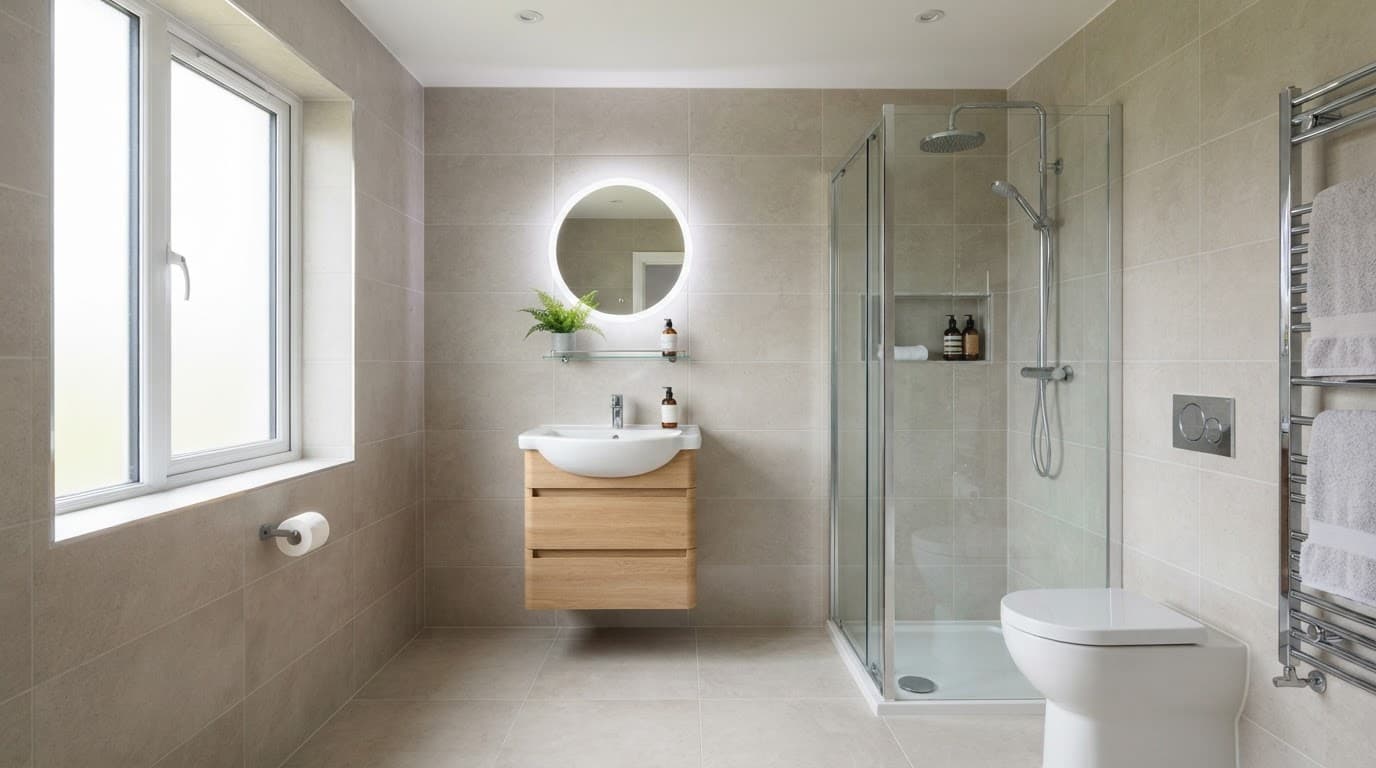
AI-generated image showing a finished practical UK bathroom with neutral tiles, useful fittings and good natural light.
Several common buying errors deserve a final check. Ordering products before measuring can leave a toilet blocking the door or a shower screen colliding with the basin. Choosing a high-flow shower without checking low water pressure can produce disappointing performance, even when the fitting itself is sound.
Ventilation is often overlooked because it doesn’t appear in a glossy bathroom photograph. Yet persistent bathroom condensation can damage paint, sealant, plaster and timber. Storage suffers a similar fate when visual simplicity takes priority over daily use. A room may look spacious on completion but become cluttered within weeks if towels and toiletries were never included in the plan.
Installation time is also easy to underestimate. Removing the old suite, repairing damp or uneven surfaces, waterproofing, tiling, waiting for materials to cure and testing the finished plumbing can extend the programme. Difficult-to-clean textured tiles, heavily grooved furniture and dark glossy finishes may create a lasting maintenance burden.
Finally, access for future repairs should be treated as part of the design. Concealed valves, boxed-in pipes and fitted furniture need removable bath panels or service access where possible. Good planning reduces disruption, limits rushed replacement purchases and protects the value of the original bathroom investment.
Frequently Asked Questions
How much should I budget for a bathroom replacement?
A bathroom replacement budget should include products, delivery, labour, waste removal, preparation work, plumbing, electrics, flooring and decoration. Set aside a contingency of around 10 to 20 per cent for concealed leaks, damaged flooring, uneven walls or other unexpected work.
Should I keep the existing bathroom layout?
A like-for-like layout is usually simpler and less expensive because it keeps plumbing and waste routes in place. Moving fittings can improve access and storage, but may add costs for concealed pipework, floor repairs and electrical changes.
What should I check before buying bathroom products online?
Compare technical drawings with the room measurements, plumbing positions, fixing points, clearances and available support. Also check delivery charges, stock levels, guarantees, return terms and whether wastes, traps, panels and other compatible components are included.
Which bathroom work should be completed by a professional?
Use appropriately qualified professionals for bathroom electrical work, major plumbing changes, waterproofing, shower installation, structural adjustments and complex waste connections. Capable DIYers may be able to manage decorating, removing old fittings and straightforward furniture assembly when the work does not affect safety or water-tightness.
How can I reduce maintenance problems after the replacement?
Choose durable, easy-to-clean materials and fittings with readily available replacement parts. Effective ventilation, accessible service points, regular cleaning and properly sealed shower areas can help prevent condensation, limescale, leaks and damp.
Conclusion
A successful bathroom replacement depends less on choosing the most expensive suite. It relies on matching the layout, materials, plumbing, electrics and installation method to the property. The shower, bath and toilet should also suit the household’s needs.
Careful measurements, reliable specifications and total-cost comparisons make buying bathroom products online more useful. Professional advice remains essential for regulated or high-risk work.
When durability, maintenance and everyday access guide decisions, the finished bathroom is more likely to remain practical and reliable long after its initial style loses appeal.
Explore More Expert Buyers Guides and Reviews
For a list of our main buyers guides use the drop-down menu at the top of the page. Topics related to this article are:
Home and Garden Furniture Buyers Guides
Bedroom Furniture Buyers Guides
living Room Furniture Buyers Guides
Garden Furniture Buyers Guides
Patio Furniture Sets Buyers Guide
–
Explore Our Blog Categories for Expert Buying Advice
- AI Powered Product Finder Tools (25)
- Expert Buying Guides & Shopping Tips for UK Shoppers (1,179)
- Brands & Designer Products (Men, Women & Electronics) (234)
- Designer Fashion Brands: Buyer’s Guides & Reviews (121)
- Electronic Brands: Buyers Guides & Reviews (78)
- Apple Products Buyer’s Guides & Reviews (22)
- Brands – Phones, Laptops, PC”s, Tablets | Buyer’s Guides & Reviews (40)
- Electronics – Tablet & iPad Reviews and Buyers Guides (11)
- Kitchen Appliance Brands: Buyer’s Guides & Reviews (21)
- Laptop Brands & MacBooks Buyer’s Guides & Reviews (9)
- Phone Brands & iPhones Buyer’s Guides & Reviews (22)
- Car Buying & Financing Made Easy | Expert Guides for the UK (88)
- Clothing, Fashion & Accessories Buying Guides UK (337)
- Beauty, Health & Wellness | Perfume, Skincare, Makeup & Wellbeing Guides (123)
- Footwear: Trainers & Shoes Buyers Guides (42)
- Jewellery: Expert Reviews, Trends & Buying Guides (58)
- Men's Clothes — Buyers Guides & Reviews (37)
- Men’s Clothes, Fashion & Accessories Guides UK | Latest Trends & Smart Shopping (132)
- Women's Clothing Buyers Guides — Dresses, Tops & More (118)
- Women’s Clothes, Fashion & Accessories Guides UK | Latest Trends & Smart Shopping (286)
- Electronics, Tech & Gadgets: Reviews, Deals & Buying Guides UK (162)
- Furniture Buyer’s Guides | Home & Garden & Styling Tips (275)
- Bedroom Furniture Guides UK | Expert Tips & Best Value Deals (90)
- Garden Furniture, Landscaping & Garden Rooms Guides UK | Expert Tips & Best Value Deals (131)
- Home Furniture, Décor & Interior Design Guides UK | Styling Tips & Inspiration (155)
- Living Room Furniture, Design & Décor Guides UK | Styling Tips & Inspiration (55)
- Holidays & Travel: Hotels, Villas, UK Breaks & Skiing (148)
- Insurance & Protection: Travel, Landlord, Gadget & More UK (157)
- Gadget Insurance UK | Expert Guides, Reviews & Smart Protection Tips (32)
- Home Emergency Cover UK | Expert Guides, Reviews & Practical Protection Tips (21)
- Landlords Insurance UK | Expert Guides, Reviews & Smart Protection Tips (31)
- Travel Insurance UK | Expert Guides, Reviews & Money-Saving Tips (34)
- Pets: Guides, Tips & Inspiration (25)
- Brands & Designer Products (Men, Women & Electronics) (234)
- Gifts for Everyone: Ideas for Every Occasion & Budget (35)