This new chapter in Capcom’s long-running series places survival horror at its core. It balances viewpoints from Grace Ashcroft and Leon S. Kennedy with tense environments, memorable characters and resource management.
This spoiler-aware review and UK buyer’s guide examines the title without revealing key developments. It covers gameplay, atmosphere, technical performance, value and its place among earlier entries. UK buyers can compare editions and prices online, but PlayStation 5 and Nintendo Switch 2 support must be verified. Delivery and Downloadable content may also change the final cost.
Release dates, platforms and performance details should be checked against Capcom’s official specifications, including those for the RE Engine. Story claims should also be checked against reputable games news outlets and established fan wiki sources before the guide begins.
AI-generated feature image, displayed at the same responsive width as the article text on desktop and mobile. Alt text: “A dark survival-horror corridor with a lone figure holding a torch among damaged walls and drifting mist.”
Key Takeaways
- Resident Evil Requiem follows Grace Ashcroft through a story connected to Raccoon City and the wider series.
- Its strongest appeal is a focused Survival horror experience, combining tension, resource management and controlled action.
- UK buyers should compare platforms, editions, delivery charges and downloadable content before judging the overall price.
- Online shopping offers wider choice and easier comparisons, but check release details and performance claims against Capcom and reputable gaming sources.
Resident Evil Requiem: What the New Horror Game Is Really About
Resident Evil Requiem returns to the series’ central concerns: biological weapons, institutional failure and the damage caused when powerful organisations bury dangerous secrets. Capcom has positioned Resident Evil Requiem as a new entry point, connecting to established lore without requiring encyclopaedic knowledge of every previous outbreak.
The story setup, setting and returning characters
The confirmed premise follows Grace Ashcroft, an FBI analyst investigating a series of deaths linked to the Wrenwood Hotel. Her work leads back to Raccoon City, the setting that shaped much of Resident Evil’s history and was destroyed during the original series’ early outbreaks.
Grace is not presented as a hardened action hero. Her investigative role creates a different perspective on survival horror, placing evidence, uncertainty and personal risk at the centre of the opening story. Alongside her, Leon S. Kennedyreturns as a playable character. Leon’s experience with bioterrorism gives the game a second viewpoint, shaped by years of surviving disasters that governments and corporations failed to contain.
The campaign uses a Dual-protagonist structure. Grace represents the search for answers, whilst Leon brings the practical knowledge needed to survive the consequences. Their stories are connected, but Capcom has not revealed the full nature of that connection.
Victor Gideon is another name associated with the revealed story material. However, Capcom has not yet clearly confirmed his role, motives or relationship to Grace and Leon. The same caution applies to Elpis and Zeno, which appear in current lore discussions without a fully explained place in the narrative.
Alyssa Ashcroft is part of the wider Ashcroft history, although the precise connection between Alyssa and Grace remains a matter for confirmed story details. That uncertainty gives Resident Evil Requiem room to explore family history without revealing its most important answers too early.
The setting does much of the narrative work. Raccoon City carries the weight of past events, yet Resident Evil Requiem does not simply revisit familiar locations as a nostalgia exercise. Its ruined streets, abandoned interiors and enclosed spaces create an atmosphere where history feels physically present.
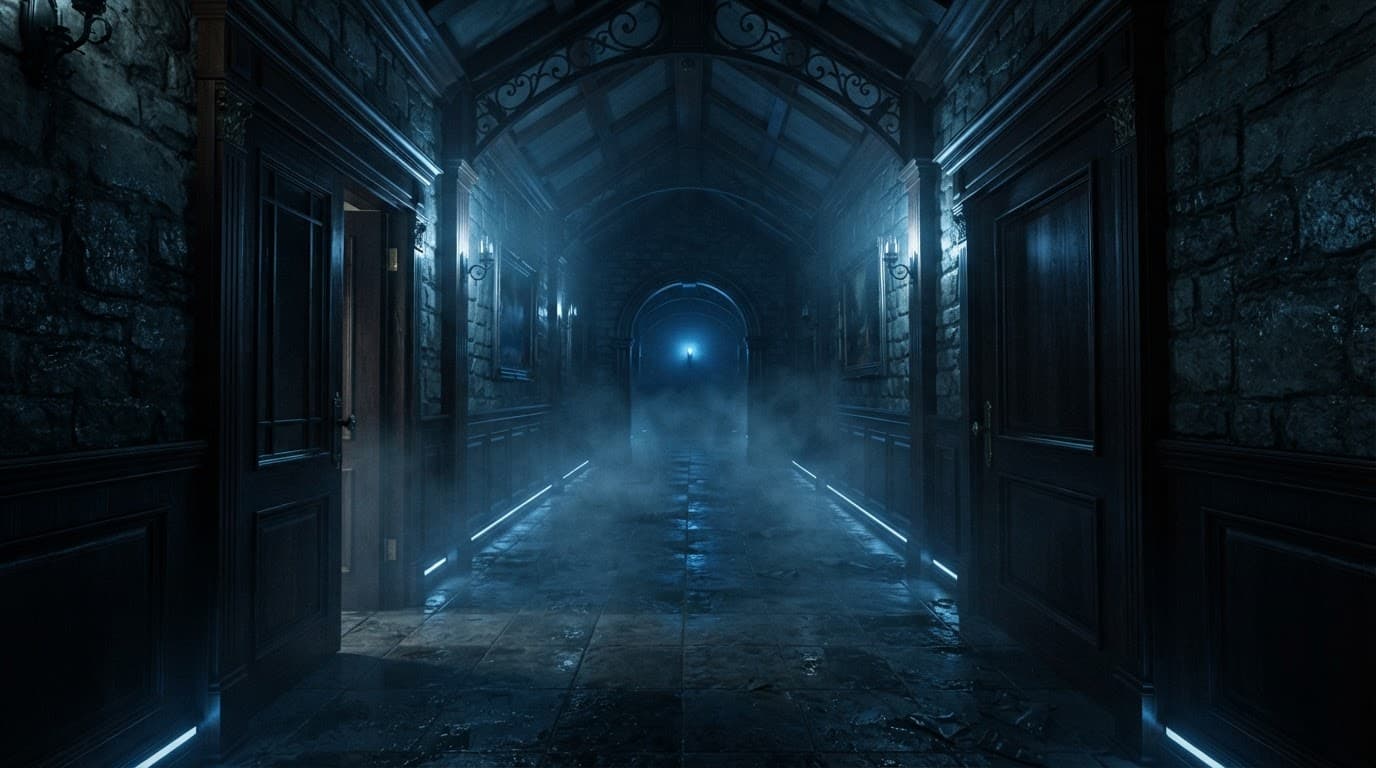
AI-generated image showing the type of oppressive survival-horror setting associated with Resident Evil Requiem.
The game’s environments also support the visual ambitions associated with Capcom’s RE Engine. Locked rooms, contaminated sites and fragments of evidence suggest that Raccoon City still contains the consequences of decisions made years earlier. Elpis and Zeno may add further layers to that history, but their full significance has not been confirmed.
The title, Requiem, points towards mourning and remembrance, although its precise story meaning remains unconfirmed. Elpis carries a similarly unresolved significance in the available material, so it would be premature to assign the term a definitive meaning. It fits a series built around the human cost of outbreaks, where scientific ambition and official secrecy leave ordinary people to pay the price.
Where it sits in the Resident Evil timeline
Resident Evil Requiem follows the modern storyline established by Resident Evil 7: Biohazard and Resident Evil Village. It also sits alongside the continuity developed through remakes such as Resident Evil 2 and Resident Evil 4, which keep Raccoon City central to the wider mythology.
Knowledge of Raccoon City, Leon’s earlier missions and the series’ recurring bioweapon history will add context. The Umbrella Corporation remains important to that background, even when its influence is felt through later consequences rather than direct appearances. Victor Gideon, Elpis and Zeno may help expand the newer side of the lore, but Capcom has not published enough detail to confirm their exact timeline positions.
References to Elpis should therefore be treated as part of the game’s emerging story vocabulary, rather than as a confirmed explanation of its central mystery. Zeno is similarly best understood through the information Capcom has officially released. Until more material appears, neither term should be used to infer undisclosed relationships or plot outcomes.
The new investigation gives newcomers a clear narrative foothold. The essential conflict is understandable without playing every previous game, whilst returning players can look for links involving Grace, Alyssa, Leon and the history of Raccoon City. Elpis and Zeno could become important to that wider continuity, but their relevance remains deliberately open.
The result is a Dual-protagonist story that can move between Grace’s investigation and Leon’s hard-earned experience. That structure should let Resident Evil Requiem revisit familiar themes from different angles, without reducing either character to a simple guide for the other.
Spoiler warning: The discussion later in this review examines deeper story developments and character outcomes. Readers seeking a completely untouched Resident Evil Requiem experience should stop before that section.
How Resident Evil Requiem Changes the Survival Horror Formula
Resident Evil Requiem appears to build on the series’ established survival-horror structure whilst giving investigation a stronger role. Its central tension comes from controlling information: players are encouraged to search thoroughly, but every extra room can expose them to danger, consume supplies or force a return journey through an area that no longer feels safe.
Exploration, puzzles and the pressure of limited supplies
The environments reward patience rather than speed. Drawers, side rooms and apparently unimportant corners can contain ammunition, healing items or clues, so rushing the main route risks leaving Grace Ashcroft or Leon S. Kennedy under-equipped. The dual-protagonist structure may also vary the pace of exploration and combat, though the full balance will depend on how Capcom connects their sections.
That search carries a cost, because backtracking can turn familiar spaces into threats. Enemies, locked routes and story events may alter the player’s assumptions about previously safe areas. This is central to survival horror, where knowledge can be as valuable as ammunition.
Puzzles work best when they belong to the setting. Resident Evil Requiem’s investigative premise gives environmental clues a natural purpose, allowing players to interpret a location instead of stopping for an unrelated brainteaser. The strongest puzzles should make the hotel and ruined city feel constructed, occupied and damaged, rather than acting as barriers placed between combat scenes.
Resource management creates sharper pressure. Carrying extra ammunition may leave less room for healing items or quest objects, whilst storing useful equipment can make a later encounter more dangerous. Limited supplies therefore influence the route through each area, not just the outcome of individual fights.
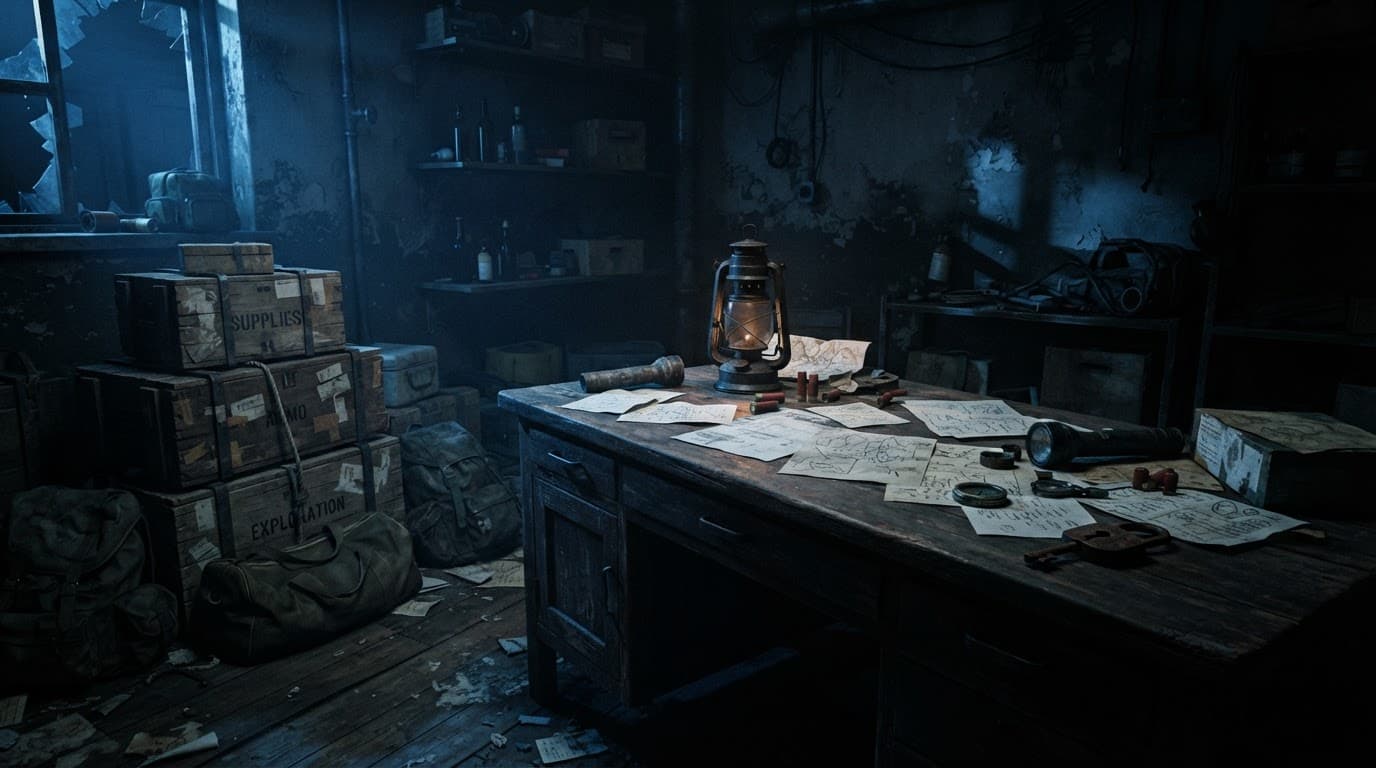
AI-generated image showing an atmospheric survival-horror room shaped by exploration and scarce resources.
Combat, enemies and the best way to approach a first playthrough
Resident Evil Requiem keeps combat as a decision rather than a default response. A weak enemy may be worth eliminating if it guards a route used repeatedly, whilst a threat in a confined corridor may be better avoided. That choice gives ammunition strategic value beyond its damage output.
On a first playthrough, careful players should check corners, listen before opening doors and learn how enemies move. Firing at every target can create a short-term advantage, but it may leave too little ammunition for a later encounter. Boss fights should test pattern recognition and positioning, rather than simply asking players to empty every weapon.
Higher difficulty settings make this approach more demanding. Enemies require tighter aim, mistakes cost more health and resource routes become less forgiving. The formula works when difficulty increases decision pressure rather than merely inflating enemy durability.
The role of fear, sound and perspective
Perspective determines how much control the player feels. A First-person perspective can restrict peripheral vision and make close encounters feel personal, whilst a Third-person perspective can give players more spatial awareness. Until Capcom confirms every camera option, it is safer not to assume which viewpoint Resident Evil Requiem will use throughout.
A shift to a Third-person perspective could make movement and positioning feel more deliberate. By contrast, a confined viewpoint may increase vulnerability in corridors and during pursuits. Either approach can support survival horror when it limits certainty without taking control away from the player.
Lighting, animation and environmental detail will also shape that experience. The RE Engine can support convincing shadows, damaged spaces and expressive character movement, while PlayStation 5 hardware should help maintain visual detail during exploration. These features matter most when they reinforce tension rather than simply making locations look impressive.
Sound often carries fear between visible events. Footsteps beyond a wall, a distant impact or a sudden loss of ambient noise can make players distrust empty space. Environmental storytelling adds another layer, using damaged rooms and abandoned evidence to suggest what happened without explaining everything.
The most effective scares should combine atmosphere, pursuit and body horror with occasional shocks. A sudden noise may startle, but a threat that the player hears, anticipates and still cannot safely avoid creates longer-lasting tension. That balance is where Resident Evil Requiem can move beyond scripted fright and return fear to the player’s own decisions.
The Characters, Themes and Horror That Stand Out Most in Resident Evil Requiem
Resident Evil Requiem appears strongest when it treats horror as a consequence of human decisions, rather than unrelated shocks. Its setting, characters and biological threats connect to the series’ interest in scientific responsibility, institutional secrecy and memories left by catastrophe.
What longtime Resident Evil fans are likely to enjoy
Resident Evil Requiem should appeal to longtime fans through its familiar structure of dangerous locations, locked routes, limited supplies and rewarding preparation. Raccoon City remains important because its streets represent both a physical threat and a source of historical memory. The Wrenwood Hotel and Raccoon City give exploration room to carry story information as well as danger.
The game also draws on the series’ wider history of bioterrorism. References involving Victor Gideon, Alyssa Ashcroft and the Umbrella Corporation help connect personal histories with institutional secrecy. These links give the setting more purpose than simple nostalgia, especially when past disasters continue to shape present decisions.
Its enemy design remains distinctive too. The best creatures are more than targets with high health. They embody failed experiments, distorted scientific ambition or the consequences of treating living bodies as raw material. The RE Engine should help Capcom present those ideas through detailed creatures, facial animation and oppressive environments.
Elpis and Zeno appear most useful when they deepen the game’s questions about identity, control and responsibility. Elpis gives the wider conflict a more troubling human dimension, while Zeno reflects the danger of knowledge without ethical limits. Used carefully, these elements can move the story from bleak horror into strange, grotesque science fiction without losing its identity.
Grace Ashcroft offers a perspective that differs from the usual veteran-soldier approach. Her role as an FBI analyst places investigation and uncertainty alongside survival skills. Leon S. Kennedy brings the weight of earlier outbreaks and hard-earned experience. Together, Grace Ashcroft and Leon create a Dual-protagonist story, although that describes contrasting narrative viewpoints rather than automatically confirming co-operative play.
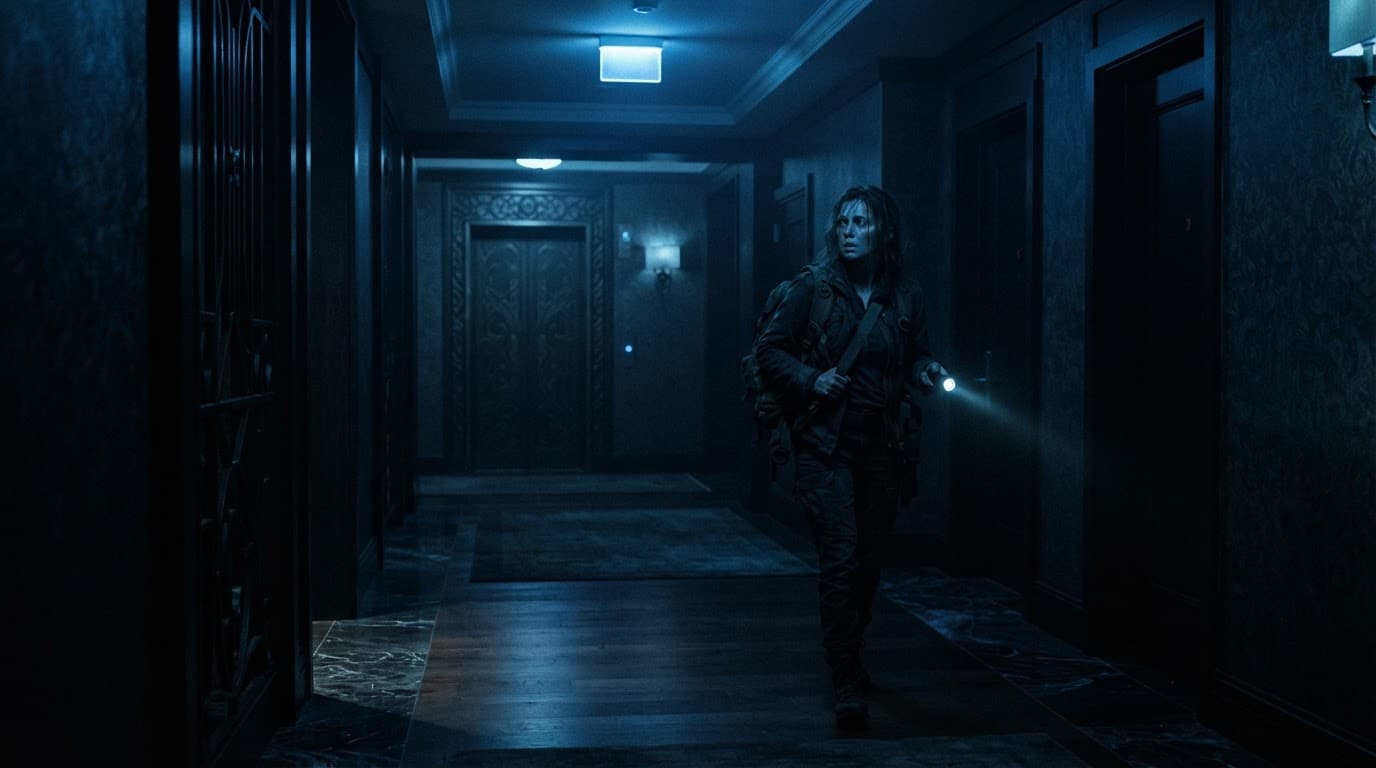
AI-generated image showing a tense survival-horror interior without revealing major story developments.
What makes the brand endure is its willingness to hold opposing tones together. A grim scene can sit beside an absurd enemy concept, an elaborate puzzle or a burst of exaggerated action. Resident Evil Requiem will need that balance to feel deliberate. Its Survival horror identity should remain clear, even when individual sections resemble an Action game.
Nostalgia alone cannot sustain a campaign, yet familiar design principles still provide a strong foundation when new locations and characters earn their place. Elpis and Zeno can support that balance if their thematic roles remain connected to the central human drama, rather than becoming unexplained additions.
What may divide players or feel less successful
The main risks concern balance. Resident Evil Requiem’s contrast between Grace’s investigative vulnerability and Leon’s combat experience could produce uneven pacing. Forced chases, repeated enemy encounters or unclear objectives would weaken tension by replacing deliberate fear with routine frustration.
Traditional survival-horror fans may be less satisfied if ammunition and healing supplies become too generous. Action-focused players, meanwhile, may find extended backtracking, slow puzzles or evasive encounters restrictive if combat is delayed for too long.
Performance will also affect the final judgement. Horror depends on timing, sound and visual stability, so stuttering, inconsistent frame rates or long loading pauses can damage encounters. Until the finished version receives sustained testing, claims about voice acting, dialogue and pacing should remain measured.
The strongest version of Resident Evil Requiem will make its tonal shifts feel intentional. If its treatment of trauma and memory earns the dramatic moments, camp and action will add character. If not, the contrast may feel like several different games competing for control of one story.
Resident Evil Requiem Performance, Platforms and Value for Money
Resident Evil Requiem’s value depends as much on stable performance as its story, atmosphere and replay potential. Platform choice, edition pricing and post-launch support will shape the experience, particularly for UK buyers comparing existing hardware.
Which platform offers the best experience?
Capcom’s RE Engine should deliver detailed environments and responsive lighting, but launch performance remains more important than visual ambition. The console version is the simpler choice, especially on PlayStation 5, as it avoids component matching, driver updates and graphics troubleshooting.
A current-generation console may offer separate quality and performance modes. On PlayStation 5, check whether ray tracing affects the frame-rate target, and whether the RE Engine supports stable image reconstruction during combat. Compatibility with your display, storage capacity and installed system software also matters.
| Platform | Main strengths | Main considerations |
|---|---|---|
| Console, including PlayStation 5 | Consistent setup, controller support and straightforward updates | Less graphics control and fixed hardware |
| PC | Adjustable settings, mouse input and broader display support | Requires suitable hardware and regular maintenance |
Nintendo Switch 2 support should not be assumed before launch. Capcom’s confirmed platform list, resolution targets and performance details should be checked before purchase. If the game arrives on Nintendo Switch 2, buyers should also verify whether features such as ray tracing are unavailable or reserved for other versions.
PC offers more control. A suitable system may support higher resolutions, ultrawide displays, mouse aiming and detailed RE Engine settings. Players can adjust shadows, textures, reflections, motion blur and ray tracing, if Capcom confirms those options for the PC release.
The strongest option is the one that holds a consistent frame rate during combat and exploration. The RE Engine can produce impressive effects, but unstable frame pacing may distract from carefully timed horror sequences. Ray tracing can also create a meaningful performance trade-off, particularly at higher resolutions.
Official system requirements, supported resolutions and frame-rate targets should be checked after launch. Capcom’s technical guidance should confirm the RE Engine version, ray tracing support and any differences between PlayStation 5 modes. Early previews rarely show the finished performance profile.

AI-generated image showing a modern gaming setup suitable for comparing console and PC ownership.
How to buy Resident Evil Requiem online without overpaying
Authorised digital storefronts and established games retailers usually provide broader edition choice than a single physical outlet. Online comparison makes it easier to check standard pricing, delivery charges, launch promotions and legitimate seasonal discounts before committing to Resident Evil Requiem.
The total cost should include more than the headline price. Buyers need to confirm:
- Whether the edition works on the intended console or PC account.
- Whether PlayStation 5, Nintendo Switch 2 or another listed platform is supported.
- The UK region, supported languages and age rating.
- The refund rules for digital purchases and opened physical copies.
- Whether bonus content requires a separate download or account access.
- Whether delivery, storage upgrades or downloadable content increase the final cost.
Suspiciously cheap prices can indicate an unofficial key, an incorrect region or an account-based purchase that may later lose access. Unofficial key sellers offer little protection when codes fail, are revoked or breach platform terms.
Is the deluxe edition or extra content worth it?
A deluxe edition earns its premium only when the extras match the buyer’s interests. Costumes, soundtrack items, digital art books and cosmetic weapon designs may appeal to collectors, but they rarely improve the core campaign. Capcom’s edition details should clarify whether any bonus affects gameplay.
The clearest value test is to compare the premium with buying the base game first and purchasing an upgrade later, if that option exists. Story expansions require closer scrutiny because campaign length, access timing and replay value matter more than cosmetic bonuses. For most players, the standard edition is the safer choice until Capcom documents the extras and post-launch support.
For the final buying decision, compare PlayStation 5 performance, storage needs, confirmed platform support and the UK price. Resident Evil Requiem offers stronger value when it runs consistently without requiring expensive upgrades or unconfirmed features.
Resident Evil Requiem: Resident Evil Games and Products Worth Trying After Requiem
Resident Evil Requiem is only one route into Capcom’s horror catalogue. The series has changed perspective, pacing and combat across several generations. Its strongest games still share a clear identity: oppressive locations, distinctive creatures, memorable characters and systems that reward repeat play.
The best Resident Evil games for different kinds of players
There is no single best follow-up for every player. The right choice depends on whether the priority is atmosphere, story, classic design or sustained combat.
- Newcomers should start with Resident Evil 2 (2019). Its police station setting introduces Raccoon City’s history, resource management and enemy design without demanding detailed knowledge of earlier games. The remake also feels modern enough for players unfamiliar with the original PlayStation era.
- Story-focused players should try Resident Evil 7: Biohazard and Resident Evil Village. The former establishes the First-person perspective and Ethan Winters’ personal story, whilst Village expands the mythology and provides a broader journey. Playing them in order gives the character development more weight.
- Fans of fixed-camera survival horror should choose Resident Evil (2002), often called the REmake. Its mansion, pre-rendered backgrounds, limited inventory and deliberate movement preserve the structure that defined the early series. The controls and pacing require more patience than modern entries.
- Players who prefer intense audio should consider a Resident Evil soundtrack. Memorable music and sound design add tension, particularly in the series’ quieter locations and most dangerous encounters.
- Those seeking more action should choose Resident Evil 4 (2023). This action game gives Leon S. Kennedy more weapons, mobility and frequent fights, whilst resource decisions remain important. It is an excellent action-horror experience, although it offers less sustained vulnerability than Resident Evil 2 or Resident Evil 7.
- Co-operative players should consider Resident Evil 5, provided its action-heavy design suits them. Its campaign supports two-player co-op and focuses more on shooting, set pieces and partner tactics than traditional survival horror. It also assumes greater familiarity with the Umbrella Corporation’s bioterrorism storyline, so it is a weaker first entry.
The original Resident Evil 4 and Resident Evil Revelations 2 are also useful choices for players interested in older combat systems and episodic storytelling. Their age shows, but both offer context for how the series’ formula changed.
Resident Evil merchandise that is genuinely worth considering
Official merchandise varies sharply in quality and price. Art books and soundtrack releases usually offer the most lasting value, particularly for fans interested in creature concepts, environmental design and the series’ distinctive visual identity. A collector’s edition can add statues, cases or digital extras, but its premium depends on build quality and whether those items will actually be displayed.

AI-generated image showing the type of collector merchandise associated with Resident Evil.
Figures are worth considering when sculpting, paintwork and scale match the price. Clothing is more practical, although fabric quality, sizing and wash instructions matter more than a large logo. Licensed props, enamel pins and replica items can be attractive display pieces, but unlicensed products may use poor materials or unauthorised artwork.
Online listings require careful checking. The total cost should include postage, import charges where relevant and return expenses. Buyers should confirm the exact edition contents, authenticity, condition, packaging, seller history and refund terms before paying. Product photographs can hide damage, missing parts or opened seals.
Official licensing provides some protection, but it doesn’t guarantee that an expensive collector item will have good resale value or exceptional workmanship.
For most fans, a well-produced art book, soundtrack or carefully selected figure is a more defensible purchase than an oversized bundle of cosmetic extras. After Resident Evil Requiem, availability and contents may vary between regions, so the product description should be treated as part of the purchase decision rather than decoration.
A Spoiler-Aware Verdict: Who Should Play Resident Evil Requiem?
Resident Evil Requiem is best understood as Survival horror with action elements, rather than a straightforward action game. Its appeal depends on whether atmosphere, investigation and resource pressure matter more than constant combat. This dual-protagonist campaign contrasts Grace Ashcroft’s uncertain investigation with Leon S. Kennedy’s experience. It also returns to Raccoon City, a setting shaped by the series’ history.
The players most likely to enjoy it
Long-time fans have the clearest reason to pay attention. Capcom draws on familiar strengths, including interconnected locations, biological horror, locked routes, environmental clues and enemies linked to failed experiments. Raccoon City’s presence gives returning players extra context without making the story inaccessible to newcomers.
New players should find the investigation a useful starting point. Grace’s limited experience contrasts with Leon S. Kennedy’s established survival skills, allowing the story to introduce its setting gradually. Previous games such as Resident Evil 2 and Resident Evil 7: Biohazard add meaning, but complete knowledge of the timeline isn’t essential.
Players who want frightening exploration should be especially well served. Searching the Wrenwood Hotel, checking side rooms and deciding whether to spend ammunition creates steady pressure. The horror works best when a familiar corridor becomes dangerous because supplies are low or an enemy may have changed the safest route.
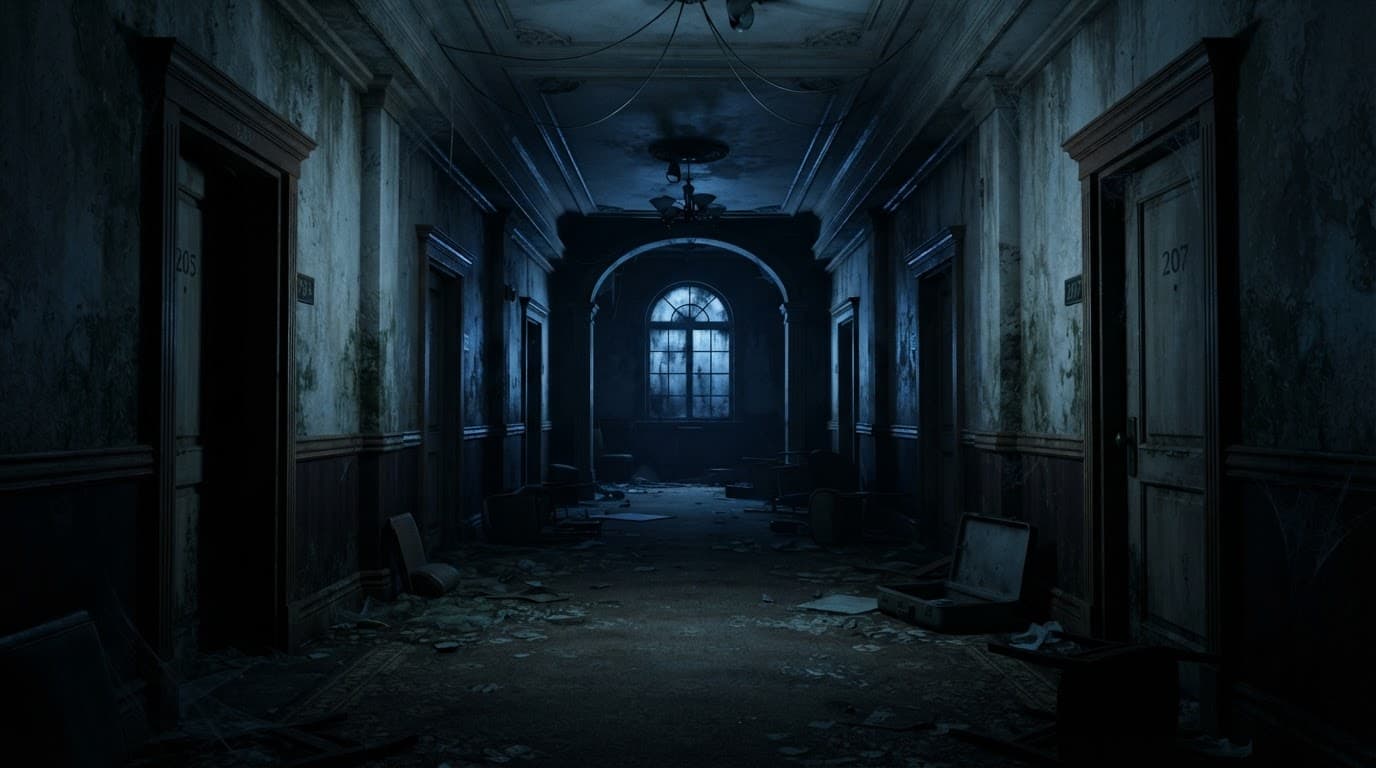
AI-generated image representing the oppressive hotel environments and controlled tension associated with Resident Evil Requiem.
Who may find it less convincing
Players seeking a fast action game may find the pacing uneven. Leon’s sections should provide more direct combat, but the wider structure still relies on backtracking, puzzles, cautious movement and avoiding fights that aren’t worth the ammunition. Each encounter feels more deliberate, which can frustrate anyone expecting uninterrupted shooting.
Technical performance remains part of the verdict. The RE Engine needs to deliver stable frame rates and responsive controls during pursuit scenes and close-range combat. Unstable performance, stutter or long loading pauses would weaken the tension. PlayStation 5 testing should therefore compare platform stability, not advertised resolution alone.
For Resident Evil Requiem, the player fit is clear:
| Player type | Spoiler-free verdict |
|---|---|
| Newcomers | A suitable entry point with useful series context |
| Long-time fans | Strong appeal through characters, setting and continuity |
| Horror-focused players | A good fit if exploration and limited supplies matter |
| Action-focused players | Worth considering, but slower sections may frustrate |
Resident Evil Requiem earns its strongest recommendation as a tense exploration game with controlled bursts of action. Its campaign value and replayability will depend on difficulty options, resource routes and whether later playthroughs reveal meaningful environmental details. The final recommendation is straightforward: players seeking vulnerability should try it, while those wanting rapid-fire spectacle may prefer a faster game.
Frequently Asked Questions
These answers cover practical questions about Resident Evil Requiem, including its story, gameplay, performance and buying options. Release information can change, so check Capcom’s latest announcements before making a purchase.
Does it need to be played after the earlier games?
No. Resident Evil Requiem offers a clear starting point, with Grace Ashcroft’s investigation introducing the setting and central conflict. Previous knowledge of Raccoon City, Leon S. Kennedy and the series’ bioterrorism history adds context, but isn’t essential.
Players seeking the minimum useful background should know about biological weapons, corporate secrecy and government failures. Grace Ashcroft is also connected to Alyssa Ashcroft, a character from Resident Evil Outbreak. Resident Evil 2 and Resident Evil 4 provide optional Leon context, whilst Resident Evil 7: Biohazard and Resident Evil Village explain the series’ modern direction.
Is it suitable for new players?
It should suit newcomers, provided they expect survival horror rather than a continuous action game. Exploration, backtracking, puzzles and limited supplies shape the pace, while disturbing enemies and sudden encounters can raise the intensity.
If the confirmed camera options are available, a third-person perspective offers greater environmental awareness. A first-person perspective can feel more intimate and unsettling. Starting on an easier mode is sensible for players unfamiliar with the series.
This can reduce pressure around ammunition and healing items. It also gives players time to learn the story, environments and controls before attempting a harder run.

AI-generated image showing a modern gaming setup suitable for playing Resident Evil Requiem.
How long does it take to complete?
Capcom has not published a verified completion range for the main story. Any precise figure quoted before reliable full-game testing should be treated as an estimate.
The eventual time will vary with difficulty, puzzle-solving speed, backtracking and optional evidence. A direct story run should be shorter than a thorough exploration playthrough. Higher difficulties and repeat attempts can extend the campaign considerably.
Which platform runs best?
The best platform cannot be chosen from resolution alone. PlayStation 5 offers a straightforward console setup, whilst PC provides adjustable settings and mouse control. Nintendo Switch 2 may suit portable players, subject to confirmed performance testing.
Check frame-rate stability, frame pacing, loading behaviour and controller support. Ray tracing should also be verified rather than assumed from retailer descriptions. Capcom’s official system requirements and patch notes remain the most reliable reference.
Does it have multiplayer or co-operative play?
It is presented as a single-player campaign, with no confirmed online multiplayer or co-operative mode. Having two playable characters doesn’t mean that two people can play together.
Campaign perspective and co-op support are separate features. Any post-launch change should be confirmed through Capcom’s official specifications or patch announcements.
What should be checked before buying online?
The listing should match the intended platform, UK region and edition. Buyers should also check system requirements, the PEGI age rating, refund terms and included bonuses.
Check whether a physical copy requires additional downloads or includes downloadable content. The final price should include delivery, storage requirements and any extra purchases. Legitimate sellers provide clear ownership terms and compatible activation, whereas unofficial keys may be region-locked, revoked or unsupported.
A lower headline price is poor value if access cannot be guaranteed.
Conclusion
Resident Evil Requiem offers a fresh investigative perspective without abandoning the qualities that made the series distinctive. Grace Ashcroft’s uncertainty contrasts with Leon’s experience, while the Wrenwood Hotel and Raccoon City’s ruins support exploration, environmental clues, locked routes and limited resources. That balance between vulnerability and action remains the game’s strongest promise.
Its horror works best when sound, darkness and scarce supplies make ordinary spaces feel unsafe. Players seeking constant combat may find the slower investigation and backtracking less appealing. The final verdict also depends on stable frame rates, reliable loading and sensible edition pricing across PC and console. UK buyers should check compatibility, delivery charges, extra content and refund terms before judging value by the headline price alone.
Resident Evil Requiem’s release date, platforms, performance, edition contents and product information should be checked against current Capcom announcements, reputable gaming news sites and established wiki sources before publication. The series continues to change its perspective and pacing, but its identity remains recognisable when fear comes from careful decisions, limited control and the suspicion that the next familiar room may no longer be safe.
Explore More Buyers Guides & Reviews
For a list of our main buyers guides use the drop-down menu at the top of the page. Topics related to this article are:
Kitchen Appliances Buyers Guides
–
Explore Our Blog Categories for Expert Buying Advice
- AI Powered Product Finder Tools (25)
- Expert Buying Guides & Shopping Tips for UK Shoppers (1,367)
- Brands & Designer Products (Men, Women & Electronics) (273)
- Designer Fashion Brands: Buyer’s Guides & Reviews (153)
- Electronic Brands: Buyers Guides & Reviews (86)
- Apple Products Buyer’s Guides & Reviews (24)
- Brands – Phones, Laptops, PC”s, Tablets | Buyer’s Guides & Reviews (42)
- Electronics – Tablet & iPad Reviews and Buyers Guides (11)
- Kitchen Appliance Brands: Buyer’s Guides & Reviews (22)
- Laptop Brands & MacBooks Buyer’s Guides & Reviews (9)
- Phone Brands & iPhones Buyer’s Guides & Reviews (23)
- Car Buying & Financing Made Easy | Expert Guides for the UK (89)
- Clothing, Fashion & Accessories Buying Guides UK (454)
- Beauty, Health & Wellness | Perfume, Skincare, Makeup & Wellbeing Guides (165)
- Footwear: Trainers & Shoes Buyers Guides (46)
- Jewellery: Expert Reviews, Trends & Buying Guides (71)
- Men's Clothes — Buyers Guides & Reviews (38)
- Men’s Clothes, Fashion & Accessories Guides UK | Latest Trends & Smart Shopping (156)
- Women's Clothing Buyers Guides — Dresses, Tops & More (173)
- Women’s Clothes, Fashion & Accessories Guides UK | Latest Trends & Smart Shopping (395)
- Electronics, Tech & Gadgets: Reviews, Deals & Buying Guides UK (170)
- Furniture Buyer’s Guides | Home & Garden & Styling Tips (313)
- Bedroom Furniture Guides UK | Expert Tips & Best Value Deals (91)
- Garden Furniture, Landscaping & Garden Rooms Guides UK | Expert Tips & Best Value Deals (158)
- Garden Sofa & Sofa Sets Buyers Guides (11)
- Garden Tables & Chairs: Sets, Individual Tables & Seating Buyers Guides (42)
- Home Furniture, Décor & Interior Design Guides UK | Styling Tips & Inspiration (167)
- Living Room Furniture, Design & Décor Guides UK | Styling Tips & Inspiration (57)
- Sofa & Sofa Beds Buyers Guides (19)
- Sofa Beds Buyers Guides (7)
- Sofa Buyers Guides & Expert Advice (11)
- Holidays & Travel: Hotels, Villas & Flights (158)
- Home & Garden Improvements | Renovations & Outdoor Transformation Guides (99)
- Insurance & Protection: Travel, Landlord, Gadget & More UK (159)
- Gadget Insurance UK | Expert Guides, Reviews & Smart Protection Tips (33)
- Home Emergency Cover UK | Expert Guides, Reviews & Practical Protection Tips (21)
- Landlords Insurance UK | Expert Guides, Reviews & Smart Protection Tips (31)
- Travel Insurance UK | Expert Guides, Reviews & Money-Saving Tips (34)
- Pets: Guides, Tips & Inspiration (26)
- Brands & Designer Products (Men, Women & Electronics) (273)
- Gifts for Everyone: Ideas for Every Occasion & Budget (45)