A futon can solve a stubborn furnishing problem, offering space efficiency by providing seating and sleeping in one item. Yet comfort, frame strength and mattress design vary widely; unlike some sofa beds, a compact bargain can become an uncomfortable daily compromise.
This guide examines the Japanese futon and Western-style futon formats sold in the UK. It covers room measurements, sleep support and online buying checks, with examples for a guest room or studio flat.
Key Takeaways
- A futon works best when its mattress, frame and intended use suit each other.
- Traditional designs differ sharply from folding sofa beds commonly sold in the UK.
- Measure the sofa and fully opened bed positions, including routes around doors and radiators.
- Occasional sleeping needs differ from everyday use, which calls for greater support and durability.
- Online buyers should compare dimensions, materials, delivery terms, reviews and return conditions before ordering.
Futon: How It Works as a Bed and Sofa
In UK furniture listings, a futon usually means a padded mattress on a hinged frame. It is often grouped with sofa beds because the frame folds upright for seating and opens flat for sleeping. These futon sofa beds are designed for flexible use in smaller homes.
A traditional Japanese futon is different. A Japanese futon is a thinner, flexible mattress placed directly on tatami mats or another firm floor surface. A futon bed roll follows this floor-based format, folding or rolling away during the day. A Western-style futon is bulkier, with a fixed frame, upholstery and a sofa-like role.
A futon bed roll can suit a simple floor-sleeping arrangement, but it is not the same as a hinged futon frame. A second futon bed roll may be stored in a cupboard, while a fixed design remains furniture in the room. A futon bed roll also needs a clean, dry storage area between uses.
This furniture suits a guest room, home office or spare bedroom where a permanent bed would take too much floor space. It can reduce the need to buy a separate sofa and guest bed. However, a futon intended for occasional visitors has different requirements from one used every night.
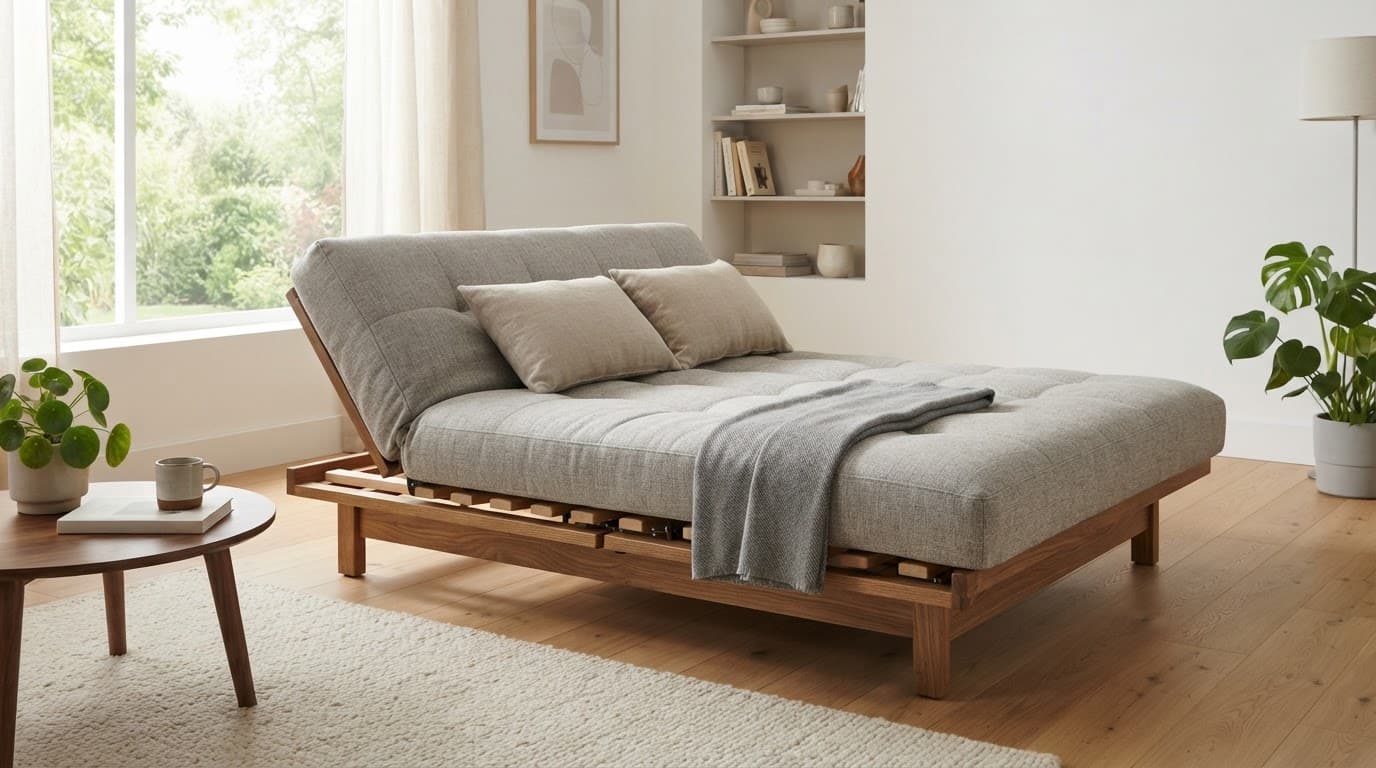
AI-generated image of a convertible futon in a living room.
Futon frames, mattresses and folding designs explained
A futon frame is the hinged support structure beneath the mattress. A wooden frame usually feels steadier and warmer in a room, but it is heavy and needs occasional checks for loose bolts. A metal frame is often lighter and less expensive, although thin tubing can flex and creak over time.
Some frames use a bi fold mechanism, which bends the sleeping surface at one main point. A tri fold design divides it into three sections, often making storage and unfolding easier. A bi fold layout may feel more like a conventional sofa, while a tri fold arrangement can create a shorter stored profile.
The mattress changes the experience more than the upholstery does. A cotton-filled futon mattress folds easily where the listing confirms that construction, but it may compress with frequent use. Where specified, lambswool can add softness and warmth, while cottonfelt uses felted fibres to create a flexible, denser layer.
Listings that confirm lambswool content may suit buyers seeking a natural filling, but the amount and construction still matter. A second lambswool layer does not automatically mean better support. Cottonfelt can help the surface retain structure, although cottonfelt alone does not determine firmness.
Depth matters. A slim futon mattress may be acceptable for one or two nights, but it can leave hips and shoulders unsupported on a rigid base. A replacement futon mattress must match the frame, because excessive thickness may interfere with the folding mechanism or prevent the sofa position from closing safely.
Brand example: checking Karup Design specifications
Karup Design listings show why the frame, mattress and mechanism should be checked separately. On a Karup Design product page, confirm the open and folded dimensions before measuring the room. A Karup Design frame may have model-specific clearance requirements around hinges and walls.
Check whether the Karup Design mattress is included or sold separately. If replacing it, compare the Karup Design mattress thickness with the original specification. Also confirm whether a Karup Design design uses a bi fold or tri fold conversion.
A Karup Design cover may have different cleaning instructions from the inner filling. Read the Karup Design care guidance before using removable covers or storing the furniture folded. Finally, check Karup Design delivery, returns and warranty details before ordering.
When a futon is a sensible choice, and when it is not
A futon is a sensible option where space is limited and the bed opens only occasionally. It keeps a small room usable between visits and can cost less than furnishing it with two separate pieces.
There are trade-offs. Some conversion mechanisms feel awkward, bedding may need removing before folding, and daily movement places pressure on hinges and upholstery. Thin mattresses also wear faster when used every night.
A sofa that feels pleasant for an evening can still lack the support needed for seven hours of sleep.
For regular sleeping, a proper bed remains the simpler choice unless the futon has a supportive mattress, stable base and clear suitability for everyday use.
How to Choose a Futon Bed That Fits the Room and the Sleeper
Choosing futon beds should start with the room rather than the product photograph. Like sofa beds, some designs look compact in seating mode but occupy most of the room when opened.

AI-generated image of a compact futon in a small bedroom.
Measure the futon in both sofa and bed positions
Record the available floor area, then mark the sofa position and open-bed footprint with masking tape or sheets of newspaper. Also measure the route from the delivery entrance. Leave space to walk around the bed, open doors and reach drawers. This protects space efficiency in small rooms.
UK mattress labels help, but they are not the furniture’s full measurements. Use this comparison as a starting point:
| Mattress format | Typical mattress size | What to check |
|---|---|---|
| single size | 90 cm x 190 cm | Allow for the arms and frame |
| compact double | Around 120 cm x 190 cm | Check clearance at both sides |
| double size | Around 135 cm x 190 cm | Measure the fully opened footprint |
| king size | Around 150 cm x 200 cm | Expect a significantly larger floor area |
A single size futon mattress may fit neatly, while the outer frame still adds width. A double size can need more clearance than expected, particularly with wide arms. A king size may be unsuitable where doors, desks or radiators restrict movement.
A futon bed roll uses a flexible floor format, but a framed design needs careful measurements in every position. Check the listed sofa depth, open length and folded height online. Confirm the double size, single size or king size dimensions refer to the finished furniture, not only the futon mattress.
Check the stated height in sofa mode as well. A low-backed design may sit beneath a window ledge, but it can feel less supportive for taller people.
Choose firmness, support and mattress depth carefully
Sleeping position and body weight should guide mattress choice. Mattress firmness is another factor, but no single level suits everyone. Side sleepers often need cushioning at the shoulder and hip, while back sleepers usually need a flatter, steadier surface.
A futon mattress should spread weight evenly without allowing the body to sink into the slats or platform beneath. For regular use, choose one that retains its shape after folding. Edge support matters where the sleeping area reaches the frame’s edge.
A deeper foam, pocket-sprung or hybrid futon mattress often gives better overnight support than a thin fibre pad. Product details may also list lambswool or cottonfelt, which can change the feel and compression over time. A lambswool layer can add resilience, but only trust the stated material content.
Ventilation also matters, particularly where the bed stays folded for long periods. A replacement futon mattress should match the frame’s dimensions, folding pattern and support requirements.
The product description should state that the futon mattress suits frequent sleeping, rather than only occasional guests. A futon bed roll can feel different from a sprung framed mattress, so compare construction as well as thickness.
Check the frame mechanism, materials and weight limit
Photographs and specifications should show the working parts, not only the finished sofa. Look for firm locking points, smooth hinges, stable legs and either strong slats or a supportive platform. The futon frame’s maximum user weight should be stated clearly.
A tri fold design usually breaks into more sections than a bi fold design, affecting both the conversion method and open footprint. A futon bed roll is more flexible on the floor, while a framed bed needs reliable hinges and locks.
A wooden frame can provide reassuring stability, but it may mean heavier delivery and more assembly. A metal frame can be lighter, although some models may flex or create more noise under movement.
A frame that wobbles in seating position is unlikely to improve under overnight load. Likewise, a mechanism that needs heavy force can become frustrating in a room that changes use often. Pinch points, sharp metal edges and legs that scrape flooring are warning signs.
Solid construction often means a heavier delivery and a longer assembly session. That is usually a fair trade if the futon will be opened several times each week. Check the route through the home again, especially for a king size model or a large double size frame.
Plan the surrounding furniture for multifunctional rooms, not just the bed’s folded position. A futon bed roll may offer flexibility, but every framed option still needs enough clearance to open safely.
Futon Prices, Running Costs and Value for Money
The final cost includes more than the advertised price. Frame material, futon mattress filling, size, removable covers, delivery and assembly can all alter the total. Compare the same specification, such as a compact double or double size, rather than sorting products by price alone.
| Setup | Typical construction | Expected comfort | Likely durability | Best use |
|---|---|---|---|---|
| Occasional use | Basic frame and slim foam or fibre mattress, often in single size | Adequate for short stays | Lower with frequent conversion | Visitors and spare rooms |
| Regular use | Stronger frame and deeper foam, pocket-sprung or hybrid mattress, commonly compact double | Better overnight support | Moderate to high | Small flats and weekly guests |
| Premium setup | Solid or reinforced frame with a substantial mattress, including double size or king size options | Closest to a conventional bed | High with proper care | Frequent sleeping and dual-purpose rooms |
The more often the bed opens, the more sensible it is to pay for construction and support rather than decorative fabric. A king size can also cost more to deliver and assemble, while its room requirements may reduce its value.
Separate the cost of the frame from the cost of the mattress
A low-priced frame may be reasonable value if it accepts a good replacement futon mattress later. However, a poor base cannot compensate for a comfortable mattress, and a quality mattress may not fold into every frame.
Material changes the replacement cost. Cottonfelt can suit a simpler specification, while lambswool may increase the price when the product specification confirms its use. Budget for a mattress protector, spare cover and possible delivery or assembly charges.
A double size replacement may cost considerably more than a single size option, especially with premium fillings. A removable, washable cover can make the furniture easier to keep presentable in a living space. Value rests on the likely years of useful comfort, not the initial ticket price.
New, second-hand and modular futon options
New furniture offers clear dimensions, instructions and consumer return rights. A new futon bed roll may cost less than a framed convertible product, but it needs suitable floor space and storage when not in use.
Second-hand frames can cost less, although buyers should inspect hinge wear, loose joints, damaged slats and missing fittings before collecting. A second-hand futon bed roll also needs careful checks for odours, staining and compressed filling.
Used mattresses bring hygiene and support concerns. A second-hand frame paired with a new compatible futon mattress is often the safer route. This compromise can work well for a single size guest setup, provided the replacement fits securely.
Modular designs with replaceable mattresses or covers can extend the useful life of the furniture. Some use a futon bed roll rather than a permanently hinged frame, so check the format before comparing prices. Fixed platform beds may offer simpler long-term support, while storage beds can use limited floor area differently.
Brand comparison note: Karup Design
Karup Design products should be compared by frame specification, mattress depth and included accessories. A Karup Design listing may show a low headline price while charging separately for delivery or assembly. Check whether a Karup Design mattress is included, removable or available as a replacement. For Karup Design, confirm the opened dimensions before choosing a larger size. Karup Design covers and fillings should also be checked against the product specification. Prices for Karup Design can vary between configurations, fabrics and sizes. Treat Karup Design as one comparison point, not a guarantee of better value. Use Karup Design listings to compare like for like with similar constructions. This keeps Karup Design within a practical cost comparison rather than making the brand name the deciding factor.
Buying a Futon Online Without Getting Caught by the Fine Print
Online shopping offers a broader selection than most showrooms. It also makes it easier to compare dimensions, mattress fillings and total delivery costs. Similar sofa beds can appear across several listings, so check the details rather than relying on the headline price.
Comfort and colour remain harder to judge on a screen. Product photographs can make a low seat appear deeper, while pale fabrics may look different under household lighting. Online dimensions should show both sofa and sleeping positions, as this affects space efficiency in multifunctional rooms.

AI-generated image of a flat-packed futon delivery.
Use specifications, customer reviews and independent information together
The useful facts usually sit below the lifestyle images. Confirm the open and closed dimensions, including the double size, single size and king size options where offered. Check the futon mattress depth, filling, cover fabric, frame materials, weight limit and assembly requirements.
A product page should also explain whether the mechanism is tri fold or bi fold. Check the futon frame, slat spacing and locking details before ordering. Listings may describe a futon bed roll separately from a framed model, so confirm the packaging, storage and return conditions for the format supplied.
Materials deserve careful checking. If a listing mentions lambswool, look for the percentage, position within the futon mattress and care requirements. Marketing terms can sound reassuring without explaining the actual construction.
For a Karup Design listing, compare the stated product name, dimensions and materials with the manufacturer’s information. A simple audit can prevent errors:
| Karup Design check | Information to record |
|---|---|
| Karup Design product name | Exact model and configuration |
| Karup Design dimensions | Folded and unfolded measurements |
| Karup Design size | Single, double or king size |
| Karup Design materials | Cover, filling and frame materials |
| Karup Design mechanism | Folding method and locking parts |
| Karup Design packaging | Number of boxes or whether it arrives rolled |
| Karup Design delivery | Postcode restrictions, access and charges |
| Karup Design returns | Conditions for opened or assembled items |
| Karup Design warranty | Cover for hinges, slats and structural faults |
Customer reviews can expose recurring faults, such as noisy hinges, difficult assembly, sagging futon mattresses or misleading colour. They should not replace the technical specification, especially where reviewers have used the product for only a few days.
Independent furniture safety guidance and encyclopaedic background can add context. Commercial claims need more scrutiny, particularly when terms such as “orthopaedic” or lambswool appear without construction details.
Check delivery, assembly, returns and warranty terms
Measure front doors, hallways, staircases and lift interiors before ordering. A compact model can arrive in several large boxes, while a futon bed roll may have different storage and handling requirements. Larger king size listings may need wider delivery access and more open floor space.
Check whether delivery reaches the room of choice, whether assembly is included and who removes the packaging. “Free UK delivery” may still exclude some postcodes, room-of-choice service or assembly charges.
Inspect boxes on arrival, photograph any damage and retain the order confirmation alongside the product specification. Confirm the delivery appointment before arranging help with assembly.
UK return policies can exclude assembled furniture, mattresses removed from protective wrapping or products showing signs of use. Check these conditions before opening or building anything. Warranty terms should state what happens if a hinge, slat or mechanism fails.
Care for the mattress and folding frame
Regular rotation helps a futon mattress wear more evenly, where the manufacturer permits it. Air the bedding and use a washable protector to limit trapped moisture and odours.
Check bolts, hinges and locking parts at intervals, then tighten fixings carefully. Bedding must not be trapped in a tri fold or bi fold mechanism, as this can strain hinges and tear fabric.
Manufacturer care instructions take priority, particularly for fibre and sprung fillings. Some futon mattresses should not be bent sharply, soaked or stored upright.
Frequently Asked Questions
Is a futon suitable for everyday sleeping?
A futon can work for everyday sleeping if it has a supportive mattress, stable frame and construction designed for regular use. Many cheaper models are better suited to occasional guests because thin mattresses and folding mechanisms can wear more quickly.
What is the difference between a Japanese futon and a Western-style futon?
A traditional Japanese futon is a thinner mattress placed on the floor, often on tatami, and stored during the day. A Western-style futon usually has a hinged wooden or metal frame that converts from a sofa into a bed.
How much space does a futon bed need?
Measure the futon in both sofa and fully opened bed positions, including the outer frame rather than only the mattress. Leave additional clearance for doors, radiators, walkways and the mechanism, and check the delivery route before ordering.
Are futon mattresses replaceable?
Many futon frames accept a replacement futon mattress, but the new mattress must match the frame’s dimensions, thickness and folding pattern. Check the manufacturer’s specification before buying, as excessive depth can prevent the frame from closing safely.
What should I check when buying a futon online?
Compare the complete dimensions, mattress filling, frame materials, weight limit, assembly requirements and total delivery cost. Also read the return and warranty terms, particularly for mattresses that have been unwrapped or furniture that has already been assembled.
A Sensible Futon Purchase Starts With Its Limits
Futon beds save space because they perform two jobs, but this flexibility asks more of their frame and mattress than a fixed bed. The most dependable choices match sleeping frequency, room measurements and the support offered by the futon mattress.
Appearance alone reveals little about comfort or durability. Construction quality, total ownership cost and online delivery terms determine whether adaptable furniture remains useful after the novelty of conversion has faded.
A futon bed roll offers a flexible, floor-based alternative to a framed convertible design. For nightly sleeping, however, a fixed bed may be the better choice unless the convertible option provides demonstrably suitable support and construction.
Explore More Expert Buyers Guides and Reviews
For a list of our main buyers guides use the drop-down menu at the top of the page. Topics related to this article are:
Home and Garden Furniture Buyers Guides
Bedroom Furniture Buyers Guides
living Room Furniture Buyers Guides
Garden Furniture Buyers Guides
Patio Furniture Sets Buyers Guide
–
Explore Our Blog Categories for Expert Buying Advice
- AI Powered Product Finder Tools (25)
- Expert Buying Guides & Shopping Tips for UK Shoppers (1,364)
- Brands & Designer Products (Men, Women & Electronics) (273)
- Designer Fashion Brands: Buyer’s Guides & Reviews (153)
- Electronic Brands: Buyers Guides & Reviews (86)
- Apple Products Buyer’s Guides & Reviews (24)
- Brands – Phones, Laptops, PC”s, Tablets | Buyer’s Guides & Reviews (42)
- Electronics – Tablet & iPad Reviews and Buyers Guides (11)
- Kitchen Appliance Brands: Buyer’s Guides & Reviews (22)
- Laptop Brands & MacBooks Buyer’s Guides & Reviews (9)
- Phone Brands & iPhones Buyer’s Guides & Reviews (23)
- Car Buying & Financing Made Easy | Expert Guides for the UK (89)
- Clothing, Fashion & Accessories Buying Guides UK (453)
- Beauty, Health & Wellness | Perfume, Skincare, Makeup & Wellbeing Guides (165)
- Footwear: Trainers & Shoes Buyers Guides (46)
- Jewellery: Expert Reviews, Trends & Buying Guides (71)
- Men's Clothes — Buyers Guides & Reviews (38)
- Men’s Clothes, Fashion & Accessories Guides UK | Latest Trends & Smart Shopping (156)
- Women's Clothing Buyers Guides — Dresses, Tops & More (172)
- Women’s Clothes, Fashion & Accessories Guides UK | Latest Trends & Smart Shopping (394)
- Electronics, Tech & Gadgets: Reviews, Deals & Buying Guides UK (170)
- Furniture Buyer’s Guides | Home & Garden & Styling Tips (312)
- Bedroom Furniture Guides UK | Expert Tips & Best Value Deals (91)
- Garden Furniture, Landscaping & Garden Rooms Guides UK | Expert Tips & Best Value Deals (158)
- Garden Sofa & Sofa Sets Buyers Guides (11)
- Garden Tables & Chairs: Sets, Individual Tables & Seating Buyers Guides (42)
- Home Furniture, Décor & Interior Design Guides UK | Styling Tips & Inspiration (166)
- Living Room Furniture, Design & Décor Guides UK | Styling Tips & Inspiration (56)
- Sofa & Sofa Beds Buyers Guides (18)
- Sofa Beds Buyers Guides (7)
- Sofa Buyers Guides & Expert Advice (10)
- Holidays & Travel: Hotels, Villas & Flights (158)
- Home & Garden Improvements | Renovations & Outdoor Transformation Guides (99)
- Insurance & Protection: Travel, Landlord, Gadget & More UK (159)
- Gadget Insurance UK | Expert Guides, Reviews & Smart Protection Tips (33)
- Home Emergency Cover UK | Expert Guides, Reviews & Practical Protection Tips (21)
- Landlords Insurance UK | Expert Guides, Reviews & Smart Protection Tips (31)
- Travel Insurance UK | Expert Guides, Reviews & Money-Saving Tips (34)
- Pets: Guides, Tips & Inspiration (26)
- Brands & Designer Products (Men, Women & Electronics) (273)
- Gifts for Everyone: Ideas for Every Occasion & Budget (45)