Laminate flooring remains common in UK homes because it offers a timber-style appearance at a lower overall cost than real wood. Modern printed surfaces, textured finishes and bevelled edges make it a credible choice for living areas, bedrooms and hallways.
The right purchase depends on more than colour. Room conditions, board construction, measurements and fitting costs all affect long-term value. Three AI-generated illustrations appear below, each displayed at the responsive width of the text column on desktop and mobile.
Key Takeaways
- Laminate flooring uses a layered construction that combines a decorative wood-effect surface with a dense fibreboard core.
- Thickness and wear rating matter, but moisture resistance, locking quality and floor preparation also shape durability.
- Bedrooms suit lighter domestic specifications, while halls and family rooms need tougher surfaces and robust joints.
- Online buying can improve choice and price comparison, provided samples, pack coverage, delivery terms and returns are checked.
- A well-fitted floor needs room for movement, suitable underlay, careful cleaning and prompt attention to spills.
What are laminate floorboards and how do they work?
Laminate floorboards are manufactured planks built from several bonded layers. The backing layer helps stabilise the board. Above it sits a dense core layer, usually made from high-density fibreboard. A printed decorative layer creates the wood, stone, or tile appearance, while a clear wear layer protects the surface from scuffs and abrasion.
Laminate flooring differs from solid wood, which is cut from one piece of timber and can usually be sanded back. Engineered wood has a real timber veneer over a layered base. Vinyl flooring uses synthetic materials throughout and generally tolerates wet conditions better.
Most boards come as long planks connected using a click-lock system. Some locking profiles combine a tongue and groove form with a click mechanism. Finishes range from smooth oak effects to embossed grain that follows the printed pattern. Micro-bevelled edges add definition between boards, while square edges create a flatter, more continuous surface.
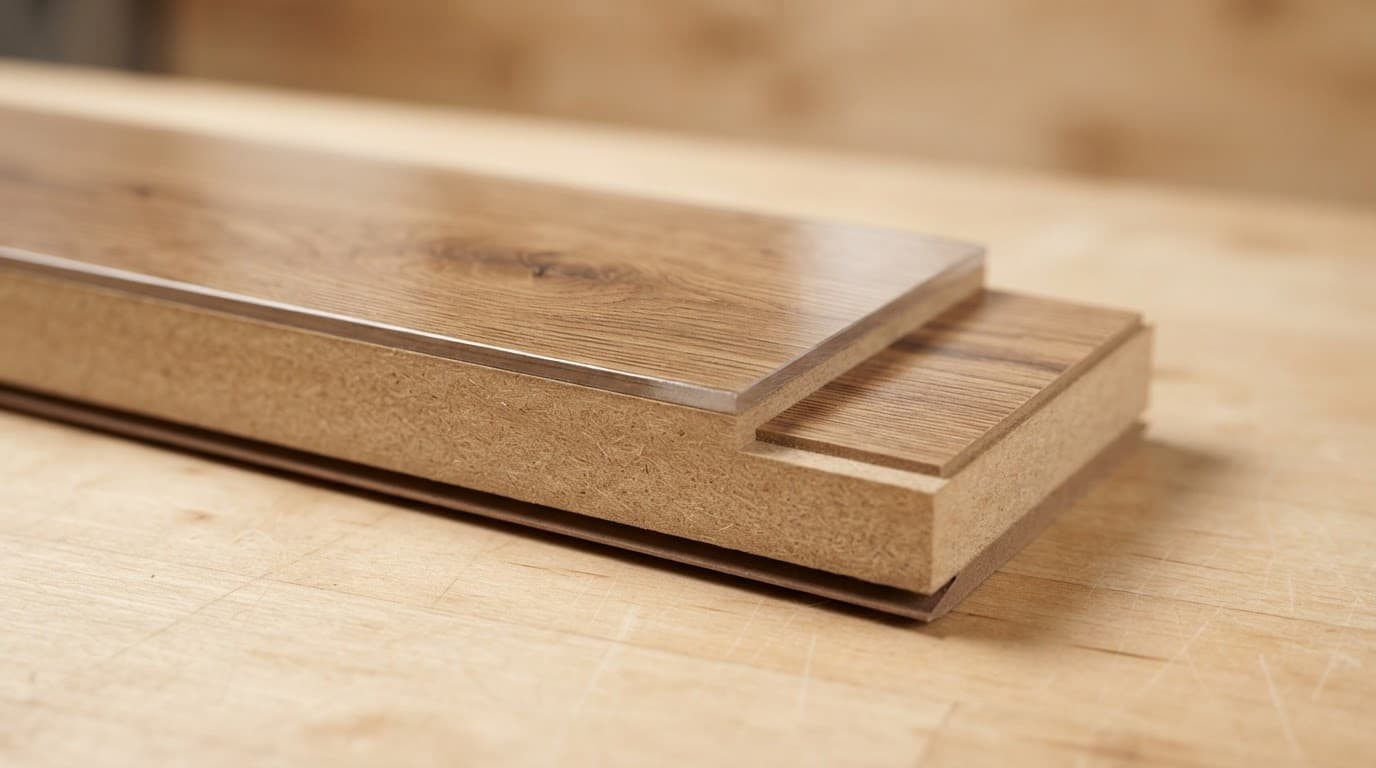
AI-generated image of a laminate plank cutaway. It is displayed at the responsive width of the article text column.
The Features That Affect Durability and Appearance
An AC rating indicates a product’s resistance to abrasion. AC3 commonly suits normal domestic use, while AC4 is often chosen for busy family rooms, entrances, and some light commercial settings. However, a higher rating alone doesn’t prove that every part of a board is stronger. Joint design, core density, surface finish, and the stated guarantee still matter.
Thicker boards, often 10 mm or 12 mm, can feel firmer underfoot. They may also reduce the hollow sound associated with thinner products. Texture affects appearance too. A matt, stain-resistant finish can disguise everyday marks better than a glossy surface, but spills still need prompt cleaning.
Water resistant laminate flooring slows moisture entering the joints or core. It isn’t automatically waterproof. In a kitchen, that extra protection helps with splashes, but standing water can still cause the high-density fibreboard core to swell.
A hard-wearing surface cannot protect a laminate core once water has entered exposed joints or cut edges.
Where laminate flooring works best, and where it does not
Laminate works well in dry bedrooms, sitting rooms, dining rooms, studies, and hallways. It can also suit kitchens where the product instructions permit it and spills are wiped quickly.
Bathrooms are more complicated. Frequent steam, wet feet, leaks, and pooling water create risks that standard boards cannot manage. Products marketed as waterproof laminate floors still require the manufacturer’s installation and sealing instructions to be followed. Tile, sheet vinyl, or properly specified waterproof flooring is usually safer for heavily wet areas.
A dry, level subfloor is essential. Boards laid over dips, loose floorboards, or residual damp can flex, squeak, and separate. Conservatories and rooms with major temperature swings may also exceed a product’s installation limits, so the manufacturer’s instructions take priority.
How to choose the right laminate flooring for a UK home
The right laminate flooring specification should match the room rather than the showroom display. A pale, narrow plank may suit a compact bedroom, while a tougher board works better in a hall used by children, pets, and outdoor shoes.
For waterproof laminate floors, check the manufacturer’s wet-room approval rather than relying on the marketing term alone. Where moisture tolerance matters most, vinyl flooring may be a more suitable alternative.
The comparison below fits the article’s text-column width on desktop and mobile. Prices are broad UK guide bands only and vary by specification, quantity, and project size. Look at the full product specification, not just the AC rating.
| Feature | Typical option | Best suited to | Typical board price |
|---|---|---|---|
| 7 mm to 8 mm, AC3 | Standard domestic plank | Bedrooms and low-traffic rooms | About £8 to £18 per m² |
| 10 mm to 12 mm, AC3 or AC4 | More substantial board | Living rooms and family spaces | About £15 to £30 per m² |
| Water-resistant, AC4 | Protected joints and tougher finish | Kitchens and busy halls | About £20 to £40+ per m² |
| Integrated underlay | Attached backing layer | Suitable dry, level bases only | Often a higher upfront cost |
| Published specification, such as Quick-Step laminate | Named product range | Compare with equivalent alternatives | Varies by collection |
Price is only one part of the budget. Underlay, trims, delivery, fitting, and old-floor disposal can change the final figure substantially.
Choosing board thickness, wear rating and plank style
Board thickness affects feel, height, and how well the joints cope with everyday use. Thinner 7 mm or 8 mm boards can offer good value in bedrooms, while 10 mm or 12 mm products often feel more stable. A high-density fibreboard core can also influence underfoot solidity and joint stability.
The AC rating should be considered alongside room suitability, joint quality, and the guarantee. AC3 is usually adequate for ordinary domestic rooms. A busy hall, open-plan family area, or home with dogs may benefit from AC4.
Extra height can cause problems around internal doors, appliances, or existing thresholds. Check clearances before ordering, especially when replacing a thicker floor covering.
Plank proportions alter the scale of a room. Narrow boards create a traditional strip-floor appearance. Wide planks can make an open room feel calmer, while long boards reduce visible end joints. Herringbone laminate flooring creates a more detailed pattern, but usually needs careful planning, extra cuts, and spare material. Tile-effect boards can suit kitchens or utility spaces without the cold feel of ceramic.
Herringbone laminate flooring and other intricate layouts can increase installation time and waste. Allow for this when comparing the total project cost, rather than only the board price.
Colour, finish and matching boards to room conditions
Pale oak effects can make smaller rooms feel brighter, particularly where daylight is limited. Oak laminate flooring offers a familiar timber look, while grey laminate can suit contemporary rooms. Darker or cooler tones may show pale dust, pet hair, and everyday marks more readily.
Matt and embossed surfaces usually look closer to timber than high-gloss finishes. A stain-resistant surface can be practical in a family room, while a scratch-resistant claim still does not make the floor immune to grit, furniture movement, or pet claws.
Distressed effects can conceal minor marks, although repeated patterns need checking. A large room fitted from identical boards can reveal copied knots or grain lines if the layout is careless.
Samples should be viewed in both daylight and evening lighting. Before ordering, check the batch number where relevant. Lay several sample pieces together to assess repetition and colour variation.
Underlay, base checks and essential accessories
A clean, dry, level base protects the locking joints. Concrete bases commonly need a damp-proof membrane, while timber floors may need repair before fitting. Underlay can reduce sound, smooth minor imperfections, or add thermal comfort, but it cannot correct a poor subfloor.
Compare separate flooring underlays with integrated backing before buying. Foam underlayment may suit some installations, but its suitability depends on the base, acoustic requirements, and the manufacturer’s instructions.
Check compatibility with underfloor heating before choosing integrated backing or a separate underlay product. An unsuitable thickness can weaken joints or breach guarantee conditions.
Perimeter clearance around walls, pipes, and fixed objects allows the floor to move with seasonal conditions. Skirting boards, beading, thresholds, and door bars can cover these spaces without restraining the floating floor.
Buying Laminate Flooring Online Without Costly Mistakes
Online buying makes comparing laminate flooring listings easier. You can check plank dimensions, wear ratings, water-resistance claims, and pack prices without relying on a display bay. It can also reveal a wider selection and sharper pricing, especially when the total cost per square metre is clear.
Photographs can flatter colour and texture, however. Stock availability may change, delivery can damage corners, and return rules for opened packs are often restrictive. Product sheets, installation instructions, and independent standards information carry more weight than a polished image.
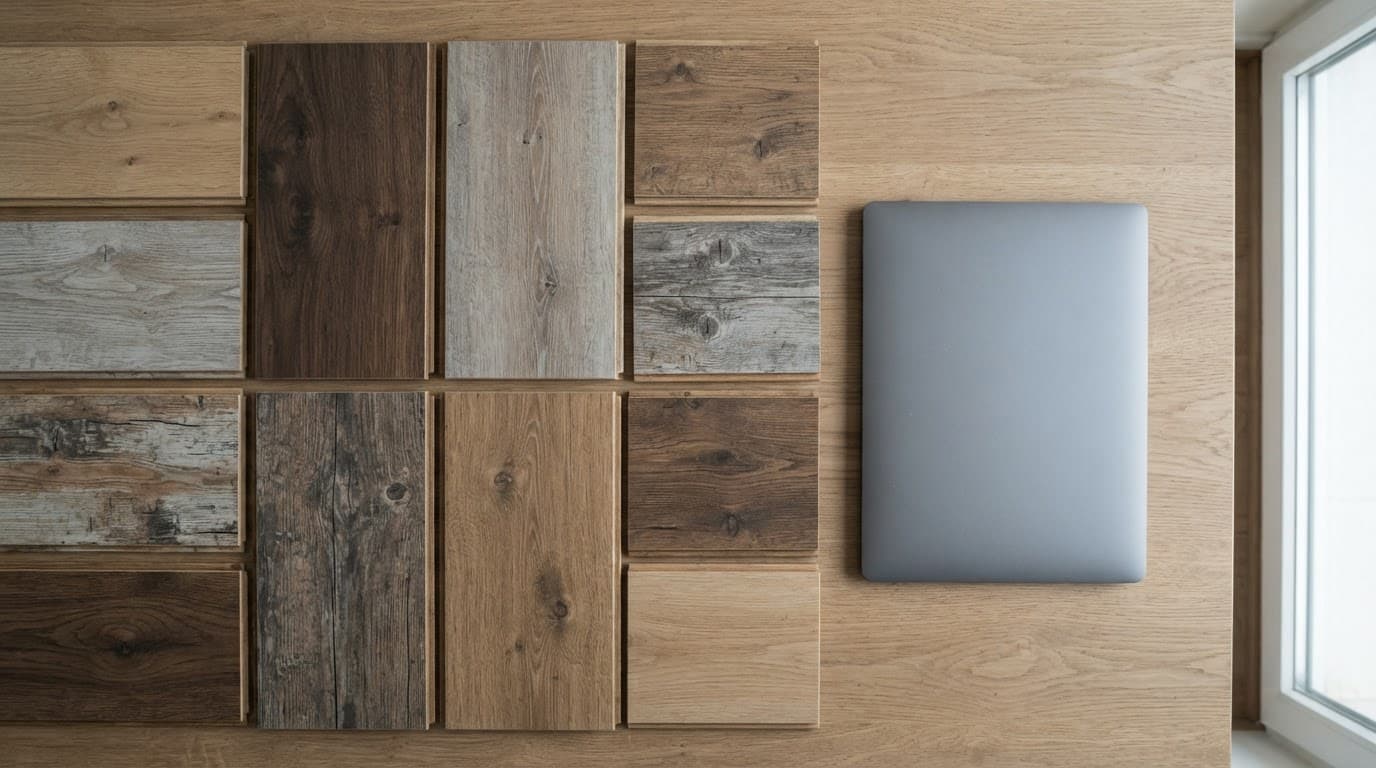
AI-generated image of flooring samples prepared for an online comparison. It is displayed at the responsive width of the article text column.
Before placing an order:
- Measure every part of the room and allow for cuts, awkward corners, and spare boards.
- Order physical samples, then check them under the room’s natural and artificial light.
- Confirm pack coverage, matching trims, underlay requirements, and the delivery charge.
- Read damaged-delivery and returns terms, inspect packs promptly, and retain invoices.
How to Measure a Room and Calculate the True Cost
Measure length and width in metres, then multiply them to find square metres. A room measuring 4.2 m by 3.6 m needs 15.12 m² of flooring before waste. Divide that figure by the coverage shown per pack, then round up to whole packs.
A straight layout often needs around 5 to 10 per cent extra material. Herringbone laminate flooring, diagonal fitting, bay windows, and irregular rooms usually require more. Split L-shaped spaces into rectangles, calculate each area, and add them together.
Board price is only the starting point. A proper budget separates flooring, underlay, membrane, trims, delivery, tools, fitting, and removal of the old floor.
How to Compare Online Listings Properly
Headline prices can conceal thinner boards, smaller packs, or limited guarantees. Cheap laminate flooring may also come with fewer accessories or less favourable delivery terms, although a lower price does not automatically indicate poor quality. For example, a Quick-Step laminate listing should still be assessed by dimensions, wear rating, locking system, and warranty terms.
Comparable listings should also be checked for pack coverage, matching accessories, and stated water resistance. Technical documents show where the product can be used, whether underfloor heating is permitted, and how the installer must prepare the base. A Quick-Step laminate range still needs these checks, including its installation requirements and manufacturer documentation.
Independent trade guidance, standards material, news reporting, and relevant encyclopaedia articles can help place marketing claims in context. Also check delivery damage procedures and returns terms, particularly for opened packs.
Installation, Cleaning and Long-Term Care for Laminate Flooring
Well-installed laminate flooring depends on careful preparation, which helps the floor stay flat and quiet. Where required, unopened packs should acclimatise in the room under the stated conditions. Quick-Step laminate and other named ranges must follow their own installation instructions.
Boards normally run with the main light source or along the length of the room. Straight starter rows, staggered end joints, and an expansion gap around the perimeter protect the appearance and locking edges. Leave space around walls, pipes and fixed objects where the manufacturer requires it.
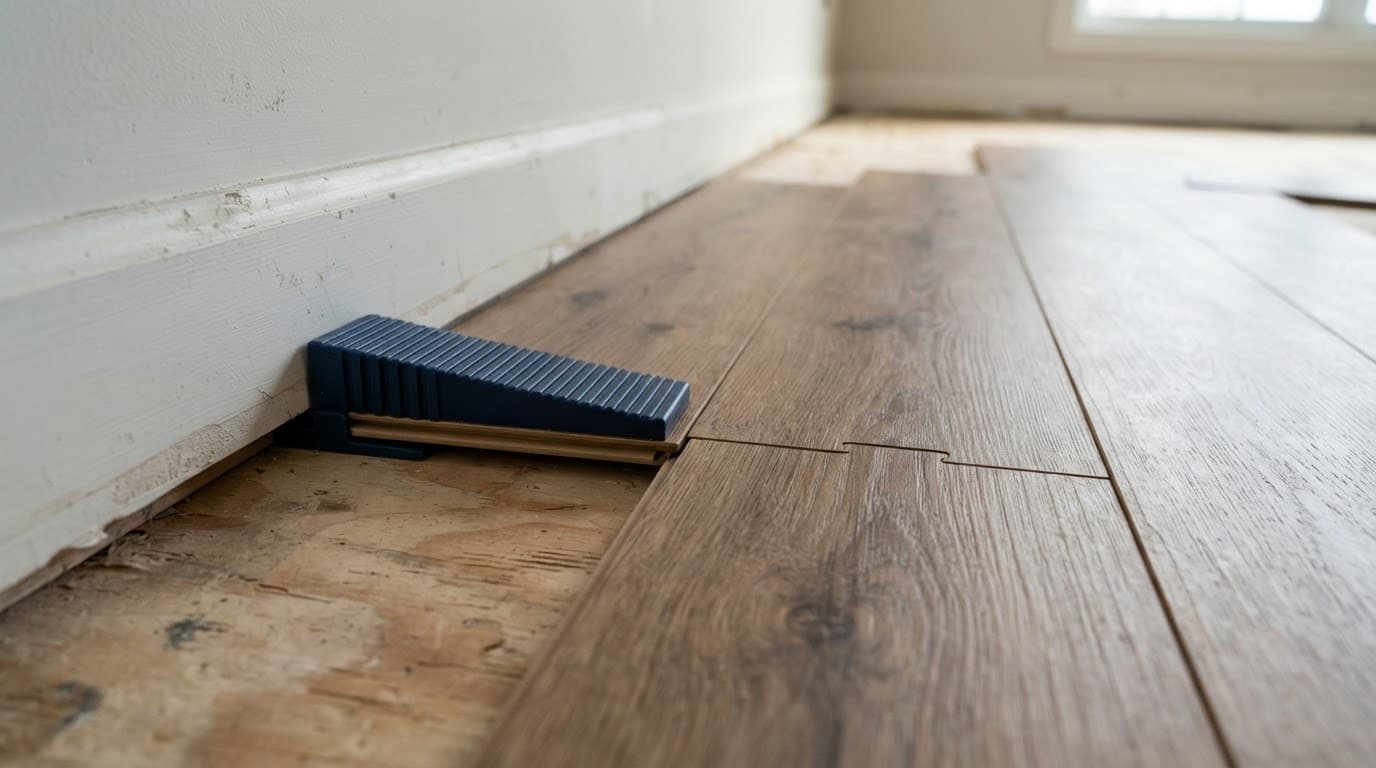
AI-generated image showing perimeter spacing during fitting. It is displayed at the responsive width of the article text column.
Click-Fit Installation and When to Use a Professional
Click-fit boards connect at an angle or through a tap-down joint, depending on the design. Some use a tongue and groove profile, but the locking action varies between products. Cuts around door frames and radiator pipes need accuracy, because damaged edges can weaken the floor.
Professional fitting is sensible where the base is uneven, moisture is suspected, or extensive subfloor work is needed. It can also help with rooms that have complex shapes. Stairs require a different approach from floating-floor installation.
Cleaning Habits That Prevent Swelling and Surface Damage
Regular vacuuming with a hard-floor setting or sweeping removes grit before it scratches the surface. A well-wrung damp mop is usually enough for routine cleaning. A stain-resistant finish still needs prompt spill removal and gentle cleaning.
Avoid flooding the floor, steam mops, harsh chemicals and abrasive pads. Steam mops can force heat and moisture into joints, so avoid them unless the specific manufacturer expressly permits their use. Felt pads under furniture, entrance mats, and lifting rather than dragging heavy items all reduce damage. Stable indoor humidity also helps limit movement.
Common Laminate Flooring Problems and Their Causes
Lifting and buckling often point to missing perimeter space, trapped moisture, or boards fixed beneath heavy fitted units. Gaps and squeaks can come from an uneven base, poor joint engagement, or unsuitable underlay.
Chipped edges may be repairable with a colour-matched repair kit, depending on the location. Swollen cores usually require replacement boards. Keeping unopened spare planks from the original batch makes later repairs less conspicuous.
Frequently Asked Questions
Is laminate flooring suitable for kitchens?
Laminate flooring can suit kitchens when the product is approved for that use and spills are wiped up promptly. Water-resistant boards offer extra protection, but standard laminate is not waterproof and standing water can swell the fibreboard core.
What thickness of laminate flooring is best?
A 7 mm or 8 mm board can offer good value in bedrooms and other lightly used rooms. Thicker 10 mm or 12 mm boards often feel more stable underfoot, but subfloor condition, joint quality and room suitability matter as much as thickness.
How much extra laminate flooring should I buy?
Allow around 5 to 10 per cent extra for a straightforward layout, including cuts and spare boards. Herringbone, diagonal layouts, bay windows and irregular rooms usually require a larger allowance.
Can laminate flooring be installed over underfloor heating?
Some laminate products are compatible with underfloor heating, but this must be confirmed in the manufacturer’s instructions. Check the combined flooring and underlay thickness, temperature limits and installation requirements before ordering.
How should laminate flooring be cleaned?
Sweep or vacuum regularly to remove grit, then use a well-wrung damp mop for routine cleaning. Avoid flooding, steam mops, abrasive pads and harsh chemicals unless the specific manufacturer expressly permits them.
Final Thoughts
Laminate flooring offers strong practical value when its construction and finish suit the room, and fitting follows the stated rules. Cheap laminate flooring may have a low pack price, but measuring, preparation, trims and fitting can raise the full project cost.
Over time, laminate floorboards are judged by stable joints, an intact surface and easy daily maintenance. A named range such as Quick-Step laminate still deserves comparison by construction, guarantee, room suitability and total cost, rather than name or appearance alone.
Explore More Expert Buyers Guides and Reviews
For a list of our main buyers guides use the drop-down menu at the top of the page. Topics related to this article are:
Home and Garden Furniture Buyers Guides
Bedroom Furniture Buyers Guides
living Room Furniture Buyers Guides
Garden Furniture Buyers Guides
Patio Furniture Sets Buyers Guide
–
Explore Our Blog Categories for Expert Buying Advice
- AI Powered Product Finder Tools (25)
- Expert Buying Guides & Shopping Tips for UK Shoppers (1,367)
- Brands & Designer Products (Men, Women & Electronics) (273)
- Designer Fashion Brands: Buyer’s Guides & Reviews (153)
- Electronic Brands: Buyers Guides & Reviews (86)
- Apple Products Buyer’s Guides & Reviews (24)
- Brands – Phones, Laptops, PC”s, Tablets | Buyer’s Guides & Reviews (42)
- Electronics – Tablet & iPad Reviews and Buyers Guides (11)
- Kitchen Appliance Brands: Buyer’s Guides & Reviews (22)
- Laptop Brands & MacBooks Buyer’s Guides & Reviews (9)
- Phone Brands & iPhones Buyer’s Guides & Reviews (23)
- Car Buying & Financing Made Easy | Expert Guides for the UK (89)
- Clothing, Fashion & Accessories Buying Guides UK (454)
- Beauty, Health & Wellness | Perfume, Skincare, Makeup & Wellbeing Guides (165)
- Footwear: Trainers & Shoes Buyers Guides (46)
- Jewellery: Expert Reviews, Trends & Buying Guides (71)
- Men's Clothes — Buyers Guides & Reviews (38)
- Men’s Clothes, Fashion & Accessories Guides UK | Latest Trends & Smart Shopping (156)
- Women's Clothing Buyers Guides — Dresses, Tops & More (173)
- Women’s Clothes, Fashion & Accessories Guides UK | Latest Trends & Smart Shopping (395)
- Electronics, Tech & Gadgets: Reviews, Deals & Buying Guides UK (170)
- Furniture Buyer’s Guides | Home & Garden & Styling Tips (313)
- Bedroom Furniture Guides UK | Expert Tips & Best Value Deals (91)
- Garden Furniture, Landscaping & Garden Rooms Guides UK | Expert Tips & Best Value Deals (158)
- Garden Sofa & Sofa Sets Buyers Guides (11)
- Garden Tables & Chairs: Sets, Individual Tables & Seating Buyers Guides (42)
- Home Furniture, Décor & Interior Design Guides UK | Styling Tips & Inspiration (167)
- Living Room Furniture, Design & Décor Guides UK | Styling Tips & Inspiration (57)
- Sofa & Sofa Beds Buyers Guides (19)
- Sofa Beds Buyers Guides (7)
- Sofa Buyers Guides & Expert Advice (11)
- Holidays & Travel: Hotels, Villas & Flights (158)
- Home & Garden Improvements | Renovations & Outdoor Transformation Guides (99)
- Insurance & Protection: Travel, Landlord, Gadget & More UK (159)
- Gadget Insurance UK | Expert Guides, Reviews & Smart Protection Tips (33)
- Home Emergency Cover UK | Expert Guides, Reviews & Practical Protection Tips (21)
- Landlords Insurance UK | Expert Guides, Reviews & Smart Protection Tips (31)
- Travel Insurance UK | Expert Guides, Reviews & Money-Saving Tips (34)
- Pets: Guides, Tips & Inspiration (26)
- Brands & Designer Products (Men, Women & Electronics) (273)
- Gifts for Everyone: Ideas for Every Occasion & Budget (45)