Buying a wedding dress should feel like the exciting start to your bridal journey, not like a second job. If you want choice, convenience, and a fair price, online shopping can be brilliant. You can browse a bigger range of bridal gowns and an extensive bridal collection, compare prices in minutes, read reviews, and shop from your sofa with a cup of tea.
Still, online comes with a few nerves. Sizing can be confusing, returns can be strict, and timing can catch you out. The good news is that you can control most of that with a simple plan.
This guide walks you through it step by step, from budget and timeline to fit notes, fabric quality, and safe delivery, so you can buy online with confidence.
Start with the basics, budget, timeline, and what you actually want
Online wedding dress shopping gets overwhelming fast because there’s always another neckline, another sleeve, another “perfect” photo. A little structure keeps it fun. Decide three things early: your budget range, your timeline, and a short style wish list.
First, set a budget that matches your whole outfit, not just the dress. Next, work back from your wedding date so delivery and alterations don’t turn into a late-night panic. Finally, write down the feel you want, not a long list of “must-haves”. Think: clean and modern, soft and romantic, dramatic and formal, beachy and light.
A short wish list helps when you’re scrolling at speed. Pick two or three priorities, such as “structured bodice”, “no heavy train”, or “sleeves I can lift my arms in”. Keep one flexible detail, because that’s often where the best savings sit.
Set a realistic budget that includes the hidden extras
A wedding dress price tag is only part of the total, especially when compared to designer wedding dresses that often carry premium boutique prices. Plan for the extras now and you’ll avoid the “how is it adding up?” moment later.
Common add-ons to include:
- Alterations: hem, taking in the bust or waist, strap changes, bustle for the train
- Support: shapewear, a strapless bra, sewn-in cups, boob tape
- Accessories: veil or hairpiece, jewellery, sometimes gloves or a wrap
- Finishing: steaming, pressing, a garment bag
- Back-up fixes: emergency tailoring, last-minute tweaks
- Shoes: plus heel grips, gel pads, or a second pair for dancing
- Delivery and returns: shipping costs, return postage, possible restocking fees
A simple rule works well: keep 10 to 20 percent of your wedding dress budget as a buffer for fixes. If your luxury wedding dresses feature more detail (lace, beading, a long train), lean towards the higher end because alterations can take longer.
Make a timeline so delivery and alterations do not bite you later
Order earlier than feels necessary. Most last-minute stress comes from underestimating shipping times and overestimating how quickly alterations happen. This timeline suits online shopping, which differs from the bespoke experience of traditional made-to-measure services.
Here’s a sensible timeline many UK brides find workable:
| When (before the wedding) | What to do | Why it helps |
|---|---|---|
| 9 to 12 months | Browse styles, save favourites, order swatches if offered | You learn what you like without pressure |
| 6 to 8 months | Place your dress order | More choice, fewer rush fees |
| 10 to 12 weeks | Book an alterations appointment | Good seamstresses fill up quickly, much like bridal appointments |
| 6 to 10 weeks | Alterations begin (often 2 to 3 fittings) | Enough time for changes and settling |
| 1 to 2 weeks | Final steam, practise sitting and walking | You spot any comfort issues early |
Made-to-order can take longer, and “rush” options often cost more. Also, couriers get busy around bank holidays and Christmas. If your wedding falls near those dates, add extra time.
If you only take one thing from this section, let it be this: timing is cheaper than rushing.
Choose wedding dress styles that suit your venue, comfort, and photos
A wedding dress isn’t just a picture. You’ll sit in it, hug people, eat, dance, and possibly walk across grass or cobbles. The best dress is the one that looks great and feels like you.
Start with your venue and the practical bits. A heavy ballgown can be stunning in a grand hall, but it may feel like a duvet on a hot summer day. A slinky sheath looks effortless, but you’ll want to check stride length and sitting comfort. Even sleeves matter. Can you lift your arms for a proper dance, or will you feel restricted?
Think about photos, too. Some fabrics show every crease. Some catch the light beautifully. Others photograph more matte, which can look modern and expensive. If you’re unsure, choose a style that gives you freedom to move. Confidence reads in every photo.
Wedding dress silhouettes made simple, what each shape feels like to wear
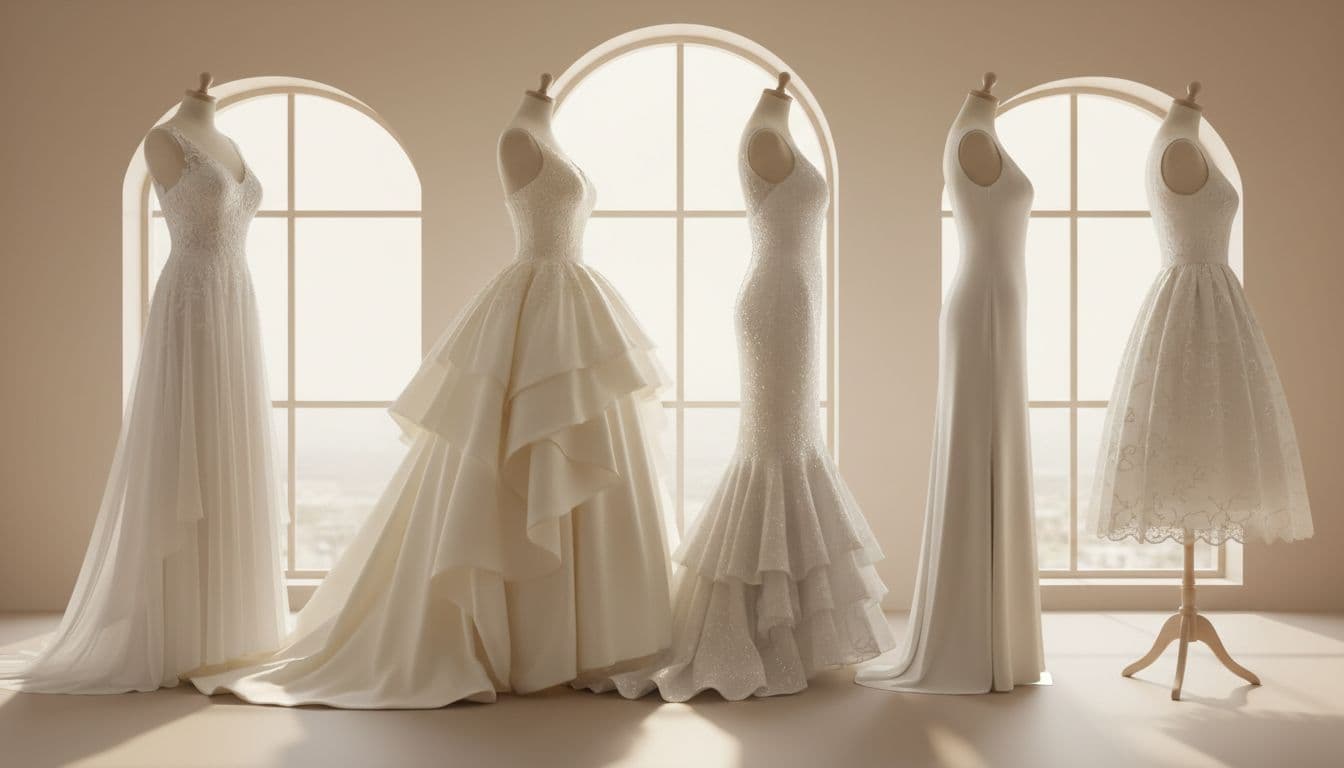 Wedding dress silhouettes sound like fashion jargon, but they’re really about movement and mood.
A-line wedding dresses are the crowd-pleaser. They define the waist, then skim over hips and legs. They’re also easy to walk in and work for most venues.
Ballgown dresses bring drama. The skirt has volume, which can feel floaty, but it takes space. Great for formal settings, less ideal for tight aisles.
Fit and flare wedding dresses hug through the bodice and hips, then open out. They give shape without the full restriction of a mermaid.
Mermaid shapes are fitted to the knees, then flare. They look striking, but check sitting, stairs, and dancing. Comfort depends on fabric stretch and lining.
Sheath falls straight and usually feels light, perfect for boho wedding dresses, modern ceremonies and warm days, although it can show lines more easily.
Tea length dresses sit around mid-calf. They’re playful, practical, and easier for walking outdoors. They also show your shoes, so choose a pair you love.
Fabric and lining, how to spot quality from a product page
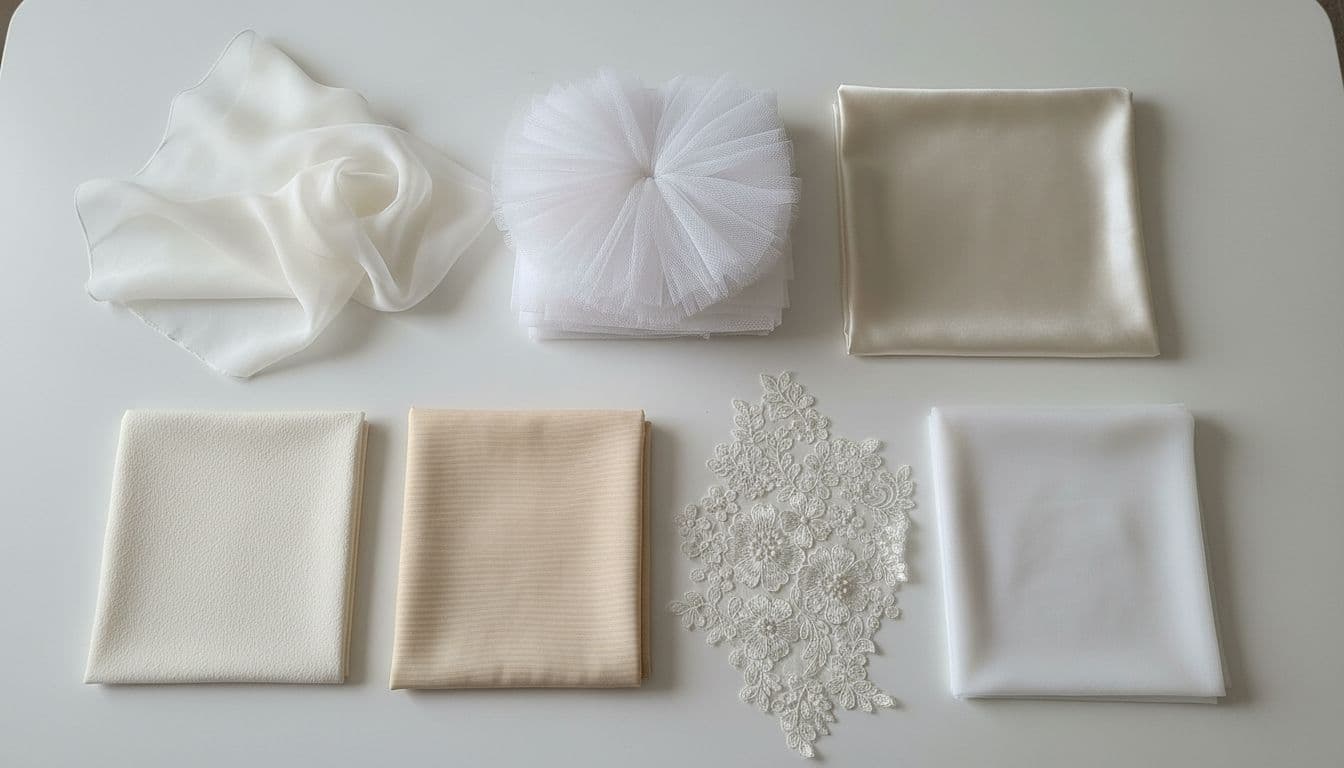 Fabric decides how a dress hangs, how it feels, and how it photographs. Online, you can’t touch it, so you need clues.
- Chiffon: light and floaty for a chiffon wedding dress, great for movement, can snag
- Tulle wedding dresses: airy and layered, often used for skirts, can feel scratchy if cheap
- Satin wedding dresses: glossy and smooth, show seams and creases, look formal
- Crepe: matte and fluid, often very flattering, can cling if unlined
- Mikado: heavier and structured, holds shape well, looks polished
- Lace wedding dress: romantic and detailed for modern romance, quality depends on placement and finish
- Organza: crisp and light, adds volume without heavy weight
On a product page, look for full lining, not just a thin slip. Check for a structured bodice (boning, built-in cups, inner waistband). Zoom in on seams. Neat stitching and clean edges matter more than extra sparkle.
Also watch for comfort issues. Lace can itch at the underarm. Heavy skirts can pull on straps. Static can cling to lining, especially in winter. If reviews mention scratchiness, take it seriously, because you’ll wear the dress for hours.
Get the right size online, measurements, fit notes, and smart ordering
Sizing is the main worry with buying a wedding dress online, and that’s fair. Bridal sizing often runs differently to UK high street or bridal shop sizes. One shop’s 12 can be another’s 16. That doesn’t mean anything about you; it just means you follow the chart, with online options offering great inclusivity even for plus size.
Treat size charts like a map. Your measurements are the postcode, and the number on the label is just the route.
Alterations are also normal. Even the most expensive dresses get tweaks because bodies aren’t standard. The goal is to start with the closest fit in the areas that are hardest to change (usually the bust and bodice structure).
Measure like a pro at home (and what to do if you are between sizes)
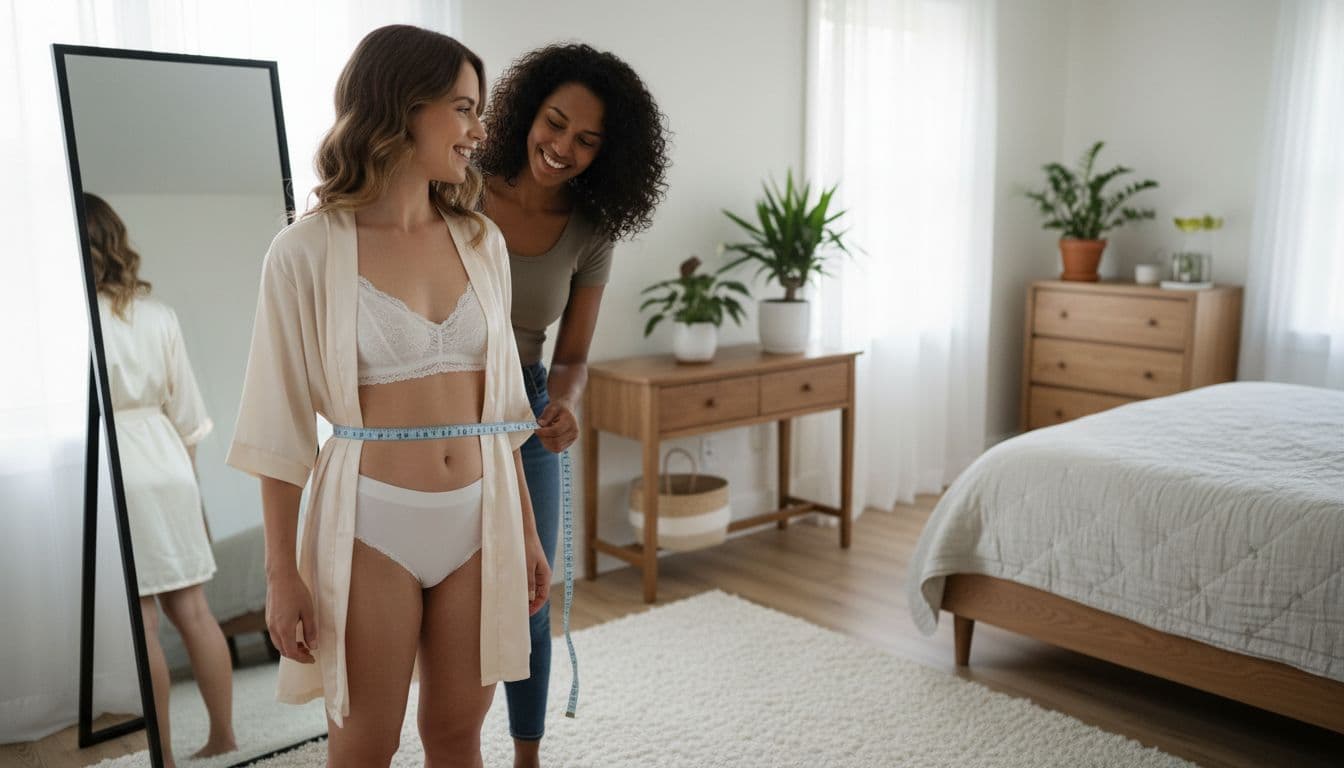 Use a soft tape measure, wear the underwear you’ll likely use on the day, and ask a friend to help. Stand naturally, don’t suck in, and keep the tape snug but not tight. If you need personalised guidance, reach out to a bridal stylist through customer service.
Key measurements most wedding dress listings use:
- Bust: around the fullest part
- Underbust: where a bra band sits (useful for structured bodices)
- Natural waist: the narrowest point, usually above the belly button
- Hips: around the fullest part of hips and bum
- Height: barefoot, plus your heel height for the day
- Hollow to hem (sometimes): from the dip at the base of your neck to the hem
If you’re between sizes, size up, especially for fitted bodices. A seamstress can take fabric in more easily than they can add it. This matters most at the ribcage and bust, where discomfort shows fast, particularly for maternity wedding dresses.
Read the listing carefully, photos, reviews, and return rules that matter
Before you click buy, read the listing like you’re checking a tenancy agreement. Details save you.
A quick listing checklist:
- Photos from multiple angles, including the back
- Close-ups of fabric, lace, and beadwork
- Exact colour name (ivory, off-white, champagne can look very different)
- Closure type (zip, buttons, corset lace-up)
- Built-in cups, boning, and lining details
- Train length, slit height, and sleeve mobility
- Stretch level (none, slight, or stretchy knit)
- Care instructions and whether steaming is safe
Reviews are your shortcut to reality. Look for photos from people with a similar height, bust, or torso length. Pay attention to notes on comfort, weight, and whether the neckline sat flat.
Returns matter just as much as the dress. Check the return window, who pays postage, whether there’s a restocking fee, and whether custom sizes count as final sale. If a shop won’t accept returns on the option you want, only buy when you’re fully happy with your measurements and timeline.
Make online wedding dress shopping safer, easier, and better value
Online shopping is at its best when you act like a calm, slightly picky editor. Compare, shortlist, and keep your plan. It’s easy to fall for pretty images, so focus on value markers you can actually verify.
Start by saving a short list of favourites and reviewing them a day later. If a dress still feels right after sleep, it’s probably a good sign. Also, consider ordering fabric swatches when offered. A small sample can prevent a big disappointment, especially with whites and creams.
If you care about sustainability, look for simple wedding dresses you can rewear (shorter lengths, simpler silhouettes) or choose designs that can be altered into an anniversary dress later. Even basic care, like proper storage and gentle steaming, makes the wedding dress last longer and photograph better.
How to compare prices and still get a dress that looks expensive
Two designer wedding dresses can cost very different amounts and look similar on screen. The difference often sits in fabric, lining, and construction.
To judge value, compare:
- Fabric type and weight: mikado and lined crepe often look more structured, ideal for vintage wedding dresses
- Bodice build: boning, cups, and an inner waistband add support, hallmarks of couture designs
- Finish: covered buttons, neat hems, smooth zips
- Alteration potential: simple seams cost less to adjust than heavy lace
- Detail placement: well-placed lace looks intentional, random lace looks busy
Price tracking can help too. Save searches, use wishlists, and check whether exclusive wedding dresses appear seasonally. If you’re flexible on one detail, like sleeve length or train size, you’ll usually find a better deal without changing the overall look.
Delivery, steaming, and dress care so it looks perfect on the day
Delivery is part of the outfit plan. Choose a shipping option with tracking and a delivery date you can work with. Then inspect the dress as soon as it arrives, ideally the same day. Try it on in clean makeup-free skin care, and keep pets well away.
Store it in a breathable garment bag, away from sunlight and damp. Don’t keep it in sealed plastic for weeks, because it can trap moisture and smells. For a beaded wedding dress, this is especially important to avoid snags.
Steaming makes a bigger difference than people expect. If you’re not confident, book a professional steam close to the wedding date. If you steam at home, test on an inside layer first and keep the steamer head a short distance away.
For travel to the venue, hang the dress up as soon as you arrive. If you’re driving, lay it across the back seat in a clean sheet, or hang it from a hook with space around it.
Pack a tiny “calm kit”: needle and thread, fashion tape, safety pins, blister plasters, and a stain-remover pen. You’ll probably never use it, which is the point.
Conclusion
Online wedding dress shopping works best when you keep it simple: set a clear budget and timeline, choose a style that suits your day and your comfort, from bridal gowns to luxury wedding dresses, then measure carefully and follow the size chart. After that, reviews and return rules do most of the heavy lifting.
Make a short shortlist from the bridal collection, take your measurements today, and pick one dress, such as a lace wedding dress, to investigate properly. With the right checks, your wedding dress can arrive feeling like a smart decision, not a gamble, as you complete your bridal journey.
–
Explore our Buyers Guides and Reviews
For a list of our main buyers guides use the drop-down menu at the top of the page. Topics related to this article are:
–
Explore Our Blog Categories for Expert Buying Advice
- AI Powered Product Finder Tools (25)
- Expert Buying Guides & Shopping Tips for UK Shoppers (1,364)
- Brands & Designer Products (Men, Women & Electronics) (273)
- Designer Fashion Brands: Buyer’s Guides & Reviews (153)
- Electronic Brands: Buyers Guides & Reviews (86)
- Apple Products Buyer’s Guides & Reviews (24)
- Brands – Phones, Laptops, PC”s, Tablets | Buyer’s Guides & Reviews (42)
- Electronics – Tablet & iPad Reviews and Buyers Guides (11)
- Kitchen Appliance Brands: Buyer’s Guides & Reviews (22)
- Laptop Brands & MacBooks Buyer’s Guides & Reviews (9)
- Phone Brands & iPhones Buyer’s Guides & Reviews (23)
- Car Buying & Financing Made Easy | Expert Guides for the UK (89)
- Clothing, Fashion & Accessories Buying Guides UK (453)
- Beauty, Health & Wellness | Perfume, Skincare, Makeup & Wellbeing Guides (165)
- Footwear: Trainers & Shoes Buyers Guides (46)
- Jewellery: Expert Reviews, Trends & Buying Guides (71)
- Men's Clothes — Buyers Guides & Reviews (38)
- Men’s Clothes, Fashion & Accessories Guides UK | Latest Trends & Smart Shopping (156)
- Women's Clothing Buyers Guides — Dresses, Tops & More (172)
- Women’s Clothes, Fashion & Accessories Guides UK | Latest Trends & Smart Shopping (394)
- Electronics, Tech & Gadgets: Reviews, Deals & Buying Guides UK (170)
- Furniture Buyer’s Guides | Home & Garden & Styling Tips (312)
- Bedroom Furniture Guides UK | Expert Tips & Best Value Deals (91)
- Garden Furniture, Landscaping & Garden Rooms Guides UK | Expert Tips & Best Value Deals (158)
- Garden Sofa & Sofa Sets Buyers Guides (11)
- Garden Tables & Chairs: Sets, Individual Tables & Seating Buyers Guides (42)
- Home Furniture, Décor & Interior Design Guides UK | Styling Tips & Inspiration (166)
- Living Room Furniture, Design & Décor Guides UK | Styling Tips & Inspiration (56)
- Sofa & Sofa Beds Buyers Guides (18)
- Sofa Beds Buyers Guides (7)
- Sofa Buyers Guides & Expert Advice (10)
- Holidays & Travel: Hotels, Villas & Flights (158)
- Home & Garden Improvements | Renovations & Outdoor Transformation Guides (99)
- Insurance & Protection: Travel, Landlord, Gadget & More UK (159)
- Gadget Insurance UK | Expert Guides, Reviews & Smart Protection Tips (33)
- Home Emergency Cover UK | Expert Guides, Reviews & Practical Protection Tips (21)
- Landlords Insurance UK | Expert Guides, Reviews & Smart Protection Tips (31)
- Travel Insurance UK | Expert Guides, Reviews & Money-Saving Tips (34)
- Pets: Guides, Tips & Inspiration (26)
- Brands & Designer Products (Men, Women & Electronics) (273)
- Gifts for Everyone: Ideas for Every Occasion & Budget (45)