Buying speakers online, from budget speakers to premium options, should feel simple, yet it often turns into a maze of specs, odd buzzwords, and “too good to be true” claims. The good news is that you don’t need to be an audio expert to get great sound quality at home.
In this guide, “speakers” covers the types most UK shoppers actually buy: Bluetooth speakers for portable music, soundbars for TV, PC speakers for desks, hi-fi speakers, and multi-speaker home cinema systems. The aim is straightforward: match the right speaker type to your room, your devices, and how you listen.
You’ll also get practical checks for ordering online safely, so you avoid surprises when the box arrives.
Start with how and where you will use your speakers
Before you compare prices, picture the setup. A speaker that sounds brilliant in a big open-plan lounge can feel overpowering in a small flat. In the same way, a compact desktop speaker can impress up close, yet struggle across a room.
Think about three basics:
- Room size and layout (small bedroom, terrace lounge, open-plan kitchen-living area)
- What you listen to most (podcasts, playlists, gaming, films)
- Where the speaker will sit (shelf, desk, under the TV, garden table)
Placement changes what you hear. A speaker tucked in a bookcase can sound “boxy”. One pushed into a corner often boosts the bass response, sometimes too much. If you want clear vocals, put the speaker where it has space to breathe, not crammed against a wall.
Room placement, size, volume needs, and neighbours
Small rooms can get boomy fast. Big bass in a tight space bounces around, so vocals lose focus and low notes turn into a rumble. Meanwhile, larger rooms need more output to sound full, especially at lower volumes.
“Loud enough” depends on the moment. Background listening should stay clear at low volume. Party volume needs headroom so the sound doesn’t become harsh when you turn it up. If you live in a flat or a terraced home, that headroom matters because you can keep volume lower and still hear detail.
If you often watch TV at night, look for night mode or volume levelling. They can reduce sudden jumps in loudness without constant remote tapping.
Connectivity you already have, phone, TV, console, or PC
Connections matter more than impressive numbers on a product page. Start with your partnering equipment.
Bluetooth is convenient for phones and tablets, but Wi-Fi is usually steadier for multi-room audio and can reduce dropouts. For TVs, HDMI eARC is the easiest route to better sound and simple volume control. Optical still works well as a fallback, especially on older TVs. For PCs, a 3.5 mm input or USB connection often keeps things simple. Matching impedance and sensitivity to your partnering equipment helps ensure the best performance from your setup.
Compatibility beats theory. A speaker with endless codecs is pointless if your TV can’t output them. Confirm the ports you need, then shortlist.
Popular speaker types explained, and who each one suits
Most online speaker shopping goes wrong for one reason: people buy the wrong category. A soundbar won’t replace portable garden music. A Bluetooth speaker won’t give proper stereo separation like bookshelf speakers under a TV.
Below is a plain-English guide to what each type does well, where it struggles, and what to look for in the listing, including bookshelf speakers and standmount speakers for more dedicated setups.
Bluetooth speakers for portable music and casual listening
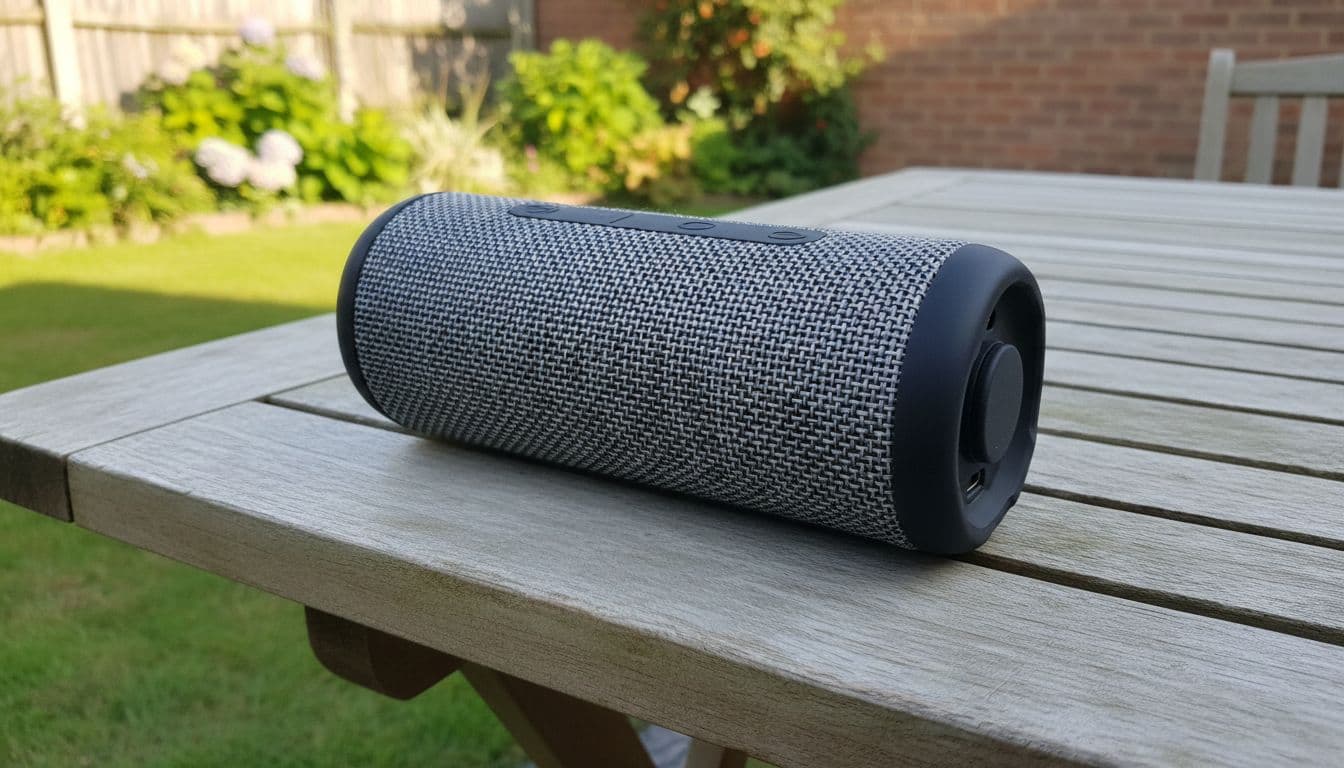 Portable Bluetooth speakers suit kitchens, bedrooms, gardens, and holidays. Size matters, because a bigger cabinet usually gives deeper bass. A tiny speaker can still sound punchy, but it won’t fill a large room like bookshelf speakers or standmount speakers.
Check battery life, yet treat claims as best case. Real use (higher volume, colder weather) often reduces it. For UK weather, look for water and dust protection ratings if you’ll use it outdoors. USB-C charging is a nice quality-of-life win, especially if your other devices use it too.
Some models let you pair two speakers for wider stereo. That can make music feel less “stuck in the middle”. If you plan to watch videos or play games, keep an eye on Bluetooth latency. Slight delay is common, and some speakers handle it better than others.
Soundbars for clearer TV dialogue and easy setup
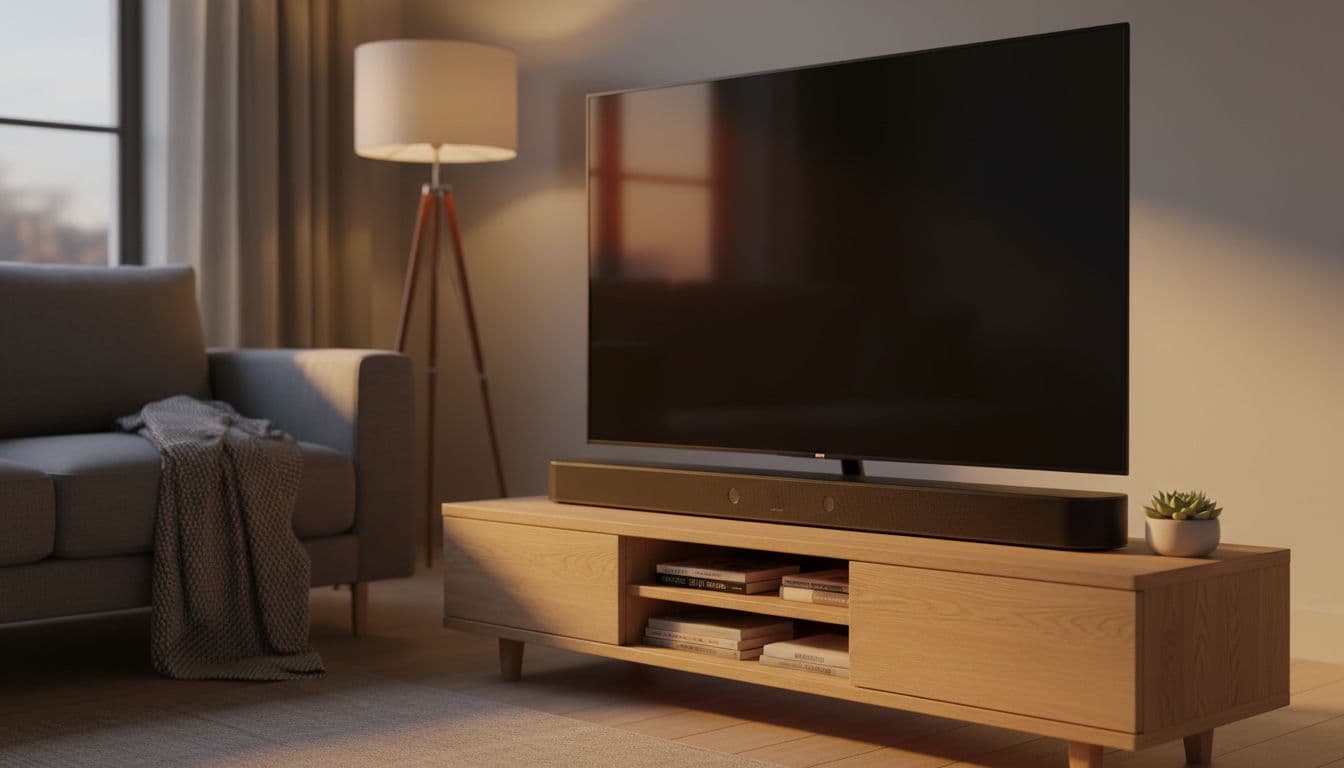 A soundbar is the simplest upgrade for TV audio, especially for dialogue. In plain terms, 2.0 means the bar only, 2.1 adds a subwoofer, and larger bundles add more speakers.
If your main complaint is “I can’t hear what they’re saying”, prioritise a bar with strong mid-range and a clear dialogue mode. For connection, HDMI eARC makes daily use smoother because your TV remote controls volume and power.
Also check the width and height. A bar that blocks the TV sensor or sits awkwardly on the stand becomes annoying fast. A separate subwoofer can add impact for action films, but in flats it can also travel through walls. If you share walls, a bar with controlled bass (and a night setting) can be the better long-term choice.
PC speakers for desks, home working, and gaming
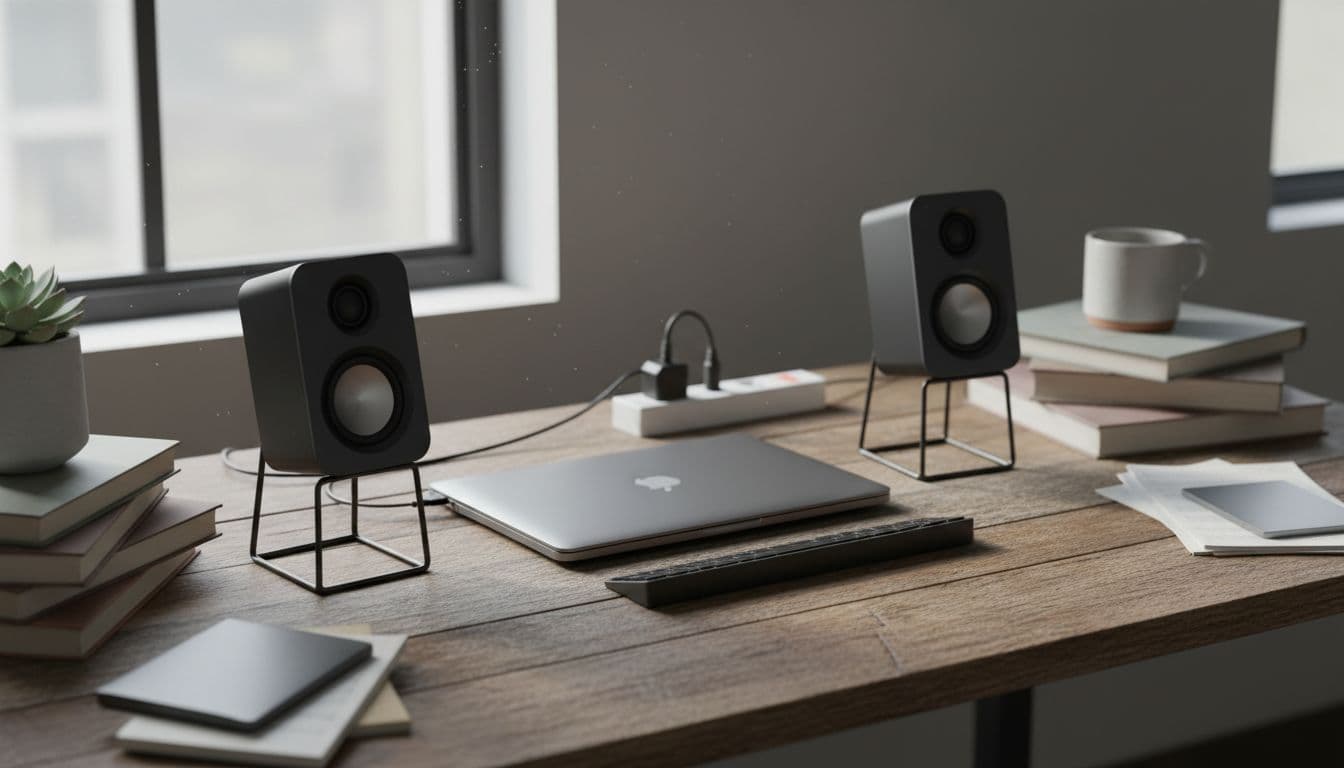 Desk speakers are about near-field listening, meaning you sit close. That’s why compact bookshelf speakers or standmount speakers can sound excellent at a workstation without huge power.
Look for active speakers (they have built-in amplification and plug into the mains). A front volume knob is more useful than you’d think, especially for meetings. A headphone jack can also be handy if you swap between speakers and headphones.
Inputs matter here. USB can reduce hiss on some setups, while 3.5 mm is universal. Bluetooth is useful for quick phone playback, but it’s not essential if you mainly use a PC. If you hear a faint hiss in reviews, take it seriously, because you’ll notice it in quiet work moments. Simple stands can help too, because lifting active speakers off the desk often improves clarity.
Home cinema and multi-speaker setups for big, room-filling sound
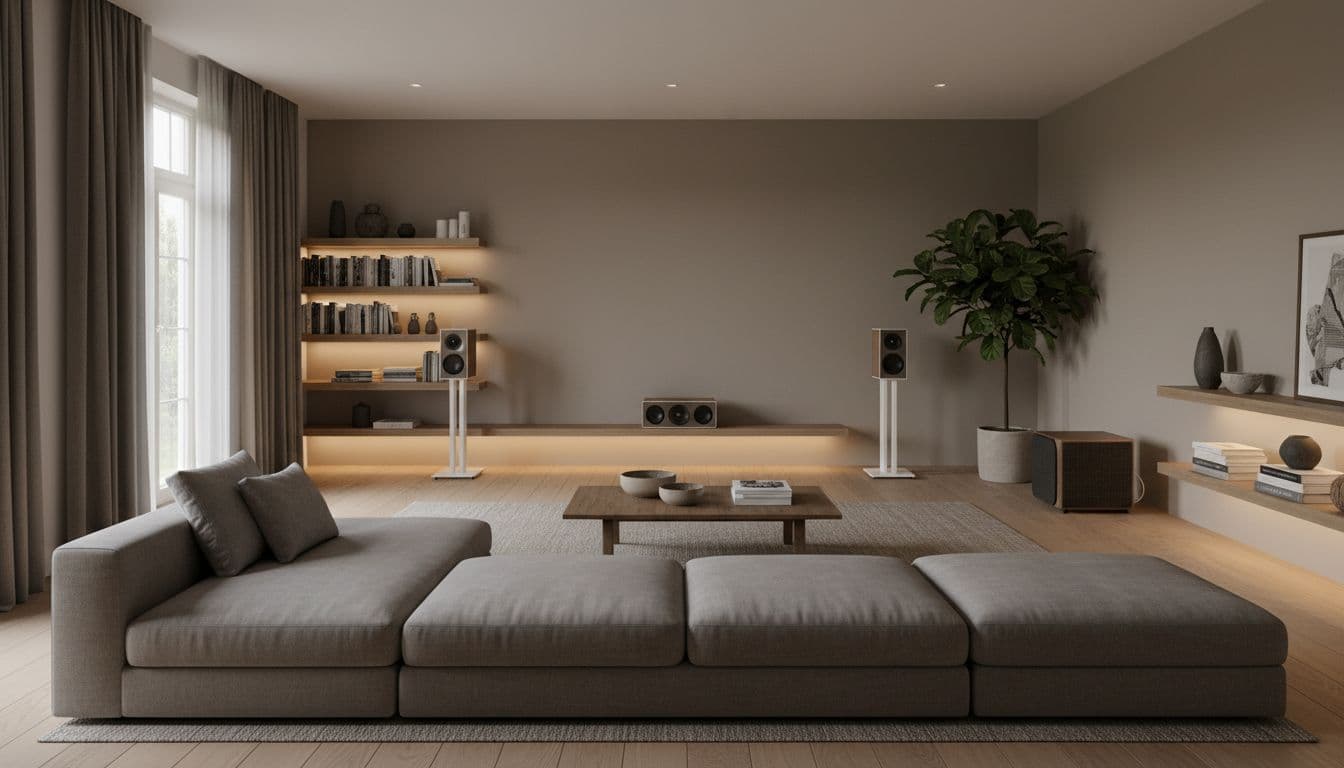 A 5.1 system usually means front left and right (often floorstanding speakers or passive speakers), a centre speaker for dialogue, two rears, plus a subwoofer. It can sound huge, but it needs planning. You may also need an AV receiver, speaker wire, and space for proper placement, especially with floorstanding speakers for greater impact.
This route suits people who watch a lot of films, have a stable room layout, and don’t mind cables. If you rent, move often, or want a tidy setup, a soundbar might give you most of the benefit with far less fuss than high-end speakers in a full home cinema system. Home cinema is worth it when you want precise effects and real surround placement, not just “bigger sound”.
What to check before you buy, sound quality, features, and hidden costs
Specs can help, but only when they map to real use. Instead of chasing watts, compare a short list of details across products.
Here’s a quick translation guide for common listing claims:
| What you see online | What it means for daily use | What to check |
|---|---|---|
| “Frequency range” | Suggests full bass and treble coverage | Look for measured response curves or reviews on balance |
| “High power / watts” | Can be marketing, not loudness | Look for clear volume reviews in similar room sizes |
| “Deep bass” | Could be punchy or muddy | Check comments on bass control, not just quantity |
| “Surround / 3D sound” | Often processing, sometimes helpful | Confirm speaker count and HDMI eARC for TV setups |
| “Multi-room” | Plays across rooms via Wi-Fi | Check app support and whether you need other units |
The takeaway: focus on how it will sound in your space, not how loud the box claims it is.
Sound basics that matter most, clarity, bass control, and stereo width
Good sound starts with quality drive units. A well-designed crossover splits frequencies between them for smooth performance. Clarity matters most. Voices should sound natural, not muffled, with strong output from the mid/bass driver. Bass should be tight, not a constant throb, and designs like a transmission line can enhance low-end control. Stereo width matters for music and games because it creates space between instruments and effects.
Match your priority to the tuning. Podcast and TV fans should favour mid-range clarity. Music listeners might prefer balance, with enough bass to feel rhythm without drowning vocals. Films need scale, yet not at the cost of speech.
EQ presets and app tuning can help fine-tune a good speaker. They can’t rescue a poor one, so treat them as a bonus.
Features worth paying for, and ones you can skip
Pay for features that reduce friction: HDMI eARC for TV, auto power on, true stereo pairing, or Wi-Fi multi-room if you’ll use it. Room correction can also help in awkward spaces.
On the other hand, be wary of gimmicks. Flashing lights don’t improve sound. Unrealistic watt claims won’t fix thin audio. “Virtual surround” can be fun, but it shouldn’t be the main reason you buy.
Size, placement, and power, avoid weak sound or messy rooms

Placement is the hidden “spec” nobody advertises, especially for bookshelf speakers. Speaker stands help lift bookshelf speakers off the floor or desk to the ideal height. Give speakers some distance from walls where possible. Keep the tweeter close to ear height for the clearest detail. Speaker stands reduce vibrations and improve stereo imaging. If bass is too heavy, pull the speaker away from corners.
Before ordering, measure the space and note socket locations. For TV setups, plan cable routes so you don’t end up with a tangle across the stand. For desk setups, check where the volume control sits, because reaching behind a monitor every day gets old.
How to buy speakers online with confidence and get better value
Online shopping is ideal for speakers because you can compare specs side by side, use filters properly, and spot better-value bundles. You also get a clearer view of return windows and warranty terms, which matters if the sound is not right for your room.
The trick is to compare fewer products, more carefully. Build a shortlist of three options that all fit your connections and space, then pick the one with the best real-world fit.
Read product pages like a pro, photos, inputs, and what is in the box
Photos should confirm the basics: ports, control placement, the actual shape, and build quality. Dimensions and weight matter more than glamour shots, so check them twice. Product descriptions often detail build quality too, which helps assess durability.
Also confirm what is included. Some listings show wall mounts, remotes, or cables that are not in the box. If the speaker needs mains power, ensure it comes with a UK plug or a proper UK power supply. Warranty length should be easy to find. If it is hidden, treat that as a warning sign.
Use reviews wisely, and avoid common traps
Reviews work best when the writer describes their room size and how they used the speaker. Look for mentions of dialogue clarity, low-volume performance, sonic performance, and any connection problems.
Be cautious with extremes. One-star reviews can be setup errors. Five-star reviews can be vague. The most useful comments include comparisons and specific downsides.
A helpful review says “small flat, sofa 2 m from TV, dialogue clear at low volume, impressive sonic performance”. A weak one says “amazing sound!!!”.
Ways to save money without ending up with poor sound
Bundles can offer value, but only if you need every piece. Last-generation models are often better buys than the newest release, especially for soundbars, Wi-Fi speakers, and hi-fi speakers. Refurbished and open-box options can also cut costs, as long as returns and warranty coverage stay strong.
Finally, price up the whole setup. You might need an optical cable, HDMI cable, stands, longer leads, or an amplifier for passive models. If a “cheap” option needs lots of extras, such as an amplifier, it may not be cheap at all.
Conclusion
Better sound doesn’t come from chasing specs. It comes from matching speaker type to your room and routine for optimal stereo imaging, choosing the right connections, then checking the details like rhythmic precision and tonal balance that affect daily use.
Before you click buy, save this quick checklist:
- Room size and layout (small flat, terrace lounge, open-plan)
- Main use (music, dynamics, podcasts, gaming, films)
- Connections needed (Bluetooth, Wi-Fi, HDMI eARC, optical, 3.5 mm, USB)
- Placement plan (space, wall distance, ear height, corner bass)
- Return policy and return window
- Warranty length and what’s covered
Use your shortlist, compare calmly, and you’ll end up with hi-fi speakers you enjoy every day.
–
Explore More Buyers Guides and Reviews
For a list of our main buyers guides use the drop-down menu at the top of the page. Topics related to this article are:
Kitchen Appliances Buyers Guides
–
Explore Our Blog Categories for Expert Buying Advice
- AI Powered Product Finder Tools (25)
- Expert Buying Guides & Shopping Tips for UK Shoppers (1,367)
- Brands & Designer Products (Men, Women & Electronics) (273)
- Designer Fashion Brands: Buyer’s Guides & Reviews (153)
- Electronic Brands: Buyers Guides & Reviews (86)
- Apple Products Buyer’s Guides & Reviews (24)
- Brands – Phones, Laptops, PC”s, Tablets | Buyer’s Guides & Reviews (42)
- Electronics – Tablet & iPad Reviews and Buyers Guides (11)
- Kitchen Appliance Brands: Buyer’s Guides & Reviews (22)
- Laptop Brands & MacBooks Buyer’s Guides & Reviews (9)
- Phone Brands & iPhones Buyer’s Guides & Reviews (23)
- Car Buying & Financing Made Easy | Expert Guides for the UK (89)
- Clothing, Fashion & Accessories Buying Guides UK (454)
- Beauty, Health & Wellness | Perfume, Skincare, Makeup & Wellbeing Guides (165)
- Footwear: Trainers & Shoes Buyers Guides (46)
- Jewellery: Expert Reviews, Trends & Buying Guides (71)
- Men's Clothes — Buyers Guides & Reviews (38)
- Men’s Clothes, Fashion & Accessories Guides UK | Latest Trends & Smart Shopping (156)
- Women's Clothing Buyers Guides — Dresses, Tops & More (173)
- Women’s Clothes, Fashion & Accessories Guides UK | Latest Trends & Smart Shopping (395)
- Electronics, Tech & Gadgets: Reviews, Deals & Buying Guides UK (170)
- Furniture Buyer’s Guides | Home & Garden & Styling Tips (313)
- Bedroom Furniture Guides UK | Expert Tips & Best Value Deals (91)
- Garden Furniture, Landscaping & Garden Rooms Guides UK | Expert Tips & Best Value Deals (158)
- Garden Sofa & Sofa Sets Buyers Guides (11)
- Garden Tables & Chairs: Sets, Individual Tables & Seating Buyers Guides (42)
- Home Furniture, Décor & Interior Design Guides UK | Styling Tips & Inspiration (167)
- Living Room Furniture, Design & Décor Guides UK | Styling Tips & Inspiration (57)
- Sofa & Sofa Beds Buyers Guides (19)
- Sofa Beds Buyers Guides (7)
- Sofa Buyers Guides & Expert Advice (11)
- Holidays & Travel: Hotels, Villas & Flights (158)
- Home & Garden Improvements | Renovations & Outdoor Transformation Guides (99)
- Insurance & Protection: Travel, Landlord, Gadget & More UK (159)
- Gadget Insurance UK | Expert Guides, Reviews & Smart Protection Tips (33)
- Home Emergency Cover UK | Expert Guides, Reviews & Practical Protection Tips (21)
- Landlords Insurance UK | Expert Guides, Reviews & Smart Protection Tips (31)
- Travel Insurance UK | Expert Guides, Reviews & Money-Saving Tips (34)
- Pets: Guides, Tips & Inspiration (26)
- Brands & Designer Products (Men, Women & Electronics) (273)
- Gifts for Everyone: Ideas for Every Occasion & Budget (45)