Belgium fits an unusual amount into a small area. A weekend can hold a grand square, a serious art collection and a memorable meal, while a one or two-week break opens up canals, coastlines, forests and small towns.
For UK travellers, Belgium is practical as well as varied. Tucked conveniently between France and the Netherlands, fast rail links, compact historic centres and frequent inter-city trains make it possible to combine places without spending whole days in transit. The country rewards a loose plan, with time for a café stop or an unplanned walk.
Key Takeaways
- Brussels is the most useful base for museums, food and rail connections across the country.
- Historic Flemish destinations have distinct characters, despite being easy to reach by train.
- A long weekend suits one or two cities, while one or two weeks allows time for the coast and Ardennes.
- Belgian food extends well beyond chocolate and waffles, with strong regional dishes and beer traditions.
- Booking transport and popular attractions online can reduce queues and make costs easier to track.
Belgium: The Best Places to Visit from Brussels to Bruges
Belgium operates as a federal state divided into three broad territories with different rhythms. The Brussels-Capital Region serves as the bilingual capital, while Flanders occupies the Dutch-speaking north as part of the wider Flemish Community, and Wallonia covers the largely French-speaking south. A small German-speaking community lies in the east near the border with Germany.
Brussels suits travellers interested in art, politics, architecture and food, functioning not only as a national capital but also as the administrative seat of the European Union and the home of NATO headquarters. Bruges offers medieval streets and canal views. Ghent has a younger, more lived-in energy, while Antwerp combines fashion, fine art and a major port. Leuven works well for an easy smaller-city stay, and the Ardennes provides forests, castles and outdoor routes near the border with Luxembourg.
 ### Brussels landmarks, museums and local neighbourhoods
The Grand-Place remains Brussels’ defining sight, surrounded by ornate guildhalls and the Town Hall’s Gothic tower. Nearby, Manneken Pis is smaller than many expect, but it remains part of the city’s character. The Atomium, built for the 1958 World Fair, offers a very different vision of Belgium.
The Royal Palace area, the Magritte Museum and the European Quarter can fill several days. For a less formal view of the capital, Sablon has antique shops and chocolate makers, Sainte-Catherine is known for restaurants, and Marolles has flea-market atmosphere around Place du Jeu de Balle.
Belgian chocolate, waffles, chips and regional beer are easy to find, though quality varies sharply. Brussels is also an efficient base, with rail journeys to Ghent, Bruges, Antwerp and Leuven generally taking around an hour or less.
Bruges, Ghent and Antwerp for culture and architecture
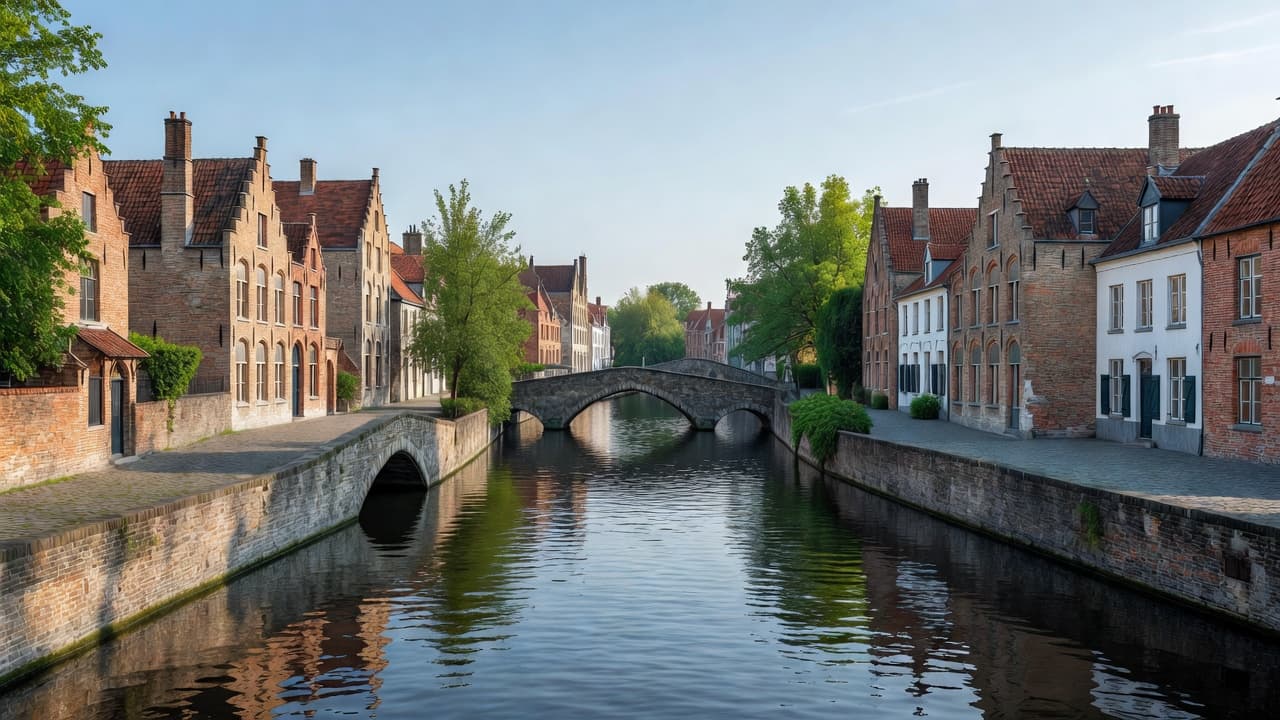
Bruges is compact and carefully preserved. Canal walks, the Belfry and the Beguinage form its core experience, especially early or late in the day when day-trip crowds thin out. Its beauty can feel staged at busy times, but the lanes beyond the central Markt retain real calm.
Ghent feels broader and more energetic. Gravensteen castle rises above the water, while Saint Bavo’s Cathedral holds the famous Ghent Altarpiece. The centre has bars, students, independent shops and a strong evening scene.
Antwerp is more urban and confident. Central Station is an attraction in its own right, while the Cathedral of Our Lady and Rubens-related collections anchor the old centre. The diamond district, fashion boutiques and Scheldt riverfront show another side of Belgian life.
All three cities are accessible by rail from Brussels. For official regional ideas and current information, consult Visit Flanders.
The Belgian coast, Leuven and the Ardennes
The coast offers wide beaches and old-fashioned resorts rather than secluded coves. A coastal tram links towns including De Panne, Ostend and Knokke-Heist, making it possible to explore without a car.
Leuven has a handsome historic centre, the richly decorated Town Hall and the social life of a major university city. It is a good choice for travellers who want cafés and culture without Brussels’ scale.
In contrast, the Ardennes is rural and hilly. Walking, cycling, kayaking and cave visits replace galleries and shopping streets. Dinant, beneath its cliffside citadel, and the small town of Durbuy make useful stops for an overnight stay.
The Best Things to Do in Belgium on a Day Trip or Longer Holiday
Short distances create tempting itineraries, yet trying to visit every major city in two days usually produces a blur of platforms and cobbles. Belgium works better when each place has room to breathe.
Easy Belgium day trips from Brussels
Several rewarding day trips need no hire car:
- Bruges suits architecture lovers and first-time visitors who want canals, museums and slow walks.
- Ghent offers medieval sights with a livelier food and bar scene.
- Antwerp is strongest for art, fashion, shopping and the Rubens legacy.
- Leuven suits a gentler day of historic streets, brewing heritage and cafés.
- Mechelen has a compact centre, St Rumbold’s Tower and a family-friendly feel.
- Waterloo appeals to military-history visitors, with its battlefield and memorial sites that shaped European history.
Rail makes these routes straightforward, although travellers should check timetable changes and engineering works before departure. The Anne Frank House-style rule applies to Belgium’s busiest attractions too: reserve ahead when timed entry is offered, particularly for popular museums, Belfry climbs and guided tours.
A relaxed one-week Belgium itinerary
A balanced week might begin with three nights in the capital, including the Grand-Place, Magritte Museum and neighbourhood meals away from the main square. Two nights in the northern historic cities allow time for canal walks after day visitors leave.
These destinations then deserve at least one night, rather than a rushed afternoon between trains. The regional art hub can take the final two nights, with time for the cathedral, riverfront and museums. Mechelen or Leuven fits naturally as a stop between the larger destinations.
Families may favour interactive museums, parks and shorter walking days. Couples often prefer the medieval centres after dark, while solo travellers benefit from excellent transport links. Visitors with limited mobility should check step-free routes, lift access and cobbled-street conditions before choosing accommodation.
How to spend two weeks exploring Belgium and nearby regions
A fortnight allows a slower version of the city route, followed by Leuven, Mechelen, the coast, Dinant and the Ardennes. It also leaves space for a brewery visit, a cycle route or a local market where you can admire architecture dating back to Belgian independence in 1830, without turning every afternoon into a transfer.
A hire car becomes helpful in the Ardennes, where rural buses can be infrequent and where terrain once shaped vital World War engagements. It is unnecessary in the main urban centres, however, where parking is costly and central streets are better explored on foot.
Belgian Food, Restaurants and Regional Specialities Worth Seeking Out
Belgian cooking is often described through chocolate and waffles, but the stronger story is regional and seasonal. Traditional brasseries offer hearty dishes, fritkots specialise in chips, and bakery counters make inexpensive lunches easy. Bringing a small amount of cash in euro helps when buying quick snacks from street stalls and smaller local markets.
A good meal may come from a seafood restaurant near the coast, a beer café with simple snacks, a food hall or a Michelin-listed dining room. The setting matters less than fresh ingredients, a clear menu and a room busy with local diners.
What to eat and drink in Belgium
Moules-frites pairs mussels with chips, while carbonnade flamande is beef slow-cooked with beer. Waterzooi is a creamy stew associated with Ghent, and stoemp combines mashed potatoes with vegetables.
Brussels waffles are light, rectangular and dusted with sugar. Liège waffles are denser, sweeter and contain pearl sugar that caramelises during cooking. Speculoos biscuits and pralines make easy gifts, although specialist chocolate shops usually offer better quality than tourist displays.
North Sea seafood is strongest along the coast and in Brussels’ Sainte-Catherine district. Trappist beers come from a small number of abbeys, while lambic beers use spontaneous fermentation and can taste tart or fruity. Strong beer deserves slow, responsible tasting, especially before a train journey.
Where to find memorable meals in Belgian cities
In Brussels, look beyond the Grand-Place towards Sainte-Catherine and Marolles. Bruges’ historic centre and fish market area offer both traditional dining rooms and casual options. Ghent’s Patershol and old port area reward an evening wander, while Antwerp’s riverside and central districts offer broad choice.
Opening days vary, particularly outside the largest cities. Current menus, accessibility details and independent reviews are more useful than old recommendation lists.
Planning a Belgium Holiday from the UK Without Unnecessary Hassle
Belgium is easy to reach, but small details shape the trip. UK visitors should check passport validity, entry rules, travel insurance and any current official advice before departure. The UK Government’s Belgium travel advice is the appropriate starting point, alongside updates from the federal government regarding local regulations.
Getting to Belgium and travelling between cities
High-speed rail from London reaches the capital quickly and avoids airport transfers. Flights also work for some departure points, with the main international airport linked to the rail network. Brussels-Midi is the primary international station, while Brussels-Central is more convenient for the historic heart of the city.
Belgium’s dense population supports an extensive, frequent passenger rail network, and urban areas are highly walkable. French, Dutch and German are official languages, though English is widely understood in tourist areas. Basic greetings in the local language are still appreciated.
Choosing the right base, budget and travel style
The capital offers the widest transport links and museum choice. Bruges has a romantic evening atmosphere but can cost more in central locations. Ghent feels relaxed after dark, while Antwerp suits longer urban stays.
Costs can be controlled by booking transport early, choosing a substantial lunch rather than a large evening meal, and comparing attraction passes against actual plans. Families should prioritise room size and easy transport. Solo travellers may prefer central areas near stations, while accessible accommodation requires careful checks on lifts, bathrooms and step-free entrances.
Why booking travel arrangements online can simplify the trip
Online booking keeps rail tickets, accommodation confirmations, attraction reservations and restaurant plans in one organised record. Flexible-date searches can reveal cheaper departures, while digital tickets reduce the need to collect paper documents.
It also makes cancellation terms, luggage rules, refund policies and accessibility information easier to compare before payment. Popular museums and guided experiences often use timed entry, so advance reservations can protect a carefully planned day.
Travellers should still check the total price, policy excesses and provider terms. Travel insurance may cover cancellation, medical emergencies or lost belongings, but gadget cover, valuables limits and excesses differ between policies.
Common Mistakes to Avoid When Visiting Belgium
A common error is treating historic regional centres as interchangeable. These destinations may be close together, yet each needs a different pace and budget. Another is assuming card payments work everywhere. Cards are common, but a small amount of physical currency in euros remains useful for markets and smaller purchases.
Museum closing days can disrupt plans, and popular attractions may sell out. Chocolate shops and beer experiences also differ widely in quality, so a famous name alone is no guarantee. Keep bags close in crowded stations and tourist areas, and check that travel insurance covers personal belongings and any expensive devices.
How to make a busy city break feel more rewarding
Group sights by neighbourhood. Start early at major squares, historic towers, or principal museums, then use busy midday hours for smaller galleries, markets, or lunch.
Leave room for a café, a canal-side bench, or an unplanned detour. Belgium’s short distances allow flexibility, although rail delays and seasonal opening hours still require some margin.
Frequently Asked Questions
What is the best way to travel between cities in Belgium?
Travelling by train is generally the quickest and most practical option for UK visitors. Frequent inter-city services connect Brussels to historic destinations like Bruges, Ghent, Antwerp and Leuven in around an hour or less.
Is a hire car necessary for a holiday in Belgium?
A car is not needed for exploring the major cities, where parking can be expensive and historic streets are best navigated on foot or by rail. However, a hire car becomes useful if you plan to explore the rural villages, forests and walking trails of the Ardennes region.
Can I use card payments everywhere in Belgium?
While contactless and card payments are widely accepted in hotels, restaurants, shops and railway stations, it is still sensible to carry a small amount of cash in euros. Physical currency remains useful for quick purchases at street stalls, local markets and smaller independent bakeries.
Conclusion
Belgium offers UK travellers fast access to dense historic centres, major art collections, serious food, and countryside that feels far removed from the capital. A weekend can hold Brussels and one neighbouring city, while a longer break allows for a slower route through the coast, the Ardennes, and even across the border to explore Luxembourg.
Its small size does not reduce its range. It makes contrasts easier to reach, between Antwerp’s grand station, Bruges’ canals, Ghent’s streets, and the wooded valleys of Wallonia.
Discover more Buyers Guides and Reviews
For a list of our main buyers guides use the drop-down menu at the top of the page. Topics related to this article are:
Skiing Holidays Booking Guides
–
Explore Our Blog Categories for Expert Buying Advice
- AI Powered Product Finder Tools (25)
- Expert Buying Guides & Shopping Tips for UK Shoppers (1,367)
- Brands & Designer Products (Men, Women & Electronics) (273)
- Designer Fashion Brands: Buyer’s Guides & Reviews (153)
- Electronic Brands: Buyers Guides & Reviews (86)
- Apple Products Buyer’s Guides & Reviews (24)
- Brands – Phones, Laptops, PC”s, Tablets | Buyer’s Guides & Reviews (42)
- Electronics – Tablet & iPad Reviews and Buyers Guides (11)
- Kitchen Appliance Brands: Buyer’s Guides & Reviews (22)
- Laptop Brands & MacBooks Buyer’s Guides & Reviews (9)
- Phone Brands & iPhones Buyer’s Guides & Reviews (23)
- Car Buying & Financing Made Easy | Expert Guides for the UK (89)
- Clothing, Fashion & Accessories Buying Guides UK (454)
- Beauty, Health & Wellness | Perfume, Skincare, Makeup & Wellbeing Guides (165)
- Footwear: Trainers & Shoes Buyers Guides (46)
- Jewellery: Expert Reviews, Trends & Buying Guides (71)
- Men's Clothes — Buyers Guides & Reviews (38)
- Men’s Clothes, Fashion & Accessories Guides UK | Latest Trends & Smart Shopping (156)
- Women's Clothing Buyers Guides — Dresses, Tops & More (173)
- Women’s Clothes, Fashion & Accessories Guides UK | Latest Trends & Smart Shopping (395)
- Electronics, Tech & Gadgets: Reviews, Deals & Buying Guides UK (170)
- Furniture Buyer’s Guides | Home & Garden & Styling Tips (313)
- Bedroom Furniture Guides UK | Expert Tips & Best Value Deals (91)
- Garden Furniture, Landscaping & Garden Rooms Guides UK | Expert Tips & Best Value Deals (158)
- Garden Sofa & Sofa Sets Buyers Guides (11)
- Garden Tables & Chairs: Sets, Individual Tables & Seating Buyers Guides (42)
- Home Furniture, Décor & Interior Design Guides UK | Styling Tips & Inspiration (167)
- Living Room Furniture, Design & Décor Guides UK | Styling Tips & Inspiration (57)
- Sofa & Sofa Beds Buyers Guides (19)
- Sofa Beds Buyers Guides (7)
- Sofa Buyers Guides & Expert Advice (11)
- Holidays & Travel: Hotels, Villas & Flights (158)
- Home & Garden Improvements | Renovations & Outdoor Transformation Guides (99)
- Insurance & Protection: Travel, Landlord, Gadget & More UK (159)
- Gadget Insurance UK | Expert Guides, Reviews & Smart Protection Tips (33)
- Home Emergency Cover UK | Expert Guides, Reviews & Practical Protection Tips (21)
- Landlords Insurance UK | Expert Guides, Reviews & Smart Protection Tips (31)
- Travel Insurance UK | Expert Guides, Reviews & Money-Saving Tips (34)
- Pets: Guides, Tips & Inspiration (26)
- Brands & Designer Products (Men, Women & Electronics) (273)
- Gifts for Everyone: Ideas for Every Occasion & Budget (45)