A chair earns its place through daily use, whether it is a reading seat, a dining perch, a work station or somewhere to put on shoes. The right chair supports the body, fits the room and survives the habits of the household.
Appearance matters, but it is rarely the deciding factor. Room size, seat height, materials, budget, delivery access and cleaning needs all shape a sensible purchase. The best choice comes from matching the chair to its job before considering colour or trend.
Key Takeaways
- Match the chair type to the room, sitting time and the people who will use it.
- Measure the room, access route and chair dimensions before placing an order.
- Seat height, depth, arm support and filling affect comfort more than appearance alone.
- Online shopping offers wider choice and price comparison, but specifications and return terms need close reading.
- A durable frame, practical upholstery and repair support often offer better value than a low headline price.
Choosing the Right Chair for Every Room
A dining chair and a recliner solve different problems. A compact hallway seat may only be used for two minutes, while an office chair can carry a person through a full working day. The distinction should shape every purchase.
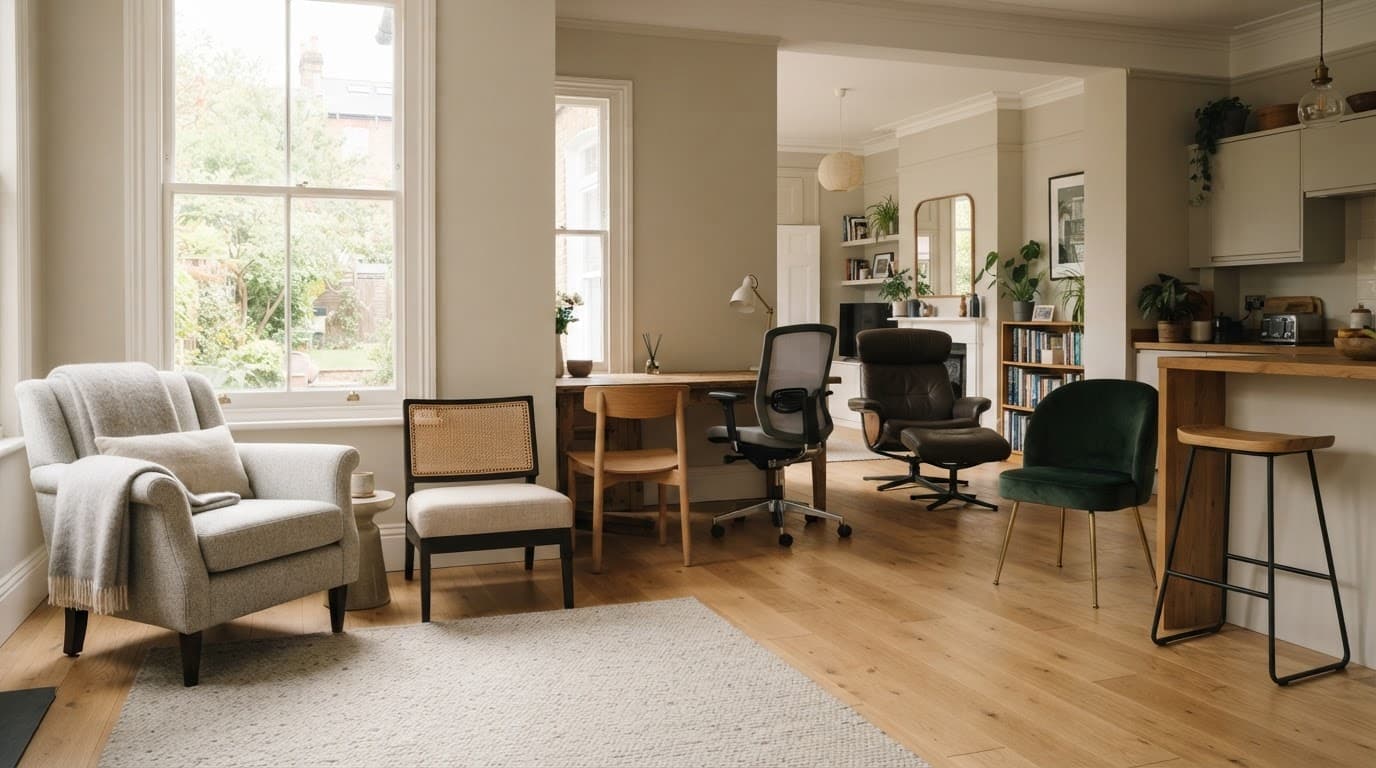
AI-generated image showing common chair styles for different parts of the home.
| Chair type | Typical use | Strengths | Possible drawbacks | Indicative UK price |
|---|---|---|---|---|
| Armchair | Living room, reading | Supportive and comfortable | Can take up substantial floor space | £150 to £1,200+ |
| Accent chair | Living room, bedroom | Adds character with a smaller footprint | Often less supportive for long sitting | £80 to £700+ |
| Dining chair | Meals and entertaining | Compact and easy to group | Comfort varies widely | £40 to £350 each |
| Office chair | Desk work | Adjustable support and mobility | More functional than decorative | £90 to £900+ |
| Recliner | Relaxing and television | Adjustable back and leg support | Needs rear and front clearance | £300 to £1,500+ |
| Occasional chair | Bedroom or hallway | Light visual presence | May not suit prolonged use | £70 to £500+ |
| Bar stool | Kitchen island or bar | Uses vertical space well | Backless versions offer less support | £50 to £300 each |
Living room chairs for comfort, reading and guests
Armchairs, lounge chairs and recliners need enough depth for comfortable sitting without forcing shorter users to perch forward. High backs support reading, while broad arms offer a resting place for elbows and a practical aid when standing.
Fabric should match household life. Tightly woven upholstery generally hides everyday wear better than delicate velvet, particularly with pets or children. A chair does not need to match the sofa exactly. Contrast in shape or fabric can make a room feel less staged.
Leave clear walking routes around the chair, especially near doors, radiators and coffee tables. Recliners need measured space behind and in front before they are considered.
Dining chairs that balance posture, space and cleaning
Most standard dining tables work with a seat height of roughly 45 cm, although the table’s underside and apron also matter. There should be enough room for legs beneath the table and enough elbow space between diners.
Hard timber, metal and wipe-clean finishes suit busy homes, children and frequent entertaining. Upholstered seats feel warmer during longer meals, but stains and crumbs are harder to manage. In smaller dining areas, slimmer legs and armless chairs reduce visual bulk.
Bedroom, hallway and occasional chairs with a smaller footprint
A dressing chair, slipper chair or hallway bench needs a clear purpose. It may hold clothes temporarily, support someone putting on shoes or provide a quiet reading spot. Daily use justifies a stronger frame and easy-clean fabric.
Compact dimensions matter, but so does visual weight. Raised legs let more floor show, which can make a narrow bedroom or hall feel less crowded. Built-in storage can help in entranceways, provided it does not obstruct the route through the home.
Home office chairs for healthy, adjustable support
A task chair needs adjustable seat height, lumbar support, a stable five-point base and castors suited to the floor. Breathable upholstery is useful during long periods of desk work, while adjustable armrests can reduce shoulder strain when they fit beneath the desk.
A decorative desk chair may look right in a room but offer limited adjustment. No chair corrects a poorly positioned screen or unsuitable desk height. Regular movement remains part of a workable home-office set-up.
Nursery, gaming and specialist chairs for focused uses
Nursing chairs benefit from supportive arms, a steady base and upholstery that can cope with spills. Gaming chairs often offer pronounced back support and adjustment, though their shape may not suit every body type or room.
Weight limits, fire-safety information, cleaning guidance and intended daily sitting time deserve more attention than broad comfort claims. The most padded option is not always the most supportive one.
What to Check Before Buying a Chair
Colour and price are easy to compare. Construction, dimensions and care requirements are where costly mistakes usually begin.
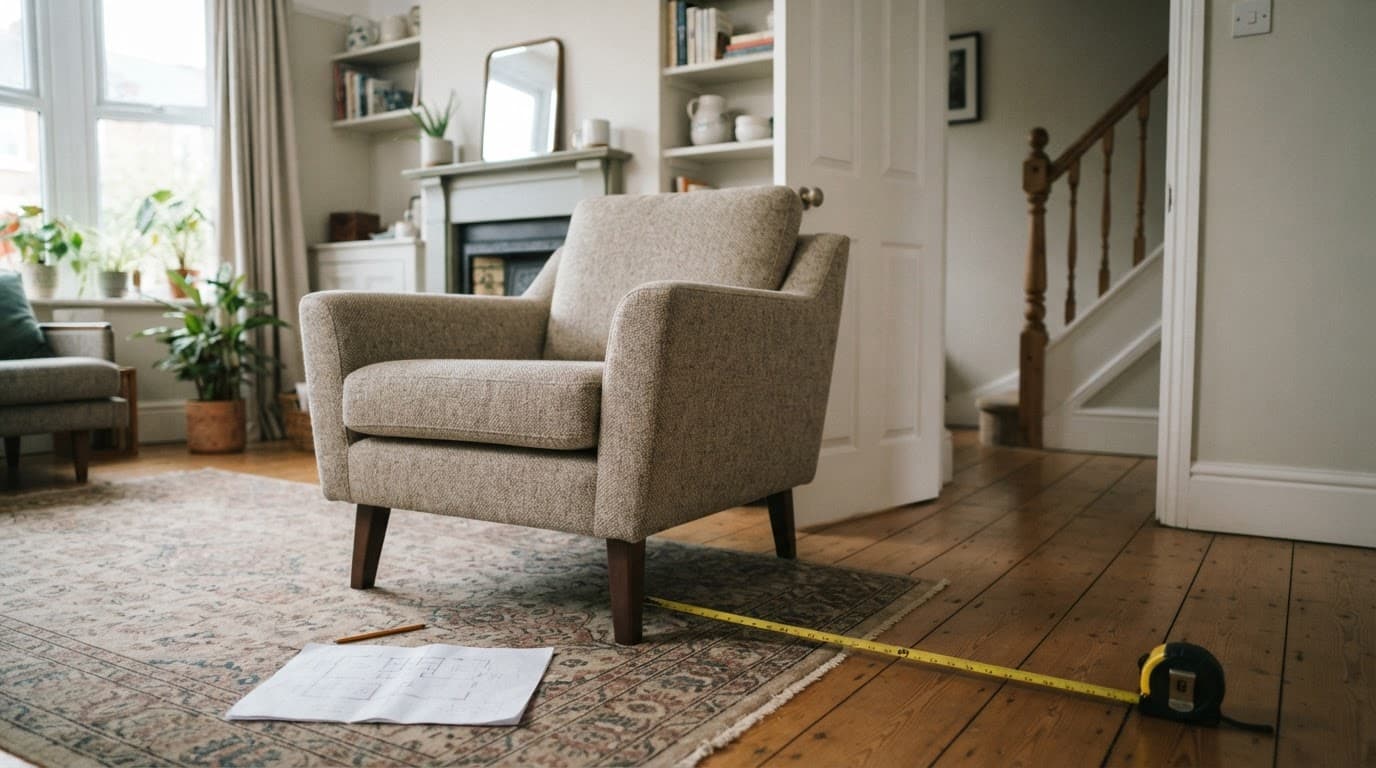
AI-generated image showing a chair measured against room and access space.
Measure the chair, room and access route first
Record overall width, height and depth, then check seat width, seat height, seat depth and arm height. A deep armchair can feel luxurious in a showroom yet dominate a compact sitting room.
Measure doorways, corridors, stair turns and lifts, not only the destination room. For recliners and large chairs, packaging dimensions may be larger than the product itself. Clearance beneath the chair also matters when it will sit over a rug or near underfloor heating vents.
A chair that fits the room but cannot pass through the front door is still the wrong size.
Compare frames, fillings, upholstery and moving parts
Solid timber, plywood and metal can all work well when joints and construction are sound. A vague description such as “wood frame” offers little reassurance. Better listings identify the materials and provide a useful warranty.
Foam tends to offer a firmer, more consistent sit. Fibre gives a softer feel but may need regular plumping. Feather-style cushions feel relaxed, though they demand more maintenance. Leather wipes clean but can show scratches, while boucle and velvet add texture with greater care needs.
Recliners and office chairs need additional scrutiny. Check the mechanism, hinges, gas lift, castors and terms for replacement parts.
Match comfort and support to the people using it
Body height, mobility and preferred posture vary. A low, soft seat can be pleasant for one person and difficult for another to rise from. Supportive arms and a moderate seat height are often more practical for people with limited mobility.
Weight limits should be stated clearly. A chair intended for brief occasional use should not be expected to perform as a full-time reading or working seat.
Check safety, standards and care information
Upholstered furniture should include clear fire-safety information, care instructions and stability details. Missing measurements, unclear return policies and vague material claims are warning signs.
Homes with children, pets or heavy footfall need fabrics that can handle marks and abrasion. Before ordering, keep copies of the specification, order confirmation and delivery terms. Those records are useful if the delivered item differs from its description.
Buying a Chair Online Without an Expensive Mistake
Online buying gives households a broader selection than most local showrooms can display. It also makes price comparison easier, and competition can reduce the cost of similar designs. The trade-off is obvious: comfort cannot be tested in person.

AI-generated image showing the practical checks behind an online chair comparison.
Use specifications, photos and reviews as evidence
Read a listing in this order: dimensions, materials, construction, seat details, care advice, delivery, warranty and returns. Photos can distort scale and colour, especially in strongly lit rooms.
Reviews are most useful when they mention firmness, assembly, fabric accuracy, persistent odours, mechanism noise and wear after several months. One glowing comment says little. A repeated complaint about a shallow seat or weak castors deserves attention.
Compare the full price, not just the headline figure
Delivery, room-of-choice service, assembly, packaging removal, fabric upgrades and return collection can alter the final cost. A £180 chair may cease to be the cheaper option if return collection costs £70 and the warranty is limited.
A lower price also has less value if early replacement is likely. Comparison only works when chairs with similar dimensions, construction and delivery conditions are judged together.
Understand delivery, returns and made-to-order terms
Check lead times and access requirements before payment. Inspect the chair on arrival, photograph any damage and report problems within the stated window.
Made-to-order upholstery and personalised options can have different cancellation and return rights from stock items. Keep photographs of packaging and retain paperwork until the return period has passed.
Chair Costs, Styles and Long-Term Value
Price often reflects scale, materials, upholstery and finish, but it does not automatically prove comfort or durability. A chair should justify its cost through regular use and practical upkeep.
| Price level | Likely materials and construction | Best suited to | Limitations | Value consideration |
|---|---|---|---|---|
| Budget | Basic foam, metal or mixed timber frames | Occasional seating, short-term needs | Fewer repair options and simpler finishes | Check stability and delivery costs |
| Mid-range | Better upholstery choices, stronger frames | Frequent household use | Specifications still vary greatly | Often the broadest balance of cost and comfort |
| Premium | Higher-grade materials and detailed construction | Long-term use or a statement piece | Price can reflect brand and design as well as build | Warranty and repair support should be clear |
Choose a style that fits the room without dating quickly
Traditional, modern, Scandinavian-inspired, industrial and mid-century forms all change a room’s character. Shape, legs and fabric affect perceived size as much as actual measurements do.
Neutral upholstery gives flexibility when rooms are redecorated. Replaceable cushions and throws extend that flexibility. However, a bold accent chair can anchor a plain scheme when the rest of the room remains restrained.
Think about maintenance, repairs and replacement parts
Removable covers, stain-resistant finishes, leather conditioner and accessible screws make ordinary care less burdensome. Loose fittings should be tightened before they damage joints.
For office chairs and recliners, spare castors, glides and mechanisms can matter more than a small initial saving. Keeping a repairable chair in use for longer also avoids the expense and waste of premature replacement.
Common chair-buying mistakes that waste money
Choosing solely by appearance can lead to a poor fit, so seat depth and support should be checked first. Ignoring access routes can make delivery impossible, while assuming online colours are exact can produce disappointing results.
Cleaning needs, weight limits and delivery fees are often overlooked. A short written comparison of those details prevents a good-looking bargain from becoming an awkward, costly return.
Frequently Asked Questions
How much space should be left around a chair?
Allow enough room to walk safely without turning the chair into an obstacle. Living-room seating often needs clear space around doors and tables, while recliners need the extra room stated for their mechanism.
Are dining chairs with arms practical?
They can be comfortable for longer meals, but armrests may prevent chairs sliding fully beneath a table. Check the arm height against the table apron and allow more width between place settings.
Is leather or fabric better for a family home?
Leather is usually easier to wipe clean, although it can scratch and feel cool in winter. Fabric offers more colours and textures, but a durable, tightly woven or stain-resistant option is more realistic for busy households.
Should a chair be assembled at home?
Home assembly can reduce delivery size and sometimes cost less. However, the buyer should check the tools required, the number of parts and whether assembly affects return rights if problems emerge.
What should be kept after an online chair delivery?
Retain the invoice, product specification, delivery note and photographs of any damage. Packaging should stay available until the chair has been inspected and the return period has passed.
A Chair Should Work Harder Than Its Price Tag
The strongest purchases begin with use, measurements and construction, then move to style and price. Comfort depends on more than soft cushions, while real value includes delivery terms, cleaning demands and the possibility of repair.
A well-chosen chair does its work without drawing attention to itself. It supports meals, work, rest and the small routines that give a home its shape.

Explore More Expert Buyers Guides and Reviews
For a list of our main buyers guides use the drop-down menu at the top of the page. Topics related to this article are:
Home and Garden Furniture Buyers Guides
Bedroom Furniture Buyers Guides
living Room Furniture Buyers Guides
Garden Furniture Buyers Guides
Patio Furniture Sets Buyers Guide
–
Explore Our Blog Categories for Expert Buying Advice
- AI Powered Product Finder Tools (26)
- Expert Buying Guides & Shopping Tips for UK Shoppers (1,352)
- Brands & Designer Products (Men, Women & Electronics) (270)
- Designer Fashion Brands: Buyer’s Guides & Reviews (151)
- Electronic Brands: Buyers Guides & Reviews (85)
- Apple Products Buyer’s Guides & Reviews (23)
- Brands – Phones, Laptops, PC”s, Tablets | Buyer’s Guides & Reviews (41)
- Electronics – Tablet & iPad Reviews and Buyers Guides (11)
- Kitchen Appliance Brands: Buyer’s Guides & Reviews (22)
- Laptop Brands & MacBooks Buyer’s Guides & Reviews (9)
- Phone Brands & iPhones Buyer’s Guides & Reviews (22)
- Car Buying & Financing Made Easy | Expert Guides for the UK (89)
- Clothing, Fashion & Accessories Buying Guides UK (447)
- Beauty, Health & Wellness | Perfume, Skincare, Makeup & Wellbeing Guides (163)
- Footwear: Trainers & Shoes Buyers Guides (46)
- Jewellery: Expert Reviews, Trends & Buying Guides (71)
- Men's Clothes — Buyers Guides & Reviews (38)
- Men’s Clothes, Fashion & Accessories Guides UK | Latest Trends & Smart Shopping (155)
- Women's Clothing Buyers Guides — Dresses, Tops & More (170)
- Women’s Clothes, Fashion & Accessories Guides UK | Latest Trends & Smart Shopping (389)
- Electronics, Tech & Gadgets: Reviews, Deals & Buying Guides UK (169)
- Furniture Buyer’s Guides | Home & Garden & Styling Tips (310)
- Bedroom Furniture Guides UK | Expert Tips & Best Value Deals (91)
- Garden Furniture, Landscaping & Garden Rooms Guides UK | Expert Tips & Best Value Deals (156)
- Garden Sofa & Sofa Sets Buyers Guides (10)
- Garden Tables & Chairs: Sets, Individual Tables & Seating Buyers Guides (39)
- Home Furniture, Décor & Interior Design Guides UK | Styling Tips & Inspiration (166)
- Living Room Furniture, Design & Décor Guides UK | Styling Tips & Inspiration (56)
- Sofa & Sofa Beds Buyers Guides (18)
- Sofa Beds Buyers Guides (7)
- Sofa Buyers Guides & Expert Advice (10)
- Holidays & Travel: Hotels, Villas & Flights (157)
- Home & Garden Improvements | Renovations & Outdoor Transformation Guides (99)
- Insurance & Protection: Travel, Landlord, Gadget & More UK (159)
- Gadget Insurance UK | Expert Guides, Reviews & Smart Protection Tips (33)
- Home Emergency Cover UK | Expert Guides, Reviews & Practical Protection Tips (21)
- Landlords Insurance UK | Expert Guides, Reviews & Smart Protection Tips (31)
- Travel Insurance UK | Expert Guides, Reviews & Money-Saving Tips (34)
- Pets: Guides, Tips & Inspiration (26)
- Brands & Designer Products (Men, Women & Electronics) (270)
- Gifts for Everyone: Ideas for Every Occasion & Budget (42)