Quick verdict: October birthstone jewellery is worth buying when the stone, setting and seller suit how you will wear it, with tourmaline usually the safer everyday choice and opal the more distinctive one.
October has two recognised birthstones, opal and tourmaline. Both are beautiful and personal choices, yet they wear very differently. The best October birthstone depends on the colour you love, your budget, the jewellery design, and whether it will face daily knocks.
This gemstone jewellery guide covers appearance, symbolism, quality, pricing, ethical considerations, online buying, care and styling. Start with the stone’s character, then choose a piece built for your routine.
Key Takeaways
- Opal is valued for its shifting play-of-color, while tourmaline offers an unusually broad palette.
- Tourmaline is harder and usually better suited to rings worn every day.
- An opal pendant or earring design gives its delicate surface more protection.
- Check treatment disclosure, measurements, metal purity and returns before buying online.
- Recycled metals, pre-owned jewellery and clear sourcing information support a more considered purchase.
What Is the October Birthstone?
October is linked with two stones: opal is the traditional choice, while tourmaline is widely accepted as the modern alternative. Birthstone lists have changed across cultures, jewellers’ associations and historical periods, so no single list is universal.
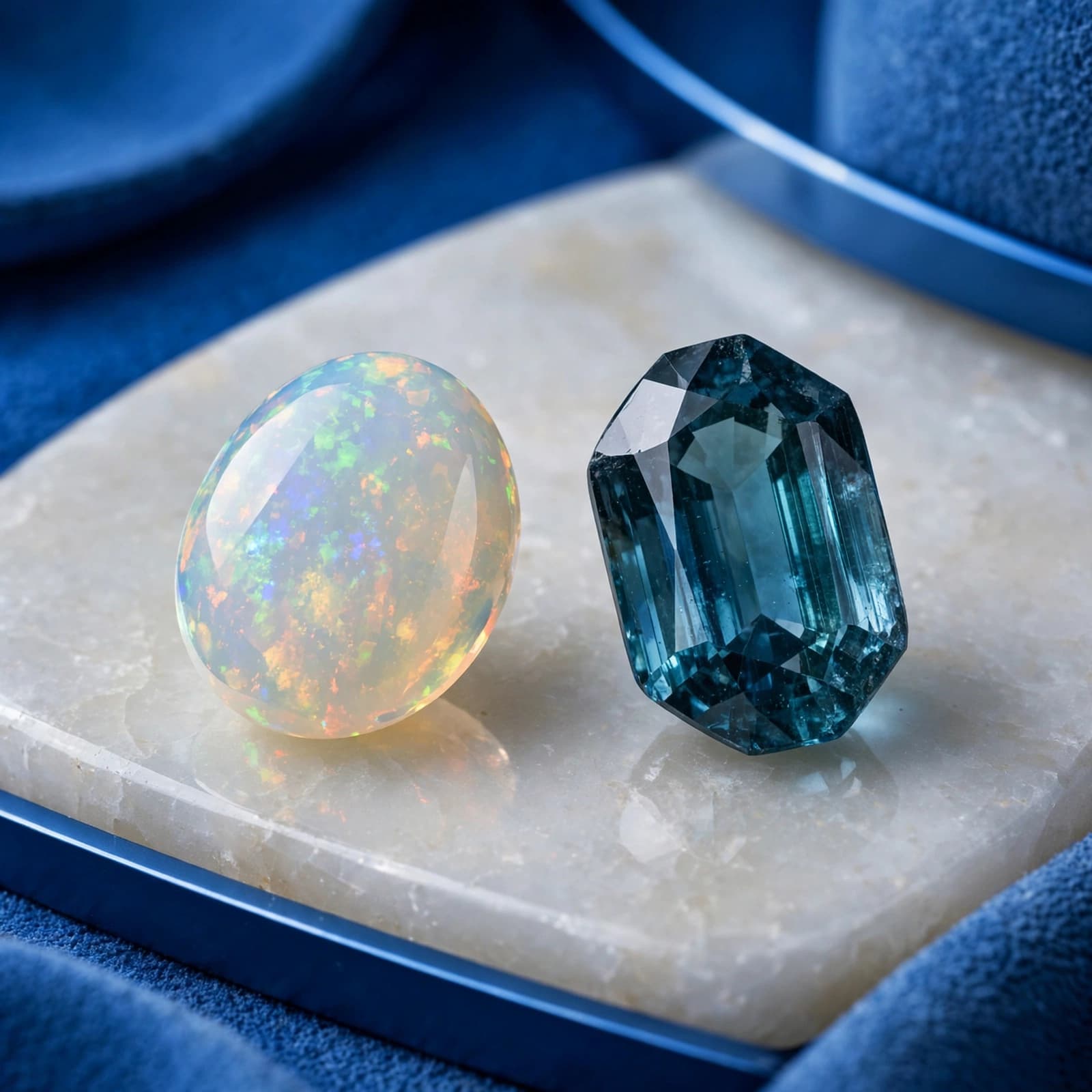
For shoppers, having two October options is useful. Opal gives you an unmistakable light show, while tourmaline offers colours ranging from soft pink to forest green. Their differing hardness and price ranges also make the choice less restrictive.
| Feature | Opal | Tourmaline |
|---|---|---|
| Colour range | White opal, black opal, crystal, fire opal, blue, green, boulder opal and more | Pink, green, blue, red, yellow, black, colourless and mixed colours |
| Visual effect | Play-of-color in precious opal | Clear body colour, sometimes colour zoning |
| Approximate hardness (Mohs scale) | 5 to 6.5 | 7 to 7.5 |
| Everyday wear | Best in protected designs | Better for frequent wear |
| Typical price position | Wide range, exceptional opals can be costly | Wide range, rare vivid colours command premiums |
Tourmaline usually handles ordinary wear more comfortably. However, an exceptional opal can make a more memorable piece of jewellery.
Opal’s Colour Flash and Meaning
Precious opal shows play-of-color, with flashes that shift as the stone moves under light. This effect comes from ordered silica spheres within the stone, which interact with light.
The arrangement and spacing of these silica spheres affect how the colours appear. Common opal does not show this effect, although it can still have an attractive body colour.
Opal types such as Australian opal, Mexican opal and Ethiopian opal can look dramatically different. A dark-bodied stone may show intense colour contrast, while a crystal opal can appear translucent. Therefore, the word “opal” alone says little about quality.
Many people connect opal with hope, creativity, imagination, emotional expression and healing properties. These associations reflect cultural traditions and personal beliefs, not scientific effects.
Tourmaline’s Wide Colour Palette
Tourmaline is a mineral family, not one fixed colour. Pink tourmaline and green tourmaline are popular jewellery choices, while blue and vivid neon-like shades can be much rarer. Rubellite is a red tourmaline variety, and watermelon tourmaline has pink and green zones in one stone.
Value depends on colour strength, clarity, cut, size and rarity. A richly saturated, transparent stone with a precise cut will often cost more than a larger, greyish example. Different colours can also vary in market value, so compare like with like.
How to Choose Between Opal and Tourmaline
Choose tourmaline if the piece will become part of your daily uniform. Its greater gemstone hardness makes it more forgiving in rings, especially when you work with your hands or travel often. It can still chip after a hard impact, so a secure setting remains important.
Choose opal when its moving colour is the reason you are buying. It suits pendants, earrings, brooches and occasional-wear rings. Sudden temperature changes, knocks and harsh cleaning can cause problems, particularly with more sensitive opals.
Opal pros and cons
- Its play-of-colour makes every good stone feel individual.
- It works beautifully in pieces intended for gentler wear.
- Scratches and impact damage are more likely than with tourmaline.
- Some opals need extra caution around water and temperature changes.
Tourmaline pros and cons
- Its colour range makes matching a wardrobe or birthstone gift easy.
- It is usually the more practical stone for regular wear.
- Fine colour and clean clarity can raise prices sharply.
- Inclusions and uneven colour are common, so photographs need close scrutiny.
Match the Stone to the Jewellery Design
A setting can protect or expose a gemstone. For an opal ring, choose a low-profile bezel setting or another design that keeps the stone away from hard edges. Pendants and earrings allow more freedom because they receive fewer direct knocks.
Tourmaline can work well with secure claws, a bezel, or a halo that helps shield the stone’s sides. Check the metal too. Yellow gold warms white and fire opals, while white gold can sharpen cooler opal flashes and blue or green tourmaline. Rose gold suits pink tourmaline, and platinum offers a dense, durable setting for frequent wear. Recycled gold or silver is worth considering when the maker provides clear material details.
Choose Colour, Cut, Clarity and Size with Care
Inspect opal for brightness, broad colour coverage, an appealing pattern, body tone and a smooth surface. Avoid obvious cracks or deep crazing. A small opal with strong flashes often looks better than a large stone with weak colour.
For tourmaline, assess colour evenness, saturation, transparency, visible inclusions, symmetry and polish. Natural inclusions are not always a problem, but a cloudy appearance or severe fractures can reduce beauty and durability. Size should never be the only measure of value.
A still photograph cannot capture an opal’s changing play-of-color as it moves. Light interacting with its silica spheres is easier to judge in video, so a fair return policy matters more than a dramatic still image.
How Much Does October Birthstone Jewellery Cost?
There is no useful single price for October birthstone jewellery. Carat weight, colour, origin, clarity, cut, treatment, metal purity, design complexity and workmanship all affect the total.
Sterling silver pieces with small stones offer an accessible entry point. Gold jewellery usually costs more because of metal weight, setting work and construction. At the top end, black opals with vivid play-of-colour, fine red or blue tourmalines, and carefully made platinum designs can command far higher prices.
Set a budget before browsing. Then prioritise an attractive stone, sound construction and a clear return policy rather than chasing the largest possible gem. A claimed original price or steep discount means little without full specifications.
Understand Treatments, Imitations and Opal Assemblies
Treatments may improve a gem’s colour, stability or appearance. They are not automatically a reason to reject a piece, but the seller should state them clearly.
A natural opal isn’t automatically superior in appearance or durability. The listing should still disclose whether it is solid, a doublet or a triplet. Solid opal is cut from a single piece of opal. Doublets pair a thin opal layer with a backing, while triplets add a clear top layer. Assemblies can offer convincing colour at a lower cost, provided you know what you’re buying.
Read descriptions and invoices for terms such as dyed, coated, synthetic, simulated or laboratory-created. If a laboratory report is included, check that its wording matches the listing.
Judge Value Beyond the Stone
A beautiful gem can still disappoint in a thin, poorly finished mount. Look for secure claws, smooth edges, a reliable clasp and enough metal around vulnerable areas. In the UK, a hallmark can confirm the fineness of qualifying precious-metal items, although it does not assess gemstone quality.
Pre-owned jewellery can offer strong value and distinctive workmanship. Condition matters, however, so inspect repairs, worn claws and signs of damage before committing.
How to Buy October Birthstone Jewellery Online with Confidence
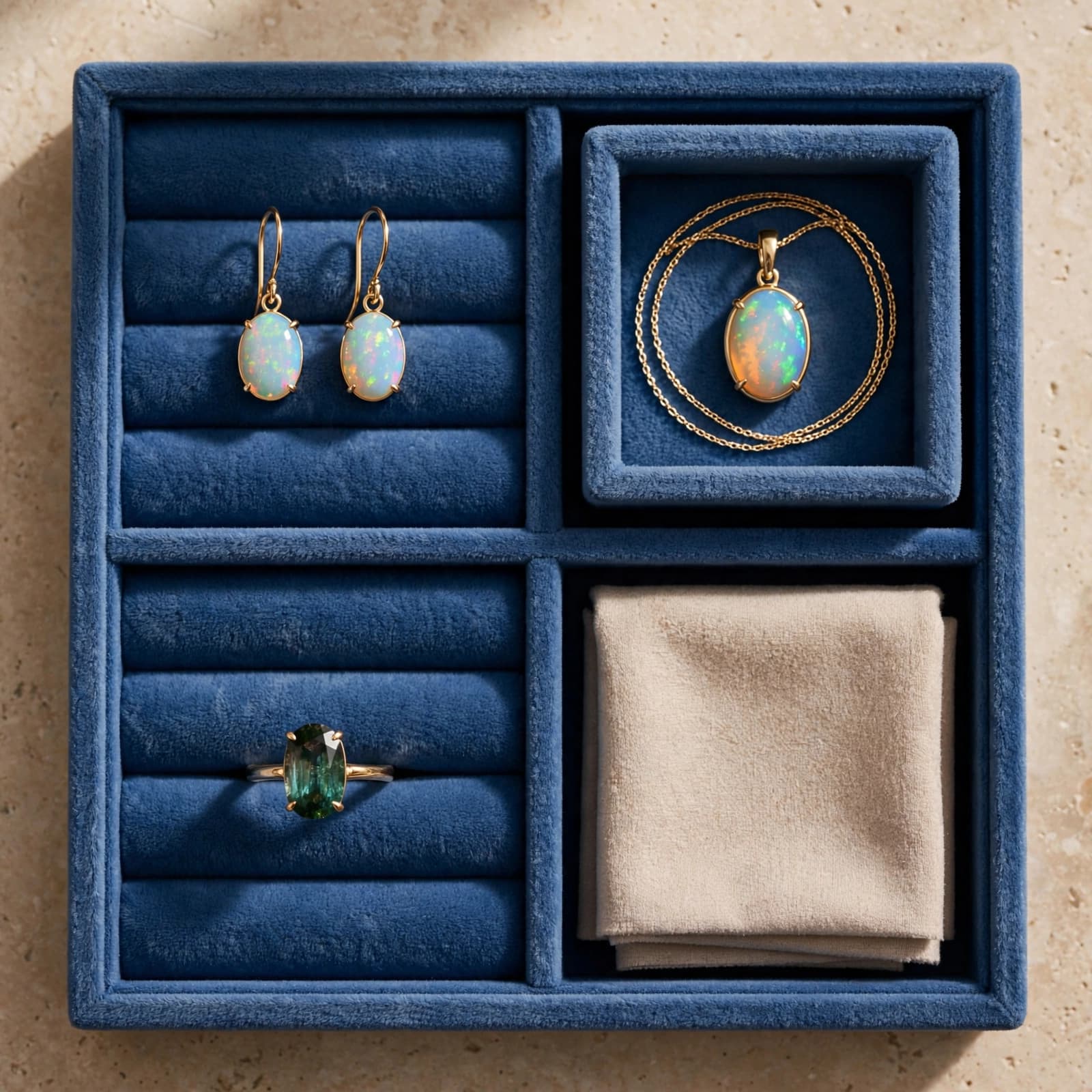
Online shopping offers a much wider choice of stone colours, shapes, metals, sizes and price points than a single shop. It also makes direct comparison easier. You can place similar pieces of gemstone jewellery side by side and see whether a higher price comes from more gold, a larger gem, better construction or a vague sales claim. For example, compare tourmaline listings by colour, carat weight, metal and construction details.
That choice can lead to better value, but only when listings give complete details. Sparkle-heavy images can make stones look larger, brighter and cleaner than they appear in ordinary light. Treat phrases such as “premium quality” as marketing unless facts support them.
Follow this buying checklist before paying:
- Research the seller’s trading details and independent customer feedback.
- Read the full description, including gemstone identity and treatment information.
- Check millimetre dimensions as well as carat weight.
- Inspect several photographs and a video, then ask whether images are enlarged.
- Confirm delivery costs, tracked postage, insurance and the return window.
- Pay through a secure method and save the product page, receipt and messages.
An unusually cheap deal deserves extra checks. A fair price is one supported by honest specifications, not a countdown timer.
What Product Details Should You Check Before Paying?
A trustworthy listing states the stone identity, whether natural or laboratory-created where relevant, and any treatments. It should also show millimetre measurements, total carat weight, metal type and purity, ring or bracelet size, setting style and hallmark information where applicable.
Look for certificate details, care guidance, dispatch times, insurance arrangements and written returns terms. Photographs are useful, but they can’t prove precise colour because screen settings and studio lighting vary. Ask direct questions before ordering, then keep screenshots of the listing and answers.
Make a More Ethical and Sustainable Choice
Look for transparent supply-chain information, accurate gemstone disclosure and recognised responsible sourcing standards. Recycled precious metals can reduce demand for newly mined metal, while durable settings and repair services can extend a piece’s useful life.
Laboratory-created gems and pre-owned jewellery may reduce some environmental pressures. Still, check how each material is described and produced before making claims about sustainability. Independent makers can be a good choice when they give clear information about materials, provenance and workmanship.
Care for Opal and Tourmaline So They Stay Beautiful
Keep Opal Away from Harsh Conditions
Good gemstone care starts with protecting opal from harsh conditions. Opal is softer than many gemstones, so keep it away from harsh chemicals, ultrasonic cleaners, steam, prolonged soaking and sudden temperature changes. Some Ethiopian opals can absorb water, so follow the maker’s care instructions closely.
Use a soft, slightly damp cloth, then dry the piece carefully. Remove opal rings before exercise, gardening, washing-up and swimming.
Clean and Store Tourmaline Gently
Tourmaline is tougher, yet it can chip if struck against a hard surface. Clean it with a soft cloth, lukewarm water and mild soap if needed, then rinse and dry gently. Avoid abrasive cleaners and heavy brushing around claws.
Store each piece in a separate soft pouch or lined compartment. Have a jeweller inspect settings, clasps and worn claws periodically, especially on frequently worn rings.
Style October Birthstones for Everyday Wear and Gifts
White opal looks soft beside knitwear, shirts and neutral tailoring. Black or boulder opal makes a stronger focal point, so pair it with plain hoops or a simple chain. Pink and green tourmaline add colour without overwhelming an everyday outfit.
Layer necklaces with enough length difference to prevent tangling, and avoid stacking rings that rub against a softer opal. For gifts, consider the recipient’s preferred metal, daily routine and usual jewellery scale. An engraving, chosen tourmaline colour, or a pendant combining family birthstones adds meaning to birthstone jewellery for occasions such as a wedding anniversary.

Frequently Asked Questions
What is the October birthstone?
The accepted choices are opal and tourmaline. Opal is commonly seen as the traditional stone, while tourmaline is widely recognised as the modern alternative.
Is opal suitable for an engagement ring?
Opal can suit an engagement ring when it has personal meaning and receives careful wear. Choose a protective setting and expect a greater risk of scratching or impact damage than with harder gemstones.
Which October birthstone is more durable?
Tourmaline is generally more durable for regular wear because it is harder than opal. The cut, setting quality and the wearer’s habits still affect how long either stone stays in good condition.
Does every opal show play-of-color?
No. Precious opal shows this colourful effect, while common opal does not. Even precious opals vary greatly in brightness, pattern and colour coverage.
Do opal and tourmaline have healing properties?
Some people associate these stones with traditional or personal healing properties, but these claims aren’t scientifically established. Choose a stone for its appearance and meaning rather than as a substitute for professional care.
Can October birthstone jewellery be personalised?
Yes. You can choose an opal body tone or tourmaline colour, add an engraving, select a birthstone pendant, or combine these stones with other meaningful gems. Check measurements and return terms before ordering customised work.
The Right October Birthstone for Your Routine
Buy opal if its unusual colour play matters most and you’re happy to treat the jewellery gently. Think twice if you need a ring that can tolerate constant hard wear.
Buy tourmaline if you want a broad colour choice and better everyday practicality. In either case, check accurate specifications, treatment disclosure, secure construction, ethical material information and a fair returns policy.
The best October birthstone jewellery is the piece that suits the wearer’s style, budget and ordinary routine.