A sofa often carries more of a UK home’s daily life than any other piece of living room furniture. It’s where people sit with a morning coffee, entertain guests, work with a laptop, watch television, read, or stretch out after a long day. A 3 seater sofa offers a practical balance, providing generous seating without taking up the floor space of a larger corner sofa.
However, dimensions, seat depth, frame construction, upholstery, comfort and delivery arrangements vary widely between models. A sofa that looks compact online may have a deep seat or broad arms, making it difficult to position in a smaller living room. A lower price can also reflect simpler materials, limited support or higher delivery costs.
This impartial buying guide examines the points that affect quality and value, including popular designs, accurate measurements, upholstery choices, construction, realistic price considerations, online buying and long-term ownership. It also explains how to assess returns, access, assembly and delivery before ordering, rather than treating product photographs as a substitute for useful specifications.
The guide begins by considering the main sofa styles and the rooms they suit best.
Key Takeaways
- A 3 seater sofa should suit the room’s measurements, doorway access and intended seating position, not just its advertised width.
- Popular styles include traditional, mid-century, contemporary, recliner and modular designs. Each offers different support and visual proportions.
- Comfort depends on seat depth, cushion filling, back height and frame support, so check the specifications when viewing sofas online.
- Online shopping offers wider choice and easier price comparison, but delivery charges, returns and fabric samples need careful checking.
- The best value comes from durable construction, suitable upholstery and realistic long-term costs, rather than the lowest initial price.
What Is a 3 Seater Sofa, and Who Is It Best For?
A 3 seater sofa is designed to accommodate three people, although the label describes intended seating capacity rather than one fixed width. In the UK, many models measure roughly 180 to 230 cm wide, but proportions vary considerably between designs.
Seat depth, arm width and cushion layout affect usable seating more than the name alone. These details also influence comfort, especially when three people share the sofa. A design with thick arms and deep cushions may offer less practical room than a narrower model with slim arms and three well-spaced seats.
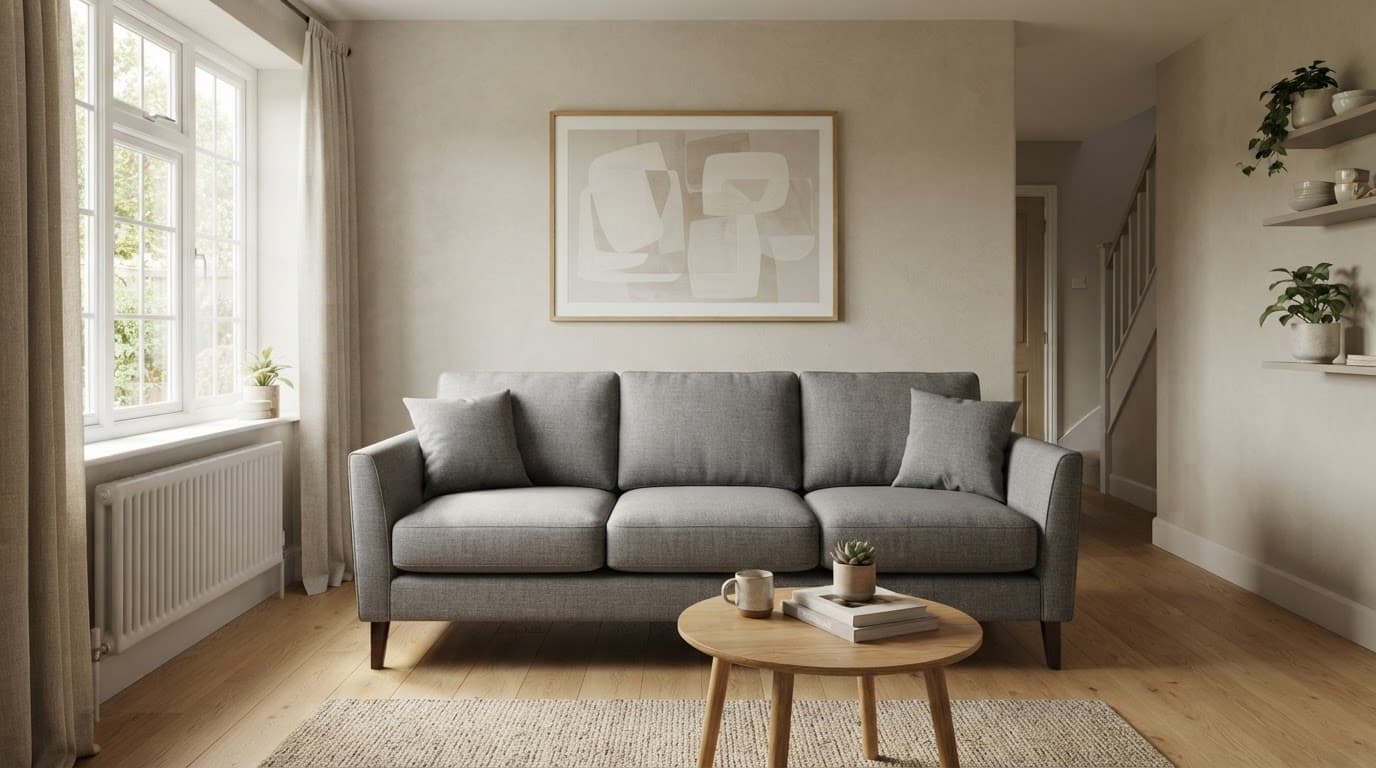
AI-generated image of a three-seater sofa in a bright lounge. The image is formatted to the same width as the article text on desktop and mobile.
How a 3 Seater Sofa Compares with Other Formats
A three-seater usually offers more usable seating than a two-seater without the footprint of corner sofas. It suits households that need a main sofa for everyday use but still want clear floor space around it.
| Sofa format | Approximate width | Intended seating | Typical space needs |
|---|---|---|---|
| Two-seater | 140 to 180 cm | Two people | Smaller lounges and flats |
| Three-seater | 180 to 230 cm | Three people | Family rooms and open-plan spaces |
| Corner sofas | 230 cm or more | Four or more people | Larger rooms with a suitable corner |
| Chaise sofas | 220 cm or more | Three or more people | Rooms with space for an extended section |
These measurements are guides rather than standard sizes. The full product specification should include overall width, height, depth, seat height and depth, plus the dimensions of removable legs or separate sections.
Who Will Benefit Most?
A three-seater works particularly well in a family living room, where it can provide the main shared seating without dominating the room. In an open-plan space, its straight profile also helps define the lounge area without blocking movement between the kitchen and dining space.
Flats and compact terraces can benefit from the same format when a corner sofa would overwhelm the available floor area. A three-seater may also be useful in a guest room, home office or larger bedroom, provided the remaining space allows comfortable circulation.
However, capacity depends on the people using it. Three adults may fit comfortably on a sofa with generous seat width, while a compact design with fixed cushions may feel better suited to two adults and a child.
Buying a Three-Seater Sofa Online
Online buying provides access to a wider selection of styles, upholstery colours and price points than many local showrooms can display. It also makes price comparison easier, particularly when shoppers compare the total cost rather than the headline price.
Before ordering, buyers should check:
- The complete dimensions and internal seat width.
- Fabric samples, care instructions and colour descriptions.
- Delivery charges, room-of-choice services and assembly requirements.
- Returns terms, exclusions and any collection costs.
A sofa can look modest in a photograph yet prove difficult to carry through a narrow hallway. Measuring the room, access route and packaging dimensions helps prevent an expensive mismatch.
Popular 3 Seater Sofa Styles for Different Homes
The best 3 seater sofa style depends on the room’s architecture, available floor space and daily use. As part of your living room furniture, arm width, leg height, back profile and cushion shape can change its appearance.
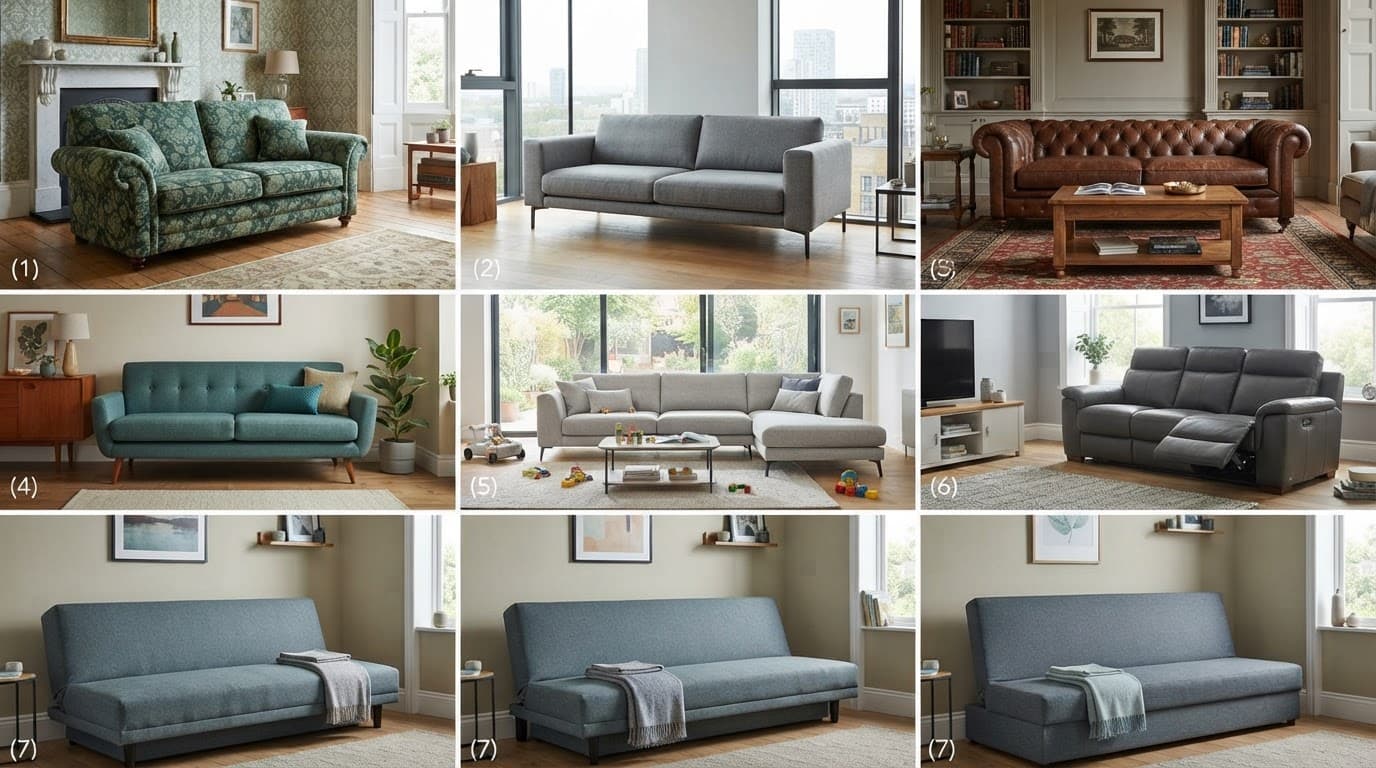
AI-generated image showing three-seater sofa styles in different UK home settings.
Classic Fabric 3 Seater Sofas
Classic fabric 3 seater sofas usually have rounded arms, a medium-height back and separate cushions. Their softer outline suits traditional terraces, cottages and family lounges, particularly where fireplaces, timber floors or painted panelling add character.
A fabric sofa offers a broad choice of colours and textures, while removable covers can simplify routine care. Pale upholstery may show marks quickly, and deep buttoning or fixed cushions can make upkeep harder. Medium-width arms provide comfort without consuming too much seating space.
Velvet 3 seater sofas add depth and a slightly more formal finish, whilst boucle sofas create a softer, textured appearance. Both fabrics can suit contemporary schemes, but their surface texture deserves careful consideration in busy homes.
Contemporary Low-Profile Designs
Low-profile sofas have clean lines, shallow arms, low backs and short or concealed legs. Their horizontal shape works well in modern flats and open-plan rooms because it keeps sightlines clear and makes the living room feel more spacious.
These designs often use firm, broad cushions that support upright sitting. The drawback is reduced back support for taller occupants, particularly when the back height is low. Slim arms can increase usable seat width, but a very low sofa may feel awkward beside tall bookcases or traditional furniture.
Chesterfield Sofas
A Chesterfield three-seater is recognised by rolled arms, deep buttoning and a low, often continuous back. Leather 3 seater sofas bring a formal, substantial appearance, whilst fabric upholstery creates a gentler look for period homes and traditional terraces.
The rolled arms and heavy base add visual weight, so this style needs breathing room around it. Deep seats can feel relaxed, although the upright back may not suit those seeking a soft, reclining posture. Buttoning also creates more surfaces for dust and crumbs to collect.
Mid-Century Styles
Mid-century sofas typically feature tapered wooden legs, slim arms, a raised base and a neatly shaped back. The elevated frame exposes more floor, which helps compact rooms feel less crowded.
Their structured cushions usually provide supportive everyday seating rather than a sinking, lounge-style feel. These sofas suit modern flats and smaller homes, but the relatively narrow arms and firmer padding may feel less generous during long family film nights.
Modular Three-Seat Sofas
Modular 3 seater sofas use separate sections that can form a straight three-seat arrangement. They give households greater flexibility when rooms change, although some models occupy more depth than their simple shape suggests.
The relaxed cushions work well in family homes, but loose sections can shift on hard floors. Buyers should check whether the modules lock together and whether replacement covers remain available.
Recliner Sofas
Recliner sofas add footrests and adjustable back sections, making them suitable for households prioritising television viewing or leg support. They can offer excellent comfort, particularly for people who prefer a supported, raised-leg position.
A power recliner sofa uses a motor to provide smoother, more precise adjustment than a manual mechanism. However, it needs clearance from walls and can look bulky. A second power recliner sofa consideration is weight, since the motor and frame can complicate delivery and room placement.
Sofa Beds
A three-seater sofa bed combines everyday seating with occasional sleeping space. It suits compact flats, guest rooms and homes without a dedicated spare bedroom.
The mattress mechanism can make the sofa heavier and reduce storage space beneath it. Comfort also varies widely, so mattress thickness, opening method and sleeping surface deserve as much attention as the daytime cushions.
Colour affects every style. Grey 3 seater sofas usually adapt well to changing décor, whilst a beige sofa can make a room feel warmer and brighter. Patterns hide marks, while brown leather sofas bring richer colour and lasting visual weight. Bold upholstery creates a stronger focal point but can date faster. Online shopping broadens choice and simplifies price comparison, yet fabric samples, full dimensions, delivery access and return terms remain essential checks.
How to Judge Comfort, Build Quality and Everyday Durability
A 3 seater sofa can look inviting in a photograph yet feel too low, too deep or poorly supported daily. Specifications reveal important details that product images rarely show, including seat dimensions, cushion fillings, suspension, joints and upholstery quality.
Check the Seating Position, Not Just the Cushioning
Seat height affects how easily people can sit down and stand up. A low seat may suit relaxed lounging, but it can feel awkward for older adults or anyone with limited mobility. A higher seat usually supports a more upright posture, although the ideal measurement depends on the user and cushion compression.
Seat depth also changes how a sofa feels. A shallow seat encourages upright sitting, while a deeper seat allows people to curl up or recline. Excessive depth can leave shorter users without proper back support. Check both the overall depth and the usable depth of the seat cushions, measured from the front edge to the back cushion.
Back height and arm height deserve equal attention. A low back may look modern but offer little support beneath the shoulders. High arms can provide a comfortable resting position, although broad arms reduce available seating space. Fixed back cushions usually retain their shape better, whilst loose cushions offer more flexibility but need regular repositioning.
Cushion filling also determines the sofa’s comfort and character:
- Foam gives firmer, more consistent support and usually holds its shape well. Higher-density foam tends to resist premature sagging, although manufacturers don’t always publish density figures.
- Fibre feels softer and more relaxed than foam, but it can flatten or develop uneven areas. Regular plumping helps restore its appearance.
- Feather offers a soft, sinking feel, yet it needs frequent shaking and reshaping. It may also feel less suitable for households seeking firm, upright support.
A showroom sofa often feels firmer than it will at home because repeated use compresses the filling. Cushion construction matters more than first impressions.
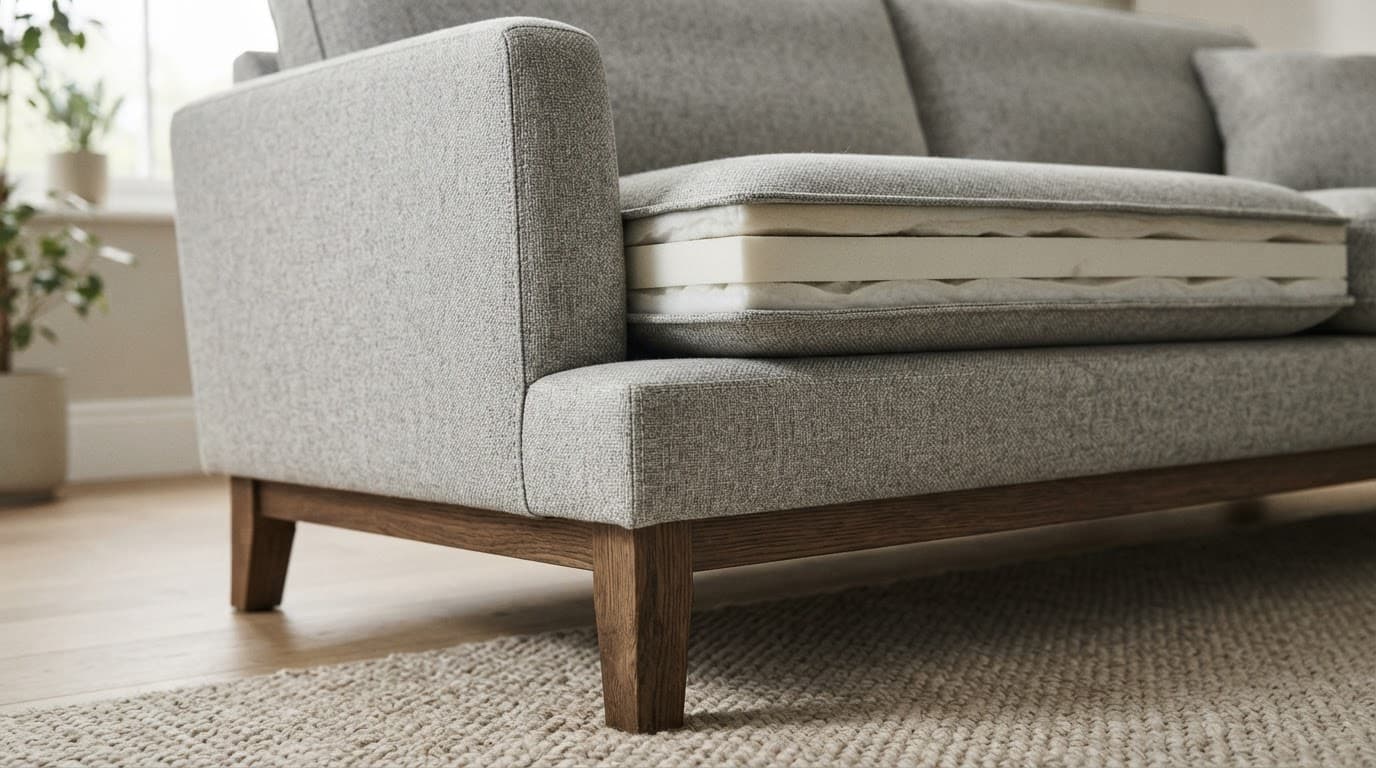
AI-generated image showing upholstery texture, stitching, cushion layers and sofa legs.
Look Beneath the Upholstery
A strong frame is the foundation of a durable three-seater sofa. Hardwood or well-constructed engineered timber can provide reliable support and long-term durability. Weak joints may loosen, creak or shift under repeated use. When viewing a sofa in person, gentle pressure on the arms and back shouldn’t produce excessive movement.
Suspension sits between the frame and cushions. A pocket spring system can provide responsive, independent support when properly installed, although not every sofa uses this construction. Serpentine springs can also perform well when securely fitted. Webbing may feel comfortable and keep the frame lighter, but its performance depends on strap quality and tension. Uneven sinking often points to weak suspension rather than worn upholstery.
If the product specification mentions pocket spring suspension, check how it is used and whether it supports the full seating area. The specification should also identify the frame materials, suspension type and any weight limits. These details make it easier to compare construction rather than relying on appearance alone.
Feet should be sturdy, properly attached and suitable for the flooring. Tall wooden legs can make cleaning easier and give a lighter appearance, whereas a low plinth may offer greater visual weight. A power recliner sofa needs additional inspection because its motor and mechanism increase frame weight. For a power recliner sofa, also check wall clearance and moving components, as repeated operation places extra stress on the frame.
Upholstery affects appearance, feel and maintenance. A fabric sofa can offer a soft, casual finish, with cotton blends and linen-look materials suited to relaxed interiors. A leather sofa is durable and easy to wipe clean, but it can scratch and needs suitable conditioning. A second leather sofa consideration is temperature and feel, as the surface may feel cool initially and show natural marks over time.
Children, pets and heavy daily use make removable covers, tight weaves and darker or patterned fabrics practical choices. Minor creasing, light pilling and gradual colour change are normal cosmetic wear. Broken stitching, exposed filling, a distorted frame or a seat that collapses unevenly indicate a quality problem.
Before ordering, the guarantee, fire safety information and care instructions should be available. Upholstery sold in the UK must meet relevant furniture fire safety requirements, but buyers still need to check the manufacturer’s labels and maintenance guidance. A clear care schedule can protect the upholstery, whilst a strong guarantee provides useful evidence of the maker’s confidence in the construction.
Measure the Room, Compare Prices and Buy a 3 Seater Sofa Online
Buying one online can widen the choice of styles, fabrics and prices, but a product page cannot show whether it will fit through a hallway or feel comfortable after an hour. Accurate measurements and a comparison of the full delivered cost are therefore more useful than attractive photography alone.
Measure Every Part of the Route
Start with the living room, then work backwards towards the front door. Measure your space, including the sofa’s floor area and the circulation space around it. Record its overall width, depth and height, plus the internal seat width, arm width and leg height. Note whether the legs can be removed. Overall depth differs from usable seating space, particularly when checking the seat cushions.
A practical measurement sequence includes:
- Mark the sofa’s floor area with masking tape, then check walking space between it, tables, radiators and other furniture.
- Measure doorways and hallways, turns, staircases and entrance height. Include narrow banisters, dado rails and awkward corners.
- Check lift access in flats, including the lift door width, internal height and maximum weight.
- Measure window openings if the sofa may need to enter through a window. Confirm whether permission or specialist equipment would be required.
- Leave clearance around radiators and vents, since tight placement can restrict heat circulation.
- Compare the narrowest point on the route with the packaged dimensions, not only the assembled size.
- For a power recliner sofa, allow extra weight and space for its motor, wiring and reclining movement.
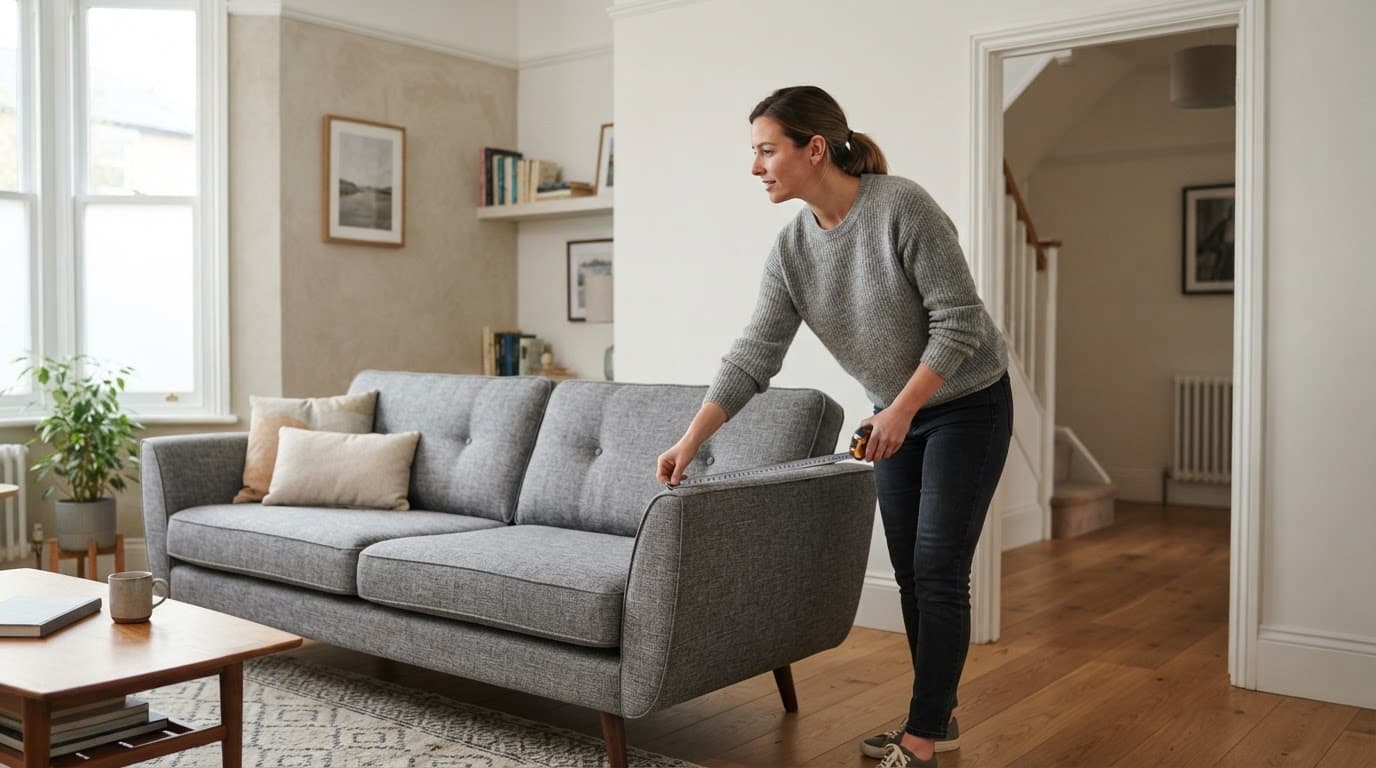
AI-generated image showing a sofa measurement and doorway clearance check.
Depth matters when the delivery team turns the sofa upright or angles it around a landing. Height can prevent it passing beneath a low ceiling or through a doorway, whilst wide arms reduce manoeuvrability. Removable legs may provide the final few centimetres needed, but they don’t solve every access problem. Packaging can also add bulk, so check whether the sofa arrives assembled, in sections or boxed.
Compare 3 Seater Sofa Prices Fairly
Broad UK price bands help place an online listing in context, although upholstery, size and construction create substantial variation.
| Price band | What commonly changes |
|---|---|
| Budget, under £600 | Simpler frames, standard fabrics, basic cushions and fewer custom options |
| Mid-range, £600 to £1,500 | Better upholstery choice, stronger suspension, improved cushioning and more finish options |
| Premium, above £1,500 | Higher-grade materials, detailed tailoring, specialist fabrics, custom sizing or more substantial construction |
These are broad guides rather than quality guarantees. A fabric sofa may cost less initially, but its price depends on the weave, treatment and cleaning requirements. A leather sofa often costs more, with care needs that vary by hide and finish.
The headline price is only one part of the calculation. The final total may include:
- Delivery, room-of-choice placement and assembly.
- Old-sofa removal or packaging disposal.
- Fabric upgrades, matching cushions and stain protection.
- Protection plans, finance charges or specialist access fees.
- Additional delivery costs for a power recliner sofa, including motor handling or wall-clearance requirements.
- Return collection charges if the sofa proves unsuitable.
The fairest comparison uses the same width, upholstery type, cushion filling, delivery service and guarantee. Consider frame construction, suspension and expected durability, rather than relying on price alone.
Use Online Information Carefully
Online shopping offers a wider selection than many showrooms can display. Product pages also make it easier to compare specifications, monitor price changes and read feedback from a larger group of buyers. However, screens can distort colour, and comfort cannot be tested through a photograph. Delivery damage, missed access details and unclear returns procedures create further risks.
Before placing an order, the online checklist should cover:
- Overall and packaged dimensions, including removable parts.
- Upholstery composition, care instructions and fabric samples.
- Frame, suspension, cushion filling and pocket spring information.
- Delivery, assembly, access and removal charges.
- Returns exclusions, collection costs and guarantee length.
- UK fire-safety labels and relevant product documentation.
- Reviews that distinguish early impressions from long-term use, including comfort after extended sitting.
- For a power recliner sofa, motor warranty details, wall clearance and specialist delivery requirements.
Neutral consumer guidance, reputable news reporting and encyclopaedia references can explain general furniture or consumer rights issues without replacing the seller’s own terms. Careful comparison turns online convenience into a clearer assessment of value, rather than a simple search for the lowest displayed price.
Care, Delivery Checks and Common Buying Mistakes
A 3 seater sofa is a substantial purchase, so value depends on what happens after the order as much as the price paid. Delivery checks, suitable care and realistic expectations can prevent minor problems becoming costly disputes.
What to Check When the Sofa Arrives
The packaging should be examined before the delivery team leaves. Tears, crushed corners, punctures or damp marks may indicate damage beneath the wrapping. Where possible, faults should be recorded on the delivery paperwork before signing, although the delivery terms will determine the exact process.
Photographs provide useful evidence, particularly when damage is visible on the packaging. The buyer should also confirm that the delivered model, colour, upholstery and configuration match the order confirmation. Missing cushions, incorrect feet or a different fabric can be difficult to prove later without written records.
The following documents should be retained:
- The order confirmation and product specification.
- Delivery notes, photographs and correspondence about faults.
- The guarantee, care instructions and returns information.
- Any paperwork relating to assembly, collection or damage reports.
A sofa that arrives in good condition can still develop a problem during assembly. Loose legs, uneven seat cushions, exposed staples, poor stitching or a distorted frame should be reported promptly rather than treated as normal settling. Cushion recovery and even support also help preserve comfort during everyday use.
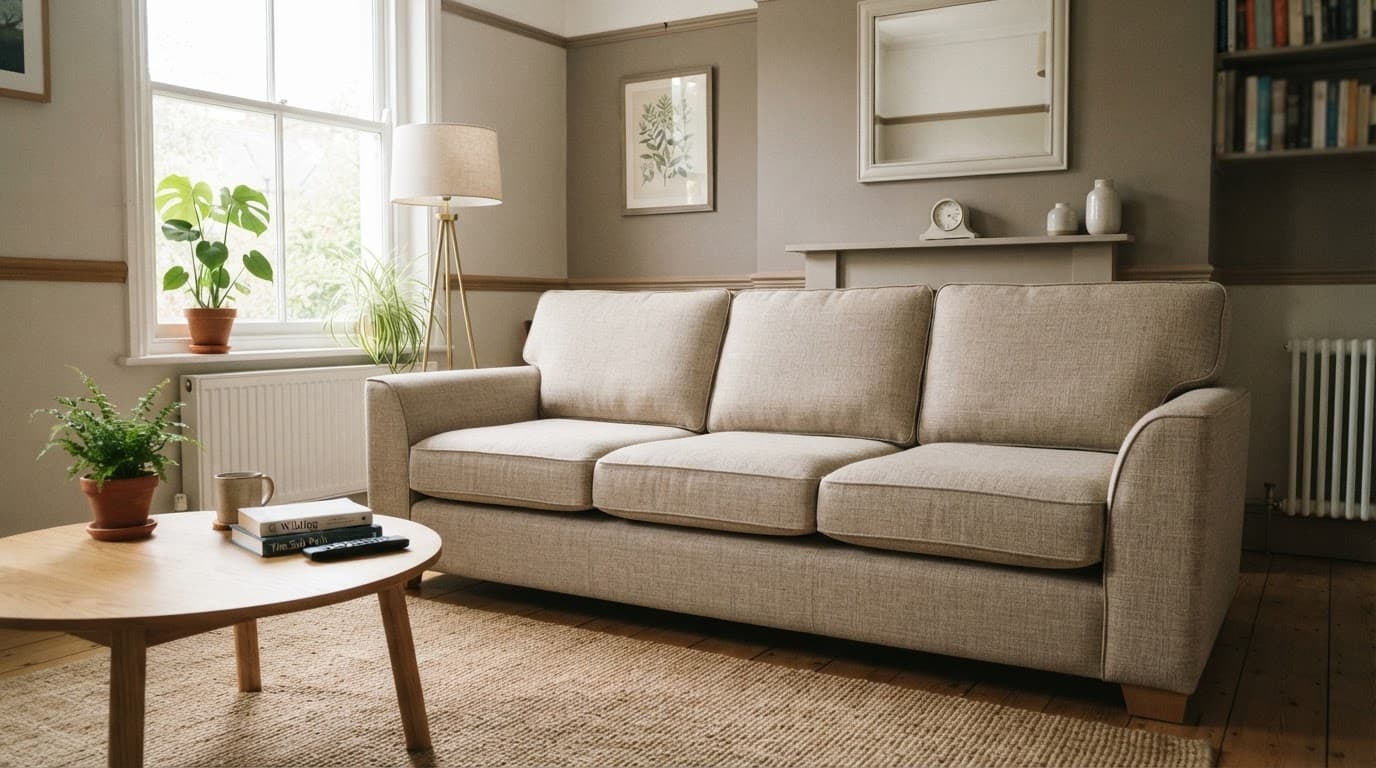
AI-generated lifestyle image of a well-maintained three-seater sofa in a realistic UK living room.
Care for Fabric, Leather and Performance Upholstery
Regular maintenance protects both appearance and comfort. A fabric sofa generally benefits from gentle vacuuming, including the creases beneath removable cushions, while cushions should be rotated or plumped when the manufacturer advises it. Prompt cleaning is important after spills, using a clean, absorbent cloth. Rubbing can spread the mark or damage the fibres.
A leather sofa should be dusted with a soft cloth and cleaned only with products approved for its specific finish. A leather sofa can also be damaged by excessive water, household detergent or direct heat, which may dry or discolour the surface. Performance upholstery may resist everyday marks, but it is still not stain-proof. Manufacturer instructions take priority over general advice.
The main differences between common upholstery types are clear:
| Upholstery | Pros | Cons |
|---|---|---|
| Fabric | Wide colour choice, softer feel and often lower cost | Can absorb spills and show wear |
| Leather | Wipes clean easily and develops character | Can scratch, feel cold and cost more |
| Performance upholstery | Better resistance to stains and heavy use | May cost more and still needs prompt care |
Mistakes That Reduce Value
Buying by appearance alone is a common error. Photographs cannot show whether the seat is too deep, the back too low or the arms too wide for comfortable use. Access measurements are equally important, especially in flats and older terraces.
Households with pets or children should assess claw marks, shedding, muddy paws and frequent spills before choosing pale or delicate upholstery. Cushion care is often overlooked, yet loose fillings can flatten without regular attention.
A guarantee doesn’t usually cover every stain, accidental damage or ordinary wear. Extended cover can also duplicate protection already included through home contents insurance or another policy. Its cost should be compared with the exclusions and claim excess.
When the frame remains sound, repair or reupholstery may offer better value than replacement. A sofa with a strong structure and tired fabric can often justify renewed covers, whereas a sagging frame, broken suspension and failing mechanisms usually make replacement more sensible.
Frequently Asked Questions
Choosing a 3 seater sofa involves more than comparing styles and headline prices. The answers below cover practical issues affecting everyday use, delivery, maintenance and long-term value.
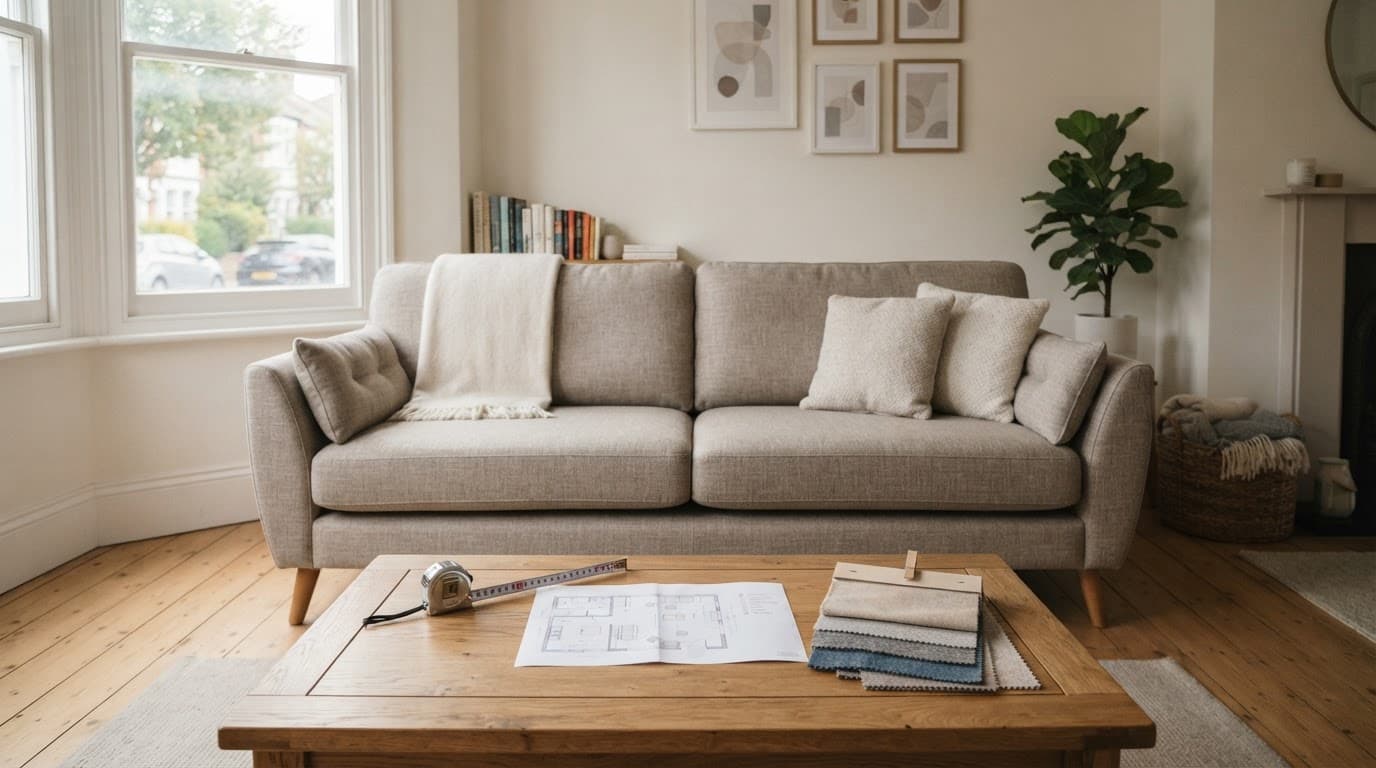
AI-generated image showing a three-seater sofa with measuring tools and fabric samples.
How wide is a typical three-seater sofa?
A typical three-seater sofa is often around 180 to 230 cm wide, although compact and oversized designs can fall outside this range. Width varies with arm thickness, cushion arrangement, reclining hardware and modular sections.
The external width includes the arms and any side mechanisms, so it doesn’t show the available seating space. Use the manufacturer’s exact dimensions when planning the room or checking doorway access.
Will a three-seater sofa fit through a narrow doorway?
Width alone cannot answer this because delivery teams may need to turn the sofa upright or angle it around corners. Sofa height, overall depth, packaged dimensions, staircases, hallway turns and ceiling clearance can all affect access.
Some models have removable legs, detachable cushions or separate modular sections, which can make delivery easier. Measure the route from the delivery vehicle or entrance to the final room, including gates, communal doors, lifts and narrow landings.
Is fabric or leather better for a family living room?
Neither material suits every household. Fabric usually feels warmer and softer, offers more colours and costs less, but it can absorb spills and show heavy wear. A leather sofa is easier to wipe clean and can develop an attractive patina, although it may feel cold initially, cost more and show scratches.
Families with young children may prefer a tightly woven, darker or patterned fabric, especially if replacement covers are available. Pet claws can catch on loose weaves, while leather can mark under repeated scratching. The choice also depends on budget, cleaning habits and whether the household prefers a soft, tactile finish or a smoother surface.
How long should a good three-seater sofa last?
A well-made three-seater sofa can remain serviceable for many years, but lifespan depends on frame construction, suspension, upholstery, usage and care rather than price alone. A costly sofa with unsuitable upholstery or weak internal support may age faster than a simpler, well-maintained model.
Cushions that have flattened, lost shape or developed minor seam damage may be replaceable or repairable before the entire sofa needs discarding. A sound frame and even suspension support lasting comfort, whereas persistent sagging, broken joints or a distorted structure usually indicate a larger problem.
Can a three-seater sofa be used for sleeping?
A standard sofa is designed for sitting and shouldn’t be treated as a regular bed. Its seat cushions may create an uneven surface, while the frame and upholstery lack the mattress support needed for safe, regular sleeping.
A purpose-built sofa bed has a suitable opening mechanism, a supported sleeping platform and a mattress designed for occasional or regular use. Sufficient clearance is also needed to open it fully without striking a table, wall or radiator.
What should be checked before ordering a sofa online?
The product page should provide full external and packaged dimensions, upholstery composition, care instructions, seat measurements and useful information about cushion filling and firmness. Delivery arrangements must cover access, assembly, room placement, packaging removal and any additional charges.
If you’re considering a power recliner sofa, check the electrical connection, wall clearance, motorised parts and delivery weight. These details can affect both room placement and access.
Returns, guarantees, fire safety details and exclusions need equal attention. Independent reviews can reveal whether seating changes over time, colours match photographs, delivery damage is handled properly and customer service responds effectively. Viewing a fabric sample remains sensible because screen colours vary between devices.
Conclusion
The best 3 seater sofa is not necessarily the widest or cheapest model. It should suit the room and delivery route, match the household’s routines, and provide dependable support. Upholstery, frame stability and overall durability matter more than appearance alone.
Online shopping can widen choice and simplify price comparisons. Assess seat dimensions, materials, delivery charges, guarantees and return terms together before buying.
A three-seater is a long-term household purchase. Its true quality emerges through repeated use, cushion recovery, stable construction and ease of care, not staged photography or a low headline price.
Explore More Expert Buyers Guides and Reviews
For a list of our main buyers guides use the drop-down menu at the top of the page. Topics related to this article are:
Home and Garden Furniture Buyers Guides
Bedroom Furniture Buyers Guides
living Room Furniture Buyers Guides
Garden Furniture Buyers Guides
Patio Furniture Sets Buyers Guide
–
Explore Our Blog Categories for Expert Buying Advice
- AI Powered Product Finder Tools (25)
- Expert Buying Guides & Shopping Tips for UK Shoppers (1,431)
- Brands & Designer Products (Men, Women & Electronics) (285)
- Designer Fashion Brands: Buyer’s Guides & Reviews (163)
- Electronic Brands: Buyers Guides & Reviews (88)
- Apple Products Buyer’s Guides & Reviews (25)
- Brands – Phones, Laptops, PC”s, Tablets | Buyer’s Guides & Reviews (42)
- Electronics – Tablet & iPad Reviews and Buyers Guides (11)
- Kitchen Appliance Brands: Buyer’s Guides & Reviews (22)
- Laptop Brands & MacBooks Buyer’s Guides & Reviews (9)
- Phone Brands & iPhones Buyer’s Guides & Reviews (23)
- Car Buying & Financing Made Easy | Expert Guides for the UK (89)
- Clothing, Fashion & Accessories Buying Guides UK (496)
- Beauty, Health & Wellness | Perfume, Skincare, Makeup & Wellbeing Guides (183)
- Footwear: Trainers & Shoes Buyers Guides (49)
- Jewellery: Expert Reviews, Trends & Buying Guides (73)
- Men's Clothes — Buyers Guides & Reviews (39)
- Men’s Clothes, Fashion & Accessories Guides UK | Latest Trends & Smart Shopping (167)
- Women's Clothing Buyers Guides — Dresses, Tops & More (194)
- Women’s Clothes, Fashion & Accessories Guides UK | Latest Trends & Smart Shopping (435)
- Electronics, Tech & Gadgets: Reviews, Deals & Buying Guides UK (173)
- Furniture Buyer’s Guides | Home & Garden & Styling Tips (326)
- Bedroom Furniture Guides UK | Expert Tips & Best Value Deals (93)
- Garden Furniture, Landscaping & Garden Rooms Guides UK | Expert Tips & Best Value Deals (169)
- Garden Sofa & Sofa Sets Buyers Guides (11)
- Garden Tables & Chairs: Sets, Individual Tables & Seating Buyers Guides (53)
- Home Furniture, Décor & Interior Design Guides UK | Styling Tips & Inspiration (169)
- Living Room Furniture, Design & Décor Guides UK | Styling Tips & Inspiration (57)
- Sofa & Sofa Beds Buyers Guides (19)
- Sofa Beds Buyers Guides (7)
- Sofa Buyers Guides & Expert Advice (11)
- Holidays & Travel: Hotels, Villas & Flights (161)
- Home & Garden Improvements | Renovations & Outdoor Transformation Guides (102)
- Insurance & Protection: Travel, Landlord, Gadget & More UK (159)
- Gadget Insurance UK | Expert Guides, Reviews & Smart Protection Tips (33)
- Home Emergency Cover UK | Expert Guides, Reviews & Practical Protection Tips (21)
- Landlords Insurance UK | Expert Guides, Reviews & Smart Protection Tips (31)
- Travel Insurance UK | Expert Guides, Reviews & Money-Saving Tips (34)
- Pets: Guides, Tips & Inspiration (26)
- Brands & Designer Products (Men, Women & Electronics) (285)
- Gifts for Everyone: Ideas for Every Occasion & Budget (49)