Adidas remains one of the best-known sportswear brands, combining established sports design with styles that work beyond the gym. Its footwear covers running, football, training, walking and leisure, so no single pair represents the brand.
This review examines Adidas trainers through their design, materials, comfort, sports performance, lifestyle appeal, durability, value and sizing, alongside practical advice for buying online. It also compares performance footwear with retro trainers and low top trainers, while considering models worth trying and the brand’s strengths and limitations. Three supporting images will be used, each clearly labelled as AI-generated and sized to match the article text. The review begins by comparing the main types of footwear and what each is made to do.
Key Takeaways
- Adidas trainers cover distinct needs, including running, football, gym training, walking and everyday leisure.
- The brand stands out through recognisable designs, dependable comfort and models that move easily between sport and casual wear.
- Samba, Gazelle, Stan Smith and Ultraboost remain strong choices, while newer performance models are worth trying for specialised use. These retro trainers suit casual styling, but low top trainers aren’t substitutes for technical running or gym footwear.
- Buying online offers broader sizing, easier price comparison and access to previous-season reductions, but fit guides and return terms need checking.
- The best pair depends on activity, foot shape, cushioning preference, durability expectations and budget.
Adidas Trainers Review: What Makes the Brand Stand Out?
The brand’s footwear occupies two distinct positions in the market. Some models address measurable sporting demands, while others rely on familiar shapes, strong colours and cultural recognition. That breadth keeps the brand visible in gyms and everyday streetwear.
However, the three stripes and a technical-sounding name don’t guarantee the right shoe for every purpose. Comfort, fit, stability and outsole design often matter more than the headline feature.
The Adidas technologies worth understanding
Adidas uses different technical materials and cushioning systems across its ranges, so specifications need to be read in context.
- BOOST technology uses small energy-returning capsules in the midsole. It is designed to provide a soft, responsive feel, making it common in running and comfort-focused footwear.
- Lightstrike foam prioritises a lighter construction and a more direct response. It appears in selected performance shoes where reduced weight can help with faster movement.
- A rubber outsole provides traction against the ground. The tread pattern and rubber compound affect grip on roads, indoor courts, artificial pitches and wet pavements. Some Adidas models use Continental rubber, which is associated with enhanced grip in selected running and lifestyle designs.
- Mesh and knit uppers allow air to circulate around the foot. They can reduce heat during exercise, although thin fabrics may offer less protection from rain and abrasion.
- Synthetic overlays reinforce areas that need more structure, such as the heel, midfoot or toe box. They can improve support, but too many overlays may make a trainer feel less flexible.
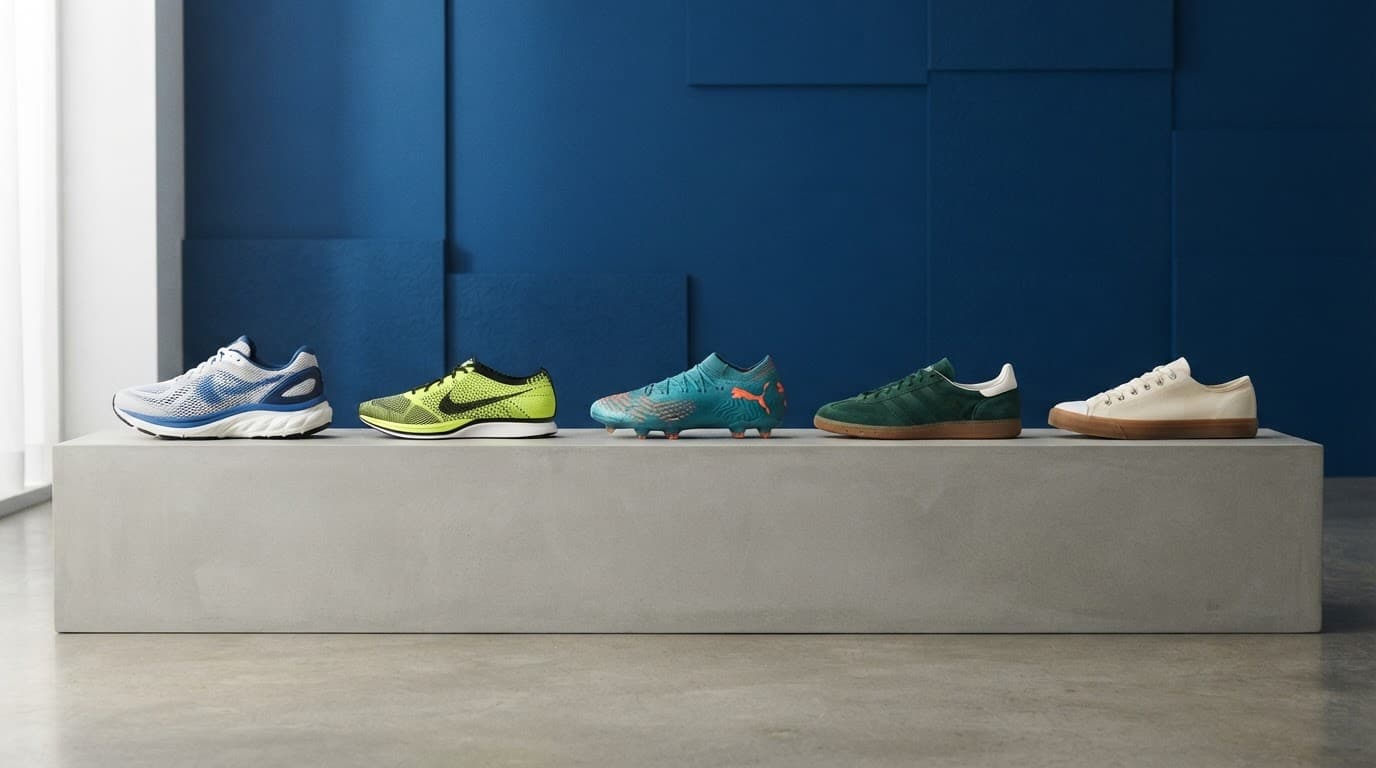
AI-generated image showing the different silhouettes used across Adidas sports and lifestyle trainers.
Primeknit uppers and other engineered textiles can offer a close, sock-like fit, but the result varies between models. A shoe with Boost may feel comfortable for walking yet lack the stability needed for heavy gym sessions. Equally, a lightweight running shoe may feel too flexible for court sports.
Technical features describe how a shoe is constructed, not whether it suits every activity.
The most reliable assessment combines intended use with the wearer’s foot shape, preferred cushioning and the surface involved. A grippy outsole, secure heel and comfortable fit can matter more than the name printed in the product description.
Why Adidas works for both sport and everyday style
Adidas has retained its crossover appeal by keeping classic designs visible while developing separate footwear for running, football and training. The Samba, Campus and Superstar, alongside another terrace-style model, are mainly lifestyle trainers. In streetwear, retro trainers and low top trainers suit casual outfits, but they aren’t proper substitutes for running shoes, football boots or supportive training footwear.
Sport-specific ranges use different priorities. Running models focus on cushioning, weight and repeated forward movement. Football footwear is shaped around ball control and pitch traction, while training shoes generally need greater lateral stability for gym exercises.
Colour choice also supports the brand’s appeal. Neutral white, black and gum-soled versions sit alongside seasonal shades, bold contrasts and limited collaborations. Retro trainers and low top trainers remain prominent in streetwear because their simple profiles work with jeans, relaxed trousers and sportswear without appearing overly technical.
That balance is Adidas’s clearest strength. Its iconic designs carry enough sporting history to feel authentic, yet their styling remains accessible away from organised sport.
The Main Types and What They Are Made For
The range covers separate activities rather than one universal design. Cushioning, grip, stability and materials change according to whether footwear is intended for road running, football, gym work or casual wear.
Running trainers for road miles and daily training
Adidas running families include Ultraboost, Adizero and Supernova, although specifications differ between individual models. Ultraboost shoes generally prioritise cushioning and comfort for regular road miles. Supernova models often sit in the daily-training category, with a balanced feel for easy runs and general fitness. Adizero covers lightweight trainers designed for faster sessions, racing and competition-focused use, although reduced weight can mean less cushioning for everyday mileage.
Key features include:
- Cushioning, which affects impact protection and how soft or responsive the shoe feels.
- Heel-to-toe drop, the height difference between the heel and forefoot, which changes the transition through each stride.
- Stability, particularly for runners who need more guidance or a secure platform.
- Weight and breathability, which matter more during faster running or warmer conditions.
- Outsole grip, especially on wet pavements and mixed road surfaces.
A comfortable daily trainer may feel too heavy for speedwork, whilst a lightweight racing design can lack the relaxed cushioning needed for long, frequent runs. Runners should consider gait, distance, surface and fit for the right balance of comfort and support. Appearance alone says little about how a shoe will perform.
Football boots and trainers for indoor or outdoor pitches
Football boots use studs or specialist soles to create traction on a particular playing surface. Ordinary trainers lack the same grip, ball-control features and lockdown, so they aren’t a safe substitute for competitive football.
Firm-ground boots are designed for natural grass, whilst artificial-ground models use stud patterns suited to synthetic pitches. Indoor football shoes usually have flat, non-marking soles, while turf trainers use many small studs for short artificial grass. Wet conditions also affect traction, touch and comfort, so the outsole must match the pitch rather than being treated as a universal solution.
Adidas ranges such as Predator, F50 and Copa illustrate different design approaches. Their construction can vary in upper texture, flexibility, protection and lockdown. A close fit helps maintain control, but excessive tightness can restrict movement or create pressure points.
Training, gym and cross-training footwear
Gym and cross-training shoes need a stable base, lateral support, a flexible forefoot and a durable outsole. These features help during circuits, lunges, jumps and side-to-side movement. Training models vary, but the category generally feels firmer and more planted than a running shoe.
Running shoes often use softer, taller cushioning for repeated forward impact. That comfort can become instability during heavy squats or lifting. A useful fit check involves standing through several squats, lunges and lateral steps. The heel should remain secure, the foot shouldn’t slide inside the upper, and the sole should feel supportive without blocking natural movement.
Lifestyle, walking and casual trainers
Lifestyle trainers include the Samba, Gazelle, Campus, Superstar, Stan Smith and Handball Spezial, with terrace-inspired profiles that make them popular retro trainers. Leather uppers are usually durable and easier to wipe clean, whilst suede offers a softer finish but marks more readily. Canvas tends to breathe well, although it provides limited rain protection. Synthetic materials can reduce cost and simplify cleaning, but breathability and long-term durability vary.
These low top trainers can suit light walking and everyday wear, yet their flatter soles may lack the cushioning and support required for long-distance walking. These retro trainers also have limited protection in wet conditions, particularly when suede absorbs moisture.
A second pair of low top trainers may feel comfortable for short trips, but casual footwear is not automatically suitable for extended walks. The flatter construction of many low top trainers can provide less shock absorption and underfoot support over longer distances.
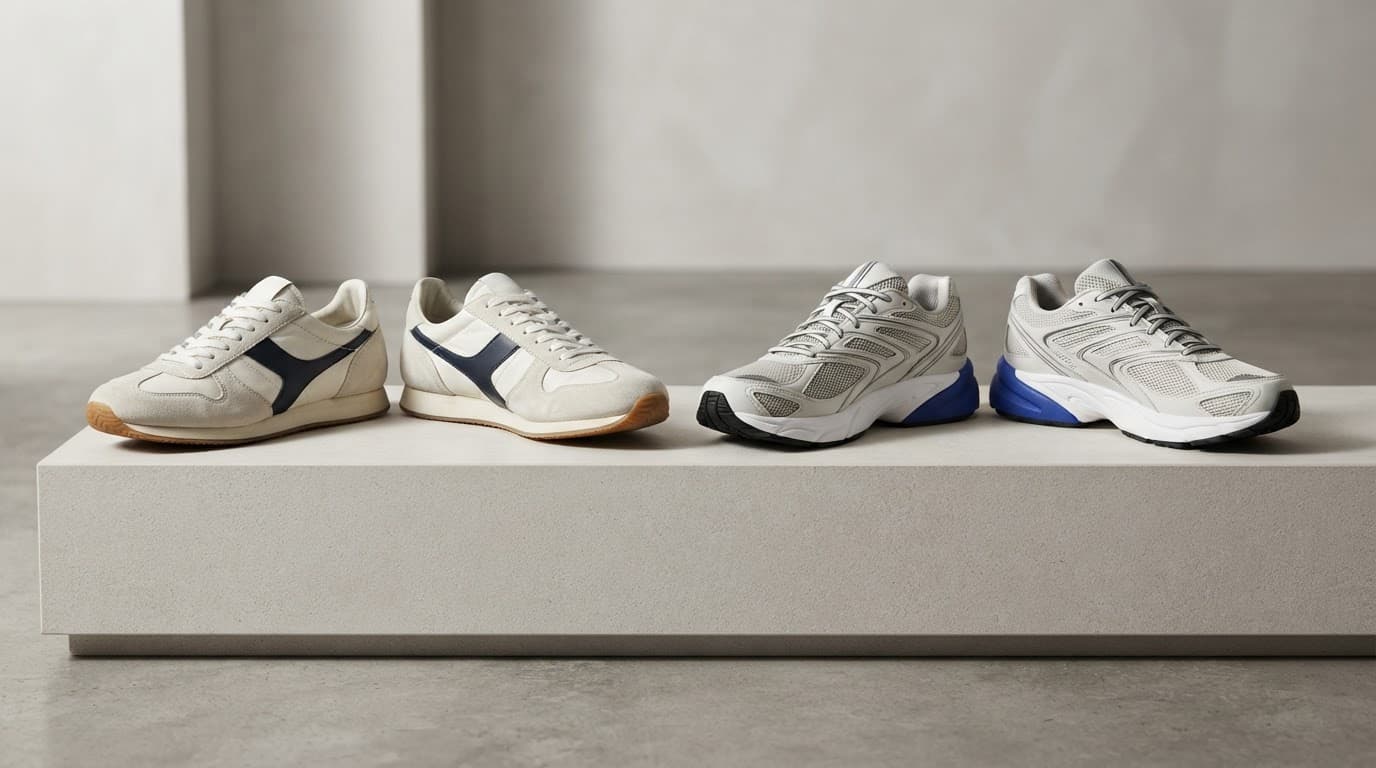
AI-generated image showing a comparison between lifestyle and sports trainers.
Must-Have Adidas Models and Trainers Worth Trying
There is no single best trainer in the range. Its strongest models meet different needs, from flat retro trainers to cushioned running shoes and stable gym footwear. Model generations also change, so the exact version, release date and specification matter when comparing prices. Classic low top trainers can look similar while feeling very different underfoot.
The everyday classics that define Adidas style
The Samba has the slimmest, most terrace-inspired profile of this group. Its leather upper, suede overlays and relatively flat rubber sole create a sharp, versatile shape, although cushioning is modest. As retro trainers go, it has a particularly structured, fashion-led look.
The Gazelle uses a similar low-cut construction but usually feels softer and more casual. Its suede upper and simple styling make it one of the more versatile low top trainers for everyday outfits. The Campus is fuller and more relaxed, with a broader-looking upper and thicker sole than the Gazelle.
The Superstar is immediately recognisable for its shell toe and generally more structured leather construction. It offers better wipe-clean practicality than suede, making it a practical choice among leather trainers, although the firm, flat sole can feel less forgiving over long walks. Stan Smith is the cleanest option, with a minimal leather tennis-shoe shape that works well with smart-casual clothing. Together, these low top trainers show how much the range varies in shape and feel.
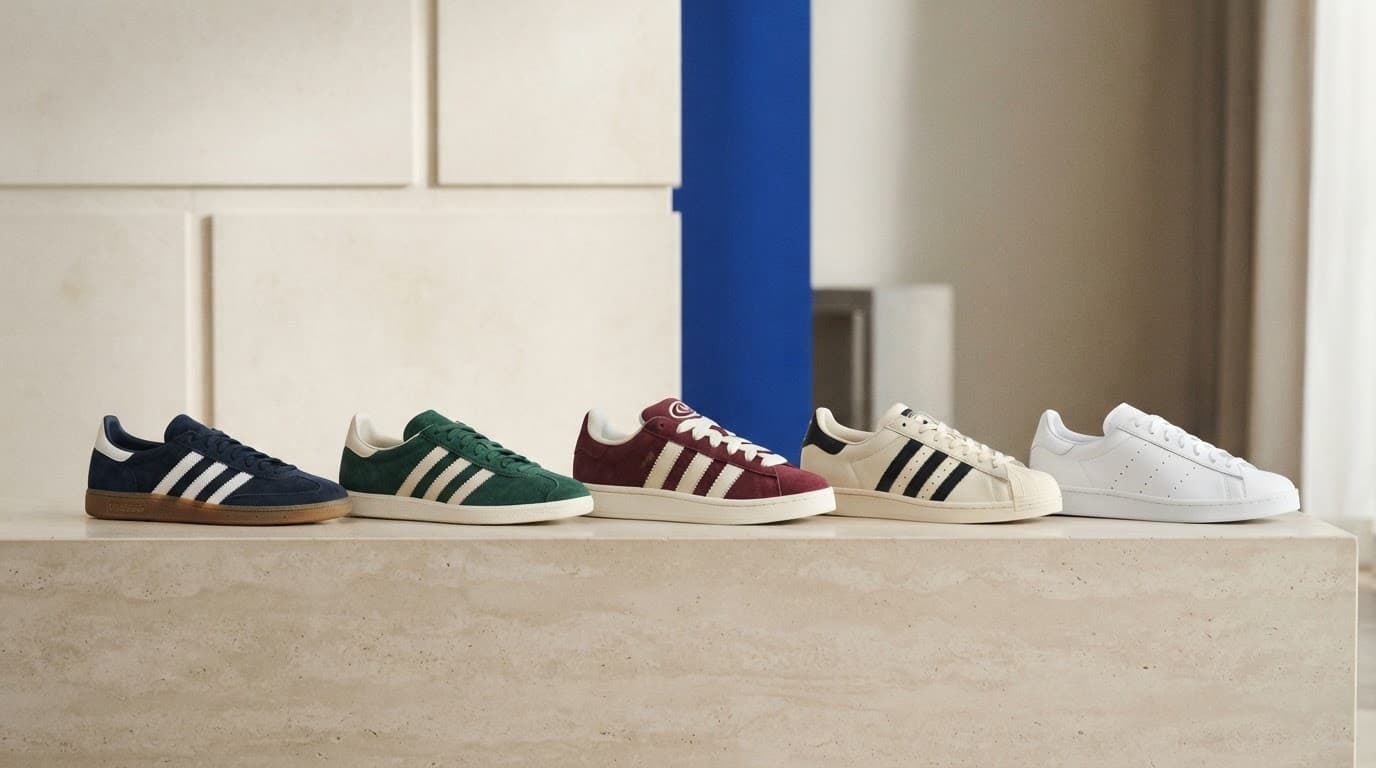
AI-generated image showing the contrasting shapes and materials of classic Adidas casual trainers.
These flat low top trainers suit everyday wear, light walking and casual outfits rather than running or demanding gym sessions. Retro trainers often provide less cushioning than modern running shoes. Fit also varies between lasts and versions, so narrow or broad feet shouldn’t be assigned to a model without checking Adidas’s current fit notes and sizing guidance.
Suede trainers need a protective spray and a dry brush, whilst leather benefits from gentle cleaning and conditioning. Low top trainers with flatter soles may also feel less comfortable during long days on foot. That maintenance difference affects value: a cheaper suede pair may demand more care, particularly in wet UK weather.
Performance models worth considering
Ultraboost is the comfort-led running choice among cushioned trainers, with generous cushioning for easy road miles, commuting and extended walking. Its softness can feel less agile during fast changes of direction. Supernova generally occupies the dependable daily-training role, balancing cushioning, stability and weight for regular shorter or longer runs.
Adizero covers lightweight trainers for tempo sessions and racing. Reduced weight and a more responsive ride can improve speed, but a racing model may sacrifice everyday comfort and durability. A representative Adidas training shoe, such as Dropset, uses a firmer, more planted platform for lifting, circuits and lateral movement. It is less suitable for repeated road running because stability takes priority over soft cushioning.
Value depends on use rather than the largest discount:
- A frequently worn daily trainer can justify a higher price through lower cost per wear.
- A specialist racing shoe may offer poor value if it is used only a few times each year.
- A previous-generation model can be a strong buy when its fit and specification still match the intended activity.
- A trainers sale reduction matters only when the model suits your needs and remains current enough for its intended use.
- Discounted trainers are not automatically good value if returns are restricted or the specification is unsuitable.
How to judge whether a model is genuinely worth trying
A sensible shortlist should pass six checks:
- The fit holds the heel securely without pressing the toes.
- The construction matches the activity and surface.
- The cushioning feels comfortable after several minutes, not just in a brief try-on.
- The upper and outsole suit the expected weather and cleaning routine.
- Return terms allow an unsuitable pair to be sent back.
- Recent independent testing supports the advertised strengths.
Recent expert reviews and reputable sports journalism provide more useful context than star ratings alone. Influencer content may show styling well, but it rarely tests lifespan, stability or performance across a full training routine.
A low price isn’t automatically a bargain. An unsuitable trainer that stays in the cupboard, marks easily or wears out quickly costs more per use than a better-matched pair bought during a seasonal reduction. Check the model generation, return rights and long-term testing before committing.
Fit, Materials, Durability and Value: The Details That Matter
A trainer can look excellent on a product page yet disappoint after several weeks of wear. Fit, upper material, outsole construction and intended use determine whether a pair remains comfortable and presentable through typical UK conditions.
Finding the right size and fit across different ranges
Sizing isn’t perfectly consistent because each range uses different lasts, shapes and construction priorities. Narrow retro trainers and low top trainers may feel tighter than a running model in the same labelled size. Football footwear often prioritises close lockdown over generous toe space.
Foot shape matters just as much. The toes should have enough room to move without touching the front, but excessive clearance can make the foot slide forwards. A slipping heel suggests poor lockdown, while pressure across the forefoot may indicate that the model is too narrow rather than simply too small.
Feet often swell during the day, so measuring both feet later in the afternoon gives a more realistic result. The larger foot should guide the choice. The model-specific size guide is more useful than relying on a familiar size, which is only a starting point, not proof of a correct fit.
Socks and insoles can change the fit significantly. Thick sports socks may create pressure in a snug upper, while an orthotic or replacement insole can reduce internal space. Both affect comfort and support by changing toe room and heel lockdown.
Indoor testing should include the intended socks and several minutes of walking, squatting and turning. Both feet should be checked, since a small difference in length or width is common.
Which materials handle daily UK wear best?
Upper materials set the balance between comfort, protection and maintenance. Their practical differences are clearer when comparing retro trainers, low top trainers and more technical footwear.
Leather trainers usually offer better protection from light rain and are easier to wipe clean. Suede trainers provide a softer texture and classic retro appeal, but need more careful protection in wet weather.
| Upper material | Main strength | Main weakness | UK care needs |
|---|---|---|---|
| Leather | Wipe-clean and reasonably protective | Can feel firm and crease visibly | Gentle cleaning and occasional conditioning |
| Suede | Soft texture and strong retro appearance | Marks, water and scuffs show easily | Dry brushing and suitable protector |
| Mesh | Good airflow and low weight | Offers limited rain and abrasion protection | Remove dirt gently and air dry |
| Knit | Flexible, close-fitting comfort | Can absorb dirt and provide less structure | Mild cleaning, with no direct heat |
| Synthetic | Often easy to clean and supportive | Breathability and longevity vary | Wipe with a damp cloth and dry naturally |
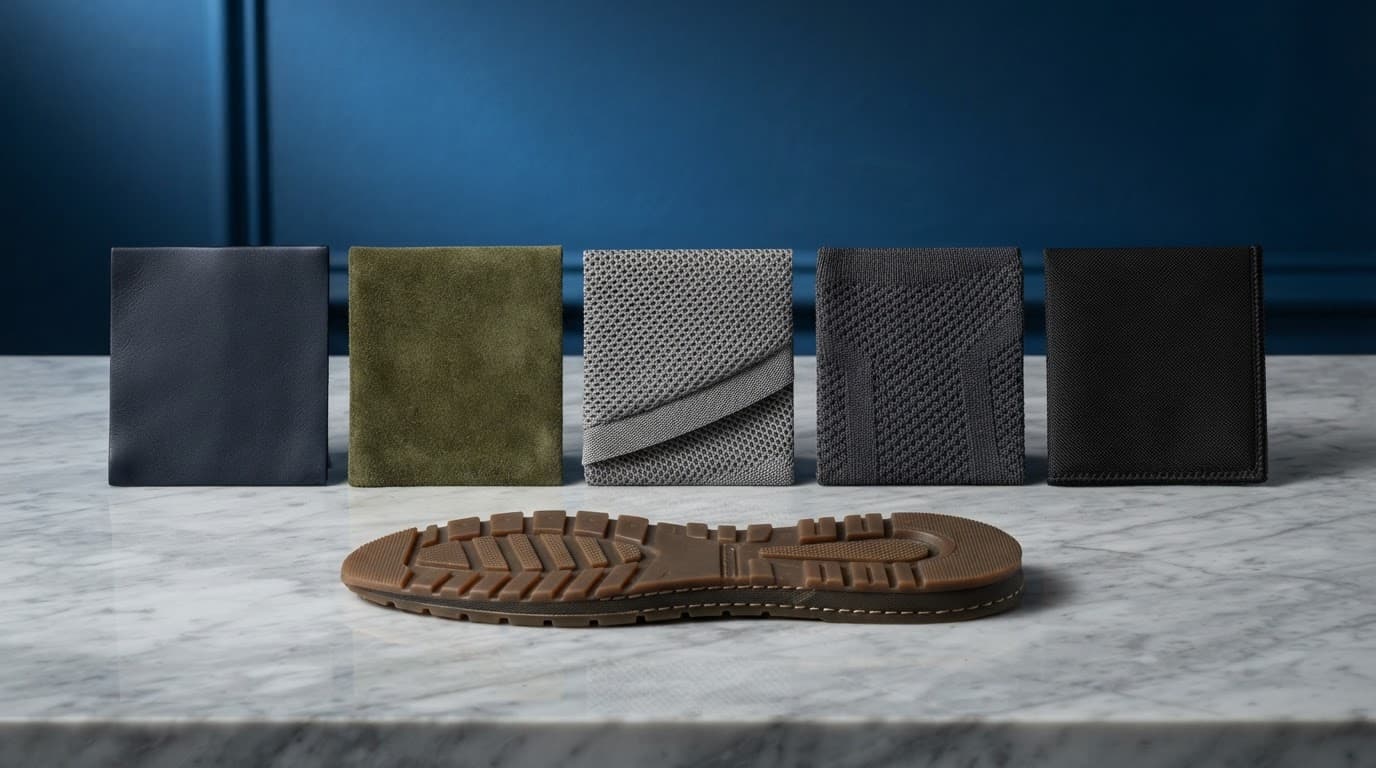
AI-generated image showing common trainer materials and outsole construction.
Mesh and knit can make breathable trainers comfortable in warmer conditions. However, they generally provide less rain and abrasion protection than leather or well-finished synthetic uppers.
The rubber outsole should look securely bonded, with even tread and no obvious gaps. Clean stitching, aligned panels and controlled glue application suggest better finishing. Early deep creasing, peeling panels or sole separation can point to weak construction, although normal creasing isn’t automatically a fault.
Regular gentle cleaning removes grit before it damages the upper. Trainers should air dry at room temperature, since radiators and direct heat can harden leather, distort foam and weaken adhesives. Wet-weather use makes suede, mesh and knit less practical for low top trainers than for more protective designs.
Working out the real cost, not just the sale price
The advertised price is only one part of value. A proper comparison includes delivery, return postage, care products and the likely frequency of use. A trainers sale price should still be judged by how often the pair is likely to leave the cupboard.
Price per wear is a simple measure: divide the total ownership cost by the number of expected uses. A £100 pair worn 100 times costs about £1 per wear before care, while a £60 pair worn 15 times costs £4.
Advanced cushioning or specialist construction makes more sense when the activity demands it. A regular runner may justify a more developed midsole, while a casual wearer may gain little from paying extra for racing technology. Rotation, weather, cleaning and the type of use all influence how long a pair remains suitable.
A manufacturing fault, such as premature sole separation, should be distinguished from ordinary wear, accidental damage or poor cleaning. Warranty rights may apply to defects, but they don’t normally cover worn tread, scuffs or heat damage.
How to Buy Adidas Trainers Online Without Making an Expensive Mistake
Buying the brand’s footwear online can provide a wider choice of sizes, colours and older model generations than a high-street shop. It also makes price history and customer feedback easier to assess. However, product pages can hide important differences, especially when similar names describe separate releases.
A reliable online research and comparison process
A careful comparison should follow a fixed order:
- Define the activity first. Running, football, gym training, commuting and casual wear require different cushioning, grip and stability.
- Shortlist suitable models. Compare several options within the correct category rather than choosing by colour or discount alone. Retro trainers and low top trainers can look similar while using different materials, soles and sizing.
- Read the technical specification. Check the upper material, midsole foam, outsole, heel-to-toe drop, stud pattern and stated fit. This matters particularly when comparing different generations of low top trainers.
- Record the exact model code and colourway. Similar names can cover different generations, materials or soles. A model code provides a more reliable comparison than the title alone.
- Compare current and previous prices. Check the original and current prices for both a trainers sale listing and the previous model. A reduction on discounted trainers may offer excellent value, but only if the specification, condition and model code match.
- Inspect delivery and return terms. Delivery charges, return postage, time limits and exclusions can alter the real cost.
- Save the order confirmation and receipt. These records can support a return, warranty query or dispute if the product differs from its listing.
Sizing deserves separate attention. Measuring both feet later in the day gives a more realistic result because feet can expand during normal activity. The larger foot should guide the choice, while the intended socks and any orthotic insoles should be considered before ordering.
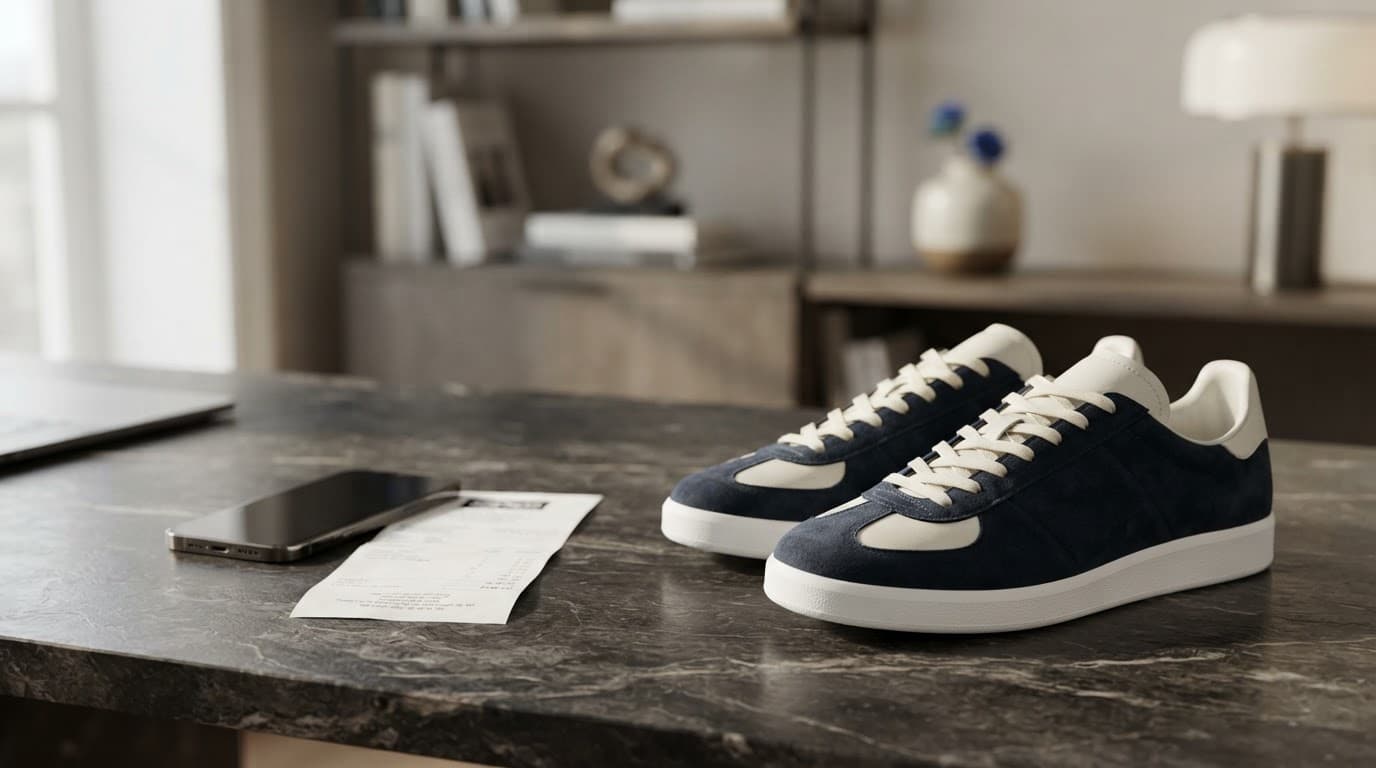
AI-generated image showing the records and product checks involved in buying trainers online.
Official specifications establish what a shoe is designed to contain, but sales copy rarely explains how it performs after repeated use. Independent testing from established news or sports publications can add useful evidence about grip, durability, comfort and sizing. Customer reviews help with recurring fit issues, although individual experiences shouldn’t replace technical information.
How to spot counterfeit or misleading listings
Several warning signs should prompt closer inspection:
- The price is far below the usual range without a clear explanation.
- Seller details, contact information or business terms are difficult to find.
- The description appears copied, uses vague claims or contradicts the official specification.
- The listing omits the model code, product measurements or material details.
- Stock photographs show a different sole, panel arrangement or colourway.
- Logos, stitching, labels or photographs appear poorly reproduced.
- The payment process offers weak buyer protection or pressures the customer to pay outside secure channels.
A genuine trainers sale still requires checks on seller details, product specification and return terms. Reputable retailers, an official outlet and secure payment protection can each reduce risk, but none should replace those checks.
Authentic footwear usually shows consistent labelling, packaging, construction and model information. Packaging alone doesn’t prove authenticity, since counterfeit goods can imitate boxes and tags. A mismatch between the box, internal label, product code and advertised colourway is more significant.
Making returns and exchanges less painful
The box, spare laces, labels and receipt should remain intact until the footwear has passed an indoor inspection. Trying it on a clean floor protects the outsole and preserves the possibility of returning an unsuitable pair.
The seller’s policy should distinguish between a change-of-mind return and a faulty-goods claim. Worn footwear may not qualify for a standard return, whilst manufacturing faults should be recorded with clear photographs and a concise description. Under UK consumer law, goods should generally match their description, be of satisfactory quality and be fit for purpose, although the precise remedy depends on the circumstances. This is general information rather than legal advice.
Keeping a dated record of the listing, model code, photographs and payment provides useful evidence when a dispute concerns condition or authenticity. A low price offers little value when unclear terms turn a simple exchange into a prolonged argument.
Frequently Asked Questions
The brand’s footwear covers very different uses, so broad claims about comfort, durability or value can be misleading. The answers below focus on practical questions after comparing running, training, walking and lifestyle ranges.
Are Adidas trainers good for everyday walking?
Many casual and running models are comfortable for daily walking, particularly those with cushioned midsoles and breathable uppers. Cushioned trainers usually offer more impact protection than flatter styles such as Samba and other retro trainers.
The right choice depends on walking distance, surface and individual foot comfort. A short commute on pavements places different demands on a shoe than several hours of standing, regular long walks or uneven paths. Breathable trainers can also feel more comfortable in warm weather, but appearance alone says little about comfort and support.
Which shoes are best for running?
Running footwear broadly falls into three groups. Cushioned daily shoes prioritise comfort and impact protection for regular road miles, whilst Adizero-style shoes focus on faster sessions, racing and a more responsive feel. Stability-focused options provide additional structure for runners who need a more guided platform.
The best model depends on distance, pace, foot shape and personal preference. Running trainers designed for racing may feel efficient during a short event but less comfortable for everyday training. A soft daily shoe may feel too heavy for speedwork, and the most expensive model is not automatically the best match.
Are they true to size?
Sizing is often broadly consistent, but the fit can change between ranges, lasts and materials. A narrow casual shoe may feel more restrictive than a knitted running shoe in the same labelled size, while football and performance models may use a closer fit for lockdown.
Both feet should be measured, preferably later in the day when they have reached their usual size. The larger foot should guide the selection, and the specific size chart should be checked before ordering. Suitable toe room is essential, with the toes clear of the front without allowing the heel to slide.
Can casual trainers be used in the gym?
Casual shoes may be suitable for light machine work, walking between exercises and general low-impact sessions. Their flatter soles can feel stable enough for basic use, although comfort and grip vary between models.
Lifting, circuits and intense training place greater demands on footwear. Casual shoes may lack the stable base, reinforced upper and lateral support needed for squats, lunges, jumps and side-to-side movement. A dedicated cross-training shoe is usually more suitable because it balances a planted heel with enough forefoot flexibility.
How long should a pair last?
There is no reliable fixed lifespan because mileage, body weight, surface, construction, rotation and care all affect wear. A pair used daily on hard pavements may deteriorate sooner than one rotated with other shoes and worn mainly indoors.
Replacement becomes sensible when the cushioning feels flattened, the tread has worn smooth or the shoe develops uneven support. Splitting materials, sole separation and new aches or discomfort also indicate that the trainer may no longer be performing as intended. Visible creasing alone does not prove that a pair needs replacing.
Are they worth buying online?
Online buying can provide a wider choice of colours, model generations and less common sizes than many physical shops. It also makes price comparison easier, particularly when older models are reduced after a newer version appears.
Retro trainers and low top trainers may look suitable for everyday wear, but appearance alone does not prove walking comfort or support. Before payment, confirm the exact model code, materials, size information, seller details, delivery charges, authenticity indicators and return conditions. Clear photographs and a realistic price are useful, but neither proves that a listing is genuine.
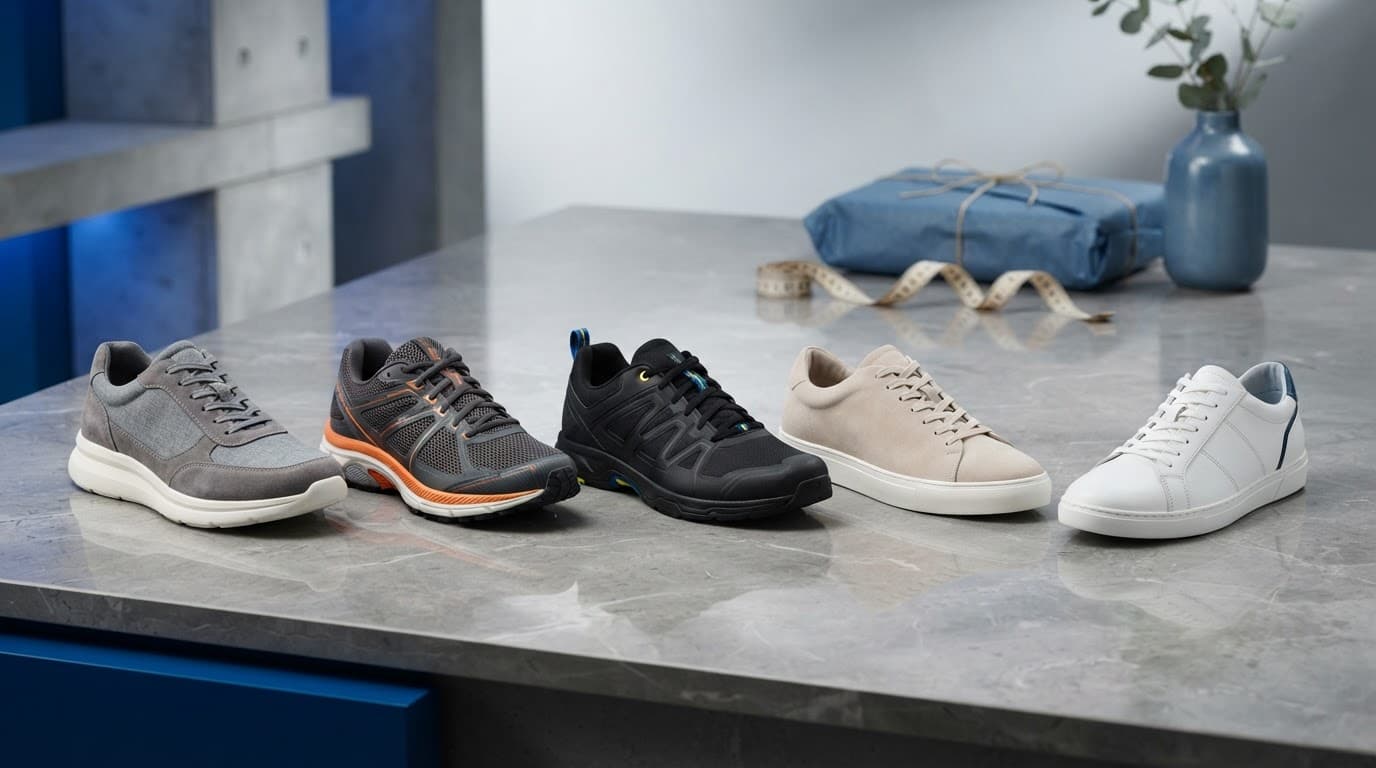
AI-generated image showing trainer choices for different activities and buying decisions.
Conclusion
The brand’s footwear remains appealing because few brands cover such a wide range of needs. Its running, football, training and walking footwear serve different purposes. Classic options, including the Samba, Stan Smith and Superstar, are iconic designs with strong visual identity and cultural recognition.
These retro trainers can make versatile low top trainers for everyday wear, but they aren’t designed for every sporting demand. The strongest products combine useful cushioning, grip or stability with materials suited to their intended use. However, value depends on selecting the correct range and fit. A classic trainer should not be judged by the same standards as a running shoe or football boot.
Online comparison can widen the choice and reveal better prices, especially when previous-season models are included. A trainers sale or previous-season reduction is worthwhile only when the model, fit and intended use are right. Checking independent reviews, exact model details, return terms and total cost helps separate a genuine bargain from an unsuitable purchase. Adidas’s lasting appeal comes from its ability to move between technical sport and everyday culture, although that breadth makes careful model selection essential.
Explore our Buyers Guides and Reviews
For a list of our main buyers guides use the drop-down menu at the top of the page. Topics related to this article are:
–
Explore Our Blog Categories for Expert Buying Advice
- AI Powered Product Finder Tools (25)
- Expert Buying Guides & Shopping Tips for UK Shoppers (1,431)
- Brands & Designer Products (Men, Women & Electronics) (285)
- Designer Fashion Brands: Buyer’s Guides & Reviews (163)
- Electronic Brands: Buyers Guides & Reviews (88)
- Apple Products Buyer’s Guides & Reviews (25)
- Brands – Phones, Laptops, PC”s, Tablets | Buyer’s Guides & Reviews (42)
- Electronics – Tablet & iPad Reviews and Buyers Guides (11)
- Kitchen Appliance Brands: Buyer’s Guides & Reviews (22)
- Laptop Brands & MacBooks Buyer’s Guides & Reviews (9)
- Phone Brands & iPhones Buyer’s Guides & Reviews (23)
- Car Buying & Financing Made Easy | Expert Guides for the UK (89)
- Clothing, Fashion & Accessories Buying Guides UK (496)
- Beauty, Health & Wellness | Perfume, Skincare, Makeup & Wellbeing Guides (183)
- Footwear: Trainers & Shoes Buyers Guides (49)
- Jewellery: Expert Reviews, Trends & Buying Guides (73)
- Men's Clothes — Buyers Guides & Reviews (39)
- Men’s Clothes, Fashion & Accessories Guides UK | Latest Trends & Smart Shopping (167)
- Women's Clothing Buyers Guides — Dresses, Tops & More (194)
- Women’s Clothes, Fashion & Accessories Guides UK | Latest Trends & Smart Shopping (435)
- Electronics, Tech & Gadgets: Reviews, Deals & Buying Guides UK (173)
- Furniture Buyer’s Guides | Home & Garden & Styling Tips (326)
- Bedroom Furniture Guides UK | Expert Tips & Best Value Deals (93)
- Garden Furniture, Landscaping & Garden Rooms Guides UK | Expert Tips & Best Value Deals (169)
- Garden Sofa & Sofa Sets Buyers Guides (11)
- Garden Tables & Chairs: Sets, Individual Tables & Seating Buyers Guides (53)
- Home Furniture, Décor & Interior Design Guides UK | Styling Tips & Inspiration (169)
- Living Room Furniture, Design & Décor Guides UK | Styling Tips & Inspiration (57)
- Sofa & Sofa Beds Buyers Guides (19)
- Sofa Beds Buyers Guides (7)
- Sofa Buyers Guides & Expert Advice (11)
- Holidays & Travel: Hotels, Villas & Flights (161)
- Home & Garden Improvements | Renovations & Outdoor Transformation Guides (102)
- Insurance & Protection: Travel, Landlord, Gadget & More UK (159)
- Gadget Insurance UK | Expert Guides, Reviews & Smart Protection Tips (33)
- Home Emergency Cover UK | Expert Guides, Reviews & Practical Protection Tips (21)
- Landlords Insurance UK | Expert Guides, Reviews & Smart Protection Tips (31)
- Travel Insurance UK | Expert Guides, Reviews & Money-Saving Tips (34)
- Pets: Guides, Tips & Inspiration (26)
- Brands & Designer Products (Men, Women & Electronics) (285)
- Gifts for Everyone: Ideas for Every Occasion & Budget (49)