Few surfaces work harder than the floor, making high quality floor tiles an essential investment for any room. In a typical UK home, the floor catches wet shoes, kitchen spills, pet claws and the drag of furniture, often in the same week. That makes selecting the right materials less a decorative afterthought and more a daily decision about how to maintain a hard-wearing, clean and comfortable living space.
The market, however, is crowded with polished images and vague claims. A sound buyer’s guide for floor tiles cuts through that noise and focuses on what matters in real homes, from hallway mud to bathroom moisture and the price of getting the choice wrong.
Key Takeaways
- Prioritise durability: Focus on material suitability for your specific room, with porcelain being the most practical choice for high-traffic areas like hallways and kitchens.
- Mind the surface finish: Choose matt or textured finishes for wet or high-traffic zones to improve grip and hide smears, as polished tiles can be slippery and show every mark.
- Account for technical requirements: Always check slip ratings, water resistance, and the condition of your subfloor; large-format tiles specifically require a perfectly level base to prevent cracking.
- Order samples first: Never rely solely on online imagery; order physical samples to test how colours look in your home’s natural light and confirm the tile’s texture.
- Budget for the total project: Remember that the cost of your project includes more than just the tiles—account for adhesives, grouts, levelling compounds, and a 10% surplus for cutting waste.
Why floor tiles remain a strong choice in British homes
Floor tiles remain a popular choice because they suit the practical demands of modern UK homes. Hallway floor tiles are essential for managing the rainwater and grit brought in throughout much of the year. Kitchen floor tiles must stand up to the rigours of busy family spaces, while bathroom floor tiles are ideal for areas that are warm, damp, and often short on ventilation. Carpet struggles in these conditions, and timber can mark, swell, or require more care than busy households want to provide. By choosing tile, you benefit from a durable, low-maintenance surface that outperforms wood in high-traffic areas.
Porcelain and ceramic tiles also work effectively with underfloor heating, which has become common in extensions and renovated ground floors across the UK. Tile conducts heat efficiently, ensuring the room warms evenly while maintaining a clean aesthetic without radiators dominating your wall space.
Style remains a priority, of course. Large-format stone effect tiles can create a sense of calm in a busy open-plan room, while vibrant patterned designs bring personality to a cloakroom or porch. Similarly, wood effect floor tiles offer the classic appearance of timber boards without the seasonal movement or warping that real wood can show. However, appearance only carries the argument so far; a glossy tile that looks sharp in a showroom can become a maintenance headache if installed in a muddy entrance hall.
That is where a buyer’s guide earns its keep. Good guidance helps you compare wear ratings, water resistance, slip performance, and upkeep, rather than focusing solely on colour and current trends.
The main types of floor tile and where they work best
Most buyers in Britain narrow the search to a few core materials: ceramic, porcelain, natural stone, quarry and encaustic-style cement tiles. Each has a place, but not every place.
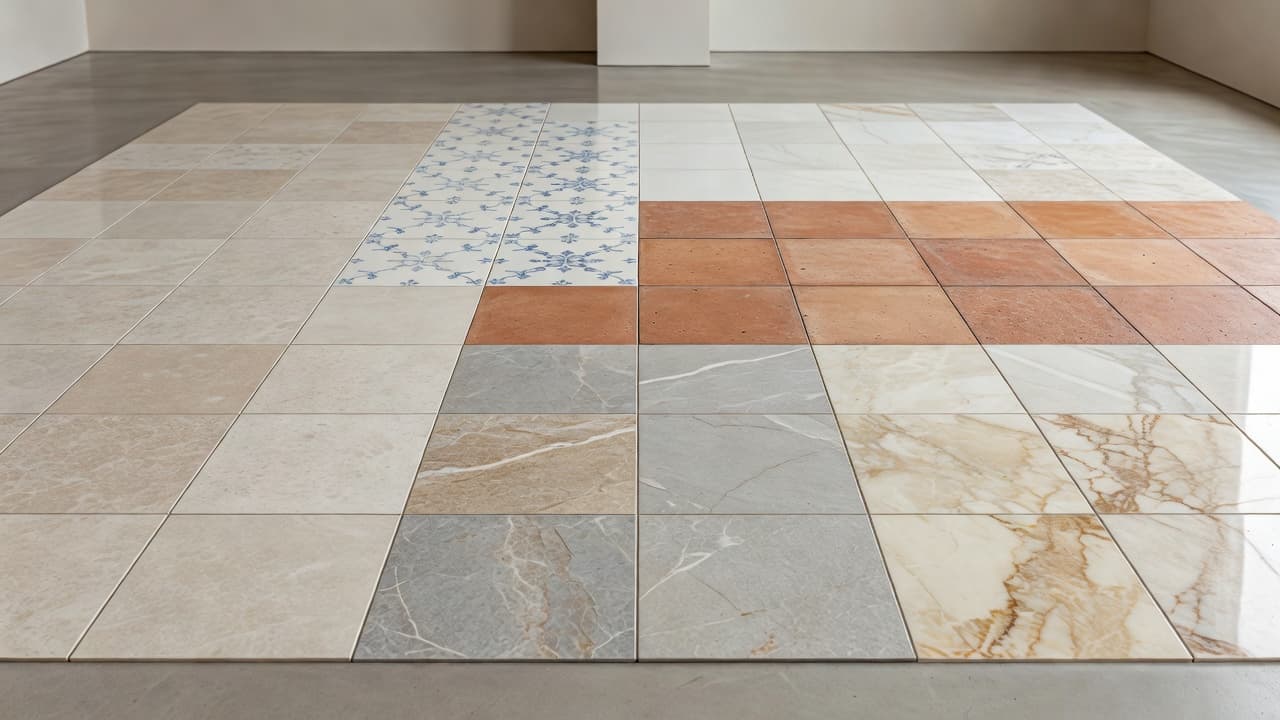
AI-generated image showing common tile materials side by side.
The table below gives a quick comparison for typical UK rooms.
| Tile type | Best areas in UK homes | Main strengths | Main watch-outs |
|---|---|---|---|
| Ceramic | Bathrooms, cloakrooms, light-use kitchens | Lower cost, broad style range, easy to clean | Less tough than porcelain in heavy-traffic spaces |
| Porcelain | Hallways, kitchens, bathrooms, utility rooms, open-plan living | Dense, hard-wearing, low water absorption | Usually heavier and dearer to cut and lay |
| Natural stone | Living areas, hallways, bathrooms, conservatories | Distinct character, strong resale appeal | Needs sealing, colour varies, some stones mark easily |
| Quarry or terracotta | Boot rooms, period kitchens, utility spaces | Warm, traditional look, good grip | Porous, needs sealing, can stain |
| Cement or encaustic-style | Hallways, porches, statement bathrooms | Strong pattern, architectural feel | Needs careful sealing and regular maintenance |
For most households, porcelain floor tiles are the safest all-round choice. They cope well with wet weather, heavy footfall and regular mopping. This makes porcelain floor tiles an ideal selection for entrance halls, family kitchens and utility rooms, where the floor is more workhorse than showpiece.
Ceramic floor tiles suit lighter-duty rooms. They are often chosen for smaller bathrooms and cloakrooms, where traffic is lower and design plays a larger role. Natural stone, including slate floor tiles, limestone and marble, can look superb, but it asks more in return. Sealing, cleaning products and surface wear all matter more. For traditional spaces, quarry tiles remain a popular choice, while patterned tiles can add a striking visual impact to porches or statement bathrooms. If you want to achieve a seamless transition between your home and garden, many modern ranges offer outdoor floor tiles that allow you to extend your interior style outside.
In bathrooms, wet rooms and front doors, an anti-slip surface matters more than a mirror-like finish.
Room size also changes the calculation. Large format living room floor tiles can make a compact space look calmer because there are fewer grout lines. By contrast, a narrow hallway may benefit from Victorian tiles or smaller formats that fit the proportions of the home better.
What separates a good tile from a costly mistake
The hardest lesson in tile buying is that appearance can hide the useful facts. Product pages often lead with styled photography, but the details that matter usually sit lower down in the measurements, finish notes, and technical data.
First comes size and calibration. A nominal 600 x 600 mm tile may vary slightly by batch, which affects your grout lines. Next comes surface finish. While polished porcelain tiles bounce light beautifully, they show smears and can feel less secure under wet feet. Conversely, matt and textured finishes, or even popular marble effect floor tiles, hide everyday marks more easily, which is why they are common choices for kitchens, hallways, and family bathrooms.
Then there is water resistance. Porcelain generally performs better than softer, more porous materials because it is highly water-resistant. This is one reason it dominates busy British ground floors. Natural stone and terracotta can still work, though they require sealing and a bit more discipline regarding spills.
Subfloor condition matters as much as the tile quality itself. Large-format tiles need a perfectly flat base, as an uneven floor can cause lipping, cracked corners, and weak adhesion. In older homes, this often means applying a levelling compound or installing backer boards before any tile goes down. Remember that the cheapest tile on the page can turn expensive once you account for the correct tile adhesive, high-quality tile grout, and essential tiling accessories like tile spacers.
A sensible order should always include extra material for cuts and breakages. Matching the same shade later is not always easy, as manufacturing batches can vary significantly.
Buying floor tiles online, with better choice and fewer surprises
Online shopping has transformed the market, significantly widening the range of options available to homeowners. While a local showroom might only carry a limited number of ranges, a digital comparison can reveal dozens of formats, finishes, and tones in mere minutes. This broader selection of floor tiles often results in more competitive pricing, particularly when purchasing plain porcelain, clearance lines, or larger pack quantities.
However, a better price is only beneficial if the product specification is clear. The soundest approach is to compare technical facts before falling for the pictures. Pack size, tile thickness, slip ratings, whether the edges are rectified or non-rectified, shade variation, and delivery terms all deserve your attention. Customer reviews are also invaluable; the most useful ones mention how the colour appears in natural daylight, report any breakages upon arrival, and clarify whether the tiles looked smaller, darker, or more heavily patterned than the website images suggested.
AI-generated image of online tile browsing in a home setting.
A careful online order usually follows four steps:
- Shortlist by room use first, then by style.
- Check dimensions, finish, and maintenance notes.
- Order tile samples before committing to full packs.
- Read returns, damage reporting, and delivery conditions.
On a reliable buyer guide website, full-width tables and high-quality reference images that sit within the text column help comparisons stay readable on both desktop and mobile devices. This is essential because buying tiles is a visual process, but it is also a technical one. A clear layout keeps the decision-making process grounded in precise measurements and material facts, rather than relying on mood photography alone.
Frequently Asked Questions
Is it better to choose porcelain or ceramic tiles for a busy hallway?
Porcelain is generally the superior choice for a busy UK hallway because it is denser and significantly more resistant to water and heavy footfall. While ceramic is cost-effective, porcelain’s low-porosity ensures it stands up better to the grit and rainwater common in British entrances.
Can I install floor tiles directly over my existing floorboards?
Installing tiles directly onto wooden floorboards is rarely recommended because movement in the wood can cause tiles and grout to crack. It is essential to install a stable, flat base such as tile backer boards or a suitable levelling compound to ensure a long-lasting, crack-free finish.
How many extra tiles should I order for my room?
It is standard practice to add at least 10% to your total square metre measurement to account for cuts, breakages, and patterns. If you are laying tiles in a complex pattern or a room with many corners, increasing this to 15% is often a safer precaution to avoid running short.
Do I need to seal my floor tiles?
Whether you need to seal your tiles depends entirely on the material you have chosen. Natural stone, quarry tiles, and cement tiles are porous and require professional-grade sealing to prevent staining, whereas most glazed porcelain and ceramic tiles do not require any sealing at all.
Conclusion
A floor tile has to survive real life before it can flatter a room. In most UK homes, that pushes the decision towards hard-wearing materials that handle moisture, grit and daily cleaning without fuss.
The strongest purchases usually come from plain comparisons rather than dramatic styling. Choosing low-maintenance floor tiles rewards a practical eye, because the best option is the one that still looks right after years of constant footsteps, rather than just minutes of browsing.
Explore More Expert Buyers Guides and Reviews
For a list of our main buyers guides use the drop-down menu at the top of the page. Topics related to this article are:
Home and Garden Furniture Buyers Guides
Bedroom Furniture Buyers Guides
living Room Furniture Buyers Guides
Garden Furniture Buyers Guides
Patio Furniture Sets Buyers Guide
–
Explore Our Blog Categories for Expert Buying Advice
- AI Powered Product Finder Tools (24)
- Expert Buying Guides & Shopping Tips for UK Shoppers (1,150)
- Brands & Designer Products (Men, Women & Electronics) (225)
- Designer Fashion Brands: Buyer’s Guides & Reviews (118)
- Electronic Brands: Buyers Guides & Reviews (69)
- Apple Products Buyer’s Guides & Reviews (23)
- Brands – Phones, Laptops, PC”s, Tablets | Buyer’s Guides & Reviews (38)
- Electronics – Tablet & iPad Reviews and Buyers Guides (10)
- Kitchen Appliance Brands: Buyer’s Guides & Reviews (18)
- Laptop Brands & MacBooks Buyer’s Guides & Reviews (7)
- Phone Brands & iPhones Buyer’s Guides & Reviews (21)
- Car Buying & Financing Made Easy | Expert Guides for the UK (85)
- Clothing, Fashion & Accessories Buying Guides UK (329)
- Beauty, Health & Wellness | Perfume, Skincare, Makeup & Wellbeing Guides (122)
- Footwear: Trainers & Shoes Buyers Guides (33)
- Jewellery: Expert Reviews, Trends & Buying Guides (58)
- Men's Clothes — Buyers Guides & Reviews (37)
- Men’s Clothes, Fashion & Accessories Guides UK | Latest Trends & Smart Shopping (121)
- Women's Clothing Buyers Guides — Dresses, Tops & More (118)
- Women’s Clothes, Fashion & Accessories Guides UK | Latest Trends & Smart Shopping (277)
- Electronics, Tech & Gadgets: Reviews, Deals & Buying Guides UK (154)
- Furniture Buyer’s Guides | Home & Garden & Styling Tips (270)
- Bedroom Furniture Guides UK | Expert Tips & Best Value Deals (88)
- Garden Furniture, Landscaping & Garden Rooms Guides UK | Expert Tips & Best Value Deals (131)
- Home Furniture, Décor & Interior Design Guides UK | Styling Tips & Inspiration (149)
- Living Room Furniture, Design & Décor Guides UK | Styling Tips & Inspiration (52)
- Holidays & Travel: Hotels, Villas, UK Breaks & Skiing (143)
- Insurance & Protection: Travel, Landlord, Gadget & More UK (156)
- Gadget Insurance UK | Expert Guides, Reviews & Smart Protection Tips (32)
- Home Emergency Cover UK | Expert Guides, Reviews & Practical Protection Tips (21)
- Landlords Insurance UK | Expert Guides, Reviews & Smart Protection Tips (31)
- Travel Insurance UK | Expert Guides, Reviews & Money-Saving Tips (34)
- Pets: Guides, Tips & Inspiration (24)
- Brands & Designer Products (Men, Women & Electronics) (225)
- Gifts for Everyone: Ideas for Every Occasion & Budget (31)
Save Money and Shop Smarter – Join Our Free Newsletter!
Get expert buying advice, exclusive deals, and money-saving tips delivered straight to your inbox.