A quality leather sofa still carries real weight in a UK living room. It can last for years, settle into the space, and age with character. Yet the label covers a wide range, from thick real leather on a strong frame to thin, heavily coated materials over cheaper components.
Buying a leather sofa online makes comparison easier, because prices, sizes, delivery terms, and material notes can sit side by side. It also widens the choice far beyond a local showroom. This guide provides the tools to look past polished photography and vague marketing claims to identify genuine craftsmanship, ensuring you invest in a piece that offers lasting comfort and value.
Key Takeaways
- Quality leather sofas are defined by the grade of hide, the strength of the frame, the seat support system, and the density of the cushion fillings.
- Always look for clear specifications regarding leather type—such as full-grain versus corrected-grain—as vague descriptions like “genuine leather” often mask lower-quality materials.
- Online listings should provide detailed dimensions, material compositions, and delivery terms; missing data is a significant warning sign.
- Beyond aesthetics, consider the physical access route to your room, including door widths and stair turns, to ensure the sofa can be delivered successfully.
- Real leather improves with age through a natural patina, provided it is cared for with gentle cleaning rather than harsh chemicals or excessive conditioning.
What Makes a Good Leather Sofa in the First Place?
A good leather sofa isn’t defined by colour or fashion alone. It rests on four things: the leather itself, the frame, the seat support, and the way it feels after months of real use.
 ### Leather type and finish, from full-grain to corrected-grain
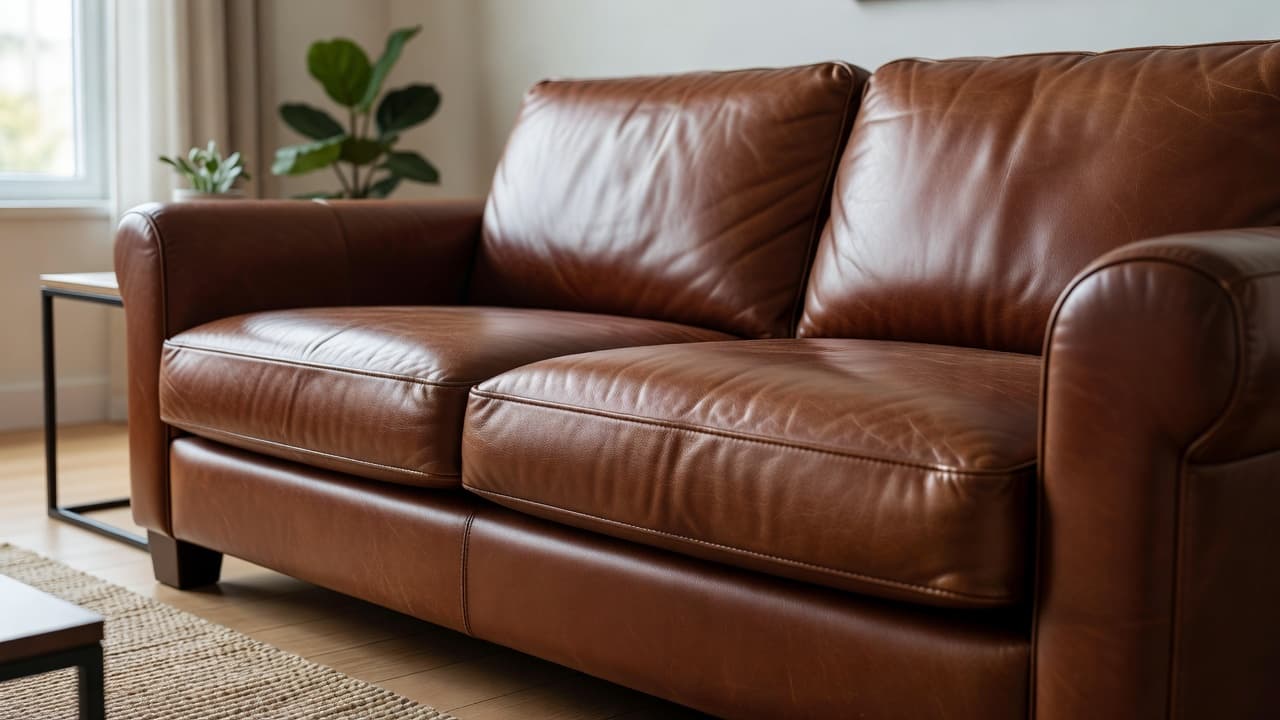
Leather grade shapes how a sofa looks on day one and how it changes later. Full-grain leather keeps the natural surface, so pores, marks, and grain stay visible. Within this category, aniline leather is the gold standard, as it uses high-quality hides dyed with soluble dyes to maintain a natural look and an incredibly soft feel. It often feels richer and ages better, but it also shows life more openly. Creases and shifts in tone are part of the material.
Corrected-grain leather has been sanded and finished to create a more even surface. That can make it more uniform and sometimes easier to live with in busy rooms. Yet the finish may feel less natural, and cheaper versions can look plasticky under strong light.
The differences are easier to judge side by side:
| Leather type | Feel and look | How it tends to age | Common compromise |
|---|---|---|---|
| Full-grain (inc. aniline) | Natural grain, soft, varied markings | Develops patina, creases, softens | Higher price, marks show sooner |
| Top-grain or corrected-grain | More even colour and texture | Wears steadily, often less character | Less natural surface |
| Split or heavily coated leather | Stiffer, shinier finish | Can crack or look tired faster | Lower cost, weaker feel |
The main point is simple. A more polished finish can hide flaws at the start, while a more natural finish often wears in with more character.
“Genuine leather” is a weak description on its own. Without grade, finish, and where the leather is used, it says little.
Frame, suspension, and cushions, the hidden parts that affect lifespan
The parts no one sees do most of the work. A durable hardwood frame, or a good mix of hardwood and quality plywood, gives a sofa its basic strength. Dowelled, glued, or screwed joints hold up better than stapled sections or thin board. If the listing only says “wood frame”, that isn’t enough.
Seat support matters just as much. Sinuous springs can work well when they are thick and well fixed. Webbing can also be sound, but only if it’s heavy-duty and properly tensioned. Weak support leads to sagging, even when the leather still looks fine.
Cushions often reveal the difference between a sofa that lasts and one that sinks. High-density foam holds shape better than soft, cheap foam. Feather wraps feel plush, but they need regular plumping. A foam core with a fibre or feather wrap often gives the best balance between comfort and shape retention.
Real-world comfort, not showroom comfort
Showroom comfort is a short test. Daily comfort is about proportions. Seat depth affects whether someone sits upright or slumps. Back height changes neck support. Arm shape decides whether the sofa feels open or boxed in. Even the leather finish changes comfort, because stiffer hides soften more slowly.
Firmness also shifts with time. New leather can feel tight, then relax after use. Seat cushions soften. The best sofas still feel supportive once that break-in period passes. Independent advice on comfort wrinkles and leather stretch makes the same point: creasing is normal, but severe puddling can point to weaker upholstery or poor support beneath.
How to Compare Leather Sofas Online Without Getting Misled
Online shopping has a real advantage in this category. It makes broad comparison possible in a way that a showroom rarely does. Material claims, dimensions, delivery dates, and total cost can be checked across many listings in one sitting. That saves time and often exposes price inflation quickly. For those in a hurry, many retailers now advertise fast delivery as a primary selling point, allowing you to bypass typical manufacturing lead times.
Which product details should always be listed
A serious listing should state the sofa’s width, depth, height, seat height, and seat depth. It should also say what sort of leather is used, whether all surfaces are leather, what the frame is made from, and what fills the cushions. Good listings add suspension type, leg material, care advice, warranty terms, and clear delivery details.
Missing details are a warning sign, especially at higher prices. If a seller avoids naming the leather grade, the frame material, or the seat filling, there is usually a reason. Vague phrasing such as premium leather finish or luxury comfort seating has no value without facts behind it.
Delivery terms deserve close attention. Room-of-choice delivery, packaging removal, assembly, and return costs can alter the real price sharply. Bespoke or made-to-order sofas may also carry tighter cancellation rules once production begins.
Reading photos, reviews, and measurements with a sceptical eye
Product photography is useful, but it often flatters scale and finish. Wide lenses can make a compact sofa look generous. Warm lighting can deepen colour. Close-up images may show the best panel, not every panel. A proper listing should include front, side, rear, and detail shots, plus a clear dimensions drawing.
Reviews help most when they mention use after several months. Early comments often focus on delivery and first impressions. Later reviews tend to mention sagging, creasing, noise from the frame, or fading in sunlight. A practical UK discussion of sofa buying mistakes repeats one point again and again: measure the room, and also measure the route in.
Door clearance catches buyers out more often than width alone. Hallways, stair turns, porch doors, and lifts can all block delivery. In many UK homes, access is the harder problem.
Why online prices can vary so much
Headline price rarely tells the full story. One sofa may look cheap until delivery, assembly, and disposal of old furniture are added. Another may cost more upfront but include better leather, better filling, and a longer warranty. Many UK furniture retailers now make premium models more accessible by offering various finance options, often including interest-free credit to spread the cost over several months.
Promotions also distort comparison. Discounts can be genuine, but some high list prices exist mainly to make the sale price look dramatic. Leather grade plays a large part as well. Full-grain or thicker hides cost more. Stronger frames and denser foam also push the price up. Branding can raise it further, although the materials don’t always follow.
Leather Sofa Prices, Quality Signals, and Value Traps
Price often reflects quality, but only up to a point. A low price can mean shortcuts. A high price can also mean styling, branding, or a large marketing budget rather than better construction.
What tends to justify a higher price
More expensive sofas usually have superior materials, cleaner stitching, stronger frames, and more careful upholstery work. A durable leather sofa is a long-term investment, and cushion interiors play a vital role in that longevity. Dense foam, properly wrapped, costs more than soft foam that collapses early. Tailoring also shows up in panel alignment, seam strength, and the way the real leather sits over the frame.
That does not make every premium-priced sofa a good buy. The price only makes sense when the specification is clear. If the seller names the leather grade, frame build, suspension, and cushion fill, the higher cost can be judged against something real.
The common shortcuts that lower quality
The warning signs are familiar once they are named. Thin leather can feel nice in a showroom, then crease heavily or wear through. Weak stitching pulls at stress points. Frames with too much particleboard or softwood can loosen. Cheap foam flattens, and loose back cushions can lose shape fast.
Be cautious when retailers offer low-cost sofa sets, as these can sometimes bundle together pieces with inconsistent build quality to hit an attractive price point. Terms such as “genuine leather,” “leather match,” or “premium finish” need checking. Some sofas use leather only on contact areas and synthetic material elsewhere. That can be fine at the right price, but the listing should say so plainly. Bonded leather is another caution. It uses leather fibres and coatings, and it rarely wears like proper upholstery leather.
Style, Size, and Layout: Choosing a Sofa That Fits the Home
Style matters, but scale matters more. A handsome piece of furniture can still overpower a narrow front room or leave too little space for walking, tables, and doors.
Measuring the room, the doorway, and the route inside
Room measurements should start with the floor plan, not the product photo. Width, depth, and height matter, but so does space around the sofa. Tape on the floor helps show whether a 3 seater will feel balanced or cramped within your living room.
Access checks are just as important. Front doors, internal doors, stair turns, ceilings above landings, and lift dimensions all affect delivery. A leather sofa can look perfect on a product page and still fail at the final corner of a terrace hallway.
Finding the right look for the way the room is used
Leather changes the mood of a room quickly. A traditional brown leather sofa, black leather sofa, or even a sleek grey leather sofa tends to ground a space and hide everyday wear better than lighter alternatives.
Arm style changes the visual weight. Chunky arms, often seen on a classic chesterfield, take up space. Slim arms give more seat width within the same footprint. Raised legs can make a 2 seater feel lighter in a small room, while low-set designs feel larger and heavier. If you have extra space, adding a matching armchair can create a cohesive look that ties the room together.
When modular, corner, or compact designs make more sense
Compact designs and narrow-arm sofas suit smaller flats and older houses with tighter access. L-shaped sofas work best when the room layout supports them, as they commit the seating plan early. Modular designs offer flexibility, which helps in awkward rooms or homes where the layout may change.
If you frequently host guests, a sofa bed provides practical functionality without sacrificing aesthetic, while those looking for maximum comfort might prefer a leather recliner. A larger shape only works when it improves daily use. If the longest seat blocks light, circulation, or storage, style has won at the expense of comfort.
Caring for a Leather Sofa So It Ages Well
Leather lasts best with light, regular care. Dust and grit should be removed with a soft cloth, because fine particles can act like sandpaper over time. Spills need prompt attention, but harsh scrubbing can do more harm than the stain. Regular maintenance is the most effective way to preserve the condition of your furniture over the years.
Cleaning, conditioning, and avoiding common damage
Most sofas are easy to clean, requiring little more than routine dusting and occasional gentle wiping with products suited to the finish. If you choose a corrected-grain hide, you will find it has naturally stain-resistant properties that make it a practical choice for busy households. However, avoid over-conditioning, as too much product can darken or clog the surface. Strong sprays, household cleaners, steam, and rough cloths should be avoided as they can strip protective layers.
Heat and sunlight also matter. Radiators, wood burners, and direct sun can dry the leather and fade colour. Sharp toys, buckles, and pet claws leave marks quickly, especially on more natural, aniline hides.
What to expect as leather develops patina
Good leather changes with use. It softens, creases, and may deepen slightly in tone. That patina is part of the appeal. It differs from cracking, peeling, or severe stretching, which point to wear or poor materials.
The line between age and damage is often visible in the surface. Normal use creates even creasing where bodies sit and arms rest. Damage looks harsher, with a broken finish, dry patches, or loose upholstery that no longer sits cleanly on the frame.
Frequently Asked Questions
What does “leather match” mean when looking at sofa descriptions?
Leather match refers to sofas that use real leather on the main contact areas like the seat, back, and arms, while using synthetic materials on the sides and back. This is a common way for manufacturers to lower the price point, but it is important to be aware of the difference as the synthetic areas will age and wear differently than the natural leather.
How can I tell if a sofa frame is well-built?
A durable frame typically uses hardwood or a high-quality mix of hardwood and plywood with dowelled, glued, or screwed joints. Avoid frames that rely heavily on stapled particleboard or thin boards, as these are unlikely to withstand years of regular use without becoming loose or noisy.
Is full-grain leather better than corrected-grain leather?
Full-grain is considered the gold standard because it retains the natural surface of the hide, allowing it to develop a beautiful patina and feel soft over time. Corrected-grain is sanded and treated to be more uniform and stain-resistant, which is practical for busy households, though it may feel less natural and lose the unique character of the original hide.
How do I prevent my leather sofa from sagging?
To maintain the shape of your sofa, ensure you choose one with high-density foam cushions and robust suspension like heavy-duty webbing or sinuous springs. Regularly rotating or flipping loose cushions if the design allows can also help distribute wear more evenly and prevent permanent indentations.
Conclusion
The strongest leather sofas tend to be the least mysterious. Their listings spell out the leather grade, the frame, the suspension, the fillings, and the delivery terms. That clarity matters more than a polished photo or a dramatic discount.
Price still matters, but value sits in the build. A leather sofa earns its place when the materials are honest, the proportions suit the room, and the wear that comes with time looks like age rather than failure. When you invest in high quality real leather, you are prioritising longevity over short term trends. Ultimately, the best leather sofa choice is usually the one with the clearest specification and the fewest hidden compromises.
Explore More Expert Buyers Guides and Reviews
For a list of our main buyers guides use the drop-down menu at the top of the page. Topics related to this article are:
Home and Garden Furniture Buyers Guides
Bedroom Furniture Buyers Guides
living Room Furniture Buyers Guides
Garden Furniture Buyers Guides
Patio Furniture Sets Buyers Guide
–
Explore Our Blog Categories for Expert Buying Advice
- AI Powered Product Finder Tools (25)
- Expert Buying Guides & Shopping Tips for UK Shoppers (1,431)
- Brands & Designer Products (Men, Women & Electronics) (285)
- Designer Fashion Brands: Buyer’s Guides & Reviews (163)
- Electronic Brands: Buyers Guides & Reviews (88)
- Apple Products Buyer’s Guides & Reviews (25)
- Brands – Phones, Laptops, PC”s, Tablets | Buyer’s Guides & Reviews (42)
- Electronics – Tablet & iPad Reviews and Buyers Guides (11)
- Kitchen Appliance Brands: Buyer’s Guides & Reviews (22)
- Laptop Brands & MacBooks Buyer’s Guides & Reviews (9)
- Phone Brands & iPhones Buyer’s Guides & Reviews (23)
- Car Buying & Financing Made Easy | Expert Guides for the UK (89)
- Clothing, Fashion & Accessories Buying Guides UK (496)
- Beauty, Health & Wellness | Perfume, Skincare, Makeup & Wellbeing Guides (183)
- Footwear: Trainers & Shoes Buyers Guides (49)
- Jewellery: Expert Reviews, Trends & Buying Guides (73)
- Men's Clothes — Buyers Guides & Reviews (39)
- Men’s Clothes, Fashion & Accessories Guides UK | Latest Trends & Smart Shopping (167)
- Women's Clothing Buyers Guides — Dresses, Tops & More (194)
- Women’s Clothes, Fashion & Accessories Guides UK | Latest Trends & Smart Shopping (435)
- Electronics, Tech & Gadgets: Reviews, Deals & Buying Guides UK (173)
- Furniture Buyer’s Guides | Home & Garden & Styling Tips (326)
- Bedroom Furniture Guides UK | Expert Tips & Best Value Deals (93)
- Garden Furniture, Landscaping & Garden Rooms Guides UK | Expert Tips & Best Value Deals (169)
- Garden Sofa & Sofa Sets Buyers Guides (11)
- Garden Tables & Chairs: Sets, Individual Tables & Seating Buyers Guides (53)
- Home Furniture, Décor & Interior Design Guides UK | Styling Tips & Inspiration (169)
- Living Room Furniture, Design & Décor Guides UK | Styling Tips & Inspiration (57)
- Sofa & Sofa Beds Buyers Guides (19)
- Sofa Beds Buyers Guides (7)
- Sofa Buyers Guides & Expert Advice (11)
- Holidays & Travel: Hotels, Villas & Flights (161)
- Home & Garden Improvements | Renovations & Outdoor Transformation Guides (102)
- Insurance & Protection: Travel, Landlord, Gadget & More UK (159)
- Gadget Insurance UK | Expert Guides, Reviews & Smart Protection Tips (33)
- Home Emergency Cover UK | Expert Guides, Reviews & Practical Protection Tips (21)
- Landlords Insurance UK | Expert Guides, Reviews & Smart Protection Tips (31)
- Travel Insurance UK | Expert Guides, Reviews & Money-Saving Tips (34)
- Pets: Guides, Tips & Inspiration (26)
- Brands & Designer Products (Men, Women & Electronics) (285)
- Gifts for Everyone: Ideas for Every Occasion & Budget (49)