A diamond bracelet is a quintessential piece of fine jewellery, yet the term encompasses a broad spectrum of designs. It can refer to a delicate tennis line, a sophisticated pave chain, or a substantial luxury diamond bracelet featuring a more pronounced use of precious metal.
That variety is significant because the price often reflects intricate details that may not be immediately apparent to the untrained eye. Factors such as stone matching, metal weight, setting style, and clasp design can influence both the long term value and the daily wearability of the piece more than many shoppers anticipate.
This guide explores the market as it exists today, providing a clear overview of these varied and attractive accessories while helping you navigate potential pitfalls with a few practical checks.
Key Takeaways
- Quality in a diamond bracelet is determined by the balance of stone matching, metal durability, and construction, rather than just the total carat weight.
- Essential checks include confirming a UK hallmark for metal quality, assessing the clasp security, and ensuring the bracelet lies flat on the wrist without twisting.
- When shopping online, prioritise technical specifications like width, length, and stone count over flattering promotional photography.
- Daily care, including regular gentle cleaning and storing the piece individually, is vital to prevent stone clouding and protect metal surfaces from scratches.
- Choosing the right fit is crucial; a tennis bracelet should allow for a fingertip’s worth of space, while rigid bangles require a larger diameter for comfort.
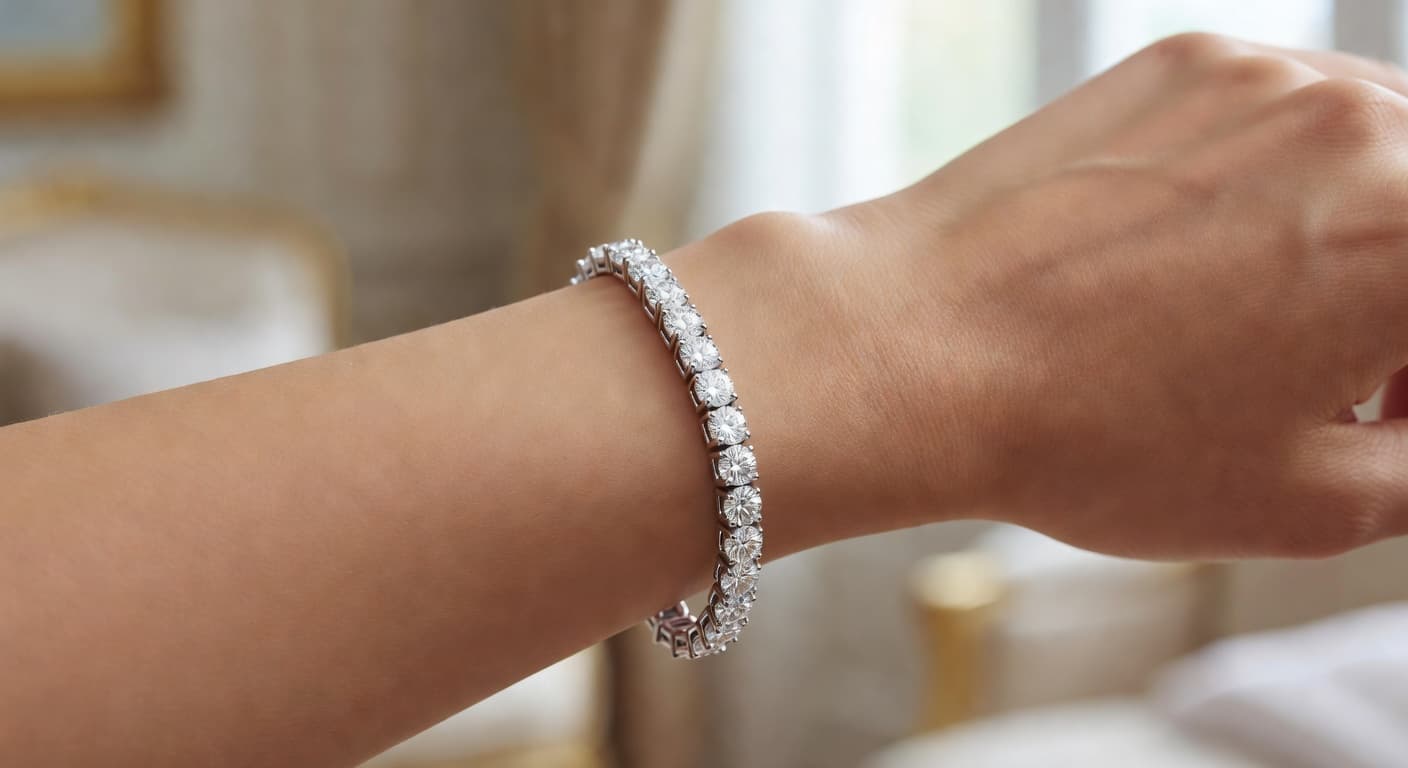
AI-generated image of a classic diamond tennis bracelet on the wrist.
What makes a diamond bracelet worth the money?
A diamond bracelet is worth the investment when its components are in perfect balance. Fine diamonds set into weak links will not wear well, while a heavy gold piece with dull stones can feel costly rather than convincing.
AI-generated image of a classic diamond tennis bracelet on the wrist.
Diamond quality, cut, colour, clarity, and carat
The four Cs remain essential, even in a diamond bracelet where each stone is small. Cut impacts sparkle more than any other factor, which is why a round brilliant diamond is a classic choice for gold diamond bracelets, as it provides exceptional sparkle that defines the piece. Colour changes how bright or warm the row looks, while clarity matters less to the naked eye at smaller sizes, though poor-quality stones can appear cloudy. Carat refers to weight, and in bracelets, this usually appears as the total carat weight across many stones.
A helpful consumer guide to buying natural diamonds explains these basics in plain terms. If you are purchasing a piece featuring larger stones, it is advisable to look for GIA certification to ensure the quality matches your expectations. In a diamond bracelet, however, matching the stones matters more than the headline weight. While a single larger stone might hide flaws in a ring, a line of uneven diamonds in a bracelet cannot.
Metal choice and how it changes durability
Metal does more than frame the diamonds. It shapes the weight, colour, upkeep, and how the diamond bracelet ages. In the UK, 9ct and 18ct gold are standard. Nine-carat gold is often harder and more affordable, while 18-carat gold offers a richer colour but can mark more easily. Platinum feels heavier, wears densely, and tends to hold claws securely, though it typically commands a higher price.
White gold suits cooler wardrobes and requires occasional re-plating to maintain its bright finish. Yellow gold offers a classic look that can soften the appearance of bright diamonds, and rose gold provides warmth that often flatters neutral and earthy palettes.
A UK hallmark is a vital basic check. It will not speak for the design quality, but it does confirm the metal standard.
A short comparison helps to clarify the differences.
| Metal | Look | Daily wear | Care |
|---|---|---|---|
| White gold | Bright, silvery | Strong, but plating fades over time | May need rhodium re-plating |
| Yellow gold | Warm, classic | Good for regular wear | Fine scratches blend in more easily |
| Rose gold | Soft pink tone | Often hard-wearing | Colour is stable, finish still needs care |
| Platinum | Cool grey-white | Dense and secure | Develops patina rather than losing surface metal |
Setting style, clasp, and build quality
Tennis settings keep diamonds exposed and bright. Channel settings feel smoother and more protected, while bezel settings wrap metal around each stone, making them well-suited for daily wear. Pave styles can look lively, but they require careful finishing because tiny claws are easy to knock.
A quality bracelet should sit flat, feel balanced, and move without twisting. The finish matters underneath as much as it does on top. Rough edges, stiff links, or a weak clasp are signs of poor construction.
If a bracelet pinches, twists, or snags early on, the problem rarely improves with wear.
Which diamond bracelet style suits which occasion?
Style is never only about taste. It is also about scale, setting, and how often the piece will leave the jewellery box.
Classic tennis bracelets for everyday elegance
Tennis bracelets are the style most people picture first, a neat run of matched diamonds with very little visual interruption. Often referred to as an eternity line, this design works because it is simple. Worn with a shirt, knitwear, or evening dress, it usually looks settled rather than showy.
The best everyday versions sit low on the wrist and keep the stones even in size and colour. Smaller or medium stones often look more refined than very large ones, especially in daylight. The effect should be polished, not loud.
Statement styles for evening wear and special events
Heavier bracelets suit occasions that can carry more shine, such as weddings, dinners, and evening events with darker fabrics or cleaner necklines. Beyond traditional links, diamond bangles have become a popular choice for those wanting a bolder look. Many favour the modern appeal of an open bangle, which provides a striking geometric frame for the wrist.
The strongest statement bracelets usually rely on one clear idea. That might be width, unusual links, or dense stone coverage. Once too many design features compete, the bracelet starts to look busy. Evening jewellery should feel intentional, not overworked.
Slim, understated designs for work and layering
Slim bracelets often make more sense for day-to-day life. They sit better beside a watch, do not dominate a sleeve, and tend to feel easier in meetings or on public transport. For a refined alternative to a full line, a solitaire diamond bracelet offers a singular, sophisticated sparkle. Similarly, a diamond initial bracelet provides a subtle, personal touch that adds polish without demanding constant attention.
This style also suits layering, though restraint matters. A light piece next to a watch or plain bangle can look sharp. However, a stack of items with different heights and catches can scratch, tangle, and distract from the beauty of the diamonds.
How to buy a diamond bracelet online with confidence
Online shopping has changed this market for practical reasons, not just for convenience. It allows for a detailed comparison across metal type, carat weight, length, width, and price in a way a single shop visit rarely can. When you search for a diamond bracelet online, you can easily compare the quality of various pieces against the original price typically found in high-street stores.

AI-generated image of at-home online research before buying jewellery.
Read the product details before looking at the pictures
Photographs often flatter jewellery. Bright lighting, close crops, and retouching can make a bracelet look larger, whiter, and more brilliant than it is. The useful facts are always found lower on the page.
The details worth checking first are metal type, total carat weight, stone count, bracelet length, width, and clasp description. Total carat weight can sound generous, but fifty tiny stones will look different from twenty larger ones. Width matters too, because a narrow bracelet can disappear on the wrist even at a healthy carat figure.
Use reviews, certificates, and return policies to reduce risk
A clear return policy often says more than polished copy. So do reviews that mention fit, clasp strength, sparkle in normal light, and whether the piece looked smaller than expected. Certificates may apply to higher-value stones or central diamonds, but many bracelets with small matched stones will not have an individual report for each one.
Even so, transparency matters. A useful guide to common engagement jewellery mistakes makes the broader point well: glossy descriptions are less valuable than plain facts, close inspection, and room to change course if the piece disappoints.
Why online selection often beats a single shop visit
The advantage of buying online is the breadth of options. More lengths appear, and more setting styles show up side by side. Price gaps become easier to spot because similar specs can be compared in minutes.
That wider view also helps shoppers who still prefer to buy elsewhere. Through online research, you can see how much of a diamond jewellery price rests on the metal, diamond weight, design, or brand presentation. Comparing these factors against the original price helps you spot genuine value. Even when the final sale happens in person, the best homework is almost always done on screen.
Sizing, fit, and comfort are easy to get wrong
A diamond bracelet can be the right length on paper and still feel wrong once it is on. Link structure, bracelet width, and clasp position all affect how it moves.
How bracelet length should sit on the wrist
Most bracelets need a little freedom, but not so much that they roll onto the hand. For a line bracelet, a small gap is usually enough, often about room for one fingertip between the wrist and the jewellery. That gives a one line bracelet a natural drape without turning the piece into a loose chain.
While flexible designs rely on this measured gap, diamond bangles are rigid and behave differently. Because diamond bangles do not bend to the contour of your wrist, they often require a slightly larger diameter to slide on comfortably. Conversely, wider bracelets may need a touch more ease because they do not bend as sharply as fine links. The ultimate goal is always achieving comfort with control.
Clasp types that help prevent loss
A valuable bracelet needs a serious clasp. Box clasps are common on tennis bracelets because they keep the line neat. Lobster clasps are familiar and secure, though they can look less elegant on refined designs. A separate safety clasp, or a double lock system, adds reassurance and is worth seeking out.
Loss often happens in ordinary moments, such as a sleeve pull, a handbag strap, or a hurried change of clothes. Security matters more with a precious diamond bracelet than on casual jewellery because the cost of failure is far higher.
Care, cleaning, and storage keep the shine alive
A diamond bracelet keeps its look through routine care. Like all fine jewellery, it requires consistent attention to prevent hand cream, soap, and body oil from dulling the stones faster than many buyers expect.
Cleaning without damaging the stones or metal
A soft cloth, warm water, and mild soap are usually enough for home cleaning. A soft brush can help around the setting, but heavy pressure is a bad idea, especially on pave or older pieces. Harsh chemicals can damage metal finishes and leave surfaces looking tired.
Regular inspection matters as much as cleaning. If a claw lifts or a stone starts to move, a jeweller’s bench check is safer than more scrubbing.
How to store a diamond bracelet safely at home
Diamonds are hard, which means they can scratch other jewellery. The bracelet should be stored on its own, ideally in a lined box or soft pouch, with the clasp closed so it does not snag. A drawer full of loose pieces is a good way to mark metal and knot fine chains.
Daily habits count too. A bracelet made for elegance is not improved by gym equipment, gardening, or a sink full of washing-up.
Frequently Asked Questions
How should I clean my diamond bracelet at home?
Use a soft cloth, warm water, and mild soap to gently remove everyday oils and lotions. Avoid harsh chemicals and heavy scrubbing, as these can damage the metal finish or loosen delicate settings.
What does a UK hallmark indicate on my jewellery?
A UK hallmark is an official mark stamped on precious metals like gold or platinum by an assay office. It guarantees the metal’s purity and serves as a vital indicator of authenticity and quality.
How tight should a diamond bracelet be on my wrist?
A flexible line bracelet should allow for a small gap, typically about the width of a fingertip, to ensure it drapes naturally. Rigid diamond bangles need to be slightly larger to account for the fact that they do not bend to the contour of your arm.
Are 18ct gold bracelets more durable than 9ct gold ones?
While 18ct gold offers a richer, more luxurious colour, 9ct gold is technically harder and often more resilient to daily wear. The best choice depends on your lifestyle and whether you prefer pure colour or long-term structural hardness.
Conclusion
A diamond bracelet is only as good as the details holding it together. Quality depends on more than the brilliance of a round brilliant cut; it rests on matched stones, sensible metal choice, secure settings, and a clasp that can cope with the demands of everyday life.
The strongest purchases often appear modest on paper through restrained weight and clean design. However, when worn, these choices matter far more than the initial flash of light. Ultimately, true value is found in the exceptional build quality of the piece rather than just a tempting original price or a discount from the retail tag. By prioritising construction and fit, you ensure your investment remains a beautiful staple for years to come.
Explore our Buyers Guides & Reviews
For a list of our main buyers guides use the drop-down menu at the top of the page. Topics related to this article are:
Designer Handbags Buyers Guides
–
Explore Our Blog Categories for Expert Buying Advice
- AI Powered Product Finder Tools (25)
- Expert Buying Guides & Shopping Tips for UK Shoppers (1,179)
- Brands & Designer Products (Men, Women & Electronics) (234)
- Designer Fashion Brands: Buyer’s Guides & Reviews (121)
- Electronic Brands: Buyers Guides & Reviews (78)
- Apple Products Buyer’s Guides & Reviews (22)
- Brands – Phones, Laptops, PC”s, Tablets | Buyer’s Guides & Reviews (40)
- Electronics – Tablet & iPad Reviews and Buyers Guides (11)
- Kitchen Appliance Brands: Buyer’s Guides & Reviews (21)
- Laptop Brands & MacBooks Buyer’s Guides & Reviews (9)
- Phone Brands & iPhones Buyer’s Guides & Reviews (22)
- Car Buying & Financing Made Easy | Expert Guides for the UK (88)
- Clothing, Fashion & Accessories Buying Guides UK (337)
- Beauty, Health & Wellness | Perfume, Skincare, Makeup & Wellbeing Guides (123)
- Footwear: Trainers & Shoes Buyers Guides (42)
- Jewellery: Expert Reviews, Trends & Buying Guides (58)
- Men's Clothes — Buyers Guides & Reviews (37)
- Men’s Clothes, Fashion & Accessories Guides UK | Latest Trends & Smart Shopping (132)
- Women's Clothing Buyers Guides — Dresses, Tops & More (118)
- Women’s Clothes, Fashion & Accessories Guides UK | Latest Trends & Smart Shopping (286)
- Electronics, Tech & Gadgets: Reviews, Deals & Buying Guides UK (162)
- Furniture Buyer’s Guides | Home & Garden & Styling Tips (275)
- Bedroom Furniture Guides UK | Expert Tips & Best Value Deals (90)
- Garden Furniture, Landscaping & Garden Rooms Guides UK | Expert Tips & Best Value Deals (131)
- Home Furniture, Décor & Interior Design Guides UK | Styling Tips & Inspiration (155)
- Living Room Furniture, Design & Décor Guides UK | Styling Tips & Inspiration (55)
- Holidays & Travel: Hotels, Villas, UK Breaks & Skiing (148)
- Insurance & Protection: Travel, Landlord, Gadget & More UK (157)
- Gadget Insurance UK | Expert Guides, Reviews & Smart Protection Tips (32)
- Home Emergency Cover UK | Expert Guides, Reviews & Practical Protection Tips (21)
- Landlords Insurance UK | Expert Guides, Reviews & Smart Protection Tips (31)
- Travel Insurance UK | Expert Guides, Reviews & Money-Saving Tips (34)
- Pets: Guides, Tips & Inspiration (25)
- Brands & Designer Products (Men, Women & Electronics) (234)
- Gifts for Everyone: Ideas for Every Occasion & Budget (35)