A food processor, your multi-functional kitchen helper, is like an extra pair of hands on the worktop. It helps you prep ingredients by chopping onions without tears, slicing veg in seconds, grating cheese fast, mixing pastry, and pureeing dips and sauces with less effort.
Buying online often makes the choice easier, not harder. You can compare bowl sizes, attachments, and dimensions side by side, check real reviews for everyday tasks, then get it delivered to your door.
This guide helps you pick the right food processor, the right size, the attachments you’ll actually use, and the features that make day-to-day cooking simpler, without paying extra for things you won’t touch.
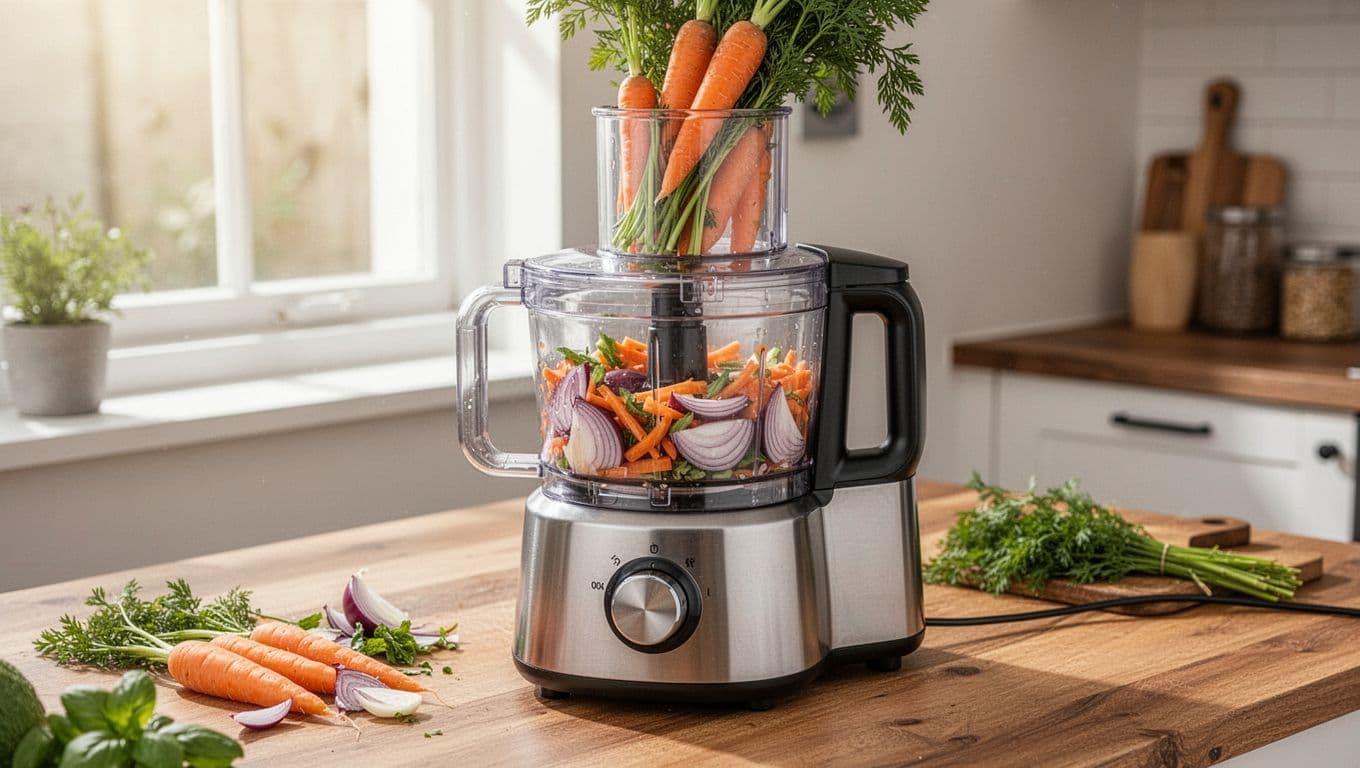
Everyday prep is where a food processor earns its keep, this image was created with AI.
Do you actually need a food processor, or will another gadget do the job?
Before you buy, it’s worth matching the machine to your real cooking habits. A Food Processor shines at prep-heavy jobs like chopping, slicing and grating. If you cook from scratch a few times a week, the time savings add up quickly. On the other hand, if you mostly assemble meals, it can end up as cupboard clutter.
Think about what slows you down. Is it chopping veg for a curry, grating cheese for pasta bakes, or making breadcrumbs and dips? A Food Processor removes those small barriers, so cooking feels easier on weeknights. It also helps batch cooks because you can prep ingredients in large amounts in one go, then portion and freeze.
Still, not everyone needs one. Small kitchens can struggle with storage, and some people hate washing up extra parts. If you already own a good knife, a box grater, and a stick blender, you may not feel the benefit unless you cook often.
Food processor vs blender vs stand mixer, quick differences that matter
These appliances overlap, but their “best jobs” are different. Use this quick table to avoid buying the wrong tool for the results you want.
| Appliance | Best for | Typical results | Simple example |
|---|---|---|---|
| Food processor | Chopping, slicing, grating, pulsing, short mixes | Textured, controlled, not always smooth | Salsa, coleslaw, grated cheese |
| Blender | Liquids and smooth blends | Very smooth, pourable | Smoothie, soup, pasta sauce |
| Stand mixer | Mixing, whisking, kneading with a bowl | Aerated mixes, strong dough handling | Cake batter, bread dough, meringue |
A blender can chop a little, but it tends to throw food around the jug. A 3-in-1 Food Processor with a blender attachment handles solids better because of the wide bowl and interchangeable discs. Meanwhile, a stand mixer can knead dough like pizza dough for longer, but it won’t slice a cucumber or shred carrots.
Signs a food processor is worth it in your kitchen
A processor tends to pay off when it matches what you cook every week. These are strong signals it’ll get used:
- You prep lots of veg: Stir-fries, soups, curries, salads, and traybakes become quicker.
- You make dips and spreads: Hummus, pesto, tapenade, and salsa take minutes.
- You grate cheese often: Great for pasta, pizza nights, and baked potatoes.
- You bake sometimes: Pastry and biscuit bases are easier with a pulse function.
- You batch cook: Big bowls help with chopped onions, grated veg, and breadcrumbs.
It’s usually not worth it if you rarely cook, you’ve got nowhere to store it, or you know you won’t clean it straight away. In that case, a compact mini chopper or a stick blender may suit you better.
Choosing the right food processor, size, power, and bowl design made simple
Online listings can look like a wall of numbers. Keep it simple: start with bowl size, then check power and processing bowl design, then look at the day-to-day details like the feed tube and controls. Also remember that specs vary between brands, so compare like-for-like rather than chasing the biggest figures.
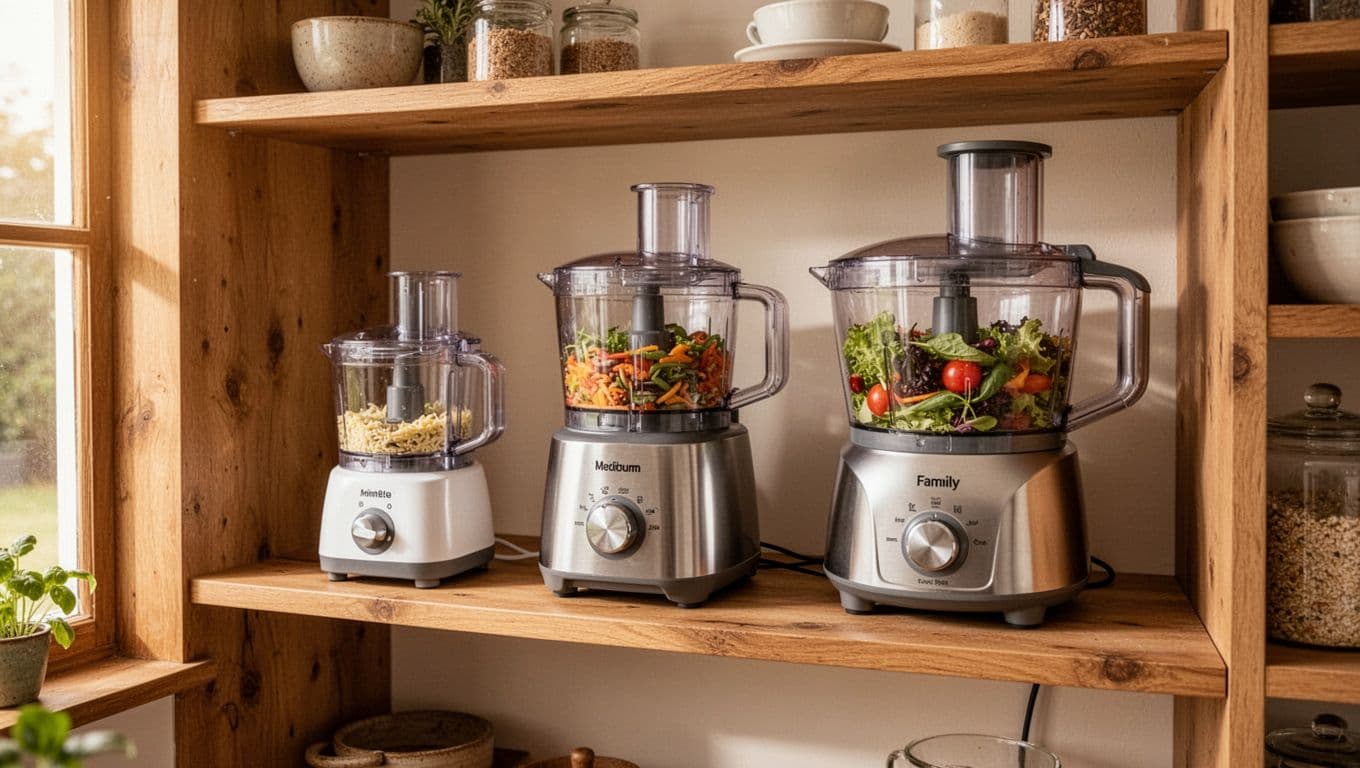
Different bowl sizes suit different households, this image was created with AI.
Pick the bowl capacity based on how many people you cook for
Capacity is usually listed in litres, but the working capacity is often less. Liquids need headroom, and some processing bowls have a centre post that reduces space. A practical guide for most UK kitchens looks like this:
- Mini (around 0.7 to 1.2L): A mini food processor best for sauces, dips, nuts, breadcrumbs, small onion jobs.
- Mid-size (around 1.5 to 2.5L): The everyday sweet spot for 1 to 3 people.
- Large (around 3L+): A large capacity better for families, big slaws, pastry batches, and meal prep. Some high-end models even feature integrated weighing scales.
If you often cook for two but like batch cooking, a mid-size processing bowl still works. You can run it twice and keep the machine easier to store. On the other hand, if you regularly prep for four or more, a large bowl saves time and stops food spilling over the rim.
A quick online tip: check the product photos. If the feed tube looks tiny on a “large” processor, you may end up pre-cutting everything anyway.
How much power do you need for chopping, grating, and dough?
Wattage matters, but it doesn’t tell the whole story. Blade shape, disc sharpness, and bowl design also affect performance. Still, power gives a helpful clue when you compare similar food processors.
Light use (basic chopping, herbs, soft veg) doesn’t need huge wattage. Medium use (regular slicing and grating, firmer veg) benefits from a powerful motor. Heavy use (cheese blocks, dough, frequent batches) is where extra power and a sturdier build often feel better.
Instead of chasing the biggest number, look for reviews that mention the tasks you do most. For example, if you want grated cheddar without smearing, you need a machine that keeps speed steady under load.
A food processor should feel calm under pressure. If reviews mention stalling, smoking smells, or wobbling bowls, keep looking.
Feed tube, lid fit, and controls, the small details that affect daily use
These “boring” details decide whether you love the machine or avoid it. A wide feed tube speeds up slicing because you can add chunks of veg without cutting everything into sticks. That matters for potatoes, courgettes, and apples.
Lid fit also matters. A secure lock and a good seal reduce leaks, especially with batters or dressings. A stable base helps too, because grating hard veg can make cheaper units dance across the counter.
Controls should be easy to use with damp hands. Simple buttons work well, while a dial can be nicer if you want variable speed control. Either way, a pulse function is important for rough chopping and for stopping before you turn salsa into soup.
Noise varies a lot. If you live in an open-plan flat, check reviews for comments about vibration and sound, because it can be surprisingly distracting.
Features and attachments that are worth paying for (and the ones you can skip)
A common online trap with food processors is paying for a long list of attachments and accessories you won’t use. Start with the meals you make most, then match the attachments to those jobs. Also check what comes in the box, because some listings show accessories that are actually optional extras.
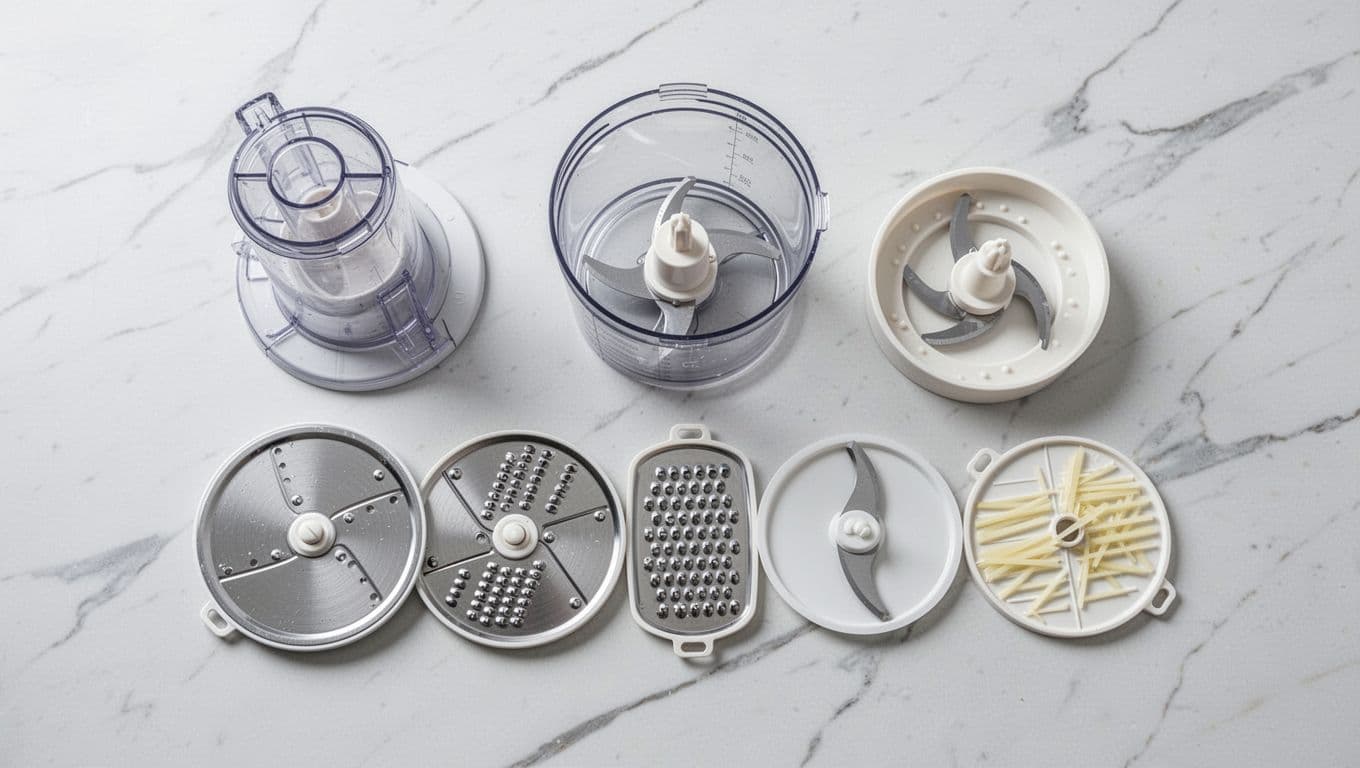
Common food processor blades and discs laid out for quick comparison, this image was created with AI.
Must-have blades and discs for most households
Most people only need three pieces of interchangeable blades to cover chopping slicing and grating.
The S-blade (often called the main blade, featuring sharp stainless steel blades) handles chopping, puréeing, and mixing. It’s the one you’ll use for onions, breadcrumbs, pesto, dips, and rough pastry mixing.
A slicing disc is for quick, even slices. It’s ideal for potatoes for dauphinoise, cucumbers for salads, and onions for fajitas. Uniform slices cook more evenly, which is useful for traybakes too.
A shredding disc speeds up cheese, carrots, and cabbage. Homemade slaw becomes a two-minute job, and you can portion grated cheese into tubs for later.
If a “food processor” listing doesn’t include at least these, it’s often poor value. You’ll either buy extra parts straight away or end up frustrated.
Nice extras if you will use them often
Extra attachments and accessories can be brilliant when they match your routine. A dough blade can help with pizza dough and basic bread, although a stand mixer still wins for frequent heavy kneading. A julienne disc is handy if you love stir-fries or salad toppers. A dicing kit can save time, but it adds parts to clean and store.
Some machines include a mini bowl. That’s useful for small sauces and avoids the food smearing around a big bowl. A citrus press can be handy if you make fresh juice or dressings often. A whisk or emulsifying tool helps with mayo and light whipping, although it won’t replace a proper mixer for big baking sessions.
A simple rule keeps you honest: only pay extra for attachments that match meals you make weekly, not “someday”.
Safety, cleaning, and storage features that save time
Cleaning is where good intentions die. Look for fewer fiddly parts, smooth surfaces, and processing bowl shapes that rinse easily. Dishwasher safe parts help, but check what needs hand washing, because blades and discs can dull faster with harsh cycles.
BPA-free plastics are common, but it’s still worth checking if you care about materials. Clear measurements on the bowl help with sauces and baking, while a solid locking mechanism keeps the lid secure. Non-slip feet reduce movement, which feels safer when feeding veg into a fast disc. Even dishwasher safe parts benefit from gentle handling.
Storage matters just as much. Some food processors store accessories in the bowl, while others include a storage caddy or need a drawer. Before you buy, measure the cupboard height and check the listed dimensions with the lid on.
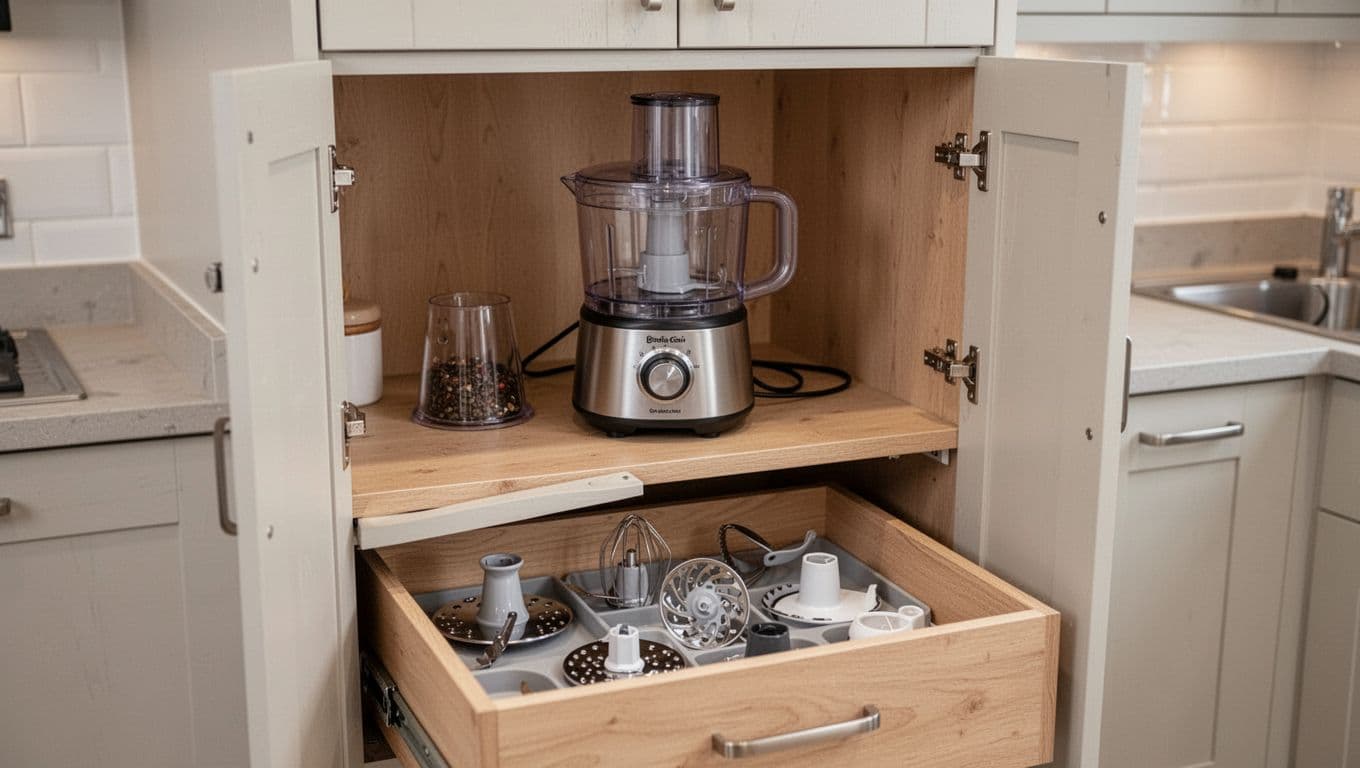
Planning storage makes a food processor easier to live with, this image was created with AI.
How to shop for a food processor online and get a better deal
Online shopping works best when you compare the right details. Product titles can be vague, and bundle photos can be misleading. Start by narrowing your must-haves (bowl size and core discs for chopping, slicing and grating), then compare the rest across a few listings.
It also helps to think about aftercare. A food processor is a machine with parts that can break or get lost. Being able to buy a replacement bowl, lid, or disc can matter more than a small price difference.
If you’re also buying bigger kitchen appliances online, the same habits apply. Whether it’s cookers, hobs, ovens, fridges, freezers, fridge freezers, dishwashers, washing machines, tumble dryers, washer dryers, air fryers, or vacuum cleaners, you’ll get better results by checking dimensions, delivery terms, energy use where relevant, and reviews that match your home.
A quick online comparison checklist you can use in minutes
Use this as a fast filter when you’ve got multiple tabs open:
- Bowl capacity (and whether reviews mention usable space for batch cooking)
- Included attachments (S-blade, slicing disc, grating disc at minimum)
- Dimensions and weight (check cupboard fit and counter stability)
- Wattage and whether reviews mention stalling on tough jobs or features like Auto-IQ technology
- Pulse function and number of speeds
- Feed tube width and how much pre-cutting users report
- Dishwasher-safe parts and how easy it is to rinse by hand
- Noise notes (especially in open-plan homes)
- Warranty length and spare parts availability
- Return policy and delivery handling (risk of cracked bowls in transit)
Once you’ve compared like-for-like, the “best” option often becomes obvious.
How to spot bad value before you click buy
Bad value usually hides in the gaps. Some listings show a full accessory set in the images, but the box only includes one disc. Others pair a large bowl with a narrow feed tube, so you still spend ages chopping food to fit.
Watch for signs that parts are hard to replace. If reviews mention cracked bowls, flimsy latches, or leaking lids, treat that as a warning. Also scan for patterns, not one-off complaints. Ten people saying the same thing is more useful than one angry review.
Running costs matter too. Replacement blades, discs, and bowls can be pricey. If you can’t find spare parts easily, the whole machine can become disposable after one accident.
If you can’t tell what’s included, how it locks, and how it’s cleaned, it’s not “a bargain”. It’s a risk.
Conclusion
Choosing a food processor is simpler when you follow a clear order: pick the tasks such as chopping, slicing and grating, pureeing or kneading dough that you want to speed up, match the bowl size to your household, confirm the must-have attachments, then prioritise easy cleaning before you compare price and warranty. Measure your storage space first, because a great machine you can’t store won’t get used. Finally, read reviews that mention your everyday jobs, then compare total value, including what’s in the box, returns, and aftercare, before you buy a food processor online.
–
Explore More Buyers Guides and Reviews
For a list of our main buyers guides use the drop-down menu at the top of the page. Topics related to this article are:
Kitchen Appliances Buyers Guides
–
Explore Our Blog Categories for Expert Buying Advice
- AI Powered Product Finder Tools (25)
- Expert Buying Guides & Shopping Tips for UK Shoppers (1,367)
- Brands & Designer Products (Men, Women & Electronics) (273)
- Designer Fashion Brands: Buyer’s Guides & Reviews (153)
- Electronic Brands: Buyers Guides & Reviews (86)
- Apple Products Buyer’s Guides & Reviews (24)
- Brands – Phones, Laptops, PC”s, Tablets | Buyer’s Guides & Reviews (42)
- Electronics – Tablet & iPad Reviews and Buyers Guides (11)
- Kitchen Appliance Brands: Buyer’s Guides & Reviews (22)
- Laptop Brands & MacBooks Buyer’s Guides & Reviews (9)
- Phone Brands & iPhones Buyer’s Guides & Reviews (23)
- Car Buying & Financing Made Easy | Expert Guides for the UK (89)
- Clothing, Fashion & Accessories Buying Guides UK (454)
- Beauty, Health & Wellness | Perfume, Skincare, Makeup & Wellbeing Guides (165)
- Footwear: Trainers & Shoes Buyers Guides (46)
- Jewellery: Expert Reviews, Trends & Buying Guides (71)
- Men's Clothes — Buyers Guides & Reviews (38)
- Men’s Clothes, Fashion & Accessories Guides UK | Latest Trends & Smart Shopping (156)
- Women's Clothing Buyers Guides — Dresses, Tops & More (173)
- Women’s Clothes, Fashion & Accessories Guides UK | Latest Trends & Smart Shopping (395)
- Electronics, Tech & Gadgets: Reviews, Deals & Buying Guides UK (170)
- Furniture Buyer’s Guides | Home & Garden & Styling Tips (313)
- Bedroom Furniture Guides UK | Expert Tips & Best Value Deals (91)
- Garden Furniture, Landscaping & Garden Rooms Guides UK | Expert Tips & Best Value Deals (158)
- Garden Sofa & Sofa Sets Buyers Guides (11)
- Garden Tables & Chairs: Sets, Individual Tables & Seating Buyers Guides (42)
- Home Furniture, Décor & Interior Design Guides UK | Styling Tips & Inspiration (167)
- Living Room Furniture, Design & Décor Guides UK | Styling Tips & Inspiration (57)
- Sofa & Sofa Beds Buyers Guides (19)
- Sofa Beds Buyers Guides (7)
- Sofa Buyers Guides & Expert Advice (11)
- Holidays & Travel: Hotels, Villas & Flights (158)
- Home & Garden Improvements | Renovations & Outdoor Transformation Guides (99)
- Insurance & Protection: Travel, Landlord, Gadget & More UK (159)
- Gadget Insurance UK | Expert Guides, Reviews & Smart Protection Tips (33)
- Home Emergency Cover UK | Expert Guides, Reviews & Practical Protection Tips (21)
- Landlords Insurance UK | Expert Guides, Reviews & Smart Protection Tips (31)
- Travel Insurance UK | Expert Guides, Reviews & Money-Saving Tips (34)
- Pets: Guides, Tips & Inspiration (26)
- Brands & Designer Products (Men, Women & Electronics) (273)
- Gifts for Everyone: Ideas for Every Occasion & Budget (45)