Buying a used Mazda CX-60 can feel like spotting a smartly dressed guest at a casual party. It’s still a family SUV, but it carries itself with a bit more polish than you might expect.
For UK drivers looking at CX-60s registered across the 2020–2026 window (depending on availability and plate dates), this guide is built around the stuff that matters day to day. What’s it like with kids, bags, and the weekly shop? Which engine makes sense for your journeys? What should you check at a viewing so you don’t inherit someone else’s headache?
You’ll get a practical view on running costs, powertrains (including the PHEV), common issues, and a no-nonsense checklist for buying used.
Mazda CX-60 at a glance, what makes this SUV different?
 The Mazda CX-60 on a typical UK country road, showing its upmarket styling (created with AI).
The CX-60 sits as a more premium-leaning SUV in Mazda’s line-up, aimed at drivers who want something a bit nicer than the usual family bus, without jumping fully into the badge-first world.
In the UK, it often gets cross-shopped with cars like the BMW X3, Audi Q5, and Volvo XC60. The key point isn’t that it tries to copy them, it’s that Mazda has pushed hard on materials, design, and driving feel to sit closer to that group than older Mazdas did.
You’ll mainly see three types of powertrain on used examples:
- Plug-in hybrid (PHEV) for drivers who can charge and do lots of shorter trips.
- Mild-hybrid diesel for long motorway runs and towing.
- Mild-hybrid petrol for mixed use, with less diesel-related worry on short journeys.
A big part of the CX-60’s character comes from it being rear-wheel drive based. In plain terms, that means the car is designed around pushing from the back wheels (even if it has four-wheel drive on some versions). It tends to feel more balanced through bends, with a nose that’s less “pulled” around. Space-wise, it can mean a chunkier transmission tunnel down the middle, so the middle rear seat can be less comfy than the outer two.
Interior quality, space, and comfort for daily family use
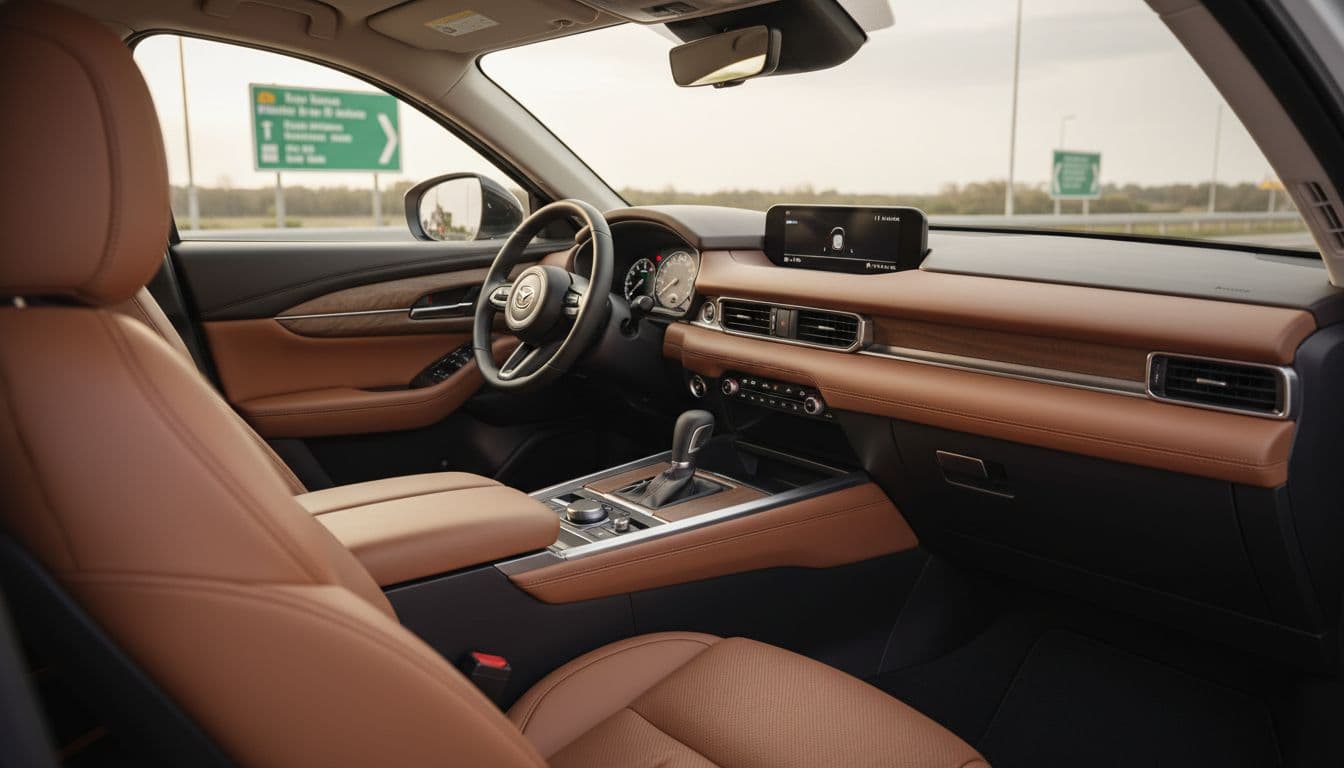 The CX-60’s cabin has a clean, premium feel with family-friendly space (created with AI).
Step inside a CX-60 and it’s clear Mazda cares about how it feels to touch and use. Many cars have soft-touch materials where your arms and knees land, plus neat details like stitching and trim that don’t look like an afterthought.
The driving position is a strong point. You sit high enough to see over traffic, but not perched like you’re on a bar stool. For commuters, that makes it easy to place on narrow roads and in multi-storey car parks.
Rear space is generally good for adults, and it’s workable for growing teenagers. For child seats, look for:
- Easy access to ISOFIX points (some covers and trims can make it fiddlier).
- Enough door opening angle to lift a bulky seat in without knocking the paint.
- Front seat clearance with a rear-facing seat fitted behind the passenger.
On a used car, do a comfort-focused check, not just a quick sit:
- Look for seat bolster wear on the driver’s side, especially on higher-mile cars.
- Drive over a rough section of road and listen for creaks and trim rattles.
- Test heated seats, ventilation (if fitted), and make sure climate control changes temperature quickly.
Boot space, practicality, and towing ability
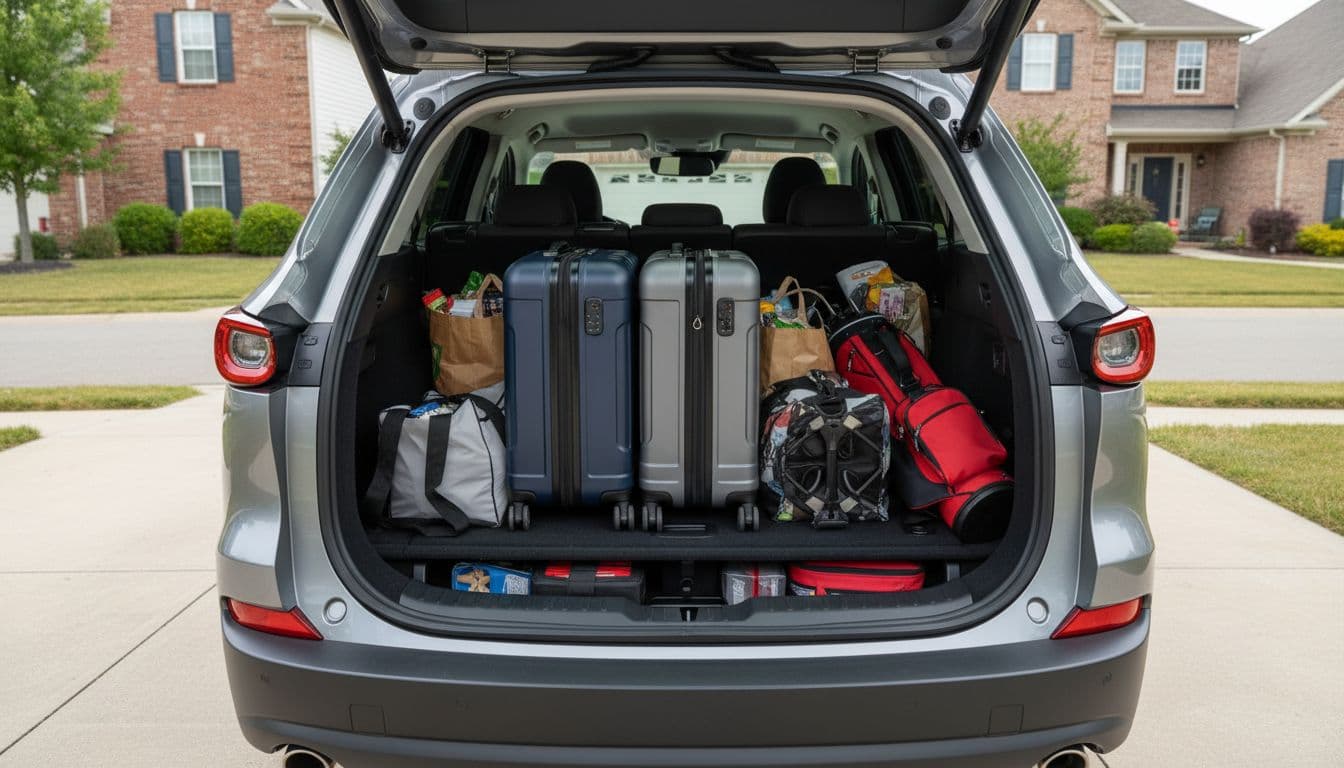 The CX-60 boot is shaped for real life, with useful height and a wide opening (created with AI).
The CX-60’s boot is more “useful” than “huge”. The opening is wide, the shape is sensible, and the floor is typically flat enough to slide heavy bags in without a wrestling match. Check the loading lip height for your needs, especially if you’re lifting prams or heavier cases.
Split-fold rear seats are key for family life. Make sure they fold easily and latch back properly. Also check any underfloor storage, as it’s handy for charging cables (PHEV) or muddy kit.
If towing is on your wish list, focus less on promises and more on evidence:
- Check the tow bar fits neatly and looks properly installed, not bodged.
- Ask to see the tow electrics working (indicators, brake lights).
- Look for signs of hard use: scraped bumper corners, heavily worn rear tyres, or rear suspension sitting low.
Engines and trims to look for when buying a used Mazda CX-60
Choosing the right CX-60 engine is like picking the right shoes. A pair that’s perfect for a long walk can be a pain in the neck for a quick dash.
A simple way to narrow it down:
Mostly city and short trips: mild-hybrid petrol can suit, and the PHEV can be excellent if you can charge. Avoid a diesel if it’ll spend its life doing two-mile school runs.
Mixed driving (town, A-roads, the odd motorway): mild-hybrid petrol or PHEV (if you’ll charge often) tends to make the most sense.
Long motorway commutes: diesel still fits this job well, with relaxed cruising and strong range between fill-ups.
Towing and heavy loads: diesel is often the calm choice, and can feel less strained. Still check servicing closely, as towing is harder on oils, brakes, and cooling.
Whatever you choose, remember the trade-offs:
- PHEV: more complexity, can be very cheap to run when charged often.
- Diesel: suits mileage, but short trips can cause problems if the engine doesn’t get hot enough regularly.
- Petrol mild-hybrid: simpler than a PHEV, but can use more fuel if driven hard.
Plug-in hybrid (PHEV) CX-60, great on paper, but is it right for you?
The CX-60 PHEV makes the most sense when it can behave like an electric car most of the week. If you have home charging and your typical day is school, work, and local errands, it can feel smooth, quiet, and satisfyingly efficient.
If you can’t charge reliably, or you mainly do long motorway runs, it may disappoint. A PHEV carrying a flat battery is still carrying that battery, so the “best case” economy is harder to reach.
What to check on a used CX-60 PHEV:
- Charging cable present and in good condition.
- Charge flap opens and closes cleanly, with no cracked hinges or loose fittings.
- Ask about battery warranty and the service record supporting it.
- On a test drive, feel for a smooth handover between electric drive and petrol power.
- Confirm it charges normally, and watch for warning messages on the dash.
Real-world economy on any PHEV depends more on routine than the brochure. If you’ll charge most nights, it can be a money saver. If you won’t, you’re paying for tech you’re not using.
Diesel and petrol mild-hybrid options, best for motorway miles and towing
A mild-hybrid system is a small assist rather than a full electric drive. You still fill up with petrol or diesel as normal, but the car uses a small electrical boost to help smooth stop-start and reduce load in certain moments.
For UK drivers who do regular motorway miles, diesel can still be a good match. It tends to sit at speed with less effort, and it can feel confident when loaded up with passengers and luggage.
For mixed use, mild-hybrid petrol can be the easier ownership bet. It usually avoids the kind of diesel system complaints that can appear with repeated short trips.
Checks to do before buying:
- Start the engine cold, listen for rough idle or unusual tapping.
- Watch the exhaust briefly for excessive smoke.
- Make sure the stop-start works properly (if it’s meant to).
- Scan the service history for regular servicing and the right fluids.
The key is matching engine to your life. A diesel that never warms up properly is like a kettle that’s switched off before it boils.
Which trims and options are worth having on a used CX-60?
On a used CX-60, a sensible spec can make the car feel calmer and easier to live with.
Options that tend to pay off in the UK:
- Adaptive cruise control for motorway runs.
- Heated seats (and a heated steering wheel if you like winter comfort).
- Parking sensors and cameras, as it’s not a small SUV.
- Matrix-style headlights where fitted, great for unlit A-roads.
- Power tailgate if you’re often juggling bags and kids.
Be cautious with cars loaded with tech if the seller can’t show it all working. At the viewing, test driver aids, cameras, parking sensors, Bluetooth, and any powered seat functions. Small faults can be annoying, and they can cost real money to sort.
How the Mazda CX-60 drives, and what it is like to live with
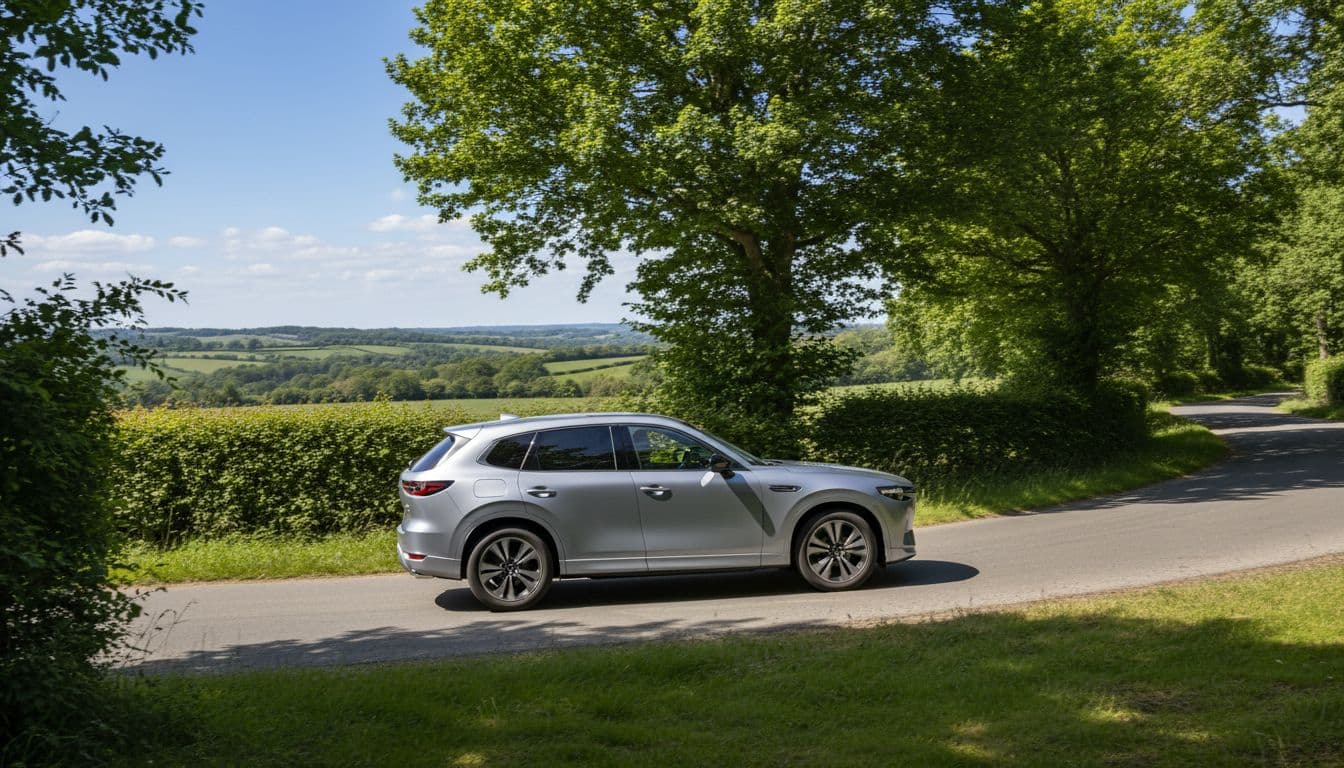 The CX-60 has a more tied-down feel than many soft SUVs (created with AI).
The CX-60 feels more “driver’s car” than many family SUVs. Steering response is typically direct, and the body stays fairly controlled through bends. If you’re used to very soft suspension, it can feel firmer than expected on rough surfaces, especially on larger wheels.
On the motorway, it settles in well. The seats tend to support you nicely, and the car feels stable at speed. Around town, the main challenge is size, so good parking sensors and cameras make a difference.
For used buyers, the best test is to drive it in the places you’ll actually use it. A five-minute loop won’t show much.
Ride comfort and handling, what to look for on a test drive
Wheel size and tyre choice can change the CX-60’s comfort a lot. Bigger wheels can look great, but they often bring a firmer edge over potholes and broken tarmac.
On your test drive, do these checks:
- Drive over speed bumps and listen for knocks or rattles.
- Let go of the wheel briefly on a flat road (safely) and check for steering pull.
- Brake from 50 to 10 mph and feel for judder through the pedal.
- At motorway speed, watch for vibration that hints at wheel balance or tyre issues.
- Shift between drive and reverse and listen for clunks that feel out of place.
Try a tight turn at low speed too. Any graunching noises or tyre scrub can hint at alignment issues.
Real-world fuel economy, tyres, and servicing costs in the UK
Running costs come down to three things: the engine you choose, the wheels and tyres fitted, and how well it’s been maintained.
A few ownership truths that catch people out:
- Large wheels usually mean pricier tyres, and sporty tyre types can wear faster.
- A PHEV can be cheap to run when charged often, but it won’t be if it’s driven like a normal petrol SUV.
- Skipped servicing matters. Modern engines, hybrids included, need the correct oil specification and timely changes.
When you view a used CX-60, look beyond stamps. Ask for invoices, check dates and mileage gaps, and ask whether any recall work or software updates have been completed. Software can affect everything from driver aids to charging behaviour.
Used Mazda CX-60 reliability, common problems, and what to check before you buy
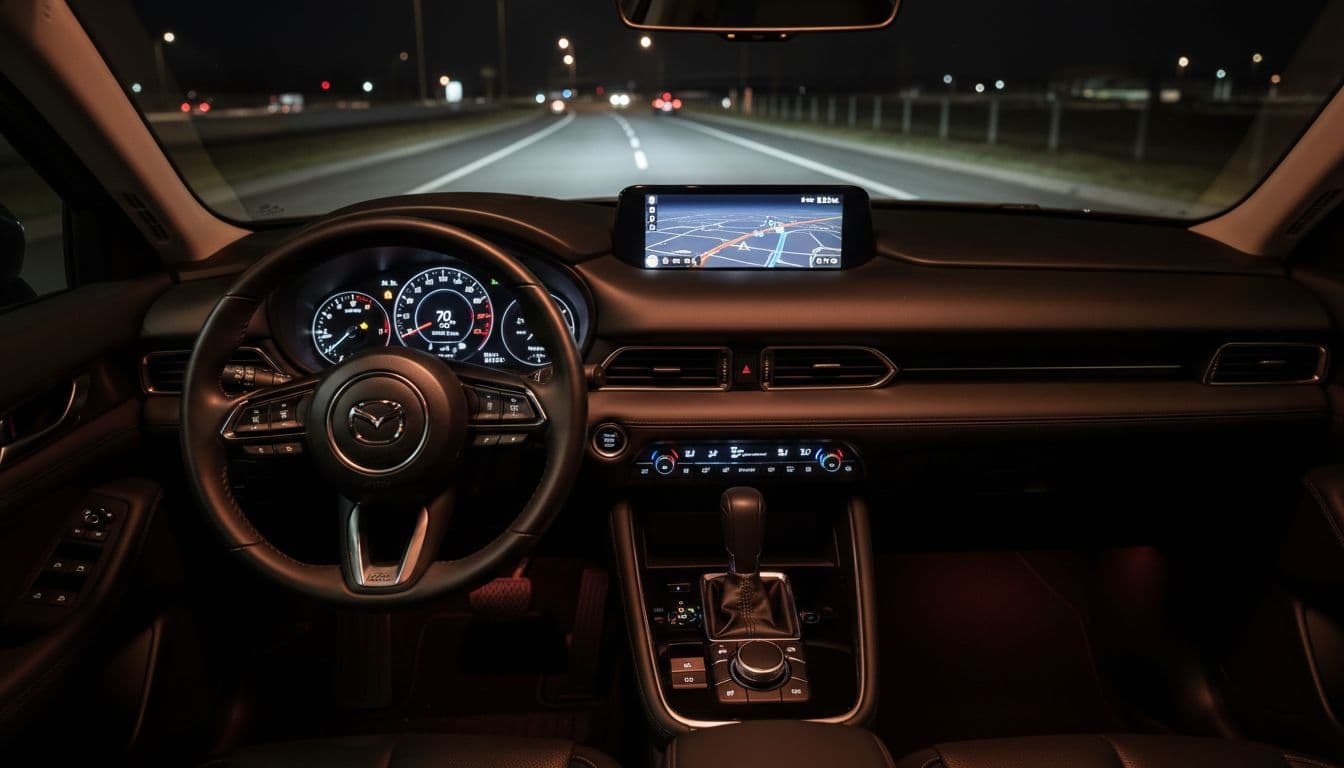 Checking warning lights and tech functions matters on modern SUVs like the CX-60 (created with AI).
Modern SUVs can be mechanically sound but still annoy owners with tech glitches. The CX-60 is no different. The aim here isn’t to scare you off, it’s to help you spot patterns early, while you still have the option to walk away.
The strongest protection is a car with a full service history, sensible tyre wear, and a seller who can explain what’s been done and why.
Common issues owners report, and how to spot them quickly
The sort of niggles that can crop up on newer SUVs tend to cluster around electronics and noises:
- Infotainment glitches, slow response, or Bluetooth dropouts.
- Parking sensor or camera faults that come and go.
- Driver-assist warnings that appear without a clear cause.
- Suspension noises over bumps.
- Occasional complaints about harsh gear changes.
- Brake squeal, sometimes just pad material, sometimes wear related.
Quick ways to catch problems at a viewing:
- Turn the car on and check the dash for warning lights that stay on.
- Test all cameras, sensors, and driver aids you can safely try.
- Leave the infotainment running for several minutes, connect your phone, and make a call.
- Take a longer test drive so the car warms up, as some faults only show when hot.
Viewing checklist, paperwork, servicing, recalls, and tyres
A tidy-looking SUV can still hide neglect. Use this simple checklist and don’t rush it.
Paperwork and keys
- VIN matches the V5C and the car.
- Service book plus invoices, with sensible intervals.
- Two keys, and both work properly.
Condition and wear
- Tyres have even tread, and ideally matching brands across an axle.
- Check inner tyre edges, uneven wear can point to alignment issues.
- Brake discs and pads look consistent, with no heavy lipping or scoring.
Tech and functions
- Test parking sensors, cameras, heated seats, climate control, and electric tailgate.
- Confirm all warning lights come on at ignition and go out after start.
PHEV-specific
- Charging cable present.
- Car starts charging normally and shows expected status messages.
- No damage around the charge port area.
Tow-car checks (if fitted)
- Tow electrics work.
- Look for heavy wear at the rear, and listen for knocks over bumps.
If you’re not confident, a pre-purchase inspection can be money well spent, especially on a PHEV or a car with a tow bar.
Best used age and mileage sweet spot for value
Most cars drop quickest in value early on, then settle. That can make slightly older examples appealing, as long as they’ve been looked after.
A practical sweet spot is often a CX-60 that’s:
- Old enough to have taken the first hit of depreciation.
- New enough to have a modern warranty history and up-to-date servicing.
- On moderate mileage with proof of regular maintenance.
Don’t dismiss higher-mile motorway cars if the history is strong and the condition backs it up. Also be wary of very low mileage cars with long service gaps, as time matters as much as miles for oils, fluids, and 12-volt batteries.
Conclusion
A used Mazda CX-60 suits UK drivers who want family space with a more premium feel, plus strong motorway comfort and the option of towing. The PHEV can be brilliant for short regular trips if you can charge at home, but it’s a tougher sell if you can’t. If you prefer a very soft, floaty ride, make sure you’re happy on a longer test drive, as the CX-60 can feel firmer than some rivals.
Before you buy, keep it simple: pick the engine that matches your journeys, prioritise a full service history, test every bit of tech you’ll rely on, and take a proper drive on town roads, rough B-roads, and the motorway. That’s how you find a CX-60 you’ll enjoy owning, not just one that looks good on the driveway.
–
Shop for More with Our Verified UK Insurance providers:
Home Emergency Cover Home Appliance Cover – Income Protection
Travel Insurance – Gadget Insurance – Phone Insurance – Caravan Insurance – Cycle Insurance – E-Bike Insurance
Car Finance – Car Breakdown Cover – Van Breakdown Cover – Motorbike Breakdown Cover
–
Explore our Buyers Guides with Money Saving Tips
For a list of our main buyers guides use the drop-down menu at the top of the page. Topics related to this article are:
Laptop Insurance Buyers Guides
Gadget Insurance Buyers Guides
Tennant’s Insurance Buyers Guide
Landlords Insurance Buyers Guide
Home Emergency Cover Buyers Guide
Travel Insurance Buyers Guides
Car Breakdown Cover Buyers Guide
–
Explore Our Blog Categories for Expert Buying Advice
- AI Powered Product Finder Tools
- Apple Products Buyer’s Guides & Reviews
- Beauty, Health & Wellness | Perfume, Skincare, Makeup & Wellbeing Guides
- Bedroom Furniture Guides UK | Expert Tips & Best Value Deals
- Beds Buying Guides UK | Types, Tips & Best Deals
- Brands – Phones, Laptops, PC”s, Tablets | Buyer’s Guides & Reviews
- Brands & Designer Products (Men, Women & Electronics)
- Car Buying & Financing Made Easy | Expert Guides for the UK
- Car Rental Worldwide: Compare Prices for UK Travellers
- Christmas Essentials: Decorations & Gift Ideas
- Clothing, Fashion & Accessories Buying Guides UK
- Designer Fashion Brands: Buyer’s Guides & Reviews
- Diamond Jewellery Buyers Guides & Shopping Tips
- Electronic Brands: Buyers Guides & Reviews
- Electronics – Tablet & iPad Reviews and Buyers Guides
- Electronics, Tech & Gadgets: Reviews, Deals & Buying Guides UK
- Europe Holidays & Hotels: Destinations Guides & Flights
- Expert Buying Guides & Shopping Tips for UK Shoppers
- Flooring: Wood, Laminate, Carpets and Floor Tiles Buyers Guides
- Footwear Brands: Reviews & Buyer’s Guides
- Footwear: Trainers & Shoes Buyers Guides
- Furniture Buyer’s Guides | Home & Garden & Styling Tips
- Gadget Insurance UK | Expert Guides, Reviews & Smart Protection Tips
- Game Reviews — PlayStation, Xbox, Nintendo & PC
- Gaming Buyers Guides — Consoles, Games, Keys & More
- Garden Furniture UK: Expert Reviews, Deals & Buying Guides
- Garden Furniture, Landscaping & Garden Rooms Guides UK | Expert Tips & Best Value Deals
- Garden Rooms, Offices & Garden Buildings Guides UK | Expert Tips & Best Value Deals
- Garden Sofa & Sofa Sets Buyers Guides
- Garden Tables & Chairs: Sets, Individual Tables & Seating Buyers Guides
- Gemstone Jewellery Buyers Guides
- Gifts for Everyone: Ideas for Every Occasion & Budget
- Gold Jewellery Buyers' Guides & Shopping Tips
- Holidays & Travel: Hotels, Villas & Flights
- Home & Garden Improvements | Renovations & Outdoor Transformation Guides
- Home Décor, Interior Design & Styling Tips UK | Inspiration & Expert Advice
- Home Emergency Cover UK | Expert Guides, Reviews & Practical Protection Tips
- Home Furniture Guides UK | Expert Tips & Best Value Deals
- Home Furniture, Décor & Interior Design Guides UK | Styling Tips & Inspiration
- Insurance & Protection: Travel, Landlord, Gadget & More UK
- iPhone Buying Guides, Reviews & Comparisons for the UK
- iPhone Insurance UK | Expert Guides, Reviews & Smart Protection Tips
- Jewellery Rings Buyers' Guides & Shopping Tips
- Jewellery: Expert Reviews, Trends & Buying Guides
- Kitchen Appliance Brands: Buyer’s Guides & Reviews
- Kitchen Appliances UK: Buyers Guides, Reviews & Money Saving Tips
- Landlords Insurance UK | Expert Guides, Reviews & Smart Protection Tips
- Laptop Brands & MacBooks Buyer’s Guides & Reviews
- Laptop Brands: Buyer’s Guides & Reviews
- Living Room Furniture, Design & Décor Guides UK | Styling Tips & Inspiration
- Makeup – Expert Buyers Guides & Reviews
- Men's Clothes — Buyers Guides & Reviews
- Men’s Clothes, Fashion & Accessories Guides UK | Latest Trends & Smart Shopping
- Men’s Fragrance Brands: Perfume & Aftershave Reviews & Buyers Guides
- Perfume & Aftershave Brands: Reviews & Buyers Guides
- Perfume & Fragrance: Best Scents, Reviews & Buying Guides
- Pets: Guides, Tips & Inspiration
- Phone Brands & iPhones Buyer’s Guides & Reviews
- Phone Brands: Buyer’s Guides & Reviews
- Phone Insurance UK | Expert Guides, Reviews & Smart Protection Tips
- Skincare — Expert Buyers Guides & Reviews
- Sofa & Sofa Beds Buyers Guides
- Sofa Beds Buyers Guides
- Sofa Buyers Guides & Expert Advice
- Sportswear Brands: Reviews & Buyers Guides
- Supplements Buyers Guides — Expert Tips & Recommendations
- Trainer Brands: Reviews & Buyer’s Guides
- Travel Insurance UK | Expert Guides, Reviews & Money-Saving Tips
- UK Holidays & Hotels: Destinations Guides & Flights
- Women's Clothing Buyers Guides — Dresses, Tops & More
- Women’s Clothes, Fashion & Accessories Guides UK | Latest Trends & Smart Shopping
- Women’s Designer Brands: Buyer’s Guides & Reviews
- Women’s Designer Shoe Brands: Buyer’s Guides & Reviews
- Women’s Dresses | Online Shopping Guides, Style Tips
- Women’s Perfume Brands: Reviews & Buyers Guides