A mirror can be more than somewhere to check your hair. In many UK homes, it’s a practical tool for light, a quick fix for making a small room feel less boxed-in, and a style choice that can pull a space together.
This guide keeps it simple and budget-aware. You’ll learn how mirrors work, which types suit each room, how to choose the right size and shape, plus how to fit and care for them safely.
How mirrors work, and why they change a room
A mirror reflects light because its surface is very smooth. Light hits it and bounces back in a predictable way, so your eyes read it as an image. Most household mirrors are glass with a reflective backing layer (often silver or aluminium) and a protective coating.
Quality matters more than people expect. A better-made mirror gives a clearer reflection with fewer ripples, and it tends to be safer too (stronger glass, better edge finishing, better fixings). In real terms, that means:
- Rooms look brighter because the mirror throws light back into the space.
- Tight areas can feel wider, because you’re seeing reflected depth.
- Getting ready is easier, because you’re not fighting a wavy reflection.
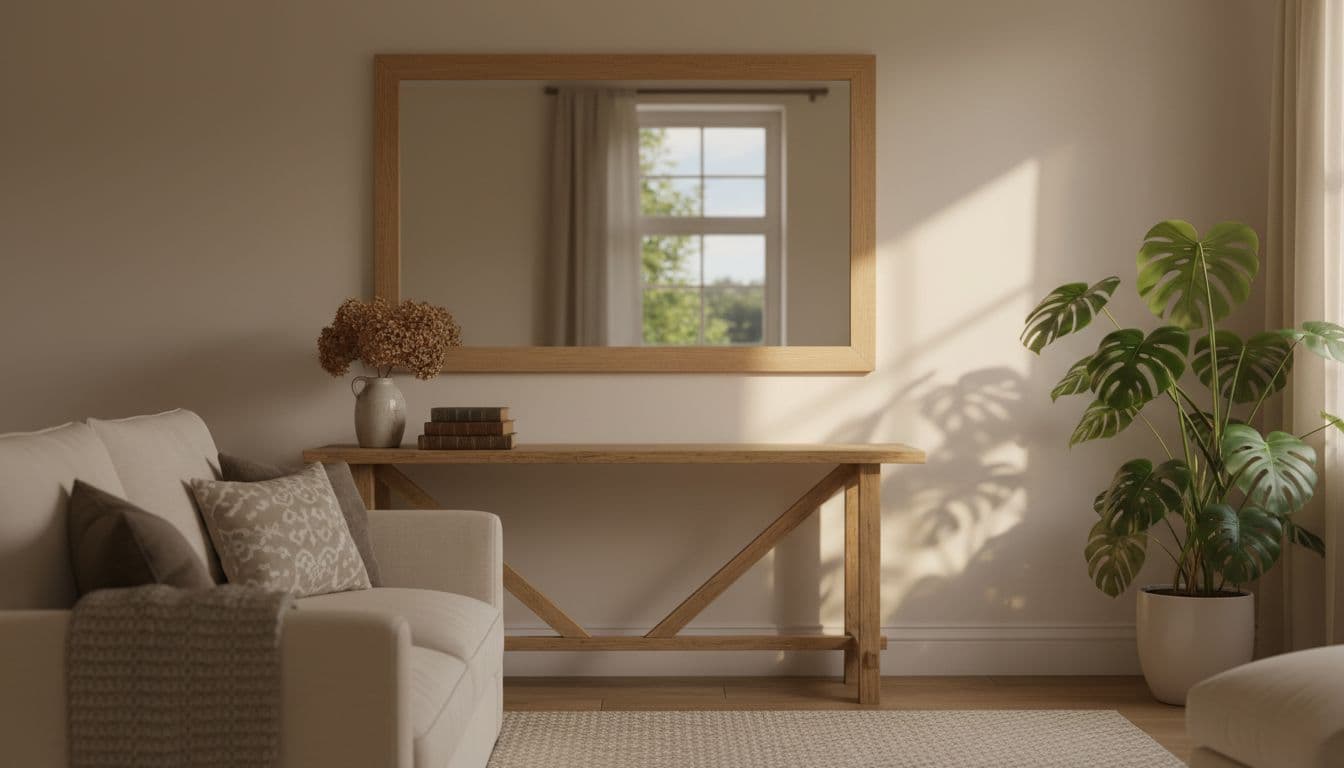 Natural daylight reflected by a wall mirror to brighten a typical UK living room (created with AI).
Clear reflection vs distortion, what causes ‘funhouse’ mirrors?
A “funhouse” look usually isn’t a joke, it’s a sign of poor build or poor fitting. Distortion often comes from:
Thin glass: It can flex slightly, which bends reflections.
Weak or patchy backing: This can create cloudy areas or warping.
Warped frames: A frame under tension can twist the mirror over time.
Uneven walls: Old plaster and lumpy surfaces can force a mirror to sit oddly.
Simple checks that take seconds:
- Stand back and look at straight lines (door frames, tiles, window edges). If they curve, something’s off.
- Move side to side. A decent mirror stays stable from angles.
- If it’s already mounted, check it isn’t being pulled tight against a high spot on the wall.
Light, angles, and placement, how mirrors brighten dark spaces
Placement is everything. A mirror doesn’t “make” light, it re-directs what you already have. For many UK homes with smaller windows, north-facing rooms, or narrow halls, that can make a noticeable difference.
Rules of thumb that work:
- Face a window when you can. Opposite is strongest, but even a slight angle helps.
- In a hallway, position a mirror so it catches light from the nearest room or glazed door.
- On stair landings, a mirror can lift a gloomy corner, but keep it away from the main line of travel so you’re not brushing past it.
- Use a lamp near a mirror to double its effect, but avoid placing it where the bulb reflects straight into your eyes when you sit down.
If glare is a problem, tilt the mirror slightly or move it away from direct sun and shiny light sources.
Types of mirrors, choosing the right one for each room
The “right” mirror depends on how you’ll use it, the wall you have, and who lives in the home. Spend more where safety and daily wear matter (bathrooms, large wall mirrors). Save money on smaller decorative mirrors where a tiny flaw won’t bother you.
Common room matches:
- Hallway: wall mirror over a small console, or a tall full-length if space allows.
- Bathroom: moisture-resistant mirror, ideally with sealed edges.
- Bedroom: full-length for outfits, plus a smaller mirror near a dressing area.
- Living room and dining room: larger statement mirrors to reflect light and add depth.
Wall, full-length, leaning, and overmantel mirrors, pros and cons
Wall mirrors suit most homes and keep floors clear. They’re great above console tables, sofas, and sideboards. The key is correct fixings and a sensible height.
Full-length mirrors are for outfits and posture checks. They can be wall-mounted or freestanding, but they’re often heavier than people expect.
Leaning mirrors look relaxed and stylish, but they’re not ideal in busy routes, homes with toddlers, or where pets barrel through the room. To reduce tip risk, choose a wide base, add anti-tip straps, and avoid placing them near doors that swing open.
Overmantel mirrors work well in period properties and living rooms. They often suit classic proportions, but they must be secured properly, especially above fireplaces where heat and vibration can be factors.
Bathroom and shower-safe mirrors, what to look for
Bathrooms are harsh on mirrors. Steam can creep into unsealed edges, and poor metal parts can rust. Look for:
- Sealed edges or a frame that protects the perimeter
- Moisture-resistant backing
- Fixings suited to tiled walls (and the right drill bit)
- Easy-clean surfaces if limescale is a common issue in your area
For fog reduction, you can choose a mirror with a demister pad. If it’s a powered mirror, keep it simple: bathroom electrics have safety zones. Check current guidance and use a qualified installer if you’re unsure.
Mirror buying checklist, size, shape, frame, and budget
If you’re searching for the “best mirror size for hallway” or wondering “how to choose a mirror”, it helps to make the decision before you fall in love with a design.
A quick checklist before you buy:
- Measure the wall space, plus nearby doors and cupboards
- Decide the purpose (grooming, light, style, or all three)
- Pick a shape that suits the room’s lines
- Check the frame finish works with handles, taps, and light fittings
- Confirm weight and hanging method, not just the width
Getting the size right, quick measuring tips that prevent returns
Sizing mistakes are common, and returns are a hassle with fragile items. These quick rules keep proportions tidy:
- Over a console table: aim for about two-thirds of the table’s width.
- Above a fireplace: keep the mirror within the mantel width so it doesn’t look top-heavy.
- Full-length: choose a height that shows head-to-toe for most people in your home, and allow a little extra if it will sit above a skirting board.
A handy trick is masking tape. Mark the mirror’s outline on the wall, then live with it for a day. You’ll spot problems fast, like light switches being trapped behind the frame.
Shape and frame choices that suit UK interiors (modern, period, small flats)
Shape changes the mood. Round mirrors soften sharp corners, so they’re great in narrow halls or above small basins. Arched mirrors suit period features, such as alcoves and chimney breasts, because the curve echoes older shapes. Rectangular mirrors feel clean and modern, and they’re easy to centre over furniture.
For mirror frame styles, think about what you already have:
- Black metal: crisp, works with modern lighting and industrial touches.
- Brass tones: warm, pairs well with cream walls and classic fittings.
- Natural oak or wood: relaxed, suits Scandi looks and traditional homes.
- Frameless: neat and minimal, often best in bathrooms.
Quality checks, what to inspect before you buy
A mirror can look fine online, then arrive with flaws you can’t ignore. When you can, check:
Glass and backing: look for a clean, even reflection with no cloudy patches.
Edges and corners: they should be tidy, with no chips or sharp points.
Hanging hardware: it should feel solid, fitted straight, and rated for the mirror’s weight.
Weight: heavier often means thicker glass, but it also means you need better fixings.
For large mirrors and busy areas, consider a safety backing film. It can help hold shards together if the glass breaks. Also check what’s covered if the mirror arrives damaged, and inspect deliveries straight away.
Safe fitting, cleaning, and care so your mirror lasts
A mirror is one of those items that’s easy to rush. Take your time, especially with heavy pieces or tricky walls. If it feels like a two-person job, it is.
Hanging a mirror safely, fixings, wall types, and height rules
Start with the wall type. UK homes can vary room to room.
- Plasterboard: use the right wall anchors, or fix into studs where possible.
- Masonry or brick: use suitable plugs and screws, and a masonry drill bit.
- Old plaster: go carefully, and avoid crumbling areas.
Check the mirror’s weight, then match fixings to that weight with a margin. Keep mirrors away from doors that might knock them, and use bump pads to stop rubbing and protect walls.
Typical heights:
- Hallway mirror: centre it around eye level for most adults in the home.
- Bathroom mirror: align it with the basin and lighting so faces are evenly lit.
For very large mirrors, and any powered bathroom mirror, getting a professional fit can save money and stress.
Cleaning without streaks, easy routine for glass and frames
You don’t need strong chemicals. Streaks usually come from too much spray and dirty cloths.
A simple routine:
- Use a clean microfibre cloth.
- Lightly mist the cloth, not the mirror.
- Wipe the edges first (where drips gather), then the centre.
- Buff dry with a second cloth.
For frames, keep it gentle. Wipe wood frames with a barely damp cloth, then dry straight away. For metal frames, dry them well in bathrooms so moisture doesn’t sit in corners.
Conclusion
Mirrors earn their place in a UK home because they add light, improve how a room feels, and help with everyday routines. Choose the right type for the room, measure before you buy, and don’t ignore build quality and safe fixings. Use the checklist, compare features and prices, and put safety first for large or bathroom mirrors. What’s the one spot in your home that could feel brighter with the right mirror?

Explore More Expert Buyers Guides and Reviews
For a list of our main buyers guides use the drop-down menu at the top of the page. Topics related to this article are:
Home and Garden Furniture Buyers Guides
Bedroom Furniture Buyers Guides
living Room Furniture Buyers Guides
Garden Furniture Buyers Guides
Patio Furniture Sets Buyers Guide
–
Explore Our Blog Categories for Expert Buying Advice
- AI Powered Product Finder Tools (25)
- Expert Buying Guides & Shopping Tips for UK Shoppers (1,459)
- Brands & Designer Products (Men, Women & Electronics) (293)
- Designer Fashion Brands: Buyer’s Guides & Reviews (166)
- Electronic Brands: Buyers Guides & Reviews (92)
- Apple Products Buyer’s Guides & Reviews (25)
- Brands – Phones, Laptops, PC”s, Tablets | Buyer’s Guides & Reviews (44)
- Electronics – Tablet & iPad Reviews and Buyers Guides (10)
- Kitchen Appliance Brands: Buyer’s Guides & Reviews (24)
- Laptop Brands & MacBooks Buyer’s Guides & Reviews (9)
- Phone Brands & iPhones Buyer’s Guides & Reviews (23)
- Car Buying & Financing Made Easy | Expert Guides for the UK (89)
- Clothing, Fashion & Accessories Buying Guides UK (509)
- Beauty, Health & Wellness | Perfume, Skincare, Makeup & Wellbeing Guides (187)
- Footwear: Trainers & Shoes Buyers Guides (49)
- Jewellery: Expert Reviews, Trends & Buying Guides (74)
- Men's Clothes — Buyers Guides & Reviews (39)
- Men’s Clothes, Fashion & Accessories Guides UK | Latest Trends & Smart Shopping (172)
- Women's Clothing Buyers Guides — Dresses, Tops & More (201)
- Women’s Clothes, Fashion & Accessories Guides UK | Latest Trends & Smart Shopping (448)
- Electronics, Tech & Gadgets: Reviews, Deals & Buying Guides UK (182)
- Furniture Buyer’s Guides | Home & Garden & Styling Tips (329)
- Bedroom Furniture Guides UK | Expert Tips & Best Value Deals (93)
- Garden Furniture, Landscaping & Garden Rooms Guides UK | Expert Tips & Best Value Deals (170)
- Garden Sofa & Sofa Sets Buyers Guides (11)
- Garden Tables & Chairs: Sets, Individual Tables & Seating Buyers Guides (57)
- Home Furniture, Décor & Interior Design Guides UK | Styling Tips & Inspiration (170)
- Living Room Furniture, Design & Décor Guides UK | Styling Tips & Inspiration (57)
- Sofa & Sofa Beds Buyers Guides (19)
- Sofa Beds Buyers Guides (7)
- Sofa Buyers Guides & Expert Advice (11)
- Holidays & Travel: Hotels, Villas & Flights (162)
- Home & Garden Improvements | Renovations & Outdoor Transformation Guides (106)
- Insurance & Protection: Travel, Landlord, Gadget & More UK (159)
- Gadget Insurance UK | Expert Guides, Reviews & Smart Protection Tips (33)
- Home Emergency Cover UK | Expert Guides, Reviews & Practical Protection Tips (21)
- Landlords Insurance UK | Expert Guides, Reviews & Smart Protection Tips (31)
- Travel Insurance UK | Expert Guides, Reviews & Money-Saving Tips (34)
- Pets: Guides, Tips & Inspiration (28)
- Brands & Designer Products (Men, Women & Electronics) (293)
- Gifts for Everyone: Ideas for Every Occasion & Budget (51)