November has two recognised birthstones, topaz and citrine, giving shoppers a worthwhile choice of colour, look and budget when the jewellery is well made. When choosing November birthstone jewellery, prioritise construction and wearability alongside the gemstone itself.
Golden citrine and blue topaz look different, whilst metal choice, treatment and setting affect what you get for your money. Online shopping makes comparisons easier, but enlarged photographs and generous discounts can distract from the specifications that matter.
Start with the differences between the stones, then assess quality, fit and the full cost before choosing.
Key Takeaways
- Topaz and citrine are both recognised November birthstones, so colour preference can guide your choice without either being more correct.
- Compare colour, visible clarity, cut and dimensions rather than judging a gemstone by carat weight alone.
- Secure settings, smooth finishing and appropriate precious-metal hallmarks matter as much as attractive stones.
- Online shopping offers broader selection and easier price comparisons, but treatment disclosures, sizing, delivery charges and returns determine the value.
November Birthstone Guide: Topaz and Citrine Compared
Citrine is yellow to orange quartz, with colours that range from pale lemon to honey and reddish orange. Topaz is a different mineral, available in colourless, blue, yellow, pink and orange shades.
Blue topaz offers a cool, bright appearance, whilst colourless topaz provides a neutral option. Rich orange-pink topaz, often described as imperial topaz, costs more than common treated blue stones.
Both gems have traditional associations with warmth, joy and good fortune. These are cultural beliefs, not proven effects, and gemstone traditions vary.
Topaz and Citrine: Strengths and Limitations
- Both offer attractive colour across varied budgets, with simple silver designs and more expensive gold settings providing different entry points.
- Neither suits careless wear: citrine can scratch, whilst topaz can split along its cleavage planes after a sharp impact.
Citrine measures 7 on the Mohs hardness scale; topaz measures 8. Hardness describes resistance to scratching, not resistance to breaking.
Much commercial citrine is made from heat-treated amethyst. Natural citrine can also be treated, so the word “natural” doesn’t confirm that a finished gemstone is untreated. A clear description should distinguish the two.
Choose by Colour, Style and Everyday Wear
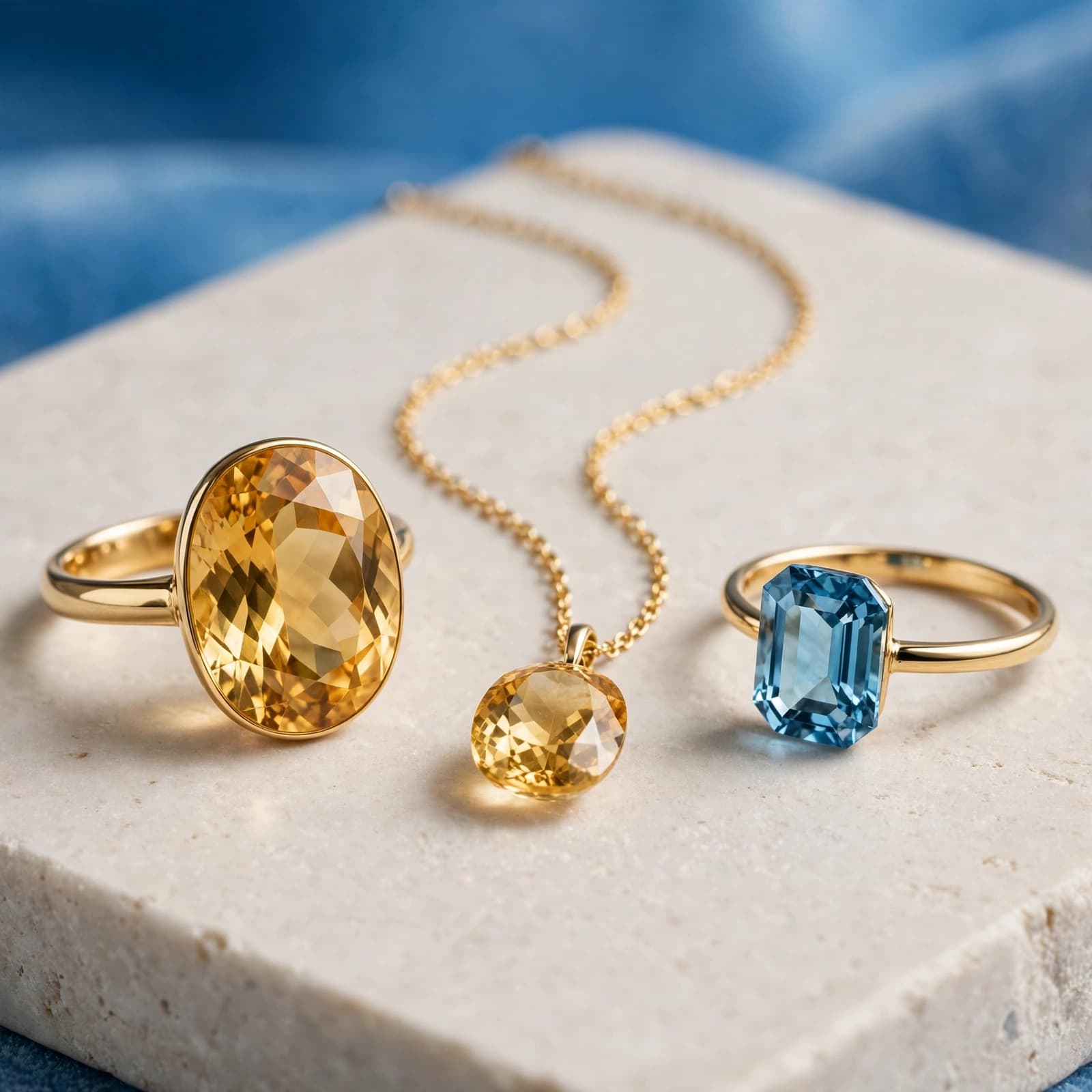
Golden tones complement cream, brown and earthy clothing, particularly in yellow gold. Meanwhile, blue topaz works with navy, grey and crisp white. Colourless topaz suits someone who prefers jewellery without a strong colour accent.
Consider how often the piece will leave its box. Rings and bracelets set with topaz or citrine encounter more knocks than pendants or earrings, so a low-profile setting matters for frequent wear.
For an occasional statement piece, a larger gemstone can be practical. For everyday use, prioritise comfortable proportions and protected edges. Simple studs or a restrained pendant also remain easy to wear when clothing styles change.
How to Judge a Quality November Birthstone Before You Buy
A convincing piece balances the gemstone with its construction. A bright stone can’t compensate for a weak clasp, and heavy gold won’t improve a lifeless cut.
Start with the specification rather than the promotional photograph. Colour, clarity, cut, dimensions and workmanship all influence appearance and price.
Assess Colour, Clarity and Cut
Look for appealing, reasonably even colour without distracting patches. Richer colour isn’t automatically better: an overly dark gemstone can lose brightness in ordinary light.
Visible clarity matters more than an impressive-sounding grade. Citrine and common blue topaz are often available without inclusions visible to the unaided eye. Cloudiness, chips or surface-reaching fractures deserve attention.
A well-proportioned cut returns light across the face. A large see-through area beneath the centre, called a window, can make a stone appear washed out.
Carat measures weight, with one carat equal to 0.2g. Compare millimetre dimensions too, as two equally heavy stones can look different in size. For multi-stone bracelets, total carat weight describes all the stones together, not each one.
Listings for natural citrine should disclose known treatments and distinguish the gemstone’s geographical origin from where the jewellery was made.
Check the Metal, Setting and Hallmark
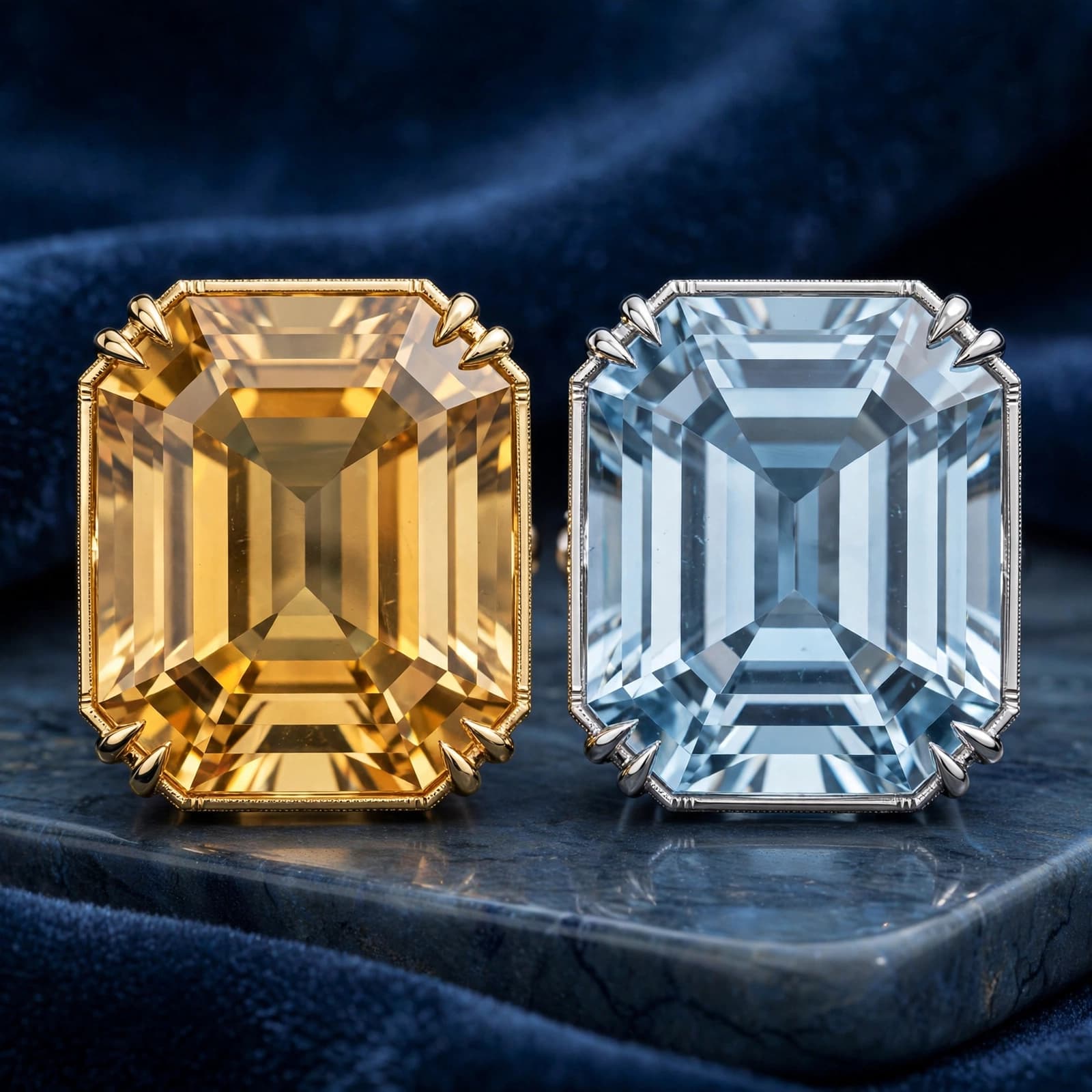
Sterling silver usually costs less than gold, although it tarnishes. Gold-plated silver offers a golden finish, but its surface layer wears with use. Nine-carat gold contains 37.5% gold; 18-carat contains 75%.
For UK purchases, hallmarking generally applies to gold items weighing more than 1g and silver items weighing more than 7.78g. Common fineness marks include 375, 750 and 925. A hallmark confirms metal fineness, not gemstone quality.
Bezel settings surround the stone’s edge with metal, while claws leave more of it exposed. Either needs careful finishing. Avoid obvious gaps around stones, lifted claws, rough undersides or poorly joined links. Bracelet clasps should close securely, and chains should move freely without kinking.
How to Buy November Birthstone Jewellery Online with Confidence
Online shopping gives you more gemstone colours, chain lengths and setting styles than a single shop usually carries. It also makes like-for-like price comparisons easier, so you can find better value without travelling between shops.
Read the full description before judging the photographs. Magnification can exaggerate a stone’s size, while bright lighting can intensify its sparkle. Stone dimensions, pendant height, chain length and bracelet width give you a more reliable sense of scale.
Reviews can help when they describe clasp security, comfort or colour in daylight. Treat them as supporting evidence, not proof.
Check treatment information, delivery charges and return conditions before paying. Use a secure checkout, but remember that a padlock alone doesn’t establish a seller’s reliability.
For most online purchases, you have 14 days after delivery to notify the seller that you’re cancelling, then another 14 days to return the goods. Personalised jewellery may be exempt.
Compare the Total Price, Not Just the Discount
Compare like-for-like November birthstone jewellery by gemstone, dimensions, metal purity and construction. A plated pendant and a solid-gold pendant aren’t equivalent, even when their stones look similar.
Add delivery and any return postage to the price. For overseas purchases, import charges can also change the total.
A large reduction against a crossed-out price doesn’t establish value. Clear specifications and useful aftercare matter more than a dramatic discount. For a lower-cost alternative to gold, consider sterling silver with the same gemstone rather than accepting an unclear stone description.
Pick a Gift That Feels Personal and Easy to Wear
Use the recipient’s existing jewellery as your guide. Their preferred metal colour and usual scale are better clues than the size of the discount.
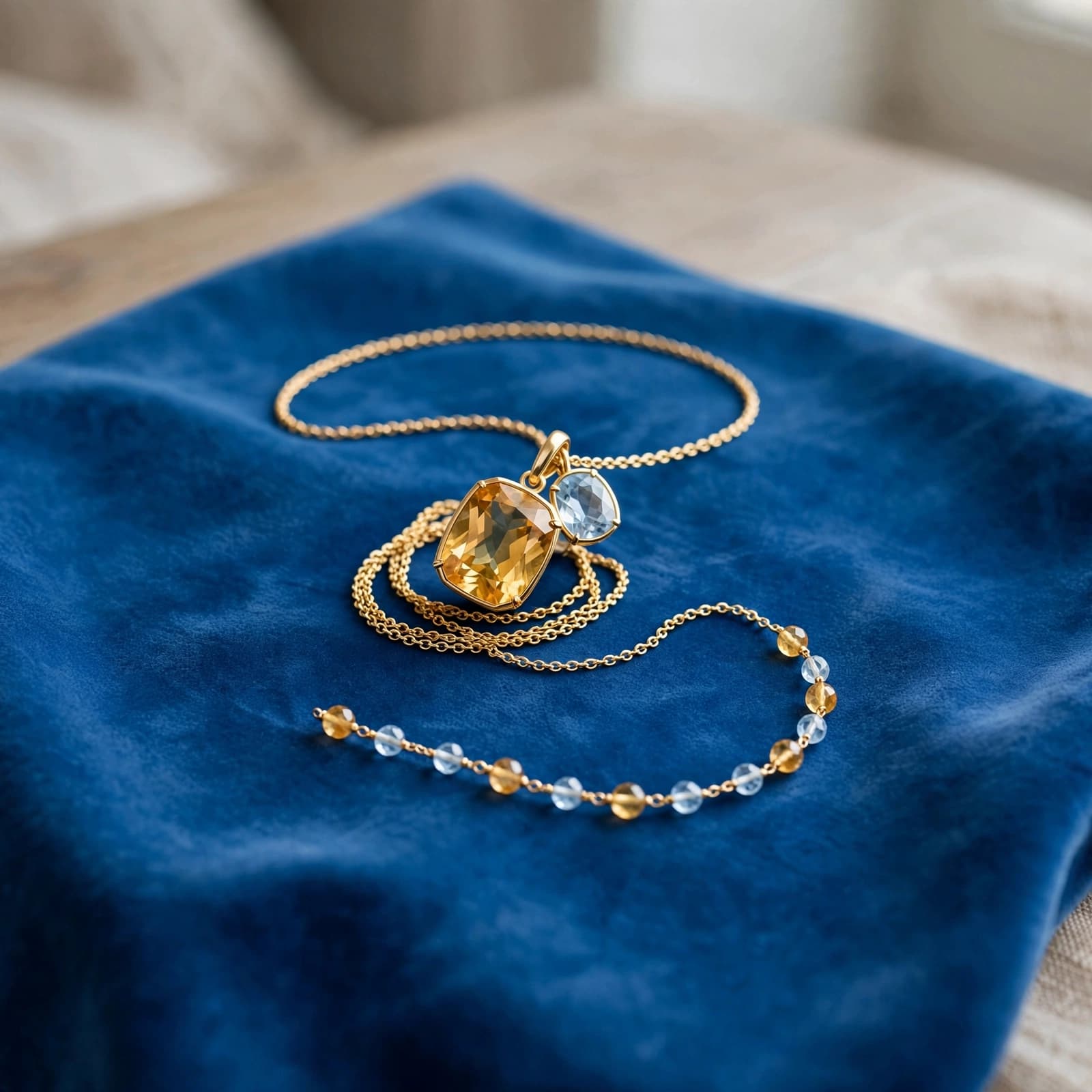
A simple pendant or stud earrings are easier choices than a ring when you don’t know the size. However, earrings require pierced ears, and hygiene-related return restrictions may apply.
For bracelets, length alone doesn’t establish comfort: link shape, width and clasp position also affect fit. Keep the receipt and choose gift-return terms that extend beyond the birthday, particularly when buying early.
Frequently Asked Questions
Is topaz or citrine the November birthstone?
Both topaz and citrine are commonly recognised choices for the November birthstone. Neither is mandatory, so the recipient’s taste can decide. A blue topaz pendant is as appropriate for a November birthday as golden citrine jewellery.
Is blue topaz natural?
Topaz occurs naturally, including rare naturally blue material. However, much blue topaz jewellery starts with colourless topaz, which undergoes irradiation and heat treatment to develop its colour. Treatment disclosure for topaz should make clear what you’re buying. The word “natural” alone doesn’t mean untreated.
Is citrine a good choice for everyday jewellery?
Citrine can suit everyday jewellery when the setting and intended use are appropriate. Pendants and earrings generally encounter fewer knocks than rings and bracelets. Remove citrine jewellery for gardening, gym sessions and other rough tasks, and follow the maker’s care guidance.
Does a November birthstone need to be expensive?
No. Prices vary with gemstone colour, size, treatment, metal and workmanship, so attractive options exist at different budgets. Sterling silver with citrine or treated blue topaz usually costs less than substantial gold jewellery. Compare specifications rather than assuming the highest price buys the most appealing piece.
How should I clean topaz or citrine jewellery?
Use lukewarm water, mild soap and a soft cloth or brush unless the maker gives different instructions. Avoid harsh chemicals, sudden temperature changes, ultrasonic cleaners and steam cleaning. Store pieces separately in soft pouches or lined compartments. If a stone moves or a claw lifts, stop wearing it and ask a jeweller to inspect the setting.
Final Verdict: Choose for the Wearer
Topaz and citrine both offer distinctive colours and styles, with options for everyday jewellery and occasional statement pieces. The right choice depends on the wearer, intended use and budget, supported by sound construction rather than impressive photography.
Buy it if the colour appeals, the dimensions suit the wearer, and the setting, metal and total price meet your needs. Clear treatment information and workable returns make an online purchase easier to judge.
Skip it if treatment, sizing, metal or returns information is unclear. A birthday connection adds meaning, but the jewellery still needs to earn its place through comfortable, reliable wear.
Explore our Buyers Guides and Reviews
◦ 🏠 All Buyers Guides Homepage