Verdict: 4/5. A light blue dress is a versatile buy when its fabric, fit and formality suit how you actually dress. It can look polished at work, suit a wedding, work well on holiday or feel relaxed at the weekend. Pale fabric quickly reveals poor lining and weak construction.
This guide helps shoppers assess material quality, comfort, sizing accuracy, durability, styling range and value for money. A pale blue garment may be icy, powdery or close to sky blue. Check the exact shade in natural daylight before committing.
Choose it for your plans, rather than buying a colour alone. A structured cut can earn repeat wear across several seasons, while an easy-going playsuit may suit more casual summer days.

AI-generated image: a pale blue garment styled as a flexible wardrobe piece.
This post may contain affiliate links. If you make a purchase through these links, I may earn a small commission at no extra cost to you.
Key Takeaways
- Fabric weight and lining matter more in pale blue because thin material can look transparent in daylight.
- Compare bust, waist and hip measurements with every brand’s size chart before ordering.
- A-line, wrap, shirt and midi styles suit different needs, so comfort should guide the choice.
- White, cream, tan, navy and metallic accessories make soft blue easier to rewear.
- Check return terms, care instructions and customer photos before buying online.
Pale Blue Styles and Silhouettes Worth Considering
The strongest Light Blue Dress styles balance a useful silhouette with a shade you’ll wear often. Pale Blue Dresses range from relaxed A-line shapes to sharper fitted designs. An A-line dress has a fitted upper section and a skirt that opens gently towards the hem. It gives room to walk and works well for daytime events. A wrap dress offers an adjustable waist, whilst a Shirt Dress feels practical for work or weekends.
A Slip Dress has a fluid, minimal shape for evenings when the fabric is substantial enough. A Bodycon Dress creates a sharper look, although it needs careful attention at the bust, hips and zip. A Mini Dress feels playful, while a Crepe Mini Dress offers more structure for cocktails. A Maxi Dress brings more drama, especially in satin, lace or pleated fabric. A Smock Dress and a Playsuit offer relaxed alternatives for warm-weather days.
Necklines, sleeves and waist placement change the wearing experience. Petite shoppers may prefer a defined waist and a midi hem that doesn’t cut across the widest part of the calf. Taller wearers can often choose longer hems without losing proportion. A fuller bust may feel more comfortable in a wrap, V-neck or shaped bodice with secure coverage. A Puff Sleeve adds volume at the shoulder, while a Halter Neck leaves the shoulders open. Those seeking modest dressing can choose a higher neckline, long sleeves and a flowing skirt without giving up colour.
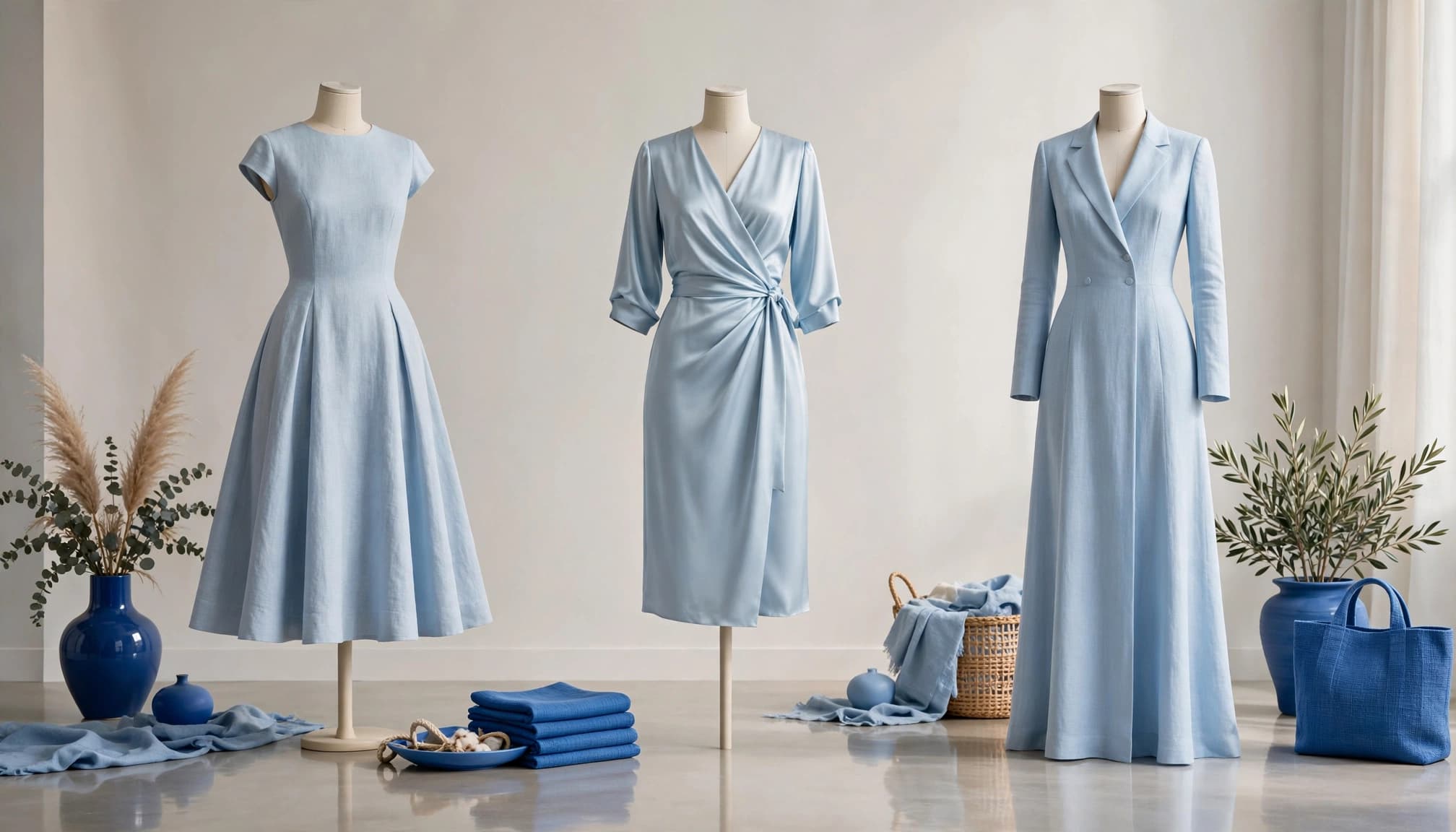
AI-generated image: A-line, wrap and maxi silhouettes in light blue.
Choose the Right Fabric for the Season and Occasion
Cotton and linen are comfortable choices for warm-weather daywear because they allow air to circulate. A Cotton Dress in Broderie Anglaise offers extra texture and breathability. Linen creases easily, however, and unlined pale linen can be less opaque than expected. Cotton poplin holds a cleaner shape, while softer cotton jersey adds stretch for casual wear. A Denim Dress provides a more durable option for relaxed weekends.
Viscose and jersey have fluid movement, although viscose may shrink or lose shape if washed carelessly. A Satin Dress gives evening outfits a smooth sheen and elegant drape, while an Evening Dress may use lace, velvet or silk for a more formal finish. Lighter fabrics work well for a Beach Dress, and a Floral Print can add interest without changing the silhouette.
Check opacity in daylight, not only under fitting-room lights. Also inspect the lining, seams, stretch, care label and crease resistance. A slightly heavier fabric usually looks better in pale blue and holds up better over repeated wears.
Find a Shade of Blue That Works With Your Existing Wardrobe
Icy blue has a cool, crisp cast and pairs naturally with silver, grey and navy. Powder blue looks softer beside cream, pearl jewellery and pale tan leather. Clear sky blue feels fresher with white trainers or bright metallic accessories, while a blue with a faint green tone can sit well with warm gold and camel.
Hold the colour near your face, then compare it with the shoes, coats and bags you already own. Preferred jewellery also helps narrow the choice. Personal preference matters more than colour rules, but practical coordination makes the dress easier to wear again.
A pale blue dress earns its place in a wardrobe when you can style it with items you already reach for.
How to Choose a Pale Blue Style That Fits Well
Ignore the number on the label until you’ve checked the measurements. Sizing varies widely, and the same size can fit differently in a structured woven midi and a stretchy jersey dress. A comfortable fit should let you sit, walk and raise your arms without pulling or constant adjustment.
Look at the shoulder seams first. They should sit close to the shoulder point, rather than dropping down the arm or digging into the neck. On a Puff Sleeve style, check that gathered fabric sits evenly on your frame. Next, assess bust space, waist placement, torso length, hem proportions, bra compatibility and fastening quality. A tailor can shorten a hem or refine a small waist adjustment, but cannot reliably fix a bodice or hips that feel too tight. This is especially important with a shorter tailored style such as a Crepe Mini Dress.
Use Measurements and Fit Notes Instead of Guessing Your Size
Measure your bust at its fullest point, your natural waist at its narrowest point and your hips around their fullest point. Keep the tape level and wear light clothing. Then compare those numbers with the listed body and garment measurements. For a close-fitting Bodycon Dress, allow less room for error than with a looser woven style.
Read the model’s height, fabric stretch and recent fit reviews where available. “Fitted” means close to the body, while “body-skimming” follows your shape with more ease. “Regular” usually follows the brand’s standard proportions, whereas a relaxed Smock Dress allows extra room through the shoulders and bust. Buy the size that lets you move comfortably, not a target number.
Check Comfort, Coverage and Construction Before Buying
Try the dress with the underwear you expect to wear. Sit down, walk, lift both arms and turn around. Check for neckline gaping, strain across the zip, tight sleeves, a lining that rides up and visible underwear.
A thoughtfully made dress has neat seams, a secure zip or buttons, reinforced stress points and pockets that don’t pull the fabric out of shape. Adjustable straps are useful on slip and sundress styles.
Use this short fitting checklist:
- The waist sits where your body naturally bends.
- The lining stays smooth when you walk and sit.
- The hem gives enough freedom for your plans.
- The fabric feels comfortable against bare skin.
- The fastening closes without force or puckering.
Style Pale Blue for Work, Weddings and Everyday Wear
A powder blue dress can look understated or dressed up, depending on its layers and accessories. Keep additions refined, especially with satin, embroidery or a more formal silhouette. A simple soft blue style lets you change the mood without buying separate outfits for every event.

AI-generated image: light blue dress outfit inspiration for several occasions.
Build Easy Outfit Combinations Around the Dress
- For a casual day, wear a Cotton Dress or relaxed Denim Dress with white trainers, a cross-body bag and a denim jacket. For holidays, layer a Beach Dress over swimwear, or choose a Playsuit for active weekend outings.
- For the office, choose a shirt dress or tailored midi with loafers, a structured blazer and a compact leather tote. A cotton style also works well beneath a cardigan or lightweight jacket.
- For a wedding or evening event, pair an Evening Dress or Satin Dress with nude or metallic heels, a small clutch and restrained gold or silver jewellery. A Halter Neck style suits an elevated summer wedding or outdoor reception, while a Crepe Mini Dress works for smart evening drinks with minimalist heels.
Broderie Anglaise and espadrilles create an easy summer combination for daytime occasions. Navy adds contrast without overpowering pale blue, while tan gives a softer daytime result. Cream looks polished for spring and summer. If the fabric is light or close-fitting, choose a skin-tone bra, a smooth slip or low-profile underwear that won’t show through.
Make the Dress Work Beyond One Season
In spring, add a cropped cardigan, lightweight trench or smart denim jacket. When autumn arrives, wear a midi dress with tights, ankle boots, a fine knit and a wool coat. Layer a fine knit over a delicate Slip Dress when temperatures drop. A more substantial jersey, ponte or wool-blend style will be easier to layer than very thin satin.
A versatile length matters if cost per wear is important. Midi hems usually work with flats, heels and boots, so the same dress can move from daytime plans to dinner with only a change of shoes and jewellery.
Buying Online: Compare Quality, Price and Return Policies
Online shopping offers more colours, lengths and silhouettes than a single shop visit. It also makes price comparison easier. However, polished product photos cannot show transparency, rough seams or an awkward waist position. This matters particularly when comparing Pale Blue Dresses, as their opacity and lining can be difficult to judge online.
Before ordering, compare the fibre content, lining, garment measurements, care instructions, delivery cost and expected arrival date. Read recent reviews for comments on colour accuracy, creasing, fit and opacity, but treat them as useful clues rather than proof.
Under UK distance-selling rules, consumers usually have 14 days to cancel an online purchase, although conditions and return postage costs vary. Check the retailer’s stated policy before removing tags or disposing of the packaging.
Avoid Common Online Shopping Mistakes
Don’t order by label size alone or assume every fabric has stretch. Rigid woven styles, such as a Denim Dress, need different checks from flexible knitted fabrics. A Playsuit also requires torso length and rise measurements, rather than standard dress lengths alone.
Look for photographs taken in different lighting and customer images where possible. Check that a Floral Print lines up at the seams, then inspect opacity in direct lighting. Pale blue can look cooler, brighter or darker online than it does in person.
Order early if the dress is for a wedding or fixed event. Keep the packaging until you’ve checked the fit, and factor likely alteration costs into the total price.
Judge Whether the Dress Offers Good Value
Use a simple test: divide the full cost by the number of times you expect to wear it, then consider fabric performance, construction, comfort, styling flexibility and care costs. A budget dress can be good value for a one-off plan. A mid-range option often offers better lining and seams. An investment piece should offer excellent fabric, a dependable fit and years of wear.
Pros
- The colour feels soft, fresh and suitable for several occasions.
- Neutral accessories make styling straightforward.
- Many silhouettes work across spring and summer.
Cons
- Pale shades can reveal thin fabric and visible underwear.
- Some fabrics need more careful washing and storage.
- Darker colours may be more practical for frequent travel or busy days.
Choose this colour if you want a flexible wardrobe piece. Consider a navy shirt dress or a patterned wrap dress if you need easier care and less concern about marks.
Garment Care: Preserving Shape and Colour
Follow the care label before washing. Wash pale colours with similar shades and use a gentle detergent. Bleach and harsh stain treatments can weaken fibres or alter the colour, particularly on silk, satin and embellished fabric. Wash Broderie Anglaise gently to protect its delicate eyelets and openwork embroidery from snagging.
Air-dry the dress away from strong direct sunlight, then steam it or use the lowest safe ironing temperature. Hang structured dresses on supportive hangers. Delicate straps, lace and satin benefit from padded hangers, while garment bags protect occasionwear during longer storage.
Treat embroidery, beads and sequins carefully to prevent snagging. Good care reduces wear, limits unnecessary replacement and protects the value of a well-chosen dress.
Frequently Asked Questions
What colours go well with a pale blue dress?
White, cream, tan, navy, grey, silver and gold are dependable choices. Use cream and tan for softer daytime styling, then choose silver or gold for a smarter finish. The exact blue and dress formality should guide the final combination.
Can I wear a pale blue dress to a wedding?
A pale blue dress is usually suitable for a wedding guest if it respects the stated dress code and doesn’t resemble bridal clothing. Consider the venue, season, hemline and fabric. For informal garden parties or daytime celebrations, a Playsuit may also be suitable if the invitation allows it. Check the dress code before choosing a very pale, lace-heavy or full-length style.
What shoes should I wear with a light blue dress?
Nude or tan sandals suit warm-weather events, while white trainers work well for casual plans. Silver heels add formality, cream flats keep the look soft, and navy shoes provide contrast. Ankle boots make a midi style more useful in cooler months.
How can I stop a pale blue dress from looking see-through?
Choose a dress with a proper lining and test it in natural light. Skin-tone underwear or a lightweight slip can improve coverage. A Halter Neck style may need a strapless or multiway bra for discreet support. Customer photographs may reveal issues, but thicker fabric or a darker print offers the most dependable solution.
How do I make a powder blue garment look more formal?
Choose refined shoes, a structured clutch, tailored outerwear and simple metallic jewellery. Polished hair also makes a difference. Fabric, silhouette and finishing details matter more than piling on accessories.
Final Recommendation
A pale blue style is worth buying when it fits comfortably, suits your routine and works for more than one occasion. Check measurements, fabric quality, transparency, return terms and care instructions before purchasing.
Buy it if:
- You want a soft colour that pairs easily with neutral accessories.
- You can wear the dress for work, events, holidays or everyday plans.
- You’re happy to care for pale fabrics properly.
- You want Pale Blue Dresses to provide long-term wardrobe value.
Skip it if:
- You need low-maintenance dark colours for frequent wear.
- Pale shades don’t feel like your style.
- The fabric feels thin, restrictive or difficult to care for.
Explore our Buyers Guides and Reviews
For a list of our main buyers guides use the drop-down menu at the top of the page. Topics related to this article are:
Explore Our Blog Categories for Expert Buying Advice
- AI Powered Product Finder Tools (25)
- Expert Buying Guides & Shopping Tips for UK Shoppers (1,370)
- Brands & Designer Products (Men, Women & Electronics) (273)
- Designer Fashion Brands: Buyer’s Guides & Reviews (153)
- Electronic Brands: Buyers Guides & Reviews (86)
- Apple Products Buyer’s Guides & Reviews (24)
- Brands – Phones, Laptops, PC”s, Tablets | Buyer’s Guides & Reviews (42)
- Electronics – Tablet & iPad Reviews and Buyers Guides (11)
- Kitchen Appliance Brands: Buyer’s Guides & Reviews (22)
- Laptop Brands & MacBooks Buyer’s Guides & Reviews (9)
- Phone Brands & iPhones Buyer’s Guides & Reviews (23)
- Car Buying & Financing Made Easy | Expert Guides for the UK (89)
- Clothing, Fashion & Accessories Buying Guides UK (455)
- Beauty, Health & Wellness | Perfume, Skincare, Makeup & Wellbeing Guides (166)
- Footwear: Trainers & Shoes Buyers Guides (46)
- Jewellery: Expert Reviews, Trends & Buying Guides (71)
- Men's Clothes — Buyers Guides & Reviews (38)
- Men’s Clothes, Fashion & Accessories Guides UK | Latest Trends & Smart Shopping (156)
- Women's Clothing Buyers Guides — Dresses, Tops & More (173)
- Women’s Clothes, Fashion & Accessories Guides UK | Latest Trends & Smart Shopping (396)
- Electronics, Tech & Gadgets: Reviews, Deals & Buying Guides UK (170)
- Furniture Buyer’s Guides | Home & Garden & Styling Tips (314)
- Bedroom Furniture Guides UK | Expert Tips & Best Value Deals (91)
- Garden Furniture, Landscaping & Garden Rooms Guides UK | Expert Tips & Best Value Deals (159)
- Garden Sofa & Sofa Sets Buyers Guides (11)
- Garden Tables & Chairs: Sets, Individual Tables & Seating Buyers Guides (43)
- Home Furniture, Décor & Interior Design Guides UK | Styling Tips & Inspiration (167)
- Living Room Furniture, Design & Décor Guides UK | Styling Tips & Inspiration (57)
- Sofa & Sofa Beds Buyers Guides (19)
- Sofa Beds Buyers Guides (7)
- Sofa Buyers Guides & Expert Advice (11)
- Holidays & Travel: Hotels, Villas & Flights (159)
- Home & Garden Improvements | Renovations & Outdoor Transformation Guides (99)
- Insurance & Protection: Travel, Landlord, Gadget & More UK (159)
- Gadget Insurance UK | Expert Guides, Reviews & Smart Protection Tips (33)
- Home Emergency Cover UK | Expert Guides, Reviews & Practical Protection Tips (21)
- Landlords Insurance UK | Expert Guides, Reviews & Smart Protection Tips (31)
- Travel Insurance UK | Expert Guides, Reviews & Money-Saving Tips (34)
- Pets: Guides, Tips & Inspiration (26)
- Brands & Designer Products (Men, Women & Electronics) (273)
- Gifts for Everyone: Ideas for Every Occasion & Budget (45)