Quick verdict: 4.5/5 for versatility. A well-made full-length dress earns its place in a UK wardrobe when the fabric, hem length and sleeve fit suit your routine.
Long sleeve dresses offer full-length coverage without limiting how you dress. They can work for weekday errands, office days, weddings and evening plans, especially when the weather changes between leaving home and travelling back.
This post may contain affiliate links. If you make a purchase through these links, I may earn a small commission at no extra cost to you.
This is a buyer’s guide, not a retailer catalogue. It assesses silhouettes, materials, sizing, comfort, durability, price, online ordering and styling, so you can choose a dress that earns repeat wear.
Key Takeaways
- Among long sleeve dresses, a versatile maxi has an ankle-length or full-length skirt, comfortable sleeves and fabric that moves well.
- Cotton, linen, viscose and jersey suit regular wear, whilst satin, velvet and silk suit smarter occasions.
- Compare your measurements with each garment chart, because UK clothing sizes vary widely.
- Check stitching, lining, opacity and return terms before ordering online.
- Choose a dress that works with shoes, coats and bags you already own.
Why Long Sleeve Dresses Deserve a Place in Your Wardrobe
A full-length dress reaches the ankle or floor, paired here with full sleeves. Those sleeves may be fitted, puffed, batwing, bishop-shaped or softly loose. Unlike midi dresses or mini dresses, this length offers extra coverage whilst still feeling light in the right fabric.
The right full-length style adapts to uneven temperatures better than a short seasonal dress. It suits everyday wear, modest dressing, office outfits, wedding guest looks and formal evenings. However, coverage only works when movement, breathability and shape remain comfortable.
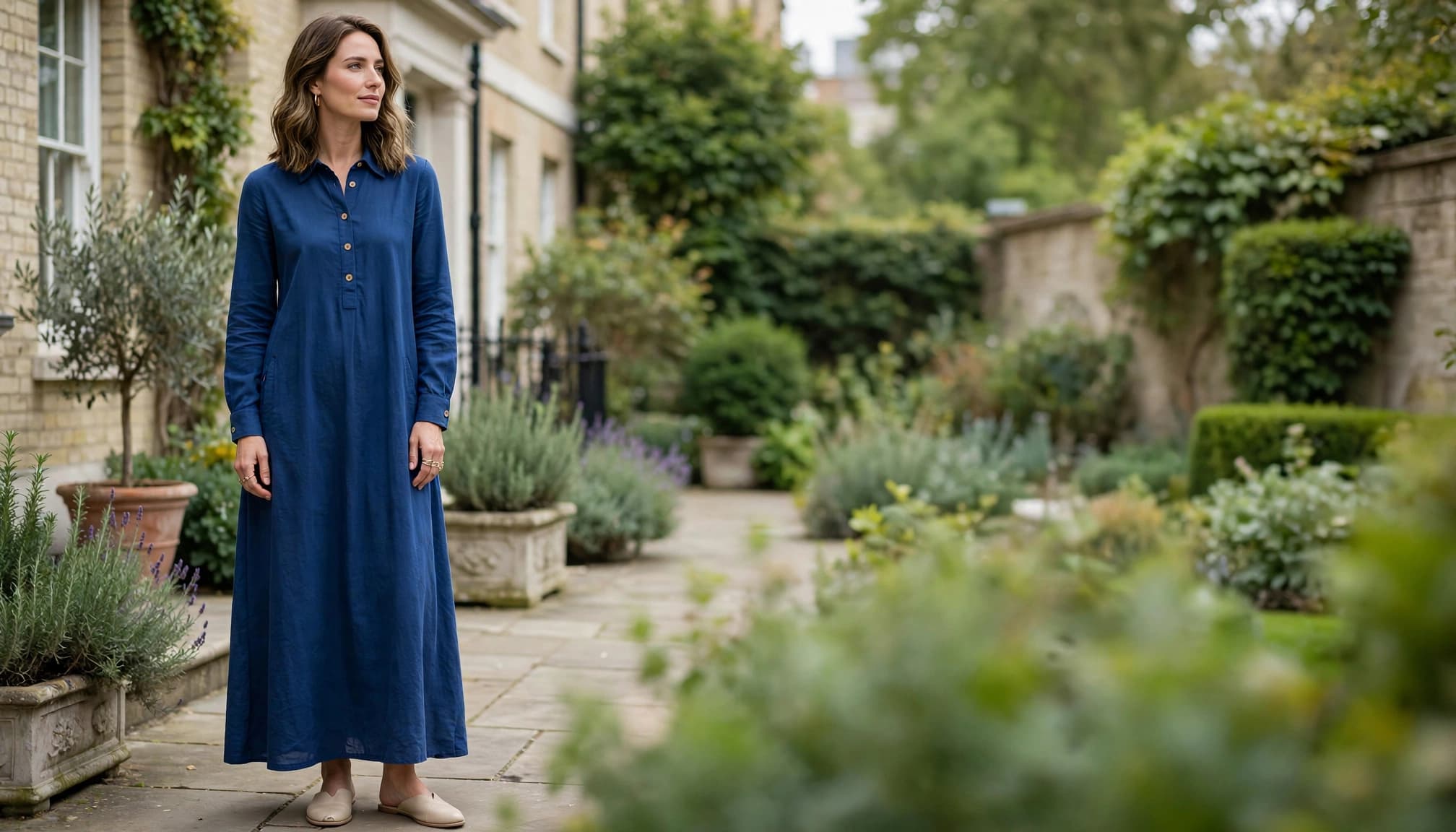
AI-generated image of a casual cotton maxi dress for relaxed daytime wear.
| Type | Typical fabric | Silhouette | Best season | Suitable occasions |
|---|---|---|---|---|
| Casual | Cotton, jersey, linen | Tiered, shirt, relaxed | Spring to early autumn | Weekends, travel, brunch |
| Smart | Viscose, crepe, ponte | Wrap, A-line, fit-and-flare | Year-round | Work, lunch, dinner |
| Formal | Satin, silk, velvet | Body-skimming, empire, gown | Autumn and winter | Weddings, evening events |
The Most Useful Silhouettes, From A-Line to Body-Skimming
An A-line dress follows the shoulders or bodice, then widens towards the hem. It offers easy walking room and works well with flat shoes. Wrap styles and shirt dresses create adjustable waist definition, often through a tie or belt.
Empire waists sit beneath the bust and leave more room through the skirt. Fit-and-flare designs bring shape at the waist with a fuller hem. A sheath or body-skimming dress has a closer line, so check the fabric’s stretch and lining before buying.
Relaxed tiered dresses feel easy for daywear but add visual volume. Petite shoppers may prefer a higher waist and a controlled tier count. Taller shoppers often benefit from longer length options, particularly when wearing boots or heels.
Dress Details That Change the Overall Look
A V-neck opens the neckline and pairs easily with pendants. Round necks feel classic, whilst funnel and high necks offer more coverage in cooler weather. Consider what works with your usual outerwear and jewellery before deciding.
Belts, adjustable waist ties and ruching can change the proportion without making the dress restrictive. Side splits improve stride length and stop a close skirt catching at the knees. Cuffs, buttons and pockets affect daily comfort more than product photos suggest.
Lining matters too. It improves opacity, adds warmth and helps reduce static cling. Yet a heavy polyester lining can make a summer dress feel warmer than its outer fabric suggests.
How to Choose Long Sleeve Dresses for Your Wardrobe
A polished photograph can’t show whether a dress twists, pulls or feels scratchy after an hour. Judge quality by even stitching, firm seams, secure fastenings, useful lining and fabric recovery after a gentle stretch.
Choose Fabric for Comfort, Season and Care
Cotton and linen feel breathable in warmer months, although both crease readily. Linen often has a more textured finish, whilst cotton poplin gives a cleaner shape. Check whether pale colours need a slip or substantial lining.
Viscose and jersey drape softly and suit dresses that need movement. Polyester blends resist creasing and often retain colour well, but some feel less breathable. Satin and silk bring polish to formal occasions, although they need more careful laundering.
Velvet and wool blends make sense for winter dresses. Always check fibre percentages, transparency, lining and care instructions. A fabric label tells you more than a vague phrase such as “premium feel”.
Get the Length and Sleeve Fit Right
Measure your bust, natural waist, hips, shoulders and sleeve length with a soft tape measure. For a full-length dress, measure from shoulder to preferred hem point, then compare each figure with the garment chart instead of trusting a familiar size label.
Fitted cuts often need extra ease at the bust, waist or hips. Stretchy jersey allows more flexibility, whilst woven satin rarely does. Look for plus size ranges, petite dresses with shorter proportions and tall dresses with longer sleeves and hems. For maternity dresses, compare bust, waist, hip and length measurements carefully where extra room is needed.
Try the dress with the bra and footwear you expect to wear. Walk across a hard floor and stairs if possible. The hem should clear the ground enough that it won’t catch underfoot.
Use Colour, Print and Neckline to Match Your Style
Black, navy, chocolate brown and deep olive are easy to repeat through several seasons. Jewel tones such as sapphire blue, emerald and burgundy offer more colour while remaining suitable for smart occasions. Soft pastels and floral prints suit spring and summer plans.
A plain dress gives statement earrings, a patterned bag or coloured shoes room to stand out. With a strong floral print, simpler footwear and jewellery usually look more balanced.
Before ordering, picture the dress with your existing coat, handbag and footwear. A beautiful colour that clashes with every outer layer often stays unworn.
Use this short check before committing:
- Read the full fibre composition, not only the headline fabric name.
- Look for close photographs of seams, cuffs, zip areas and the hem.
- Confirm the garment length in centimetres.
- Check whether the lining extends through the skirt and sleeves.
- Read the washing instructions before buying a special-occasion fabric.
How to Style Long Sleeve Maxi Dresses for Every Occasion
One reliable choice among long sleeve dresses can move through several dress codes with small changes. Footwear, layers, bag choice, jewellery and other accessories do most of the work, while the dress remains the foundation.
Casual Dresses and Smart Casual Outfit Ideas
For a casual day, pair a cotton or jersey maxi with clean trainers, ballet flats or boots. These fabrics often offer softer movement than many denim dresses. Add a denim jacket, cropped leather jacket or cardigan or other knitwear, depending on the forecast. A cross-body bag and small hoop earrings keep the outfit practical.
A shirt dress looks relaxed with its sleeves rolled once or fastened at the cuff. A slim belt can add definition without changing the dress’s easy feel. For brunch, choose floral dresses in earthy tones with loafers and lightweight trench coats. For a strong floral print, keep the footwear simple and let the pattern lead.
Work, Wedding and Evening Combinations
For workwear, choose opaque fabric, a modest neckline and a hem that doesn’t trail. Structured blazers, closed-toe shoes and restrained jewellery create a professional finish. Avoid sleeves that restrict typing, commuting or carrying a work bag.
For wedding guest dresses, an elegant colour, block heel and refined jewellery feel appropriate without competing with the bride. Bridesmaid dresses may have specific colour and dress-code requirements, so check these with the couple or wedding party. Dinner and formal events suit evening dresses, party dresses, satin dresses and velvet dresses, with subtle sparkle, statement earrings or a clutch. Let the venue, dress code and weather decide whether you need a tailored coat or a lighter layer.

AI-generated image of a formal long sleeve gown styled for a wedding or evening event.
Changing shoes, jewellery and outerwear can take one restrained maxi dress from daytime plans to a formal dinner without buying a separate outfit.
Buying Online: Check Fit, Quality, Price and Returns Before You Order
Online shopping offers wider size, colour and length choices than a single shop floor. It also makes price comparison easier. However, it demands more checking before you place the order.
When comparing long sleeve dresses, prioritise reviews that discuss height, usual size, sleeve fit and opacity. Product photos should show front, back and close fabric views. Keep packaging and tags intact until you have completed a full fit test.
| Price band | What to expect | Watch for |
|---|---|---|
| Under £70 | Simple fabrics, limited lining, basic finishes | Thin cloth, inconsistent sizing, short return windows |
| £70 to £180 | Better fabric weight, more considered cuts and stronger finishes | Check whether the price reflects fabric content |
| Over £180 | Natural fibres, detailed construction and specialist care | Delicate fabrics and costly alterations |
A mid-range dress often offers the strongest balance of construction and repeat wear. Premium pricing only makes sense when the fabric, finishing and fit are clearly better.
Buy it if:
- The measurements, fabric details and reviews all agree.
- It feels suitable for at least three occasions in your calendar.
Skip it if:
- The listing hides fibre content, lining details or return conditions.
- The hem, sleeve construction or opacity already looks doubtful.
Tailoring is worth the extra cost when a dress needs a simple hem adjustment or a small waist alteration and you expect to wear it for years.
A Practical Fit Test When the Dress Arrives
Before removing tags, inspect seams, hem stitching, zip or buttons, lining and fabric recovery. Then sit, walk, raise your arms and turn in front of a mirror. Check for gaping, pulling, restricted shoulders and see-through areas.
Use natural light, your intended bra and your chosen shoes. A tailor can shorten a hem, adjust straps or take in a waist. Major changes to shoulders, sleeves or a heavily lined bodice can cost more than the dress deserves.
Care, Storage and Long-Term Value
Follow the care label, use a gentle wash where permitted and avoid harsh bleach. Dry the garment as directed, because heat can shrink natural fibres or damage elastic blends. Turn embellished dresses inside out before storage.
Use a suitable hanger and a garment bag for occasionwear. Proper care lowers cost per wear and keeps a good dress out of the discard pile for longer.

AI-generated image of an autumn maxi dress layered with a tailored coat and boots.
Frequently Asked Questions
Can I wear long sleeve dresses in summer?
Yes, if you choose breathable cotton, linen or a light viscose fabric. Loose sleeves, an unlined skirt or breathable natural-fibre lining make a substantial difference on warmer days.
What shoes work best with a dress?
The hem and occasion should guide your choice. Trainers and ballet flats suit relaxed styles, closed shoes work well in autumn, and block heels give lift without the instability of narrow stilettos.
Are dresses suitable for the office?
They can be, provided the fabric is opaque and the cut feels professional. Choose a simple print or solid colour, then add a blazer and closed-toe shoes where the workplace dress code requires them.
How can I stop a dress clinging?
A lining reduces cling, particularly in synthetic fabrics. Anti-static spray can help, while breathable slips create a smoother layer between the dress and tights.
Choose a Dress You Will Reach For Again
The strongest choice combines comfortable fabric, a useful length, reliable construction, suitable opacity and a silhouette you enjoy wearing. A long sleeve maxi dress works hardest when it feels as good during a commute as it looks at an event.
Buy one if it works with your existing layers, fits well with your usual footwear and has clear care and return information. Skip it if you dislike full-length hems, need very low-maintenance clothing or can’t confirm the fit and return terms. Choose quality and repeat wear over a short-lived trend.
Explore our Buyers Guides and Reviews
For a list of our main buyers guides use the drop-down menu at the top of the page. Topics related to this article are:
Explore Our Blog Categories for Expert Buying Advice
- AI Powered Product Finder Tools (26)
- Expert Buying Guides & Shopping Tips for UK Shoppers (1,313)
- Brands & Designer Products (Men, Women & Electronics) (266)
- Designer Fashion Brands: Buyer’s Guides & Reviews (146)
- Electronic Brands: Buyers Guides & Reviews (85)
- Apple Products Buyer’s Guides & Reviews (23)
- Brands – Phones, Laptops, PC”s, Tablets | Buyer’s Guides & Reviews (41)
- Electronics – Tablet & iPad Reviews and Buyers Guides (11)
- Kitchen Appliance Brands: Buyer’s Guides & Reviews (22)
- Laptop Brands & MacBooks Buyer’s Guides & Reviews (9)
- Phone Brands & iPhones Buyer’s Guides & Reviews (22)
- Car Buying & Financing Made Easy | Expert Guides for the UK (89)
- Clothing, Fashion & Accessories Buying Guides UK (427)
- Beauty, Health & Wellness | Perfume, Skincare, Makeup & Wellbeing Guides (153)
- Footwear: Trainers & Shoes Buyers Guides (46)
- Jewellery: Expert Reviews, Trends & Buying Guides (71)
- Men's Clothes — Buyers Guides & Reviews (38)
- Men’s Clothes, Fashion & Accessories Guides UK | Latest Trends & Smart Shopping (146)
- Women's Clothing Buyers Guides — Dresses, Tops & More (162)
- Women’s Clothes, Fashion & Accessories Guides UK | Latest Trends & Smart Shopping (372)
- Electronics, Tech & Gadgets: Reviews, Deals & Buying Guides UK (169)
- Furniture Buyer’s Guides | Home & Garden & Styling Tips (300)
- Bedroom Furniture Guides UK | Expert Tips & Best Value Deals (92)
- Garden Furniture, Landscaping & Garden Rooms Guides UK | Expert Tips & Best Value Deals (148)
- Garden Sofa & Sofa Sets Buyers Guides (10)
- Garden Tables & Chairs: Sets, Individual Tables & Seating Buyers Guides (31)
- Home Furniture, Décor & Interior Design Guides UK | Styling Tips & Inspiration (164)
- Living Room Furniture, Design & Décor Guides UK | Styling Tips & Inspiration (56)
- Sofa & Sofa Beds Buyers Guides (18)
- Sofa Beds Buyers Guides (7)
- Sofa Buyers Guides & Expert Advice (10)
- Holidays & Travel: Hotels, Villas & Flights (157)
- Home & Garden Improvements | Renovations & Outdoor Transformation Guides (96)
- Insurance & Protection: Travel, Landlord, Gadget & More UK (159)
- Gadget Insurance UK | Expert Guides, Reviews & Smart Protection Tips (33)
- Home Emergency Cover UK | Expert Guides, Reviews & Practical Protection Tips (21)
- Landlords Insurance UK | Expert Guides, Reviews & Smart Protection Tips (31)
- Travel Insurance UK | Expert Guides, Reviews & Money-Saving Tips (34)
- Pets: Guides, Tips & Inspiration (26)
- Brands & Designer Products (Men, Women & Electronics) (266)
- Gifts for Everyone: Ideas for Every Occasion & Budget (40)