Luxury vinyl tile (LVT) has become a popular flooring choice in UK homes. It recreates timber, stone and ceramic finishes without the maintenance or cost of some natural materials. Luxury vinyl flooring can provide a realistic wood effect, while the fitting system, price and floor preparation affect the final result.
This LVT Flooring buyers guide takes an impartial look at the choices behind the marketing. It covers glue-down tiles, vinyl click flooring, rigid-core products, wood effect planks and tiles, plus other wood effect designs and stone effect finishes. It also considers their benefits, drawbacks and suitability for kitchens, bathrooms, hallways and living spaces.
It examines installation, typical costs, online buying and care requirements. It also highlights checks that can prevent an attractive sample from becoming a poor-value purchase. Buying online can widen the available selection and simplify price comparisons. However, product thickness, dimensions, colour variation, delivery terms and sample policies need close attention before ordering.
Editor’s note: Include at least three clearly captioned, descriptive images labelled “AI-generated image”. Set all images and tables to the main text width on desktop and mobile.
Key Takeaways
- Popular in UK homes, it combines realistic wood effect and stone-inspired looks with easy cleaning and strong everyday durability.
- Main formats include glue-down tiles, vinyl click flooring and rigid-core designs, with wood effect styles available for different rooms.
- Product thickness, wear layer rating and floor condition affect performance, appearance and installation costs.
- Online buying can offer wider choice and sharper prices, but samples, measurements, delivery charges and returns need checking. They also help you assess how a wood effect finish will suit the room.
- Professional fitting may provide a better finish, particularly where the floor needs levelling or moisture protection.
What Is LVT Flooring and How Is It Made?
LVT Flooring, or luxury vinyl tile, is a resilient material made in layers. A protective surface sits above a printed decorative layer, core and stabilising backing. The core is usually made largely from polyvinyl chloride. Digital printing creates wood effect and stone visuals, while embossing can match the pattern’s texture.
Unlike ordinary sheet vinyl, LVT comes as separate planks or tiles, so damaged sections can often be replaced individually. These luxury vinyl tiles may feature a wood effect, stone design or geometric pattern. A luxury vinyl tile also differs from laminate, while ceramic tile is a rigid, mineral-based product requiring different preparation and fitting methods.
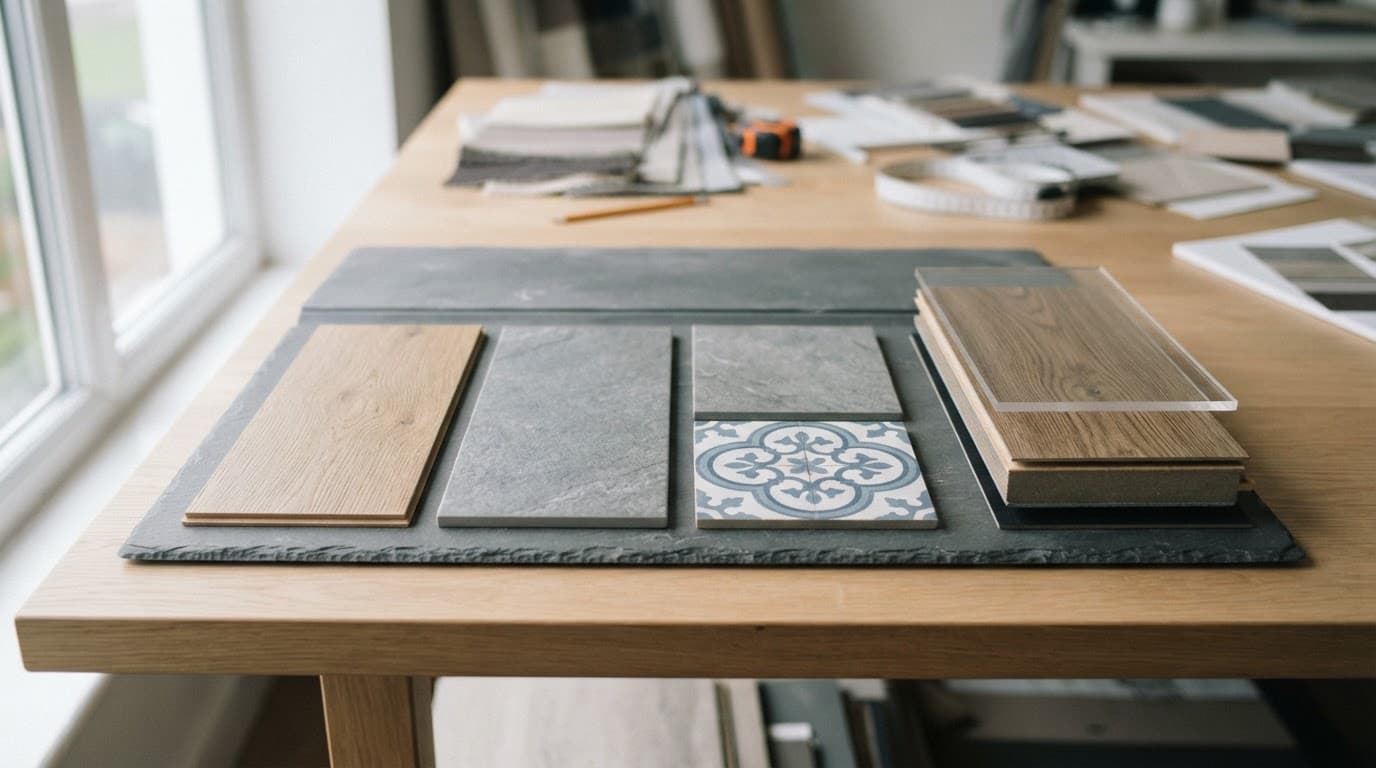
AI-generated image showing LVT formats, surface designs and layered construction.
The Main Types of Luxury Vinyl Tile to Compare
The UK market includes several LVT formats, including wood effect planks and tiles with different fitting requirements.
- Dryback LVT is bonded directly to a prepared subfloor. It offers a stable, low-profile finish and works well around fitted kitchens or awkward room shapes. However, the floor surface usually needs careful smoothing, cleaning and moisture checks. Professional fitting is often the safer choice, although experienced DIY installers may manage straightforward rooms.
- Click or rigid-core LVT uses interlocking edges to create vinyl click flooring that normally floats over the underlying floor. Its rigid construction can make vinyl click flooring more forgiving of minor imperfections, although it still needs a clean, reasonably level base. Some vinyl click flooring products require an underlay, while others have built-in underlay or acoustic backing attached. Extra movement allowance is needed around the room’s edges for vinyl click flooring.
- Loose-lay LVT relies on weight, friction and a specially designed backing rather than permanent bonding product. It can be quicker to lift and replace, which helps with future repairs. Movement or curling can occur if the floor is dusty, uneven or poorly fitted, so professional installation may still be appropriate.
- Self-adhesive LVT has a pre-applied bonding backing. It is accessible for small DIY projects, but the floor surface must be exceptionally smooth, dry and dust-free. Once positioned, tiles can be difficult to adjust without damaging the backing.
Planks usually imitate timber boards, with wood effect planks reproducing natural grain. Stone effect tiles can reproduce slate, limestone or concrete, while marble effect finishes offer a more decorative appearance. Geometric designs use contrasting shapes or colours to create patterned floors. Product instructions take priority, particularly for underlay, movement allowances, bonding products and moisture protection.
Wear Layers, Thickness and Rigid Cores Explained
Total thickness alone doesn’t determine quality. A thinner product with a suitable wear layer and stable backing may outperform a thicker floor with weak construction.
The wear layer, measured in millimetres, protects the printed design from everyday traffic, scuffs and staining. Surface texture, bevelled edges and acoustic backing also affect realism, comfort and sound. A textured vinyl tile may feel more convincing underfoot, particularly with a wood effect finish. Rigid-core products may use stone polymer composite (SPC) or wood polymer composite (WPC), although manufacturers use these terms differently and specifications need checking.
Light domestic rooms can often use a simpler specification. Busy family spaces need stronger surface protection and reliable joints, while hallways, kitchens and other heavy-use areas benefit from a robust finish and stable core. A wood effect design can also need clear texture and colour variation to look convincing. These are practical guideposts, not universal ratings, because each manufacturer’s installation and performance claims differ.
Why LVT Is So Popular in UK Homes, and Where It Falls Short
LVT Flooring has become popular in UK homes because a luxury vinyl tile combines the appearance of timber, stone or ceramic tile with simpler daily care. It feels warmer and quieter underfoot than many hard mineral floors. Its broad range of colours and plank formats suits both traditional terraces and modern open-plan rooms.
However, LVT isn’t automatically waterproof, scratch-proof or suitable for every base. Its performance depends on the product specification, preparation and installation quality.
Which Rooms Suit LVT Best?
Kitchens, hallways and utility rooms are often strong candidates because LVT handles everyday dirt and spills better than many wood-based floors. Its surface is easy to sweep and mop, while wood effect planks can continue through an open-plan kitchen and living area. This avoids the visual break created by different floor coverings.
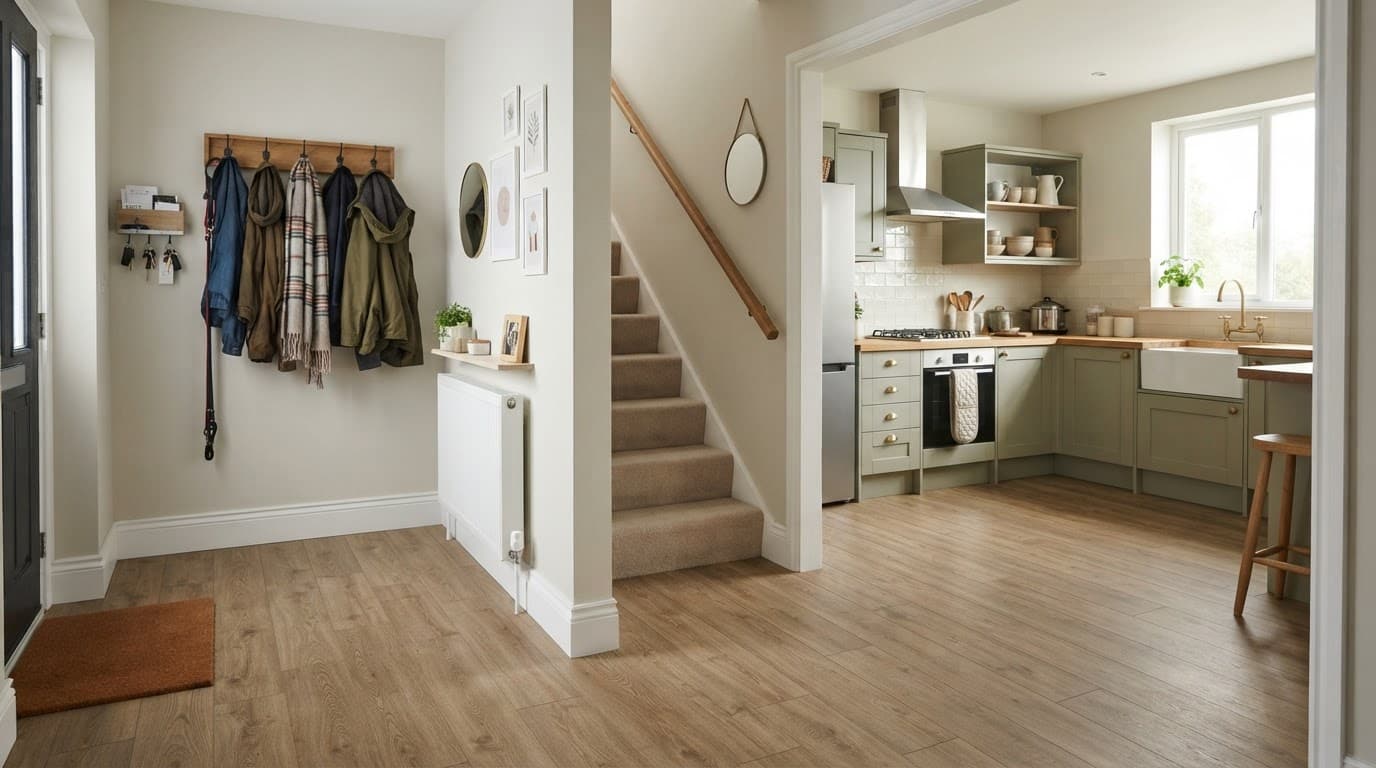
AI-generated image showing wood effect LVT running through a UK hallway and kitchen.
Living rooms and home offices also benefit from LVT’s relatively soft, quiet feel. Vinyl click flooring can provide a quieter floating format, although results vary between products. A suitable underlay or acoustic backing may reduce footfall noise. Wood effect designs can also create a consistent look across connected rooms.
Bedrooms can use lighter domestic specifications, particularly where comfort and easy cleaning matter more than heavy traffic resistance. Wood effect planks suit bedrooms that need a softer alternative to hard tiles, without the maintenance associated with natural timber.
Bathrooms require more caution. Water-resistant performance depends on the LVT construction, joint design, fitting method and edge sealing. Vinyl click flooring should only be used where the manufacturer gives explicit approval. Joints, edges, adhesive and sealing determine how water behaves around the floor. Standing water can still reach the floor beneath through gaps or poorly sealed borders.
Several limitations affect every room:
- Grit can mark the surface when it is walked across the flooring.
- Sharp furniture legs may dent or scratch the flooring.
- Strong sunlight can fade some designs, especially beside large windows.
- Poor preparation can allow flaws in the underlying surface to show through.
- Inadequate bonding or movement allowances can cause lifting, gaps or curling.
A discontinued design can also make repairs difficult, since a replacement plank may not match the existing colour or batch.
The Environmental and Indoor Air Quality Questions
LVT uses synthetic materials, and manufacturing, replacement waste and disposal all form part of its environmental cost. A long service life can reduce the frequency of replacement, but damaged or discontinued flooring may still create avoidable waste.
Product information should explain the manufacturer, construction, durability claims and any relevant low-emission testing. Broad claims such as “eco-friendly” provide little evidence without supporting detail about materials, emissions or production.
Indoor air quality depends on the flooring, bonding products and installation materials used. Synthetic vinyl products should be assessed through available emissions information, rather than vague marketing language. Ventilation during fitting remains sensible, even where low-emission testing is available.
Recycling routes vary. Local councils may not accept LVT through household collections, so responsible disposal depends on local arrangements or specialist flooring-recycling services.
How to Choose the Best LVT Flooring for a Home
The best LVT Flooring depends on the room, traffic levels, appearance, fitting method, budget and expected maintenance. For appearance, decide whether a wood effect suits the room’s style and furniture. Product photographs can disguise important differences, so construction, protective layer thickness, plank dimensions, warranties and installation requirements deserve closer attention. Room suitability should guide the specification, based on traffic, moisture exposure and intended use.
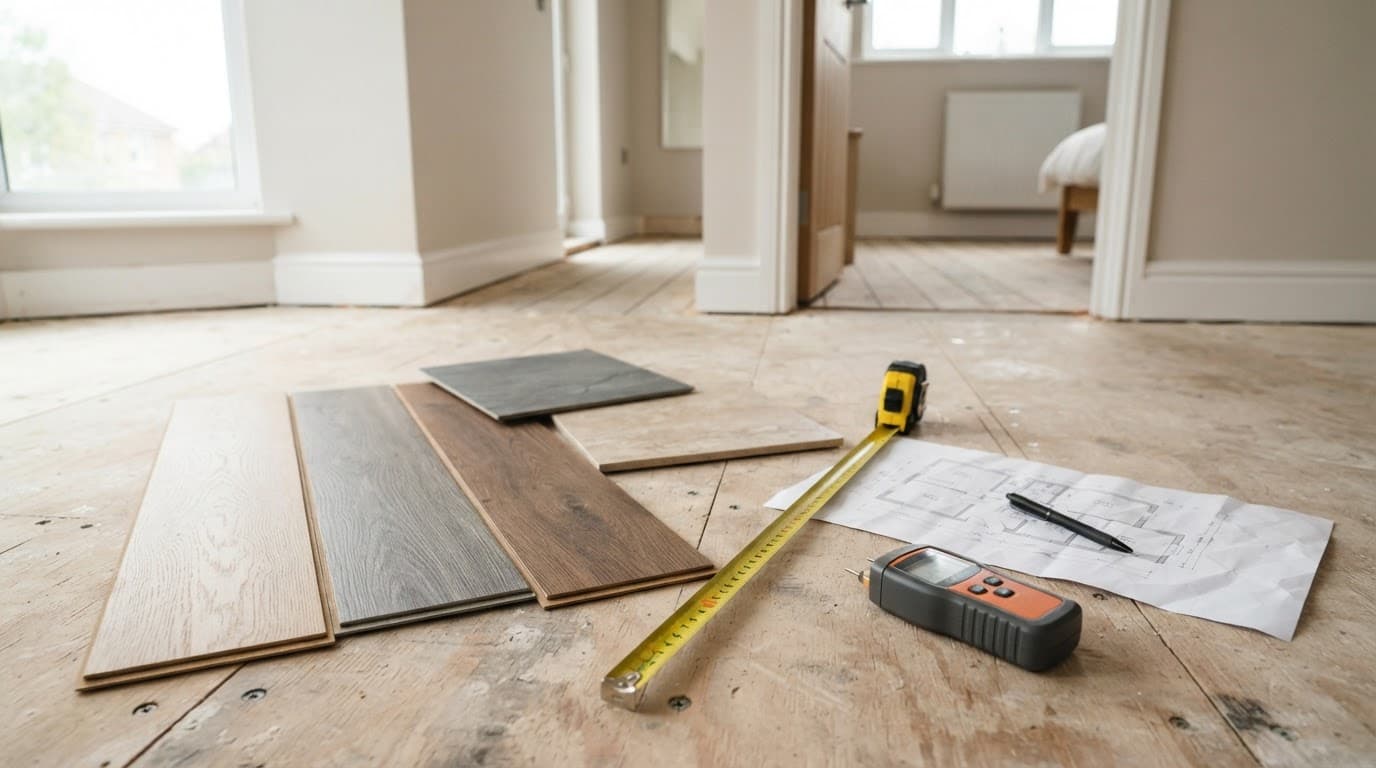
AI-generated image showing the practical checks involved when choosing LVT flooring.
Match the Construction to the Room and Lifestyle
Glue-down LVT suits open-plan layouts, fitted kitchens and rooms with detailed cuts because each plank or tile bonds directly to the prepared base. It also works well beneath heavy furniture and makes future repairs relatively straightforward, since individual sections can be replaced. However, extensive levelling, moisture testing or bonding work often makes professional fitting better value.
Click LVT has interlocking edges and usually floats over the floor surface. Vinyl click flooring can be quicker to install and may accommodate minor imperfections better, although it still needs a clean, stable and reasonably level base. Some vinyl click flooring products include built-in underlay, which can improve acoustics and simplify installation. Vinyl click flooring can suit households with children or pets, whilst glue-down flooring may provide greater stability in a large, busy area.
A higher specification is sensible in a heavily used hallway, where grit and constant foot traffic put the protective layer under pressure. Long planks can make a wood effect feel more spacious, while shorter boards may suit smaller rooms. A textured surface can make a wood effect look and feel more convincing underfoot. Plank size, surface texture, bevelled edges and acoustic backing all affect the final choice. A pale wood effect can brighten a dark room, while a deeper wood effect may create a warmer, more traditional appearance. Check compatibility with underfloor heating before ordering.
Calculate How Much Flooring Is Needed
For a simple rectangular room, multiply the length by the width in metres to calculate the floor area. An awkward room should be divided into smaller rectangles, with each area calculated separately before adding the results together.
An allowance for cuts and waste is necessary, but there is no single figure suitable for every project. Room shape, plank direction, pattern matching and the installer’s layout all affect the amount required. A herringbone effect and intricate borders usually create more offcuts than a straightforward straight-line layout.
Pack coverage must be checked before ordering, since packs may contain different numbers of planks or tiles. Ordering from one batch where possible can reduce colour variation. Spare boards or tiles should also be retained for future repairs, particularly if the design may later be discontinued.
Read Product Ratings, Guarantees and Safety Information
A manufacturer’s guarantee covers stated defects or performance conditions for a defined period. It isn’t a promise that the floor will never scratch, fade or wear out. Domestic and commercial ratings indicate intended use, but the full specification remains more useful than a headline duration.
Where supplied, slip-resistance information helps assess suitability for kitchens, entrances and other areas exposed to moisture. Fire performance documents and VOC or emissions testing provide further information about safety and indoor air quality.
Guarantees can depend on correct fitting, suitable floor conditions, approved cleaning products and ordinary domestic use. Installation instructions, exclusions and claim requirements therefore matter more than the number printed on the guarantee.
LVT Installation: Subfloors, Fitting Methods and Common Errors
A successful LVT Flooring installation depends more on preparation than on laying speed. The subfloor must be clean, dry, sound and sufficiently level, while the fitting method should suit the room, product and installer’s experience.
Glue-Down Versus Click LVT Installation
Glue-down LVT is bonded directly to the prepared base. It usually demands more preparation because bumps, dust, moisture and contamination can affect the adhesive bond or show through the finished floor. Concrete may need smoothing compound, whilst timber boards might require a suitable overlay for stability.
Dryback LVT can provide a stable, low-profile finish around fitted units and door thresholds. Individual planks or tiles can also be removed and replaced after damage, although matching an older batch may prove difficult. Adhesive selection, open time and application must follow the manufacturer’s instructions, so complex rooms are often better handled by a trained flooring fitter.
Click LVT uses interlocking joints and normally floats over the prepared base. Vinyl click flooring can reduce installation time and may hide minor imperfections, but only when the specified underlay and base conditions are met. Some products have built-in underlay and must not receive an additional layer, while others need suitable underlay for vinyl flooring.
The result can work well in a straightforward room, particularly with vinyl click flooring. Its wood effect planks can create a consistent layout when the joints are planned carefully. Glue-down LVT may provide greater stability in detailed layouts, whilst vinyl click flooring is often practical for simpler spaces.
Neither system suits every home. Vinyl click flooring still needs accurate measurements, careful planning and controlled room temperatures during installation. Both methods also require attention around fitted units, thresholds and transitions.
How to lay vinyl flooring: prepare, plan and fit
Rushed preparation creates many of the faults associated with LVT. Visible bumps can cause movement, while small debris may produce hollow sounds beneath vinyl click flooring. Uneven concrete, loose floorboards and poorly prepared existing tiles can also lead to telegraphing, where grout lines, joints or texture become visible through the new surface.
Moisture presents a more serious risk. Damp subfloor material can weaken glue and cause lifting, whereas excessive movement in timber can open seams. Old flooring should be removed or prepared only when the base is sound and compatible with the new system. A professional fitter should assess uncertain underlying floors, moisture levels and any levelling work.
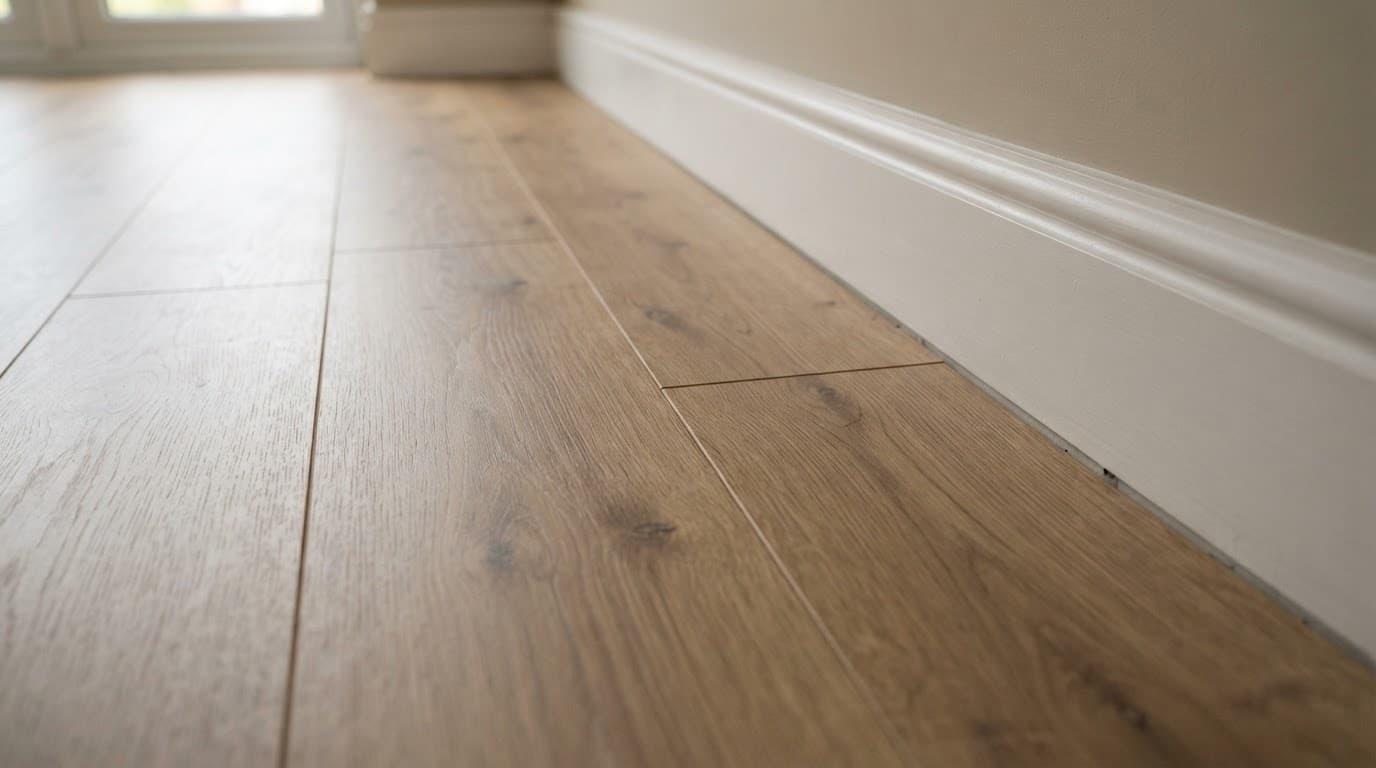
AI-generated image showing aligned wood effect planks and a correctly maintained perimeter gap.
Before laying begins, materials may need acclimatising in the room according to the product instructions. The layout should avoid narrow slivers at walls, particularly with a wood effect design. Vinyl click flooring needs the correct expansion gap around edges, door frames and fixed objects. Products with built-in underlay must not receive a second backing layer.
Insufficient gaps can make planks lift or buckle, whilst poor transitions leave awkward height changes between rooms. The second expansion gap should be maintained wherever the manufacturer’s instructions require movement around the perimeter.
Glue failure, open seams, lifting edges and hollow areas are rarely isolated cosmetic issues. They usually indicate unsuitable conditions, incorrect materials or inadequate installation control. A floor can look attractive at handover yet fail early when preparation is treated as an afterthought.
Buying LVT Flooring Online: Prices, Samples and Delivery Checks
Buying LVT Flooring online can provide a broader choice of colours, plank sizes and laying patterns than a local showroom. Options such as vinyl click flooring are often easier to compare alongside specification sheets, customer reviews and competing prices. However, photographs cannot show every colour variation, while damaged packs, unavailable stock and restrictive returns policies can turn a low headline price into an expensive order. Treat a product review rating as supporting evidence, not a replacement for the technical specification.
What to Check Before Placing an Online Order
A careful order check should cover the following points:
- Order samples before buying full packs, then compare several options in the actual room and under both natural and artificial light. Include wood effect finishes if they are being considered.
- Check the coverage of each pack rather than comparing pack prices alone. Confirm the plank or tile dimensions and colour options, including wood effect designs, as these affect the finished pattern and number of joints.
- Ask whether all packs come from the same batch number. Different batches can vary slightly in colour, texture or print, particularly with wood effect designs.
- Confirm the wear-layer thickness and whether the product suits the intended room, particularly kitchens, bathrooms, hallways and areas with heavy foot traffic.
- Check whether the product is vinyl click flooring, glue-down, loose-lay or self-adhesive. For vinyl click flooring, confirm whether backing is already attached as built-in underlay. The fitting method determines whether bonding materials, floor-base preparation or perimeter allowances are required.
- Confirm that the delivery vehicle can reach the property. Narrow roads, restricted access, stairs and timed home delivery arrangements may affect the final charge. Some suppliers may offer click + collect instead.
- Read the returns policy before opening any packs. Cut, fitted or opened flooring may be excluded, even when the product remains unused.
- Check the procedure and time limit for reporting damaged goods. Packs should be inspected before fitting, with photographs taken if boards, tiles or packaging show damage.
- Read the guarantee conditions, including requirements for acclimatisation, approved cleaning products, installation and suitable moisture levels in the underlying surface.
- Confirm whether matching skirting, stair nosings, trims, thresholds and door bars are available. Accessories can be difficult to match later, especially with wood effect flooring or when the original design is discontinued.
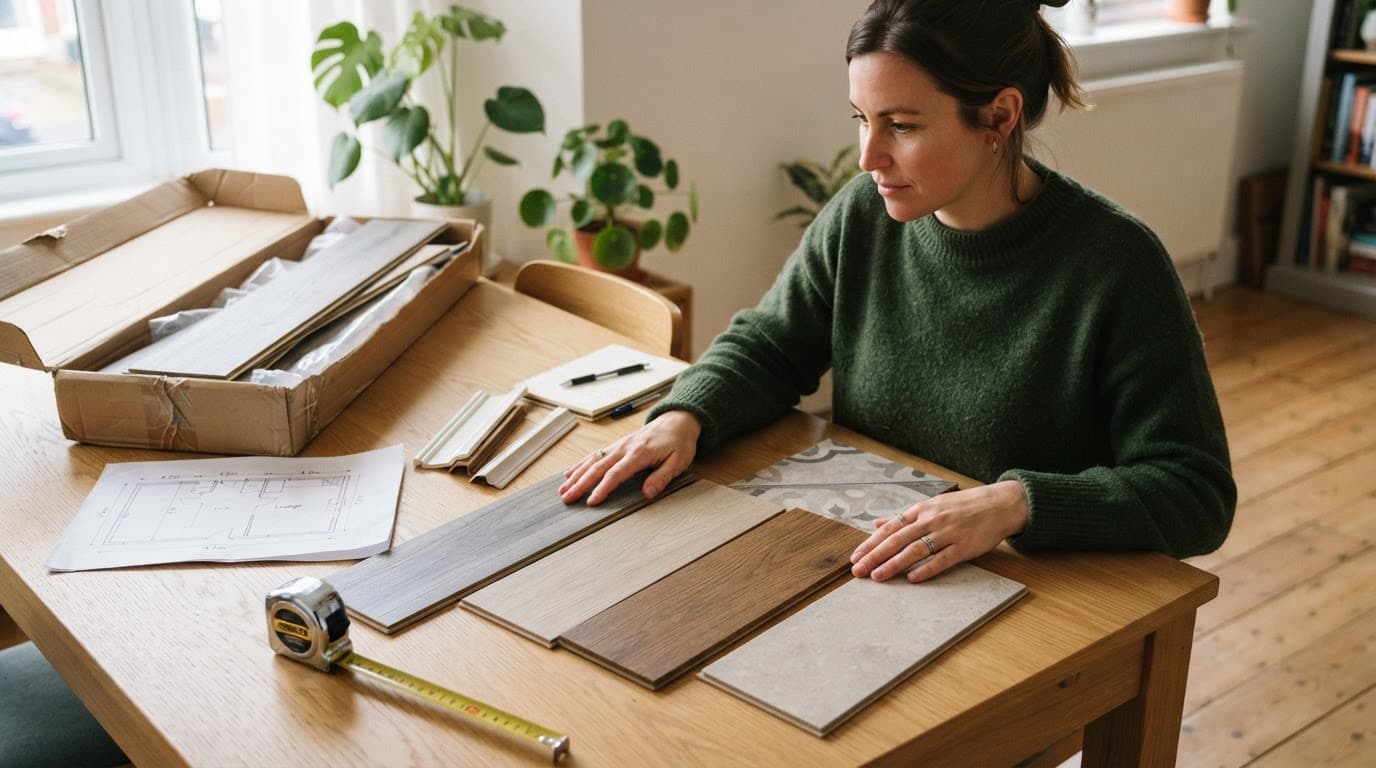
AI-generated image showing LVT samples being compared before an online order.
A Realistic LVT Flooring Cost Plan
The flooring price is only one part of the project. The final budget may also include cutting waste, floor-base repairs, levelling compound, bonding materials or underlay, trims, delivery, removal of old flooring and professional fitting. VAT should be checked as well, since a displayed price may or may not include it.
| Cost category | What the budget may need to include |
|---|---|
| Flooring | Packs, extra waste and spare planks or tiles |
| Preparation | Cleaning, repairs, moisture checks and levelling compound |
| Installation materials | Adhesive, primer, underlay for vinyl flooring or damp-proof protection |
| Finishing items | Trims, stair nosings and door bars |
| Services | Delivery, old-floor removal and professional fitting |
For example, a £25-per-square-metre product is not a £25-per-square-metre project once preparation, accessories and labour are added. Vinyl click flooring may reduce fitting time, but its pack coverage and cutting waste still need checking. Premium designs, herringbone effect patterns and marble effect finishes can increase the total, particularly when spare packs are needed for batch matching. A low online pack price is therefore not the same as a low installed cost. Online comparisons only become meaningful when every project cost is included.
How to Clean and Maintain LVT Flooring for a Longer Life
These floors need a simple, consistent care routine rather than aggressive cleaning. Regularly removing grit, dealing with spills quickly and following the manufacturer’s instructions can help protect the wear layer and keep the surface looking even.
Protect the Surface from Grit, Moisture and Furniture Marks
Grit carried indoors on shoes acts like a fine abrasive. As people walk across it, particles can rub against the surface and create dull patches or fine scratches, particularly in hallways and entrances. Regular sweeping or vacuuming with a suitable hard-floor setting removes this debris without excessive water.
Entrance mats placed inside external doors reduce the grit and moisture reaching the floor. Wipe up spills promptly, particularly in kitchens and bathrooms. Pay extra attention around joints, edges, doorways and areas near sinks.
Damp mopping is suitable when the manufacturer allows it. Use a well-wrung mop and an approved floor cleaner. A textured vinyl tile may hold more dirt, so clean it gently with a soft mop rather than an abrasive pad.
Excessive water can enter vulnerable areas. A steam mop can also damage some products, so use one only when the flooring instructions expressly approve it. Avoid abrasive pads, scouring powders and harsh chemicals, which may mark the finish.
Rubber-backed mats, furniture feet and other rubber products may stain some surfaces. Check their compatibility before use.
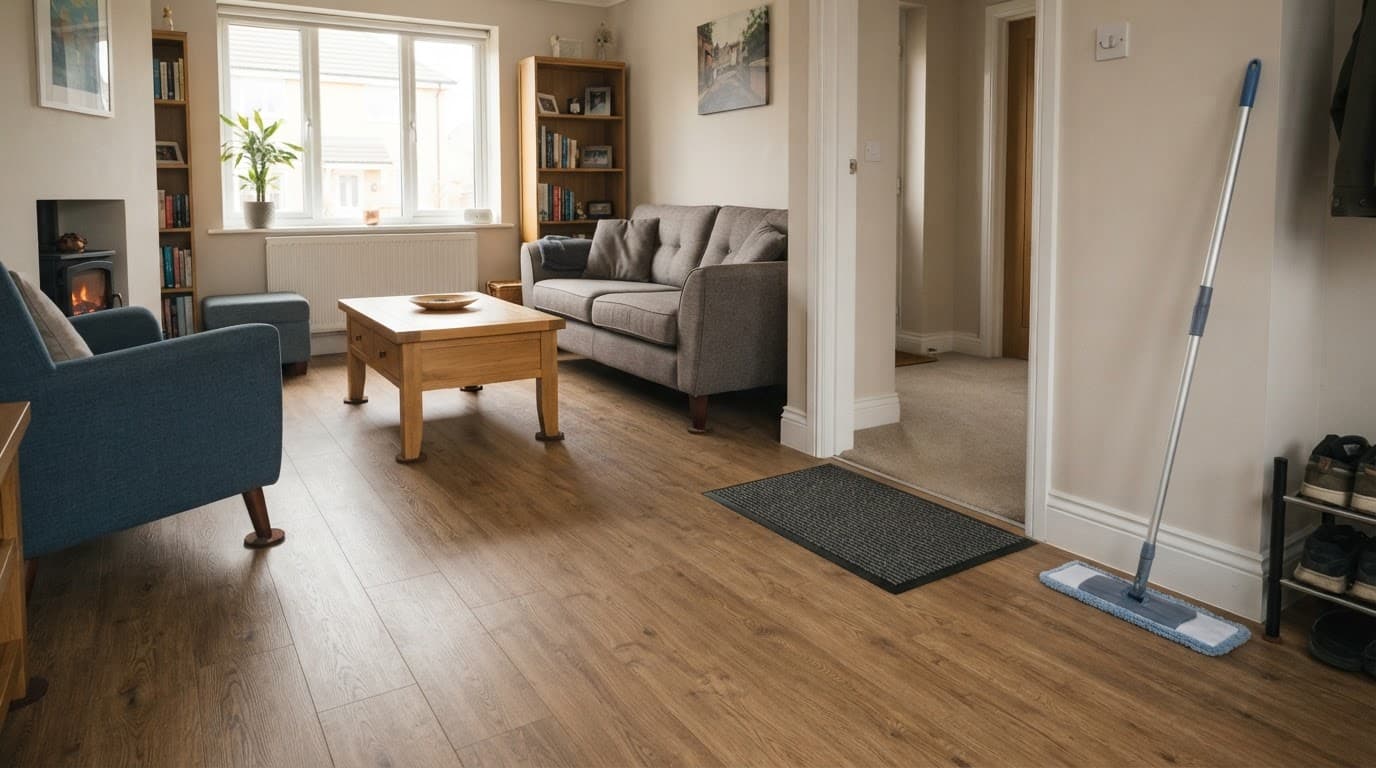
AI-generated image showing practical protection and cleaning details for LVT flooring in a UK home.
Felt pads under chairs, tables and sofas help prevent scratches and pressure marks, but they need regular inspection. Dust can become embedded in a pad, while worn adhesive can expose the furniture leg. Clean or replace pads when they become thin, dirty or loose.
Lift heavy furniture where possible, rather than dragging it across the floor. If movement is unavoidable, use suitable protective boards and avoid twisting the item across the planks.
Sunlight can fade some wood effect designs, particularly beside large windows. Blinds, curtains or UV-filtering window treatments can reduce prolonged exposure. Occasional deep cleaning should follow the manufacturer’s approved method.
Only use a steam mop when the manufacturer gives explicit approval for that specific product. Otherwise, choose the recommended damp-cleaning method.
When LVT Can Be Repaired Instead of Replaced
Isolated cosmetic damage may allow a single plank or tile to be replaced. Glue-down flooring is usually cut out and re-bonded, while vinyl click flooring may require surrounding planks to be carefully unlocked first. Loose-lay products can often be lifted more readily, provided the replacement sits securely and the backing remains sound.
A matching spare plank or tile makes repairs far easier. Discontinued designs, colour variation between batches and fading from sunlight can make a new piece visibly different. This is possible even when the product name remains the same, especially with wood effect flooring.
Keeping spare flooring in a dry, suitable place helps prevent this problem. Store it away from direct sunlight and protect it from damage.
Scratches or surface marks are usually cosmetic issues. Lifting, moisture damage, repeated gaps and widespread movement need professional assessment. Cleaning cannot correct an installation fault, and replacing one plank will not resolve an underlying floor, bonding or moisture problem affecting the wider area. A replacement can also look different from the original wood effect finish.
LVT Flooring Compared with Laminate, Wood and Tile
LVT is often chosen as a middle ground between soft vinyl, natural timber and hard tile. Luxury vinyl tiles offer realistic wood effect and stone effect designs, while floating products are commonly sold as vinyl click flooring. The best material depends on the room, floor base and priorities, rather than the initial price alone.
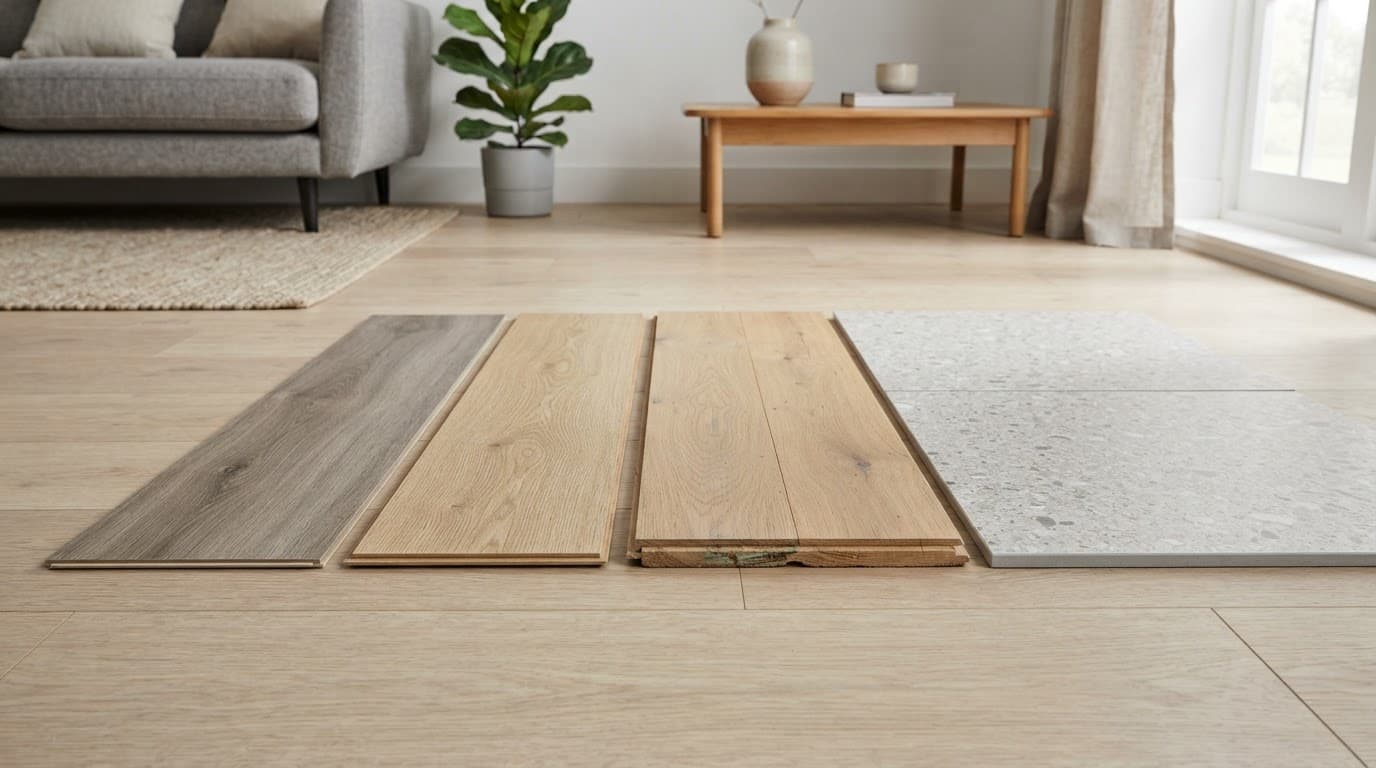
AI-generated image comparing LVT, laminate, engineered wood and ceramic tile flooring.
When Another Flooring Type May Be the Better Choice
LVT suits many busy UK rooms, but other materials can make more sense in particular circumstances. The main differences are summarised below.
| Flooring type | Main strengths | Main limitations |
|---|---|---|
| LVT | Comfortable, quiet, water-resistant and available in realistic wood effect or stone effect designs | Can scratch, dent or fade; joints and installation conditions still need careful attention |
| Laminate | Often affordable, hard-wearing and straightforward to install in dry rooms | Moisture can damage the fibreboard core; repairs may be less discreet |
| Engineered wood | Contains real timber, can often be repaired and offers natural variation | Costs more, needs careful moisture control and may require professional fitting |
| Solid wood | Long service life and repeated refinishing potential | More affected by humidity, movement and installation conditions |
| Sheet vinyl | Low-cost, warm and practical for simple rooms | Less convincing appearance and a damaged area may require replacing a larger section |
| Ceramic or porcelain tile | Very durable, water-resistant and easy to clean | Harder and colder underfoot, with more demanding preparation and installation |
The water-resistant surface of LVT doesn’t make the whole installed floor waterproof. Moisture can still pass through poorly sealed joints or reach the floor base, so room suitability and fitting quality remain important.
Those prioritising natural timber may prefer engineered wood or solid wood, particularly where repair and refinishing matter. Engineered boards generally provide greater dimensional stability than solid boards, but neither material removes the need to manage spills, humidity and suitable floor preparation. Timber provides genuine grain and a wood effect finish cannot fully reproduce its natural variation.
Quality laminate flooring can be a sensible choice for a dry bedroom, home office or living room where the budget is tight. Its click installation may reduce fitting time, and modern wood effect designs can look convincing. However, the joints and fibreboard core still need protection from standing water.
Vinyl click flooring can offer a quicker floating installation than bonded products, with designs ranging from straight planks to a herringbone effect. It may also provide a marble effect or other decorative finish, although pattern realism and surface texture vary between collections. Sheet vinyl can cost less again, making it useful for a short-term refurbishment or a basic utility space.
Ceramic and porcelain tile remain stronger candidates where a hard, mineral surface is preferred. They tolerate water well when correctly installed and offer a distinct feel underfoot, but the rigid surface transmits more sound and provides less cushioning. Ceramic tiling and porcelain installations need careful preparation, adhesive, grout and experienced fitting.
Engineered and solid timber remain appealing for their authentic wood effect, repair potential and changing character. They can develop marks and colour changes that some households value, but they need more careful control of humidity and movement than LVT.
A flooring sample can show colour and texture, but it cannot reveal how the material will respond to moisture, sound, furniture or floor movement.
Unusual temperature changes, damp-prone rooms, conservatories and areas with direct heat require careful checking. LVT may expand, contract or lose adhesion if the product and installation system are unsuitable. In those conditions, vinyl click flooring still needs manufacturer approval and professional assessment. These checks matter more than a low purchase price.
Frequently Asked Questions
Several practical questions remain after comparing LVT types, prices and fitting methods. The answers below focus on installation decisions and ownership issues that product descriptions often leave unclear.
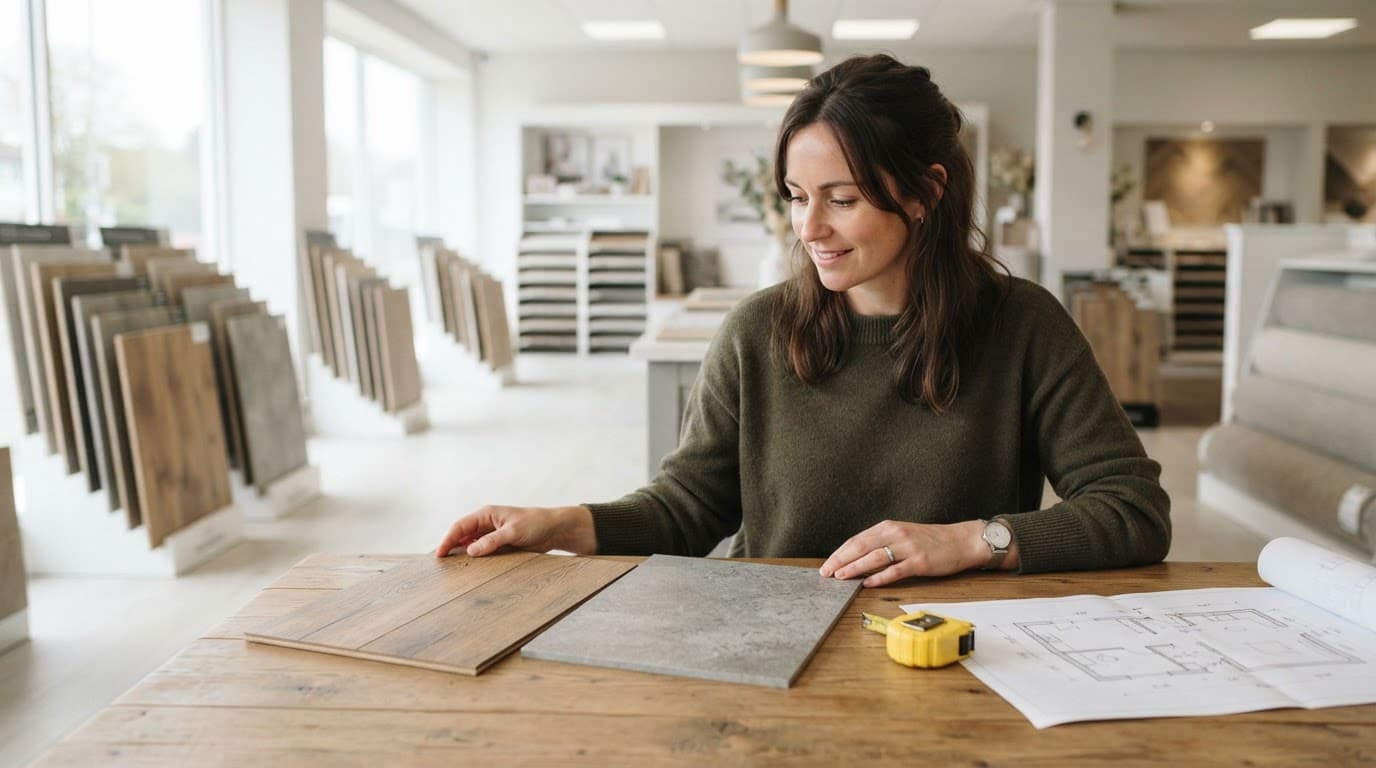
AI-generated image showing LVT samples being assessed before purchase.
Can vinyl click flooring be installed over existing flooring?
Sometimes, but the existing floor must be sound, clean, dry and sufficiently level. Loose tiles, damaged boards, deep grout lines and soft surfaces can show through flexible LVT or affect vinyl click flooring joints. A wood effect design can also highlight unevenness across the finished surface. Carpet, cushioned vinyl and unstable flooring usually need removal, whilst hard, well-bonded surfaces may be suitable after preparation. The product instructions should confirm whether overlay installation is permitted.
Is LVT suitable for underfloor heating?
Many LVT products work with water-based or electric underfloor heating, but compatibility depends on the product and system. Products with built-in underlay may have additional restrictions, so check the fitting instructions carefully. Manufacturers normally specify a maximum floor-surface temperature and may restrict certain fitting methods. The heating should be switched off before installation, then raised gradually afterwards according to the instructions. Exceeding the stated temperature can cause movement, gapping or joint failure.
How long should LVT flooring last?
Service life depends on the surface layer, traffic, maintenance and installation quality. A domestic floor in a bedroom may experience less wear than one in a busy hallway, where grit and constant footfall place greater pressure on the surface. A longer guarantee doesn’t guarantee an unchanged appearance, so the surface-layer specification and conditions of use provide a more useful comparison.
Can heavy furniture or kitchen units be placed on click flooring?
Floating vinyl click flooring generally needs to move slightly with changes in temperature, so fixed units can restrict that movement. Leave the recommended expansion gap around the room perimeter and avoid trapping the floor beneath permanent cabinets. Many manufacturers advise fitting kitchen units first and running the flooring up to them. A matching wood effect can help create a consistent finish around the room. Glue-down LVT may be more suitable beneath fitted units, provided the underlying surface and bonding system are properly prepared. The manufacturer’s instructions take priority.
Is LVT completely waterproof?
Some products are marketed as waterproof LVT, but the completed floor is only as water-resistant as its joints, edges, bonding system and surrounding details. Water can reach the underlying surface through gaps, poorly sealed pipe openings, doorways or perimeter edges. Bathroom products need explicit manufacturer approval, and standing water should never be left on the surface.
Can LVT be fitted on stairs?
Some LVT ranges include stair nosings or matching stair components, but ordinary planks should not be adapted without suitable profiles. Stair fitting requires secure bonding, accurate cuts and a safe, finished edge on each tread. The chosen product must be approved for stairs, and professional installation is usually the safer option.
Conclusion
LVT Flooring is a strong choice for many UK homes, combining practical performance with convincing design. As luxury vinyl flooring, it offers a broad range of styles, but a wood effect alone shouldn’t determine the decision. The right luxury vinyl tile depends on the room, specification and installation requirements.
A suitable wear layer, prepared subfloor and correct fitting matter more than headline photography. The full project cost should include preparation, adhesive or underlay, trims, delivery, waste and professional fitting where necessary.
LVT has clear material and installation limits, but its balance of appearance, practicality and cost remains compelling. Its value comes from choosing the right product for the property, not simply the lowest pack price.
Explore More Expert Buyers Guides and Reviews
For a list of our main buyers guides use the drop-down menu at the top of the page. Topics related to this article are:
Home and Garden Furniture Buyers Guides
Bedroom Furniture Buyers Guides
living Room Furniture Buyers Guides
Garden Furniture Buyers Guides
Patio Furniture Sets Buyers Guide
–
Explore Our Blog Categories for Expert Buying Advice
- AI Powered Product Finder Tools (25)
- Expert Buying Guides & Shopping Tips for UK Shoppers (1,431)
- Brands & Designer Products (Men, Women & Electronics) (285)
- Designer Fashion Brands: Buyer’s Guides & Reviews (163)
- Electronic Brands: Buyers Guides & Reviews (88)
- Apple Products Buyer’s Guides & Reviews (25)
- Brands – Phones, Laptops, PC”s, Tablets | Buyer’s Guides & Reviews (42)
- Electronics – Tablet & iPad Reviews and Buyers Guides (11)
- Kitchen Appliance Brands: Buyer’s Guides & Reviews (22)
- Laptop Brands & MacBooks Buyer’s Guides & Reviews (9)
- Phone Brands & iPhones Buyer’s Guides & Reviews (23)
- Car Buying & Financing Made Easy | Expert Guides for the UK (89)
- Clothing, Fashion & Accessories Buying Guides UK (496)
- Beauty, Health & Wellness | Perfume, Skincare, Makeup & Wellbeing Guides (183)
- Footwear: Trainers & Shoes Buyers Guides (49)
- Jewellery: Expert Reviews, Trends & Buying Guides (73)
- Men's Clothes — Buyers Guides & Reviews (39)
- Men’s Clothes, Fashion & Accessories Guides UK | Latest Trends & Smart Shopping (167)
- Women's Clothing Buyers Guides — Dresses, Tops & More (194)
- Women’s Clothes, Fashion & Accessories Guides UK | Latest Trends & Smart Shopping (435)
- Electronics, Tech & Gadgets: Reviews, Deals & Buying Guides UK (173)
- Furniture Buyer’s Guides | Home & Garden & Styling Tips (326)
- Bedroom Furniture Guides UK | Expert Tips & Best Value Deals (93)
- Garden Furniture, Landscaping & Garden Rooms Guides UK | Expert Tips & Best Value Deals (169)
- Garden Sofa & Sofa Sets Buyers Guides (11)
- Garden Tables & Chairs: Sets, Individual Tables & Seating Buyers Guides (53)
- Home Furniture, Décor & Interior Design Guides UK | Styling Tips & Inspiration (169)
- Living Room Furniture, Design & Décor Guides UK | Styling Tips & Inspiration (57)
- Sofa & Sofa Beds Buyers Guides (19)
- Sofa Beds Buyers Guides (7)
- Sofa Buyers Guides & Expert Advice (11)
- Holidays & Travel: Hotels, Villas & Flights (161)
- Home & Garden Improvements | Renovations & Outdoor Transformation Guides (102)
- Insurance & Protection: Travel, Landlord, Gadget & More UK (159)
- Gadget Insurance UK | Expert Guides, Reviews & Smart Protection Tips (33)
- Home Emergency Cover UK | Expert Guides, Reviews & Practical Protection Tips (21)
- Landlords Insurance UK | Expert Guides, Reviews & Smart Protection Tips (31)
- Travel Insurance UK | Expert Guides, Reviews & Money-Saving Tips (34)
- Pets: Guides, Tips & Inspiration (26)
- Brands & Designer Products (Men, Women & Electronics) (285)
- Gifts for Everyone: Ideas for Every Occasion & Budget (49)