Sapphire is the traditional September birthstone, valued for its royal blue colour, lasting durability and associations with loyalty, wisdom and protection. Although blue remains the classic choice, modern jewellery also includes pink, yellow, green and colourless varieties, giving September birthdays more options than tradition suggests.
For UK buyers, choosing jewellery for a September gift or everyday wear involves more than selecting an appealing shade. Cut, clarity, carat weight, metal, setting and treatment all affect appearance and price. Buying online can offer wider choice and competitive pricing, provided you check product details, photographs, returns policies and independent reviews. This guide covers colour, quality, suitable settings, styling, online buying, care and alternatives, with at least three AI-generated images displayed at the same width as the main text for clear viewing on desktop and mobile.
The sections ahead begin with colour and quality, then explain how these factors support a confident purchase, whether you’re choosing a gift or an everyday piece.
Key Takeaways
- The September birthstone is sapphire, with blue the classic choice alongside pink, yellow, green and colourless varieties.
- Judge quality by colour, cut, clarity, carat weight, treatment and metal before buying.
- Choose a piece that suits the wearer’s wardrobe, from women’s clothing and perfume to men’s tailoring and aftershave.
- When buying online, check treatment disclosure, product details, reviews, secure payment and the returns policy.
What Is the September Birthstone? Sapphire Explained
Sapphire is the traditional September birthstone, best known for its intense blue colour and associations with loyalty, wisdom, sincerity and protection. These meanings come from cultural tradition rather than science. They have nevertheless helped the gem remain popular for birthdays, anniversaries and milestone gifts.
It is a variety of corundum, a durable mineral composed of aluminium oxide. Red corundum is classified as ruby, whilst other colours are generally placed in the sapphire category. Its hardness of 9 on the Mohs scale makes it suitable for jewellery worn regularly.
| Feature | Details |
|---|---|
| Traditional birthstone | September |
| Mineral family | Aluminium oxide |
| Typical colours | Blue, pink, yellow, green, white and colourless |
| Hardness | 9 on the Mohs scale |
| Common jewellery uses | Everyday settings and pendants |

AI-generated image showing classic blue and fancy-colour gems.
Why Blue Sapphire Became September’s Signature Gem
Blue sapphire’s link with September developed through colour, symbolism and jewellery history. Its dark blue shades were associated with the sky, truth and steadfastness in several cultural traditions. Royal and religious jewellery also connected the stone with authority, faithfulness and protection.
The modern birthstone list did not come from one universally agreed ancient source. Birthstone customs drew on older religious, astrological and gem traditions, then changed as jewellers, writers and trade organisations promoted different stones. Lists became more standardised during the twentieth century, placing blue gems firmly with September.
Fine jewellery strengthened that association. Durability allowed these gems to feature in important heirloom pieces, whilst their blue colour offered a distinctive alternative to diamond. The engagement ring associated with Princess Diana and later worn by the Duchess of Cambridge helped reinforce sapphire’s connection with royalty. This is historical context, not proof of quality or value.
Sapphire Colours Beyond Classic Royal Blue
These gems occur in several colours, often described as fancy-colour sapphires when they aren’t blue. Pink, yellow, green, orange and violet stones can all be attractive, whilst white sapphire is usually a colourless variety valued for its bright appearance, rather than being identical to diamond.
Colour depends on three related factors:
- Hue describes the basic colour, such as blue, pink or yellow.
- Tone indicates how light or dark the stone appears.
- Saturation measures the strength or intensity of that colour.
A padparadscha sapphire combines delicate orange and pink tones and is among the most distinctive colour varieties. Recognised origins include Kashmir, Myanmar and Sri Lanka, although origin claims require credible laboratory documentation.
A second padparadscha sapphire isn’t automatically the best choice simply because the colour is rare. Value can rise when colour is vivid, evenly distributed and visually appealing, but personal preference remains central, particularly for everyday wear.
How to Judge Sapphire Quality Before Buying
Sapphire quality depends on the stone’s appearance, formation and disclosed history. Size and price attract attention, but they aren’t reliable evidence alone. Assess colour and cut first, then clarity, origin, treatment and documentation. Carat weight matters, but it doesn’t determine value by itself.
Colour, Clarity and Cut Matter More Than Size
A smaller sapphire with lively colour and a well-proportioned cut can look more impressive than a larger, dull stone. In blue stones, a rich medium to medium-dark blue often shows more life than one so dark that its facets appear almost black. Darker blue isn’t automatically better.
Clarity also affects appearance. Minor inclusions are common, particularly in natural stones, and some can help a gemmologist identify formation or origin. However, prominent inclusions, surface-reaching fractures or cloudy areas may reduce beauty and affect durability.
Cut controls how effectively the gem returns light. Good symmetry, balanced proportions and neatly aligned facets create brightness across the stone. A sapphire that looks attractive loose may appear less lively in a deep or heavy setting, so judge it as part of the finished jewellery.

AI-generated image comparing a smaller vivid sapphire with a larger, darker stone.
Check colour under daylight and warmer indoor lighting. Some stones change noticeably between conditions, while photographs can hide uneven colour or dark areas. Online listings should include clear images, video where available, exact dimensions and a returns policy allowing proper inspection.
Natural, Lab-Grown and Treated Stones
A mined natural sapphire forms through geological processes and may attract more interest when its colour, clarity, rarity or documented origin is desirable. Laboratory-grown stones have the same chemical composition and physical properties as natural material, but usually cost less because they are produced under controlled conditions.
Treated natural stones begin as mined material, then receive treatment to improve colour, clarity or overall appearance. Heat treatment is common and isn’t automatically a defect. However, full disclosure is essential, particularly when untreated status could affect the price.
The important issue is honest disclosure. The description should state whether the item is natural, laboratory-grown or treated, rather than implying rarity or untreated quality that hasn’t been verified.
What a Gemstone Report Can and Cannot Confirm
An independent gemmological report may identify the mineral species, confirm the variety and record detectable treatments. It may also provide an opinion on geographic origins such as Kashmir, Myanmar or Sri Lanka. Origin can influence interest and price, but a credible laboratory report is needed for a serious claim.
A gemstone report supports identification, but it doesn’t guarantee beauty, future resale value or ethical sourcing. It also doesn’t replace an assessment of colour, cut and setting. Before purchase, check the report number through the issuing laboratory’s verification service. The stone’s measurements, photographs and identifying features should match the report and the jewellery being sold.
Choosing September Birthstone Jewellery for Real Life
The best September birthstone jewellery fits the wearer’s routine as well as their taste. Sapphire is hard enough for regular use, but the design must still account for knocks, clothing, existing jewellery and personal grooming products.
Rings, Necklaces, Earrings or Bracelets?
Rings receive more knocks than most other jewellery. Hands meet door handles, worktops, phones and bags throughout the day, so a raised setting can suffer impact even when its wearer is careful. Sapphire has a hardness of 9 on the Mohs scale, making it suitable for many ring styles. However, no gemstone is impossible to scratch, chip or fracture.
Pendants and earrings are often easier for daily wear because they sit away from surfaces that receive repeated contact. A small pendant can work with office clothing, knitwear and evening dresses, whilst stud earrings suit understated styling for any wearer. Bracelets need particular attention to the fastening, since a weak or awkward catch can allow the piece to fall unnoticed.

AI-generated image showing jewellery formats suited to everyday styling.
| Jewellery type | Main strength | Possible drawback | Best use |
|---|---|---|---|
| Finger jewellery | Visible and personal | Receives frequent knocks | Birthday or special-occasion gifts |
| Pendant | Comfortable and versatile | Chain can snag or break | Daily wear and personalised gifts |
| Stud pair | Low-contact and easy to style | Small stones may be less noticeable | Workwear and regular use |
| Wrist jewellery | Adds colour at the wrist | Catch security matters | Occasional or layered styling |
Metal, Setting and Shape Choices That Change the Look
Oval, round, cushion, pear and emerald cuts each produce a different effect. An oval can look elongated, a round cut feels traditional, and a cushion shape has softer edges. Pear cuts introduce movement, whilst emerald cuts emphasise clean lines rather than intense sparkle. None is universally best.
A halo of smaller stones increases the stone’s visual spread, while a bezel surrounds its edges and offers useful protection. Claw settings expose more of the stone and allow greater light entry, although they need periodic inspection. Cluster designs create a fuller appearance and can suit a modest budget.
Metal should relate to jewellery already worn. White gold, platinum and sterling silver create a cooler, sharper contrast with blue stones. Yellow gold gives them a warmer, more traditional character, while rose gold softens the overall effect. Matching the new piece to existing metal colour, scale and finish usually produces a more coherent collection than choosing the setting in isolation.
Styling Sapphire Jewellery with Clothing and Fragrance
Blue sapphire works naturally with navy, cream, grey, black and denim. It also holds its own against jewel tones such as emerald and burgundy, while soft neutrals keep the stone as the focal point. Anyone can pair a pendant with a blouse, tailored trousers or knitwear, or choose cufflinks, a signet style or discreet studs with tailoring, a jumper or an understated everyday outfit.
Evening wear can support larger stones and brighter settings, whereas small studs or a simple pendant suit ordinary work and weekend clothing. Apply fragrance before putting on jewellery. Alcohol and fragrance oils can affect some metal finishes, so perfume or aftershave should never be sprayed directly onto gemstones.
Buying the September Birthstone Online in the UK
Online shopping gives UK buyers access to a wider selection of sapphire colours, cuts, settings and prices than many physical shops can display. However, photographs may use controlled lighting, while ring sizing, treatment disclosure and authenticity can be harder to assess remotely. Product pages should therefore be treated as evidence to check, not a complete substitute for examining jewellery in person.
How to Compare Prices Fairly
A sapphire’s price reflects both the stone and the finished piece. Colour is often the strongest visual influence, particularly when tone and saturation are attractive. Clarity, cut quality, carat weight and measurements also affect value. Origin may influence interest when a laboratory provides a credible geographic opinion, while treatment status matters because untreated stones can command a premium.
The setting creates further differences. Platinum and higher-purity gold usually cost more than sterling silver. Detailed craftsmanship, hand finishing and a secure setting also add to the price. Certification carries an additional cost, but an independent report can provide useful information about the stone’s identity and detectable treatments.
A gold setting may therefore cost considerably more than a similar piece in sterling silver. Comparing the stone separately from the setting helps prevent headline prices from distorting the decision.
| Detail to record | Piece A | Piece B | Piece C |
|---|---|---|---|
| Stone type and colour | |||
| Natural, lab-grown or treated | |||
| Carat weight and measurements | |||
| Cut, clarity and setting | |||
| Metal purity and hallmark | |||
| Origin and laboratory report | |||
| Total cost after extras |
The final cost should include VAT, delivery, insurance, resizing and any certification fee. Comparing a documented natural stone in platinum with an uncertified laboratory-grown stone in silver will not produce a meaningful result.

AI-generated image showing an online comparison of jewellery and purchase details.
Sizing, Returns and Delivery Checks for Online Jewellery
Ring measurements should come from an existing well-fitting ring or a professional measurement, rather than an estimate based on finger width. Where sizing remains uncertain, earrings, an adjustable pendant or bracelets with secure fastenings may reduce the risk of an unsuitable fit. The listing should state whether resizing is available and whether it affects the right to return the item.
Before payment, check the returns window, exclusions and refund process carefully. UK consumer rights can differ when an item is personalised, resized or made to order. Delivery should include tracking, suitable packaging and insurance for the parcel’s full value.
When the package arrives, inspect the outer packaging before opening it. Visible damage warrants photographs of the unopened parcel, followed by prompt contact with the seller or carrier. Retain all invoices, certificates, care instructions and correspondence. Check the jewellery quickly for loose stones, scratches, incorrect metal details and differences from the listing. Don’t remove tags or alter the piece before deciding to keep it.
Questions to Ask Before Paying
Written answers create a clear record of what the seller represented at the time of purchase. Practical questions include:
- Is the sapphire natural, laboratory-grown or treated, and which treatments are present?
- What is the stone’s stated origin, and does a laboratory report support that claim?
- What are the metal purity and hallmark details?
- How should the jewellery be cleaned, stored and protected from perfume or aftershave?
- Who pays for repairs, servicing or resizing, and what warranty applies?
- What are the return conditions for a resized, personalised or made-to-order item?
- Is delivery insured, and what after-sales support is available?
Vague descriptions, stock photographs, pressure to pay quickly and implausibly low prices deserve caution. A missing specification can matter as much as an attractive photograph, because it leaves the buyer unable to compare quality on equal terms.
Sapphire Alternatives, Ethical Choices and Gift Ideas
This stone offers durability and colour, but it isn’t the only September birthstone option. The strongest choice depends on appearance, budget, provenance and the meaning attached to a natural gemstone.
Is a Lab-Grown Sapphire a Good Choice?
A lab-grown sapphire has the same chemical composition and hardness as a natural stone. In a well-cut piece, it can offer attractive colour, clarity and size at a lower price. This makes it suitable for a pendant, ring or earrings intended for regular wear.
The main difference concerns origin and market position. A laboratory-grown stone is created under controlled conditions, while a natural stone forms through geological processes. A rare, untreated natural stone with credible documentation may interest collectors and retain stronger resale prospects. Lab-grown material generally carries lower resale expectations because it can be produced again.
Treatment is another important distinction. A natural stone may have been treated to improve its colour or clarity, and this should be disclosed before purchase. Treatment doesn’t automatically make it unsuitable, but it can affect value, care requirements and collectability.
Personal values also matter. Some buyers prefer laboratory-grown stones because they avoid newly mined material, whilst others value geological rarity and the possibility of an heirloom. The description should state the stone’s origin and treatment clearly, without presenting a laboratory-grown stone as a rare natural gem.
Responsible Buying Without Overclaiming Ethics
Terms such as ethical, sustainable and conflict-free have no single meaning across every jewellery listing. Responsible buying therefore depends on evidence rather than reassuring adjectives. A seller making an environmental or social claim should explain what it covers and how it has been checked.
Useful questions include:
- Can the supplier provide supply-chain or origin information?
- Is the gemstone natural, lab-grown or treated?
- Does the metal have a stated source, with recycled content clearly defined?
- Are independent reports available for significant stones?
- Can the setting be repaired, resized or maintained rather than replaced?
Recycled metal claims also need precision. They may refer to part of the alloy, the entire item or metal recovered from manufacturing waste. No seller can prove every ethical condition through a photograph alone, so absolute claims deserve caution.
September Birthstone Gifts for Different Budgets
Budget is best considered alongside design, stone size and daily wear. A modest gift might be a small blue pendant, simple stud earrings or a birthstone stacking ring in sterling silver. These formats suit women and men because scale, finish and personal style matter more than gender rules. The compromise may involve a smaller stone, treated material or less costly metal, so cut and secure construction should take priority.
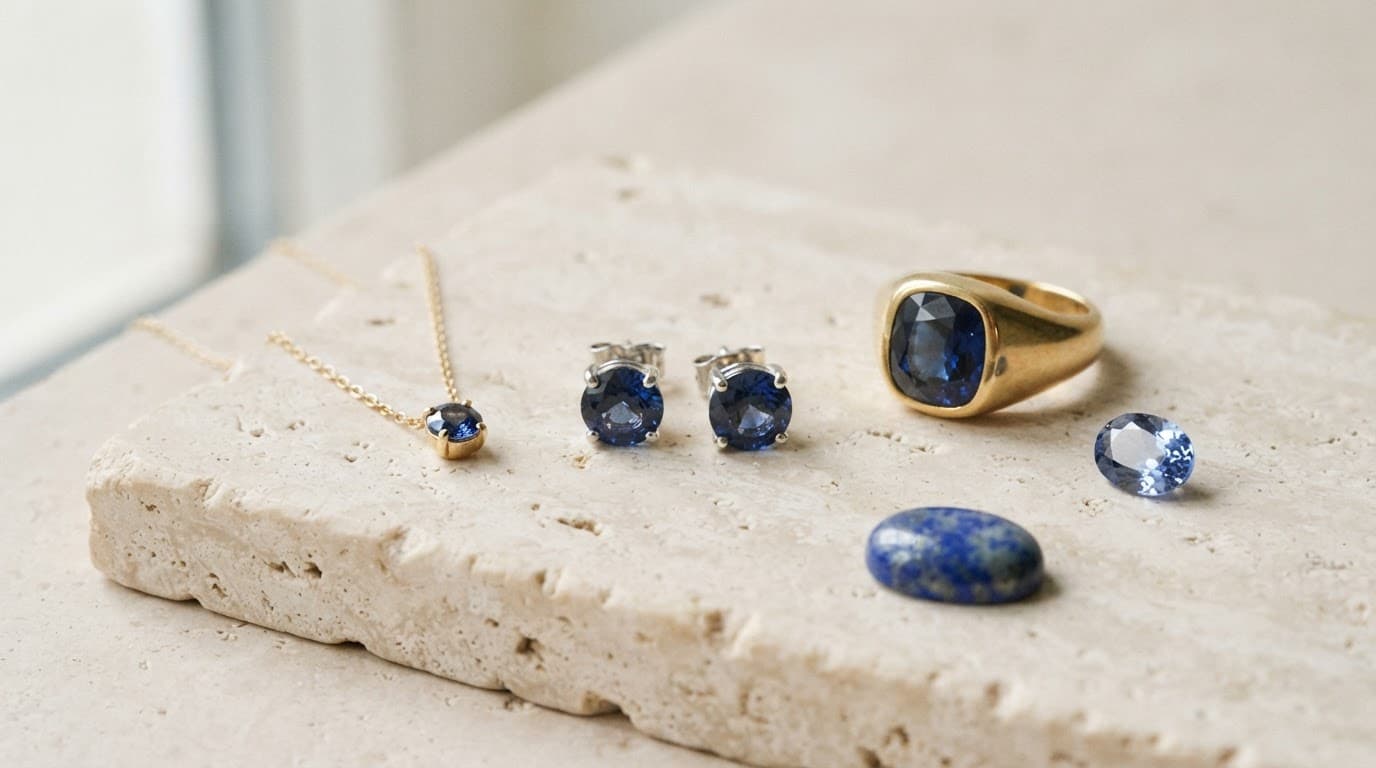
AI-generated image showing gift ideas alongside lapis lazuli and a lab-grown stone.
Mid-range gifts could include matched earrings, a signet-style piece, a larger pendant or a ring with a protective setting. Colour consistency, exact measurements and treatment disclosure matter more than chasing the highest carat weight.
An investment purchase may involve a documented, untreated natural sapphire, a custom design or a substantial heirloom ring. Independent gemmological evidence, attractive colour, sound construction and repairability should take priority over size alone. Lapis lazuli offers a lower-cost blue alternative, while white sapphire provides a colourless appearance similar to diamond, but neither has the same hardness, value structure or traditional status as blue sapphire. A gold heirloom setting may cost more than a sterling silver budget piece, so metal choice should reflect intended use as well as appearance.
Caring for Sapphire Jewellery So It Lasts
Sapphire ranks 9 on the Mohs scale, making it well suited to regular wear. Hardness helps prevent everyday scratches, but it doesn’t prevent chips, fractures or setting damage. Inclusions, metal and treatments can also affect durability and sensitivity.
Safe Cleaning Methods and Common Mistakes
For routine cleaning, place the jewellery in lukewarm water with a small amount of mild soap. Loosen dirt around the setting with a soft, clean brush and gentle pressure. Rinse thoroughly, then dry with a lint-free cloth. Clean jewellery away from an open sink, where a dropped ring or earring could disappear down the plughole.
Remove jewellery before swimming, sport, gardening, household cleaning and other activities involving impact or chemicals. Apply perfume, aftershave, hairspray and hand cream before putting jewellery on. Harsh cleaning products, sudden temperature changes and contact with harder materials can damage the surface or weaken vulnerable areas.
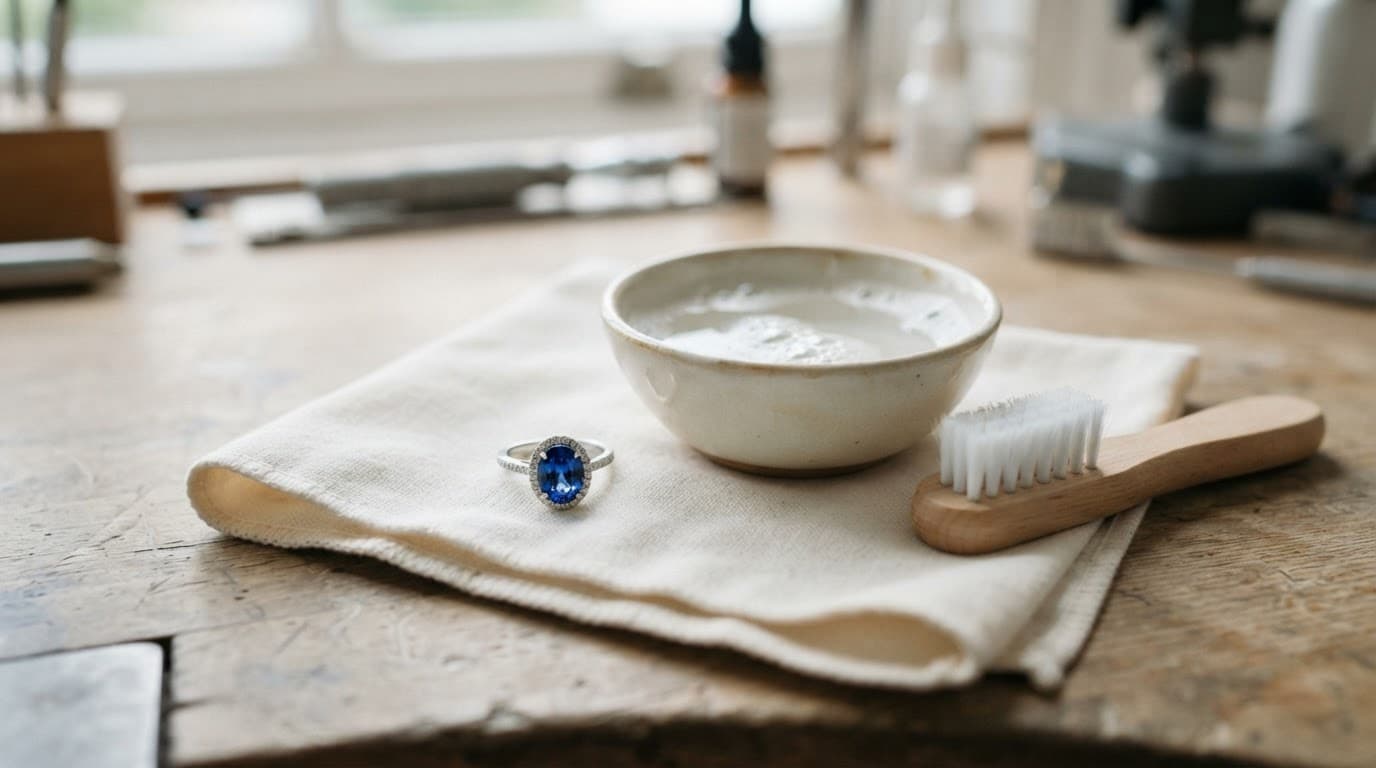
AI-generated image showing a ring beside simple materials for routine cleaning.
Professional cleaning is useful for claw-set rings, older jewellery and pieces worn every day. A jeweller can remove compacted dirt and inspect the setting at the same time. Ultrasonic or steam cleaning isn’t suitable for every stone, particularly those with significant inclusions, fractures or certain treatments. A jeweller or gemmologist should confirm that the stone and setting can tolerate either method before use.
Store each item separately in a fabric-lined compartment or soft pouch. This prevents the gemstone from scratching other jewellery and reduces contact between the setting and harder stones. Keep receipts, gemstone reports, photographs and insurance records with the purchase details, particularly for valuable or inherited pieces.
When a Setting Needs Professional Attention
Cleaning cannot correct a weakened setting. Arrange a prompt inspection if the stone appears loose, rocks when touched or makes a faint movement within the mount. Other warning signs include bent or lifted claws, a damaged catch, gaps around the gemstone, sharp edges, snagging fabric or a bracelet that no longer closes securely.
These faults can develop gradually through ordinary wear. A claw may catch on knitwear, a catch may weaken after repeated opening, or an impact may distort the metal without visibly damaging the stone. Continued wear increases the chance of losing it.
Repairs should be documented with dated photographs and written details of the work. This record may help demonstrate responsible ownership and support an insurance claim, although the outcome depends on the policy terms, exclusions and required evidence. Regular professional inspections help preserve both the jewellery and its documented value.
Frequently Asked Questions
The September birthstone is a durable and versatile choice for jewellery, but its value, care requirements and suitability depend on more than colour alone. These answers cover the points that most often influence a UK buying decision.
What is the official birthstone?
Sapphire, particularly blue sapphire, is the traditional September birthstone. Its association with loyalty, wisdom and protection comes from long-standing cultural and jewellery traditions. Other gemstones may appear in modern or regional birthstone lists, but they don’t have the same established status.
Are all sapphires blue?
No. This gemstone can appear in pink, yellow, green, white and colourless varieties, as well as blue.
Colourless stones can offer a bright, diamond-like appearance, while pink and yellow varieties provide a more distinctive alternative. Colour should be assessed through hue, tone and saturation, rather than judged by size alone.
Is a sapphire engagement ring suitable for everyday wear?
Yes, its hardness makes it a practical choice for an engagement ring, although hardness doesn’t prevent chips, fractures or damage from a sharp impact. A gemstone’s resistance to scratching isn’t the same as resistance to breakage.
The setting remains important. Secure claws, a protective bezel or a low-profile design can reduce risk, particularly for a ring worn every day. Regular checks should look for loose stones, lifted claws and worn metal. The ring should also be removed for sport, cleaning and other activities involving impact or chemicals.
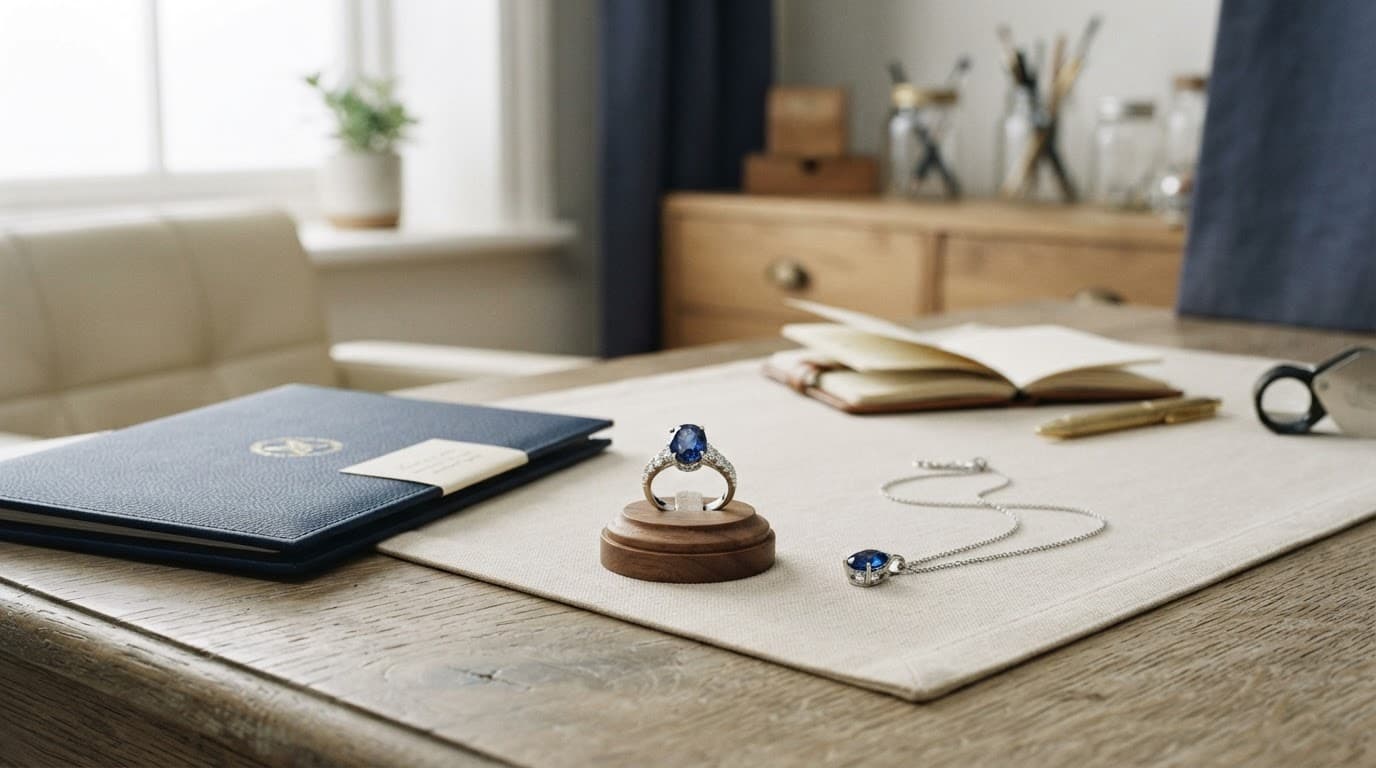
AI-generated image showing jewellery alongside buying documentation.
Does September birthstone jewellery have to be expensive?
No. Prices vary widely according to stone size, colour, cut, clarity, treatment, origin, metal and workmanship. A smaller natural stone with attractive colour and a lively cut can offer better value than a larger, poorly proportioned one.
Laboratory-grown options provide another accessible choice because they share the same chemical composition and durability without the same geological rarity. Silver, simpler settings and treated stones can also reduce the price, provided the listing discloses those details clearly.
How can a buyer tell whether a stone is real?
A reputable seller should state whether the stone is natural, treated or laboratory-grown. Treatment disclosure and accurate measurements are essential, particularly when an item is sold as rare or untreated.
Home tests and visual inspection cannot reliably confirm a stone’s origin, treatment history or laboratory-grown status. For higher-value purchases, an independent gemmological report offers stronger evidence. The report number, stone measurements and identifying details should match the jewellery being sold.
Can this jewellery be worn every day?
Yes, it is durable enough for frequent wear when mounted in a secure setting. Rings receive the most knocks, while pendants and earrings generally face less contact with hard surfaces.
Jewellery should still be removed for swimming, gardening, sport, household cleaning and manual work. Chemicals, dirt and sudden impacts can affect the stone or its setting, even when the stone itself remains unscratched.
Conclusion
The September birthstone is sapphire, valued for its attractive colour, durability and enduring personal meaning. Its hardness makes it suitable for regular jewellery, while varied colours offer more choice than the classic blue image suggests.
The strongest purchase isn’t necessarily the largest or most expensive piece. Colour, cut, setting and metal should suit the wearer’s wardrobe and daily routine, whether choosing rings or another format. Online buying can widen selection and sometimes reduce prices, but clear measurements, stated materials, treatment information, independent documentation, secure delivery and fair returns remain essential.
A well-chosen piece should combine attractive design with honest information and sound construction. When cared for properly, the jewellery can remain wearable for many years. It should also complement existing gold or silver jewellery, becoming a meaningful gift and a lasting family keepsake.
Explore our Buyers Guides and Reviews
For a list of our main buyers guides use the drop-down menu at the top of the page. Topics related to this article are:
–
Explore Our Blog Categories for Expert Buying Advice
- AI Powered Product Finder Tools (25)
- Expert Buying Guides & Shopping Tips for UK Shoppers (1,431)
- Brands & Designer Products (Men, Women & Electronics) (285)
- Designer Fashion Brands: Buyer’s Guides & Reviews (163)
- Electronic Brands: Buyers Guides & Reviews (88)
- Apple Products Buyer’s Guides & Reviews (25)
- Brands – Phones, Laptops, PC”s, Tablets | Buyer’s Guides & Reviews (42)
- Electronics – Tablet & iPad Reviews and Buyers Guides (11)
- Kitchen Appliance Brands: Buyer’s Guides & Reviews (22)
- Laptop Brands & MacBooks Buyer’s Guides & Reviews (9)
- Phone Brands & iPhones Buyer’s Guides & Reviews (23)
- Car Buying & Financing Made Easy | Expert Guides for the UK (89)
- Clothing, Fashion & Accessories Buying Guides UK (496)
- Beauty, Health & Wellness | Perfume, Skincare, Makeup & Wellbeing Guides (183)
- Footwear: Trainers & Shoes Buyers Guides (49)
- Jewellery: Expert Reviews, Trends & Buying Guides (73)
- Men's Clothes — Buyers Guides & Reviews (39)
- Men’s Clothes, Fashion & Accessories Guides UK | Latest Trends & Smart Shopping (167)
- Women's Clothing Buyers Guides — Dresses, Tops & More (194)
- Women’s Clothes, Fashion & Accessories Guides UK | Latest Trends & Smart Shopping (435)
- Electronics, Tech & Gadgets: Reviews, Deals & Buying Guides UK (173)
- Furniture Buyer’s Guides | Home & Garden & Styling Tips (326)
- Bedroom Furniture Guides UK | Expert Tips & Best Value Deals (93)
- Garden Furniture, Landscaping & Garden Rooms Guides UK | Expert Tips & Best Value Deals (169)
- Garden Sofa & Sofa Sets Buyers Guides (11)
- Garden Tables & Chairs: Sets, Individual Tables & Seating Buyers Guides (53)
- Home Furniture, Décor & Interior Design Guides UK | Styling Tips & Inspiration (169)
- Living Room Furniture, Design & Décor Guides UK | Styling Tips & Inspiration (57)
- Sofa & Sofa Beds Buyers Guides (19)
- Sofa Beds Buyers Guides (7)
- Sofa Buyers Guides & Expert Advice (11)
- Holidays & Travel: Hotels, Villas & Flights (161)
- Home & Garden Improvements | Renovations & Outdoor Transformation Guides (102)
- Insurance & Protection: Travel, Landlord, Gadget & More UK (159)
- Gadget Insurance UK | Expert Guides, Reviews & Smart Protection Tips (33)
- Home Emergency Cover UK | Expert Guides, Reviews & Practical Protection Tips (21)
- Landlords Insurance UK | Expert Guides, Reviews & Smart Protection Tips (31)
- Travel Insurance UK | Expert Guides, Reviews & Money-Saving Tips (34)
- Pets: Guides, Tips & Inspiration (26)
- Brands & Designer Products (Men, Women & Electronics) (285)
- Gifts for Everyone: Ideas for Every Occasion & Budget (49)