The Maldives is often flattened into a single image, water villas, white sand beaches, and honeymoon dinners above a lagoon. That picture is accurate, but it leaves out the country itself. Located south west of Sri Lanka and India, the Maldives is a vast spread of coral atolls in the Indian Ocean, featuring luxury resorts on private islands alongside inhabited local islands.
For UK travellers, the draw of Maldives holidays is obvious: warm water, strong marine life, and a getaway organised around the sea rather than the schedule of a city. The practical choices matter, though, because flights, boat transfers, seaplanes, meal plans, and island type can change both the budget and the tone of the trip. Those choices begin with the geography of the Maldives and the unique experience of being surrounded by the Indian Ocean.
Key Takeaways
- Geography Defines the Experience: The Maldives is a vast archipelago of coral atolls; choosing your island requires considering transfer logistics, such as seaplane or speedboat accessibility, which impacts both your budget and travel time.
- Private vs. Local Islands: Decide between the self-contained luxury of private resort islands and the more authentic, budget-friendly, and culturally immersive experience of staying on local inhabited islands.
- Strategic Meal Planning: Food costs can quickly escalate at resorts, so carefully evaluate meal plans—such as all-inclusive or half-board options—against your dining preferences and island location to avoid hidden expenses.
- Marine Life and Activity: The archipelago is a world-class destination for snorkelling and scuba diving, particularly in the Baa and Ari Atolls, though travellers should also consider the seasonal nature of marine sightings and weather patterns.
- Responsible Travel: Recognise that the Maldives is a fragile ecosystem facing climate challenges; choosing sustainable accommodation and mindful travel practices helps support the long-term preservation of these islands.
What the Maldives is really like beyond the postcard view
The Maldives is not just one island, nor is it a single compact group of islands. It is a country of scattered atolls and low-lying coral islands spread across the Indian Ocean, which means most visitors experience only a small fragment of the Maldives during their stay. That unique geography shapes your holiday from the very first transfer onward.
The Maldives suits couples after privacy, families after calm lagoons, and divers who care more about the health of the coral reefs than local nightlife. It also suits travellers who want a quiet, sea-led break. Those who need museums, shopping districts, or constant movement often find the pace of the Maldives too narrow after a few days.
How the island geography shapes every trip
Atolls are ring-shaped coral formations around lagoons, and in the Maldives, these atolls determine almost everything about your logistics. After landing at Velana International Airport near Malé, some islands are a short speedboat ride away. Others require a domestic flight, a seaplane, or a combination of the two.
That matters because your choice of transfer affects your total cost, baggage limits, and your first impression of the Maldives. A fast speedboat transfer is simple and often cheaper for those staying on nearby islands. Seaplane transfers can be spectacular, with reefs and sandbanks visible from the air, but they usually add a substantial extra charge and only operate during daylight hours.
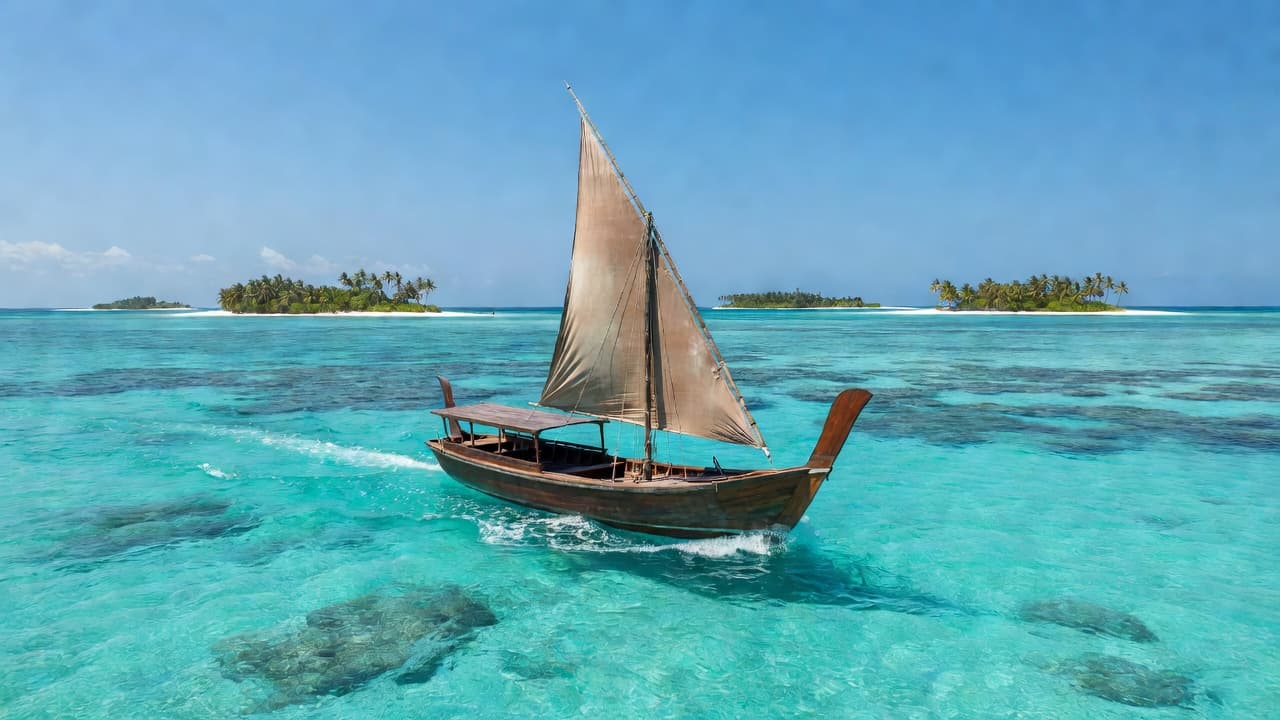
AI-generated image: a traditional dhoni on clear Maldivian water.
Private islands versus local islands
Private islands, or resort islands, are self-contained worlds. One island often means one resort, one set of restaurants, one spa, and a house reef that defines the perimeter of your holiday. Alcohol is available, dress is relaxed, and the whole environment is built to offer maximum comfort to guests.
Local islands feel more grounded. Guesthouses sit beside homes, schools, cafés, and mosques. Dress is more modest away from designated tourist beaches, and alcohol is not sold. Prices on local islands are lower, but facilities are usually much simpler than on private luxury resorts.
A quick comparison makes the split clearer:
| Feature | Private islands | Local islands |
|---|---|---|
| Atmosphere | Private, polished, insulated | Lived-in, social, more everyday |
| Dining | Multiple resort restaurants | Cafés and small restaurants |
| Rules | Alcohol available, relaxed dress | No alcohol, modest dress expected |
| Budget | Higher nightly cost | Better for lower-cost stays |
The real difference is your preferred holiday style. Private islands trade flexibility for comfort, while local islands trade polish for a closer view of everyday life in the Maldives.
The best places to see in the Maldives and what each one offers
Most holidays in the Maldives pass through the capital region, but the country opens up quickly once the transfer boats start moving. Some locations work well for a short stop, while others justify the entire journey to the Indian Ocean.
Malé and Hulhumalé for culture, shopping, and first impressions
Malé is compact, busy, and dense, which comes as a surprise after the empty beach mythology attached to the Maldives. The fish market gives a direct sense of how central tuna is to daily life, while the coral stone Old Friday Mosque is one of the most important historic sites in Malé. Short walks also take in local shops, cafés, and the harbour edge.
Nearby Hulhumalé is planned, broader, and more spacious. Its beach, seafront cafés, and airport access make it a convenient choice for an overnight stay in Malé before or after a resort transfer. Neither Malé nor Hulhumalé replaces the classic island stay, but both add a necessary cultural contrast to your Maldives trip.
Baa Atoll, Ari Atoll, and the reefs that draw divers
Baa Atoll is best known for its rich marine life, especially around Hanifaru Bay, where manta rays gather in season to feed. Resorts and guesthouses in Baa Atoll often centre the holiday around snorkelling, reef excursions, and quiet lagoons rather than beach spectacle alone.
Ari Atoll is another major destination for those interested in scuba diving and strong swimming. South Ari is closely associated with whale shark sightings, while many islands within these atolls feature accessible coral reefs teeming with life. Longer stays work well here because weather can shift plans, and the best days are often those spent exploring the diverse coral reefs beneath the surface. If you are keen on scuba diving, these regions offer some of the most vibrant marine life in the world.
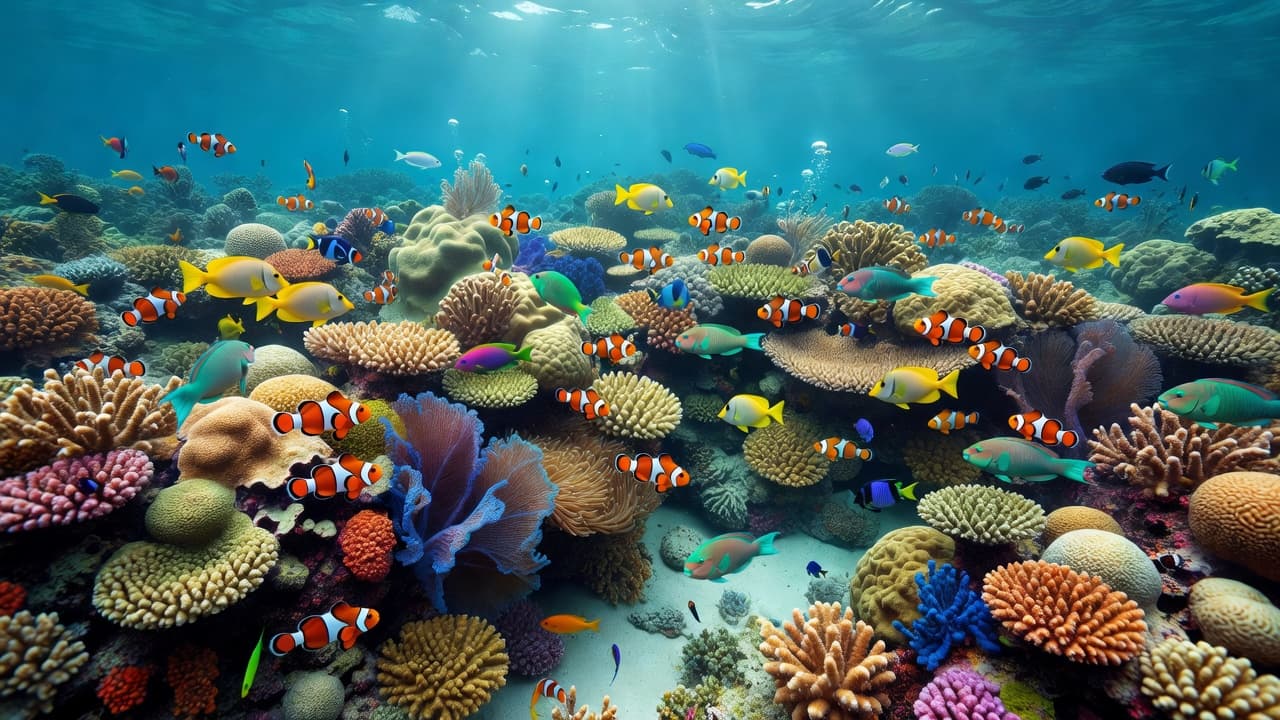
AI-generated image: coral reef life in the clear water that draws snorkellers and divers to the Maldives.
Vaadhoo and the appeal of the Maldives after dark
Vaadhoo is widely linked with the bioluminescent sea of stars effect, when plankton can make the shoreline glow blue at night. It is real, but it is not guaranteed; season, sea conditions, and simple luck all play a part.
Even without that glow, the Maldives is special after sunset. Dhoni cruises at dusk, dark skies with little light pollution, and the quiet of an island after dinner often become the moments people remember most.
Addu Atoll for a different side of the archipelago
Addu Atoll, in the far south, feels separate from the better known resort belt of the Maldives. It is less crowded, more spread out, and more connected to local life. Causeways link several islands, which makes cycling practical and gives the atoll a different rhythm from places where every move happens by boat.
Gan adds a layer of history, and the broader setting rewards travellers who want more than a resort bubble. It does not have the instant fame of other regions, but that is part of its appeal for those exploring the Maldives.
What to do in the Maldives, from a short escape to a two-week stay
Most activities here are extensions of the sea. The difference between a short break and a longer stay in the Maldives is not volume, but pacing.
Easy day trips that work well on a shorter holiday
On a three to five-night stay, the most realistic extras are reef snorkeling, a sunset dolphin cruise, a sandbank lunch, and a visit to a nearby local island. These trips fit neatly around beach time and do not demand much recovery time.
Fishing trips also work well in short breaks, particularly evening outings on a traditional dhoni. For travellers staying on a house reef island, simple shore snorkeling can be as rewarding as a formal excursion.
Longer stays that make the Maldives feel deeper
A week or more changes the rhythm. There is time for weather to shift, for a missed manta trip to be tried again, and for the holiday to include both activity and stillness. Multi-island stays begin to make sense, especially when a resort stay is paired with a few nights on a local island.
Those interested in scuba diving often use longer holidays for liveaboards or repeated boat dives across different sites. Others use the extra time for spa days, more ambitious marine excursions, and long afternoons that are not organised at all.
Family-friendly and couple-focused activities
The Maldives adapts well to different travellers because the sea itself is flexible. Families usually benefit from shallow lagoons, kids clubs, paddleboards, and glass-bottom boat trips. Older children often get the most from guided snorkeling and marine centre programmes focused on local marine life.
Couples often gravitate towards overwater villas, though many prefer the direct sand access of beach villas for a classic honeymoon experience. Quiet islands, sunset cruises, and private beach dining remain popular choices. Privacy is easy to find, but so is simplicity, a shaded deck, clear water, and very little else on the agenda.
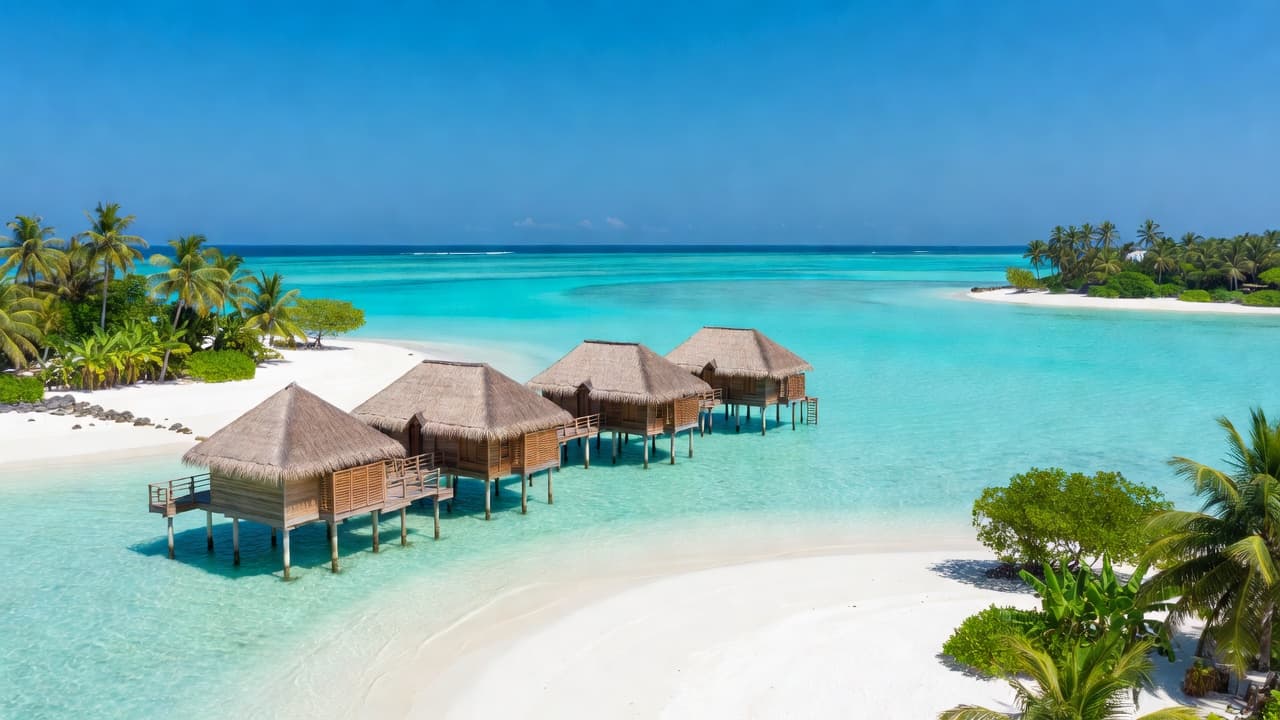
AI-generated image: overwater villas and lagoon views typical of many resort islands.
Where to eat in the Maldives and what the food tells visitors about island life
Food often exposes the biggest gap between expectation and reality in the Maldives. On resort islands, dining can become one of the trip’s largest costs after the room and transfer. As the tourism industry has expanded, the variety of culinary experiences has grown to include everything from rustic beachside shacks to high-end global gastronomy.
Local dishes worth trying
Maldivian food is shaped by tuna, coconut, rice, chilli, and flatbread. Mas huni, a breakfast mix of shredded tuna, coconut, onion, and chilli, usually arrives with roshi, a soft flatbread. Garudhiya, a clear fish broth, is one of the national staples, while grilled reef fish and fried snacks such as bajiya appear widely on local islands.
These are not heavy restaurant dishes. They are direct, practical, and tied to what the islands catch and grow, offering a true taste of the Maldives.
Restaurant settings, from buffet dining to overwater tables
Local islands offer the broadest sense of everyday eating, small cafés, simple seafood grills, and juice bars near the beach. In Malé, the capital city, Seagull Cafe House is a regular stop for light meals, while Sala Thai and Symphony Restaurant are often mentioned by travellers who want something beyond a resort buffet.
Resort dining is more theatrical. One island may offer a buffet, a Japanese counter, a seafood grill, and a private beach dinner, all within a few minutes’ walk. The setting often matters as much as the plate. Before booking your Maldives holiday, meal plans deserve close attention because breakfast-only rates can look attractive until lunch and dinner prices begin to add up.
How to book a Maldives holiday online without turning it into a guessing game
The Maldives rewards careful online planning because the room is only one part of the total trip. Flight times, transfer methods, and meal plans can change the real cost more than a nicer bathroom or a better deck chair. When you are planning your Maldives holiday, careful preparation is the key to ensuring everything runs smoothly from your departure from the UK to your final arrival in paradise.
Why online booking makes complicated island logistics easier
The destination usually involves several decisions at once, including long-haul flights from the UK, airport arrival times, onward transfers, room types, and meal bases. Online comparison brings those pieces into one view. It becomes easier to line up an international arrival in Malé with the last speedboat or a same-day seaplane window. Being mindful of the best time to visit is also essential, as weather patterns can influence both your travel plans and the overall experience across the various atolls.
In the Maldives, the room rate rarely tells the full story. Transfers and meal plans often decide the real cost.
What to check before confirming a trip
Transfer timing should come first. A resort close to Malé may be reachable in under an hour by boat, while a distant atoll can require an extra flight and strict baggage limits. Cancellation terms matter, and so do meal inclusions. It also helps to check whether the quoted price covers taxes, transfer charges, and any supplements for late arrivals, which is standard practice across the local tourism industry. A cheaper headline rate can become less persuasive once those additional details appear.
How to spot a better-value package
Value in the Maldives rarely sits in the lowest nightly rate. It sits in the full calculation. Breakfast only can suit short stays near the capital, where cafés are nearby. On remote resort islands, half board, full board, or an all-inclusive package often makes more sense because there is nowhere else to eat. Choosing an all-inclusive option can significantly simplify your budget, allowing you to enjoy your time in the Maldives without worrying about hidden costs.
Online booking makes those comparisons faster because different room categories, transfer types, and meal plans sit side by side. That clarity matters more in the Maldives than in many other beach destinations.
Frequently Asked Questions
Do I need a visa to visit the Maldives from the UK?
British citizens travelling to the Maldives for tourism generally receive a free 30-day visa on arrival. You must hold a valid passport, proof of onward travel, and your resort or guesthouse booking confirmation to clear immigration successfully.
What is the best time of year for a holiday to the Maldives?
The dry season, which typically runs from November to April, offers the best weather with plenty of sunshine and minimal rain. While this is the peak time for tourism, you will enjoy the clearest water conditions for snorkelling and diving.
Are local islands suitable for all types of travellers?
Local islands offer a wonderful glimpse into Maldivian life and are very welcoming, though they operate differently to resorts. Because they are part of a Muslim country, visitors are expected to dress modestly in public areas and alcohol is not served on these islands.
How do seaplane transfers work?
Seaplanes are a popular way to reach remote islands, offering stunning aerial views of the atolls. They only operate during daylight hours, so keep this in mind when booking international flights, as late arrivals may require an overnight stay in the capital region before proceeding to your resort.
Final thoughts
The Maldives looks simple in photographs, yet the holiday itself is shaped by distance, transfer time, and the type of island chosen. Its enduring appeal lies in the crystalline water, vibrant marine life, and the serene stillness found across the unique geography of this country, which is spread across thousands of distinct atolls rather than gathered on one shore.
As you plan your journey, it is worth remembering that these islands are on the front line of environmental change. While the Maldives offers a sanctuary for travellers, it is also a fragile ecosystem facing the very real modern challenges of climate change and sea level rise. Supporting sustainable tourism practices helps ensure that this incredible destination remains protected for the future.
The strongest trips tend to be those matched carefully to your budget, length of stay, and appetite for privacy or local texture. When flights, transfers, and meal plans are compared clearly online, the Maldives stops being a vague luxury fantasy and becomes a place that can be understood and appreciated on its own terms.
Discover more Buyers Guides and Reviews
For a list of our main buyers guides use the drop-down menu at the top of the page. Topics related to this article are:
Skiing Holidays Booking Guides
–
Explore Our Blog Categories for Expert Buying Advice
- AI Powered Product Finder Tools (25)
- Expert Buying Guides & Shopping Tips for UK Shoppers (1,445)
- Brands & Designer Products (Men, Women & Electronics) (291)
- Designer Fashion Brands: Buyer’s Guides & Reviews (166)
- Electronic Brands: Buyers Guides & Reviews (90)
- Apple Products Buyer’s Guides & Reviews (25)
- Brands – Phones, Laptops, PC”s, Tablets | Buyer’s Guides & Reviews (43)
- Electronics – Tablet & iPad Reviews and Buyers Guides (10)
- Kitchen Appliance Brands: Buyer’s Guides & Reviews (23)
- Laptop Brands & MacBooks Buyer’s Guides & Reviews (9)
- Phone Brands & iPhones Buyer’s Guides & Reviews (22)
- Car Buying & Financing Made Easy | Expert Guides for the UK (89)
- Clothing, Fashion & Accessories Buying Guides UK (503)
- Beauty, Health & Wellness | Perfume, Skincare, Makeup & Wellbeing Guides (185)
- Footwear: Trainers & Shoes Buyers Guides (49)
- Jewellery: Expert Reviews, Trends & Buying Guides (73)
- Men's Clothes — Buyers Guides & Reviews (39)
- Men’s Clothes, Fashion & Accessories Guides UK | Latest Trends & Smart Shopping (169)
- Women's Clothing Buyers Guides — Dresses, Tops & More (198)
- Women’s Clothes, Fashion & Accessories Guides UK | Latest Trends & Smart Shopping (442)
- Electronics, Tech & Gadgets: Reviews, Deals & Buying Guides UK (177)
- Furniture Buyer’s Guides | Home & Garden & Styling Tips (328)
- Bedroom Furniture Guides UK | Expert Tips & Best Value Deals (93)
- Garden Furniture, Landscaping & Garden Rooms Guides UK | Expert Tips & Best Value Deals (170)
- Garden Sofa & Sofa Sets Buyers Guides (11)
- Garden Tables & Chairs: Sets, Individual Tables & Seating Buyers Guides (56)
- Home Furniture, Décor & Interior Design Guides UK | Styling Tips & Inspiration (170)
- Living Room Furniture, Design & Décor Guides UK | Styling Tips & Inspiration (57)
- Sofa & Sofa Beds Buyers Guides (19)
- Sofa Beds Buyers Guides (7)
- Sofa Buyers Guides & Expert Advice (11)
- Holidays & Travel: Hotels, Villas & Flights (162)
- Home & Garden Improvements | Renovations & Outdoor Transformation Guides (103)
- Insurance & Protection: Travel, Landlord, Gadget & More UK (159)
- Gadget Insurance UK | Expert Guides, Reviews & Smart Protection Tips (33)
- Home Emergency Cover UK | Expert Guides, Reviews & Practical Protection Tips (21)
- Landlords Insurance UK | Expert Guides, Reviews & Smart Protection Tips (31)
- Travel Insurance UK | Expert Guides, Reviews & Money-Saving Tips (34)
- Pets: Guides, Tips & Inspiration (26)
- Brands & Designer Products (Men, Women & Electronics) (291)
- Gifts for Everyone: Ideas for Every Occasion & Budget (49)