A pair of trainers (or sneakers, as they are known globally) now has to do more than look good in a shop window. For many men in the UK, the same footwear purchase has to cope with commuting, home working, weekends away, light exercise, and the odd smart-casual dinner.
That makes the choice less about hype and more about use. The strongest buy is usually the pair that fits the routine, feels right on the foot, and holds up after months of wear. The guide below looks at the points that matter most, from fit and materials to style, budget, and buying online with fewer mistakes.
Key Takeaways
- Match trainers to their primary use, whether for city walking, commuting, gym sessions, or casual office wear, as purpose shapes the best choice over hype.
- Prioritise fit and comfort by checking toe space, heel security, arch support, and sock pairing, since brands vary widely in sizing and width.
- Look for quality signs like even stitching, firm soles, sturdy heel counters, and smooth linings, which predict longevity more than price or branding.
- Mid-range brands (£60-£130) often deliver the strongest balance of style, build, and value, outperforming budget options for daily wear.
- Opt for neutral colours like white, black, grey, or navy for wardrobe versatility, and use size guides, reviews, and returns policies for safe online buys.
What men should decide before buying a new pair of trainers
The search gets easier once the main job of the shoe is clear. A trainer for daily walking through city streets won’t be built like Gym shoes, and a clean leather pair for casual offices won’t feel the same as soft Running models. Many buyers still want one pair to cover everything, but that usually leads to compromise.
The best men’s trainers are usually the pair built for the job they do most often.
Where the trainers will be worn most often
Use changes almost every buying decision. For lifestyle wear, comfort over long hours matters more than speed or low weight. For commuting, grip becomes more important, especially on wet pavements and station steps. For travel, lighter pairs with flexible soles are easier to pack and wear all day.
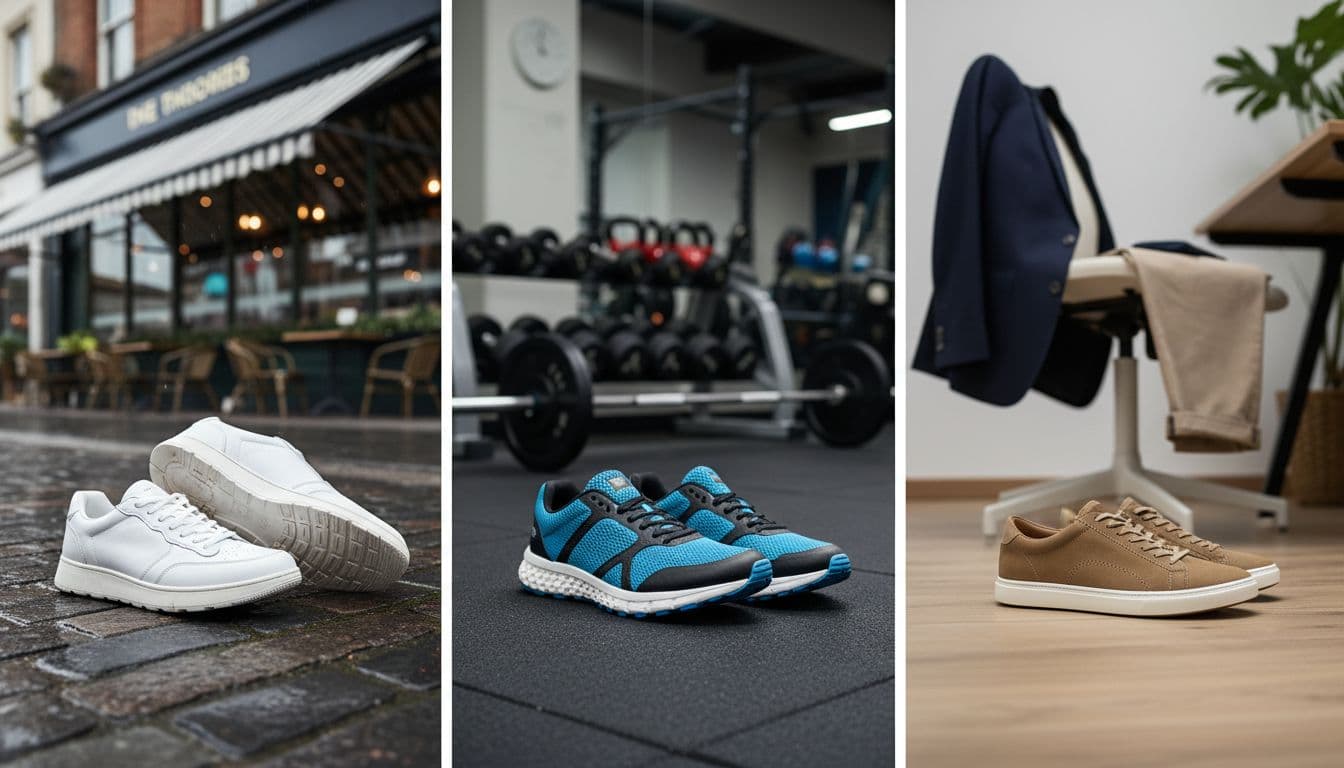
AI-generated image showing how different trainers suit different settings.
A city pair often needs a cleaner shape and a sole that doesn’t look too technical. Meanwhile, a gym or light sport trainer should place function first, with better traction, airflow, and shock absorption. Those priorities often clash. A sleek suede trainer may look sharper with chinos, but it won’t welcome heavy rain or a treadmill.
Warmer months also shift the balance. Mesh and knit uppers feel cooler in summer, while leather and suede can feel sturdier in autumn and winter. Buyers who walk a lot in British weather should think about surface as much as style.
How fit and comfort should be checked
Size labels only tell part of the story. One brand’s 9 can feel like another brand’s 8.5, and width varies more than many men expect. A good fit leaves space at the toe, holds the heel in place, and avoids pressure on the sides of the foot.
Socks matter as well. Thin trainer socks can change the feel of a close-fitting pair, while thicker cotton or sports socks may turn a comfortable shoe tight. That matters most with leather and suede, which may soften a little, but rarely stretch enough to fix a poor fit.
Arch Support is more personal than many style guides admit. Some men need very little. Others notice discomfort after an hour if the footbed is flat. A removable insole is useful because it allows adjustment later, either with a better insole or an orthotic insert.
Materials, build, and why they matter over time
Materials shape comfort on day one and condition after six months. Premium leather tends to look smarter and last well if cared for, but it can feel warmer and heavier. Classic suede looks softer and more relaxed, though it marks easily and dislikes wet pavements. Mesh is light and breathable, which suits warmer weather and active use, yet it often shows wear faster. Knit uppers feel flexible, although some lack structure around the heel.
Synthetic uppers vary more than the label suggests. Good synthetics can be durable and easy to wipe clean. Cheaper ones can crease early, trap heat, and look tired after little wear. The finish tells the story. Even stitching, tidy edges, and firm bonding between upper and sole usually point to better standards.
Sole construction matters too. A solid join between upper and sole helps the trainer keep its shape. If the sidewall already looks patchy or uneven in the box, it rarely improves at home.
How to judge quality without overpaying
Price alone doesn’t sort good trainers from bad ones. Some pairs cost more because of branding, while others offer strong materials and sensible construction without much noise, incorporating modern technology in midsole construction and foam types. A careful look at the upper, lining, insole, midsole, and outsole often says more than the logo.
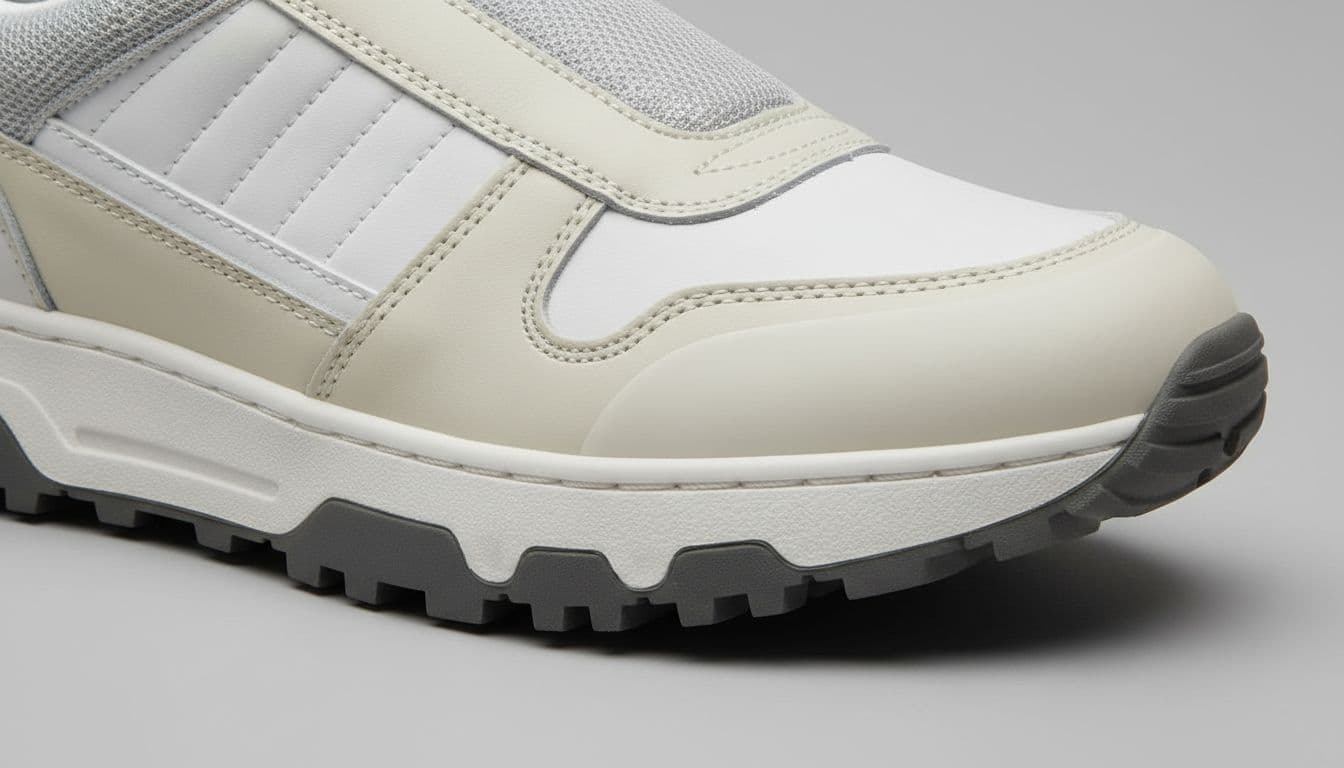
AI-generated image highlighting the build details that usually separate better pairs from weaker ones.
The signs of a trainer that will last
Early warning signs are easy to miss. Loose threads, glue marks, thin heel counters, and soles that bend too easily at the midfoot often point to short life. By contrast, even stitching, secure overlays, and a stable heel structure usually mean the shoe will keep its shape.
Some creasing is normal, especially on leather across the toe box. Fast, deep creasing after only a few wears can suggest poor leather quality or weak synthetic panels. Outsoles should also feel firm enough to resist quick wear, with enough tread for real grip rather than decoration.
Lining matters more than it gets credit for. A rough or flimsy lining tends to pill, rub, and break down early. Once that happens, comfort falls quickly.
Comfort features that are worth paying for
Extra comfort is worth the money when it matches the day-to-day routine. Men who stand for long periods often benefit from maximum cushioning and support, a padded collar, and stronger heel counters. Those features can reduce fatigue in a way a prettier upper cannot.
For casual wear, soft midsoles and removable insoles are often the best upgrades. For walking and commuting, shock absorption and grip matter more. By contrast, some expensive pairs add bulk, thick branding, or unusual soles without improving comfort at all.
A higher price should buy something concrete, better foam, a sturdier outsole, stronger upper panels, or a lining that feels finished. If none of that shows up, the value may be weak.
Which trainer brands tend to suit different budgets
The biggest brands in the industry make the market easiest to understand by price band. This quick table gives a useful map for UK shoppers on desktop and mobile.
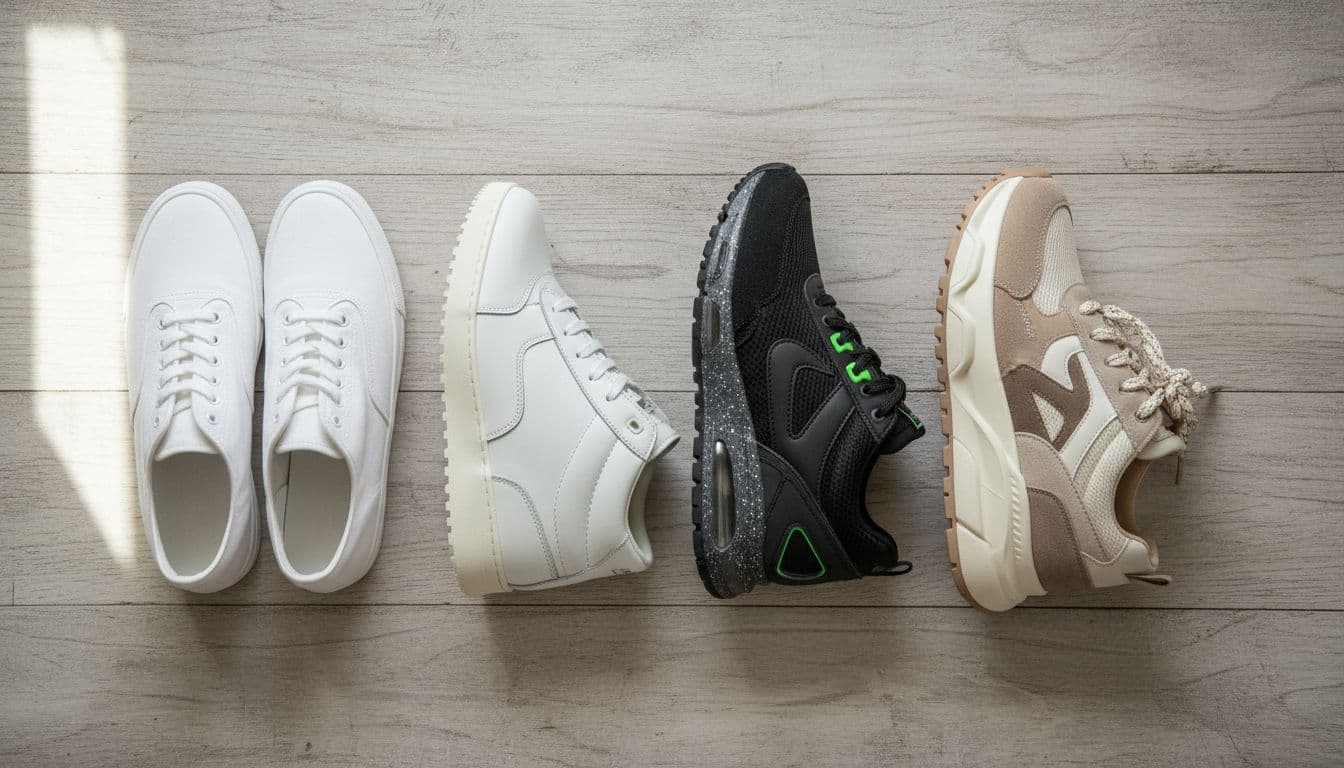
AI-generated image comparing the look of trainers across common price tiers.
| Price band | Typical range | Common examples | What the money usually buys |
|---|---|---|---|
| Budget | Under £60 | Kappa, Slazenger, Lee Cooper, some Fila lines | Basic comfort, simpler materials, trend-led styling |
| Mid-range | £60 to £130 | Adidas Originals, New Balance, Puma, Reebok, Clarks | Better uppers, cleaner design, stronger build |
| Performance | £100 to £180 | ASICS, Brooks, Saucony, Hoka, On, Nike Running | Support, cushioning, traction, sport-led engineering |
| Designer | £180 and up | Axel Arigato, Common Projects, Alexander McQueen, Maison Margiela | Premium styling, fashion appeal, branding, mixed practicality |
The broad pattern is clear. Value often improves in the middle, while the top end splits into technical sport and fashion status.
Budget brands that cover the basics well
Budget brands usually work best for occasional wear, spare pairs, or trend-led buys that don’t need to last for years. Canvas, basic synthetics, and simpler foam are common here. That doesn’t make them bad. It means expectations should be realistic.
For light casual use, many affordable pairs do enough. Problems tend to appear with daily mileage, wet weather, or long hours on foot. Soles wear faster, uppers lose shape sooner, and comfort fades earlier than the price might suggest.
Mid-range brands that often give the best balance
This is where many shoppers find the strongest return on their money. Better leather, improved mesh, sturdier outsoles, and more refined shapes become easier to find. Brands like adidas and New Balance often exemplify this jump, with cleaner stitching, better heel support, and uppers that age more gracefully.
Mid-range also tends to offer the safest mix of style and practicality. A pair can look good with jeans or chinos and still cope with a full day out. Over time, that versatility often makes the total cost per wear lower than a cheaper pair replaced twice.
Performance brands and designer labels, what each really adds
Performance brands usually spend money on function. Running and training models from ASICS, Brooks, HOKA, Saucony, On Running, Nike, and adidas often offer stronger cushioning, grip, and support. For men with long walking days or light sport in mind, that can justify the price.
Designer trainers sell something else. The appeal is shape, finish, rarity, and fashion weight. Some are well made. Some are less comfortable than pairs at half the price. A high price tag doesn’t guarantee durability, and it often says more about image than foot support.
How to choose a style that works with the rest of a wardrobe
A trainer earns its place when it fits the clothes already in rotation. That usually means thinking about silhouette, colour, and sole thickness before looking at trends.

AI-generated image showing a smart-casual way to wear minimalist trainers.
Crisp white trainers and why they stay popular
Crisp white trainers remain common because they work with almost everything. They suit denim, chinos, shorts, and many relaxed office outfits. They also make older basics look sharper.
Their weakness is obvious. They mark easily, show rain splash, and need regular cleaning. For a practical alternative in winter or work settings, triple black trainers offer better resilience. Still, as a first pair for a simple wardrobe, crisp white leather or leather-look trainers are hard to beat.
Chunky, retro, and minimalist designs
Retro runners with terrace styles, such as the adidas Originals Samba, or retro influences like the Nike Air Max 95, lean casual and often work best with denim, joggers, and relaxed trousers for a casual fit. Court-inspired minimalist low-tops look smarter, especially in leather, suede, or muted tones. Chunky trainers like the New Balance 9060 make a stronger statement, but they can dominate an outfit and feel dated faster when the trend shifts.
No style wins on every measure. The right choice depends on the rest of the wardrobe, body frame, and where the shoes will be worn.
Colour choices that make trainers easier to wear
White, black, navy, grey, and soft earth tones do the most work. They pair well with common menswear colours and don’t demand much thought in the morning. Black is practical in poor weather. Grey and navy often hide wear better than white. Earth tones work well with olive, beige, brown, and washed denim.
Bright colours can look great, though they narrow the outfit options. Strong contrasts also date more quickly. For most men, neutral shades are the safer long-term buy.
Buying men’s trainers online without getting the fit wrong
Online shopping offers more sizes, more colours, and easier price comparison than most high streets. Finding the latest creps is often easier online than on the local high street. It also makes it easier to compare materials, model updates, and sale prices without rushing a decision. For UK shoppers outside major cities, that wider choice can be the main advantage.

AI-generated image showing the sort of at-home checks that reduce sizing mistakes.
Using size guides, reviews, and product photos properly
A brand’s own size guide is the starting point, not the final word. Measurements in centimetres are more useful than the printed shoe size alone. Reviews help most when they mention width, arch feel, break-in time, and whether the pair runs long or short.
Product photos should show the trainer from the side, front, heel, and sole. That reveals toe shape, sole depth, heel height, and how bulky the shoe will look with everyday clothes. Reviews that only say “great trainers” add little. Wear reports after a few weeks are far more useful.
Why returns policies matter more than the headline price
A slightly lower price can become poor value if returns are awkward or costly. That matters most when trying a new brand, a new last, or a new material. Free returns aren’t universal, so buyers should check the return window, condition rules, and who pays postage.
UK distance selling rules usually give a cooling-off period for most online purchases, but the process still varies between sellers. A smooth return route lowers the risk of buying online. That can matter more than saving £5 on the initial order.
Frequently Asked Questions
What should men consider first when buying trainers?
The main job of the shoe comes first: decide where they will be worn most often, such as city streets, commuting, gym, or casual offices. Lifestyle pairs prioritise comfort and clean looks, while gym models focus on grip and airflow. Warmer months favour breathable mesh, and British weather calls for sturdy materials like leather.
How can you check fit and comfort properly?
Try them with the socks you will wear, ensuring toe space, secure heel hold, and no side pressure. Arch support varies personally, so flat footbeds may need insoles. Leather and suede soften slightly but rarely stretch to fix a poor initial fit.
Which price band offers the best value for most men?
Mid-range (£60-£130) from brands like Adidas Originals, New Balance, and Puma usually provides better uppers, stitching, and outsoles that age well. Budget pairs suit occasional use but wear faster daily, while performance and designer options add specific benefits at higher cost.
Are crisp white trainers a practical choice?
Yes, they pair easily with jeans, chinos, and office outfits, sharpening basic wardrobes. They mark and splash easily, so black or grey alternatives suit wet weather better. Regular cleaning keeps them sharp.
How to avoid sizing mistakes when buying trainers online?
Start with the brand’s centimetre size guide and read reviews on width, length, and break-in. Check product photos for sole depth and shape, and confirm returns policies, as UK rules help but processes vary by seller.
Conclusion
The strongest pair of men’s trainers, a foundational piece of footwear, is rarely the loudest or the most expensive. It is usually the pair that matches daily use, fits well from the start, and shows honest build quality in the parts that take the strain.
Purpose comes first, then fit, materials, budget, and style. Once those pieces line up, the purchase tends to last longer and make more sense. Fashion moves quickly, but a careful buy usually outwears a fashionable one.
Explore our Buyers Guides and Reviews
For a list of our main buyers guides use the drop-down menu at the top of the page. Topics related to this article are:
Designer Handbags Buyers Guides
–
Explore Our Blog Categories for Expert Buying Advice
- AI Powered Product Finder Tools (25)
- Expert Buying Guides & Shopping Tips for UK Shoppers (1,431)
- Brands & Designer Products (Men, Women & Electronics) (285)
- Designer Fashion Brands: Buyer’s Guides & Reviews (163)
- Electronic Brands: Buyers Guides & Reviews (88)
- Apple Products Buyer’s Guides & Reviews (25)
- Brands – Phones, Laptops, PC”s, Tablets | Buyer’s Guides & Reviews (42)
- Electronics – Tablet & iPad Reviews and Buyers Guides (11)
- Kitchen Appliance Brands: Buyer’s Guides & Reviews (22)
- Laptop Brands & MacBooks Buyer’s Guides & Reviews (9)
- Phone Brands & iPhones Buyer’s Guides & Reviews (23)
- Car Buying & Financing Made Easy | Expert Guides for the UK (89)
- Clothing, Fashion & Accessories Buying Guides UK (496)
- Beauty, Health & Wellness | Perfume, Skincare, Makeup & Wellbeing Guides (183)
- Footwear: Trainers & Shoes Buyers Guides (49)
- Jewellery: Expert Reviews, Trends & Buying Guides (73)
- Men's Clothes — Buyers Guides & Reviews (39)
- Men’s Clothes, Fashion & Accessories Guides UK | Latest Trends & Smart Shopping (167)
- Women's Clothing Buyers Guides — Dresses, Tops & More (194)
- Women’s Clothes, Fashion & Accessories Guides UK | Latest Trends & Smart Shopping (435)
- Electronics, Tech & Gadgets: Reviews, Deals & Buying Guides UK (173)
- Furniture Buyer’s Guides | Home & Garden & Styling Tips (326)
- Bedroom Furniture Guides UK | Expert Tips & Best Value Deals (93)
- Garden Furniture, Landscaping & Garden Rooms Guides UK | Expert Tips & Best Value Deals (169)
- Garden Sofa & Sofa Sets Buyers Guides (11)
- Garden Tables & Chairs: Sets, Individual Tables & Seating Buyers Guides (53)
- Home Furniture, Décor & Interior Design Guides UK | Styling Tips & Inspiration (169)
- Living Room Furniture, Design & Décor Guides UK | Styling Tips & Inspiration (57)
- Sofa & Sofa Beds Buyers Guides (19)
- Sofa Beds Buyers Guides (7)
- Sofa Buyers Guides & Expert Advice (11)
- Holidays & Travel: Hotels, Villas & Flights (161)
- Home & Garden Improvements | Renovations & Outdoor Transformation Guides (102)
- Insurance & Protection: Travel, Landlord, Gadget & More UK (159)
- Gadget Insurance UK | Expert Guides, Reviews & Smart Protection Tips (33)
- Home Emergency Cover UK | Expert Guides, Reviews & Practical Protection Tips (21)
- Landlords Insurance UK | Expert Guides, Reviews & Smart Protection Tips (31)
- Travel Insurance UK | Expert Guides, Reviews & Money-Saving Tips (34)
- Pets: Guides, Tips & Inspiration (26)
- Brands & Designer Products (Men, Women & Electronics) (285)
- Gifts for Everyone: Ideas for Every Occasion & Budget (49)