Aberdeen often sits in the shadow of Edinburgh and Glasgow, yet that misses the point. This is one of the UK’s most distinctive small cities, known as the “Silver City by the Sea” for its silver-grey architecture, a working harbour, a long beach and fast access to a wider county full of castles, coastal villages and open country.
For travellers from across the UK, Aberdeen works in more than one way. It suits a short city break, but it also rewards a longer stay, because museums, sea walks, good food and day trips all sit within easy reach. The city makes more sense once it is seen as both destination and gateway to North East Scotland.
Key Takeaways
- Aberdeen’s granite architecture and compact centre make it perfect for short city breaks, with a distinctive silver-grey look that stands out among UK cities.
- The working harbour and North Sea heritage shape the city’s character, best explored via the Maritime Museum and waterfront walks.
- A mix of landmarks like St Machar’s Cathedral, Union Street, and Duthie Park’s Winter Gardens suits varied paces, from one-day visits to longer stays.
- Excellent gateway to Aberdeenshire, with easy day trips to castles, coastal villages, and countryside routes adding depth to any trip.
- Strong food scene from fresh seafood and local rowies to fine dining, all tied to regional produce.
Why Aberdeen stands out on a UK city break
The look and feel of the Granite City
Aberdeen’s nickname, the Granite City, is not a bit of tourist gloss. The pale stone is everywhere, on civic buildings like Marischal College, terraces, churches and long central streets. In clear light, the city can seem almost silver. In rain, it turns darker and more dramatic. Either way, it has a strong visual identity that few British cities match.
The centre is also fairly compact. Union Street, Broad Street, Belmont Street and nearby lanes are easy to cover on foot, so first-time visitors can get a sense of the place without complicated planning. That matters on a weekend break, because time is often short.
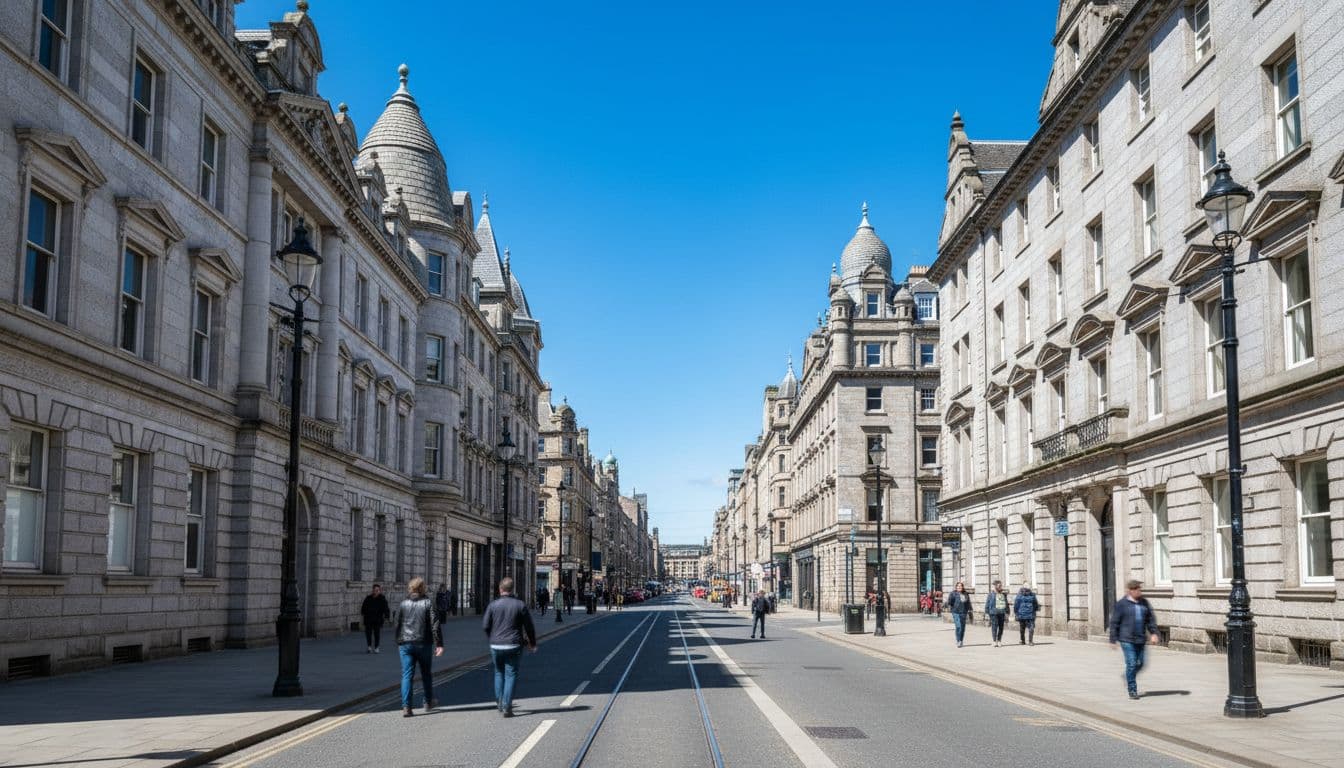
AI-generated image of Aberdeen’s granite architecture in the city centre.
A city shaped by the North Sea
The sea gives Aberdeen much of its character. The harbour is active, the weather changes fast, and the city’s working life has long been tied to fishing, shipping and, later, North Sea oil, which established it as the Oil capital of Europe. That history still shapes what visitors notice first, from the waterfront to the menus.
Because of that maritime edge, Aberdeen feels different from inland university cities. It suits couples after a thoughtful city break, solo travellers who like walkable places, families mixing museums with parks, and visitors who prefer a place with uniquely Aberdonian texture rather than polished uniformity.
Aberdeen works best when it is treated as both a city break and a base for the wider North East.
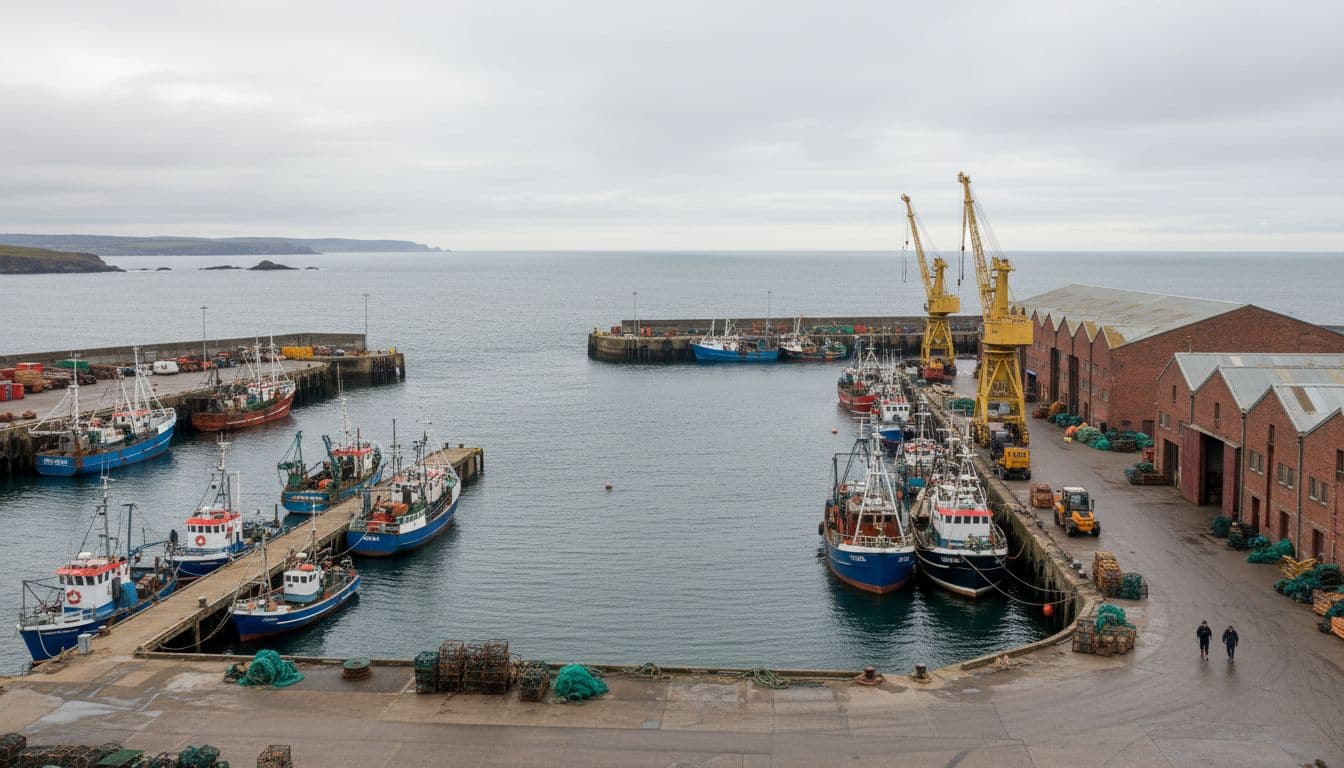
AI-generated image of Aberdeen harbour and its working waterfront.
The landmarks and places of interest that define Aberdeen
Aberdeen Maritime Museum and Aberdeen Harbour’s maritime heritage
Aberdeen Maritime Museum is one of the most useful first stops in the city. It explains shipping, fishing and the offshore industry in a way that gives context to almost everything outside. After that, the nearby Aberdeen Harbour makes more sense, because the quays, warehouses and boats are part of a continuing story rather than background scenery.
St Machar’s Cathedral and the city’s older story
Old Aberdeen changes the mood at once. Streets narrow, traffic softens and the city feels older. St Machar’s Cathedral is central to that shift. Its heavy stone, twin towers and calm setting connect modern Aberdeen to its medieval roots, and the surrounding area, with University of Aberdeen buildings such as King’s College and old lanes, is worth unhurried time.
The city centre, Union Street, and public spaces worth seeing
Union Street is the spine of the centre, broad, long and built on a grand scale. It is still the reference point for most visits, even as the city has changed around it. Nearby public spaces, civic buildings such as His Majesty’s Theatre and smaller streets give the centre more variety than a quick pass suggests. For many visitors, this is the practical base for getting around the rest of Aberdeen.
Parks, gardens, and green escapes inside the city
Duthie Park, near the River Dee, is one of the city’s best balances to granite and sea wind. It offers wide paths, open lawns and a slower pace, while the Winter Gardens add warmth, colour and shelter on colder days. These are not minor extras. They make Aberdeen easier to enjoy for families, older travellers and anyone building in a quieter half-day.
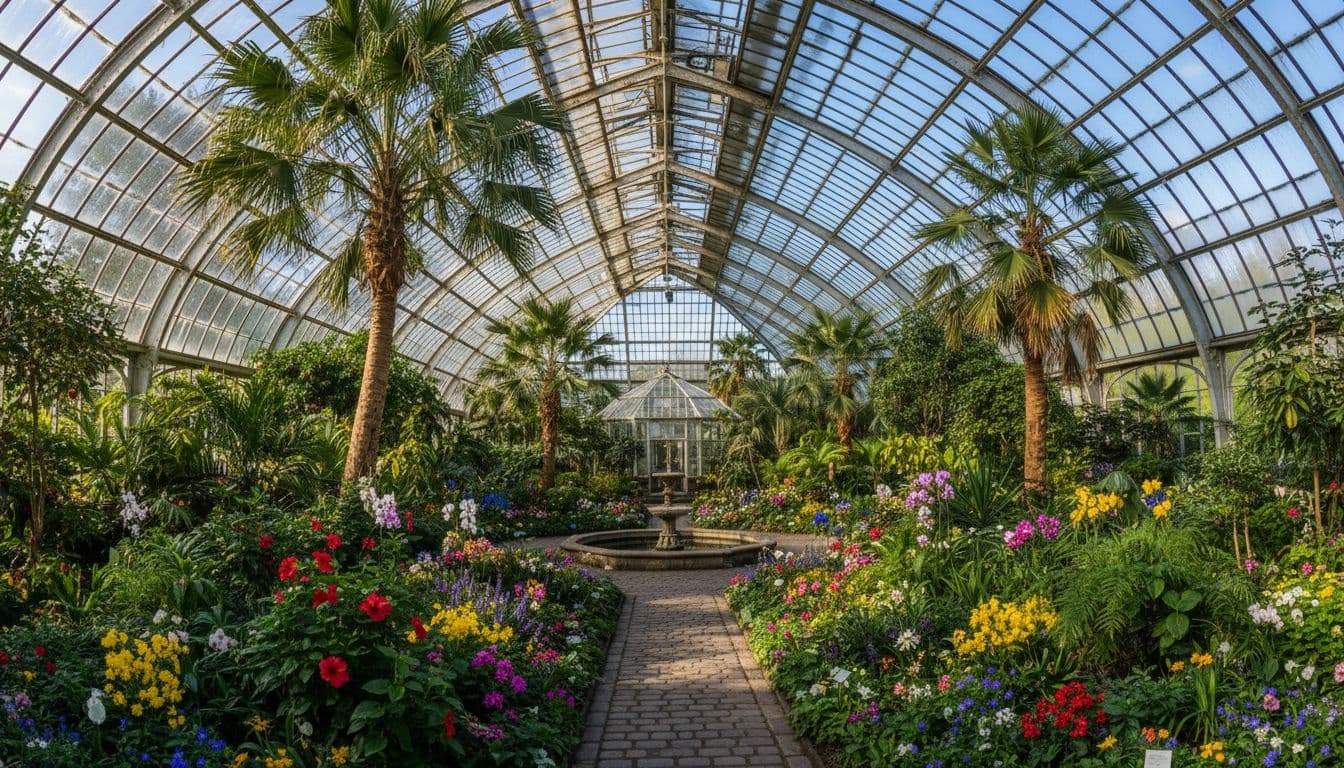
AI-generated image of the Winter Gardens at Duthie Park.
How to spend a day in Aberdeen, or stretch it into a longer stay
The city’s appeal changes with the length of the trip. Whether arriving at Aberdeen International Airport or by ScotRail services, this quick guide shows what fits comfortably.
| Trip length | What fits well | Typical pace |
|---|---|---|
| 1 day | Centre, one museum, harbour or park, one good meal | Compact |
| 2 to 3 days | Main sights, food stops, Old Aberdeen, beach or gardens | Balanced |
| 5 to 7 days | City highlights plus several day trips | Varied |
| 1 to 2 weeks | Aberdeen plus wider Aberdeenshire and coast | Relaxed |
The key point is simple. Aberdeen can fill a day, but it grows stronger with time.
A one-day visit that covers the essentials
A short stop can still feel full rather than rushed. A practical day often starts with a walk near Union Square in the centre for those arriving by train or bus, moves to the Maritime Museum, includes lunch nearby, then heads either towards the waterfront or out to Duthie Park. That leaves room for an evening meal without trying to force too much into a few hours.
A weekend break with more depth
Two or three days allow Aberdeen to breathe. Old Aberdeen, St Machar’s Cathedral, gallery time, independent cafés and a proper walk along the beach or harbour all become realistic. At that pace, the city stops feeling like a list of landmarks and starts to show its local rhythm, which is where much of its appeal lies.
One to two weeks in and around Aberdeen
A longer stay changes the role of the city. Aberdeen becomes a practical base for wider Aberdeenshire, with roads and rail links that open up castles, inland routes, small towns and stretches of coast. For travellers who like mixing urban comforts with day trips, that combination is one of the city’s strongest points.
Day trips from Aberdeen that add real value
Castles, estates, and historic houses within easy reach
The North East is castle country. Some sites are grand estates with formal grounds, while others are dramatic ruins set against cliffs or open farmland, many linked to historical figures like Robert the Bruce. That range makes day trips from Aberdeen especially strong for visitors interested in Scottish history, photography or scenic drives. A city stay gains far more depth once one or two of these places are added.
Coastal villages and beaches for fresh-air days out
The coast north and south of Aberdeen, including the Banffshire Coast, changes quickly. There are harbour towns with small working quays, long beaches where the sky seems to widen, and villages that feel a world away from the city centre. These trips suit walkers, families and anyone who wants a simpler day built around sea air, fish and chips and a slow return.
Countryside routes for a slower Aberdeen itinerary
Inland in Aberdeenshire, the pace softens again. River valleys, glens and small towns like those along Royal Deeside offer a different kind of trip, one built around drives, short walks, tearoom stops and local heritage sites towards the Cairngorms National Park. Couples often favour these quieter days, but families can too, especially when the plan allows room to stop rather than chase a fixed timetable.
Where to eat in Aberdeen, from seafood to local favourites
Seafood and North Sea produce
Aberdeen’s food scene starts with the coast and its proximity to the North Sea. Fish and shellfish are the obvious draw, and the best meals often come from places that keep the menu close to what is local and fresh. Restaurants near the harbour and city centre often make the most of that supply, so seafood is more than a token option here.
Casual cafes, bakeries, and easy lunch stops
For lunch, the city is well set up for travellers on foot. Independent cafés, bakeries and casual dining rooms are easy to find around the centre and West End. This is also a good place to try local favourites such as buttery rolls, often called rowies, which are part of the traditional Doric dialect culture, alongside soup, sandwiches or a simple coffee stop between museums and walks.
Fine dining and special-occasion meals
Aberdeen also has enough polished dining rooms for anniversaries, longer stays and evenings that call for a more careful setting. Menus often lean on Scottish produce, including beef, game and seafood, rather than trying to mimic larger cities. That restraint helps. It gives the city’s restaurant scene a grounded, regional feel.
Why booking Aberdeen online makes planning simpler
Comparing stays, travel times, and trip lengths in one view
Online booking makes Aberdeen easier to judge before money is spent. Travellers can compare central hotels, self-catering flats and longer-stay options side by side, while also checking rail times, driving distances, parking, cancellation terms and resources from Aberdeen City Council for event listings. That is useful in a city where the right base depends on whether the trip is built around walking, business, day trips or a mix of all three.
Making it easier to match the trip to the traveller
The same tools help different travellers sort the practical details. Families can check room size and access to parks. Couples can focus on central locations and restaurant areas. Solo travellers can compare public transport links, walkable neighbourhoods and areas like the modern campus of Robert Gordon University. For longer holidays, online planning also helps tie the city to the wider region, because attractions, transport and opening times can be arranged in one place without guesswork. Travel experts like Stephen Robinson recommend online booking for the best rates on the granite-lined streets.
Frequently Asked Questions
What makes Aberdeen’s architecture unique?
Aberdeen earns its ‘Granite City’ nickname from the pale silver-grey stone cladding civic buildings, terraces, and streets like Union Street. This creates a strong visual identity that shifts dramatically in different lights, from silvery in sun to moody in rain. The compact centre lets visitors cover key areas on foot easily.
Is Aberdeen suitable for a short city break?
Yes, Aberdeen fits a one-day or weekend visit perfectly, with essentials like the Maritime Museum, harbour, and parks reachable without rush. It balances urban sights, sea air, and good meals in a walkable layout. For depth, extend to two or three days to include Old Aberdeen and beach walks.
What are the best day trips from Aberdeen?
Top options include castles and historic estates in Aberdeenshire, coastal villages with beaches north and south, and inland routes along Royal Deeside towards the Cairngorms. These suit history fans, walkers, and families, often reachable by car or bus in under an hour. They turn Aberdeen into a strong base for the North East.
Where can I eat well in Aberdeen?
Seafood shines due to the North Sea proximity, with harbour-area spots offering fresh fish and shellfish. Casual cafés serve local favourites like buttery rowies for lunch, while fine dining uses Scottish beef and game. The scene feels grounded and regional rather than overly flashy.
How easy is it to plan a trip to Aberdeen?
Online booking simplifies comparing hotels, rail times, and day-trip distances, with resources from Aberdeen City Council for events. It helps match stays to trip length, from central spots for walkers to options near parks for families. Travel experts recommend it for best rates and no guesswork.
Final thoughts
Aberdeen rewards attention. Its granite streets, harbour life, old religious sites, the historical River Don, electric atmosphere at Pittodrie Stadium, parks and food scene create a city break with more range than its reputation often suggests.
What lifts it further is access to the wider county, Aberdeenshire. A quick visit can cover the essentials, but a longer stay reveals the real strength of Aberdeen, a city that holds together sea, history and countryside with unusual ease.
Explore our Buyers Guides and Reviews
For a list of our main buyers guides use the drop-down menu at the top of the page. Topics related to this article are:
Skiing Holidays Booking Guides
–
Explore Our Blog Categories for Expert Buying Advice
- AI Powered Product Finder Tools (25)
- Expert Buying Guides & Shopping Tips for UK Shoppers (1,431)
- Brands & Designer Products (Men, Women & Electronics) (285)
- Designer Fashion Brands: Buyer’s Guides & Reviews (163)
- Electronic Brands: Buyers Guides & Reviews (88)
- Apple Products Buyer’s Guides & Reviews (25)
- Brands – Phones, Laptops, PC”s, Tablets | Buyer’s Guides & Reviews (42)
- Electronics – Tablet & iPad Reviews and Buyers Guides (11)
- Kitchen Appliance Brands: Buyer’s Guides & Reviews (22)
- Laptop Brands & MacBooks Buyer’s Guides & Reviews (9)
- Phone Brands & iPhones Buyer’s Guides & Reviews (23)
- Car Buying & Financing Made Easy | Expert Guides for the UK (89)
- Clothing, Fashion & Accessories Buying Guides UK (496)
- Beauty, Health & Wellness | Perfume, Skincare, Makeup & Wellbeing Guides (183)
- Footwear: Trainers & Shoes Buyers Guides (49)
- Jewellery: Expert Reviews, Trends & Buying Guides (73)
- Men's Clothes — Buyers Guides & Reviews (39)
- Men’s Clothes, Fashion & Accessories Guides UK | Latest Trends & Smart Shopping (167)
- Women's Clothing Buyers Guides — Dresses, Tops & More (194)
- Women’s Clothes, Fashion & Accessories Guides UK | Latest Trends & Smart Shopping (435)
- Electronics, Tech & Gadgets: Reviews, Deals & Buying Guides UK (173)
- Furniture Buyer’s Guides | Home & Garden & Styling Tips (326)
- Bedroom Furniture Guides UK | Expert Tips & Best Value Deals (93)
- Garden Furniture, Landscaping & Garden Rooms Guides UK | Expert Tips & Best Value Deals (169)
- Garden Sofa & Sofa Sets Buyers Guides (11)
- Garden Tables & Chairs: Sets, Individual Tables & Seating Buyers Guides (53)
- Home Furniture, Décor & Interior Design Guides UK | Styling Tips & Inspiration (169)
- Living Room Furniture, Design & Décor Guides UK | Styling Tips & Inspiration (57)
- Sofa & Sofa Beds Buyers Guides (19)
- Sofa Beds Buyers Guides (7)
- Sofa Buyers Guides & Expert Advice (11)
- Holidays & Travel: Hotels, Villas & Flights (161)
- Home & Garden Improvements | Renovations & Outdoor Transformation Guides (102)
- Insurance & Protection: Travel, Landlord, Gadget & More UK (159)
- Gadget Insurance UK | Expert Guides, Reviews & Smart Protection Tips (33)
- Home Emergency Cover UK | Expert Guides, Reviews & Practical Protection Tips (21)
- Landlords Insurance UK | Expert Guides, Reviews & Smart Protection Tips (31)
- Travel Insurance UK | Expert Guides, Reviews & Money-Saving Tips (34)
- Pets: Guides, Tips & Inspiration (26)
- Brands & Designer Products (Men, Women & Electronics) (285)
- Gifts for Everyone: Ideas for Every Occasion & Budget (49)