Few unreleased games have held attention as stubbornly as Pragmata, Capcom’s bold new IP. This sci-fi action-adventure’s moon setting, uneasy tone and long stretch of uncertainty have given it an unusual profile, even by big-budget standards.
What exists in public is still partial, a run of trailers, short gameplay footage and first impressions shaped more by mood than by completed form. Yet that is also why the game has become a talking point. It already has a distinct identity, and that is rare.
This review looks at what has been shown, what appears promising and where the doubts still sit.
Key Takeaways
- Pragmata offers a distinctive sci-fi action-adventure set in a ruined lunar research station, centring on the uneasy bond between astronaut Hugh Williams and child-like companion Diana, promising emotional depth amid isolation.
- The game’s atmosphere excels through stark visuals, restrained sound design, and effective use of emptiness, creating a memorable sense of distance and vulnerability.
- Gameplay hints at layered combat with hacking, puzzles, and companion mechanics, but uncertainty around pacing, structure, and dual-character precision raises valid concerns.
- Capcom’s reputation fuels high expectations for this bold new IP, with potential to launch a series if it delivers on its intriguing premise, though execution risks remain.
What Pragmata appears to be, and why it matters
At its simplest, Pragmata looks like a science-fiction action game set in a damaged lunar research station, centred on an astronaut called Hugh Williams and a child-like companion. That description is clear enough, but it misses what gives the project its grip. The game doesn’t present its future as sleek or triumphant. It looks cold, broken and slightly off-balance.
That mood matters because so many large sci-fi games still rely on familiar military or space-opera rhythms. Pragmata seems more intimate, more unsettled and more interested in dependence than power.
A striking premise set on the Moon
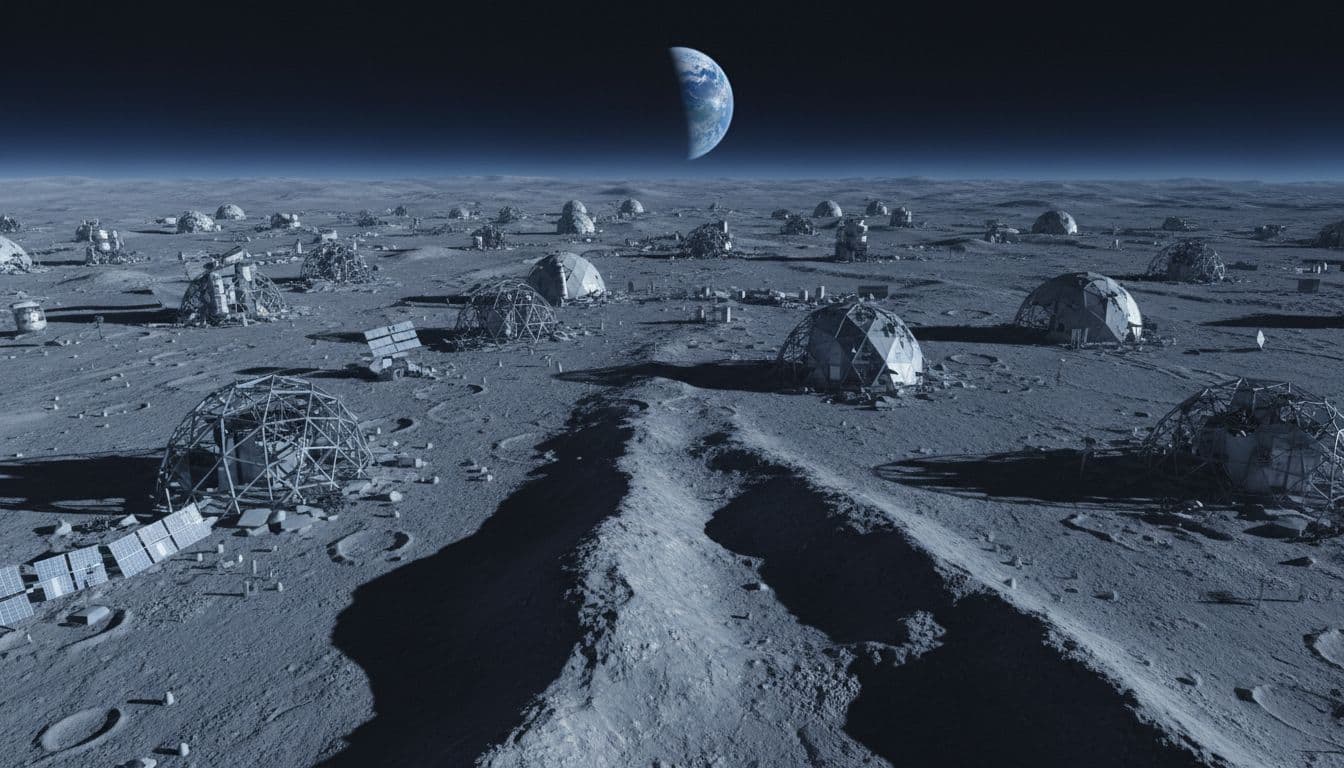
The moon is not new territory for science fiction, but Pragmata uses it well. The setting suggests vast distance, failed systems triggered by a rogue AI, and the sort of silence that makes every movement feel exposed. Public footage has leaned into that emptiness, with barren surfaces, hard shadows and interiors that look maintained by machines rather than people.
AI-generated image of the ruined lunar research station.
That is a smart choice. A ruined station on Earth can still feel reachable. A ruined station on the moon feels sealed off. Every corridor carries the weight of distance. Every open exterior shot suggests that survival depends on damaged technology holding together for a few more minutes. The premise gets much of its force from that isolation, and the game’s strongest early images understand it.
The astronaut and the child at the heart of the story
At the centre of the game is an unusual pair, Hugh Williams in his suited astronaut gear and a small companion called Diana. She appears child-like, yet also artificial or enhanced, with a design that hints at something more complex than a standard sidekick role. The relationship is the game’s most distinctive idea.
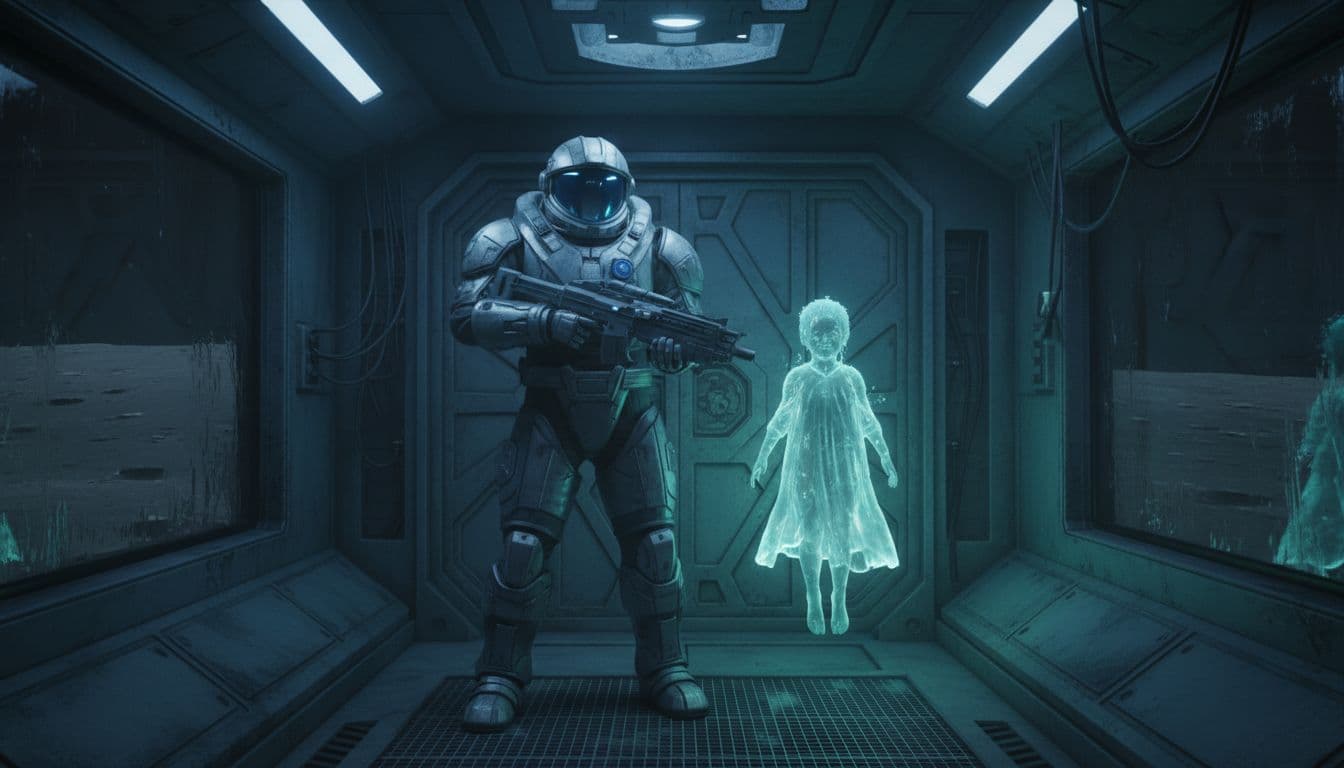
AI-generated image of Hugh Williams and Diana inside the lunar base.
The contrast works at once. The astronaut is heavy, opaque and mechanical. Diana looks lighter, more fragile and more mysterious. That split changes the emotional pitch. Instead of a lone hero fantasy, the game suggests a story built on trust, risk and mutual need. If that bond is written with care, Pragmata could carry real emotional weight. If it is shallow, much of the concept loses its force.
Why the idea has drawn so much attention
Some of the attention comes from reputation. Capcom has spent years building trust through polished releases, and that gives any new project a stronger starting point. But reputation alone does not keep interest alive through long gaps. Pragmata has done that because its imagery is easy to remember.
There is also the fact that it doesn’t look like a routine prestige action game. The public material has preferred mystery to explanation. That can frustrate, but it can also help. In a crowded market, a game that withholds information often holds attention longer than one that explains every system up front. Pragmata has turned absence into part of its identity.
The gameplay questions that still shape the conversation
The strongest reaction to Pragmata has not been certainty. It has been curiosity mixed with caution. The footage suggests action, exploration, hacking, puzzle work and some form of dual-character system in this single-player third-person perspective experience, but the full shape of those systems is still hard to pin down.
That uncertainty is not a flaw in itself. However, it does place more pressure on the final design to prove that the game’s mood is matched by mechanical clarity.
How the action and puzzle elements may fit together
Early gameplay has hinted that the combat system may depend on more than shooting. Some sequences suggest enemy bots require a layer of disruption or the hacking mechanic before they can be attacked properly. If that reading is right, then Pragmata is trying to combine real-time pressure with brief moments of tactical problem-solving.
That could be a strength. Action games often flatten into routine once their combat loop is clear. A system that asks for timing, target choice and rapid puzzle input could keep encounters tense. Still, the danger is obvious. If the puzzle layer slows the action too much, fights could turn clumsy. If it is too light, it risks feeling like decoration rather than design. So far, the idea is attractive because it looks slightly awkward in an interesting way. The final question is whether it plays with rhythm or with friction.
Why the companion system could define the whole experience
Diana may be more than a story device. The footage points to a structure where she actively supports combat and progression, perhaps through hacking interfaces, opening routes or exposing enemy weaknesses. That would make the relationship central to the game, not merely sentimental.
The upside is clear. Companion systems often fail because they don’t matter enough. Pragmata seems to be pushing in the other direction. If the astronaut and Diana rely on one another in play as much as they do in the story, the game could gain a sense of identity that few action titles manage.
The risk is also clear. Two-character mechanics demand precision. Commands must be quick, readable and reliable. Any delay between intention and response will feel worse in a tense fight. A weak companion system would not be a minor fault here. It would cut through the whole design.
What players still do not know
For all the strong first impressions, basic questions remain open. Public footage has not yet answered them in full.
The gap between promise and proof is easy to map:
| What the footage suggests | What remains unclear |
|---|---|
| A moon-based action game with hacking elements | How mission structure works from hour to hour |
| A close bond between the astronaut and Diana | How deep that relationship goes in gameplay terms |
| Tense combat with layered mechanics | The overall difficulty and pacing |
| A polished, atmospheric presentation | The game’s length and replay value |
| A focused sci-fi story | Whether the structure is linear, semi-open or more open-ended |
That gap explains the tone around Pragmata. Expectations are high because the concept is strong. They remain unfinished because the practical shape of the game still sits behind the curtain.
How Pragmata looks and sounds so far
Presentation is where the game has been most convincing. Even limited footage of this upcoming title for PlayStation 5, Xbox Series X/S, and Steam has shown a world with a clear visual language and a controlled sense of mood. It does not chase clutter or spectacle for its own sake.
Instead, it uses contrast, heavy against delicate, bright interfaces against dead space, human motion against machine order.
Visual design that leans into silence and scale
Pragmata’s art direction, built using Capcom’s RE Engine with ray tracing and path tracing, is clean, but not sterile. Metal corridors, open lunar surfaces and sparse interface elements create a world that looks advanced yet damaged. The design does not rely on constant noise. It trusts emptiness, and that gives the environments room to breathe.
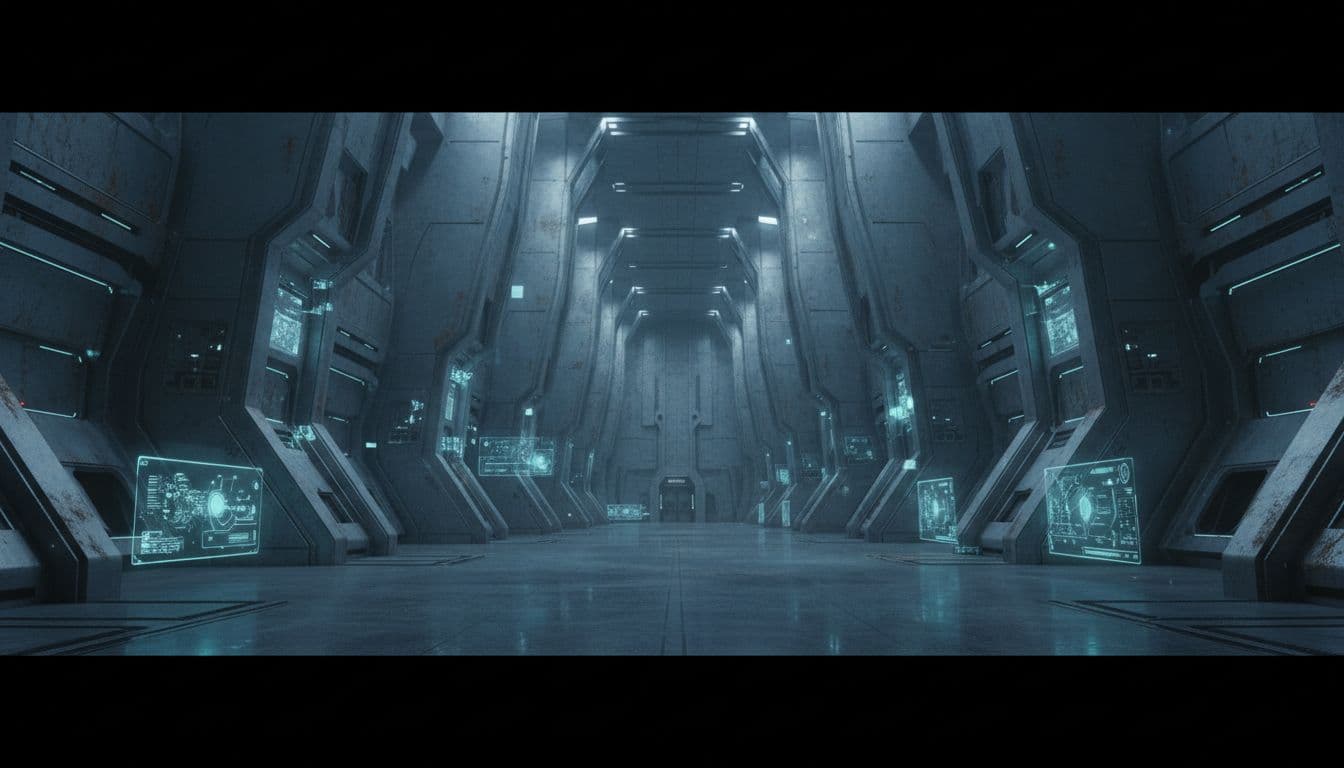
AI-generated image of the lunar station’s scale and desolation.
The contrast between the bulky Hugh Williams suit and Diana’s lighter form is especially effective. It creates a visual shorthand for the game’s larger tensions, protection and exposure, hardware and code, force and fragility. First impressions count in games like this. Pragmata has made a strong one because its images are easy to recognise after only a few scenes.
Sound and atmosphere as part of the storytelling
Sound appears to follow the same restraint. Footage has leaned on mechanical hums, distant impacts and quiet stretches rather than an overbearing score. That gives the world a sense of place. A lunar facility should sound pressurised, enclosed and faintly wrong. Pragmata seems to understand that.
This matters because atmosphere is not separate from story. If every corridor carries small signs of machine life, the player feels the station before the plot explains it. If footsteps, doors and alarms have weight, the world gains credibility. A game built on mystery cannot afford a careless audio design. So far, Pragmata’s soundscape looks like one of its stronger assets.
What Pragmata could mean for Capcom if it lands well
Capcom does not need a new science-fiction property to survive. It does, however, benefit from proving that it can still build one. Original projects carry more risk than sequels, but they also test whether a publisher can create interest without relying on inherited loyalty. Pragmata serves as a useful measure here, sitting outside the company’s most familiar lines while carrying major-production ambition, even as Capcom works to overcome development hell.
A chance to build a new sci-fi series
If the game lands, Capcom gains more than a one-off success. It gains a new setting, new characters and a world that could support future stories. That matters in a market crowded with remakes, remasters and sequel logic. New properties are harder to establish because they must build everything at once: tone, mechanics, audience trust and recognisable imagery. The Sketchbook demo stands out as a key piece of public footage that has kept interest alive.
Pragmata already has one advantage. People remember it. The moon, the suit, the child, the eerie stillness; these are clear hooks. A strong first game, projected for April 17 2026, could turn that recognition into a durable series, perhaps with options like a Deluxe Edition, a Diana amiibo or support for the Nintendo Switch 2.
The risk of being remembered more for ambition than delivery
There is another path, and large games have taken it before. A striking reveal can create an image of a game that the finished work cannot match. Long silences then make that image even harder to satisfy. Pragmata is close to that line because its idea is so strong in outline.
That does not mean failure is likely. It means the final game must convert mood into structure. Beautiful trailers and careful mystery can start attention, but they cannot finish the job. If the mechanics prove thin or the story leans too heavily on suggestion, the project may be remembered as an elegant concept that never found its final shape.
Frequently Asked Questions
What is Pragmata about?
Pragmata is a sci-fi action-adventure game set in a damaged lunar research station, following astronaut Hugh Williams and his child-like companion Diana as they navigate isolation, rogue AI threats, and mutual dependence. The story emphasises an intimate, unsettled tone rather than triumphant space opera, with hacking, combat, and exploration mechanics. Public footage highlights the duo’s contrasting designs and the moon’s vast emptiness for atmospheric impact.
What platforms will Pragmata release on?
Pragmata is slated for PlayStation 5, Xbox Series X/S, and Steam. It leverages Capcom’s RE Engine with ray tracing and path tracing for polished visuals. No Nintendo Switch 2 confirmation exists yet, though future support like a Diana amiibo is speculated.
When is the release date for Pragmata?
The game is projected for release on 17 April 2026, after a prolonged development marked by uncertainty. This timeline follows trailers and demos like the Sketchbook footage that have sustained interest. Capcom aims to overcome past ‘development hell’ to meet high expectations.
What are the biggest risks for Pragmata?
The primary risks lie in gameplay execution, particularly the companion system and layered combat-puzzle integration, which could feel clumsy or shallow if not refined. Unclear mission structure, pacing, and replay value also loom large. A strong emotional core and visuals provide a solid foundation, but mechanical clarity is essential.
Could Pragmata become a new Capcom series?
Yes, success could establish Pragmata as a durable sci-fi franchise, building on its memorable imagery and unique identity outside Capcom’s familiar lines. It offers hooks like the moon setting and character duo for sequels or expansions. However, it must convert atmospheric promise into engaging structure to avoid being remembered for ambition over delivery.
Final assessment
Pragmata remains memorable because it pairs mystery with a sharp visual identity and an unusual partnership at its core. The bond between Hugh Williams and Diana stands as the emotional heart, promising depth amid the game’s lunar intrigue. Even in fragmentary form, it looks different from much of the current action market, and difference still has real value.
At the same time, this is a game defined by possibility more than proof. The moon setting, the astronaut and Diana, hints of layered play with IDUS, 3D printers, and Lunafilament, all point towards something distinctive. Whether those parts lock together is still the question that matters.
New science-fiction games rarely generate this much interest before release unless they have already shown a clear voice. Pragmata has done that. Now it has to show the rest, especially with high metascore expectations on the line.
Explore our Buyers Guides and Reviews
For a list of our main buyers guides use the drop-down menu at the top of the page. Topics related to this article are:
Kitchen Appliances Buyers Guides
–
Explore Our Blog Categories for Expert Buying Advice
- AI Powered Product Finder Tools (25)
- Expert Buying Guides & Shopping Tips for UK Shoppers (1,367)
- Brands & Designer Products (Men, Women & Electronics) (273)
- Designer Fashion Brands: Buyer’s Guides & Reviews (153)
- Electronic Brands: Buyers Guides & Reviews (86)
- Apple Products Buyer’s Guides & Reviews (24)
- Brands – Phones, Laptops, PC”s, Tablets | Buyer’s Guides & Reviews (42)
- Electronics – Tablet & iPad Reviews and Buyers Guides (11)
- Kitchen Appliance Brands: Buyer’s Guides & Reviews (22)
- Laptop Brands & MacBooks Buyer’s Guides & Reviews (9)
- Phone Brands & iPhones Buyer’s Guides & Reviews (23)
- Car Buying & Financing Made Easy | Expert Guides for the UK (89)
- Clothing, Fashion & Accessories Buying Guides UK (454)
- Beauty, Health & Wellness | Perfume, Skincare, Makeup & Wellbeing Guides (165)
- Footwear: Trainers & Shoes Buyers Guides (46)
- Jewellery: Expert Reviews, Trends & Buying Guides (71)
- Men's Clothes — Buyers Guides & Reviews (38)
- Men’s Clothes, Fashion & Accessories Guides UK | Latest Trends & Smart Shopping (156)
- Women's Clothing Buyers Guides — Dresses, Tops & More (173)
- Women’s Clothes, Fashion & Accessories Guides UK | Latest Trends & Smart Shopping (395)
- Electronics, Tech & Gadgets: Reviews, Deals & Buying Guides UK (170)
- Furniture Buyer’s Guides | Home & Garden & Styling Tips (313)
- Bedroom Furniture Guides UK | Expert Tips & Best Value Deals (91)
- Garden Furniture, Landscaping & Garden Rooms Guides UK | Expert Tips & Best Value Deals (158)
- Garden Sofa & Sofa Sets Buyers Guides (11)
- Garden Tables & Chairs: Sets, Individual Tables & Seating Buyers Guides (42)
- Home Furniture, Décor & Interior Design Guides UK | Styling Tips & Inspiration (167)
- Living Room Furniture, Design & Décor Guides UK | Styling Tips & Inspiration (57)
- Sofa & Sofa Beds Buyers Guides (19)
- Sofa Beds Buyers Guides (7)
- Sofa Buyers Guides & Expert Advice (11)
- Holidays & Travel: Hotels, Villas & Flights (158)
- Home & Garden Improvements | Renovations & Outdoor Transformation Guides (99)
- Insurance & Protection: Travel, Landlord, Gadget & More UK (159)
- Gadget Insurance UK | Expert Guides, Reviews & Smart Protection Tips (33)
- Home Emergency Cover UK | Expert Guides, Reviews & Practical Protection Tips (21)
- Landlords Insurance UK | Expert Guides, Reviews & Smart Protection Tips (31)
- Travel Insurance UK | Expert Guides, Reviews & Money-Saving Tips (34)
- Pets: Guides, Tips & Inspiration (26)
- Brands & Designer Products (Men, Women & Electronics) (273)
- Gifts for Everyone: Ideas for Every Occasion & Budget (45)