A short break can feel thin in the wrong city. Bristol, the hub of South West England, usually avoids that problem. It is compact, lively and varied, with enough history, green space, food and culture to fill a weekend without turning it into hard work.
That balance is what gives Bristol its pull. It suits a family trip, a couple’s escape, a solo stay or a few days with friends. It is also easy to reach from much of the UK, and booking online makes the process simpler, because travel times, room choices and budget checks can sit in one place before the journey starts.
Key Takeaways
- Bristol delivers a compact, lively city break blending harbour history, Clifton views, street art and independent food spots, without the exhaustion of larger cities.
- Focus a first trip on Harbourside (museums, walks), Clifton Suspension Bridge and neighbourhoods like Stokes Croft for a balanced mix of sights and character.
- Easily reached by train, coach or airport; prioritising walkable centre or waterside stays keeps planning simple and friction low.
- Suits families, couples or solos with flexible pacing—book online to align transport, rooms and budgets upfront.
- Thrives in mild spring or autumn weather, with markets, pubs and cafés adding everyday appeal to any short stay.
What makes Bristol worth visiting?
Bristol has the range of a larger city, but it rarely feels swollen or impersonal. The harbour, River Avon, old streets and hills hold its past in plain sight. At the same time, its cafés, music venues, markets and murals keep the place rooted in the present.
For a short break, that matters. A city can have great museums and still feel tiring. Bristol works because its main districts join up well. A morning by the water, an afternoon in Clifton and an evening meal in an independent restaurant can all fit into one day.
A city shaped by Bristol Harbour, trade, and reinvention
Bristol Harbour is the city’s spine. For centuries, Bristol’s maritime history of trade and shipbuilding shaped the city’s money, power and layout. Those links also carry a harder history, including wealth built through the slave trade. The city does not hide that past, and several museums and public spaces place it in view.
Today, the old docks tell a different story. Warehouses, quays and former industrial buildings now sit beside galleries, flats, cafés and cultural venues. The change is visible on foot. A short walk can move from cobbled streets to modern waterside paths without much effort.
Why Bristol feels different from other UK cities
Some UK cities feel organised around chains, office blocks and traffic. Bristol has those elements, but they do not dominate the mood. Independent shops still matter here, and street art is not tucked away as a novelty. It is woven into ordinary routes.
The pace also helps. Bristol is busy, but it is less relentless than London or Manchester. For travellers who want a city break without a packed timetable, that difference is practical. There is enough to do, yet space remains for walking, browsing and stopping without a sense of falling behind.
The places in Bristol that belong on a first trip
A first visit does not need an endless checklist. Bristol opens up best through a few strong districts rather than a frantic sweep across the map.
Harbourside and the city centre
The Harbourside is the natural place to begin. It brings together museums like M Shed and the SS Great Britain (designed by Isambard Kingdom Brunel), waterside paths, cafés and easy links to the station and bus routes. For first-time visitors, it cuts out wasted time.
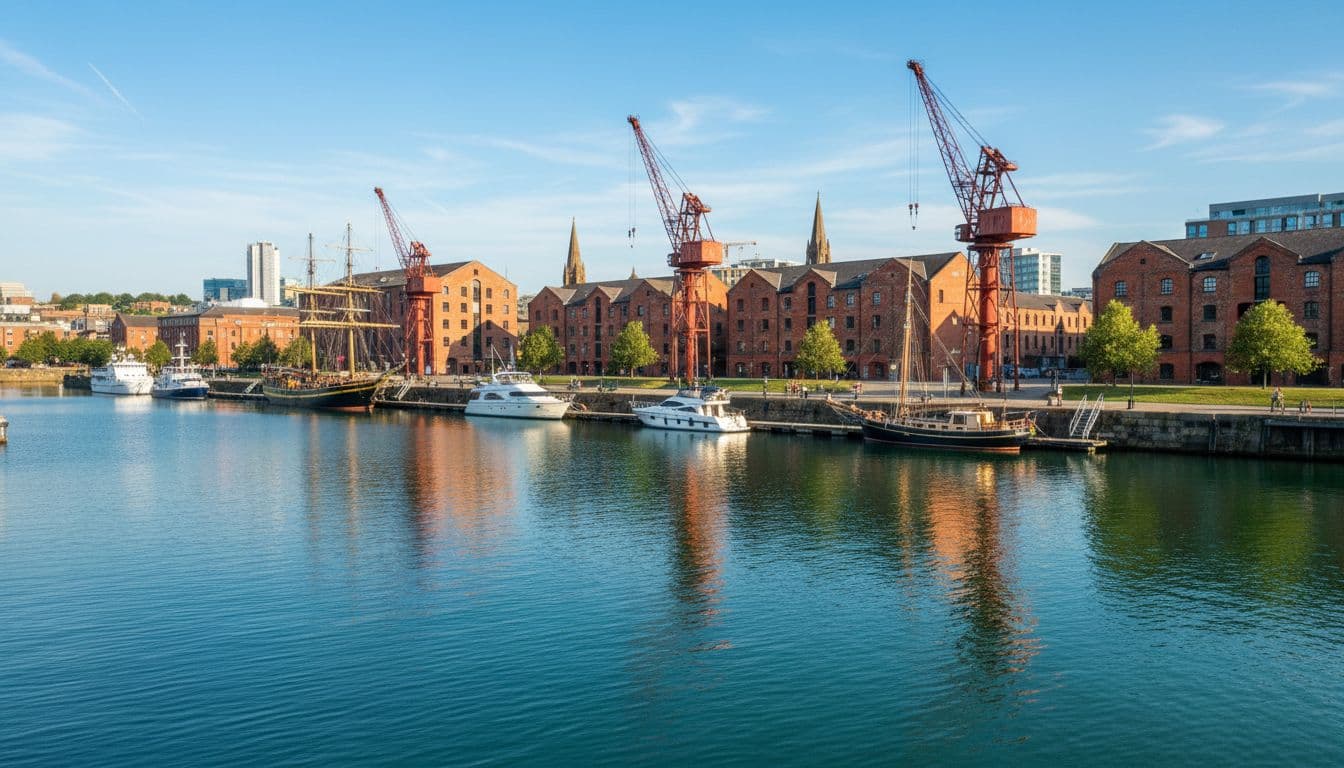
AI-generated image: the harbourside is where much of a first Bristol walk begins.
The area around the water feels open and readable. M Shed offers a clear sense of local history, whilst nearby routes lead towards the city centre and Old City, home to must-visit cultural spots like Bristol Cathedral and Bristol Museum & Art Gallery. Broadmead provides central shopping options too. Staying close to this area often makes sense for a short visit, because much of the city can then be reached on foot.
Clifton, the Clifton Suspension Bridge, and the views above the city
Clifton shows another side of Bristol. The terraces are elegant, the streets are quieter and the pace slows. Independent shops, coffee spots and small food places give the area life without making it feel overdone.
The Clifton Suspension Bridge remains the city’s signature landmark for good reason. It is dramatic without feeling theatrical, and the views across the Avon Gorge give a sense of Bristol’s shape.

AI-generated image: Clifton and the bridge offer Bristol’s most recognisable skyline.
A walk here works well late in the day, when the light lifts the stone and the city spreads out below.
Street art, neighbourhood character, and lesser-seen corners
Bristol’s street art is famous (thanks to artists like Banksy), but the appeal is broader than a hunt for well-known names. Areas such as Stokes Croft and Bedminster show how public art sits alongside everyday life. Murals share space with takeaways, corner shops and music venues.

AI-generated image: street art is part of Bristol’s daily streetscape, not a separate attraction.
These neighbourhoods reward a slower hour or two. They are useful not because they are hidden gems, but because they round out the city’s character beyond the postcard view.
How to spend a day or two in Bristol without feeling rushed
Bristol punishes over-planning less than many cities, yet a rough shape helps. The most successful short stays leave room for pauses. That usually means one main district in the morning, one in the afternoon, then an easy evening by the water or in a neighbourhood pub.
Bristol works best when the visit has some slack in it.
A simple one-day Bristol plan
A sensible one-day route starts at Bristol Temple Meads or the city centre, then moves towards the harbourside. That gives time for a museum, a waterside walk and lunch without constant doubling back.
After that, Clifton fits well as the second half of the day. The climb changes the pace, and the bridge delivers the main landmark without fuss. Evening can then return to the water or a central dining spot. This plan covers Bristol’s essentials, but it still leaves breathing room.
What a longer stay makes possible
An extra night changes the mood of the trip. Museums no longer compete with neighbourhood walks, and Bristol Harbour offers more to explore over 48 hours. Families can add child-friendly stops, while seasonal visits can include the Balloon Fiesta at Ashton Court; couples can linger over dinner instead of watching the clock for a train home.
Bristol also works as a base. Bath is close, and parts of Somerset are within easy reach. That makes the city useful for travellers who want an urban break with the option of a day trip.
Getting to Bristol and moving around the city
For UK travellers, Bristol is straightforward to reach. The city’s draw is not only what is there, but how little friction sits around the journey.
Arriving by train, coach, or car
Flying into Bristol Airport offers a convenient option for international or domestic flights. Rail suits many short breaks because Bristol Temple Meads is well connected and close to the centre. Coach travel can cost less, though it often takes longer. Driving gives the most freedom for wider south-west plans, especially when Bristol is paired with Somerset, Devon or Cornwall, but note that vehicles may need to pay the Clean Air Zone charge, an initiative managed by Bristol City Council.
Online booking simplifies these choices. Train and coach times can be compared side by side, and room locations can be checked against arrival points before money is spent. That helps keep transport costs, late arrivals and awkward transfers under control.
Walking, buses, and cycling inside Bristol
Once in Bristol, walking often makes the most sense. The centre, harbourside and parts of Clifton join up well, though the hills can catch out anyone expecting a flat city.
Buses fill the gaps, and bikes are useful for longer stretches. Those options matter because parking can be expensive and stressful near popular areas. For many visitors, leaving the car still and moving on foot or by bus is the easier choice.
Where to stay for the kind of trip being planned
Location shapes a Bristol break more than star rating does. A room near the wrong area can add time, hills and transport costs that were not obvious when the booking looked cheap. The high standard of local parks and public spaces, maintained by Bristol City Council using revenue like Council tax, contributes to the appeal of these neighbourhoods.
This quick comparison helps narrow the choice:
| Area | Best for | Feel | Main trade-off |
|---|---|---|---|
| Harbourside and centre | First trips, short stays | Busy, practical, walkable | More noise in peak periods |
| Clifton | Couples, slower weekends | Smart, scenic, calmer | Hills and longer walk to some sights |
| Waterside edges near the centre | Families, easy access | Relaxed, convenient | Fewer late-night options nearby |
The best area depends on the trip’s shape, not on a universal rule.
Best areas for first-time visitors
Most first-time visitors do well in the centre or by the harbourside. Those areas reduce travel time and make it easy to return for a rest. Clifton suits travellers who want a quieter base and do not mind the slope between districts.
Families often benefit from somewhere near the water, where paths are flatter and attractions are close together. Friends who plan late dinners may prefer central streets with stronger evening life.
What to look for when booking online
Booking online helps most when it is used for comparison rather than speed. Check Visit Bristol for official recommendations alongside other sites. A map view can expose a long uphill walk that a written description softens. Room photos can reveal whether a family room is truly spacious or only labelled that way.
Up-to-date details also matter. Breakfast times, parking rules, cancellation terms and check-in hours can affect the whole trip. When transport, accommodation and rough spending are checked together, Bristol becomes easier to budget for. That means fewer surprises after arrival and less time lost to patching up poor choices.
Food, drink, and local places that help Bristol feel alive
Eating in Bristol is part of the trip, not a gap between attractions. The city has enough range to support a weekend of casual bites, good coffee and one more thoughtful evening meal.
Markets, casual lunches, and independent cafés
Markets and food halls make sense for short stays because they save time without flattening the local feel. A decent breakfast can come from an independent café, lunch can be picked up near the water, and snacks are easy to find between museums or walks.
That matters for value as well. Bristol is not the cheapest city in Britain, but it can still be done well without leaning on expensive dining rooms for every meal.
Pubs, riverside spots, and evening dining
By evening, the city changes gear rather than pace. Pubs fill, waterside tables gain appeal in fair weather, and smarter dining rooms take over for those treating the trip as a proper escape. Sports fans will appreciate the lively match-day atmosphere in pubs near the stadiums for Bristol City FC and Bristol Rovers FC, which adds to the independent local character.
The useful point is choice. One night can end with a quick burger and a pint, the next with a longer dinner in Clifton or the centre. Those options shape the tone of the break as much as any museum ticket.
When Bristol works best, and who it suits most
Bristol is strongest in mild weather, when the harbour, parks and bridge walks come into their own. Spring and early autumn often show the city at its best, because outdoor time feels pleasant and the streets are active without the pressure of peak summer crowds.
The city suits couples, friends, solo travellers and families because it allows different speeds of travel. A museum-heavy weekend works here, particularly for history buffs exploring Bristol’s aerospace industry heritage like the Concorde museum, but so does a looser trip built around coffee, walking and food, or soaking up the vibrant academic atmosphere near the University of Bristol. Bristol rewards curiosity more than box-ticking, and that is a useful quality in a short break.
Frequently Asked Questions
Is Bristol suitable for a short weekend break?
Yes, Bristol’s compact layout and connected districts make it ideal for a weekend. A day can cover harbourside museums, Clifton walks and evening food without rushing. The city’s balance of history, culture and green space avoids the fatigue of bigger UK cities.
What are the must-see areas for first-time visitors?
Start at the Harbourside for museums like M Shed and SS Great Britain, plus waterside paths. Head to Clifton for the Suspension Bridge and elegant streets. Add Stokes Croft or Bedminster for street art and local vibe, all reachable on foot or short bus rides.
How do I get to Bristol and get around?
Trains to Temple Meads or coaches work well for UK travellers; Bristol Airport suits flights. Once there, walk the centre and harbourside, use buses for hills or rent bikes. Driving offers flexibility for day trips but watch Clean Air Zone charges.
Where should I stay in Bristol?
Harbourside or centre suits short, practical trips with easy access. Clifton offers calmer, scenic stays for couples. Families may prefer waterside edges for flat paths and proximity to attractions—check maps online to avoid unexpected hills.
When is the best time to visit Bristol?
Spring and early autumn shine, with mild weather perfect for harbour walks and parks. Avoid peak summer crowds if possible. Events like the Balloon Fiesta add seasonal draw, while the vibe suits indoor-outdoor plans year-round.
Conclusion
Bristol holds together in a way many short-break cities do not. History, public art, green space, food and everyday city life sit close enough to feel connected.
That is why planning matters. Booking online can make the trip easier to judge before it begins, from transport times to room location and likely costs. The city then has room to do what it does best, which is offer more than a list of sights and leave a stronger impression than its size suggests.
Explore our Buyers Guides and Reviews
For a list of our main buyers guides use the drop-down menu at the top of the page. Topics related to this article are:
Skiing Holidays Booking Guides
–
Explore Our Blog Categories for Expert Buying Advice
- AI Powered Product Finder Tools (25)
- Expert Buying Guides & Shopping Tips for UK Shoppers (1,373)
- Brands & Designer Products (Men, Women & Electronics) (274)
- Designer Fashion Brands: Buyer’s Guides & Reviews (153)
- Electronic Brands: Buyers Guides & Reviews (87)
- Apple Products Buyer’s Guides & Reviews (24)
- Brands – Phones, Laptops, PC”s, Tablets | Buyer’s Guides & Reviews (42)
- Electronics – Tablet & iPad Reviews and Buyers Guides (11)
- Kitchen Appliance Brands: Buyer’s Guides & Reviews (22)
- Laptop Brands & MacBooks Buyer’s Guides & Reviews (9)
- Phone Brands & iPhones Buyer’s Guides & Reviews (23)
- Car Buying & Financing Made Easy | Expert Guides for the UK (89)
- Clothing, Fashion & Accessories Buying Guides UK (456)
- Beauty, Health & Wellness | Perfume, Skincare, Makeup & Wellbeing Guides (166)
- Footwear: Trainers & Shoes Buyers Guides (46)
- Jewellery: Expert Reviews, Trends & Buying Guides (71)
- Men's Clothes — Buyers Guides & Reviews (39)
- Men’s Clothes, Fashion & Accessories Guides UK | Latest Trends & Smart Shopping (157)
- Women's Clothing Buyers Guides — Dresses, Tops & More (175)
- Women’s Clothes, Fashion & Accessories Guides UK | Latest Trends & Smart Shopping (397)
- Electronics, Tech & Gadgets: Reviews, Deals & Buying Guides UK (171)
- Furniture Buyer’s Guides | Home & Garden & Styling Tips (315)
- Bedroom Furniture Guides UK | Expert Tips & Best Value Deals (91)
- Garden Furniture, Landscaping & Garden Rooms Guides UK | Expert Tips & Best Value Deals (160)
- Garden Sofa & Sofa Sets Buyers Guides (11)
- Garden Tables & Chairs: Sets, Individual Tables & Seating Buyers Guides (44)
- Home Furniture, Décor & Interior Design Guides UK | Styling Tips & Inspiration (167)
- Living Room Furniture, Design & Décor Guides UK | Styling Tips & Inspiration (57)
- Sofa & Sofa Beds Buyers Guides (19)
- Sofa Beds Buyers Guides (7)
- Sofa Buyers Guides & Expert Advice (11)
- Holidays & Travel: Hotels, Villas & Flights (159)
- Home & Garden Improvements | Renovations & Outdoor Transformation Guides (99)
- Insurance & Protection: Travel, Landlord, Gadget & More UK (159)
- Gadget Insurance UK | Expert Guides, Reviews & Smart Protection Tips (33)
- Home Emergency Cover UK | Expert Guides, Reviews & Practical Protection Tips (21)
- Landlords Insurance UK | Expert Guides, Reviews & Smart Protection Tips (31)
- Travel Insurance UK | Expert Guides, Reviews & Money-Saving Tips (34)
- Pets: Guides, Tips & Inspiration (26)
- Brands & Designer Products (Men, Women & Electronics) (274)
- Gifts for Everyone: Ideas for Every Occasion & Budget (45)