Curious about trying a full suspension electric mountain bike, but confused by all the jargon and high prices? You are not alone.
In simple terms, this type of bike has suspension at the front and rear, plus an electric motor that helps when you pedal. On UK trails, bridleways, forest tracks, and rough lanes, that mix can turn tiring slogs into fun, confidence-boosting rides.
This guide explains what a full suspension e-MTB is, who it suits, and which features matter. By the end, you should feel ready to compare models and prices calmly, without pressure or brand hype.
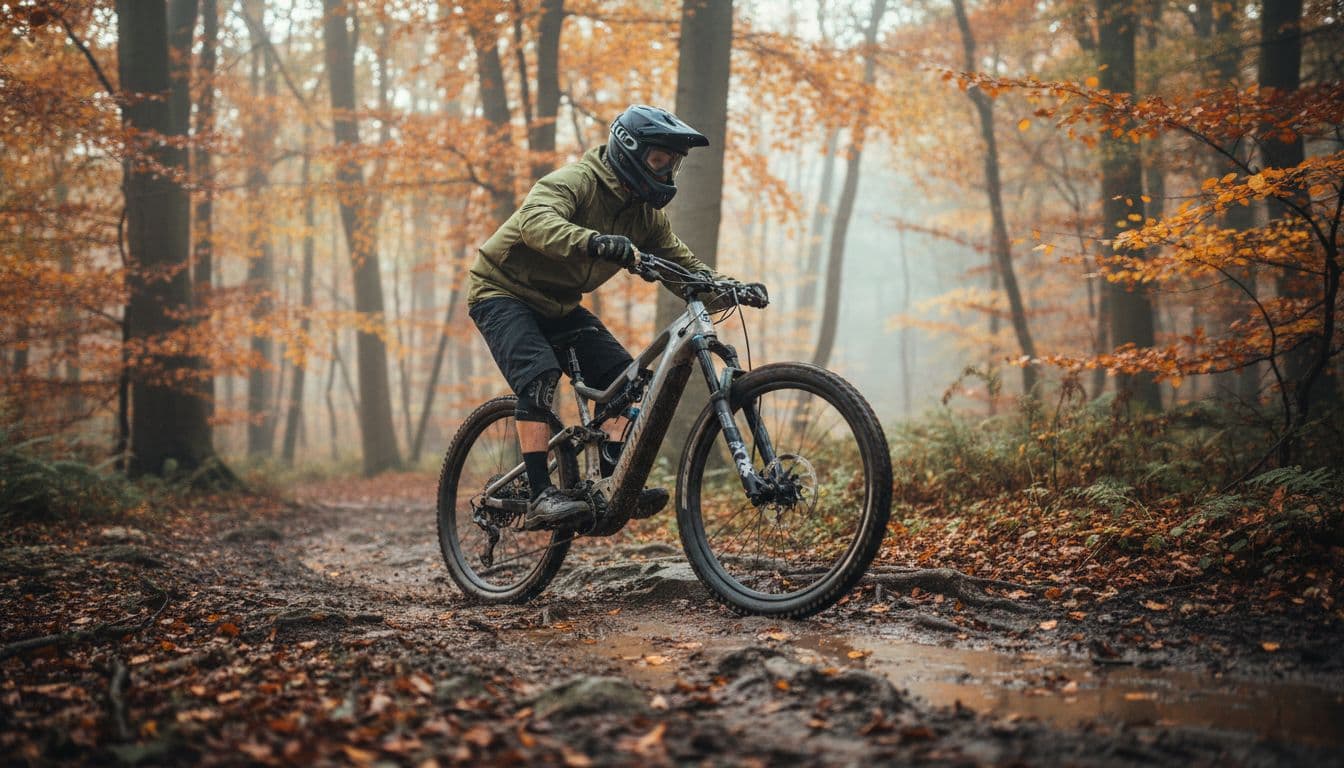
Full suspension electric mountain bike on a muddy UK forest trail. Image generated by AI.
What Is a Full Suspension Electric Mountain Bike?
A full suspension electric mountain bike, often called a full suspension e-MTB, is a mountain bike with:
- Suspension at the front and rear
- An electric motor and battery that help you pedal
Think of it as a normal mountain bike that feels softer over bumps, and gives you a gentle push on hills.
On rough UK bridleways, stony tracks, and rooty forest paths, the suspension helps keep the wheels in contact with the ground. The motor then makes it easier to climb, ride into a headwind, or carry camping kit or shopping.
How Full Suspension Differs From Hardtail and Rigid Bikes
There are three broad types of mountain bike:
- Rigid: No suspension at all
- Hardtail: Suspension at the front only
- Full suspension: Suspension at the front and rear
On smooth towpaths or tarmac, a rigid bike can feel fast and simple. Once you hit roots and rocks, it starts to feel harsh. Your hands, arms, and back take every bump.
A hardtail softens the front of the bike. The fork absorbs hits from potholes and stones, which helps with control. The rear still feels firm, so you may feel kicks through the saddle on rougher tracks.
A full suspension bike adds a rear shock. This lets the back wheel move up and down over lumps instead of bouncing you out of the saddle. The bike feels more planted on loose, rocky or muddy sections, which can be a big help if you are new to off-road riding.
The trade-offs are clear. Full suspension e-MTBs are usually heavier and more expensive than hardtails. In return, they are more forgiving, which is handy for new riders or anyone who prefers comfort over outright speed.
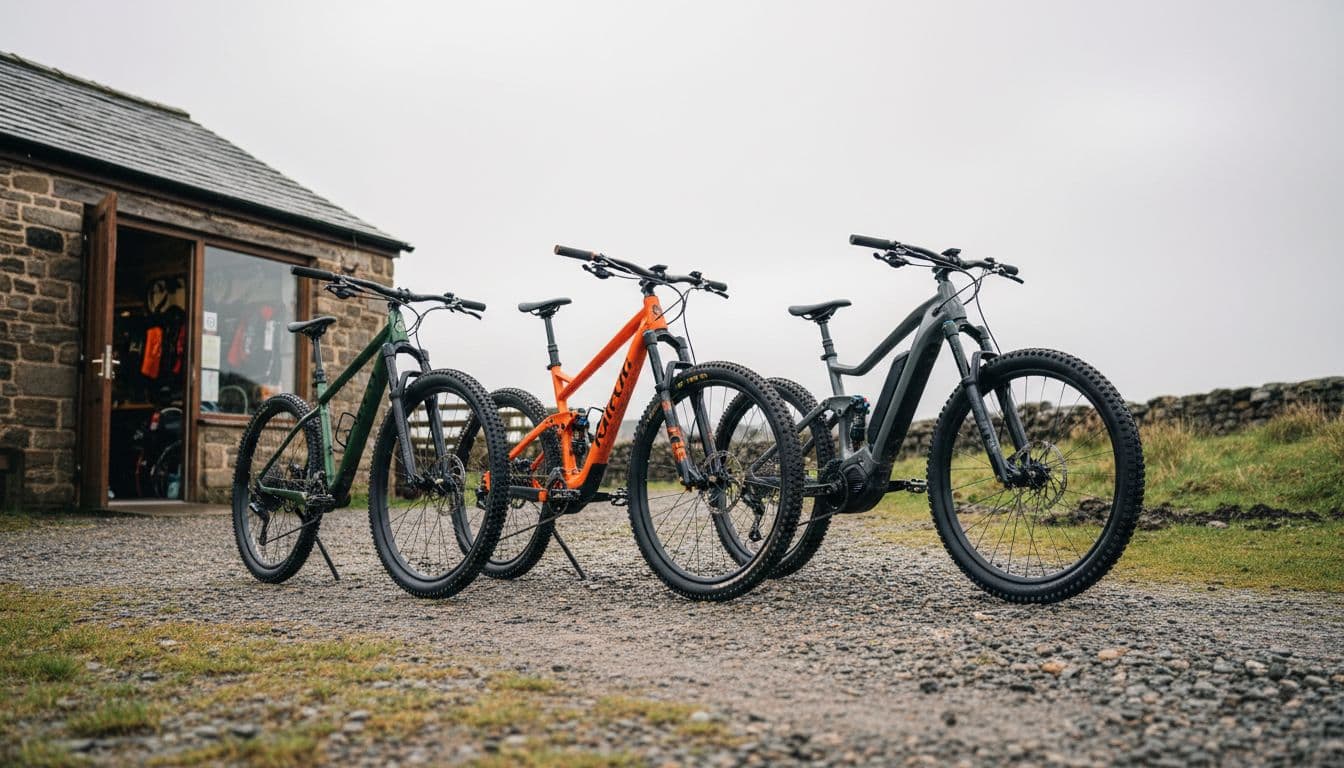
Comparison of rigid, hardtail, and full suspension mountain bikes. Image created with AI.
Key Parts That Make an Electric Mountain Bike “Full Suspension”
When you see a bike in a shop or online, these are the bits to look for:
- Frame with pivot points: Joints near the rear wheel and bottom bracket let the back of the bike move.
- Front suspension fork: The chunky tubes around the front wheel that compress over bumps.
- Rear shock: A spring and damper unit placed near the rear wheel and seat tube.
- Motor: Often built into the crank area (mid-drive) or the rear wheel hub.
- Battery: Usually sits inside or on the down tube.
- Control unit or display: A small screen or set of buttons near the handlebars.
The front fork and rear shock work together. When you hit a rock or root, both ends of the bike absorb the impact. This keeps the wheels tracking the ground instead of skipping across it.
The motor and battery are built into the frame so the weight is low and fairly central. That balance helps you stay in control on twisty singletrack and rough descents.
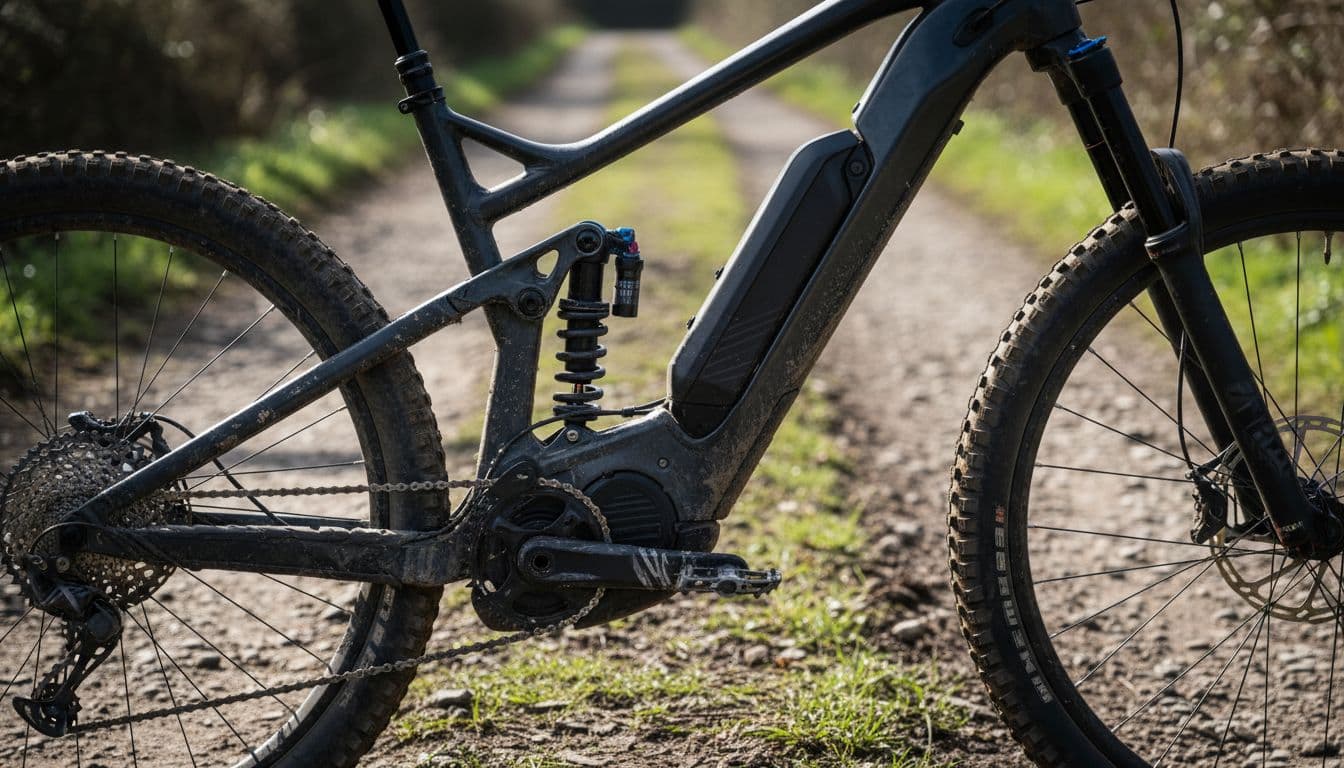
Key components of a full suspension electric mountain bike. Image generated by AI.
How Electric Assist Works on a Mountain Bike Trail
Electric mountain bikes use pedal assist. The motor only helps when you turn the pedals. It does not work like a throttle on a motorbike.
You usually pick from several assist modes, such as:
- Eco or low
- Trail or medium
- Boost or high
On a steep climb, you might use a higher mode to help keep a steady rhythm. On gentle fire roads or lanes, you can drop to eco mode to save battery.
You still get a workout. You are simply choosing how much help the motor gives on top of your effort. That means you can go further, ride more hills, or keep up with fitter friends without finishing every ride exhausted.
In the UK, most e-bikes give power support up to about 15.5 mph. Above that, the motor stops helping and you are riding under your own steam.
Is a Full Suspension Electric Mountain Bike Right for You?
Not everyone needs a full suspension e-MTB. Some riders will be happier on a simpler, lighter, or cheaper bike.
Think about where you ride now and where you would like to ride in the future. Weekend forest loops, trail centre trips, rough-lane commutes, or longer leisure rides across the countryside all place different demands on your bike.
Types of UK Riders Who Benefit Most From Full Suspension
You might be a good match for full suspension if you recognise yourself in any of these:
- New riders on rough tracks: If you are still learning, extra grip and comfort can stop every root from feeling scary.
- Older riders or anyone with joint issues: Softer hits on your back, knees and wrists can keep riding fun for longer.
- Trail centre fans: If you ride technical singletrack, rocky descents, or jump lines, the extra control is a big plus.
- Rural commuters: If your commute includes bridleways, parks, or broken tarmac, suspension can smooth the daily bumps.
Picture a wet Sunday on a Peak District bridleway, with slick rocks and deep puddles. A full suspension e-MTB helps you stay upright and keeps the ride enjoyable even when conditions are rough.
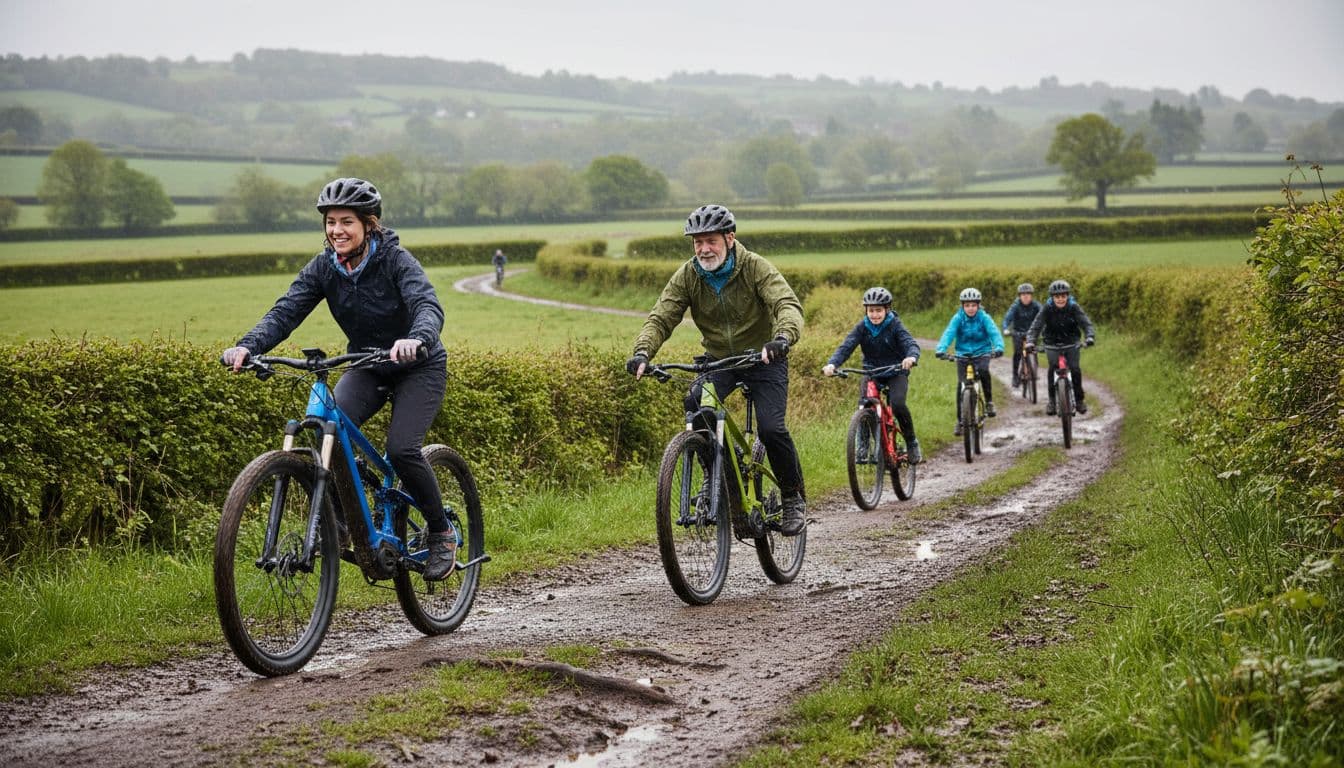
Different UK riders enjoying full suspension e-MTBs in mixed weather. Image created with AI.
When a Hardtail or Non‑Electric Bike Might Be Enough
If most of your riding is on:
- Smooth cycle paths
- Canal towpaths
- Quiet roads or light gravel
then a hardtail or even a non-electric bike could suit you better.
A hardtail has fewer moving parts than a full suspension bike, which can mean:
- Lower purchase price
- Easier servicing
- A lighter bike to lift and store
Some riders also enjoy the feeling of pedalling without motor help. They like the simplicity, and use hills as part of their fitness routine.
Comfort, Confidence, and Fitness: What Matters Most to You?
Before you dive into spec sheets, decide what really matters for you:
- Comfort on rough ground
- Confidence on steep or loose trails
- Fitness goals and how hard you want to work
A full suspension e-MTB can make nervous riders feel safer and help them keep pace with fitter friends. The trade-off is that these bikes are not usually the lightest or cheapest.
A simple exercise is to write down your top three priorities, for example:
- Comfort
- Price
- Range
Keep that list handy when you start comparing bikes.
Key Features to Compare on Full Suspension Electric Mountain Bikes
When you are ready to shortlist models, focus on a few core features. These have the biggest effect on how the bike rides and how much it costs.
Motor Power and Where the Motor Is Fitted
Most full suspension e-MTBs use a mid-drive motor, which sits in the crank area. Some use a hub motor in the rear wheel.
In plain terms:
- Mid-drive: Better balance, strong climbing, smooth power. Often feels more natural.
- Hub motor: Simpler setup, can feel more like a push from behind.
Power is usually given in watts, such as 250 W, and torque in newton metres. Rather than obsess over numbers, think about:
- Your weight and any luggage
- How steep your local hills are
- How much you value smooth, controllable power
For most UK trail riders, a quality mid-drive with good control at low speed is more useful than the highest possible torque rating.
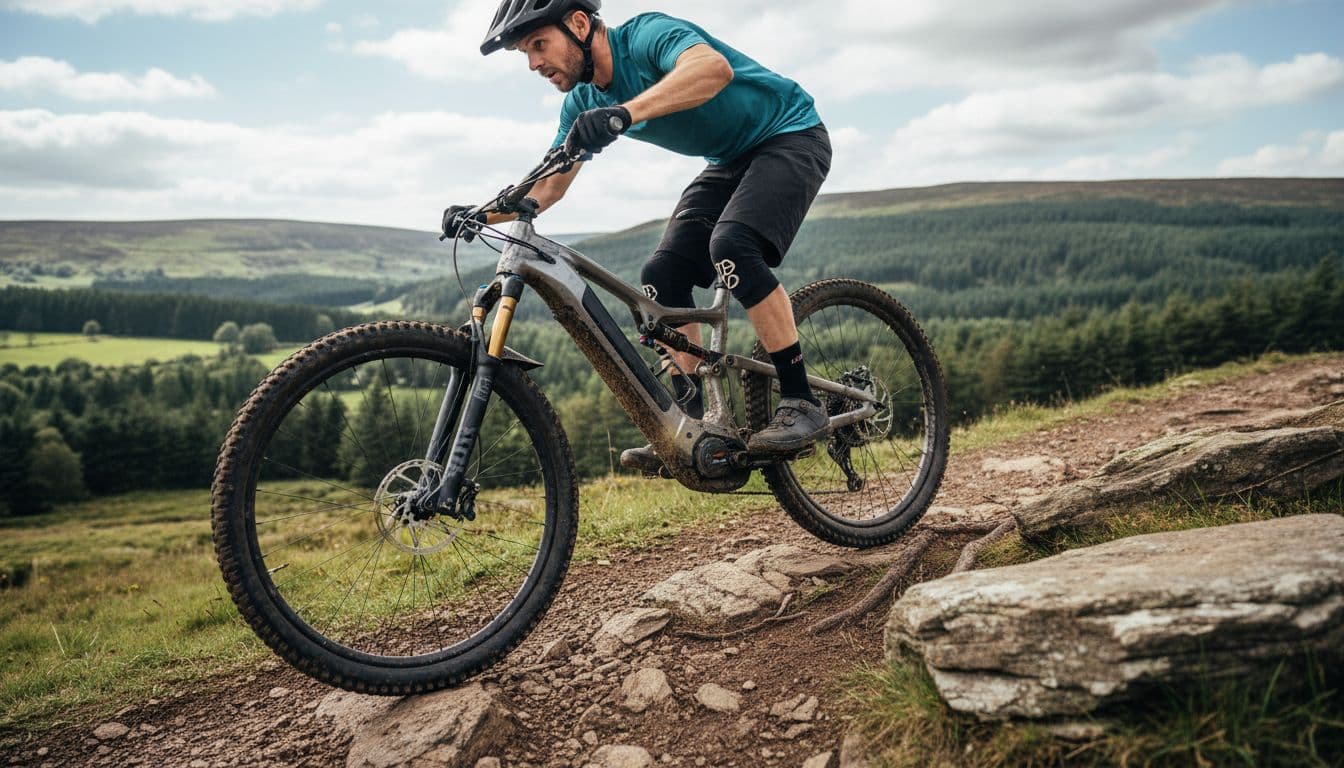
Electric assist helping on a steep UK climb. Image generated by AI.
Battery Size, Range, and How Far You Can Really Ride
Battery capacity is usually measured in watt-hours (Wh). The higher the Wh, the more energy the battery holds.
As a rough idea for mixed UK terrain:
- 400 Wh: shorter rides, for example 20–35 miles at mixed assist
- 500–600 Wh: medium rides, say 25–50 miles
- 700 Wh and above: longer days out, if used sensibly
Range depends on:
- Rider weight and luggage
- How hilly your route is
- Wind, temperature, and tyre pressure
- How high you set the assist
Some batteries are removable, so you can charge them indoors. Others are built into the frame, which looks neat but may mean charging the whole bike in the shed or hallway.
Simple range tips:
- Use lower assist on flats
- Save higher modes for steep climbs or headwinds
- Keep tyres pumped to the recommended pressure
- Ride smoothly rather than sprinting and braking hard
Suspension Travel, Adjustments, and Ride Feel
Suspension travel is how far the fork and rear shock can move. Common ranges for e-MTBs are:
- Around 120–140 mm: gentler trails, bridleways, and light trail centre use
- Around 150–170 mm: rougher tracks, rockier descents, and bike parks
More travel usually means more comfort on big hits, but can feel a bit bouncy if you mostly ride smooth paths.
Many forks and shocks offer:
- Rebound adjustment, which controls how fast the suspension returns after a bump
- Lockout or firm modes, which reduce bobbing when you climb or ride on roads
A basic but well set up suspension system is often better than a very fancy fork that is badly adjusted. Take the time to set the correct sag for your weight, and tweak rebound if the bike feels too harsh or too bouncy.
Frame Size, Geometry, and Fit for UK Riders
Frame size and shape have a huge effect on comfort and control.
Key ideas, in simple language:
- Reach: How stretched you feel from saddle to bars
- Standover height: How easily you can stand over the frame
- Riding position: More upright usually feels relaxed, more stretched feels sporty
Check each brand’s size chart, and think about:
- Your height
- Your leg length
- Whether you prefer a relaxed or sporty stance
If you can, sit on or test ride a similar style of bike. Women, men, and teenagers may all need different fits, and some brands offer shorter reach or lower standover frames that suit smaller riders better.
Brakes, Gears, and Tyres That Suit British Weather
UK weather is hard on bikes, so parts choice matters.
- Brakes: Hydraulic disc brakes give stronger, more consistent stopping in mud and rain than mechanical discs.
- Gears: A wide-range cassette at the back helps with steep climbs, especially when combined with a mid-drive motor.
- Tyres:
- Wider tyres (around 2.3–2.6 inches) give more grip and comfort
- Chunky tread helps on mud and wet roots
- Smoother tread rolls faster on tarmac but can slide more in deep mud
If you split your time between roads and trails, a mid-width, fairly grippy tyre is a good compromise.
Budget, Running Costs, and How to Save Money on a Full Suspension e‑MTB
Headline price is only part of the story. Full suspension e-MTBs also come with ongoing running costs.
Thinking about total cost over a few years can help you judge which bike is good value.
What You Can Expect at Different Price Levels
Without quoting exact figures, full suspension e-MTBs usually fall into three broad bands:
- Entry level: Shorter travel, smaller batteries, and simpler suspension parts. Fine for light trail and leisure use.
- Mid-range: Better motors, bigger batteries, stronger brakes, and smoother suspension. Often the best mix of performance and value.
- Higher-end: Lighter frames, high-spec suspension, powerful brakes, and large batteries. Aimed at keen riders who tackle tough terrain often.
If you mainly ride forest tracks and bridleways at weekends, an entry or mid-range bike will usually be more than enough.
Servicing, Spares, and Day‑to‑Day Running Costs
Electric mountain bikes weigh more and often see harder use than normal bikes. That means some parts can wear faster.
Typical regular costs include:
- Brake pads
- Chains and cassettes
- Tyres
- Suspension servicing
- Occasional safety checks or tune-ups
You can cut costs by:
- Rinsing the bike gently after muddy rides
- Keeping the chain clean and lightly oiled
- Checking tyre pressure before rides
- Fixing small issues early, before they damage other parts
Looking after the battery also helps it last longer. Avoid fully draining it every ride, and store it in a cool, dry place.
Smart Ways to Get Better Value for Your Money
A few simple habits can stretch your budget:
- Compare current and previous model years, as last year’s bikes are often discounted
- Time bigger purchases around seasonal sales
- Focus on the model that matches your real riding, not the flashiest spec list
Look at the whole package, including battery size, fork and brake quality, and warranty, not just the lowest price tag.
Practical Tips Before You Buy a Full Suspension Electric Mountain Bike
Once you have a shortlist, a few final checks can help you avoid expensive mistakes.
Try Before You Buy and What to Look For on a Test Ride
If you can test ride, pay attention to:
- How the motor feels when it kicks in
- Whether the frame size feels natural when you stand and sit
- How easy the controls and display are to use
- How the bike climbs and descends on a short loop
Good simple tests:
- Start on a small hill in different assist modes
- Shift through all the gears under light pedalling
- Try riding with full assist, then eco, then off, so you feel the difference
If you cannot test ride, look for rider reviews, check the geometry chart, and study photos of people close to your height on the bike.
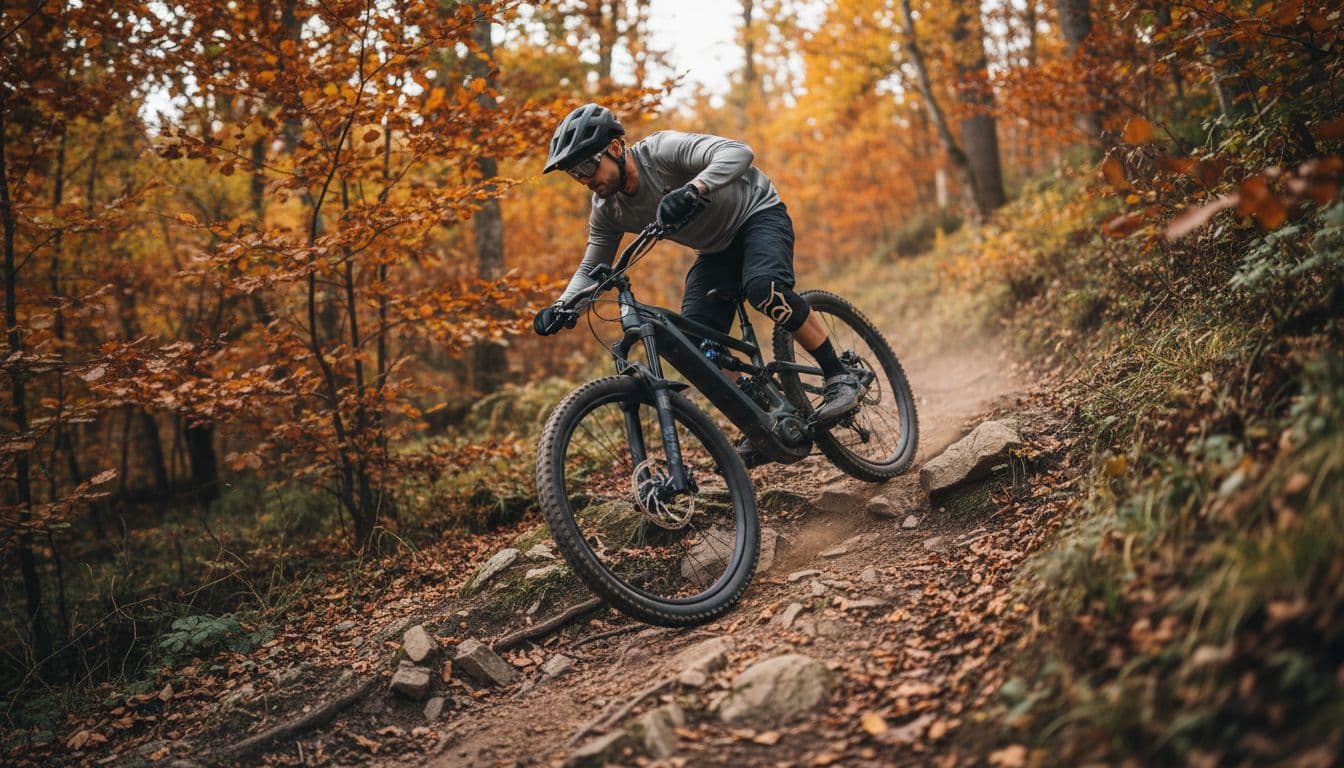
Test ride of a full suspension e-MTB on UK singletrack. Image generated by AI.
Check Safety, Warranty, and After‑Sales Support
Before you part with money, check:
- Frame and motor warranty length
- Battery coverage
- Where you can get the bike serviced in the UK
Basic safety habits matter too:
- Charge the battery with the supplied charger only
- Store the bike and battery away from extreme heat or cold
- Check brakes and tyres before each ride
Read the manual, and learn how to do simple checks at home.
Essential Accessories for UK Trails and Everyday Riding
Factor in the cost of sensible extras, such as:
- A well-fitted helmet
- Front and rear lights for dull days
- A sturdy lock
- Mudguards for wet lanes and trails
- A mini pump, spare inner tube, and basic multi-tool
- Waterproof jacket, gloves, and possibly overshoes for winter
These items add up, but they make riding safer and more pleasant in real UK weather.
Conclusion
A full suspension electric mountain bike is, at heart, a comfortable mountain bike with extra help on the hills. It smooths rough ground, boosts your confidence on tricky sections, and lets you ride further across the UK without feeling broken at the end.
The right choice depends on where you ride, how often, and what you care about most, whether that is comfort, confidence, price, or range. Use the features in this guide as a simple checklist while you compare models side by side.
Take your time, test if you can, and focus on a bike that fits your body and riding style, not just the biggest motor or battery number. Get it right, and a full suspension e-MTB can open up more trails, longer days out, and a lot more fun in the woods, hills, and lanes close to home.

Explore More Buyers Guides and Reviews
For a list of our main buyers guides use the drop-down menu at the top of the page. Topics related to this article are:
Kitchen Appliances Buyers Guides
–
Explore Our Blog Categories for Expert Buying Advice
- AI Powered Product Finder Tools (25)
- Expert Buying Guides & Shopping Tips for UK Shoppers (1,367)
- Brands & Designer Products (Men, Women & Electronics) (273)
- Designer Fashion Brands: Buyer’s Guides & Reviews (153)
- Electronic Brands: Buyers Guides & Reviews (86)
- Apple Products Buyer’s Guides & Reviews (24)
- Brands – Phones, Laptops, PC”s, Tablets | Buyer’s Guides & Reviews (42)
- Electronics – Tablet & iPad Reviews and Buyers Guides (11)
- Kitchen Appliance Brands: Buyer’s Guides & Reviews (22)
- Laptop Brands & MacBooks Buyer’s Guides & Reviews (9)
- Phone Brands & iPhones Buyer’s Guides & Reviews (23)
- Car Buying & Financing Made Easy | Expert Guides for the UK (89)
- Clothing, Fashion & Accessories Buying Guides UK (454)
- Beauty, Health & Wellness | Perfume, Skincare, Makeup & Wellbeing Guides (165)
- Footwear: Trainers & Shoes Buyers Guides (46)
- Jewellery: Expert Reviews, Trends & Buying Guides (71)
- Men's Clothes — Buyers Guides & Reviews (38)
- Men’s Clothes, Fashion & Accessories Guides UK | Latest Trends & Smart Shopping (156)
- Women's Clothing Buyers Guides — Dresses, Tops & More (173)
- Women’s Clothes, Fashion & Accessories Guides UK | Latest Trends & Smart Shopping (395)
- Electronics, Tech & Gadgets: Reviews, Deals & Buying Guides UK (170)
- Furniture Buyer’s Guides | Home & Garden & Styling Tips (313)
- Bedroom Furniture Guides UK | Expert Tips & Best Value Deals (91)
- Garden Furniture, Landscaping & Garden Rooms Guides UK | Expert Tips & Best Value Deals (158)
- Garden Sofa & Sofa Sets Buyers Guides (11)
- Garden Tables & Chairs: Sets, Individual Tables & Seating Buyers Guides (42)
- Home Furniture, Décor & Interior Design Guides UK | Styling Tips & Inspiration (167)
- Living Room Furniture, Design & Décor Guides UK | Styling Tips & Inspiration (57)
- Sofa & Sofa Beds Buyers Guides (19)
- Sofa Beds Buyers Guides (7)
- Sofa Buyers Guides & Expert Advice (11)
- Holidays & Travel: Hotels, Villas & Flights (158)
- Home & Garden Improvements | Renovations & Outdoor Transformation Guides (99)
- Insurance & Protection: Travel, Landlord, Gadget & More UK (159)
- Gadget Insurance UK | Expert Guides, Reviews & Smart Protection Tips (33)
- Home Emergency Cover UK | Expert Guides, Reviews & Practical Protection Tips (21)
- Landlords Insurance UK | Expert Guides, Reviews & Smart Protection Tips (31)
- Travel Insurance UK | Expert Guides, Reviews & Money-Saving Tips (34)
- Pets: Guides, Tips & Inspiration (26)
- Brands & Designer Products (Men, Women & Electronics) (273)
- Gifts for Everyone: Ideas for Every Occasion & Budget (45)