A dedicated makeup brush cleaner is worth buying for regular cream makeup, scoring 8/10 for cleaning power, brush protection, drying time and value when the formula suits the tools. Dirty brushes can dull colour payoff, make blending patchy and leave stale product lodged near the base of the bristles.
The category often labelled makeup brushes cleaner includes liquid washes, solid soaps, quick sprays, silicone mats and electric devices. Each has a different job, and none is automatically the right choice for every brush collection.
The strongest purchase is usually a gentle liquid or solid cleanser, paired with careful washing and proper drying.
Key Takeaways
- Liquid cleansers and solid soaps give the most dependable full wash for foundation, concealer and cream colour.
- Quick-clean sprays help between shades but do not replace rinsing away built-up product.
- Mild surfactants, lukewarm water and gentle pressure protect bristles, ferrules and handles.
- Dense synthetic brushes need more frequent washing than fluffy powder brushes.
- Cost per clean matters more than the price on the bottle or tin.
How Makeup Brushes Cleaner Products Work and Why They Matter
A makeup brush cleaner breaks down oils, waxes, pigments and powder that cling to fibres. Most formulas use surfactants, ingredients that help water lift oily residue away. Conditioning agents can then reduce the rough, squeaky feel that some stronger washes leave behind.
Foundation brushes carry the heaviest residue because liquid and cream formulas dry into dense bristle bundles. Powder brushes may look clean longer, yet trapped pigment can still affect the next shade applied. Odour, rough texture and stubborn staining are practical signs that a full wash is overdue.
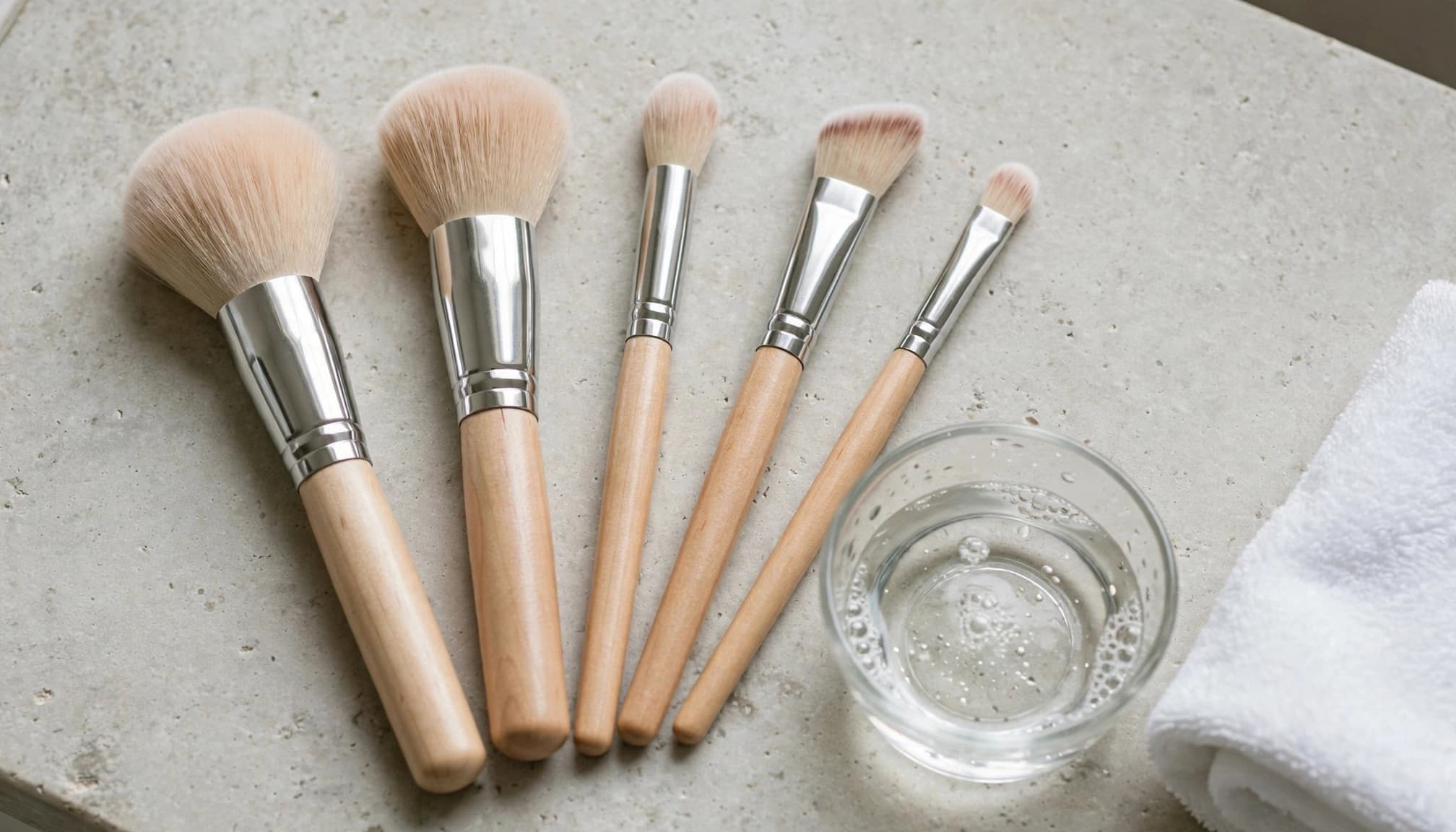
AI-generated illustration of a clean brush-care set-up.
The main types of makeup brush cleaner
Liquid shampoos, usually £6 to £18, are the most versatile option. They suit routine deep cleaning, offer strong removal and rinse well, although wet brushes still need hours to dry.
Solid brush soaps cost about £7 to £20. They are portable, economical and effective on creams when the brush is gently swirled over the surface. However, a tin can become messy if stored damp.
Quick-drying sprays, commonly £5 to £15, are useful for changing eyeshadow shades or refreshing a brush before travel. They dry fast, but they may only shift surface pigment. A spray does not replace a full wash after foundation or waterproof makeup.
Silicone mats, around £4 to £12, add texture that helps loosen residue. Electric cleaning devices, often £15 to £45, can speed the spinning and rinsing stage, although they take space and need careful handling.
Ingredients and formulas that are safer for brush fibres
Look for mild surfactants such as glucosides or betaines, plus light conditioning ingredients. Fragrance-free formulas are a sensible option where perfumed products irritate the skin or prove unpleasant during washing.
Harsh washing-up liquid, strong solvents and very hot water can dry fibres and weaken glue over time. Excess alcohol may also leave natural hair brushes brittle. Product labels should be checked for fibre suitability, rather than assuming that a cleanser marked “gentle” will suit every brush.
Water should reach the bristles, not the inside of the ferrule. Once moisture enters that metal sleeve, the adhesive and wooden handle face the greatest risk.
Testing Makeup Brush Cleaners for Real-World Performance
A fair review needs comparable brushes and the same makeup load each time. Testers should use separate but similar brushes for liquid foundation, concealer, cream blush, pressed powder and waterproof liner or mascara residue. Each brush should receive a measured amount of cleanser and the same washing time.
Visible residue tells only part of the story. Rinse water, staining at the base, softness after drying, shedding and lingering scent all matter. Drying time should be measured only after excess water has been pressed out with a clean towel.
How well each cleaner removes creams, powders and waterproof makeup
Loose powder usually lifts quickly, often within one wash. Cream foundation and concealer need more product and more patient working through the centre of dense bristles. Waterproof formulas can require a second wash, particularly where waxes have set near the ferrule.
Cloudy water is expected during the first rinse. The brush should feel clean near its base as well as at the tips. A pale stain may remain on white fibres without affecting performance, but greasy or stiff patches indicate remaining product.
Build quality, ease of use and drying time
A useful pump dispenses a small, controllable amount without dribbling down the bottle. Solid soaps need secure tins, while sprays need even nozzles that do not soak the brush. Silicone mats should stay flat on the basin surface, rather than sliding around.
Score each product out of five, then apply the weighting below.
| Criterion | Weight | What to assess |
|---|---|---|
| Makeup removal | 30% | Cream, powder and waterproof residue after washing |
| Brush safety | 25% | Softness, shape retention and shedding after drying |
| Rinse effort | 15% | How readily product and lather wash away |
| Ease of use | 15% | Dispensing, grip, mess and product dosage |
| Drying and scent | 15% | Drying speed and any persistent fragrance |
Cleaning results and brush safety should outweigh novelty features. A spinning device that leaves residue behind is poor value, however quick it looks on a bathroom shelf.
Choosing the Best Makeup Brushes Cleaner for a UK Routine
The best makeup brushes cleaner is the one that matches the products used most often. A compact collection of synthetic face brushes needs a different formula from a large kit of natural-hair eye brushes.
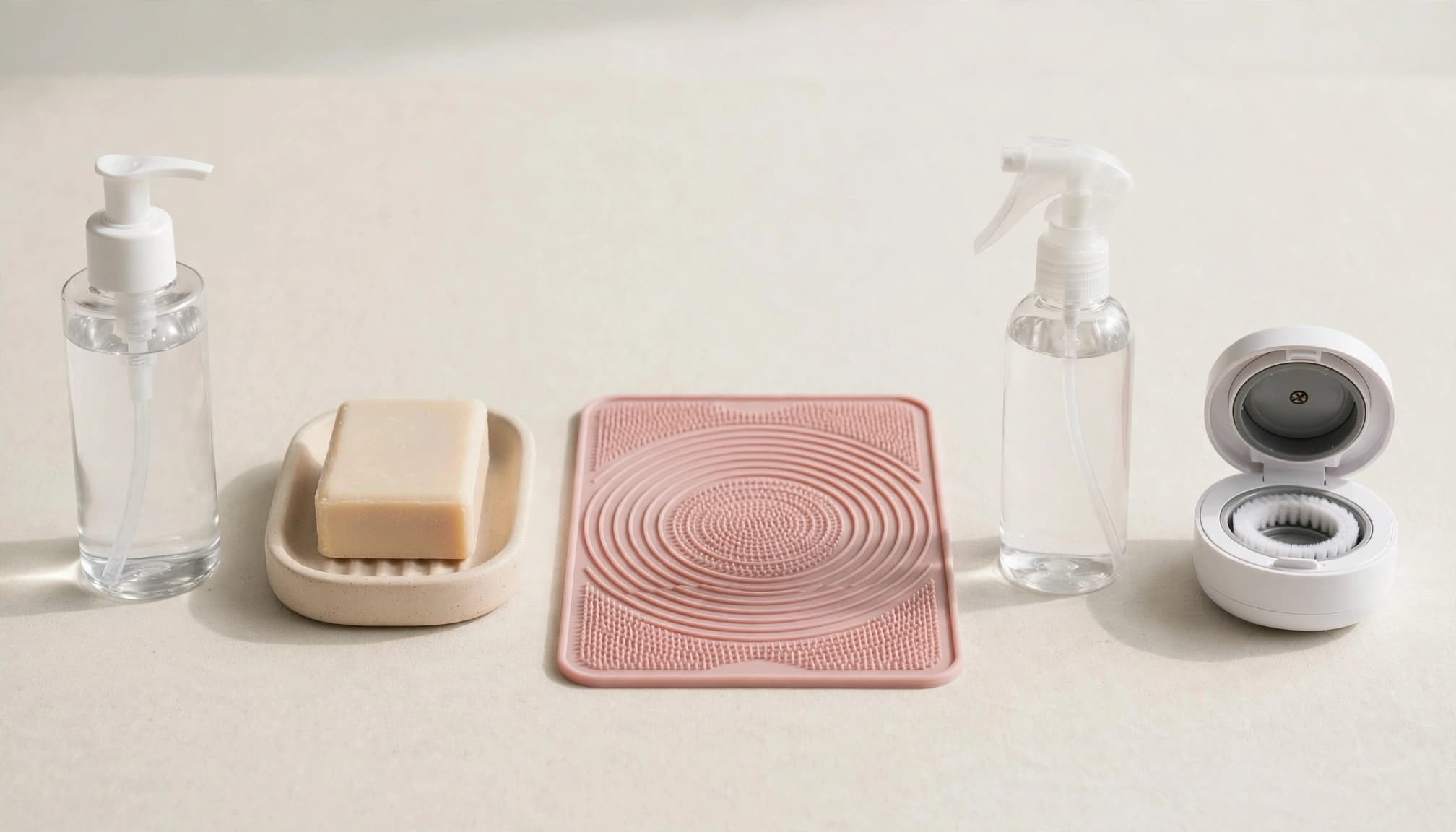
AI-generated illustration comparing common cleaner formats.
| Cleaner type | Best for | Strengths | Drawbacks | Typical UK cost |
|---|---|---|---|---|
| Liquid wash | Regular full cleaning | Versatile and easy to rinse | Takes time to dry | £6 to £18 |
| Solid soap | Travel and dense brushes | Concentrated and low-waste | Needs a dry storage tin | £7 to £20 |
| Spray | Eye brushes between shades | Fast and portable | Limited deep-cleaning power | £5 to £15 |
| Silicone mat | Stubborn residue | Adds gentle texture | Needs a separate cleanser | £4 to £12 |
| Electric device | Large synthetic kits | Reduces manual spinning | Bulky and less controlled | £15 to £45 |
Match the cleaner to synthetic, natural and delicate brushes
Synthetic fibres usually tolerate regular liquid washing well. Dense foundation brushes need the most attention because product settles into the centre. Fluffy powder brushes respond well to a mild cleanser and light pressure.
Natural hair can benefit from a gentler formula with some conditioning. Delicate handmade, premium or glued-handle brushes should always follow the manufacturer’s care instructions. Sponge applicators need their own cleanser or a mild wash, as their porous structure holds more product than bristles.
Work out the true cost per clean
A £7 bottle is not automatically cheaper than a £15 solid soap. If the thinner formula needs several pumps per brush, it may run out sooner. Concentrated liquids and solid cleansers can last longer when only a small amount is required.
Refills, tins and bundled mats affect the final cost. Drying racks are useful for large collections, but a clean towel and a level surface work well for most households.
When a dedicated cleaner beats gentle soap or shampoo
Mild, unscented soap or baby shampoo can handle light powder residue. However, they may struggle with long-wear foundation, creamy contour and heavy concealer. Some also leave fragrance or a film that changes how the brush performs.
Dedicated makeup brushes cleaner products are most useful for frequent washing, heavy cream makeup and working kits. They are formulated to rinse cosmetic oils and pigments away without relying on aggressive detergents.
The Right Way to Wash, Dry and Store Makeup Brushes
A full wash protects the shape of a brush more effectively than hurried scrubbing. The method is simple, but the direction of water matters.
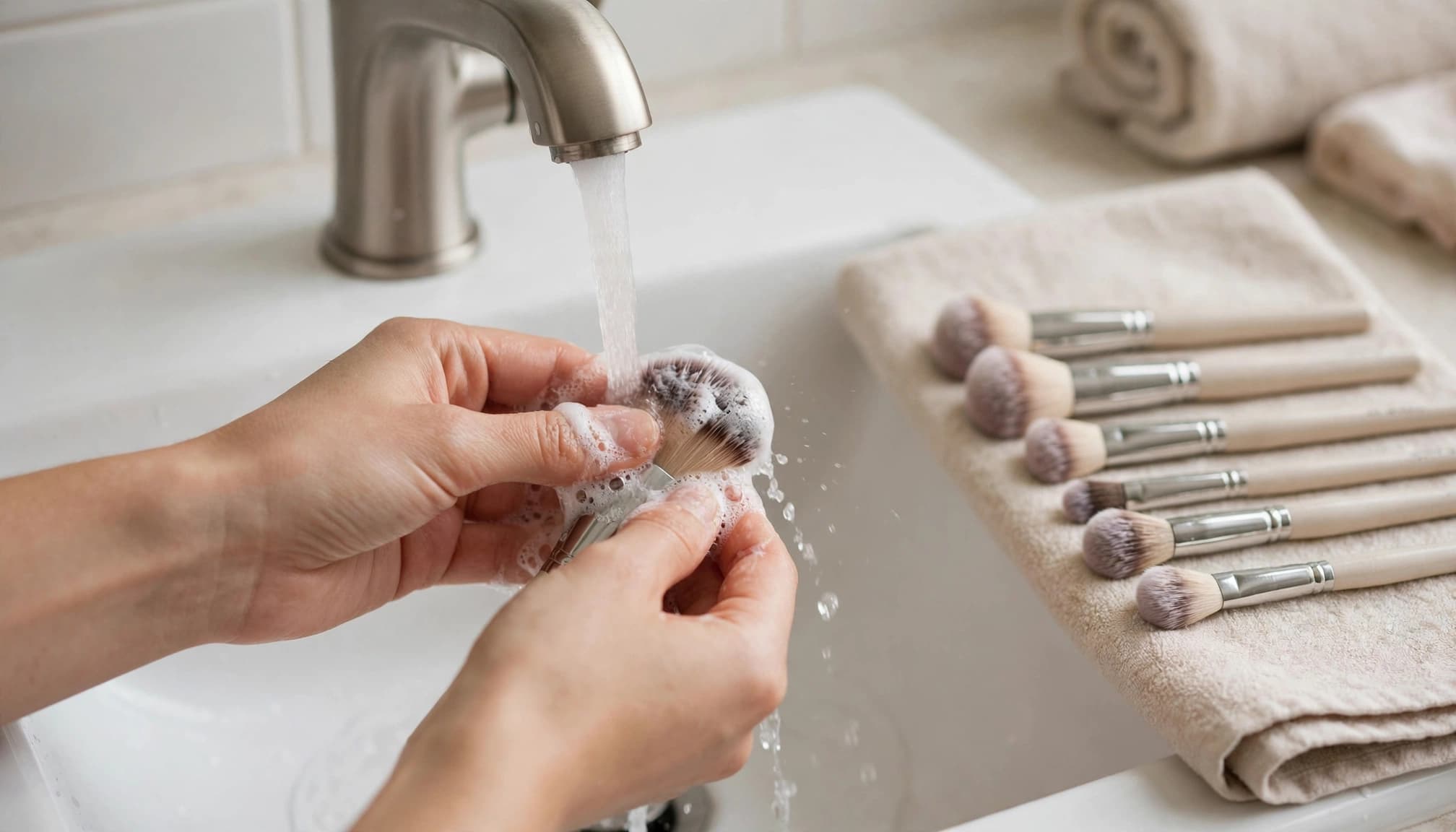
AI-generated illustration of safe brush washing and horizontal drying.
- Wipe excess makeup from the brush with a clean tissue or towel.
- Wet the bristles only with lukewarm water, keeping the ferrule pointed down.
- Add a small amount of cleanser, then massage it gently through the fibres or over a silicone mat.
- Rinse until the water runs clear, repeating only where residue remains.
- Press out water with a clean towel, reshape the bristles and dry the brush horizontally or bristles-down.
Quick spot cleaning works for eye brushes between shades. Full washing suits face brushes used with liquids and creams at least weekly for frequent users. Makeup artists and those working on several people need a stricter cleaning routine between clients.
Common mistakes that damage brushes
Soaking an entire brush can loosen the ferrule and swell a wooden handle. Boiling water, direct radiator heat and hairdryers can distort fibres or weaken adhesive.
Aggressive scrubbing creates frizz and shedding, especially in natural hair. Wet bristles should not be twisted into a point. Brushes also need to dry completely before they return to a holder, otherwise trapped moisture can cause stale smells and product build-up.
Cleaning makeup sponges, tools and brush holders
Sponge applicators should be dampened, lathered and squeezed repeatedly until the water clears. Cracked, permanently stained or misshapen sponges need replacing, as washing cannot restore worn foam.
Eyelash curlers, palettes and brush cups need separate attention. Wipe metal tools with an appropriate cleanser, wash removable holders with warm soapy water, and keep clean brushes away from damp bathroom surfaces.
Pros, Cons and Alternatives to Makeup Brush Cleaner
Dedicated cleansers improve makeup application because fibres stay softer and release product more predictably. They also deal better with long-wear creams than plain soap, while concentrated formulas can offer respectable value.
The drawbacks are real. Some formulas have strong fragrance, plastic packaging adds waste, and every full wash requires drying time. A poor technique can damage a brush regardless of the price paid for the cleanser.
| Option | Suits | Main limitation |
|---|---|---|
| Specialist cleanser | Frequent cream makeup and professional kits | Ongoing cost |
| Mild unscented soap | Occasional powder-brush washing | May leave residue on dense brushes |
| Silicone mat | People with several dense face brushes | Needs a separate cleansing formula |
| Electric system | Large synthetic collections | Less portable and often expensive |
Frequently Asked Questions
How often should makeup brushes be replaced?
Brushes do not need replacing on a fixed timetable. Replacement is sensible when bristles shed heavily, stay misshapen after washing, smell persistently or the ferrule loosens from the handle.
Can makeup brushes be cleaned with micellar water?
Micellar water can remove light surface makeup from an eye brush. It may leave moisturising ingredients behind, so it is not a reliable substitute for rinsing a face brush after foundation.
Can brushes dry overnight?
Small eye brushes often dry overnight when laid horizontally in a warm, ventilated room. Dense kabuki and foundation brushes may need longer, particularly in a cool or humid home.
Is a cleaning mat necessary?
No. A palm and gentle circular motion can clean most brushes effectively. A mat is helpful for dense bristles, but strong pressure on textured silicone can still damage delicate fibres.
Final Verdict
A dedicated cleanser merits an 8/10 category rating when cleaning performance and brush protection come before novelty. Liquid or solid formulas are the strongest options for everyday users and heavy cream makeup, while a compact spray suits travel and fast colour changes. Professional kits benefit most from a dependable liquid wash, measured dosage and a separate drying system.
| Decision | Best fit |
|---|---|
| Buy it if | Regular cream makeup, dense brushes or frequent washing make residue difficult to remove. |
| Skip it if | The collection is small, used mainly with powder products and mild soap already rinses cleanly. |
Consistent cleaning does more than keep a brush looking presentable. It preserves colour accuracy, reduces wasted makeup and extends the useful life of the tools that shape every finished look.

Explore our Buyers Guides and Reviews
For a list of our main buyers guides use the drop-down menu at the top of the page. Topics related to this article are:
Explore Our Blog Categories for Expert Buying Advice
- AI Powered Product Finder Tools (26)
- Expert Buying Guides & Shopping Tips for UK Shoppers (1,353)
- Brands & Designer Products (Men, Women & Electronics) (270)
- Designer Fashion Brands: Buyer’s Guides & Reviews (151)
- Electronic Brands: Buyers Guides & Reviews (85)
- Apple Products Buyer’s Guides & Reviews (23)
- Brands – Phones, Laptops, PC”s, Tablets | Buyer’s Guides & Reviews (41)
- Electronics – Tablet & iPad Reviews and Buyers Guides (11)
- Kitchen Appliance Brands: Buyer’s Guides & Reviews (22)
- Laptop Brands & MacBooks Buyer’s Guides & Reviews (9)
- Phone Brands & iPhones Buyer’s Guides & Reviews (22)
- Car Buying & Financing Made Easy | Expert Guides for the UK (89)
- Clothing, Fashion & Accessories Buying Guides UK (447)
- Beauty, Health & Wellness | Perfume, Skincare, Makeup & Wellbeing Guides (163)
- Footwear: Trainers & Shoes Buyers Guides (46)
- Jewellery: Expert Reviews, Trends & Buying Guides (71)
- Men's Clothes — Buyers Guides & Reviews (38)
- Men’s Clothes, Fashion & Accessories Guides UK | Latest Trends & Smart Shopping (155)
- Women's Clothing Buyers Guides — Dresses, Tops & More (170)
- Women’s Clothes, Fashion & Accessories Guides UK | Latest Trends & Smart Shopping (389)
- Electronics, Tech & Gadgets: Reviews, Deals & Buying Guides UK (169)
- Furniture Buyer’s Guides | Home & Garden & Styling Tips (310)
- Bedroom Furniture Guides UK | Expert Tips & Best Value Deals (91)
- Garden Furniture, Landscaping & Garden Rooms Guides UK | Expert Tips & Best Value Deals (156)
- Garden Sofa & Sofa Sets Buyers Guides (10)
- Garden Tables & Chairs: Sets, Individual Tables & Seating Buyers Guides (39)
- Home Furniture, Décor & Interior Design Guides UK | Styling Tips & Inspiration (166)
- Living Room Furniture, Design & Décor Guides UK | Styling Tips & Inspiration (56)
- Sofa & Sofa Beds Buyers Guides (18)
- Sofa Beds Buyers Guides (7)
- Sofa Buyers Guides & Expert Advice (10)
- Holidays & Travel: Hotels, Villas & Flights (157)
- Home & Garden Improvements | Renovations & Outdoor Transformation Guides (99)
- Insurance & Protection: Travel, Landlord, Gadget & More UK (159)
- Gadget Insurance UK | Expert Guides, Reviews & Smart Protection Tips (33)
- Home Emergency Cover UK | Expert Guides, Reviews & Practical Protection Tips (21)
- Landlords Insurance UK | Expert Guides, Reviews & Smart Protection Tips (31)
- Travel Insurance UK | Expert Guides, Reviews & Money-Saving Tips (34)
- Pets: Guides, Tips & Inspiration (26)
- Brands & Designer Products (Men, Women & Electronics) (270)
- Gifts for Everyone: Ideas for Every Occasion & Budget (43)