Minecraft has become more than a bestselling sandbox video game. It is a creative platform, a social space and a broad entertainment brand built around player freedom. Originally created by Markus Persson, it grew from an independent project into a global phenomenon maintained by Mojang Studios. Its block-based, procedurally generated landscapes form an open world where players can build, explore, survive and create at their own pace, although that freedom can leave newcomers unsure where to begin.
This UK-focused review examines gameplay, graphics, modes, editions, platforms, value and community features, alongside products associated with the brand. It also considers what makes Minecraft merchandise appealing, which products are worth trying, and how buying online can improve choice and pricing without overlooking delivery costs, authenticity or return terms. The franchise has expanded across platforms over time, from PC and consoles to mobile releases such as Pocket Edition.
The game’s appeal, documented through sources such as the Minecraft Wiki and reporting from BBC News, begins with its unusual balance of simple rules and almost unlimited outcomes. The review starts with how Minecraft plays across its main modes and editions.
Key Takeaways
- Minecraft’s open-ended gameplay rewards creativity, exploration and survival, with distinct experiences in Java Edition and Bedrock Edition.
- Its lasting appeal comes from player freedom, regular updates, multiplayer communities and a recognisable block-based style.
- Essential products include the game itself, building sets, plush figures and practical accessories, while themed clothing and collectibles are also worth trying.
- Buying Minecraft products online offers wider choice and easier price comparison, but delivery fees, seller authenticity, returns and total costs need careful checking.
- The best purchase balances genuine enjoyment, product quality and long-term value, rather than relying on brand popularity alone.
Minecraft Review: The Core Game Still Rewards Curiosity
Minecraft’s main strength is the way its systems connect without forcing a fixed route. A first shelter may take only a few minutes to build, yet it quickly becomes the starting point for farming, mining, enchantment and expeditions into more dangerous areas. From Markus Persson’s early alpha designs to later work by Mojang Studios, those survival mechanics have evolved without losing their simple appeal.
How exploration, crafting and survival fit together
The early game begins with practical decisions in Survival mode. Wood becomes the first tools and crafting table, while nearby animals, crops or fish provide food. Across the Overworld, a small shelter matters when night approaches because hostile creatures appear in dark areas.
Mining then changes the pace. Coal improves visibility, iron supports stronger tools and armour, and deeper caves offer rarer materials alongside greater danger. Farming creates a reliable food supply, freeing players to spend longer underground or prepare for distant journeys. Redstone can later support simple farms and useful mechanisms, while enchanting helps prepare equipment for the Ender Dragon.
Terrain keeps this open world varied. Villages can provide shelter, crops and useful trades, while caves, oceans, mountains and forests each create different routes and risks. The Overworld offers plenty to discover, but a cave expedition may still end with a fall, hostile mob or lost route. The day-night cycle adds a steady rhythm, encouraging players to return home, improve their equipment and plan the next outing.
A well-built base is useful because it supports the next objective, rather than ending the current one.
That structure explains why Minecraft remains engaging after the first shelter. Each improvement creates another possibility: a larger farm supports longer travel, better tools open tougher materials, and enchantments make the Ender Dragon more realistic to face. Player-made objectives replace a traditional campaign, so the game suits those who enjoy setting their own milestones.
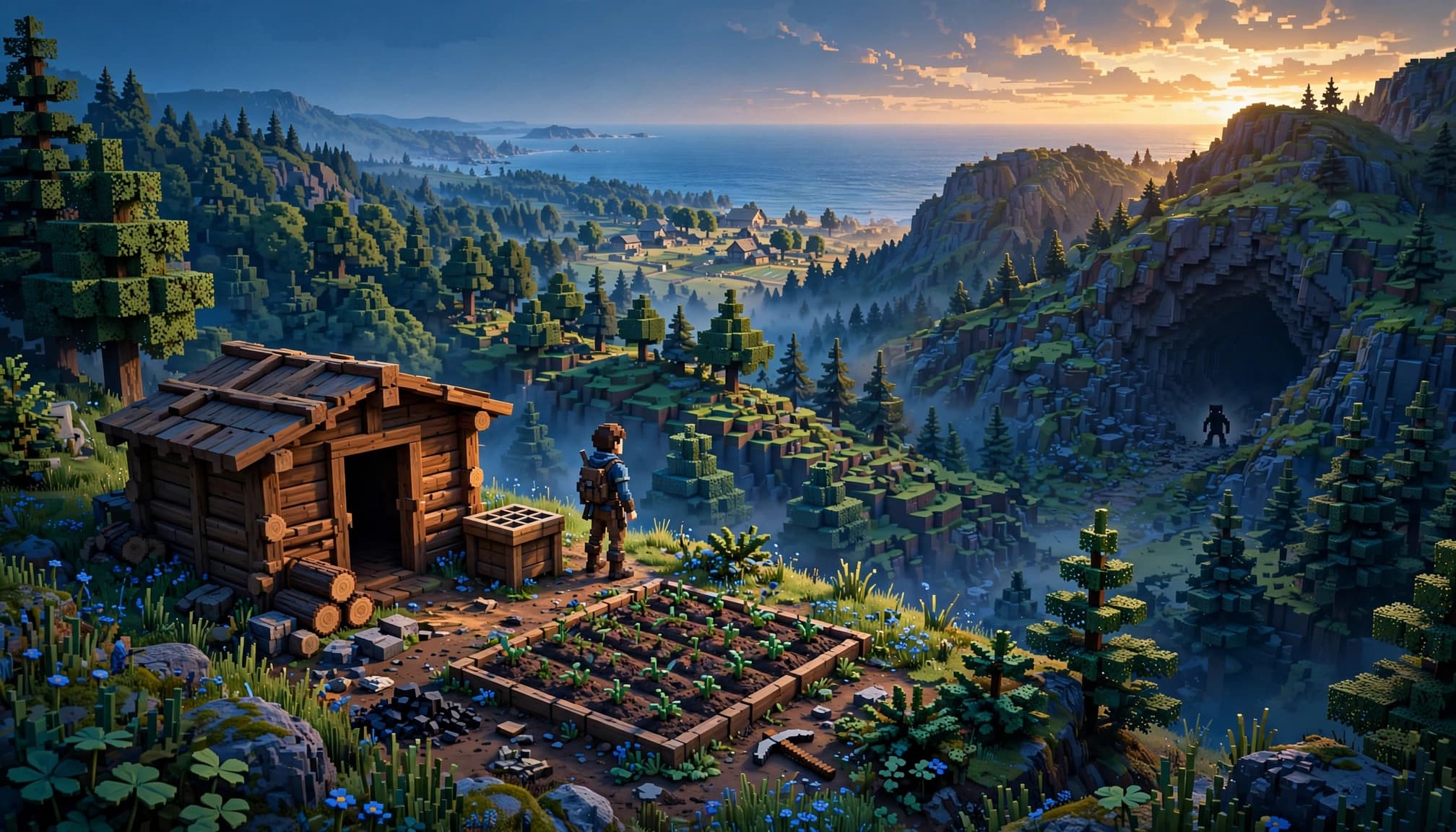
AI-generated image showing the connected survival loop of gathering, building and exploring.
Why Creative mode is more than a building sandbox
Creative mode removes hunger, enemy pressure and resource scarcity. Players gain unlimited materials, flight and rapid construction, making it suitable for architectural projects that would take weeks in Survival. A detailed castle, transport network or recreation of a real building can be planned without spending hours gathering blocks.
The mode also supports Redstone experiments, role-play maps, custom maps, classroom activities and collaborative builds. Teachers can use it to demonstrate geometry, planning or basic logic, while groups can design shared spaces without arguing over limited supplies. Creative mode gives Redstone a safe testing ground for doors, farms and automated machines.
However, that freedom changes the reward structure. Players who enjoy danger, scarcity and gradual progression may find unlimited access less satisfying. Creative is strongest when construction or experimentation is the goal, while Survival mode gives each finished project a history of risk and effort.
What Makes Minecraft’s Multiplayer and Community So Powerful
Minecraft’s social appeal comes from shared ownership of a world. Friends can build a base together, divide survival tasks, create mini-games or leave a project unfinished until the next session. Local multiplayer is available on supported devices, while online play includes Realms, private multiplayer servers and public servers, each offering different levels of access and control.
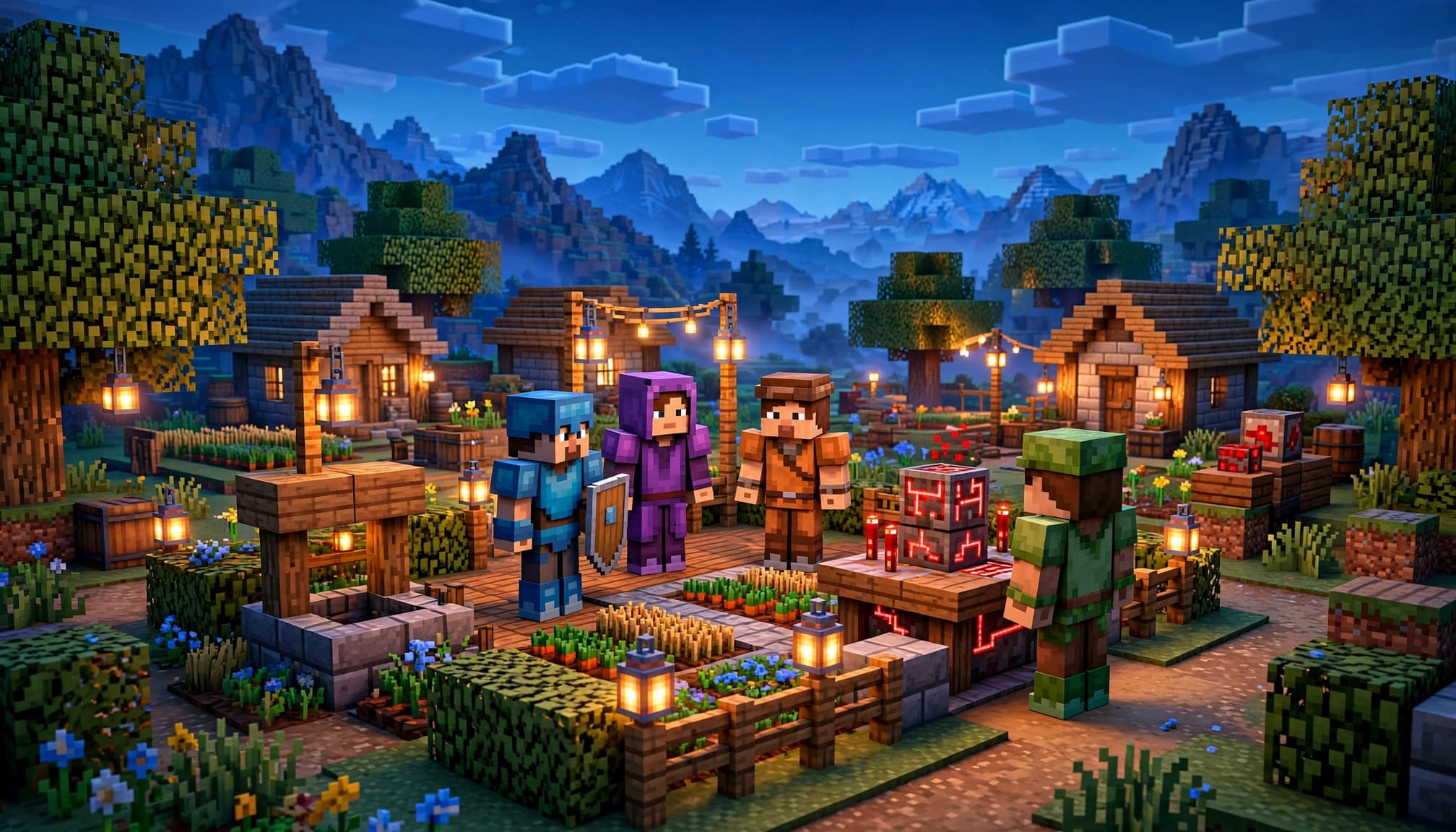
AI-generated image showing cooperative building and shared Minecraft gameplay.
Java Edition and Bedrock Edition explained clearly
Java Edition runs on Windows, macOS and Linux computers. It’s usually the stronger choice for traditional PC modding, large community-made modifications and independent multiplayer servers. Performance depends heavily on the computer and installed mods, although optimisation tools can improve weaker systems.
Bedrock Edition covers Windows PCs, consoles, mobile devices and other compatible platforms. It generally suits households using Xbox, PlayStation, Nintendo Switch, Android, iPhone or tablet devices because compatible players can join the same session. This cross-platform play also supports split-screen gaming on supported consoles.
Bedrock grew from the mobile Pocket Edition codebase and its shared networking architecture. The Pocket Edition name was eventually folded into the wider Bedrock platform, although many players still use Pocket Edition when discussing Minecraft on phones. Older Pocket Edition worlds and features helped shape today’s mobile experience.
The editions remain separate in important ways. Java players can’t normally join Bedrock servers, and Bedrock players can’t automatically join Java servers. Java Edition also relies more heavily on external community resources, so quality and safety require closer checking.
Bedrock offers the Minecraft Marketplace, where players can buy curated skins, texture packs, custom maps and add-ons using Minecoins. These commercial resources provide a straightforward alternative to downloading content elsewhere, while Pocket Edition users now access the same platform through Bedrock.
Realms are private, subscription-based online worlds available for either edition, with the edition determining who can join. Realms Plus provides an expanded subscription option for Bedrock, including access to a rotating catalogue of community content. Public server access is broader but varies by platform, account settings and server rules. The technical reference material provides current details where compatibility is uncertain.
The benefits and risks of playing with others
Shared worlds give Minecraft a stronger sense of continuity. A group can construct a town, organise a role-play scenario or compete in mini-games designed by other players. Community maps, custom maps, skins, texture packs and resource packs also keep familiar mechanics fresh, although quality, pricing and safety vary widely.
Private invitations and Realms offer more control than open public servers. Mojang Studios and Microsoft provide account and safety tools, while Microsoft child accounts and parental settings can restrict communication and multiplayer access. Checking a server’s rules also helps families understand its chat policy, moderation standards and reporting process.
Risks still exist. Griefing can destroy shared builds, scams may involve misleading links or fake giveaways, and public chat may contain unsuitable language. Unofficial downloads can carry unwanted software or request excessive account access. Regular backups protect important worlds, while trusted communities reduce exposure to poorly moderated spaces. Multiplayer works best when social access is treated as a setting to manage, rather than a feature to leave open by default.
Minecraft on PC, Console and Mobile: Which Version Offers the Best Experience?
Minecraft offers a broadly similar game across devices, but the experience changes with the hardware. Windows PCs provide the greatest control and scope, consoles suit shared living-room play, while tablets and smartphones prioritise portability. Modern mobile Minecraft grew from Pocket Edition, although today’s experience uses the unified Bedrock Edition. The best version depends on whether precision, convenience, performance or local multiplayer matters most.
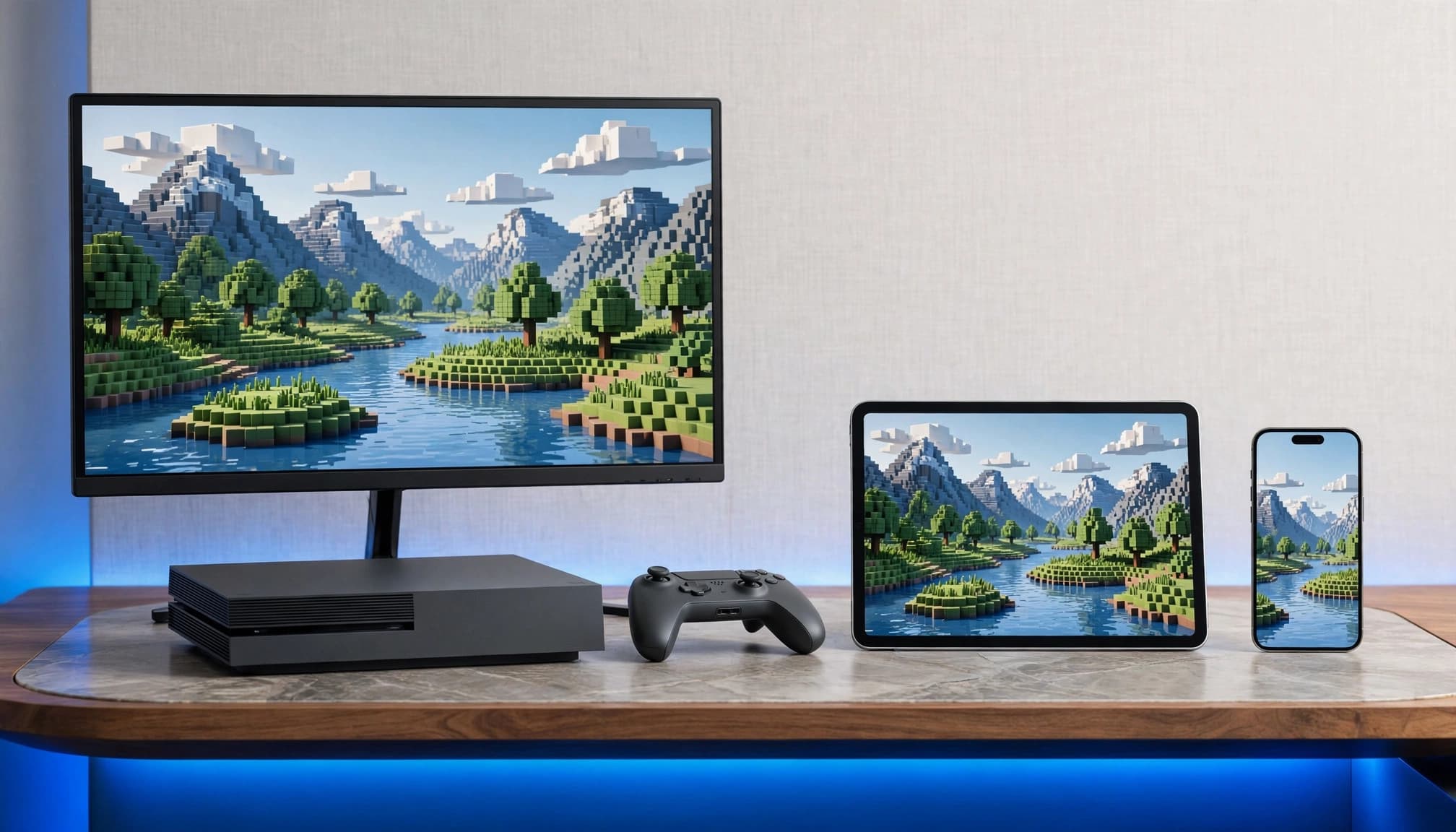
AI-generated image showing Minecraft across PC, console, tablet and smartphone formats.
Performance, controls and accessibility across devices
A keyboard and mouse usually give PC players the clearest advantage. Building large structures, moving items through a crowded inventory and switching quickly between tools are more precise with separate keys and mouse aiming. Java Edition tends to suit players who value detailed PC controls, whilst Bedrock Edition supports a wider range of devices.
Console controllers offer a more relaxed setup, with analogue movement and a comfortable interface for television play. Supported consoles can also provide split-screen multiplayer, which remains one of the simplest ways for people in the same room to share a world. Cross-platform play makes console and mobile gaming convenient for mixed-device groups, although PC setups still offer greater input precision.
Touchscreens make Minecraft easy to start on a phone or tablet. Their controls still inherit some of the direct, gesture-based feel associated with Pocket Edition. Placing blocks, managing inventories and fighting can feel less precise than using a keyboard and mouse. Larger tablet displays help, but older Pocket Edition interfaces were not designed for every modern screen size.
Frame rates, loading times and render distance depend on the device, edition and settings. Mods, shaders, busy multiplayer areas and extensive Redstone builds can place greater demands on a PC. Texture packs and Resource packs can also affect frame rates on mobile devices and consoles. Compared with legacy Pocket Edition code, the unified version offers broader features, but it may require more capable hardware.
Older consoles and mobile devices may need reduced visual settings. Players upgrading from older Pocket Edition setups should check storage, operating system support and available performance before buying add-ons. Worlds, screenshots, cached files and updates accumulate over time. Mobile play also adds battery drain and may require a stable connection for online worlds, updates or account services. Offline play is available in suitable circumstances, although synchronisation and multiplayer require connectivity.
Accessibility options can make Minecraft more comfortable. Adjustable controls, subtitles, camera settings, difficulty choices and visual or audio preferences may help different players, but availability varies between editions and platforms. Microsoft family security settings can also help manage online features for younger players. The chosen device should be checked before purchase, especially when accessibility is a deciding factor.
What a new player needs before starting
Minecraft’s first hours can feel opaque because the game explains few of its systems in sequence. Difficulty settings shape the pressure, whilst a world seed determines the generated terrain and can affect the starting surroundings. A new world belongs to its creator or local group, whereas a shared Realm is an online world designed for invited players to access over time.
Backups protect important builds, particularly before major updates or experimental add-ons. Account security matters as well, so strong passwords, appropriate account settings and cautious handling of links reduce avoidable risks. The in-game recipe book removes much of the guesswork, while a carefully chosen guide or reliable Minecraft Wiki reference can clarify unfamiliar mechanics without dictating how a world should be played.
The Minecraft Products Worth Buying and Trying
Minecraft’s product range is broad, but Mojang Studios’ core game remains the essential purchase. Other options add convenience, structured play or physical creativity, yet none is required for enjoying solo Survival mode or Creative mode.
The essentials for a first-time Minecraft buyer
The best edition depends on the player’s devices and the people they want to play with. Java Edition suits PC players who value traditional modding and community servers, whilst Bedrock Edition is usually the practical choice for households using consoles, Windows devices, tablets or phones. Friends must use compatible editions, so checking the group’s preferred version before buying prevents an expensive mismatch.
Realms is optional, with Realms Plus adding a broader library of included content. These subscriptions provide managed private online worlds that invited players can access when the owner is away. Solo players and local groups don’t need either option. A standard game purchase is enough for individual play, local multiplayer on supported devices and many online options.
Minecraft Marketplace content and add-ons need a stricter value test. Before spending Minecoins, buyers should check:
- Recent reviews and whether users report technical problems.
- Evidence that the creator still supports updates.
- Age suitability, particularly where frightening themes or online features appear.
- The full cost of repeated purchases, not just the price of one map or skin pack.
A low-cost item can become poor value when several packs are needed to create the intended experience.
Spin-offs and physical products that are worth trying
Minecraft Dungeons offers a more focused dungeon-crawling experience than the open-ended main game. Players move through structured missions, defeat enemies and improve equipment, making it a better fit for those who prefer clear objectives and faster action. Minecraft Legends shifts towards strategy, with exploration and combat linked to commanding units and defending settlements. Platform availability, ongoing support and pricing should be checked before publication or purchase because these details can change.
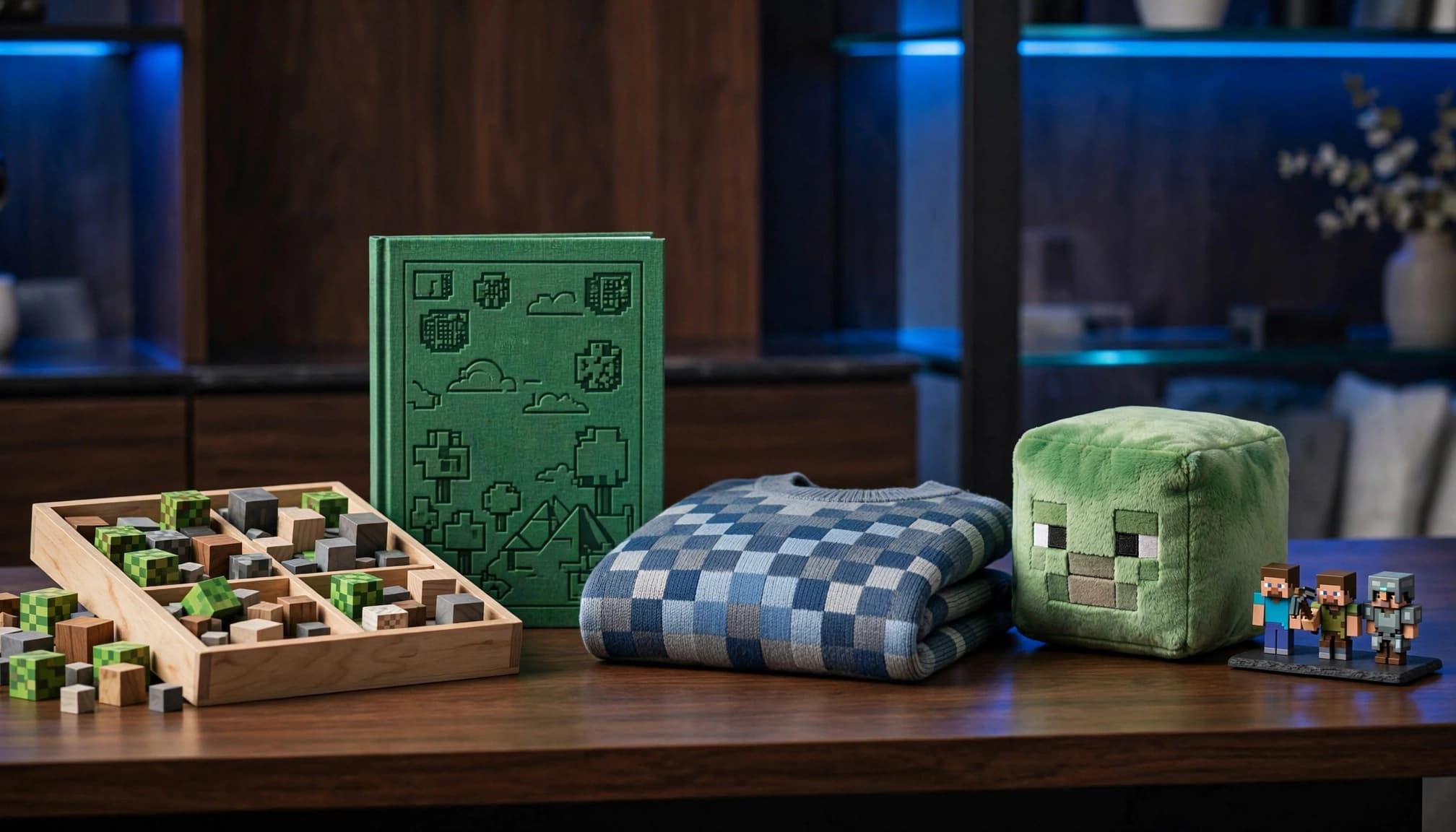
AI-generated image showing Minecraft-inspired construction, books, clothing, plush toys and collectibles.
Physical products are optional brand purchases, rather than extensions every player needs. Construction sets offer the strongest lasting value when children or adults enjoy building away from a screen. Sets themed around the Overworld, the Ender Dragon and familiar locations can make the digital world tangible. Guidebooks can help newcomers understand recipes and mechanics, with early Pocket Edition companion guides holding particular nostalgic appeal. Free references may cover similar information. Clothing, plush figures and collectibles appeal to fans who value the visual identity, but quality, sizing, storage space and price deserve attention. Some historical mobile merchandise was also linked to Pocket Edition.
| Product | Best for | Main strength | Drawback | Ongoing cost |
|---|---|---|---|---|
| Base game | Every new player | Complete core experience | Edition compatibility matters | None |
| Realms / Realms Plus | Managed private multiplayer | Simple shared access | Subscription required | Monthly |
| Marketplace content | Curated changes | Easy access to maps and add-ons | Spending can accumulate | Optional |
| Minecraft Dungeons | Structured action | Clear missions and loot | Separate from the main game | Usually none |
| Minecraft Legends | Strategy fans | Unit-based tactical play | Different style of Minecraft | Usually none |
| Physical products | Fans and gift buyers | Screen-free creativity | Quality and authenticity vary | None |
The brand’s appeal rests on its recognisable blocks, creative identity and wide age range. Its products stand out because the same visual language connects digital building, community storytelling and hands-on construction, although the logo alone cannot guarantee durability, safety or long-term value.
How to Buy Minecraft Online Without Paying More Than Necessary
Buying Minecraft online can improve choice, speed up price comparisons and provide immediate digital delivery. However, the cheapest headline price may not be the lowest total cost once subscriptions, add-ons, accessories and platform limits are included. Start with compatibility and licence terms, not the discount.
Digital download or physical copy: which is better value?
Digital copies are convenient, arrive immediately and are harder to lose. They also avoid delivery charges and take no shelf space. However, digital ownership is tied to an account and platform, so transfer, resale and upgrade rules may be limited.
Mobile app-store purchases should be checked carefully, especially when listings use the old Pocket Edition name. A genuine Bedrock download from the correct store is safer than an unfamiliar app or unofficial code.
Physical copies can be useful for gifting, collecting or finding pre-owned stock. They may also be easier to pass on, depending on the console and licence terms. Delivery adds time and cost, while the disc or cartridge still needs compatible hardware and storage space for updates.
| Buying option | Main benefit | Main drawback |
|---|---|---|
| Digital download | Immediate access with no delivery | Usually tied to an account and platform |
| Physical copy | Can be gifted, collected or bought pre-owned | Delivery, storage and compatibility risks |
| Download code | Quick access without a disc | May be region-locked or counterfeit |
Ownership, licensing and upgrade policies differ between editions and platforms. Current terms should be checked on the official Minecraft product information before payment. The Minecraft Wiki can help clarify edition features, but it isn’t a substitute for the purchase terms.
AI-generated image showing a comparison between digital and physical Minecraft purchases.
How to avoid hidden costs and incompatible purchases
Before buying, the buyer should confirm:
- The device, exact edition and age rating.
- Whether the intended multiplayer group uses Java or Bedrock.
- Cross-platform play between PC, console, tablet and mobile.
- The Microsoft account that will receive the purchase.
- Download size, available storage and any required platform membership.
- Refund terms, subscription renewal dates and code region restrictions.
Game Pass can provide an alternative subscription route for PC and Xbox players, although access depends on the current plan and terms. Realms Plus creates an ongoing cost because private online worlds require a subscription. Marketplace maps, skins, add-ons, Texture packs and Minecoins can also turn occasional spending into a larger annual bill.
Storage may need expansion, whilst a controller, keyboard, mouse or headset can add to the initial setup. Mobile buyers should also check that they aren’t paying for a counterfeit Pocket Edition listing instead of an official Bedrock download.
Online research helps compare current prices, inspect user feedback and find legitimate seasonal promotions. Price history is more useful than a dramatic discount label, particularly during major sales periods. Refurbished or pre-owned physical copies may reduce the entry price, although condition, included codes and return rights need checking.
Phishing pages, counterfeit download codes and unofficial mod files create separate risks. Fake discounts often lead to stolen account details, invalid keys or unsafe software. A secure checkout, clear seller identity and written refund policy matter more than a small saving. The true bargain is the version that works with the intended device and remains affordable after its continuing costs are counted.
Minecraft’s Strengths, Weaknesses and Long-Term Value
Minecraft’s value is easier to understand through sustained play than through its launch price. As a sandbox video game, its open world can support hundreds of hours. That freedom can frustrate players who expect clear instructions, polished combat or a fixed campaign.
What players praise most about the Minecraft brand
Minecraft connects several forms of play without forcing them into separate products. The same block-based world supports solo survival, collaborative building, classroom projects, online communities and creative experiments. Players can treat it as a game, a construction set, a social space or an introduction to planning, resource management and Redstone logic.
Its visual style is instantly recognisable because its blocks, simple textures and limited shapes remain consistent. That identity began with Markus Persson’s original vision and has continued through Mojang Studios’ development. The same look appears across the game, spin-offs, guidebooks, building sets, plush figures and other products.
The franchise also matured across hardware generations. Early mobile builds of Pocket Edition brought Minecraft to smaller screens, while later versions offered a more connected experience across devices. Pocket Edition helped establish the game’s reach beyond traditional computers and consoles.
Personal expression is the central attraction. One player may build an efficient farm, another may recreate a landmark, while a third may use Creative mode to design an elaborate role-play setting. Regular updates, Custom maps, texture packs, add-ons and Multiplayer servers extend those possibilities. Their quality and safety can vary.
AI-generated image showing the reflective balance between Minecraft’s creative appeal and its practical limitations.
Where Minecraft still falls short
Minecraft often explains too little at the start. New players must learn recipes, hostile mob behaviour, enchantments, dimensions and resource levels through experimentation or outside references. Inventory management becomes tiring during long expeditions, especially when valuable materials compete with food, tools and building blocks.
Combat remains functional rather than sophisticated. Movement, timing and equipment matter, but some players find encounters repetitive compared with dedicated action games. Even the Ender Dragon offers a simpler boss encounter than many modern adventure games. Resource gathering can create a similar problem, since ambitious construction often requires hours of mining, farming or transporting materials.
Technical performance also depends heavily on hardware. Large worlds, complex Redstone systems, high render distances, mods and busy multiplayer areas can expose differences between a modern PC, an older console and a mobile device. Public servers introduce further concerns, including griefing, unsuitable chat, scams and inconsistent moderation. Private worlds and parental controls reduce those risks, but they don’t remove the need for oversight.
The base purchase can also understate the long-term cost. Realms requires a subscription, whilst Marketplace content and add-ons can encourage repeated spending. Those extras are optional, yet families should count them when comparing the total cost of ownership.
Minecraft remains suitable for children, adults, casual players and dedicated builders, but for different reasons. Its lack of a fixed ending gives creative players room to continue, while players seeking a tightly directed story may experience it as unfinished. As updates, features, pricing and platform support can change, live details should be checked against current official information as of September 2026. Its long-term value comes from continued use, not simply from buying the game cheaply once.
Frequently Asked Questions
Minecraft’s open-ended design creates practical questions about age suitability, costs, connectivity and long-term value. The answers depend on the edition, platform, play style and level of control around online features.
AI-generated image showing Minecraft being assessed as a game and entertainment product.
Is Minecraft suitable for children?
Suitability depends on a child’s age, maturity, chosen mode and access to other players, rather than on a universal judgement. Creative mode and private worlds provide a more controlled introduction, whilst public servers can expose children to unmoderated chat, griefing and unsuitable behaviour.
Microsoft account family settings, multiplayer restrictions and chat controls can reduce those risks. Adult supervision remains important, particularly when children join unfamiliar servers, download community content or communicate with strangers.
Is Minecraft free to play?
The main Minecraft game normally requires a purchase for the relevant platform and edition. Game Pass or another platform membership may include access, so the apparent purchase price may not tell the whole story.
The initial game purchase is separate from optional costs. Realms requires a subscription, Marketplace maps and add-ons may use Minecoins, and some consoles require a paid online service for multiplayer access.
Which Minecraft edition is best for playing with friends?
The devices used by the group decide the most practical edition. Bedrock is generally better for mixed-platform groups because it supports compatible play across Windows devices, consoles and mobile hardware.
Pocket Edition is no longer a separate current release, as modern mobile Minecraft uses Bedrock. Older Pocket Edition worlds may transition into Bedrock, but players should back them up before changing devices or versions.
Java Edition remains popular among PC players who want established modding communities and a wide choice of independent servers. Java and Bedrock multiplayer remain separate in ordinary circumstances, so current compatibility rules should be checked before purchase.
Does Minecraft need an internet connection?
A downloaded single-player world can usually be played offline, provided the platform has already installed the game and any required account checks have been completed. Internet access is needed for online multiplayer, Realms, updates, Marketplace purchases and synchronising certain account-based content.
Some features may therefore require connectivity even when the core world is played alone. Older Pocket Edition worlds and add-ons may also need an online check when moved to a new device. Downloading updates before travelling can reduce disruption, although platform policies still apply.
Are Minecraft add-ons and Marketplace purchases worth it?
Add-ons and Marketplace content can suit players who want new maps, visual themes or structured activities without installing community files manually. Texture packs and custom maps are easy ways to change the experience, but quality varies.
Update support matters because older content may not work properly after game changes. The base game already contains extensive building, exploration and survival content, so extras are optional.
A fixed spending limit is sensible for households managing repeated Minecoin purchases. Check ratings, compatibility details and recent updates before buying.
Is Minecraft still worth buying in 2026?
Minecraft remains strong value for long-term builders, creative players and co-operative groups that return to shared projects over months or years. Its replay value comes from generated worlds, player-made goals, community servers, mods and regular content changes.
The case is weaker for players who want a guided story, sophisticated combat or modern photorealistic graphics. Platform choice also matters, because the best experience depends on hardware, edition compatibility and the people available for multiplayer.
Conclusion
Minecraft remains an unusually accessible game with substantial long-term value. What began as an independent project by Markus Persson grew into an enduring global brand under Mojang Studios. Its basic controls make experimentation easy, although new players still face crafting, combat and resource management challenges. Technical performance also varies between PC, console and mobile. Realms subscriptions, Marketplace content and platform costs can raise the total price beyond the initial purchase.
People value Minecraft because it gives players control over their experience. Its products share a consistent visual style across the main game, spin-offs, building sets, guidebooks, plush figures and collectibles. The base game is the must-have purchase, whilst Realms, construction sets, guidebooks and selected spin-offs suit players with specific interests.
Minecraft’s lasting importance comes from empowering builders, explorers and storytellers. That combination of creativity and freedom explains its long-term value across games, online worlds and physical products. Its most memorable content is often made by the community, rather than supplied through a conventional campaign.
Explore More Buyers Guides & Reviews
For a list of our main buyers guides use the drop-down menu at the top of the page. Topics related to this article are:
Kitchen Appliances Buyers Guides
Explore Our Blog Categories for Expert Buying Advice
- AI Powered Product Finder Tools (25)
- Expert Buying Guides & Shopping Tips for UK Shoppers (1,463)
- Brands & Designer Products (Men, Women & Electronics) (293)
- Designer Fashion Brands: Buyer’s Guides & Reviews (166)
- Electronic Brands: Buyers Guides & Reviews (92)
- Apple Products Buyer’s Guides & Reviews (25)
- Brands – Phones, Laptops, PC”s, Tablets | Buyer’s Guides & Reviews (44)
- Electronics – Tablet & iPad Reviews and Buyers Guides (10)
- Kitchen Appliance Brands: Buyer’s Guides & Reviews (24)
- Laptop Brands & MacBooks Buyer’s Guides & Reviews (9)
- Phone Brands & iPhones Buyer’s Guides & Reviews (23)
- Car Buying & Financing Made Easy | Expert Guides for the UK (89)
- Clothing, Fashion & Accessories Buying Guides UK (510)
- Beauty, Health & Wellness | Perfume, Skincare, Makeup & Wellbeing Guides (187)
- Footwear: Trainers & Shoes Buyers Guides (49)
- Jewellery: Expert Reviews, Trends & Buying Guides (74)
- Men's Clothes — Buyers Guides & Reviews (39)
- Men’s Clothes, Fashion & Accessories Guides UK | Latest Trends & Smart Shopping (172)
- Women's Clothing Buyers Guides — Dresses, Tops & More (202)
- Women’s Clothes, Fashion & Accessories Guides UK | Latest Trends & Smart Shopping (449)
- Electronics, Tech & Gadgets: Reviews, Deals & Buying Guides UK (183)
- Furniture Buyer’s Guides | Home & Garden & Styling Tips (329)
- Bedroom Furniture Guides UK | Expert Tips & Best Value Deals (93)
- Garden Furniture, Landscaping & Garden Rooms Guides UK | Expert Tips & Best Value Deals (170)
- Garden Sofa & Sofa Sets Buyers Guides (11)
- Garden Tables & Chairs: Sets, Individual Tables & Seating Buyers Guides (58)
- Home Furniture, Décor & Interior Design Guides UK | Styling Tips & Inspiration (170)
- Living Room Furniture, Design & Décor Guides UK | Styling Tips & Inspiration (57)
- Sofa & Sofa Beds Buyers Guides (19)
- Sofa Beds Buyers Guides (7)
- Sofa Buyers Guides & Expert Advice (11)
- Holidays & Travel: Hotels, Villas & Flights (163)
- Home & Garden Improvements | Renovations & Outdoor Transformation Guides (106)
- Insurance & Protection: Travel, Landlord, Gadget & More UK (159)
- Gadget Insurance UK | Expert Guides, Reviews & Smart Protection Tips (33)
- Home Emergency Cover UK | Expert Guides, Reviews & Practical Protection Tips (21)
- Landlords Insurance UK | Expert Guides, Reviews & Smart Protection Tips (31)
- Travel Insurance UK | Expert Guides, Reviews & Money-Saving Tips (34)
- Pets: Guides, Tips & Inspiration (29)
- Brands & Designer Products (Men, Women & Electronics) (293)
- Gifts for Everyone: Ideas for Every Occasion & Budget (51)