Buying a bed-and-mattress bundle can simplify furnishing a UK bedroom, especially when matching a frame and mattress separately feels time-consuming. It may also reduce delivery arrangements and make budgeting easier. However, the lowest-priced package isn’t automatically the best value if the mattress lacks support, the frame feels flimsy, or delivery charges appear at checkout.
This practical guide compares double bed frames, mattress construction, UK sizing, storage options, delivery arrangements and after-sales terms. It also covers realistic price points and the costs that can affect long-term value.
The product images used in this guide are AI-generated illustrations, so they should support visual comparison rather than replace accurate measurements, materials, firmness details and specifications. A carefully chosen package can offer a practical sleep solution, and the guide begins by examining the main frame options and their effects on comfort, storage and durability.
Key Takeaways
- A standard UK double mattress measures approximately 135 x 190 cm, but the complete frame may need considerably more floor space. Compare both internal and external dimensions before buying.
- Choose a mattress based on firmness, sleeping position, support needs, construction and the length and terms of any trial period.
- Compare frame materials, slat design, storage capacity and weight limits, as these affect comfort, durability and everyday practicality.
- Online prices can offer wider choice and easier comparisons, but include delivery, assembly and old-bed removal fees in the total cost.
- Check the full specification, warranty, returns policy and customer feedback before deciding whether a bundle offers genuine value.
What a bed-and-mattress package includes
A bed-and-mattress package normally combines a UK double bed frame with a compatible mattress. However, the advertised price can cover very different items. Some bundles include only the frame, slats and mattress. Others add a headboard, storage or delivery services.
A standard UK double mattress is usually 135 cm wide by 190 cm long. The frame will need extra floor space, and mattress depth can change the finished bed height. The product title is only a starting point. Check the specification to confirm every included component.
| Package component | Usually included | What to check |
|---|---|---|
| Bed frame and mattress | A matched frame and mattress | Mattress quality, dimensions and warranty |
| Slatted base | Support for the mattress and airflow underneath | Slat spacing and maximum weight limit |
| Headboard | Added comfort and a finished appearance | Whether it is included or sold separately, plus compatibility with matching headboards |
| Drawers or lift-up storage | Extra storage within the bed | Capacity, access, assembly and clearance |
| Delivery and assembly | Reduced practical effort | Whether room-of-choice delivery or old-bed removal is included |
The image below is an AI-generated illustration showing how these parts may appear within one bundle.
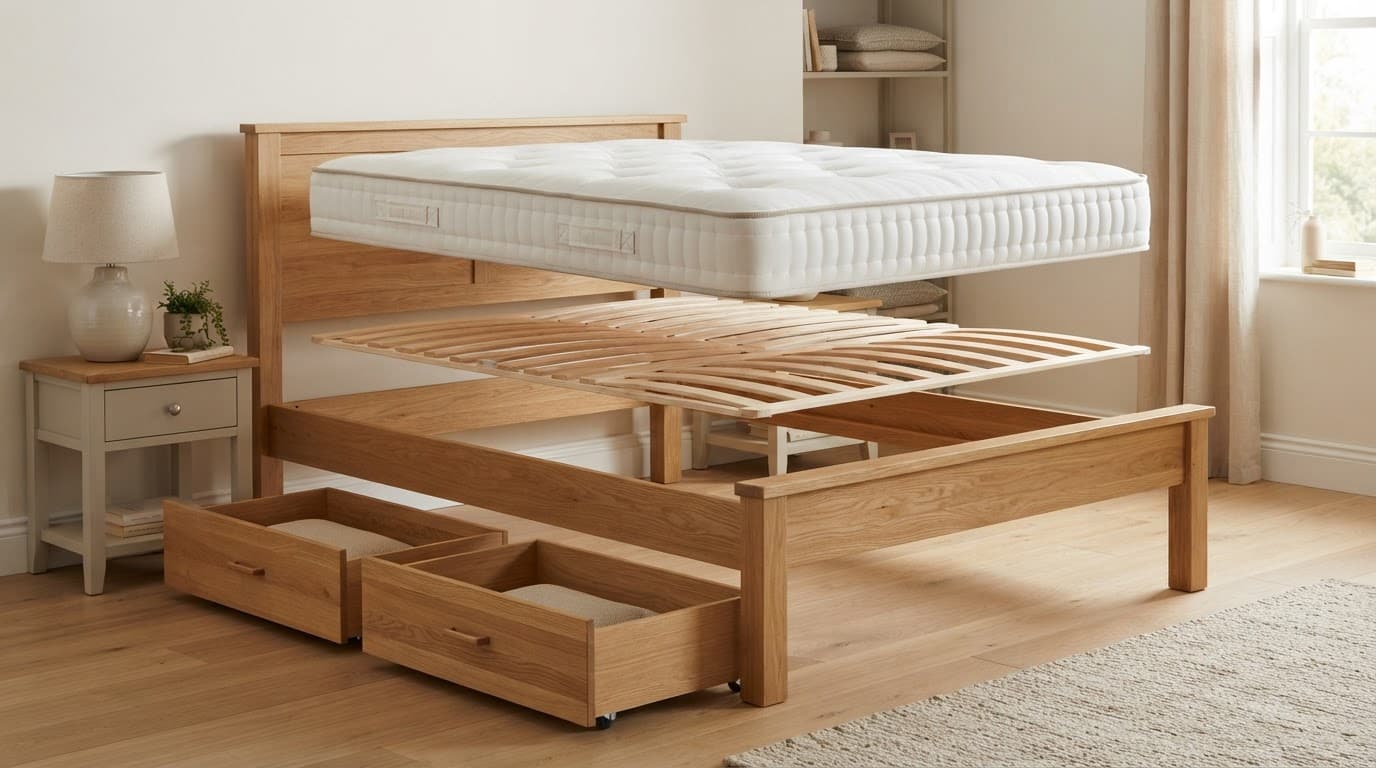
Check the bed frame before judging the bundle price
Frame material affects stability, noise, cleaning and lifespan. For wooden double bed frames, solid timber can feel substantial and remain repairable. It may cost more and weigh considerably more. Engineered wood is often cheaper and easier to finish, but moisture damage and worn fixings can shorten its useful life.
Metal frames are usually easy to clean and may provide strong support. However, loose joints can create squeaks. Upholstered frames soften the room and provide a comfortable backrest, although fabric collects dust and needs more careful cleaning. Divan-style bases have a compact footprint and often work well in smaller rooms. Double divan bedswith drawers or an ottoman lift can also provide useful storage.
The platform beneath the mattress deserves equal attention. The bed base may use sprung or solid slats. Sprung slats offer some flex and can make a bed feel less rigid, whilst solid slats provide firm, even support. The stated gap between slatsmatters because wide gaps can leave some mattresses inadequately supported. The frame’s maximum weight limit must include sleepers, mattress and bedding, not just the occupants.
Drawers and ottoman compartments make double beds with storage practical in a UK flat or box room. However, they add cost, assembly time and weight. Double ottoman beds also need suitable clearance for the platform to open safely. Check the lift up mattress storage mechanism, including its hinges and required opening space.
Understand what the mattress specification leaves out
A mattress description that says “luxury”, “orthopaedic” or “hotel quality” reveals little without measurable details. An orthopaedic mattress label is not meaningful without information about construction, support and firmness. Thickness affects the bed’s final height, but it doesn’t prove better support. Firmness ratings also vary between manufacturers, so spring construction, foam density and the sleeper’s preferred position provide more useful evidence.
Spring count needs context because manufacturers may count different spring types or sizes. Foam density is more informative than a simple reference to memory foam, particularly where long-term resilience matters. The cover fabric, whether removable and washable, affects maintenance as well.
Rotation instructions should be clear. Some mattresses need regular head-to-foot rotation, whilst others should not be flipped. A mattress supplied compressed in a box may need time to expand before use. It can also feel different at first. A flat-delivered mattress avoids that recovery period, but usually requires more careful room access and delivery handling.
How to choose a double bed with mattress for the room and sleeping needs
Choosing the right package requires more than comparing prices or selecting a style that suits the bedroom. Room dimensions, access routes and sleeping habits all affect whether the finished bed will be practical and comfortable.
Match the mattress type to comfort and support
Mattress construction changes how the bed feels at night. Pocket-sprung mattresses use individually wrapped springs, so they usually provide responsive support with less movement travelling across the surface. They also tend to offer useful edge support and better airflow than many all-foam designs.
Open-coil mattresses are often less expensive and can feel pleasantly bouncy, but movement transfers more easily between sleepers. Their edge support may also be less consistent. A memory foam mattress reduces pressure around the shoulders and hips and absorbs movement well, although some sleepers find it warmer and less springy.
Hybrid mattresses combine springs with foam, balancing bounce, airflow and pressure relief. Latex offers responsive support, good breathability and quicker recovery when the sleeper changes position, but it can feel firmer and usually costs more.
A firmer mattress isn’t automatically better. Body weight, sleeping position, temperature preference and personal comfort all influence the right choice. Side sleepers often need enough cushioning around the hips and shoulders, whilst front and back sleepers may prefer stronger surface support. Couples should also consider motion control, particularly when one person gets up at different times.
Choose a frame style that suits everyday use
The frame affects more than appearance. Low-profile double bed frames can make a small room look less crowded, but they provide limited under bed storage and may be less comfortable for sleepers who prefer a higher sitting position. Divans and ottoman designs can add useful storage, although drawers or lifting mechanisms may reduce access around the bed.
Upholstered beds offer a softer headboard for reading, whilst fabric can collect dust and show wear. Wooden frames suit traditional and modern rooms, whilst metal beds are often lighter and easier to clean. Choose a design that complements the bedroom decor without allowing appearance to override construction quality.
For rented homes, a frame that dismantles easily and avoids heavy wall fixings may be more practical. Before judging the design, check the construction. A visually attractive bed offers poor value if its joints flex, the slats move, or the frame squeaks. Storage mechanisms should open fully, and the mattress should remain accessible when replacement becomes necessary.
Avoid a poor fit between frame and mattress
The mattress must match the frame’s internal sleeping area, not simply the advertised bed size. For a standard double bed, the mattress is approximately 135 x 190 cm, but small differences between manufacturers can leave gaps or create pressure against the side rails. The product specification should confirm both measurements before ordering.
Mattress depth needs equal attention. A thick mattress can cover part of a headboard, sit awkwardly beneath a footboard, or raise the sleeping surface so high that getting in and out becomes uncomfortable. Check the frame’s maximum recommended depth, especially when choosing a hybrid or pillow-top model.
The base must also suit the mattress. Slatted platforms need spacing that supports the construction without allowing foam or springs to sag between gaps. Some foam mattresses require a ventilated base, and placing them on an unsuitable solid or closely spaced surface can restrict airflow. It may also affect the manufacturer’s warranty terms.
Room measurements should include more than the mattress footprint. The bedroom space needs room for doors, wardrobe drawers and clear circulation. An accurate plan can expose problems before delivery.
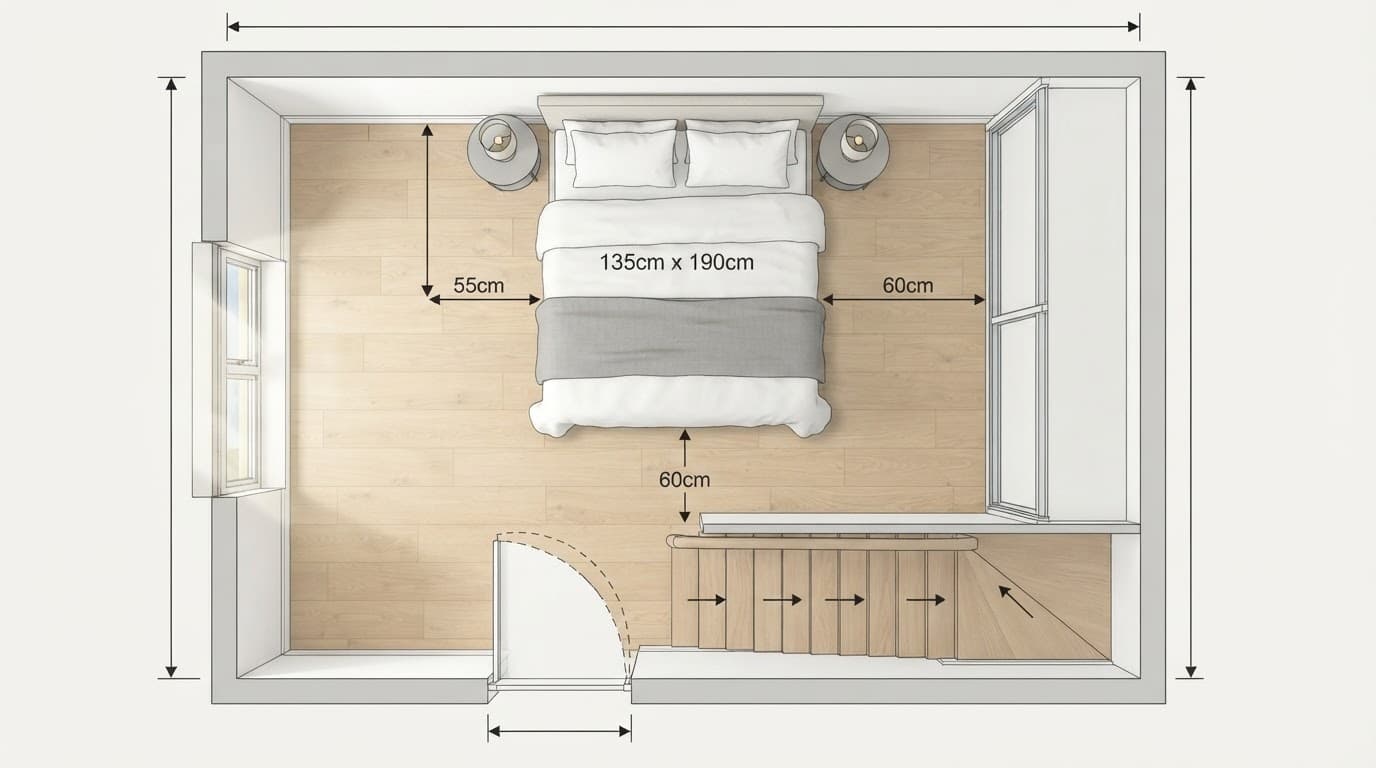
The sleeping space must also pass through the property. Narrow hallways, staircases, lifts and tight corners can prevent delivery of a fully assembled frame or flat mattress. Checking package dimensions and choosing a frame that arrives in manageable sections can prevent an expensive return.
Double bed mattress types, firmness and value compared
The mattress often determines whether a package feels like a sensible purchase or a false saving. A bundle can lower the initial cost and simplify delivery, yet its mattress may have a thinner comfort layer or simpler spring unit than a separately chosen model.
Pocket springs, foam and hybrid designs explained
Pocket springs sit inside individual fabric sleeves, allowing each spring to respond more independently to pressure. A pocket sprung mattress usually limits movement transfer between partners and offers more targeted support than connected open coils. Open-coil mattresses use linked springs, so pressure in one area can affect a wider section of the bed. They often cost less and feel bouncier, but can transfer more movement.
Foam changes the feel in a different way. Memory foam contours closely around the body and can ease pressure at the shoulders and hips. However, dense layers may retain more heat and make changing position feel slower. Polyfoam generally feels more responsive and can improve ease of movement, but quality varies according to its density and thickness. Hybrid mattresses combine a spring core with foam or latex comfort layers, offering a balance of airflow, bounce, pressure relief and movement control.
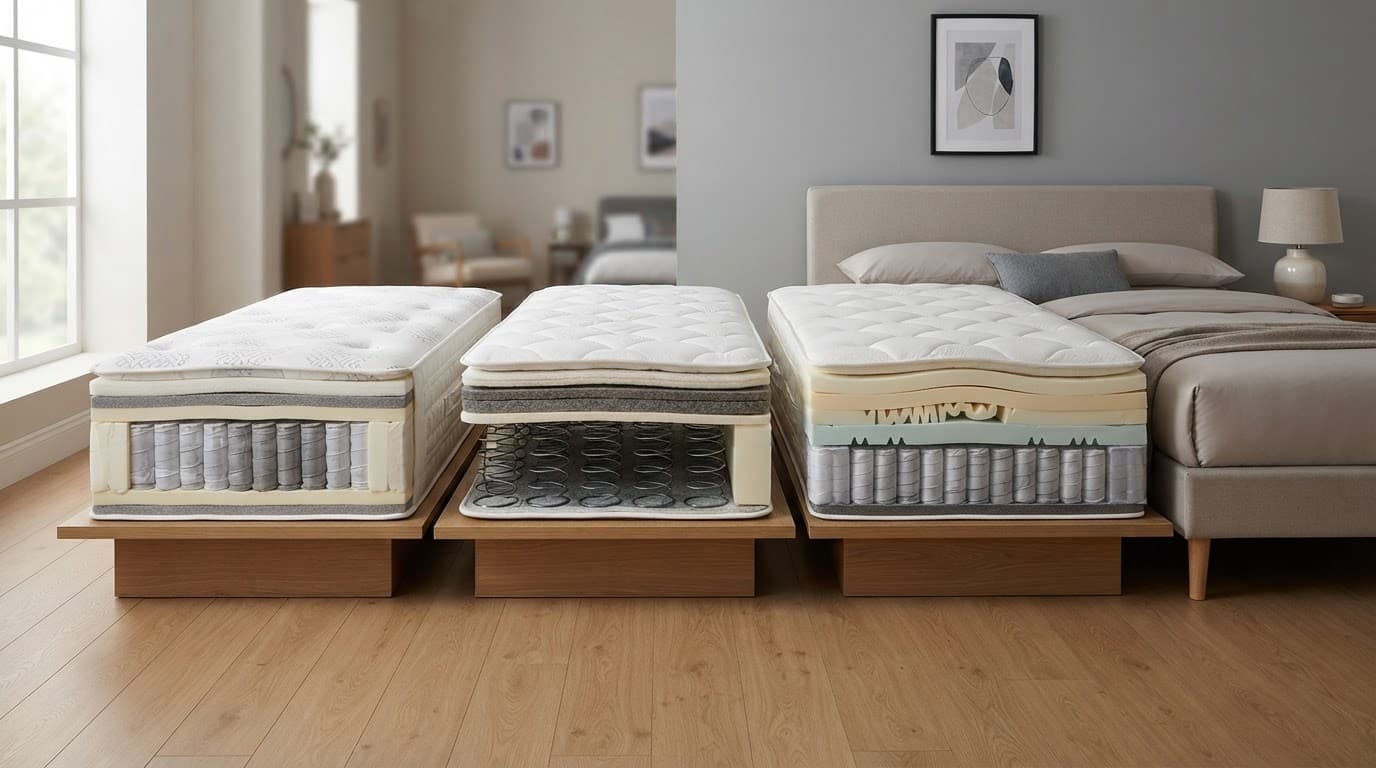
AI-generated illustration showing common mattress constructions found in UK double-bed packages.
Spring counts need careful interpretation. Manufacturers may count full-size springs, mini springs, or several layers together, so a higher number doesn’t automatically indicate better construction. Spring gauge, arrangement, edge support, foam density, mattress depth and cover quality provide more useful context.
| Mattress type | Feel | Strengths | Drawbacks | Lifespan considerations | Suitable sleepers |
|---|---|---|---|---|---|
| Open coil | Bouncy and familiar | Usually lower priced and well ventilated | More movement transfer and less targeted support | Construction quality and coil fatigue vary | Budget-conscious sleepers, guest room |
| Pocket spring | Responsive with steadier support | Better motion control and airflow | Can cost more; specifications differ | Spring quality, edge support and materials matter | Couples and those wanting responsive support |
| Memory foam | Close, cushioned and less springy | Strong pressure relief and movement absorption | May retain heat and restrict easy movement | Foam density and layer thickness affect durability | Side sleepers and people who prefer a moulded feel |
| Hybrid | Balanced, with bounce beneath cushioning | Combines spring support, airflow and foam comfort | Heavier and often more expensive | Several layers create more variables in wear | Couples wanting a compromise between responsiveness and cushioning |
Specifications and costs vary widely, so these categories describe tendencies rather than guarantees.
How firmness ratings and trial periods should be assessed
Firmness labels aren’t standardised between manufacturers. A medium mattress from one company may feel firmer or softer than another. Body weight, sleeping position, base construction and personal preference also affect whether it provides firm support.
A short shop test provides useful evidence, but several nights at home may reveal pressure points or excessive sinking. Comparing pressure relief, movement control and temperature regulation helps you work towards a comfortable night sleep.
The term orthopaedic mattress should also be treated carefully. It isn’t proof of medical suitability or superior support, so check the actual materials, firmness and return terms instead.
A home trial is valuable only when its conditions are clear. The policy should state whether the mattress must be kept in an approved protector, how long the trial lasts, whether the original packaging is required and whether collection carries a fee. Hygiene rules can exclude mattresses with stains, odours or other signs of use. Return terms therefore affect the practical value as much as the headline trial length.
Work out the total cost, not just the advertised price
Cheap double beds may cost less because they include a simpler mattress or frame, rather than offering a genuine bargain. The final budget can include:
- Standard delivery, timed delivery or room-of-choice service.
- Bed assembly and removal of packaging.
- Disposal or collection of the old mattress and bed.
- Bed linen, pillows and a suitable mattress protector.
- Storage upgrades, sprung slats or an ottoman mechanism.
- Return collection if the mattress proves unsuitable.
Comparing the expected cost per year of use gives a clearer picture than focusing on an opening discount. A cheaper mattress that loses support early may cost more over its useful service than a better-built option with a higher starting price.
Buying a double bed with mattress online without losing value
Online bed-and-mattress packages give buyers access to more choice, simpler specification comparisons and frequent price changes. Customer reviews can reveal problems that product photography hides, while saved listings make it easier to monitor prices rather than buy during a short-lived promotion.
However, online images can flatter upholstery and conceal scale. Dimensions may be unclear, the bed and mattress may arrive separately, and comfort cannot be tested before purchase. A careful comparison therefore matters more than the headline discount.

Use a specification checklist before placing an order
A product page should answer the following points before payment is made:
- For double bed frames, confirm the external dimensions, internal sleeping area, construction and storage features. Check the standard UK double mattress size, approximately 135 x 190 cm.
- Check the mattress depth and the finished sleeping height, particularly where a tall headboard or footboard is fitted.
- Identify the frame and mattress materials, including spring type, foam layers, upholstery and the base construction.
- Record the slat spacing, maximum supported weight and whether the limit includes the mattress, sleepers and bedding.
- Measure the headboard height and check that drawers, doors or an ottoman lift have enough clearance to operate.
- Establish the storage capacity, internal drawer measurements and whether storage reduces usable floor space.
- Read the warranty length, exclusions and claim process, then separate it from any mattress trial period.
- Confirm delivery method, package dimensions, room-of-choice service, old-bed collection and assembly charges. Promises of fast delivery should be checked against separate parcel timings.
- Check whether assembly is included, optional or entirely the buyer’s responsibility.
Some listings group a frame and mattress under different package names, including double mattress sets. Check exactly what each package contains before comparing prices.
Screenshots should be saved at checkout, showing the specification, total price, delivery charge and terms. Prices, stock details and conditions can change after an order, so this record provides a clearer reference if the delivered package differs from the listing.
Read online reviews for evidence, not star ratings alone
A high average score says little without the comments behind it. Repeated references to squeaking, damaged packaging, missing fixings, sagging or unexpected firmness provide more useful evidence than isolated praise. Delivery delays and poor assembly instructions also deserve attention, although they describe the buying process rather than necessarily proving that the frame or mattress is defective.
Extreme reviews need context. One angry complaint may involve an unusual incident, while one glowing review may not reveal long-term performance. Verified purchase indicators can add confidence that the reviewer bought the item, but they don’t replace detailed evidence about use, condition and customer service.
Understand UK delivery, cancellation and returns
Returning an unwanted bed is different from reporting one that arrived damaged or developed a fault. Unwanted furniture may require collection, original packaging and compliance with stated terms. Large-item collection can also involve charges, particularly where the buyer arranged a return for convenience.
When comparing cheap double beds, assess like-for-like specifications rather than relying on discount labels. A lower price may reflect a thinner mattress, simpler construction or fewer included services.
Damaged packaging, missing parts or faults should be recorded promptly with photographs and order details. The seller may arrange collection or replacement, and the agreed process can depend on the nature of the problem. Current UK consumer guidance from independent, non-retailer sources, including reputable news coverage and general reference material, should be checked before relying on any policy wording. That information can clarify rights and procedures, but it doesn’t replace tailored legal advice.
Delivery, assembly and care can decide whether the package is good value
The purchase is only the beginning. Delivery restrictions, assembly quality and routine maintenance can determine whether the bed remains comfortable and stable over time. A low price loses its appeal when the frame cannot reach the bedroom, arrives damaged or needs replacing because basic checks were missed.
Prepare the room before the delivery arrives
Measure the full delivery route, including the entrance, hallway, staircase, lift, landing and bedroom door. Package dimensions matter because the frame or mattress may need to pass through tight corners, narrow doorways or restricted communal areas.
Fast delivery is useful only when access restrictions, room-of-choice terms, package dimensions and damage-reporting procedures are clear. Delivery teams may not carry large furniture upstairs, remove doors, lift items over balconies or manoeuvre packages through difficult access points. Some services stop at the entrance or exclude room-of-choice delivery. Check these terms before ordering, particularly in a flat, maisonette or property with shared access.
Clear the bedroom before arrival and decide the bed’s final position. This leaves space for assembly and prevents the frame being dragged across furniture. Floor protection can reduce scratches, especially on timber, laminate or vinyl flooring. Keep wall sockets accessible, and allow enough clearance for drawers or storage mechanisms to open fully.

AI-generated illustration of a proportionate double bed in a UK bedroom prepared for delivery and installation.
Assemble the frame safely and check for movement
Before assembly, inspect the outer packaging for crushed corners, punctures, damp patches or torn wrapping. Photograph damaged parcels before opening them, then take further images if the frame, mattress or fittings show signs of impact. Keep the packaging until the initial inspection period has passed, as some sellers require it for collection.
Follow the supplied instructions, even when assembly appears straightforward. Tighten fixings evenly, and ensure slats sit in their intended supports without gaps, bowing or sharp movement. Before adding bedding, test the frame with gentle pressure at the corners and centre.
Record and report repeated squeaks, uneven support or visible movement. Over-tightening may damage threads or distort the frame. Improvised screws, brackets or replacement parts can also affect safety and warranty claims.
Keep the frame and mattress in good condition
Routine checks help catch small faults before they affect sleep. Bolts may loosen, slats can shift, drawers can misalign and lift-up mechanisms may need inspection for smooth, even operation. Rotate or turn the mattress only according to the manufacturer’s instructions, as some designs are one-sided or contain zoned layers.
Regular airing helps reduce trapped moisture. A washable mattress protector can limit stains and perspiration reaching the cover, but it cannot correct an unsupported frame or persistent damp. Folding a mattress that isn’t designed to bend may damage its internal layers. Stains, moisture and poor support can affect hygiene, comfort and the validity of a warranty claim.
Common mistakes when buying a double bed and mattress bundle
A low price and attractive photograph can make a bundle look convincing, but neither shows how well the frame and mattress will perform together. The most common mistakes involve missing specifications, overlooked delivery costs and assumptions about protection after purchase.
When buying the frame and mattress separately may be wiser
A package is convenient when the frame and mattress have been designed or tested for compatibility. The correct UK double size, suitable slat spacing and recommended mattress depth should all be confirmed in the specification. One order can also reduce delivery coordination and make the total price easier to compare.
However, separate buying may produce a better result when comfort is the priority. A specialist mattress selected independently may offer clearer information about spring construction, foam density, firmness and trial conditions. Choosing double bed frames separately also allows you to prioritise stronger joints, better storage or a higher weight limit.
An integrated storage design needs closer inspection. With a storage double bed, check access around the opening mechanism, available clearance and how easily the mattress can be replaced. Consider whether the mechanism is robust and whether its internal dimensions restrict future choices.
Replacement is another consideration. If the mattress wears out before the frame, a standard-sized base makes future shopping simpler. Some bundled frames have unusual internal dimensions or restrict mattress depth, which can limit replacement choices. A separate purchase may cost more initially, but stronger construction and a more suitable mattress can improve value over several years.
Signs that a deal is cheaper for a reason
Certain gaps in a product listing should be treated as warning signs rather than minor omissions. Cheap double beds aren’t automatically poor quality, but a low price should prompt careful checks before you order. Buyers should confirm whether the listing provides:
- Complete external and internal measurements, including the mattress size and depth.
- Clear information about the base, slat spacing, materials and maximum supported weight.
- A realistic price history, rather than an inflated “original” price used to make a discount appear larger.
- Specific warranty terms, exclusions and the process for reporting a fault.
- Delivery, assembly, room-of-choice and old-bed removal charges before payment.
- Clear, consistent photographs that show the frame, base and storage mechanism from useful angles.
- Reviews that relate to the exact product, rather than comments describing a different bed or mattress.
Pressure to order quickly is another concern. Genuine value doesn’t depend on preventing basic checks. A long warranty may cover manufacturing faults, but it generally won’t cover ordinary wear, stains, misuse or comfort preferences. The photograph below contrasts a measured double-bed installation with a cramped layout caused by poor planning.
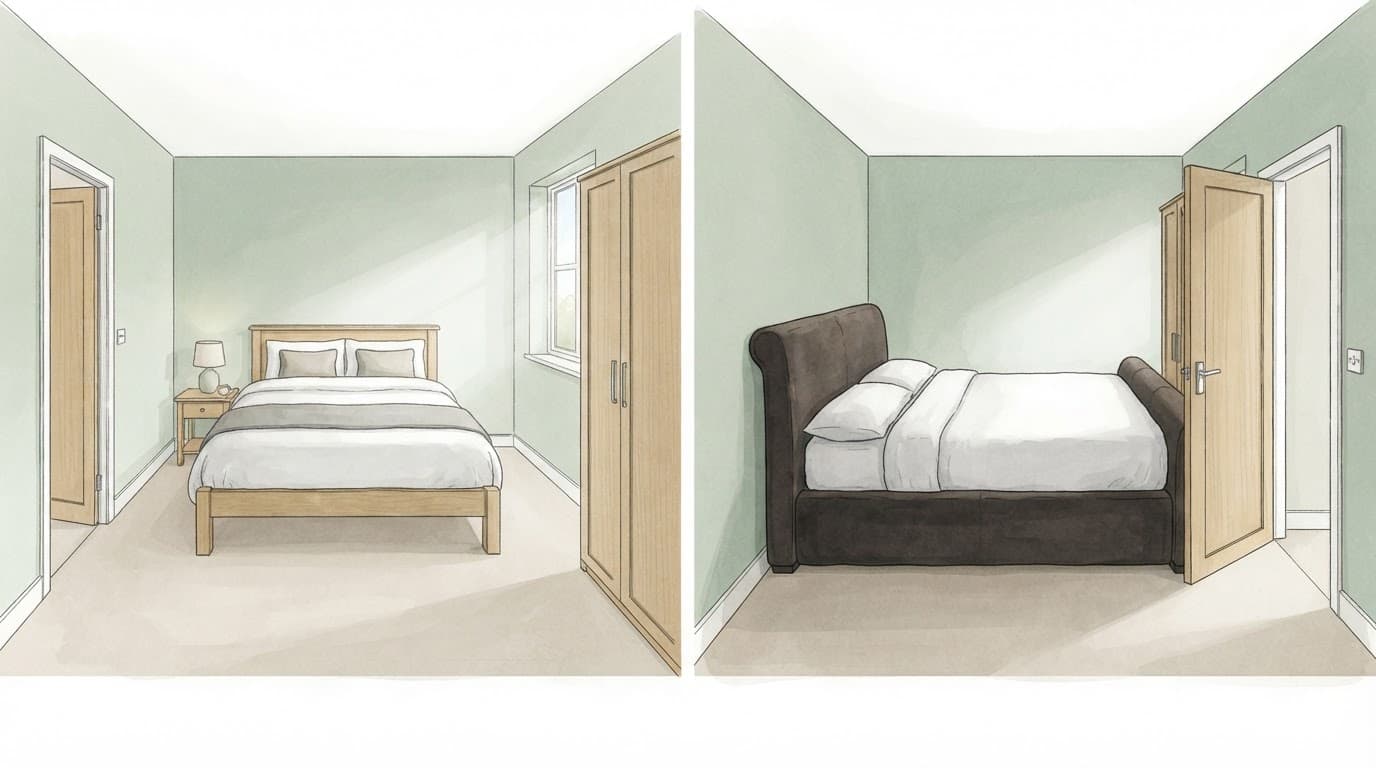
AI-generated comparison showing why internal dimensions, access routes and usable floor space matter.
Frequently Asked Questions
A bundle of this kind can look straightforward, but small differences in dimensions, materials and delivery terms often affect its real value. These answers cover practical details that product listings commonly leave unclear.
Is a package cheaper than buying both items separately?
A package can reduce the combined purchase price because the frame and mattress are sold together, often with one delivery arrangement. However, the saving depends on the mattress specification, frame quality, delivery charge and included extras, such as assembly or storage.
A low headline price may reflect an entry-level mattress or a lightweight frame. Comparing like-for-like features gives a more accurate result than comparing discounts alone. Check the spring type, foam density, slat construction, weight limits and warranty terms.
What is the standard UK double-bed size?
A standard UK double mattress commonly measures 135 cm by 190 cm. The complete frame will be larger because its side rails, headboard, footboard and storage components add to the external dimensions.
Small doubles are usually narrower, while European double mattresses can use different measurements. These alternatives should not be treated as interchangeable with a standard UK double, since even a small mismatch can leave gaps or place pressure on the frame.
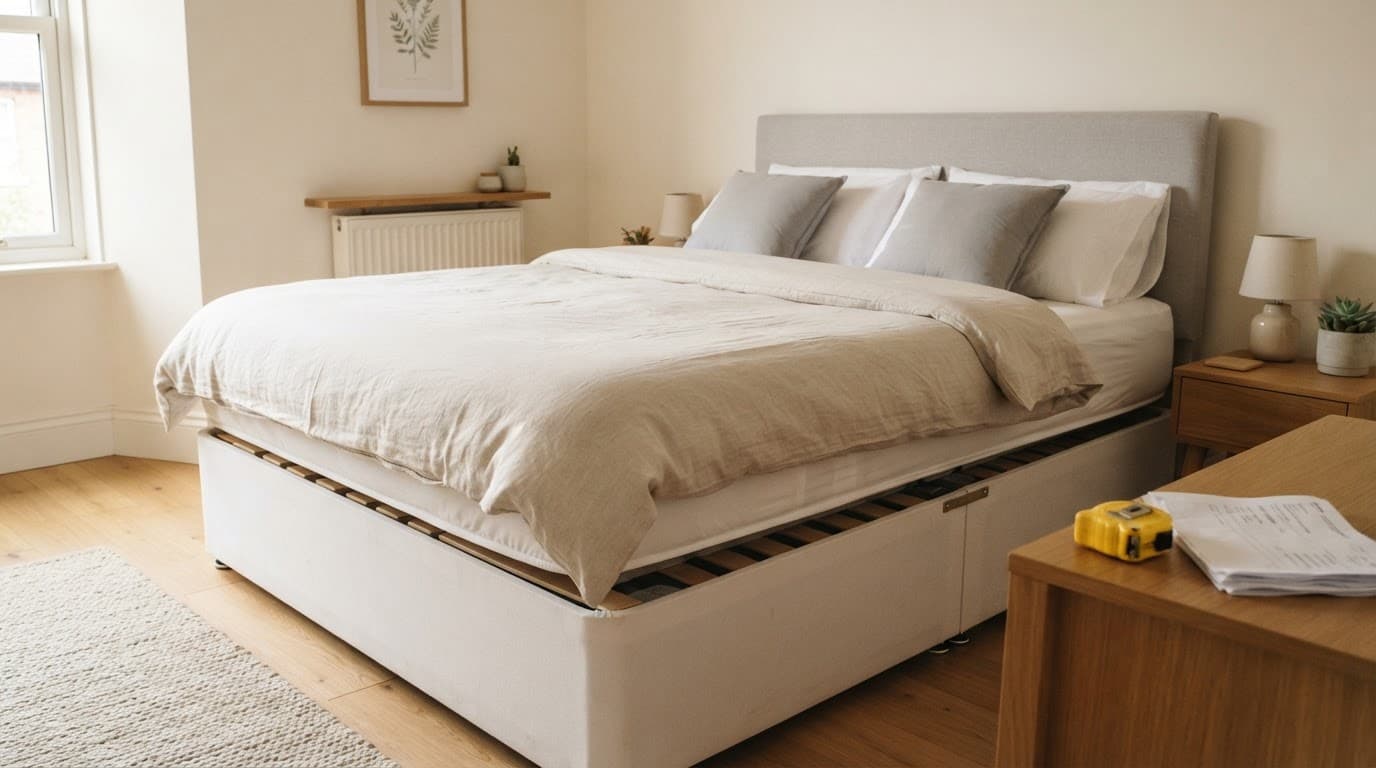
AI-generated image showing practical checks for a double-bed purchase.
Can any mattress be used on any double bed frame?
The mattress must match the frame’s internal dimensions and base design. A standard size does not guarantee that every manufacturer’s mattress will fit correctly, particularly where the frame has unusually narrow rails or limited depth.
Slat spacing, maximum weight limits and mattress depth can all affect compatibility. Some foam and hybrid mattresses need specific ventilation or closely spaced slats. Certain frames also have manufacturer requirements that may affect warranty cover.
How long should a double mattress last?
Service life varies according to the materials, construction, sleeper weight, frequency of use and level of care. A mattress in a main bedroom may wear sooner than one used occasionally. Poor support beneath it can also accelerate deterioration.
Replacement is usually worth considering when the surface develops lasting dips, support weakens, damage affects the internal structure or sleep becomes regularly disturbed. Age alone is less useful than changes in comfort and performance.
Does a mattress delivered compressed need time to expand?
Boxed mattresses often need a stated period to regain their shape and air out after unpacking. The required recovery time varies, so the supplied instructions should take priority over general advice.
Comfort can feel unusual immediately after unboxing, particularly if the mattress remains compressed or has a temporary odour. Judging it before the recommended expansion period may give a misleading impression of its final feel.
What should happen if the bed arrives damaged?
Photographs should show the outer packaging, labels and damage before the parcel is discarded. Delivery records, order details and written communications should also be kept, especially when several packages arrive separately.
The seller should be contacted promptly through the stated reporting process. The appropriate remedy may involve repair, replacement, collection or a refund, depending on the fault, order terms and applicable UK consumer rights.
Conclusion
This type of bed-and-mattress bundle offers clear convenience, particularly when one purchase simplifies delivery and ensures both parts fit together. However, the strongest value comes from checking internal dimensions, support and total costs, rather than choosing the lowest advertised price.
Online shopping offers broader choice and easier price comparisons, but photographs can’t confirm construction, comfort or access requirements. Slat spacing, mattress depth, weight limits, delivery arrangements, returns and collection fees can affect long-term value, so cheap double beds aren’t always the lowest long-term cost.
Explore More Expert Buyers Guides and Reviews
For a list of our main buyers guides use the drop-down menu at the top of the page. Topics related to this article are:
Home and Garden Furniture Buyers Guides
Bedroom Furniture Buyers Guides
living Room Furniture Buyers Guides
Garden Furniture Buyers Guides
Patio Furniture Sets Buyers Guide
–
Explore Our Blog Categories for Expert Buying Advice
- AI Powered Product Finder Tools (25)
- Expert Buying Guides & Shopping Tips for UK Shoppers (1,260)
- Brands & Designer Products (Men, Women & Electronics) (251)
- Designer Fashion Brands: Buyer’s Guides & Reviews (134)
- Electronic Brands: Buyers Guides & Reviews (84)
- Apple Products Buyer’s Guides & Reviews (23)
- Brands – Phones, Laptops, PC”s, Tablets | Buyer’s Guides & Reviews (41)
- Electronics – Tablet & iPad Reviews and Buyers Guides (11)
- Kitchen Appliance Brands: Buyer’s Guides & Reviews (22)
- Laptop Brands & MacBooks Buyer’s Guides & Reviews (9)
- Phone Brands & iPhones Buyer’s Guides & Reviews (22)
- Car Buying & Financing Made Easy | Expert Guides for the UK (88)
- Clothing, Fashion & Accessories Buying Guides UK (384)
- Beauty, Health & Wellness | Perfume, Skincare, Makeup & Wellbeing Guides (137)
- Footwear: Trainers & Shoes Buyers Guides (46)
- Jewellery: Expert Reviews, Trends & Buying Guides (67)
- Men's Clothes — Buyers Guides & Reviews (37)
- Men’s Clothes, Fashion & Accessories Guides UK | Latest Trends & Smart Shopping (137)
- Women's Clothing Buyers Guides — Dresses, Tops & More (138)
- Women’s Clothes, Fashion & Accessories Guides UK | Latest Trends & Smart Shopping (334)
- Electronics, Tech & Gadgets: Reviews, Deals & Buying Guides UK (167)
- Furniture Buyer’s Guides | Home & Garden & Styling Tips (293)
- Bedroom Furniture Guides UK | Expert Tips & Best Value Deals (92)
- Garden Furniture, Landscaping & Garden Rooms Guides UK | Expert Tips & Best Value Deals (143)
- Garden Sofa & Sofa Sets Buyers Guides (10)
- Garden Tables & Chairs: Sets, Individual Tables & Seating Buyers Guides (28)
- Home Furniture, Décor & Interior Design Guides UK | Styling Tips & Inspiration (162)
- Living Room Furniture, Design & Décor Guides UK | Styling Tips & Inspiration (56)
- Sofa & Sofa Beds Buyers Guides (18)
- Sofa Beds Buyers Guides (7)
- Sofa Buyers Guides & Expert Advice (10)
- Holidays & Travel: Hotels, Villas & Flights (156)
- Home & Garden Improvements | Renovations & Outdoor Transformation Guides (94)
- Insurance & Protection: Travel, Landlord, Gadget & More UK (159)
- Gadget Insurance UK | Expert Guides, Reviews & Smart Protection Tips (33)
- Home Emergency Cover UK | Expert Guides, Reviews & Practical Protection Tips (21)
- Landlords Insurance UK | Expert Guides, Reviews & Smart Protection Tips (31)
- Travel Insurance UK | Expert Guides, Reviews & Money-Saving Tips (34)
- Pets: Guides, Tips & Inspiration (26)
- Brands & Designer Products (Men, Women & Electronics) (251)
- Gifts for Everyone: Ideas for Every Occasion & Budget (37)