Welcome to this comprehensive birthstone guide for anyone born in the final month of summer. The August Birthstone is often listed as peridot, yet spinel and sardonyx also have recognised places in modern and historical traditions, meaning the traditional August Birthstone actually offers three distinct options.
That can make a simple gift choice feel less simple. The vibrant peridot gemstone, the versatile spinel birthstone, and the banded sardonyx birthstone each carry a different colour, price range and level of durability, so the most suitable choice depends on the jewellery itself as much as the calendar month.
For UK buyers, the useful questions concern colour, setting, wearability, online descriptions and long-term care.
Key Takeaways
- Peridot is August’s best-known green gemstone, while spinel offers a wider range of colours and sardonyx has classical roots.
- The spinel birthstone is generally the strongest choice for a ring worn most days because its durability makes it harder than peridot and sardonyx.
- Colour, cut, measurements and setting matter more than carat weight alone.
- Online listings should disclose gemstone treatments, metal details, dimensions, delivery costs and returns terms.
- Perfume, aftershave, household chemicals and hard knocks can dull or damage jewellery over time.
August Birthstone Choices: What Each Stone Means
Birthstone lists have changed with fashion, trade groups and regional custom. Peridot is the usual modern choice for August, spinel joined modern lists more recently, and sardonyx has a much older association with the month. None is a wrong choice.
An August Birthstone gift can therefore follow a favourite colour, family tradition or a particular jewellery style. Exploring gemstone origins and each unique gemstone meaning helps buyers understand why these stones captured the imagination of past civilisations. The stones also suit very different wardrobes and budgets.
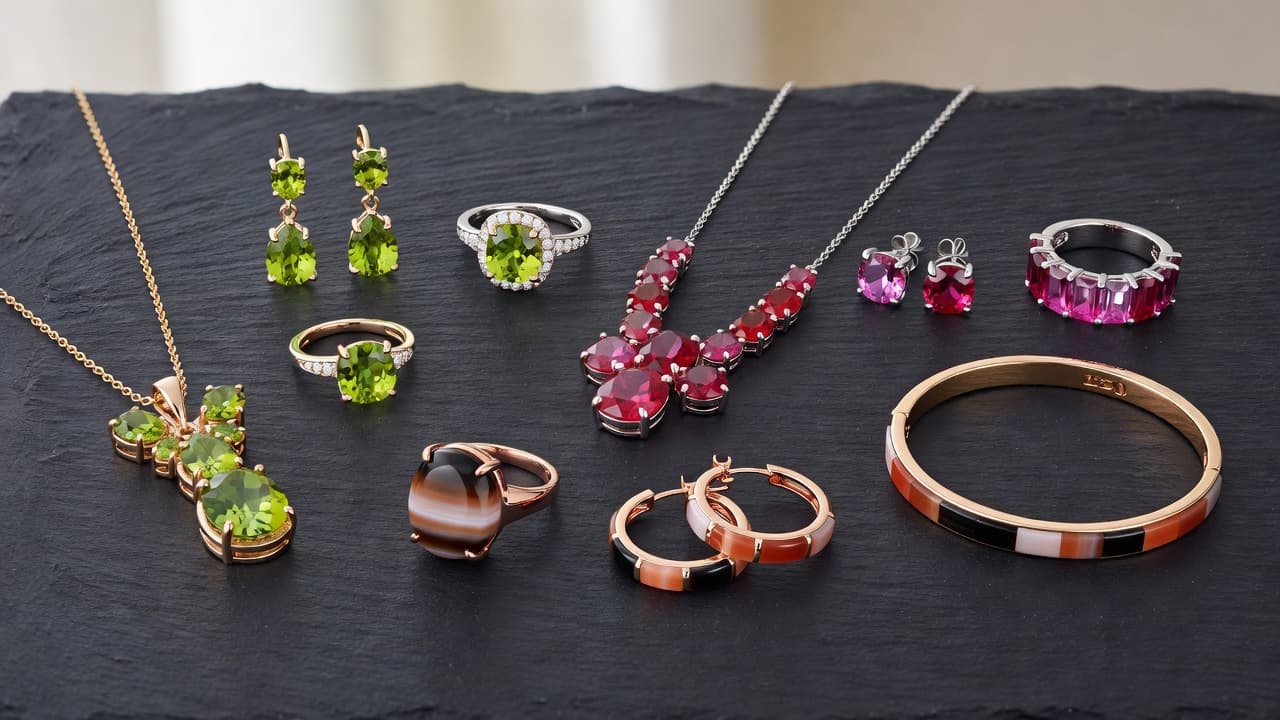
AI-generated image: peridot, spinel and sardonyx jewellery arranged for comparison.
Peridot brings bright green colour and ancient history
Peridot is the gem-quality form of the mineral olivine. Its colour runs from yellow-green and lime to olive, with the most appealing examples often showing a clean, lively green rather than a brownish cast.
This green gemstone has a rich ancient history, having appeared in jewellery for thousands of years, which gives the peridot gemstone an enduring appeal despite its vivid summer colour. Because volcanic eruptions and even meteorites can deliver the mineral olivine to Earth, folklore has linked the peridot gemstone with renewal, confidence and protection. Some cultures also viewed it as a protective talisman, although these meanings are cultural traditions rather than proven properties.
Historically known by some as the evening emerald, this green gemstone maintains its sparkling allure under artificial light. People often celebrate a sixteenth wedding anniversary with this vibrant stone, and the evening emerald also holds a special place in gem-quality mineral collections.
Colour depth and clarity shape its appearance. A pale stone can look fresh and delicate in silver, while a stronger green peridot often has greater presence in yellow gold. Small inclusions may be visible, so a stone should be viewed in daylight where possible.
Spinel offers colour variety beyond classic red
Spinel gives August a less expected option. It occurs in red, pink, purple, blue, grey and black, allowing a birthstone piece to feel restrained or highly coloured without leaving the August tradition behind.
The spinel birthstone provides remarkable versatility because these gem varieties form across diverse geological environments, including rich deposits found in Myanmar mines.
For centuries, some red spinels were mistaken for rubies. The famous Black Prince’s Ruby in the Imperial State Crown is, despite its name, a red spinel. That history has helped the spinel birthstone gain greater recognition in its own right.
A red or pink spinel can suit classic fine jewellery, while grey and black varieties work well in modern men’s rings and pared-back pendants. Its durability also gives it an advantage for pieces that see regular use.
Sardonyx connects August jewellery with classical tradition
Sardonyx is a layered form of chalcedony, made from sard and onyx. It commonly shows bands of red-brown, orange, white or black, and no two patterns are identical. Selecting a sardonyx birthstone connects the wearer to centuries of artistic heritage.
Carvers have long used the sardonyx birthstone for cameos, seals and signet rings because the contrasting layers can reveal a design. It carries traditional associations with courage, strength and protection.
Its character is less about sparkle than surface and pattern. Sardonyx suits carved pendants, oval signet rings, cufflinks and geometric jewellery, especially for someone drawn to vintage clothing, tailoring or unisex accessories.
How to Choose the Right August Birthstone Jewellery
The right August Birthstone jewellery depends on where it will be worn. Earrings and pendants face fewer knocks than rings and bracelets, so they offer more freedom with softer stones, allowing you to appreciate the unique peridot gemstone in various settings.
A buyer comparing several pieces should inspect the whole design. The metal, setting, clasp and cut will affect both appearance and lifespan.
Match the gemstone to the wearer’s style and wardrobe
Peridot pairs naturally with warm neutrals, cream linen, tan leather and yellow-gold jewellery. It works particularly well with summer dresses, relaxed shirts and soft tailoring, though a small green gemstone pendant can remain discreet in winter. This vibrant peridot gemstone also carries a rich history that adds depth to any outfit.
Spinel suits a wider colour palette. Pink and red stones complement eveningwear and richer jewel tones, whereas grey or black spinel can sit easily with black knitwear, navy suits and minimalist men’s clothing, making the spinel birthstone a versatile choice for modern wardrobes.
Sardonyx has a more historic look. A carved pendant can make a thoughtful women’s birthstone gift, while a signet ring or cufflinks can suit formal menswear. A slim sardonyx birthstone bracelet also offers a quieter alternative to a large gemstone ring.
Check durability before choosing a ring or everyday piece
The Mohs hardness scale measures resistance to scratching. Peridot is around 6.5 to 7 on the Mohs scale, sardonyx is around 6.5 to 7, and spinel is around 8, which greatly affects the overall durability of each piece.
That makes spinel the more practical option for frequent ring wear where durability is a priority. However, hardness is not the only issue. A high setting can catch on clothing, a pointed cut can chip, and a busy job or active hobby can damage any stone.
A protective bezel or low claw setting can extend the life of an everyday ring, especially where peridot or sardonyx is exposed at the edge.
Understand colour, clarity, cut and carat weight
Colour should appear even and appealing under natural light. Peridot should not look muddy, while spinel benefits from clear saturation and sardonyx from well-defined bands. When selecting a piece to mark a wedding anniversary, understanding the gemstone meaning and overall quality becomes especially important.
Clarity concerns visible internal features. A few inclusions do not automatically reduce beauty, but a cloudy stone may lack life. Cut controls how a faceted stone reflects light, while a neat cabochon can show sardonyx’s bands to better effect.
Carat describes weight, not automatic quality or visible size. Two gemstones of equal carat weight may look different because of their shape and proportions. Online buyers should compare millimetre measurements, several photographs and an independent written description.
Buying August Birthstone Jewellery Online in the UK
Online shopping offers access to unusual spinel colours, carved sardonyx and cuts rarely found on a high street. It also makes price comparison easier. However, photography can exaggerate colour, and a low headline price may conceal delivery, resizing or import costs.
What to verify before placing an online order
A credible listing identifies the gemstone, its dimensions, carat weight where relevant, metal purity and total item weight. For precious metals, buyers should check hallmark information where it is legally required in the UK.
The description should also disclose treatments and state clearly whether a peridot gemstone is natural, lab-created or imitation. Valuable pieces may justify a report from a recognised independent gemmological laboratory to confirm gemstone origins.
Before payment, the listing should confirm:
- The ring size, pendant dimensions, chain length and fastening type.
- Whether the item is made to order, altered or eligible for return.
- Delivery cost, insurance during transit and expected dispatch date.
- The seller’s UK contact details, returns address and written terms.
Receipts, photographs and gem reports should be retained. They help with resale records, repairs and any future jewellery insurance claim.
Compare the full cost, not just the advertised price
Consumer prices should make clear whether VAT applies. Imports can also bring handling charges, customs costs and longer returns arrangements. Resizing a ring or replacing a short chain can change the total sharply.
Like-for-like comparisons are more reliable. A £300 spinel birthstone pendant in sterling silver cannot be measured fairly against a £300 piece in 9-carat gold with a smaller stone. Metal purity, workmanship, gemstone dimensions and aftercare all belong in the calculation.
For expensive jewellery, a contents policy may have a limit for single items. Buyers should check the policy wording before assuming a new August Birthstone ring is covered outside the home.
Use measurements and reviews to avoid poor fit or surprises
Ring guides help, but an existing ring measured by a jeweller is more reliable. Pendant size should be compared with a familiar object, while chain length should be checked against a necklace already worn regularly.
When shopping for an August Birthstone online, reviews matter most when they describe colour accuracy, polish, packaging, sizing and how returns were handled. A high star rating without detail offers little evidence. Close-up customer photographs can also reveal how a sardonyx birthstone looks away from studio lighting.
Caring for Peridot, Spinel and Sardonyx Jewellery
Gentle cleaning suits all three stones, and warm soapy water is the ideal choice for everyday upkeep. Warm soapy water, a small amount of mild soap and a soft brush will usually remove everyday residue before the jewellery is dried with a lint-free cloth.
Harsh chemicals, ultrasonic cleaners and sudden temperature changes create avoidable risks, especially for stones with fractures or delicate settings, making proper gemstone care essential.
Protect softer stones from knocks and scratches
Peridot and sardonyx need more care than spinel because the peridot gemstone has a lower rating on the hardness scale. Contact with harder gems can scratch their surfaces, while an impact against a worktop or gym equipment can chip an exposed edge, testing the durability of the jewellery.
Rings should come off before sport, gardening, cleaning and manual work. Regular checks of claws, clasps and earring backs can prevent a loose stone becoming a lost one through routine gemstone care.
Keep colour and polish looking their best
Lotions, perfume and aftershave leave residue that dulls a gemstone’s surface. Jewellery should go on after cosmetics and fragrance have dried, then come off before showering or applying hand cream as part of your gemstone care routine.
Store each piece separately in a lined box or soft pouch. This reduces scratching and protects metal surfaces from damp conditions and direct sunlight.
August Birthstone FAQs and Gift Ideas
| Question | Practical answer |
|---|---|
| What is the August birthstone? | Peridot is the best-known modern choice. Spinel is also recognised, while sardonyx is the traditional historical option. |
| Is spinel different from peridot? | Yes. The peridot gemstone is green olivine, while the spinel birthstone occurs in many colours and is harder. |
| Is sardonyx still recognised? | Yes. It remains an established traditional August stone and is popular for carved jewellery. |
| Which stone suits everyday wear? | Spinel is usually the strongest choice for a frequently worn ring. |
| What makes a suitable gift? | A personalised pendant, small birthstone earrings, a discreet bracelet or a sardonyx signet ring can suit different tastes. |
| How do these stones form? | Peridot can be brought to the surface by volcanic eruptions, whereas famous spinel stones often originate from Myanmar mines. |
| How can I understand the history? | Exploring each gemstone meaning can help you choose a piece with a deeper personal connection. |
Peridot remains the natural choice for those who want August’s familiar green. Spinel gives more freedom over colour and daily wear, while sardonyx brings pattern, carving and a sense of history.
Final Thoughts
The three August stones offer distinct routes into birthstone jewellery. Peridot brings a luminous green gemstone to your collection, spinel combines colour choice with greater hardness, and sardonyx offers an older, carved tradition.
The strongest choice rests on personal colour preference, jewellery type, durability, budget and the quality of the listing. Selecting the right peridot gemstone or its alternatives becomes much easier when you use a thorough birthstone guide, ensuring the final piece is matched by a design that can be worn for years.
Explore our Buyers Guides and Reviews
For a list of our main buyers guides use the drop-down menu at the top of the page. Topics related to this article are:
Laptop Insurance Buyers Guides
Gadget Insurance Buyers Guides
Home Emergency Cover Buyers Guide
Travel Insurance Buyers Guides
Car Breakdown Cover Buyers Guide
–
Explore Our Blog Categories for Expert Buying Advice
- AI Powered Product Finder Tools (24)
- Expert Buying Guides & Shopping Tips for UK Shoppers (1,160)
- Brands & Designer Products (Men, Women & Electronics) (228)
- Designer Fashion Brands: Buyer’s Guides & Reviews (121)
- Electronic Brands: Buyers Guides & Reviews (70)
- Apple Products Buyer’s Guides & Reviews (22)
- Brands – Phones, Laptops, PC”s, Tablets | Buyer’s Guides & Reviews (36)
- Electronics – Tablet & iPad Reviews and Buyers Guides (10)
- Kitchen Appliance Brands: Buyer’s Guides & Reviews (20)
- Laptop Brands & MacBooks Buyer’s Guides & Reviews (7)
- Phone Brands & iPhones Buyer’s Guides & Reviews (20)
- Car Buying & Financing Made Easy | Expert Guides for the UK (85)
- Clothing, Fashion & Accessories Buying Guides UK (333)
- Beauty, Health & Wellness | Perfume, Skincare, Makeup & Wellbeing Guides (123)
- Footwear: Trainers & Shoes Buyers Guides (36)
- Jewellery: Expert Reviews, Trends & Buying Guides (58)
- Men's Clothes — Buyers Guides & Reviews (38)
- Men’s Clothes, Fashion & Accessories Guides UK | Latest Trends & Smart Shopping (126)
- Women's Clothing Buyers Guides — Dresses, Tops & More (117)
- Women’s Clothes, Fashion & Accessories Guides UK | Latest Trends & Smart Shopping (281)
- Electronics, Tech & Gadgets: Reviews, Deals & Buying Guides UK (156)
- Furniture Buyer’s Guides | Home & Garden & Styling Tips (272)
- Bedroom Furniture Guides UK | Expert Tips & Best Value Deals (89)
- Garden Furniture, Landscaping & Garden Rooms Guides UK | Expert Tips & Best Value Deals (131)
- Home Furniture, Décor & Interior Design Guides UK | Styling Tips & Inspiration (151)
- Living Room Furniture, Design & Décor Guides UK | Styling Tips & Inspiration (52)
- Holidays & Travel: Hotels, Villas, UK Breaks & Skiing (143)
- Insurance & Protection: Travel, Landlord, Gadget & More UK (157)
- Gadget Insurance UK | Expert Guides, Reviews & Smart Protection Tips (32)
- Home Emergency Cover UK | Expert Guides, Reviews & Practical Protection Tips (21)
- Landlords Insurance UK | Expert Guides, Reviews & Smart Protection Tips (31)
- Travel Insurance UK | Expert Guides, Reviews & Money-Saving Tips (34)
- Pets: Guides, Tips & Inspiration (24)
- Brands & Designer Products (Men, Women & Electronics) (228)
- Gifts for Everyone: Ideas for Every Occasion & Budget (31)