Investing in a high-quality patio heater is the most effective way to turn a chilly outdoor space into a comfortable retreat you’ll use long after sunset. That matters in the UK, where patios, decking, balconies and garden seating areas often feel underused for much of the year.
The right energy efficient heater adds comfort without taking over the space or pushing up running costs more than needed. Before you buy, it helps to know which type suits your layout, how much warmth you need, and why buying online often makes comparison easier.
Key Takeaways
- Choose your patio heater type based on space and needs: electric for smaller patios, balconies and covered areas; gas for larger open spaces; tabletop for compact seating.
- Match heat output to your seating layout and conditions like wind, prioritising targeted radiant heat such as infrared over raw power for efficiency.
- Check running costs, safety features like tip-over switches and timers, weather resistance, and ease of storage to suit UK weather and usage.
- Buy online to compare specs, reviews, dimensions and prices easily, ensuring the model fits your outdoor setup without excess size or cost.
What a patio heater does, and who it is best for
A patio heater provides outdoor heating, with an electric patio heater or freestanding patio heater able to transform your outdoor space, so you can sit outside longer when the air cools down. It won’t turn your garden into a living room, but it can make a dining set, sofa area or balcony feel far more usable in spring, autumn and cool summer evenings.
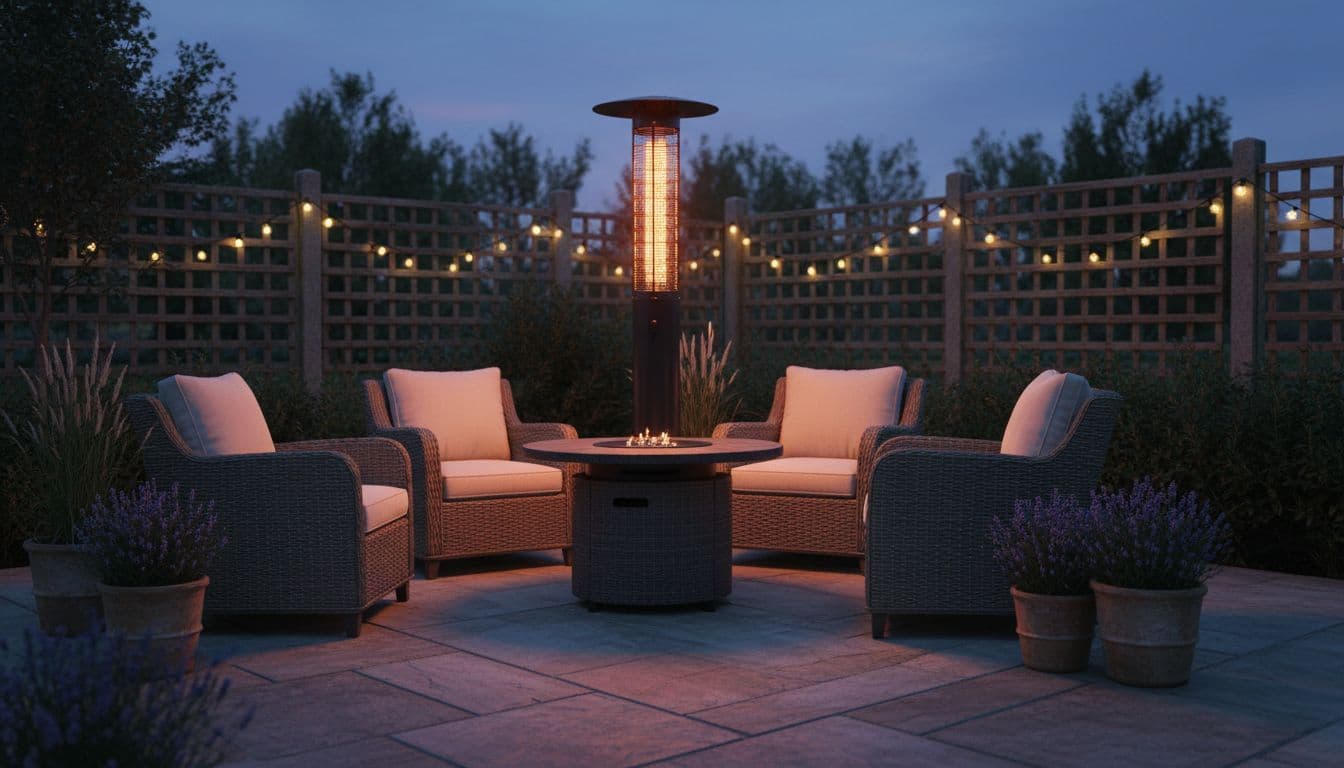 For many homes, that’s enough. If you eat outdoors, host friends now and then, or like a quiet evening in the garden, a heater can make the space feel less seasonal. Still, the best model depends on three things, the size of the area, the fuel or power source, and how often you’ll use it.
When a patio heater is worth buying
You’ll probably get good use from one if any of these sound familiar:
- You sit outside in the evening and don’t want to head in as soon as the temperature drops.
- You use your garden or balcony in spring and autumn, not only on hot days.
- You want warmth aimed at a dining table or seating area, not across the whole garden.
- You prefer the convenience of instant warmth without smoke, unlike a traditional fire pit.
If you only go outside on rare warm weekends, a heater may spend more time stored away than in use.
The main places people use patio heaters at home
Most people use them on patios, terraces, decking and garden seating areas. They also suit some balconies and covered outdoor spaces, as long as the heater type fits the spot.
Placement matters, because open and windy corners lose heat fast. In those spaces, you may need higher output, a better position, or a heater that gives more direct warmth.
The main types of patio heater, and how to pick between them
The main choice comes down to electric patio heaters, gas patio heaters, or compact tabletop patio heaters. Each works well in the right setting, but none suits every garden.
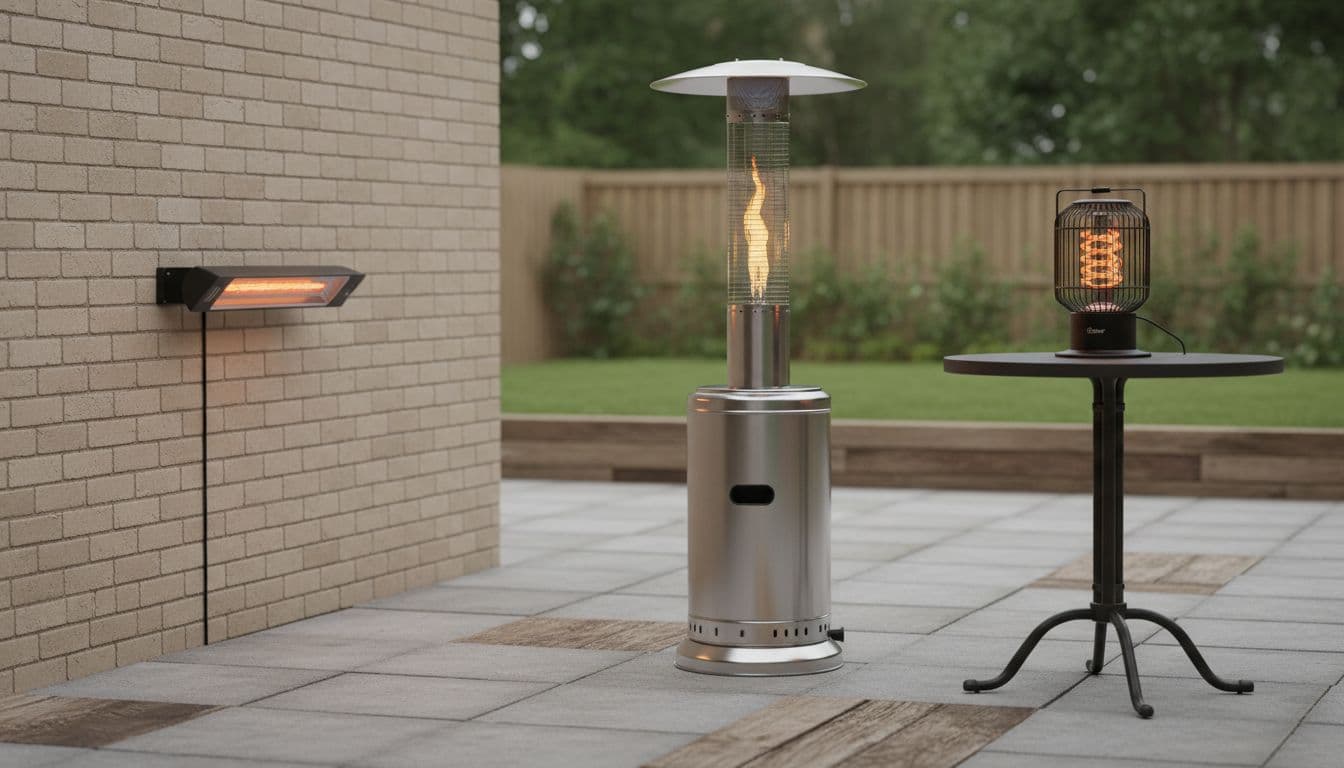 This quick comparison makes the trade-offs easier to spot:
| Type | Best for | Main strengths | Main limits |
|---|---|---|---|
| Electric patio heaters | Smaller patios, covered areas, balconies | Quick to switch on, low fuss, quiet | Needs power nearby |
| Gas patio heater | Larger patios, open spaces | Stronger heat, easy to place | Needs gas bottle, takes more room |
| Tabletop patio heater | Bistro sets, compact seating areas | Small footprint, easy to move | Heats a narrow area |
In short, think about how the heater fits your space, not which type sounds most powerful on paper.
Electric patio heaters for simple, low-fuss use
Electric models are often the easiest to live with. You switch them on quickly, there’s no fuel bottle to manage, and many run quietly. They suit smaller spaces well, especially if you already have an outdoor socket. Electric patio heaters are ideal for balconies.
You’ll see wall-mounted, freestanding and infrared styles. Popular choices include the infrared patio heater and halogen heaters, which deliver radiant heat to people and surfaces more directly. Halogen heaters feel better than trying to warm the air around you, making them a smart pick for efficient, targeted comfort.
Gas patio heaters for stronger heat and flexible placement
Gas patio heaters often give more heat, which helps in bigger or more open areas. They also don’t need a power socket nearby, so placement is more flexible.
That said, they need room for the heater and the fuel bottle, typically propane. Gas patio heaters also offer multiple heat settings but ask for a bit more upkeep. If you want strong warmth for outdoor dining or regular entertaining, though, gas can be a good fit.
Tabletop and compact heaters for smaller outdoor spaces
Compact heaters work best where space is tight. Think balcony seating, a small patio set, or a corner bench.
Because they’re smaller, they usually give targeted warmth rather than broad coverage. That’s not a weakness if you only need heat for two people at a table.
Key things to check before you buy a patio heater
It’s easy to focus on the biggest model or the lowest price. A better approach is to match the heater to the way you use the space.
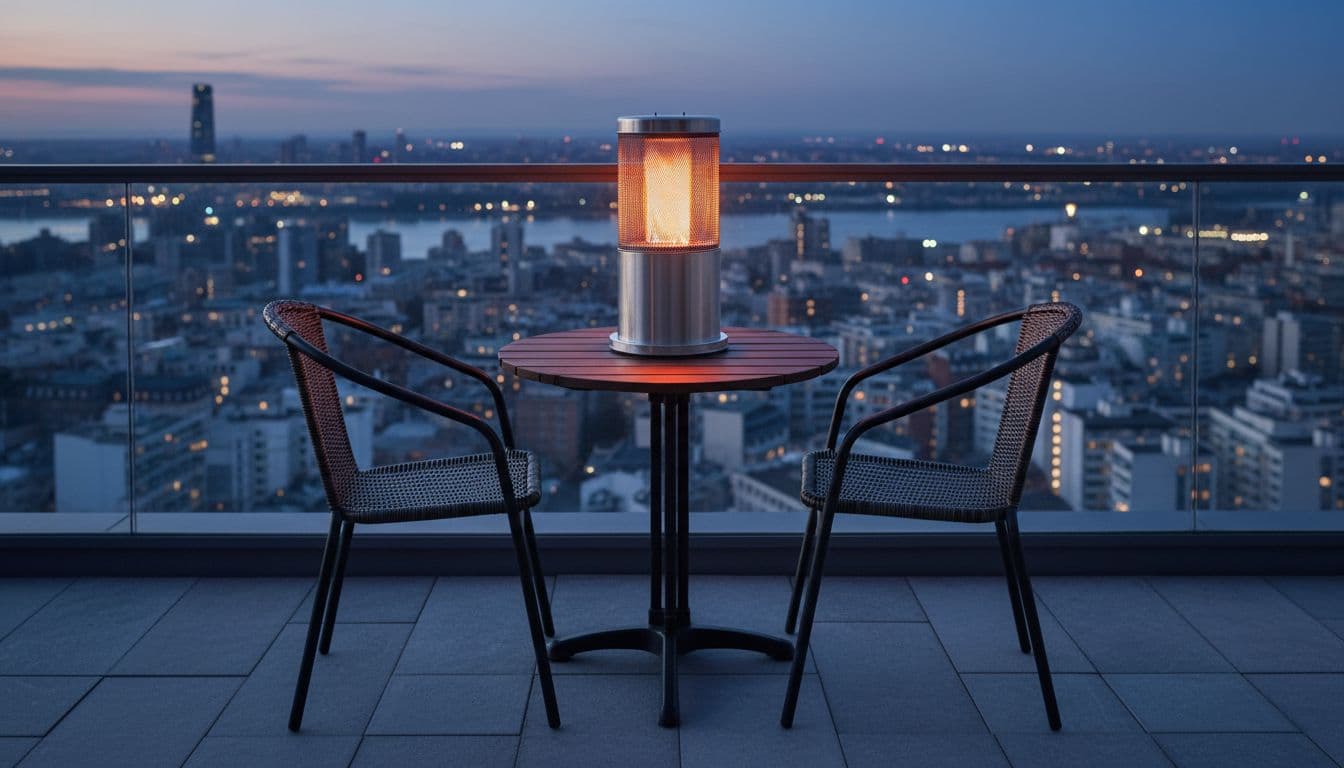 A heater for a sheltered balcony won’t need the same output as one for an exposed patio. In the same way, a tall freestanding model can swamp a small seating area, while a compact heater may disappear in a large garden.
Heat output, coverage, and where the warmth actually reaches
Heat output is often measured in kilowatts for electric units, but higher output doesn’t always mean better results. If the area is open and windy, much of that heat can drift away. Infrared heat, for example, is less affected by wind and can provide more consistent warmth.
Think about your seating layout instead. Do you want broad warmth across several chairs, or focused heat for one dining table? Distance matters too, because even a strong heater feels weak if it’s too far from where people sit.
Size, style, and fit for your outdoor space
Check the heater’s footprint and height before ordering. A large base can block walkways, while a tall model may look awkward beside low seating. For small spaces like narrow balconies, wall-mounted options help save floor space.
For electric models, cable reach matters as much as power. Also think about style; a dining area, lounge set, and narrow balcony all suit different shapes and sizes. Adjustable heat settings add convenience for fine-tuning the warmth.
Weather resistance, materials, and ease of storage
UK weather can be hard on outdoor gear, so build quality matters. Stainless steel, aluminium, and powder-coated finishes are common, and a stable base is always worth having. Look for an IP rating to ensure all weather use.
A waterproof cover helps, especially if the heater stays outside for part of the season. If you plan to store it away, check how easy it is to move and whether it comes apart without much hassle.
Frequently Asked Questions
What type of patio heater is best for a small balcony?
Electric patio heaters, especially wall-mounted or infrared models, suit balconies best due to their compact size, quiet operation and no need for a gas bottle. They provide quick, targeted warmth without taking up floor space. Tabletop options also work well for bistro sets if you have a power socket nearby.
How do electric and gas patio heaters compare in running costs?
Running costs depend on usage, power level and fuel prices, but electric models often cost less upfront and for short sessions, while gas provides stronger heat for larger areas at potentially higher fuel costs. Match output to your space to avoid waste, and compare energy efficiency ratings. Gas may suit occasional strong heating, but electric is simpler for regular low-fuss use.
What safety features should I look for in a patio heater?
Essential features include a tip-over safety switch, built-in timer, and stable base to prevent accidents. Keep clear space around the heater, away from children, pets and flammables, and ensure it’s rated for outdoor use. Higher-end models add remote controls and oscillation for safer heat distribution.
Will a patio heater work well in windy UK gardens?
In windy or open spaces, opt for gas models with higher output or infrared electric heaters that deliver radiant heat less affected by breeze. Position the heater close to seating for direct warmth, and avoid exposed corners where heat escapes quickly. A stable, weather-resistant build with IP rating helps in UK conditions.
Patio heater running costs, safety, and smart online buying tips
Price tags only tell part of the story. The real cost depends on how often you use the heater, what powers it, and how long it lasts.
What affects running costs and long-term value
Running costs vary with fuel type, power level and usage. A gas patio heater used twice a week for short evening meals will cost less to run than one used for long sessions in an exposed garden. For example, a gas patio heater running on propane offers high power, but matching its BTU output to your space keeps it energy efficient and helps control running costs over time.
So, compare the full picture. Look at energy or fuel use, expected lifespan, maintenance, and whether the heater gives the right amount of heat for your space. A cheap gas patio heater can feel expensive if it’s weak, awkward, or poorly made.
Basic patio heater safety rules every buyer should know
Patio heaters need sensible placement. Keep clear space around them, set them on a stable surface, and use them only in the way the maker states. Look for key safety features such as a tip-over safety switch and a built-in timer, which automatically shut off the heater if tipped or after a set time.
Put the heater where people feel the warmth, but not where they’ll brush past it.
Keep heaters away from children, pets, cushions and anything flammable. Also check whether the model is for outdoor-only use, and follow the instructions for setup, use and storage. Higher-end options often include a remote control and oscillation for safer, more even heat distribution without needing to get too close, plus another tip-over safety switch and built-in timer for added peace of mind.
Why buying a patio heater online can be the smarter option
Buying online usually gives you more choice. You can compare electric, gas and tabletop models side by side, check dimensions, and filter by heat output, finish or mounting style without walking around shops.
It’s also easier to compare prices, delivery costs and warranty terms. Customer reviews can help too, especially when they mention real-life use on balconies, patios or exposed gardens. Before ordering, check the key details carefully, including size, power or fuel type, weather rating, returns policy and delivery times. Note that self-assembly is common for a portable patio heater or freestanding patio heater, and some robust models suit commercial use.
Final Verdict
A patio heater earns its place when it matches the space you already have. The best choice isn’t the biggest or the cheapest; it’s the one that provides the right amount of heat, suits your specific layout, and feels easy to use. By carefully measuring your space, comparing running costs against your expected usage, and selecting a model with essential safety features like a tip-over switch, you can enjoy your garden long after the sun goes down.
Explore More Expert Buyers Guides and Reviews
For a list of our main buyers guides use the drop-down menu at the top of the page. Topics related to this article are:
Home and Garden Furniture Buyers Guides
Bedroom Furniture Buyers Guides
living Room Furniture Buyers Guides
Garden Furniture Buyers Guides
Patio Furniture Sets Buyers Guide
–
Explore Our Blog Categories for Expert Buying Advice
- AI Powered Product Finder Tools (25)
- Expert Buying Guides & Shopping Tips for UK Shoppers (1,461)
- Brands & Designer Products (Men, Women & Electronics) (293)
- Designer Fashion Brands: Buyer’s Guides & Reviews (166)
- Electronic Brands: Buyers Guides & Reviews (92)
- Apple Products Buyer’s Guides & Reviews (25)
- Brands – Phones, Laptops, PC”s, Tablets | Buyer’s Guides & Reviews (44)
- Electronics – Tablet & iPad Reviews and Buyers Guides (10)
- Kitchen Appliance Brands: Buyer’s Guides & Reviews (24)
- Laptop Brands & MacBooks Buyer’s Guides & Reviews (9)
- Phone Brands & iPhones Buyer’s Guides & Reviews (23)
- Car Buying & Financing Made Easy | Expert Guides for the UK (89)
- Clothing, Fashion & Accessories Buying Guides UK (510)
- Beauty, Health & Wellness | Perfume, Skincare, Makeup & Wellbeing Guides (187)
- Footwear: Trainers & Shoes Buyers Guides (49)
- Jewellery: Expert Reviews, Trends & Buying Guides (74)
- Men's Clothes — Buyers Guides & Reviews (39)
- Men’s Clothes, Fashion & Accessories Guides UK | Latest Trends & Smart Shopping (172)
- Women's Clothing Buyers Guides — Dresses, Tops & More (202)
- Women’s Clothes, Fashion & Accessories Guides UK | Latest Trends & Smart Shopping (449)
- Electronics, Tech & Gadgets: Reviews, Deals & Buying Guides UK (183)
- Furniture Buyer’s Guides | Home & Garden & Styling Tips (329)
- Bedroom Furniture Guides UK | Expert Tips & Best Value Deals (93)
- Garden Furniture, Landscaping & Garden Rooms Guides UK | Expert Tips & Best Value Deals (170)
- Garden Sofa & Sofa Sets Buyers Guides (11)
- Garden Tables & Chairs: Sets, Individual Tables & Seating Buyers Guides (57)
- Home Furniture, Décor & Interior Design Guides UK | Styling Tips & Inspiration (170)
- Living Room Furniture, Design & Décor Guides UK | Styling Tips & Inspiration (57)
- Sofa & Sofa Beds Buyers Guides (19)
- Sofa Beds Buyers Guides (7)
- Sofa Buyers Guides & Expert Advice (11)
- Holidays & Travel: Hotels, Villas & Flights (162)
- Home & Garden Improvements | Renovations & Outdoor Transformation Guides (106)
- Insurance & Protection: Travel, Landlord, Gadget & More UK (159)
- Gadget Insurance UK | Expert Guides, Reviews & Smart Protection Tips (33)
- Home Emergency Cover UK | Expert Guides, Reviews & Practical Protection Tips (21)
- Landlords Insurance UK | Expert Guides, Reviews & Smart Protection Tips (31)
- Travel Insurance UK | Expert Guides, Reviews & Money-Saving Tips (34)
- Pets: Guides, Tips & Inspiration (28)
- Brands & Designer Products (Men, Women & Electronics) (293)
- Gifts for Everyone: Ideas for Every Occasion & Budget (51)