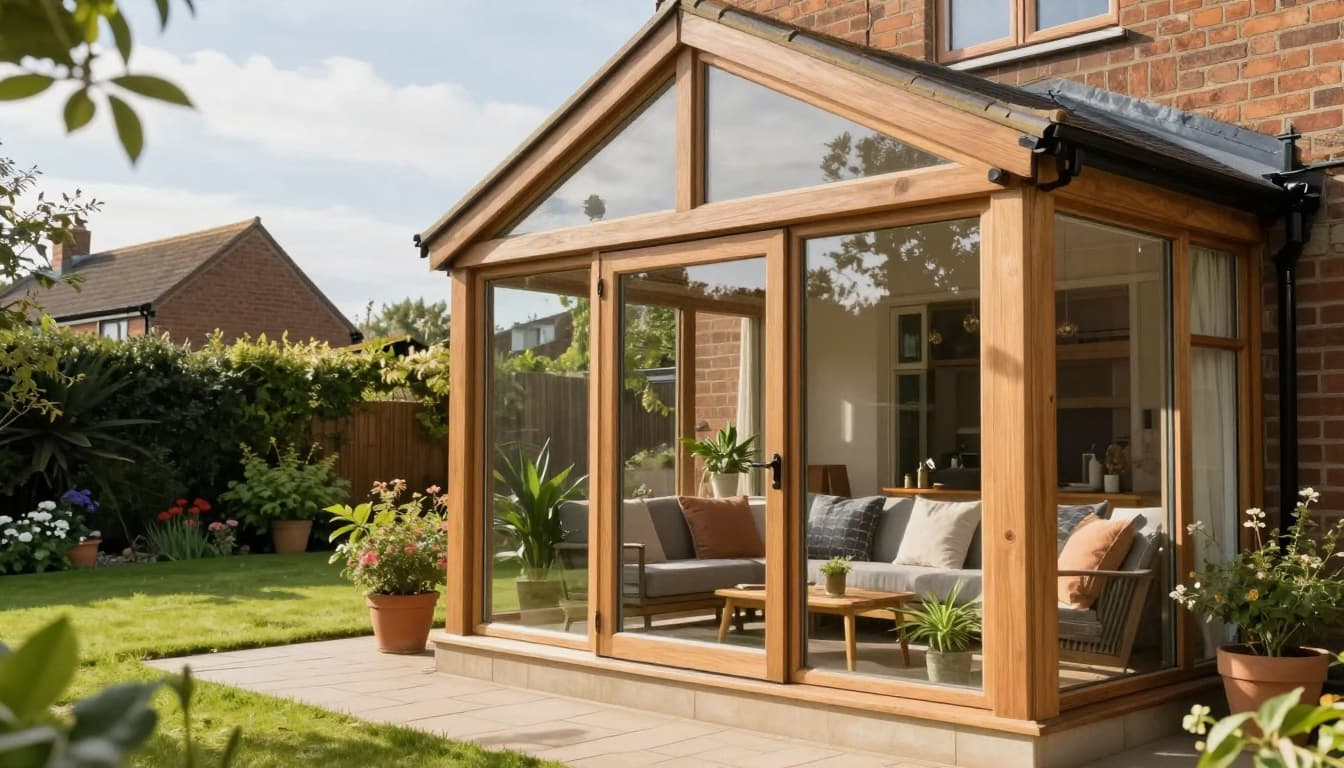
 An airy sunroom opening onto a garden, created with AI.
A sunroom is the home upgrade that feels like cheating. It’s more space, more daylight, and a front-row seat to the garden, without always needing a full scale extension.
In plain terms, a sunroom is a glazed room (lots of glass) designed to bring in light. In the UK, homeowners often choose one for a brighter kitchen-diner, a calm reading spot, a playroom that can be closed off, or a home office that doesn’t feel boxed in.
This guide walks through the main types of sunrooms, what affects comfort (and price), the planning and building rules to check, and how to compare quotes so you’re not caught out by “extras” later.
What is a sunroom, and is it right for your home?
A sunroom sits between “full extension” and “a bit more space”. It’s usually built at the rear or side, with large glazed panels and a roof designed to let in plenty of daylight. If you love the idea of eating breakfast with the garden in view, it’s hard to beat.
Common ways people use a sunroom in UK homes include:
- Dining space that feels brighter than a typical rear extension
- Reading room with a comfy chair and plants
- Playroom that keeps toys out of the lounge
- Home office with natural light (and a door you can shut)
Still, sunrooms aren’t perfect. The biggest trade-offs are comfort and privacy.
Pros
- More natural light, even on grey days
- Strong connection to the garden
- Often quicker and less disruptive than some structural extensions
Cons
- Can overheat in summer if glazing and shading are wrong
- Can feel chilly in winter if insulation is poor
- Overlooking and glare can be an issue, especially with neighbours nearby
If you want a space that behaves like a “normal room” all year, you may need more insulation, a more solid roof, and proper heating. Those choices affect the budget, but they usually pay you back in day to day comfort.
Sunroom vs conservatory vs orangery, what is the difference?
These terms get mixed up a lot, and installers don’t always use them consistently. A simple way to think about it is how “solid” the room feels.
| Type | Typical roof | How much glazing | How it tends to feel | Best for | ||—|—|—|—| | Sunroom | Glass, solid, or mixed | High | Light, airy, can be very comfortable with the right spec | Everyday living space with garden views | | Conservatory | Often glass or polycarbonate | Very high | Bright but more temperature swings | Seasonal use, plants, occasional seating | | Orangery | Usually solid with a glazed lantern | Medium | Most like a standard extension | Year-round family room, kitchen extension |
Quick guidance:
- If you’re working to a tighter budget and you’re happy with a “fair weather” space, a conservatory style build may suit.
- If you want the room to feel part of the house, an orangery style (more solid structure) often wins on comfort.
- A sunroom can sit in the middle, with choices like solar control glass and a solid roof pushing it closer to “real room” territory.
Best places to add a sunroom in the UK (rear, side return, wraparound)
Rear sunrooms are the most common. They open straight onto the garden and often link well to the kitchen or dining area. If you can align the floor level and keep the doorway wide, it feels like the house has gained a brighter “extra” room rather than an add-on.
Side return sunrooms can be brilliant on terraced and semi-detached homes where there’s a narrow strip of unused space. Glazing here can bring light deep into the home, but privacy needs thought if a neighbour’s path runs alongside.
Wraparound sunrooms (rear plus side) create a larger footprint and can transform how the ground floor works. They also raise more planning and neighbour questions, so early checks matter.
Orientation changes everything:
- South-facing: bright and warm, but it can overheat. Solar control glazing and shading stop it feeling like a greenhouse.
- North-facing: cooler and more even light, often easier to keep comfortable, but may need better insulation and heating.
- East-facing: morning sun, then calmer temperatures later.
- West-facing: afternoon and evening sun, good for after-work use, but glare can be strong.
Also think about the view out and the view in. A sunroom with full height glazing feels great, but it can leave you exposed if you’re overlooked. Frosted side panels, slatted screening, and planting can help without killing the light.
Sunroom styles and materials that affect comfort and price
Two sunrooms can look similar in a brochure and feel totally different in real life. Comfort comes down to the basics: frame quality, roof choice, glazing spec, ventilation, and how well it’s built.
It’s tempting to chase the lowest quote, but cheap choices can cost you later. A room that’s too hot in summer and too cold in winter often ends up used as storage, which is the most expensive outcome of all.
Frame materials: uPVC, aluminium, or timber, what to choose
Your frame choice affects looks, maintenance, and how much glass you can have.
| Frame material | Typical strengths | Watch-outs | Best fit | ||—|—|—| | uPVC | Often the lowest cost, good insulation, low maintenance | Thicker frames can reduce glass area, colour options vary by supplier | Value-focused builds, simple styling | | Aluminium | Slim sightlines, modern look, strong for large doors | Can cost more, check thermal break quality, consider coastal exposure | Wide openings, modern homes, big glazing spans | | Timber | Warm, classic look, can suit period homes | Needs repainting and care, upfront cost can be higher | Traditional styling, character properties |
A UK-specific note: if you’re near the coast, talk through finish quality and fixings, especially for metal frames. Salt air can be harsh, and you want coatings that stand up to it.
Roof options: glass, polycarbonate, or solid, and how they change the feel
The roof often decides whether the room is a joy, or a sweatbox.
Glass roof
- Maximum light and sky view
- Can need blinds to control glare and heat
- Rain noise varies by build quality and glazing
Polycarbonate roof
- Usually the cheapest option
- Lighter, but can be noisier in heavy rain
- Often weaker on insulation and looks less “room-like”
Solid roof (or mostly solid)
- Better insulation and more stable temperatures
- Feels closer to an extension
- Less sky light, but you can add roof lanterns or larger windows
If you want a sunroom you’ll use daily, a more insulated roof is often the biggest single comfort upgrade.
Glazing basics: double vs triple, low-E coatings, and solar control glass
Glazing is where comfort and running costs are won or lost.
- Double glazing is common for extensions and can work well when the spec is good.
- Triple glazing can improve insulation, but it costs more and isn’t always needed for every panel.
- Low-E coatings help keep heat inside during colder months.
- Solar control glass reduces overheating and glare, which matters a lot on south and west-facing rooms.
When comparing quotes, ask for simple, clear specs. Useful terms to look for include:
- U-values (lower usually means better insulation)
- Solar factor or g-value (how much heat from the sun comes through)
- Toughened or laminated safety glass where required, especially for doors and low level glazing
Also ask about furniture fading. Sunlight through glass can bleach fabrics and flooring over time, so solar control and good blinds are not just about comfort.
Planning permission and building rules for a UK sunroom
Before you fall in love with a design, get clear on what you can build. Many sunrooms fall under permitted development rules, but not all. Building Regulations are a separate topic, and they often matter even when planning permission isn’t needed.
This section is a practical checklist, not legal advice. Always confirm with your local council and your installer before you commit.
Key things to check early:
- Distance to boundaries and impact on neighbours
- Whether the property is listed or in a conservation area
- Drainage, soakaways, and where rainwater will go
- Any existing manholes or shared drains where you plan to build
- Electrical work for lighting, sockets, and heating
When a sunroom may be permitted development, and when it is not
A sunroom may be permitted development when it sits within the limits for home extensions and meets rules on height, footprint, and placement.
Common reasons you might need planning permission include:
- The home is listed
- You’re in a conservation area with tighter rules
- The extension is front-facing
- The design breaks height or depth limits, or covers too much garden
- It’s too close to boundaries for the proposed height or form
- You’re altering access or visibility in a way the council will care about
Neighbour impact matters, even when permission isn’t required. Overlooking, loss of light, and drainage changes can still cause disputes, so it’s smart to talk things through early.
Building Regulations: insulation, foundations, electrics, and exterior doors
Building Regulations often come into play for safety, structure, insulation, and electrics. It can also affect whether your new sunroom is treated as a separate “thermal zone” or part of the main house.
Situations that often trigger Building Regulations considerations:
- You remove the original external doors or windows so the sunroom becomes open-plan to the house
- You add fixed heating (radiators, plumbed underfloor heating, some built-in systems)
- You change structure, add significant openings, or need deeper foundations
- You install new electrics, which must be done safely and signed off properly
Ventilation is another practical point. Trickle vents, opening windows, and roof vents can help reduce condensation and keep the air fresh, especially if you dry laundry nearby or keep lots of plants.
How much does a sunroom cost in the UK, and how to get the best value
Sunroom pricing is hard to pin down because small decisions add up. Size matters, but so do groundworks, roof type, glazing spec, and the doors you choose.
As a rough guide, many UK sunroom projects land somewhere from the mid five figures into higher ranges for larger, more insulated builds with premium doors and finishes. The only reliable way to budget is to compare like-for-like quotes against a clear spec.
The best value usually comes from picking the features that affect comfort first (roof and glazing), then spending on the visible upgrades (doors and finishes) once the core is right.
Main cost factors that change your quote (size, access, groundworks, finishes)
Expect quotes to move based on:
- Size and shape: wider spans and awkward angles raise material and labour costs
- Access: long carries, narrow side passages, and skip placement issues can add labour time
- Groundworks: levelling, drainage, relocating manholes, and dealing with poor ground
- Doors: large sliding or bi-fold doors often add a big chunk
- Roof upgrades: moving from polycarbonate to high spec glass, or to a solid roof
- Interior finish: plastering, flooring, skirting, painting, and built-in storage
- Electrics and lighting: more sockets, feature lighting, outdoor power points
Ask what’s included in the base price. “Supply and fit” can still exclude important items like waste removal, making good, and final decoration.
Running costs and comfort: heating, shading, ventilation, and insulation
A sunroom should feel pleasant at breakfast and at sunset, in January and July. That takes a plan.
Heating options
- Underfloor heating can feel even and comfortable, but it’s a bigger install.
- Electric panel heaters can be simpler for smaller rooms or occasional use.
- If you extend your central heating, make sure the room’s insulation matches the demand.
Shading and glare control
- Roof blinds and fitted shading reduce heat build-up.
- Thermal curtains help on winter evenings and add privacy.
Ventilation
- Opening windows, roof vents, and trickle vents help manage heat and moisture.
- Ceiling fans can make warm days feel cooler without heavy running costs.
To reduce condensation, keep airflow steady and avoid blocking vents with thick blinds. It also helps to choose glazing and frames that limit cold spots where moisture forms first.
Quote checklist: questions to ask before you sign
A good quote should read like a clear recipe, not a vague promise. Before you sign, get these points in writing:
- Exact roof type and full glazing spec (including any solar control)
- Stated U-values or performance figures where available
- What’s included in the base price, and what counts as an extra
- Who handles approvals and sign-off, and what paperwork you’ll receive
- Guarantees for frames, glass, roof, and installation work
- Lead time, build duration, and what happens if parts are delayed
- Payment stages, deposit size, and when final payment is due
- Waste removal, skip hire, and who pays for unexpected disposal
- Snagging process, and how long you have to report issues after completion
If two quotes aren’t comparable, it’s usually because the roof, glazing, or finishes differ. Ask for a revised quote that matches the same spec before deciding.
Conclusion
A sunroom can be the brightest, most used part of the home, but only if you choose the right type and build it for comfort. Focus on materials, roof choice, and glazing first, then check the planning and Building Regulations points that apply to your property. When you’re ready to compare prices, ask for like-for-like quotes with every detail stated, especially roof and glass specs. Your next step is simple: measure the space, list your must-haves, then request quotes that match that brief so you get the best value on a sunroom you’ll actually use.
Explore More Expert Buyers Guides and Reviews
For a list of our main buyers guides use the drop-down menu at the top of the page. Topics related to this article are:
Home and Garden Furniture Buyers Guides
Bedroom Furniture Buyers Guides
living Room Furniture Buyers Guides
Garden Furniture Buyers Guides
–
Explore Our Blog Categories for Expert Buying Advice
- AI Powered Product Finder Tools (25)
- Expert Buying Guides & Shopping Tips for UK Shoppers (1,367)
- Brands & Designer Products (Men, Women & Electronics) (273)
- Designer Fashion Brands: Buyer’s Guides & Reviews (153)
- Electronic Brands: Buyers Guides & Reviews (86)
- Apple Products Buyer’s Guides & Reviews (24)
- Brands – Phones, Laptops, PC”s, Tablets | Buyer’s Guides & Reviews (42)
- Electronics – Tablet & iPad Reviews and Buyers Guides (11)
- Kitchen Appliance Brands: Buyer’s Guides & Reviews (22)
- Laptop Brands & MacBooks Buyer’s Guides & Reviews (9)
- Phone Brands & iPhones Buyer’s Guides & Reviews (23)
- Car Buying & Financing Made Easy | Expert Guides for the UK (89)
- Clothing, Fashion & Accessories Buying Guides UK (454)
- Beauty, Health & Wellness | Perfume, Skincare, Makeup & Wellbeing Guides (165)
- Footwear: Trainers & Shoes Buyers Guides (46)
- Jewellery: Expert Reviews, Trends & Buying Guides (71)
- Men's Clothes — Buyers Guides & Reviews (38)
- Men’s Clothes, Fashion & Accessories Guides UK | Latest Trends & Smart Shopping (156)
- Women's Clothing Buyers Guides — Dresses, Tops & More (173)
- Women’s Clothes, Fashion & Accessories Guides UK | Latest Trends & Smart Shopping (395)
- Electronics, Tech & Gadgets: Reviews, Deals & Buying Guides UK (170)
- Furniture Buyer’s Guides | Home & Garden & Styling Tips (313)
- Bedroom Furniture Guides UK | Expert Tips & Best Value Deals (91)
- Garden Furniture, Landscaping & Garden Rooms Guides UK | Expert Tips & Best Value Deals (158)
- Garden Sofa & Sofa Sets Buyers Guides (11)
- Garden Tables & Chairs: Sets, Individual Tables & Seating Buyers Guides (42)
- Home Furniture, Décor & Interior Design Guides UK | Styling Tips & Inspiration (167)
- Living Room Furniture, Design & Décor Guides UK | Styling Tips & Inspiration (57)
- Sofa & Sofa Beds Buyers Guides (19)
- Sofa Beds Buyers Guides (7)
- Sofa Buyers Guides & Expert Advice (11)
- Holidays & Travel: Hotels, Villas & Flights (158)
- Home & Garden Improvements | Renovations & Outdoor Transformation Guides (99)
- Insurance & Protection: Travel, Landlord, Gadget & More UK (159)
- Gadget Insurance UK | Expert Guides, Reviews & Smart Protection Tips (33)
- Home Emergency Cover UK | Expert Guides, Reviews & Practical Protection Tips (21)
- Landlords Insurance UK | Expert Guides, Reviews & Smart Protection Tips (31)
- Travel Insurance UK | Expert Guides, Reviews & Money-Saving Tips (34)
- Pets: Guides, Tips & Inspiration (26)
- Brands & Designer Products (Men, Women & Electronics) (273)
- Gifts for Everyone: Ideas for Every Occasion & Budget (45)