Hidden mould is a bit like a slow leak under a sink, you don’t notice it until the smell hits you, or a wall starts to look “tired”. In many UK homes, winter brings cold external walls, shorter daylight hours, and more time spent cooking, showering, and drying laundry indoors. Add tight furniture layouts, and you’ve got the perfect setup for mould to grow out of sight.
The tricky part is that cleaning the visible patch rarely solves it. Hidden mould often sits behind wardrobes, sofas, and big units where warm, moist air can’t move, and the wall stays cold.
This guide gives you a quick way to spot it, a room-by-room checklist, and a safe fix plan. If anyone at home has asthma, allergies, babies, older age, or a weakened immune system, take extra care and don’t “push through” a big clean. Stopping the moisture source matters more than scrubbing alone.
Spot hidden mould fast: warning signs and a simple risk check
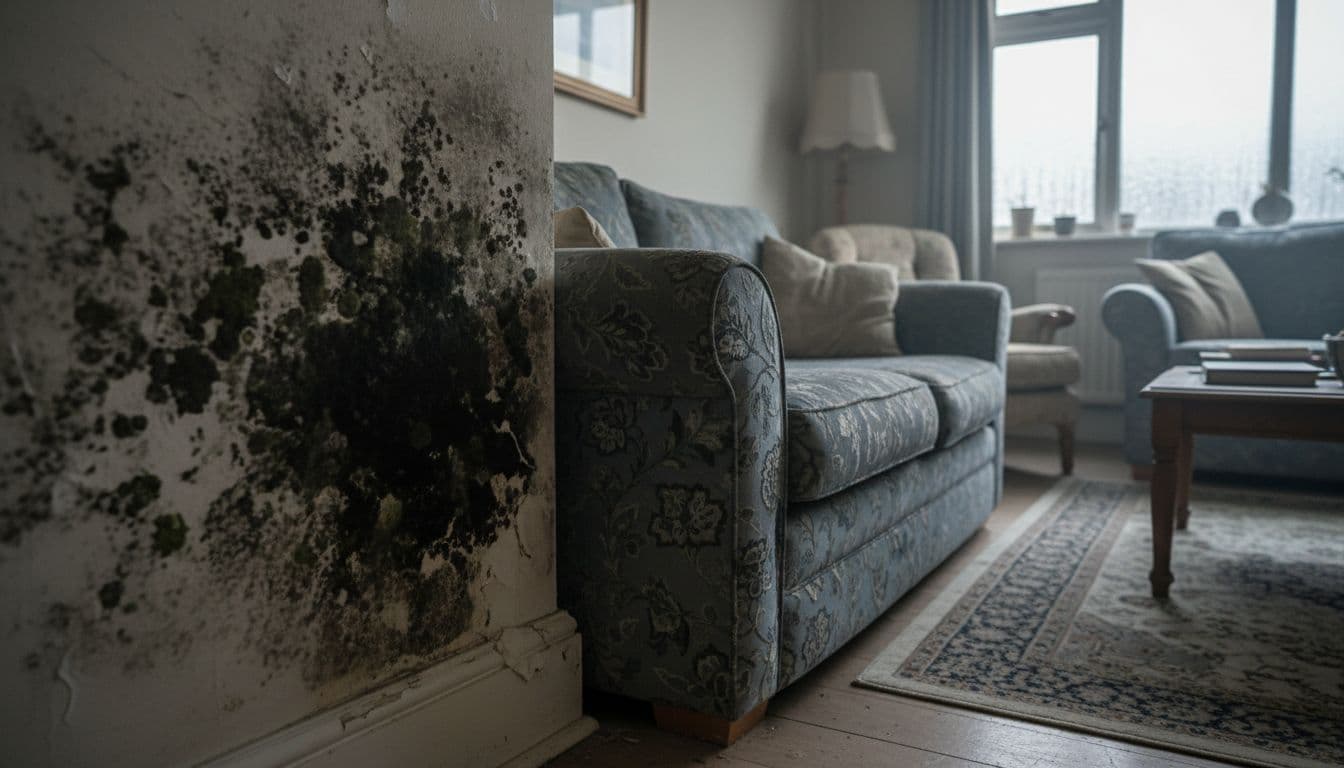 Hidden mould behind a sofa on a cold external wall (created with AI).
Hidden mould usually announces itself before you see it. Trust your senses and look for small changes that add up.
Common warning signs in UK homes
- A musty smell that lingers, especially after heating comes on.
- Black or green specks on paint, wallpaper edges, or silicone.
- Peeling paint, bubbling wallpaper, or tide marks on walls.
- Damp patches that feel cooler than the rest of the wall.
- Warped skirting, swollen chipboard furniture backs, or rusting fixings.
- More window condensation than usual, or water beading on frames.
- A wall that feels cold and slightly “clammy” behind furniture.
The 60-second triage (do this now)
- Sniff near the sofa, wardrobe, and any built-in cupboard. Musty air often pools there.
- Put the back of your hand on the wall behind the item. If it feels much colder than nearby walls, risk is higher.
- Check skirting corners for dark dots or paint lifting.
- Look at windows. If you’re wiping water daily, moisture is likely feeding mould.
- If you can safely move one item a few centimetres, shine a torch low along the skirting.
Where to look behind wardrobes and sofas (the usual UK hotspots)
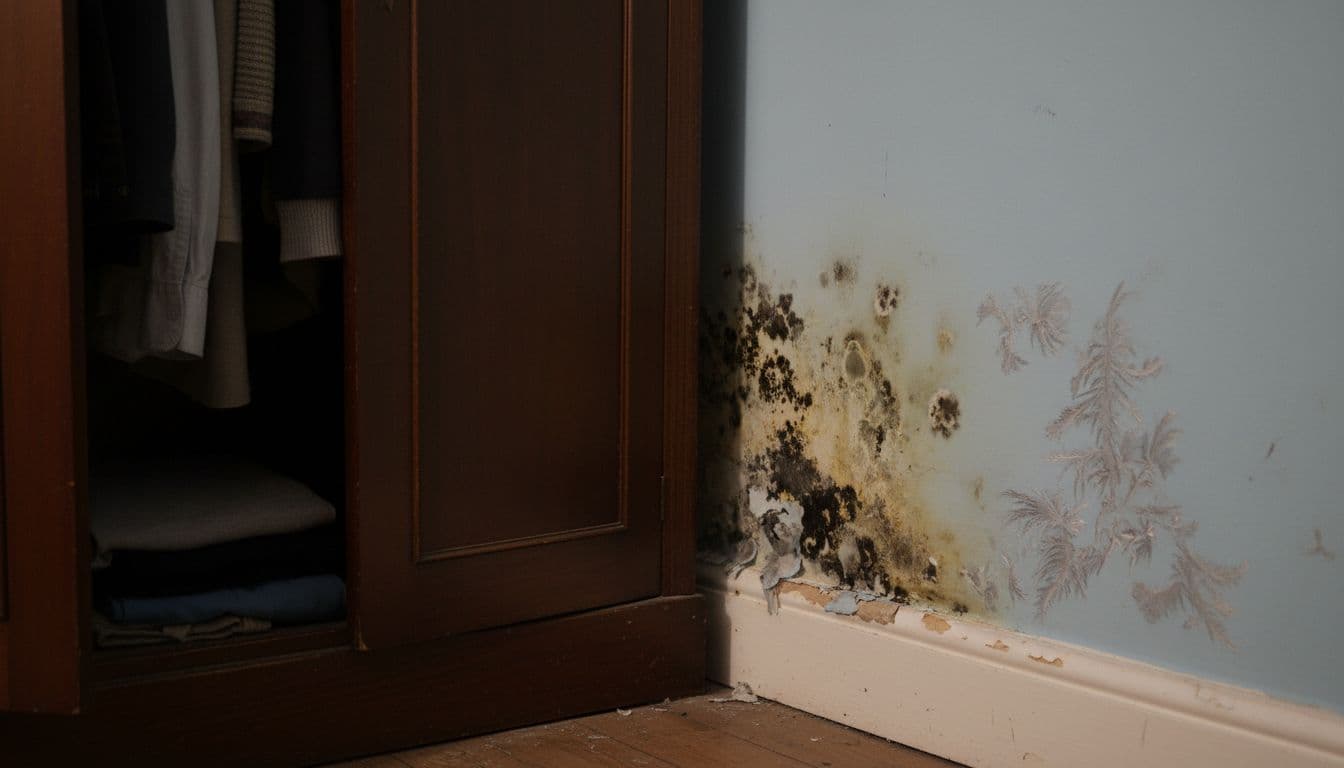 Wardrobe pulled slightly off an external wall, revealing mould and damp staining (created with AI).
These spots give the best “hit rate” when you’re checking quickly:
- External walls behind sofas, wardrobes, and big TV units
- Lower corners and behind skirting boards
- Around chimney breasts, especially side walls of the breast
- Behind radiators (warm air, cold wall, trapped moisture)
- Near windows, under window boards, and behind curtains
- Under sofa bases and storage beds (stale, humid air)
- Behind headboards on outside walls
- Inside built-in cupboards and meter cupboards
- Inside face of walls near air bricks (don’t block them)
- Behind stacked boxes that sit against a cold wall
Spacing rule that prevents a lot of problems: keep large furniture 5 to 10 cm off external walls, and don’t cover vents or air bricks.
Small patch or bigger problem: a quick severity and safety triage
DIY is usually reasonable when:
- The patch is smaller than an A4 sheet
- It’s localised, with a clear cause (condensation behind a sofa)
- The wall isn’t wet to touch
- Nobody in the home is high risk
Stop and get help if:
- It’s widespread, keeps returning, or the smell never goes
- Plaster is crumbling, wallpaper is soaking, or timber feels soft
- You suspect a leak (pipes, roof, gutters, flashing) or damp after rain
- You find wet insulation, saturated plasterboard, or mould deep in materials
Basic safety
- Wear gloves, eye protection, and an FFP2 or FFP3 mask
- Open windows, shut the door, keep kids and pets out
- Watch for electrics. If mould is near sockets, wiring, or a fuse box, isolate power and get advice.
- In older homes, avoid sanding or ripping out unknown boards or textured coatings. Some materials may contain asbestos. If unsure, pause and get it checked.
Why it happens in the first place: find the moisture source before you clean
Mould needs two things: moisture and a surface it can cling to. Behind furniture, the wall is often colder, air barely moves, and warm indoor humidity turns into water on the surface. It’s like a cold drinks can sweating on a table.
Aim for indoor humidity around 40 to 60 percent RH. A cheap hygrometer tells you what’s really going on, because your nose can’t measure humidity.
Cleaning helps, but if you don’t fix the moisture, it often comes back within weeks. Also, bleach is commonly relied on and often disappoints on porous surfaces like plaster, grout, and unfinished wood. It can discolour, irritate lungs, and it doesn’t solve why the wall got damp.
Condensation vs leaks vs cold bridging: quick clues you can use
- Condensation: worse in winter, worse after showers or cooking, water on windows, mould in corners and behind furniture.
- Leaks: localised wet patches, staining, soft plaster, damp smell all year, may worsen after rain or when heating is off.
- Thermal bridging: mould lines up with cold features (corners, window reveals, lintels, concrete beams) and improves with better airflow and steadier heating.
Blocked extractors, shut trickle vents, overpacked wardrobes, and drying clothes indoors all raise risk. If someone mentions “rising damp”, don’t self-diagnose. Get a proper inspection if you’re unsure.
Ventilation and heating basics that prevent mould in UK winters
Keep it simple and consistent:
- Heat rooms evenly, don’t let one room stay cold all day
- After showers or cooking, open a window for 5 to 10 minutes
- Use extractor fans in bathrooms and kitchens, and keep doors shut while the fan runs
- Cook with pan lids on, and use the cooker hood if it vents outside
- A dehumidifier helps in small flats, laundry rooms, and box rooms (a continuous low setting often works best)
- Keep vents and air bricks clear, and don’t push furniture tight to the wall
UK room by room checklist, then the step-by-step fix and prevention plan
Room by room checklist of hidden hotspots
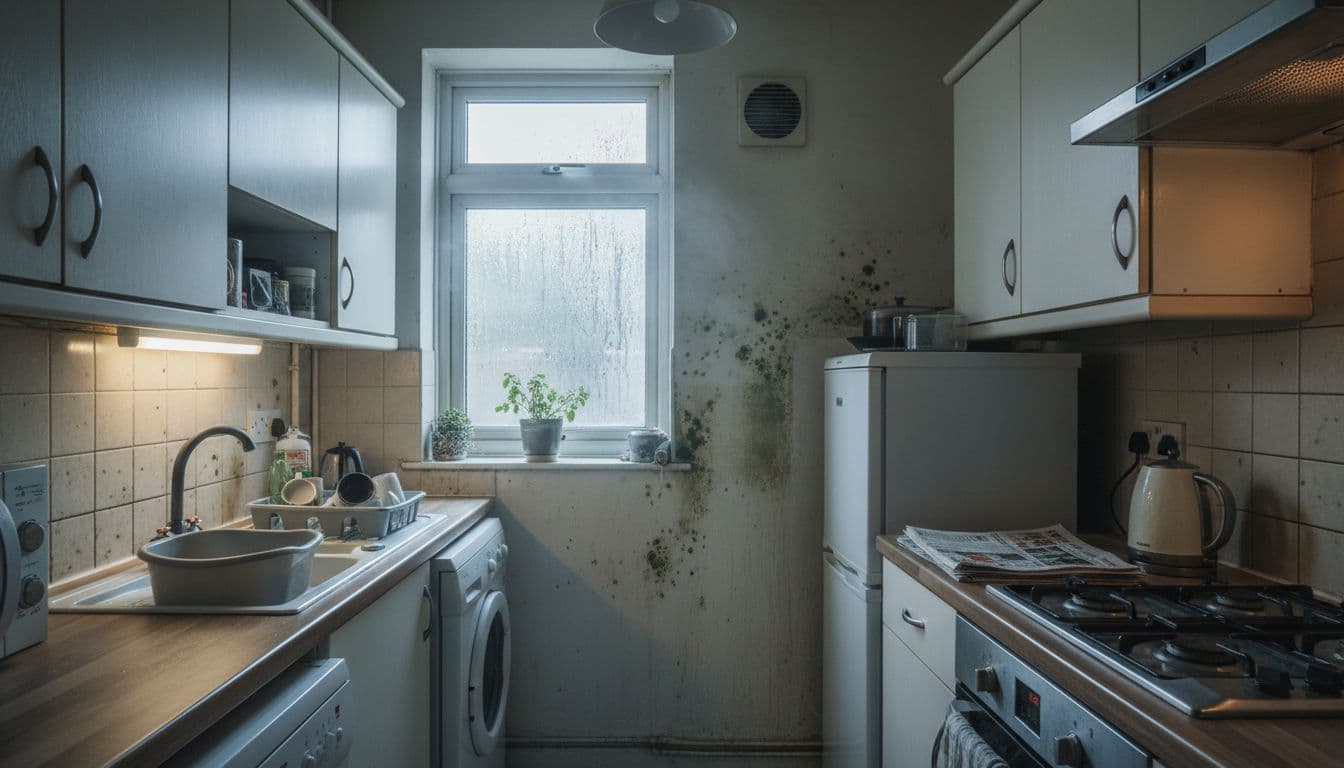 Kitchen hotspots: behind appliances and under-sink areas on an external wall (created with AI).
- Bedroom: behind wardrobes on external walls, behind headboards, inside wardrobe corners, under storage beds near cold walls, window reveals.
- Living room: behind sofa on external wall, behind curtains, chimney breast corners, behind TV unit, around patio doors.
- Hallway and under stairs: cold corners, behind shoe storage, under-stair cupboards, around front door frame, inside meter cupboard (check for condensation).
- Bathroom: behind mirror cabinet, around extractor fan cover, behind laundry basket, ceiling corners, around bath panel and shower screen (watch for leaks).
- Kitchen: behind fridge and freezer, behind base units on external walls, under sink and around waste pipe, behind washing machine, pantry cupboard corners.
- Utility: tumble dryer venting and hose connections, behind appliances, damp patches on an outside wall.
- Box room and loft-adjacent walls: behind stored bags and boxes, cold gable wall corners, around loft hatch frame (don’t disturb unknown insulation or boards).
Tip: note patterns, only in winter, after cooking, or after rain, and record your RH readings.
How to fix hidden mould behind furniture: a safe step-by-step plan
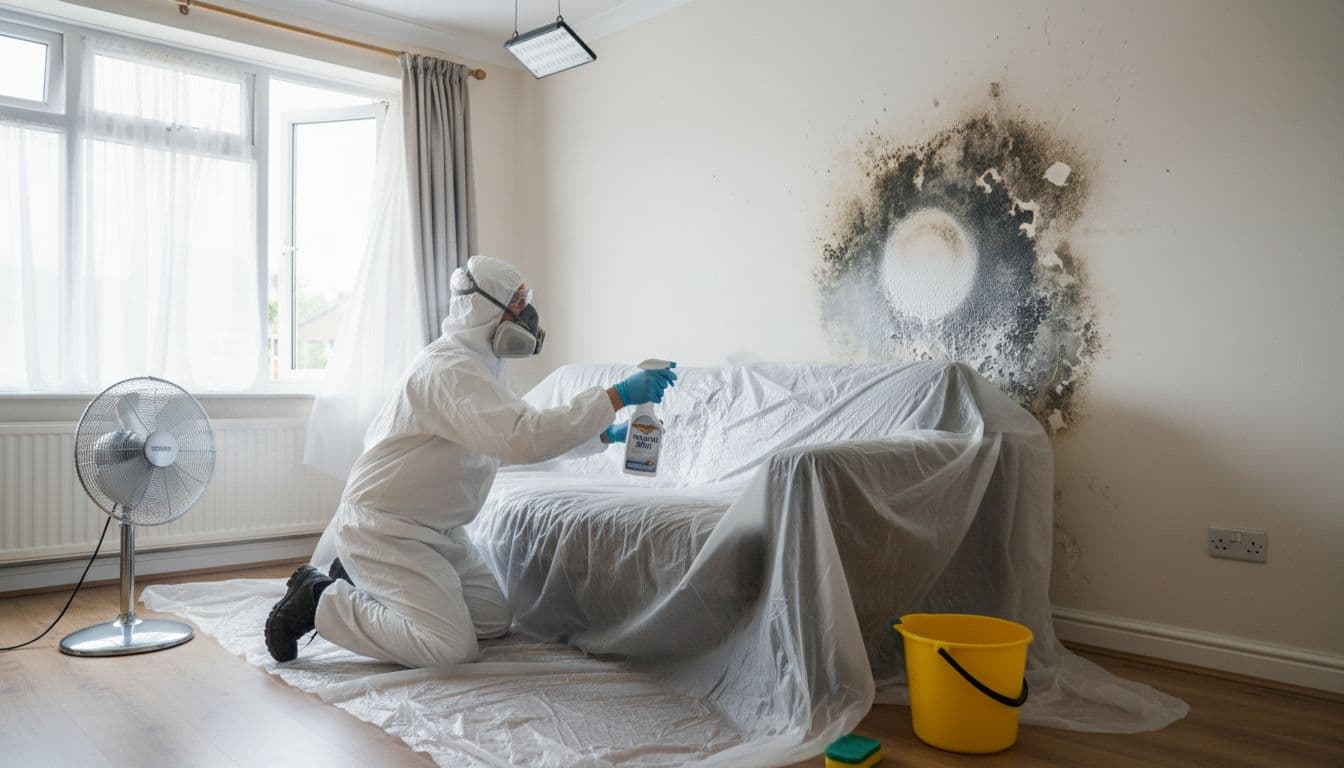 Safe cleaning with PPE, ventilation, and furniture moved clear (created with AI).
- Prep and protect: mask, gloves, eye protection. Open windows. Cover flooring. Keep children and pets out. Unplug nearby electrics.
- Move furniture carefully: get help for heavy items. Don’t scrape mouldy backs against the wall. Bag dusty items and wash soft furnishings as needed.
- Dry the area first: steady heat plus ventilation, or a dehumidifier. Don’t trap damp behind furniture again.
- Clean correctly: use an anti-mould wash or fungicidal cleaner. Wipe, don’t blast it into the air. Don’t mix chemicals. Avoid relying on bleach on porous plaster or wood.
- Treat and repair: once fully dry, use a fungicidal treatment if needed. Fill and sand only when dry. Use a stain blocker where marks remain, then a mould-resistant paint. Replace mouldy wallpaper rather than painting over it.
- Prevent recurrence: keep a 5 to 10 cm gap, allow airflow under sofas, don’t overpack wardrobes, keep RH at 40 to 60 percent, use fans and short window airing, consider thermal lining or insulation for stubborn cold spots.
Common mistakes
- Painting over damp patches
- Pushing furniture back the same day
- Drying clothes in the room with windows shut
- Turning heating off for long periods in winter
- Blocking vents or air bricks
If it returns Recheck RH, look for hidden leaks, and log when it happens. Increase ventilation, run a dehumidifier more consistently, and consider a professional assessment if it keeps coming back.
Conclusion
Hidden mould doesn’t usually start with a dramatic stain, it starts quietly behind the places you rarely look. Spot the early signs, check behind big furniture, do a quick safety triage, then fix the moisture cause before you clean and repaint. That’s what stops repeat outbreaks.
If you rent, report mould promptly in writing, take dated photos, keep humidity readings, and keep receipts for cleaning supplies or a dehumidifier. Don’t carry out major work without permission. Call a pro for widespread mould, suspected leaks, recurring problems despite changes, structural damp, or if vulnerable people live in the home.
Tick-box recap: ☐ Inspect ☐ Measure RH ☐ Move furniture ☐ Dry ☐ Clean ☐ Treat ☐ Prevent ☐ Monitor ☐ Escalate
Shop for Furniture for your Home from Verified UK Retailers
Furniture for your Home Sofas Sofa Beds
Bedroom Furniture Beds & Mattresses
Shop for Furniture for your Garden, storage and Garden Rooms
Garden Furniture Garden Storage Gas BBQ’s Outdoor Kitchen Garden Decor Gardening Supplies
Garden Sheds Prefab Garden Rooms Garden Rooms with UK Installation
Pergolas Gazebo Greenhouse Canopies Awnings Conservatories
–
Explore More Expert Buyers Guides & Money Saving Tips
For a list of our main buyers guides use the drop-down menu at the top of the page. Topics related to this article are:
Home and Garden Furniture Buyers Guides
Bedroom Furniture Buyers Guides
living Room Furniture Buyers Guides
Garden Furniture Buyers Guides
–
Explore Our Blog Categories for Expert Buying Advice
- AI Powered Product Finder Tools
- Apple Products Buyer’s Guides & Reviews
- Beauty, Health & Wellness | Perfume, Skincare, Makeup & Wellbeing Guides
- Bedroom Furniture Guides UK | Expert Tips & Best Value Deals
- Beds Buying Guides UK | Types, Tips & Best Deals
- Brands – Phones, Laptops, PC”s, Tablets | Buyer’s Guides & Reviews
- Brands & Designer Products (Men, Women & Electronics)
- Car Buying & Financing Made Easy | Expert Guides for the UK
- Car Rental Worldwide: Compare Prices for UK Travellers
- Christmas Essentials: Decorations & Gift Ideas
- Clothing, Fashion & Accessories Buying Guides UK
- Designer Fashion Brands: Buyer’s Guides & Reviews
- Diamond Jewellery Buyers Guides & Shopping Tips
- Electronic Brands: Buyers Guides & Reviews
- Electronics – Tablet & iPad Reviews and Buyers Guides
- Electronics, Tech & Gadgets: Reviews, Deals & Buying Guides UK
- Europe Holidays & Hotels: Destinations Guides & Flights
- Expert Buying Guides & Shopping Tips for UK Shoppers
- Flooring: Wood, Laminate, Carpets and Floor Tiles Buyers Guides
- Footwear Brands: Reviews & Buyer’s Guides
- Footwear: Trainers & Shoes Buyers Guides
- Furniture Buyer’s Guides | Home & Garden & Styling Tips
- Gadget Insurance UK | Expert Guides, Reviews & Smart Protection Tips
- Game Reviews — PlayStation, Xbox, Nintendo & PC
- Gaming Buyers Guides — Consoles, Games, Keys & More
- Garden Furniture UK: Expert Reviews, Deals & Buying Guides
- Garden Furniture, Landscaping & Garden Rooms Guides UK | Expert Tips & Best Value Deals
- Garden Rooms, Offices & Garden Buildings Guides UK | Expert Tips & Best Value Deals
- Garden Sofa & Sofa Sets Buyers Guides
- Garden Tables & Chairs: Sets, Individual Tables & Seating Buyers Guides
- Gemstone Jewellery Buyers Guides
- Gifts for Everyone: Ideas for Every Occasion & Budget
- Gold Jewellery Buyers' Guides & Shopping Tips
- Holidays & Travel: Hotels, Villas & Flights
- Home & Garden Improvements | Renovations & Outdoor Transformation Guides
- Home Décor, Interior Design & Styling Tips UK | Inspiration & Expert Advice
- Home Emergency Cover UK | Expert Guides, Reviews & Practical Protection Tips
- Home Furniture Guides UK | Expert Tips & Best Value Deals
- Home Furniture, Décor & Interior Design Guides UK | Styling Tips & Inspiration
- Insurance & Protection: Travel, Landlord, Gadget & More UK
- iPhone Buying Guides, Reviews & Comparisons for the UK
- iPhone Insurance UK | Expert Guides, Reviews & Smart Protection Tips
- Jewellery Rings Buyers' Guides & Shopping Tips
- Jewellery: Expert Reviews, Trends & Buying Guides
- Kitchen Appliance Brands: Buyer’s Guides & Reviews
- Kitchen Appliances UK: Buyers Guides, Reviews & Money Saving Tips
- Landlords Insurance UK | Expert Guides, Reviews & Smart Protection Tips
- Laptop Brands & MacBooks Buyer’s Guides & Reviews
- Laptop Brands: Buyer’s Guides & Reviews
- Living Room Furniture, Design & Décor Guides UK | Styling Tips & Inspiration
- Makeup – Expert Buyers Guides & Reviews
- Men's Clothes — Buyers Guides & Reviews
- Men’s Clothes, Fashion & Accessories Guides UK | Latest Trends & Smart Shopping
- Men’s Fragrance Brands: Perfume & Aftershave Reviews & Buyers Guides
- Perfume & Aftershave Brands: Reviews & Buyers Guides
- Perfume & Fragrance: Best Scents, Reviews & Buying Guides
- Pets: Guides, Tips & Inspiration
- Phone Brands & iPhones Buyer’s Guides & Reviews
- Phone Brands: Buyer’s Guides & Reviews
- Phone Insurance UK | Expert Guides, Reviews & Smart Protection Tips
- Skincare — Expert Buyers Guides & Reviews
- Sofa & Sofa Beds Buyers Guides
- Sofa Beds Buyers Guides
- Sofa Buyers Guides & Expert Advice
- Sportswear Brands: Reviews & Buyers Guides
- Supplements Buyers Guides — Expert Tips & Recommendations
- Trainer Brands: Reviews & Buyer’s Guides
- Travel Insurance UK | Expert Guides, Reviews & Money-Saving Tips
- UK Holidays & Hotels: Destinations Guides & Flights
- Women's Clothing Buyers Guides — Dresses, Tops & More
- Women’s Clothes, Fashion & Accessories Guides UK | Latest Trends & Smart Shopping
- Women’s Designer Brands: Buyer’s Guides & Reviews
- Women’s Designer Shoe Brands: Buyer’s Guides & Reviews
- Women’s Dresses | Online Shopping Guides, Style Tips
- Women’s Perfume Brands: Reviews & Buyers Guides