An integrated dishwasher is worth buying if you want concealed appliances in a fitted kitchen and can accommodate the installation requirements. Our recommendation is to prioritise verified fit and everyday cleaning performance over smart extras.
A matching cabinet front creates a tidy finish, but it also makes replacement more involved than swapping a freestanding machine. This guide explains how integrated models work, how to measure your space, which features deserve your money, and how to compare purchase and running costs. Start with the kitchen opening, because an attractive specification can’t compensate for an incompatible door or awkward plumbing.
Key Takeaways
- A fully integrated dishwasher hides behind matching kitchen panels, whilst semi-integrated models leave their controls visible.
- Full-size models are typically 60cm wide; a slimline dishwasher is around 45 cm, though exact dimensions vary.
- Check capacity in place settings, and prioritise flexible racks and useful programmes over rarely used functions.
- Compare the energy rating, energy use per 100 eco cycles, water per cycle and stated noise level.
- Include the cabinet panel, fitting, delivery and removal when comparing total prices.
What is an integrated model, and how does it fit into your kitchen?
An integrated model fits beneath the worktop and has a decorative kitchen panel attached to its door. It normally sits in an appliance opening between cabinets, rather than inside a standard cupboard.
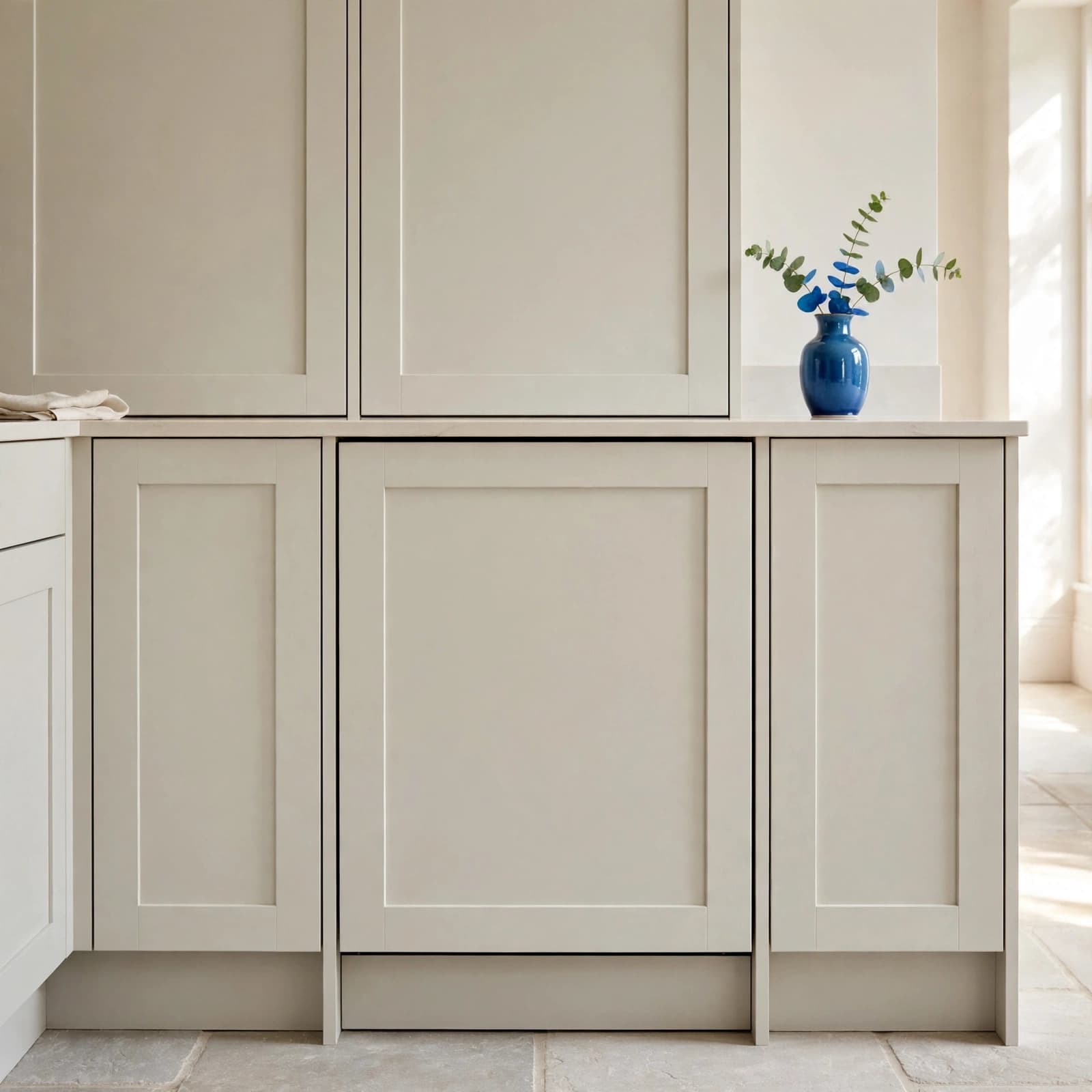
A fully integrated dishwasher conceals the entire front behind a decorative panel. Its controls usually sit along the door’s top edge, so you select a programme before closing it. Some machines project a light or remaining time onto the floor because their displays are hidden during operation.
Semi-integrated dishwashers leave a control strip visible above the decorative panel. This makes buttons and programme information easier to access, but the front won’t look completely continuous with neighbouring cupboards.
The decorative panel, or cabinet door, is usually supplied separately. It must meet the model’s size, weight and fixing requirements, and match your kitchen’s finish. An existing panel won’t necessarily fit a replacement machine.
Integration mainly affects appearance and fitting. It doesn’t guarantee better washing, drying or efficiency than an equivalent freestanding appliance.
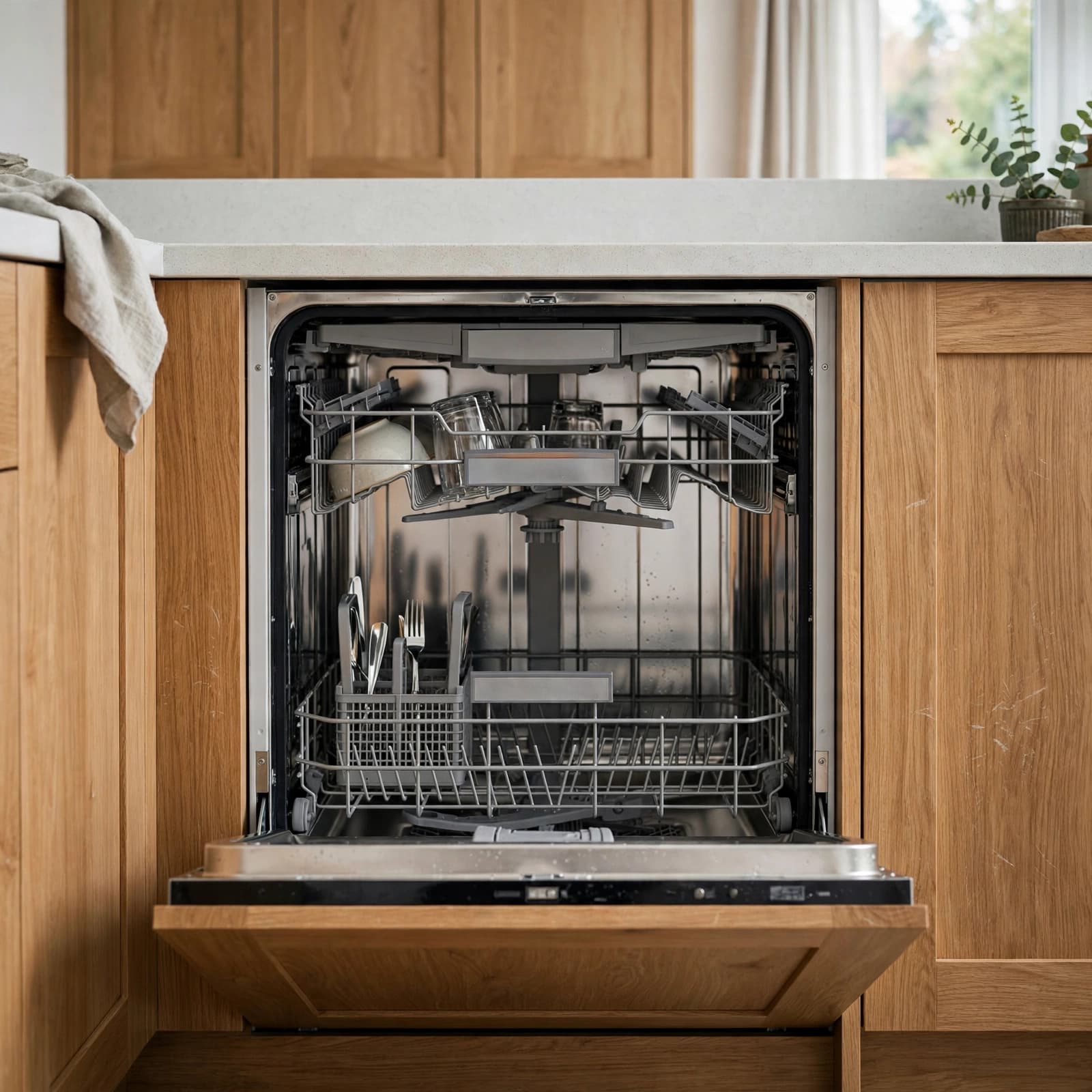
Check the space, capacity and installation before choosing
An advertised width describes the appliance category, not a guaranteed fit. An integrated dishwasher must fit the opening, allow for its panel and connect to plumbing, with room for the door to move.
Choose full-size or slimline capacity for your household
Many full-size models are around 60cm wide, whilst slimline machines are around 45 cm. Full-size capacity commonly falls around 12 to 16 place settings; a slimline dishwasher often offers around nine to 11 place settings.
These figures provide a standardised comparison, but they don’t describe every household load. Deep bowls, large dinner plates and roasting tins can take up much more space than standard test crockery.
Choose a capacity that suits your cooking habits and how often you plan to wash up. A couple who cook daily may benefit from full-size racks, whilst a smaller kitchen may justify a slimline model. A machine that takes too long to fill can leave you waiting for essential utensils.
Measure the cabinet opening and plan the installation
Measure the opening’s width, height and depth at several points, including beneath the worktop. Compare these measurements with the model’s technical drawing and height-adjustment range. Allow the specified space for hoses rather than forcing them behind the appliance.
The installation plan must account for panel height, thickness and weight, hinge type and plinth clearance. Sliding-hinge designs can help with certain tall-door or low-plinth arrangements, but compatibility varies by model.
Also allow space for the door to open fully without blocking a walkway. Check the water supply, drainage route, permitted hose reach and access to an electrical connection.
Ask a qualified installer to assess uncertain plumbing or electrical arrangements before purchase, especially when replacing a different appliance type.
Which dishwasher features make a real difference day to day?
When choosing an integrated dishwasher, cleaning results, effective drying and easy loading matter more than programme counts. For an open-plan kitchen, noise also deserves attention.
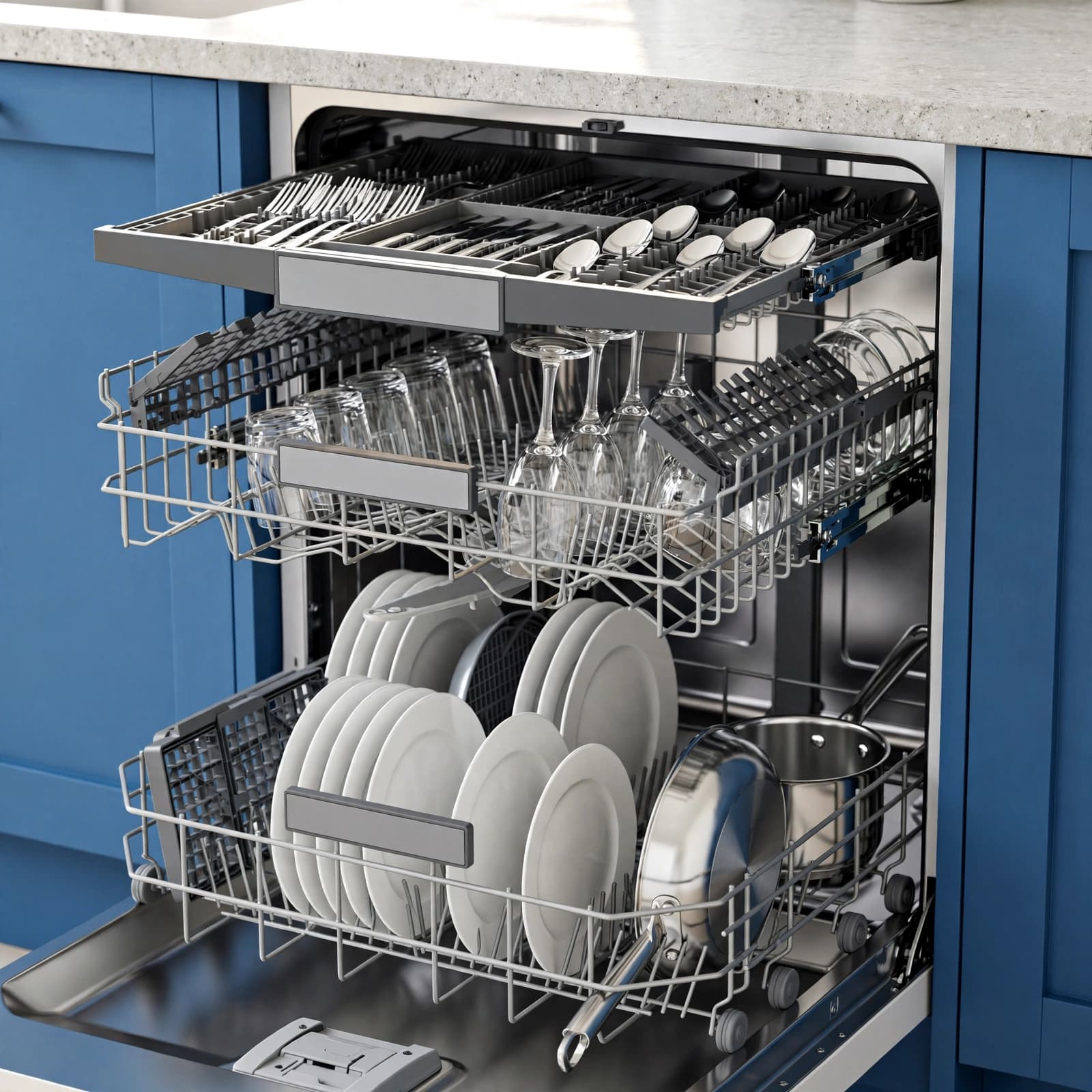
Compare cleaning programmes, drying and flexible racks
Eco programmes prioritise lower energy and water use, usually through longer cycles. Intensive settings suit heavily soiled cookware, whilst automatic programmes use soil sensors, where fitted, to adjust the wash.
Quick cycles suit lightly soiled loads, but aren’t always the cheapest option. Their shorter duration can require more intensive heating, and some provide limited drying.
Drying systems vary. Condensation drying, automatic door opening and additional drying technologies produce different results, particularly with plastics. An energy rating alone doesn’t tell you how dry lunchboxes will emerge.
Adjustable upper racks create room for tall glasses or larger plates below. Fold-down supports accommodate pans, whilst cutlery trays free lower-basket space. However, a tray can reduce clearance above the upper rack; baskets offer a different loading compromise.
Check noise, energy use and water consumption for your integrated dishwasher
The UK energy rating uses an A to G scale. Compare the letter with the actual electricity, water and noise figures.
Electricity appears in kilowatt-hours per 100 eco cycles, whilst water consumption appears in litres per eco cycle. Compare models with similar capacity, measured in place settings, for a fairer view of consumption.
For annual electricity use, multiply the labelled figure by your expected annual eco cycles, then divide by 100. Apply your electricity tariff to estimate the cost. Other programmes can consume different amounts.
Noise appears in decibels, with an accompanying noise class. Lower figures deserve more weight if the kitchen adjoins your living area.
Loading, installation and programme choice affect real-world consumption and sound. A higher purchase price only makes financial sense when useful features or running-cost differences justify it.
Compare cleaning programmes, drying and flexible racks
Eco programmes prioritise lower energy and water use, usually through longer cycles. Intensive settings suit heavily soiled cookware, whilst automatic programmes use soil sensors, where fitted, to adjust the wash.
Quick cycles suit lightly soiled loads, but aren’t always the cheapest option. Their shorter duration can require more intensive heating, and some provide limited drying.
Drying systems vary. Condensation drying, automatic door opening and additional drying technologies produce different results, particularly with plastics. An energy rating alone doesn’t tell you how dry lunchboxes will emerge.
Adjustable upper racks create room for tall glasses or larger plates below. Fold-down supports accommodate pans, whilst cutlery trays free lower-basket space. However, a tray can reduce clearance above the upper rack; baskets offer a different loading compromise.
Check noise, energy use and water consumption
The UK energy rating uses an A to G scale. Compare the letter with the actual electricity, water and noise figures.
Electricity appears in kilowatt-hours per 100 eco cycles, whilst water consumption appears in litres per eco cycle. Compare models with similar capacity, measured in place settings, for a fairer view of consumption.
For annual electricity use, multiply the labelled figure by your expected annual eco cycles, then divide by 100. Apply your electricity tariff to estimate the cost. Other programmes can consume different amounts.
Noise appears in decibels, with an accompanying noise class. Lower figures deserve more weight if the kitchen adjoins your living area.
Loading, installation and programme choice affect real-world consumption and sound. A higher purchase price only makes financial sense when useful features or running-cost differences justify it.
Weigh the benefits and drawbacks of a concealed dishwasher
A concealed design creates a consistent kitchen finish, but it comes with practical considerations. These trade-offs matter when planning a replacement.
| Advantage | Drawback |
|---|---|
| A matching panel keeps the appliance out of sight. | You need a compatible panel and suitable fittings. |
| Fully integrated controls remain hidden. | You usually need to open the door to access them. |
| Cabinetry determines the visible style. | A replacement appliance may need panel or hinge adjustments. |
| The appliance blends into an open-plan kitchen. | Installation and replacement can cost more than a straightforward freestanding swap. |
The appearance can remain consistent when you upgrade the appliance, provided the new model accepts the existing panel. However, compatibility isn’t guaranteed.
Freestanding machines are a sensible alternative when easy replacement, moving home or direct access to controls matters more than concealment. Semi-integrated designs offer a middle option.
Compare prices, warranties and online buying options
Online shopping gives you a broader choice of capacities, rack layouts and installation designs. The best integrated dishwasher depends on fit, capacity and useful features, so compare specifications side by side. Compare models such as Bosch appliances with other options, and check the integrated dishwasher cost against the services included.
Where to spend and where a lower-cost model may be enough
Spend first on reliable fit, appropriate capacity, flexible racks and manageable noise. A lower-cost machine may be sufficient if its programmes match your routine and its running costs remain reasonable. Wi-Fi control adds little value if you’ll always start the wash at the appliance.
More frequent use gives efficiency differences greater financial importance. Compare the energy rating and running costs, but occasional washing may not recover a substantial premium through electricity savings alone.
Look beyond the headline warranty length. Parts, labour, call-out charges, registration conditions and exclusions determine its practical value. Repair support and replacement-part availability also affect long-term ownership.
For build quality, look for racks that move smoothly, secure basket adjusters and robust folding supports. Recurring owner reports about these components are more useful than isolated complaints.
Use a simple checklist before placing an online order
Compare the full integrated dishwasher cost, including delivery, fitting, panel and accessory charges.
- Match exact appliance dimensions and adjustment limits to the opening, then choose full-size or slimline capacity.
- Record panel dimensions, permitted weight, hinge requirements and whether the decorative door is included.
- Compare control access, rack layout, noise, energy use per 100 cycles and water use per cycle.
- Check delivery access, installation scope and old-appliance removal in the quotation.
- Read warranty coverage and returns terms, including any charges for collection or handling.
A lower online price is worthwhile only when the specification and included services match. Keep the product specification and order confirmation together.
Frequently Asked Questions
Does the appliance come with a cabinet door?
The decorative kitchen panel is commonly supplied separately, although packages vary. Check the product listing and fitting instructions for what’s included and the permitted panel dimensions. Mounting brackets aren’t the same as a finished cabinet door.
Can I replace a freestanding dishwasher with another model?
Yes, if the kitchen has a suitable appliance opening, compatible services and a correctly sized decorative panel. Removing a freestanding machine doesn’t automatically provide those conditions. The replacement must also fit beneath the worktop and allow its door to clear the plinth.
Are dishwashers quieter when built into a kitchen?
Integration alone doesn’t guarantee quieter operation. Compare the stated decibel ratings rather than assuming the cabinet panel provides enough sound reduction. Kitchen acoustics and proximity to seating also affect how noticeable the wash sounds.
How long does the machine usually last?
There’s no dependable fixed lifespan for every model or household. Washing frequency, water hardness, maintenance and component quality all affect useful life. Clean filters, unobstructed spray arms and correctly adjusted salt settings support normal operation. Repairability determines whether a fault ends ownership or leads to a repair.
Conclusion: Buy for the Kitchen You Have
Buy it if you want a concealed appliance and have a suitable opening, compatible panel and realistic installation budget. Prioritise verified dimensions, usable capacity and programmes that suit your washing routine.
Skip it if straightforward replacement, portability or visible controls matter more than a continuous cabinet finish. A freestanding or semi-integrated model may suit those priorities better.
Online comparison helps you find more choice and identify better value. Treat delivery, fitting, warranty coverage and panel requirements as part of the purchase, not extras to consider after choosing the appliance.