Wood Flooring is a durable, attractive choice, and earns a strong recommendation, when you select the right construction, finish and fitting method for the room. Timber flooring can bring warmth and the natural beauty of real timber, but the wrong board in a damp or poorly prepared space can become an expensive problem.
This guide covers Timber Flooring, including solid, engineered and reclaimed boards, alongside popular choices such as Oak Flooring. It also covers costs, installation, online buying, care, advantages and drawbacks. Your best option depends on room use, moisture, subfloor condition and budget, whether you own your home or rent it.
Start with how the room behaves day to day, then choose the floor that can handle it.
This post may contain affiliate links. If you make a purchase through these links, I may earn a small commission at no extra cost to you.
Key Takeaways
- Engineered Wood Flooring is often the most practical choice for busy UK homes and compatible underfloor heating systems.
- Solid Wood Flooring offers the greatest refinishing potential but needs stable indoor conditions and careful fitting.
- Reclaimed boards bring unique character, although preparation and condition checks can add to the cost.
- Compare full project costs, including fitting, underlay, trims, delivery and subfloor work.
- Order samples, test them in natural light and inspect every delivery before fitting begins.
Wood Flooring Explained: Solid, Engineered and Reclaimed Options
Timber boards use real timber as their visible surface. They can range from uniform, pale Oak Flooring to heavily knotted boards with strong grain and colour shifts. Wood Species, board width, thickness, grade and finish all affect the final look.
Wider planks suit larger rooms and show off the grain, whilst narrower boards can feel more in scale in compact spaces. A clear grade has fewer knots and less colour variation. Rustic grades show natural features, filler and stronger tonal changes.
| Type | Construction | Best suited to | Main watch-out |
|---|---|---|---|
| Solid wood | One piece of timber | Dry, stable rooms | Moves with humidity |
| Engineered wood | Real-wood top layer over layered core | Most living spaces | Wear layer quality varies |
| Reclaimed wood | Salvaged, reused boards | Character-led interiors | Requires careful inspection |
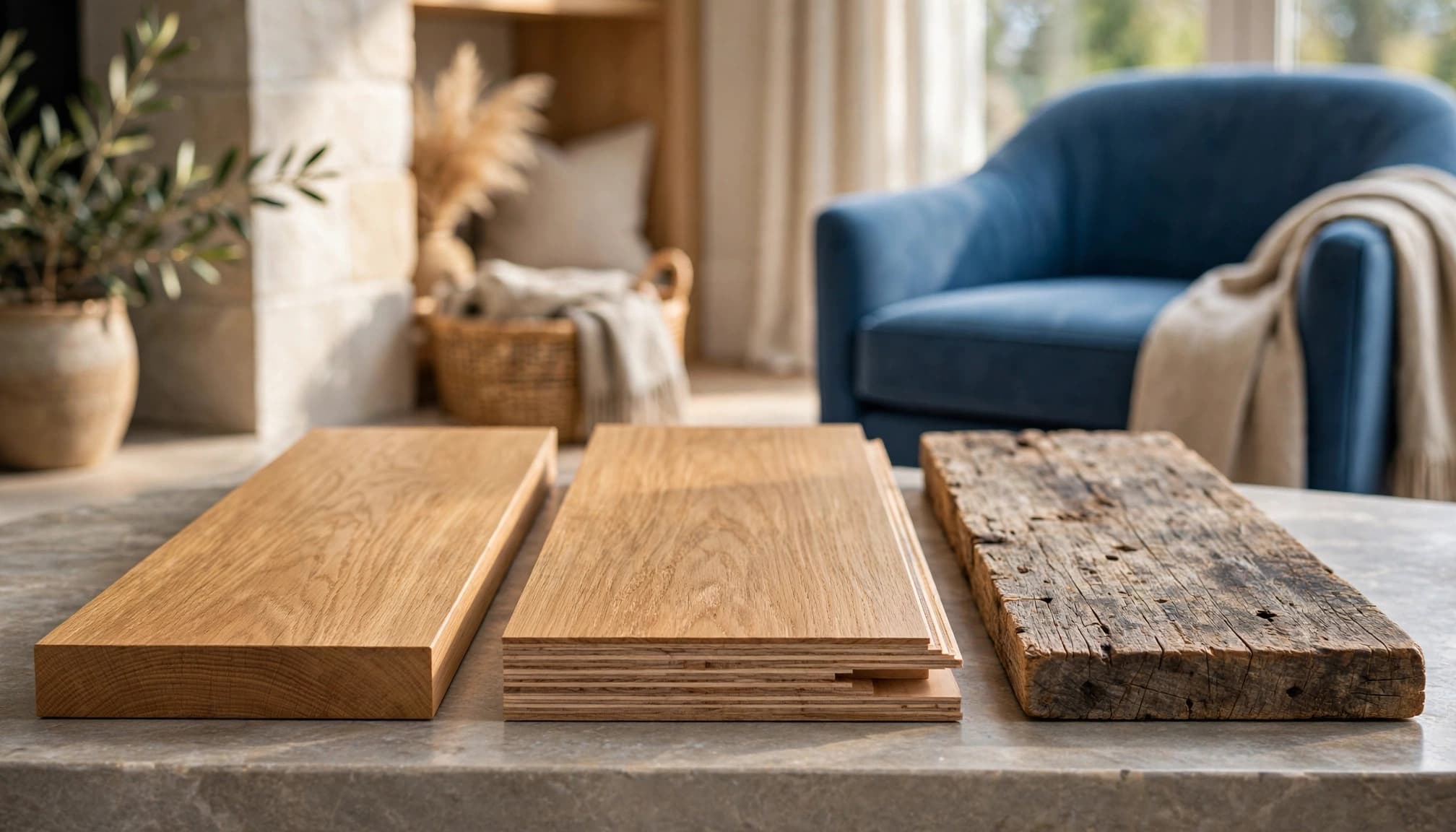
Solid Wood Flooring offers timeless character and long-term repairability
Solid boards are milled from a single piece of timber, so they feel substantial underfoot and show natural grain clearly. With suitable thickness, they can usually be sanded and refinished several times over their life.
However, timber expands and contracts as indoor humidity changes. Boards need time to acclimatise in the room before fitting, and installers must leave expansion gaps around walls. Solid wood is rarely the easy option for damp rooms, uneven subfloors or spaces with frequent temperature swings.
Engineered Wood Flooring gives better stability in many UK homes
Engineered boards have a real timber surface bonded to a multi-layer core. That structure improves Dimensional Stability, so it often performs better in centrally heated homes and rooms with changing conditions.
Many products work with floating, glue-down or secret-nailed fitting methods. Some use a Tongue and Groove profile and are approved for underfloor heating, although the manufacturer’s instructions always decide this. Check the real-wood wear layer, core material and warranty before comparing prices.
Reclaimed wood creates a distinctive look but needs closer inspection
Reclaimed boards bring old nail holes, saw marks, worn edges and irregular colour that new timber cannot replicate. Each batch can look markedly different, which suits period homes and relaxed interiors.
Yet reclaimed timber may contain hidden nails, splinters, pests, contamination or boards of uneven thickness. Ask about the source, previous use and preparation process. Also buy enough at the outset, because matching boards may not be available later.
How to Choose Wood Flooring for Each Room and Lifestyle
Start with daily use rather than colour. A quiet bedroom has different demands from a kitchen used by children, pets and guests. Sunlight, muddy footwear, cleaning habits and furniture movement all affect how a floor will look after several years.
Match the flooring construction to the room’s conditions
Engineered boards are usually the safer choice for lounges, hallways and kitchens where temperatures vary. Solid boards need closer moisture control and a consistently suitable subfloor.
Timber is generally a poor fit for bathrooms, utility rooms and other wet rooms. A Water Resistant alternative may be more appropriate in these spaces. Even a good finish cannot stop repeated standing water from reaching joins and edges. Wherever timber is fitted, wipe spills up promptly.
Choose a finish, colour and board size that will age well
Pale wood can brighten a small or north-facing room, whilst mid-tones hide everyday dust well. Dark stains create contrast but can show scratches, pet hair and pale grit more clearly.
Wide Plank boards can suit larger rooms, whilst narrower boards may be better scaled to compact spaces. A Herringbone Pattern or Chevron Pattern creates more complex cuts, so order extra material and confirm the fitting allowance.
Matt and textured surfaces disguise light wear better than glossy finishes. For Surface Protection, a Lacquered Floor provides a sealed surface with strong stain resistance, although local repairs can stand out. Oil soaks into the timber and makes spot repairs easier, but needs periodic re-oiling. Hard Wax Oiled finishes offer a low-sheen appearance with protection that can often be maintained in smaller areas.
Check subfloor, moisture and fitting needs before ordering
Measure each room accurately, including alcoves and cupboards. Check the subfloor is level, dry and sound, then allow for door clearance, skirting boards, thresholds and expansion space.
A Floating Floor sits over a suitable underlay. Secret nailing fixes boards through their tongues, whilst full-spread glue-down fitting bonds them to the subfloor. A professional fitter is the sensible choice where there is damp, an old uneven floor, expensive boards or a complex layout.
A floor can look perfect on delivery and still fail if moisture levels or subfloor tolerances fall outside the manufacturer’s requirements.
Wood Flooring Costs, Installation and Buying Online
The price per square metre is only one part of the bill. As a broad guide, engineered oak often costs around £35 to £85 per m², while solid Oak Flooring costs about £50 to £110 per m². Reclaimed timber can exceed £60 per m² before preparation or fitting.
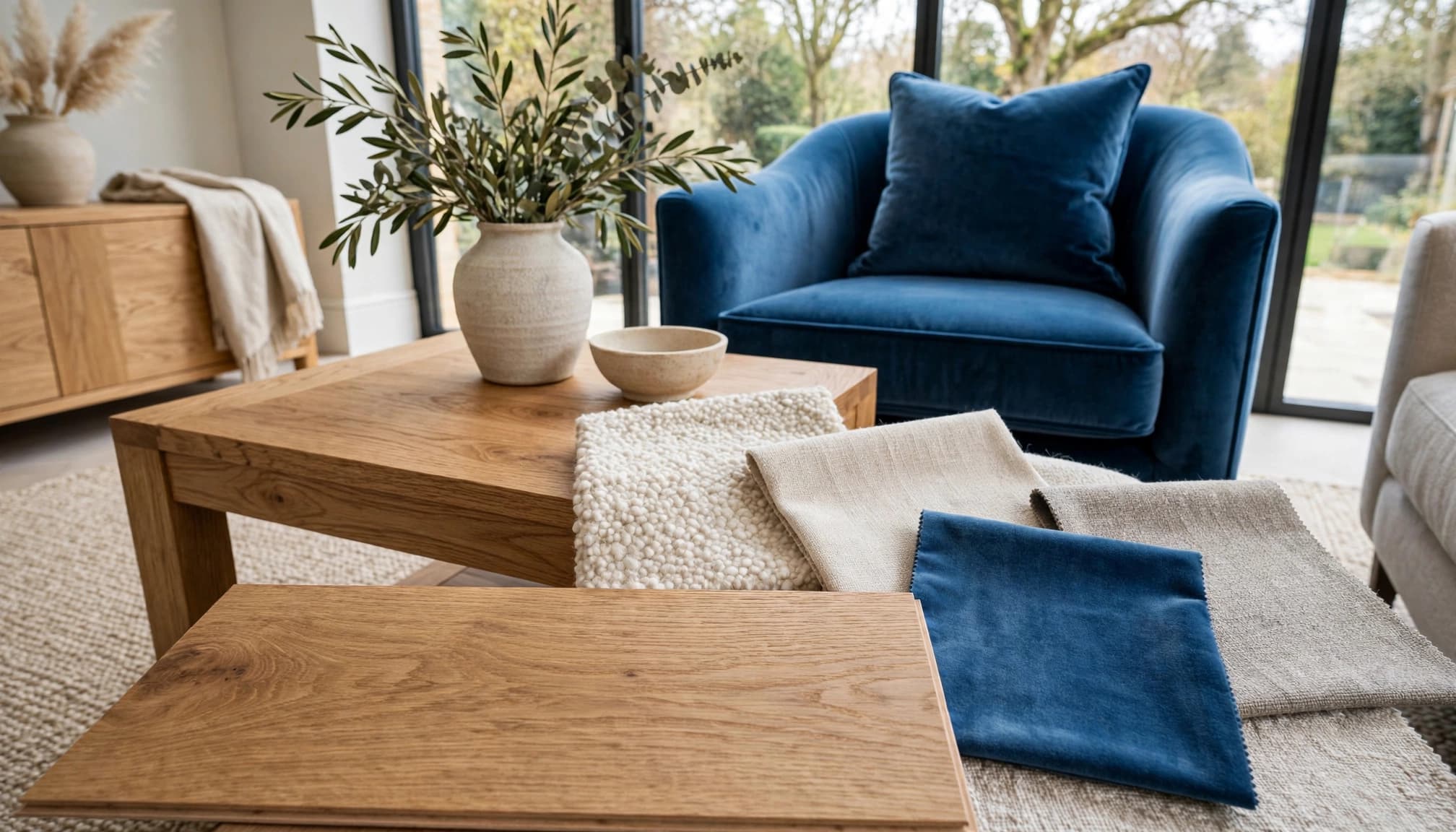
Calculate the real project cost before comparing prices
Multiply the room length by its width, then add an allowance for cuts and waste. A simple 20 m² room often needs about 22 m² of boards with a 10% allowance. A Herringbone Pattern, diagonal layouts and awkward rooms may need more than 10% extra material.
Also budget for underlay or adhesive, trims, moisture barriers, delivery, removal of the old floor, subfloor preparation, levelling work and Maintenance Products. Unusually cheap boards may have a thin wear layer, lower-grade timber or limited factory finishing. Premium Wood isn’t automatically better, so compare construction, finish, durability, total project cost and likely service life. Bamboo Flooring is a distinct alternative to timber, so assess it on the same practical factors rather than treating it as identical.
Buy boards online with fewer surprises
Buying online gives you a wider choice of grades, widths and finishes. It also makes price comparisons easier and gives you access to customer feedback before committing. Screen colour is unreliable, however, so physical samples remain essential.
- Order Samples and view them beside your furniture in daylight and evening light.
- Read the technical sheet, including thickness, wear layer, pack coverage and fitting method.
- Confirm delivery access, especially for flats, narrow hallways and properties without easy parking.
- Check packaging and board condition on arrival, then keep invoices and delivery paperwork.
- Avoid opening every pack until you have accepted the product, as return rules may change once boards are opened or acclimatised.
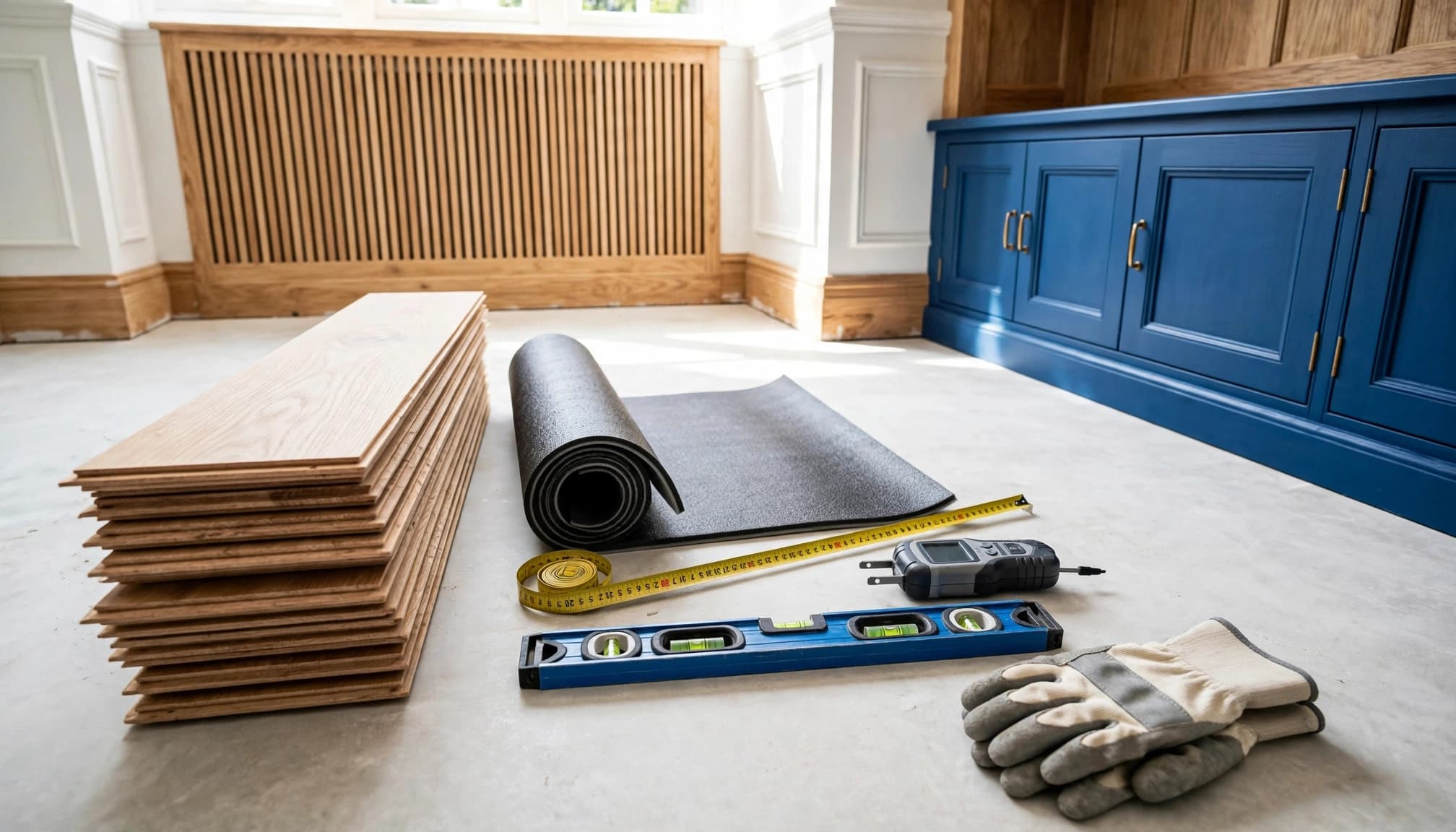
Know when professional installation is worth paying for
A good fitter spots damp, unevenness and movement risks before costly materials go down. They can also plan thresholds, board direction and expansion gaps so the finished floor looks deliberate.
DIY fitting can suit confident homeowners with a straightforward room and a verified subfloor. Errors can affect door movement, board alignment, warranties and long-term stability. If you rent, get written permission before making permanent changes to the floor.
Wood Flooring Pros, Cons and Care That Protects Your Investment
A Hardwood Floor can feel warmer and more natural than many hard-floor alternatives. Comfort and appearance depend on construction, finish and maintenance, not price alone.
The main benefits of timber boards for UK households
Real timber has grain, texture and colour variation that printed surfaces cannot fully copy. This Natural Beauty suits Traditional Designs, modern schemes and country-style interiors.
- Natural boards give each room a distinct appearance and suit many decorating styles.
- Quality solid boards and thicker engineered wear layers can be repaired or refinished.
- Timber feels comfortable underfoot and is straightforward to sweep or vacuum.
- Responsibly sourced timber and a long service life can reduce replacement waste.
Check credible sourcing claims rather than assuming every floor is sustainable. Product documentation should state the Wood Species and whether the timber comes from Sustainable Sources.
The drawbacks to consider before placing an order
Timber costs more upfront than many laminate and carpet options. It can scratch, dent, creak or move, especially with heavy furniture, pets and poor moisture control.
- Water exposure can stain boards, swell edges and damage joints.
- Hard surfaces may increase footfall noise in upstairs rooms or flats.
- Fitting demands more preparation than laying a loose rug or click-lock vinyl.
- Finishes vary in their resistance to stains, marks and wear.
Buy it if you want a long-lasting natural floor and can prepare the room properly. Skip it if water resistance, a lower upfront cost or quieter comfort matters more. Laminate, luxury vinyl, Bamboo Flooring and carpet may suit those priorities better. Bamboo has different performance and sourcing considerations, so check whether it suits the room.
Simple cleaning and maintenance habits keep boards looking better
Sweep with a soft brush or use a vacuum designed for hard floors. Place mats at entrances, fit felt pads under furniture and clean wet footwear before it crosses the room.
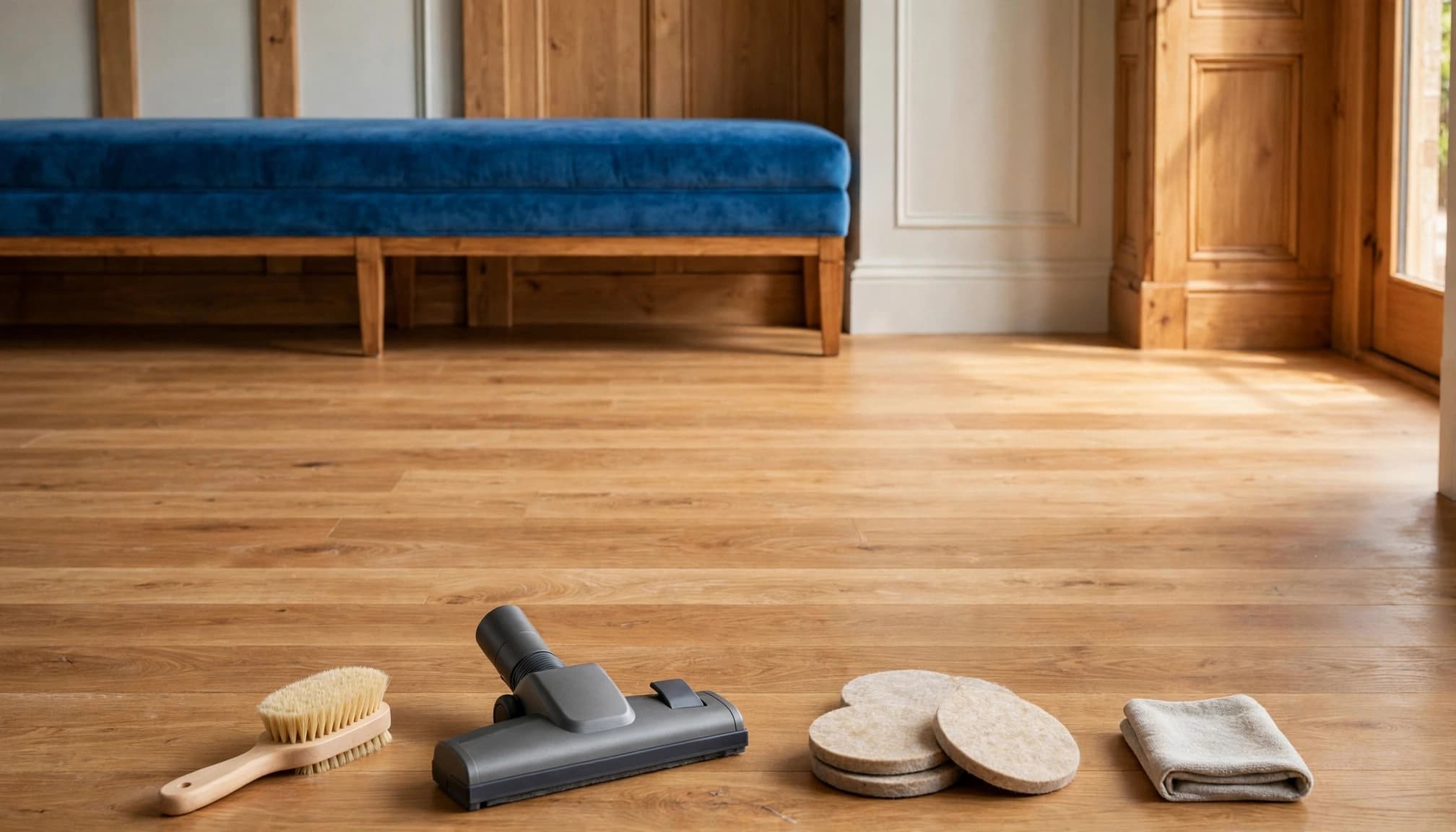
Wipe spills with a lightly damp cloth, never a soaking mop. Trim pet claws and avoid harsh cleaners, steam mops and abrasive pads. Hard Wax Oiled boards may need local re-oiling, whilst a Lacquered Floor usually needs a compatible refresher or eventual full recoat. Sand only when the board construction and remaining wear layer allow it.
Frequently Asked Questions
Is Engineered Wood Flooring better than Solid Wood Flooring?
Neither option is always better. Engineered boards usually offer greater stability and wider installation options, whilst solid boards offer the strongest potential for repeated sanding. Choose based on room conditions, fitting method and the thickness you can afford.
Can timber boards be used with underfloor heating?
Some engineered products are designed for underfloor heating. Compatibility depends on the board’s construction, thickness, heating system and installation method. Confirm the manufacturer’s temperature limit and fitting instructions before ordering.
How long should timber boards last?
Service life depends on timber quality, wear layer thickness, traffic, moisture control and maintenance. A well-kept floor can last for decades, particularly if it can be refinished. The original purchase price matters less than suitable construction and proper care.
Are timber boards suitable for kitchens?
Timber can work in a well-managed kitchen if spills are cleaned quickly and the finish is maintained. It is less forgiving than Water Resistant alternatives near sinks, dishwashers and appliances that could leak. Engineered boards are often the more practical option.
How much extra flooring should I buy for waste?
The allowance depends on room shape, board length, fitting direction and pattern. Ten per cent often suits a simple room, but complex cuts and herringbone usually require more. Confirm the calculation with your fitter and retain a few spare boards for future repairs.
Final Thoughts
The best wood floor balances board construction, finish, room conditions, installation quality and full project cost. The lowest online price rarely tells you whether the boards will suit your home or last well.
Choose engineered wood for versatile stability, solid wood for maximum refinishing potential and reclaimed boards for distinctive character, provided their condition is verified. Order samples, check the subfloor and compare every cost before buying.
Explore More Expert Buyers Guides and Reviews
For a list of our main buyers guides use the drop-down menu at the top of the page. Topics related to this article are:
Home and Garden Furniture Buyers Guides
Bedroom Furniture Buyers Guides
living Room Furniture Buyers Guides
Garden Furniture Buyers Guides
Patio Furniture Sets Buyers Guide
–
Explore Our Blog Categories for Expert Buying Advice
- AI Powered Product Finder Tools (26)
- Expert Buying Guides & Shopping Tips for UK Shoppers (1,328)
- Brands & Designer Products (Men, Women & Electronics) (269)
- Designer Fashion Brands: Buyer’s Guides & Reviews (149)
- Electronic Brands: Buyers Guides & Reviews (85)
- Apple Products Buyer’s Guides & Reviews (23)
- Brands – Phones, Laptops, PC”s, Tablets | Buyer’s Guides & Reviews (41)
- Electronics – Tablet & iPad Reviews and Buyers Guides (11)
- Kitchen Appliance Brands: Buyer’s Guides & Reviews (22)
- Laptop Brands & MacBooks Buyer’s Guides & Reviews (9)
- Phone Brands & iPhones Buyer’s Guides & Reviews (22)
- Car Buying & Financing Made Easy | Expert Guides for the UK (89)
- Clothing, Fashion & Accessories Buying Guides UK (435)
- Beauty, Health & Wellness | Perfume, Skincare, Makeup & Wellbeing Guides (157)
- Footwear: Trainers & Shoes Buyers Guides (46)
- Jewellery: Expert Reviews, Trends & Buying Guides (70)
- Men's Clothes — Buyers Guides & Reviews (38)
- Men’s Clothes, Fashion & Accessories Guides UK | Latest Trends & Smart Shopping (148)
- Women's Clothing Buyers Guides — Dresses, Tops & More (166)
- Women’s Clothes, Fashion & Accessories Guides UK | Latest Trends & Smart Shopping (379)
- Electronics, Tech & Gadgets: Reviews, Deals & Buying Guides UK (168)
- Furniture Buyer’s Guides | Home & Garden & Styling Tips (304)
- Bedroom Furniture Guides UK | Expert Tips & Best Value Deals (91)
- Garden Furniture, Landscaping & Garden Rooms Guides UK | Expert Tips & Best Value Deals (151)
- Garden Sofa & Sofa Sets Buyers Guides (10)
- Garden Tables & Chairs: Sets, Individual Tables & Seating Buyers Guides (34)
- Home Furniture, Décor & Interior Design Guides UK | Styling Tips & Inspiration (165)
- Living Room Furniture, Design & Décor Guides UK | Styling Tips & Inspiration (56)
- Sofa & Sofa Beds Buyers Guides (18)
- Sofa Beds Buyers Guides (7)
- Sofa Buyers Guides & Expert Advice (10)
- Holidays & Travel: Hotels, Villas & Flights (157)
- Home & Garden Improvements | Renovations & Outdoor Transformation Guides (97)
- Insurance & Protection: Travel, Landlord, Gadget & More UK (159)
- Gadget Insurance UK | Expert Guides, Reviews & Smart Protection Tips (33)
- Home Emergency Cover UK | Expert Guides, Reviews & Practical Protection Tips (21)
- Landlords Insurance UK | Expert Guides, Reviews & Smart Protection Tips (31)
- Travel Insurance UK | Expert Guides, Reviews & Money-Saving Tips (34)
- Pets: Guides, Tips & Inspiration (26)
- Brands & Designer Products (Men, Women & Electronics) (269)
- Gifts for Everyone: Ideas for Every Occasion & Budget (40)