Birkenstock sandals remain a familiar sight in the UK because their practical design has changed little at its core: a contoured footbed, supportive shape and straightforward styling built for regular wear. That long-standing reputation has earned the brand a loyal following, although some wearers find the sandals stiff at first, bulky underfoot or expensive beside similar-looking alternatives.
This review examines how comfortable Birkenstock sandals are in everyday use, which models stand out, how sizing works and whether their durability supports the price. It also considers the materials, footbed features, care requirements and the advantages of buying online, where shoppers can often find a wider choice of colours, sizes and seasonal prices without relying on a single shop.
The comparison begins with the brand’s best-known designs, including the must-have styles and models worth trying, before weighing their strengths against common complaints and assessing which pairs offer the soundest value for UK shoppers.
Key Takeaways
- Birkenstock sandals stand out for their contoured cork-latex footbeds, adjustable straps and supportive shape, although the initial firmness needs time to settle.
- The Arizona remains the must-have model, while Boston, Gizeh and waterproof EVA styles are worth trying for different wardrobes and routines.
- Customers value the brand’s durability, practical design and recognisable styling, but some find the sandals bulky or expensive.
- Accurate sizing matters because footbed length, width and strap adjustment affect comfort more than appearance alone.
- Buying online can provide broader colour and size availability, easier price comparison and better access to seasonal reductions, provided returns and authenticity are checked.
Birkenstock Sandals Review: What Makes the Brand Different?
Birkenstock’s appeal comes from a design that prioritises foot placement and stability over a soft, immediately forgiving feel. That approach explains both the brand’s loyal following and the complaints that appear in user reviews. Comfort is personal, so positive owner experiences indicate common patterns rather than guaranteed performance for every foot.
Why people like Birkenstock sandals
Many owners praise the stable sensation underfoot, particularly when walking or standing for long periods. The shaped footbed gives the sandal more structure than a flat foam pair, while adjustable straps allow the fit to be refined across the foot. Width options also help, with some models available in regular and narrow fits.
The styling has become instantly recognisable. Arizona two-strap sandals work with jeans, shorts and relaxed summer clothing, yet leather versions can look considered with linen trousers or a casual dress. Gizeh offers a neater toe-post shape, whilst EVA styles suit poolside use and wet conditions. Boston clogs are another must-have for those wanting the same footbed beyond sandal season.
Durability is part of the value argument. The soles generally cope well with frequent use, and some components can be replaced or repaired, depending on the model and the condition of the upper and footbed. That can extend a pair’s useful life beyond basic summer sandals.
Still, user reviews regularly mention drawbacks. The classic footbed can feel firm, even hard, during the first few wears, and break-in takes patience. Some straps rub until adjusted, whilst the cork surface and soles show visible wear over time. The upfront price is also higher than uncomplicated sandals, so value depends on frequency of wear and expected lifespan.
A well-liked Birkenstock sandal is not necessarily soft on day one. Its comfort comes from structure, fit and familiarity with the footbed.
What stands out most in the product design
The classic footbed combines a contoured base with a heel cup, raised arch support and a toe bar. These features encourage the foot to sit securely rather than spreading across a completely flat sole. Traditional styles commonly use cork and latex beneath a suede lining, creating a firm platform that gradually adapts with wear.
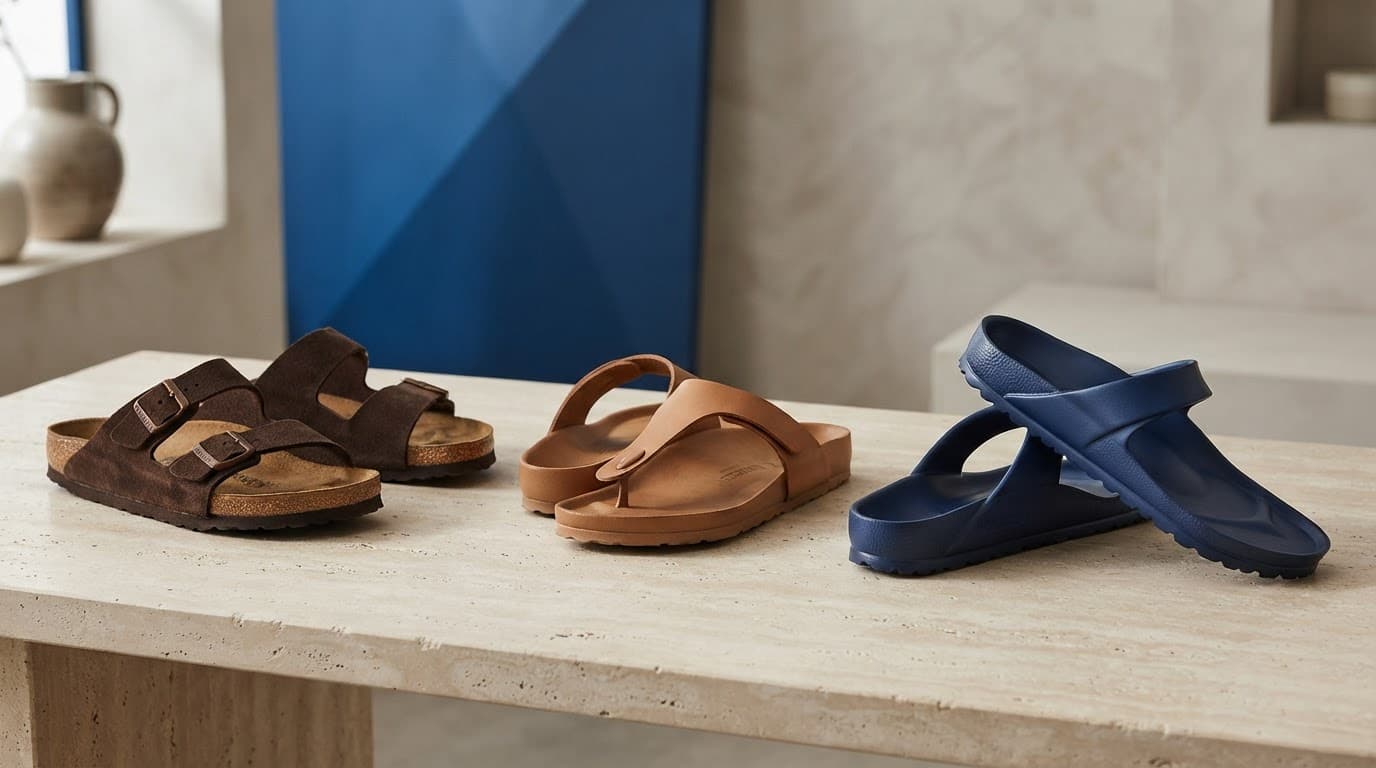
AI-generated image showing the contrasting footbed shapes and materials used across sandal styles.
The range is not uniform. Soft Footbed versions add cushioning beneath the lining, while slimmer designs reduce some of the classic bulk. Lightweight EVA models feel more flexible and water-friendly, but they don’t provide the same cork-and-latex experience or repair potential. That distinction matters when comparing comfort, support and long-term value.
| Feature | Classic footbed | Softer or slimmer variants | EVA styles |
|---|---|---|---|
| Feel | Firm and structured | More cushioned or lower-profile | Light and flexible |
| Materials | Cork-latex and suede lining | Varies by model | Moulded EVA |
| Break-in | Usually noticeable | Often gentler | Minimal |
| Best use | Regular everyday wear | Users wanting easier comfort | Wet weather and holidays |
The Best Birkenstock Styles for Different Uses
Birkenstock’s sandal families share the same recognisable footbed, but their straps, materials and levels of coverage change how they perform. This review is not a popularity ranking. The Arizona may be the obvious everyday choice, yet other designs work better for summer dressing, travel or wet conditions.
| Model | Design | Strengths | Limitations | Most suitable use |
|---|---|---|---|---|
| Arizona | Two adjustable straps | Versatile, easy to fit, many materials | Open heel, slippery footbed when wet | Everyday wear |
| Gizeh | Toe-post strap | Neat profile, suits summer clothing | Toe post may rub | Warm-weather outfits |
| Mayari | Crossed toe straps | Secure feel and distinctive styling | Strap placement may not suit every foot | Casual summer wear |
| Madrid | Single wide strap | Simple, light and easy to wear | Least secure for long walks | Short summer outings |
| Milano | Two straps with backstrap | More secure and supportive | Bulkier than open-heel styles | Travel and extended walking |
| EVA styles | Moulded waterproof material | Lightweight, washable and weather-resistant | Less breathable, different footbed feel | Pools and wet weather |
Arizona, the best-known everyday option
The two-strap Arizona remains the strongest all-rounder because each buckle allows the fit to be adjusted independently. That helps accommodate changes in foot volume and gives the sandal more flexibility than a fixed-strap design. Its open construction also keeps feet cooler during warmer weather.
Material choice changes the experience. Suede feels soft and becomes more relaxed with wear, but it needs protection from rain and careful cleaning. Smooth leather has a firmer, more polished finish and usually wipes clean more easily, although it still needs conditioning. Synthetic uppers offer simpler care, whilst EVA versions are the lightest and most resistant to water.
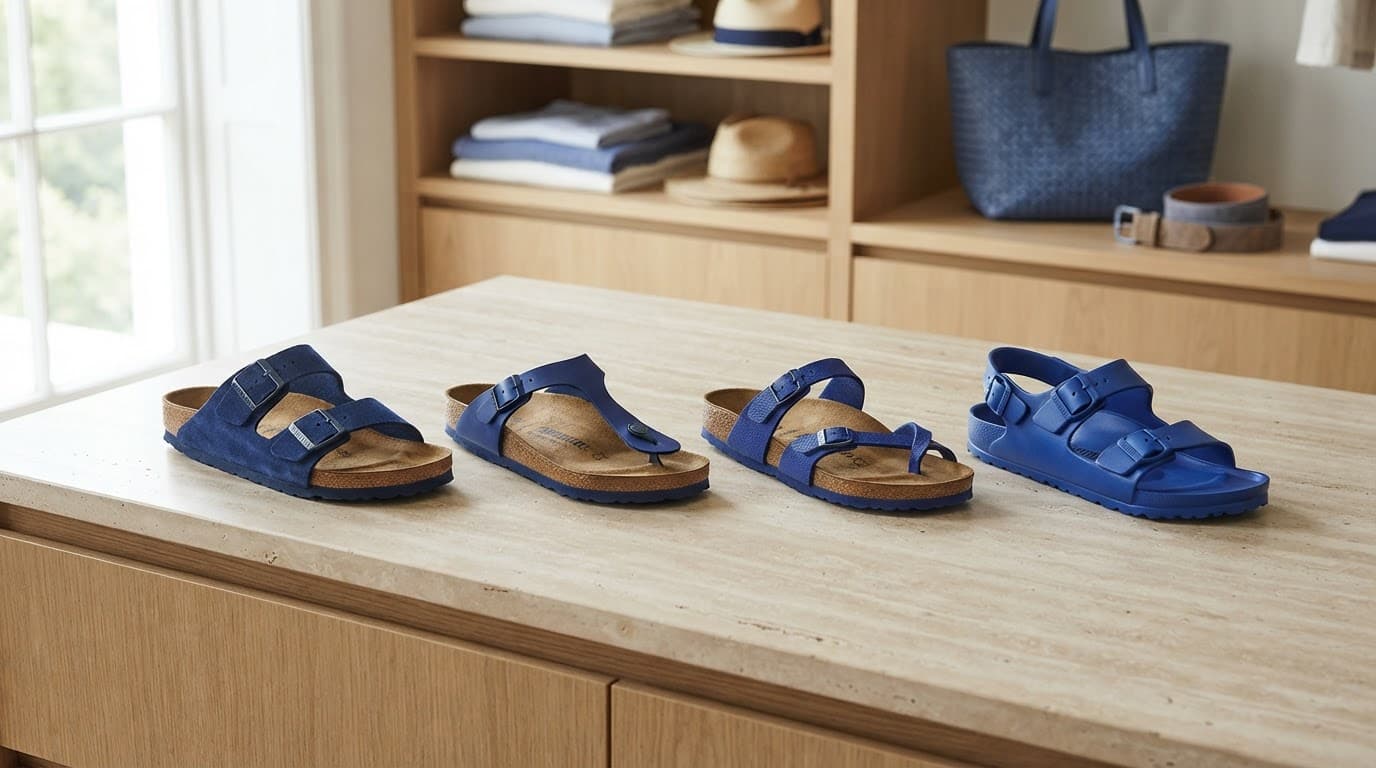
AI-generated image showing different Birkenstock sandal designs and materials.
Arizona suits jeans, shorts, linen trousers and relaxed dresses, which explains its lasting appeal. However, the open heel gives less security for brisk walking, uneven ground or crowded travel. The footbed can also become slippery when wet, so it isn’t a dependable choice for poolsides or heavy rain.
Gizeh, Mayari and Madrid for lighter summer wear
The Gizeh uses a toe post, making it slimmer and more refined under summer clothing. Some people find the post comfortable once accustomed to it, whilst others experience rubbing between the toes. Foot shape and spacing matter more here than appearance suggests.
Mayari’s crossed straps hold the forefoot differently and may feel more stable for wearers who dislike a toe post. Madrid uses one broad strap and has the simplest look, but it provides less control because there is no second strap or backstrap. Each style works well with shorts, skirts and lightweight trousers, yet trying several designs is sensible when one strap presses against a sensitive area.
Milano and EVA styles for travel and wet weather
The Milano adds a backstrap to the familiar two-strap layout. That extra contact can reduce movement inside the sandal during airport journeys, sightseeing and longer periods standing. It still has an open front, but feels more secure than Arizona for travel.
EVA styles are lightweight, washable and practical around swimming pools, changing rooms and rainy pavements. They don’t feel like cork footbeds, however. EVA is less breathable and may provide a different level of long-term comfort, particularly during extended walking. The trade-off is clear: Milano prioritises security, whilst EVA prioritises easy cleaning and water resistance.
Comfort, Sizing and Fit: Getting the Footbed Right
Birkenstock comfort depends on correct foot placement rather than softness alone. The contoured footbed should support the foot without forcing it into a cramped position, and the straps should hold the sandal securely without restricting movement. A careful fit check matters more than choosing the usual shoe size.
How Birkenstock sizing and width options work
Birkenstock sandals commonly come in regular and narrow widths. The printed footprint symbol on the packaging or footbed can indicate the width, while the product listing usually provides a further guide. However, sizing should still be checked against the specific model, since strap layouts, materials and footbed versions can affect how a pair feels.
Both feet should be measured while standing, preferably at the end of the day when feet may be slightly larger. Measure heel to the longest toe and compare the result with the model’s current size guide. The longer foot usually determines the required length. Once placed in the footbed, the toes should have a small amount of space in front, with a similar modest gap behind the heel. The foot should not spill over the sides.
The arch support should sit beneath the natural arch, while the toe bar should rest below the toes rather than pressing into them. A secure sandal stays in place when walking, but a tight sandal leaves pressure marks, restricts the toes or causes the straps to bite. These are different sensations, and tightening the buckles cannot correct an unsuitable footbed length or width.
Leather and synthetic straps also change differently with use. Leather may soften and become more flexible, whilst synthetic materials can retain their original shape for longer. Neither material changes the footbed into a different size. The cork-latex base may feel more familiar over time, but its basic dimensions and support points remain fixed.
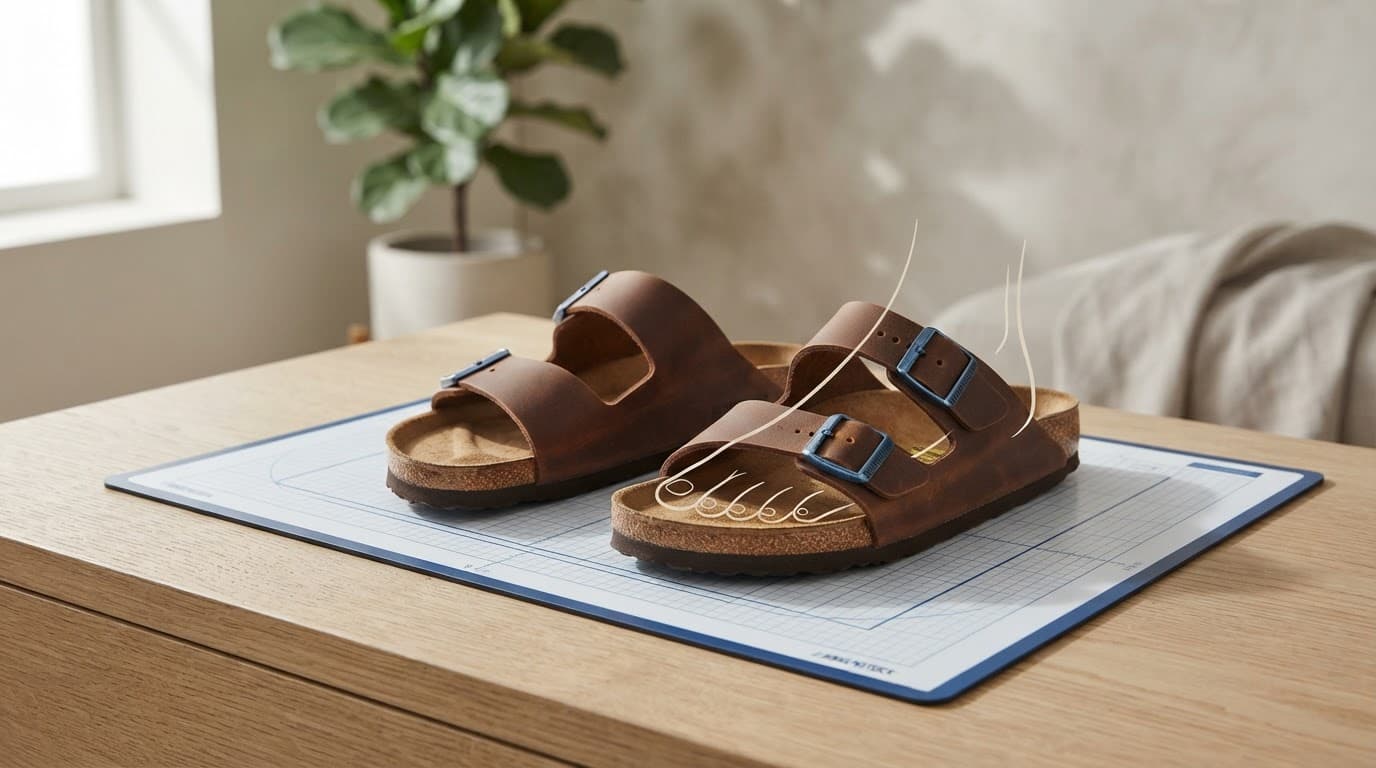
AI-generated image showing suitable space around the toes and heel, with the arch and toe bar correctly positioned.
Breaking them in without creating sore spots
The classic footbed often feels firm during the first few wears. A gradual break-in period is more sensible than taking a new pair straight on a long walk. Short sessions on clean, dry surfaces allow the footbed and straps to settle while making pressure points easier to identify.
Straps should be adjusted so the foot remains stable without being clamped down. Some wearers find thin socks useful during early indoor wear, particularly where a leather edge rubs. Socks can reduce friction temporarily, but they cannot solve a poor fit.
Redness, sharp pressure or repeated rubbing deserves attention after each wear. Severe blisters are not proof that the sandals will eventually fit. Persistent pain, numbness or ongoing irritation is a reason to stop wearing them and seek suitable professional advice. A properly fitted pair may need time to feel natural, but it shouldn’t cause escalating discomfort.
Materials, Durability and Value for Money
Birkenstock sandals justify their price only when their useful life matches the purchase cost. The cork-latex footbed, replaceable components and sturdy construction can support that case, but materials, weather exposure and fit determine how long a pair remains comfortable. A cheaper sandal may cost less initially, yet replacing it several times can produce a similar total cost.
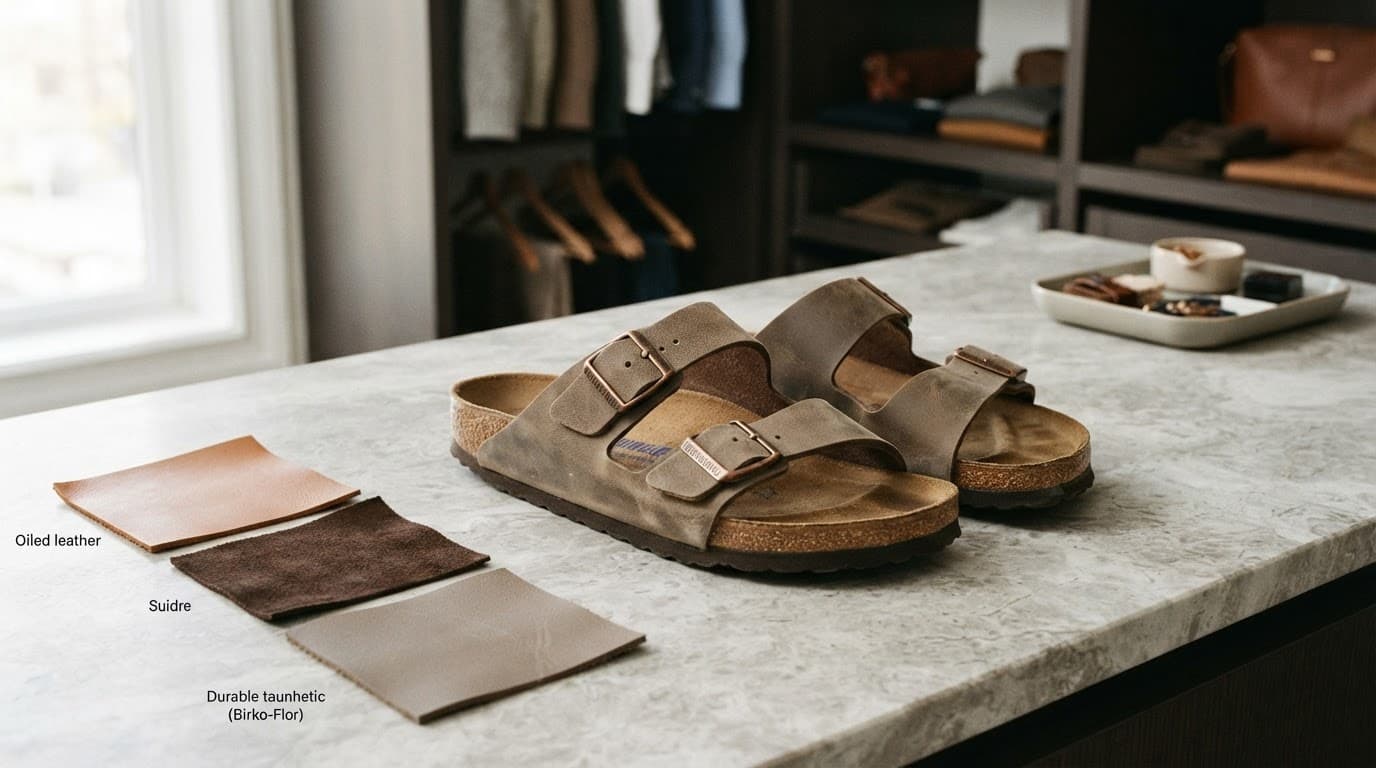
AI-generated image showing sandal materials and signs of normal wear.
Common problems owners report
Some owners experience a lengthy break-in period, particularly with the firm classic footbed or stiff leather straps. Others report suede marking, footbed odour, sole wear and buckles that loosen over time. These complaints appear regularly in customer discussions, but isolated online reports cannot show how common each issue is across the full customer base.
Cork is particularly vulnerable to soaking. Prolonged damp can weaken the cork edge and affect adhesives, whilst salt, dirt and sweat may stain the footbed or create odour. Heat from radiators, car interiors or intense sunlight can also dry and crack cork, leather and synthetic finishes. Suede marks more easily than smooth leather, although careful brushing can often improve its appearance.
Some wear is manageable. Loose buckles, dirty footbeds and worn outsoles may be repairable, depending on the model and the condition of the rest of the sandal. Persistent rubbing, cramped toes or an arch support that sits in the wrong place usually indicate an unsuitable size, width or style, rather than a problem that more break-in will solve. Straps that crack, a badly damaged cork base or a heavily worn footbed may make replacement more sensible than repair.
How to care for Birkenstock sandals
Care should match the upper material. Suede needs a gentle, dry brush to lift dirt without flattening the nap. Smooth leather can usually be wiped and conditioned with suitable products, whilst Birko-Flor and other synthetic uppers generally respond to a damp cloth. EVA styles are easier to clean, but they still need thorough drying after use.
The cork footbed should never be soaked. Light surface cleaning is safer, followed by complete air-drying away from radiators and strong direct heat. Model-appropriate cork sealer can help protect exposed edges, although it cannot restore cork that has already crumbled.
Storing sandals flat helps prevent straps and soles from distorting. Allowing them to dry fully before storage also reduces odour and limits prolonged damp around the lining. Because finishes differ between models, the manufacturer’s current care guidance should take priority over general cleaning advice.
A useful value test compares the purchase price, likely years of regular wear, care costs and any repair expense. A pair worn frequently for several seasons may offer a lower cost per wear than cheaper sandals replaced each year. However, infrequent wear, poor fit or weather damage weakens that calculation, even when individual components can be replaced.
How to Buy Birkenstock Sandals Online in the UK
Buying Birkenstock sandals online can provide a wider choice of sizes, widths, colours and seasonal materials than a physical shop. It also makes it easier to compare delivered prices, check older colourways and review availability across several sellers. The trade-off is that fit, authenticity and return terms need closer examination before payment.

AI-generated image showing an online comparison process. Images should be displayed at the same width as the article text on desktop and mobile.
How to compare prices without choosing on price alone
Birkenstock prices often change with seasonal demand. Summer colours and popular sizes may sell quickly, whilst older colourways can fall in price when a newer collection appears. Price-history tools can help show whether a reduction is genuine or simply a short-term change from an inflated previous price.
A lower price isn’t automatically a like-for-like bargain. The listing may show a different material, such as EVA rather than cork-latex, or a narrow width instead of a regular one. Soft Footbed and classic footbed versions can also look similar while offering a different underfoot feel. Model names, strap designs and seasonal finishes deserve careful comparison.
The final basket total gives a more reliable picture than the product price. Delivery charges, optional shipping upgrades and returns postage can remove much of an apparent saving. If the size proves unsuitable, the cost of sending the sandals back becomes part of the purchase calculation. Delivery times should also be checked, particularly when a pair is needed for a holiday or a fixed date.
How to spot an unreliable listing
Unreliable listings often reveal themselves through missing or inconsistent information. Warning signs include:
- An unclear business address, incomplete contact details or no identifiable seller.
- Product photographs that appear copied, heavily edited or inconsistent across the listing.
- Unusually low pricing without a clear explanation.
- Different model names or specifications in the title, description and checkout.
- No accessible returns terms, or wording that makes return postage and refunds unclear.
- Pressure to pay by bank transfer, messaging service or another route outside a normal checkout.
Counterfeit sandals can have inaccurate packaging, poor finishing or product details that don’t match the genuine model. Checking the box, labels, footbed markings and supplied information can help, although none of these checks replaces seller credibility.
Order confirmations, receipts, listing screenshots and photographs of the delivered item should be retained. If the sandals arrive faulty, counterfeit or materially different from the description, the seller is generally the first contact under UK consumer protection rules. The relevant terms and evidence should be reviewed before pursuing the appropriate formal route.
Birkenstock Sandals Compared With Other Footwear Choices
Birkenstock sandals occupy a middle ground between casual fashion footwear and performance sandals. Their contoured footbed and adjustable straps offer more structure than flat sandals or foam slides, but they don’t match the grip, coverage or rapid drying of purpose-built sports designs. No single sandal suits every setting, so the practical choice depends on how and where it will be worn.
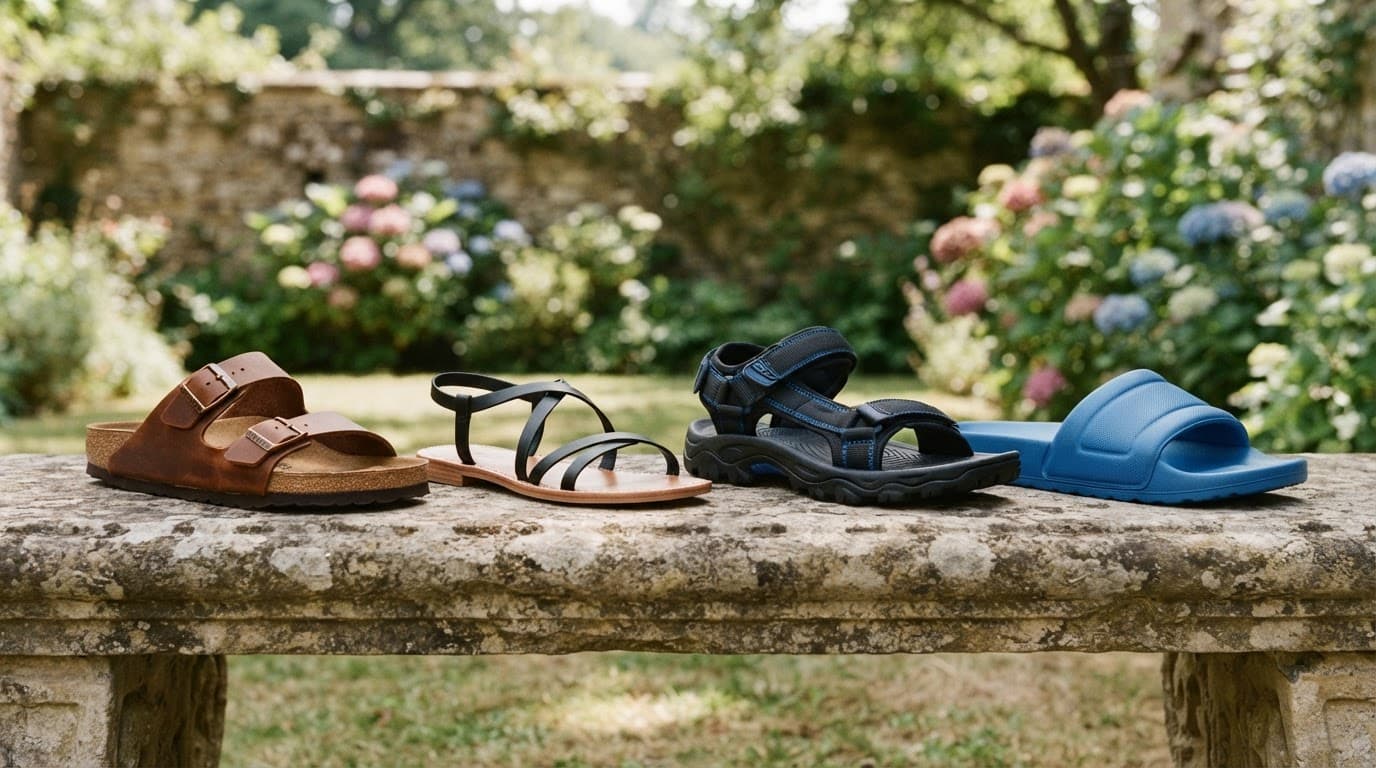
AI-generated image comparing structured cork, flat fashion, sports and foam sandal designs. Images in this article are displayed at the same width as the text on desktop and mobile.
When a structured footbed is a good choice
People who prefer a firm, defined base often favour Birkenstock sandals over soft, flat alternatives. The heel cup, raised arch area and toe bar give the footbed a clear shape, whilst adjustable straps allow the fit to be refined across the forefoot. That combination can feel more stable during city walking, commuting and everyday standing than a sandal with a thin, flexible sole.
The Arizona remains the brand’s must-have style because its two buckles offer more adjustment than most flat fashion sandals. Milano is worth trying when a backstrap is useful for travel or longer periods on foot. Soft Footbed versions suit wearers who want the same general design with a gentler initial feel, while EVA models are more practical around water.
| Footwear type | Main advantage | Main limitation | Suitable setting |
|---|---|---|---|
| Birkenstock sandals | Defined footbed and adjustable fit | Cork needs care around water | City walking and commuting |
| Flat fashion sandals | Slim appearance and easy styling | Limited cushioning and structure | Occasional wear |
| Sports sandals | Better grip and foot security | Less smart-casual in appearance | Long walks and outdoor trips |
| Leather sandals | Polished appearance and adaptable styling | Drying can be slow when soaked | Smart-casual occasions |
| Foam slides | Light weight and quick cleaning | Loose fit and limited support | Pools, beaches and short errands |
The table is formatted to remain readable beside the article text on both desktop and mobile. Its main finding is simple: Birkenstock offers a balance of structure and smart-casual styling, rather than maximum performance in one area.
When another sandal type may work better
Sports sandals are usually the stronger choice for water sports, uneven trails and fast walking because their heel straps and grippier soles hold the foot more securely. Open-backed Birkenstock designs can shift during brisk movement, particularly on slopes or rough ground.
Very wet weather also exposes a material limitation. Traditional cork-based footbeds and suede uppers should be kept away from prolonged soaking, whereas foam slides and water-friendly sports sandals dry faster and tolerate splashes more easily. Foam slides are convenient at the beach, although they generally offer less cushioning control and adjustability.
Flat fashion and leather sandals may also work better for formal occasions. Their slimmer profiles fit tailored clothing more naturally, whilst Birkenstock’s broader footbed can look visibly casual. For occasional wear, a lighter fashion sandal may therefore offer better value, even if it provides less support during extended walking.
Frequently Asked Questions
These answers address practical questions that often remain after comparing Birkenstock comfort, fit, materials and long-term value.
Are Birkenstock sandals good for walking?
Birkenstock sandals can work well for casual walking, commuting and sightseeing on reasonably even pavements. The contoured footbed includes a heel cup, arch support and toe bar, which give the foot more structure than a flat sandal. Adjustable straps can also reduce movement when the fit is correct.
However, the firm footbed and leather straps usually need a gradual break-in period. New pairs may cause rubbing or pressure during a long first walk, so shorter outings are more sensible. Open-backed styles such as Arizona also offer less security than Milano or a purpose-built sports sandal.
For demanding hikes, steep slopes, wet paths or rough terrain, walking sandals with deeper tread, stronger grip and a secure heel strap are generally more suitable. Birkenstocks are comfortable lifestyle sandals, but they aren’t specialist hiking footwear.
Do Birkenstock sandals run true to size?
Birkenstock sizing depends on the model, foot shape and available width. A person who normally wears a particular shoe size may need a different Birkenstock size or width because the footbed has a fixed shape and requires space around the toes and heel.
Both feet should be measured while standing, then compared with the current measurements for the chosen model. The toes should sit comfortably within the footbed, the heel should remain supported and the arch should align with the natural arch. Buckle adjustment can refine the fit, but it cannot correct the wrong length or width.
Returns also matter when buying online. The policy should allow unworn sandals to be sent back within the stated period, with packaging and proof of purchase retained.
Can Birkenstock sandals get wet?
EVA Birkenstock styles are moulded from water-resistant material and are the most suitable option for poolsides, light rain and easy cleaning. Traditional cork footbeds, suede uppers and leather styles need greater protection.
Soaking can weaken cork, affect adhesives and stain or distort leather. Prolonged damp may also encourage odour and damage the lining. After exposure to water, sandals should air-dry naturally away from radiators, hairdryers and strong sunlight, since high heat can dry cork and leather too quickly.
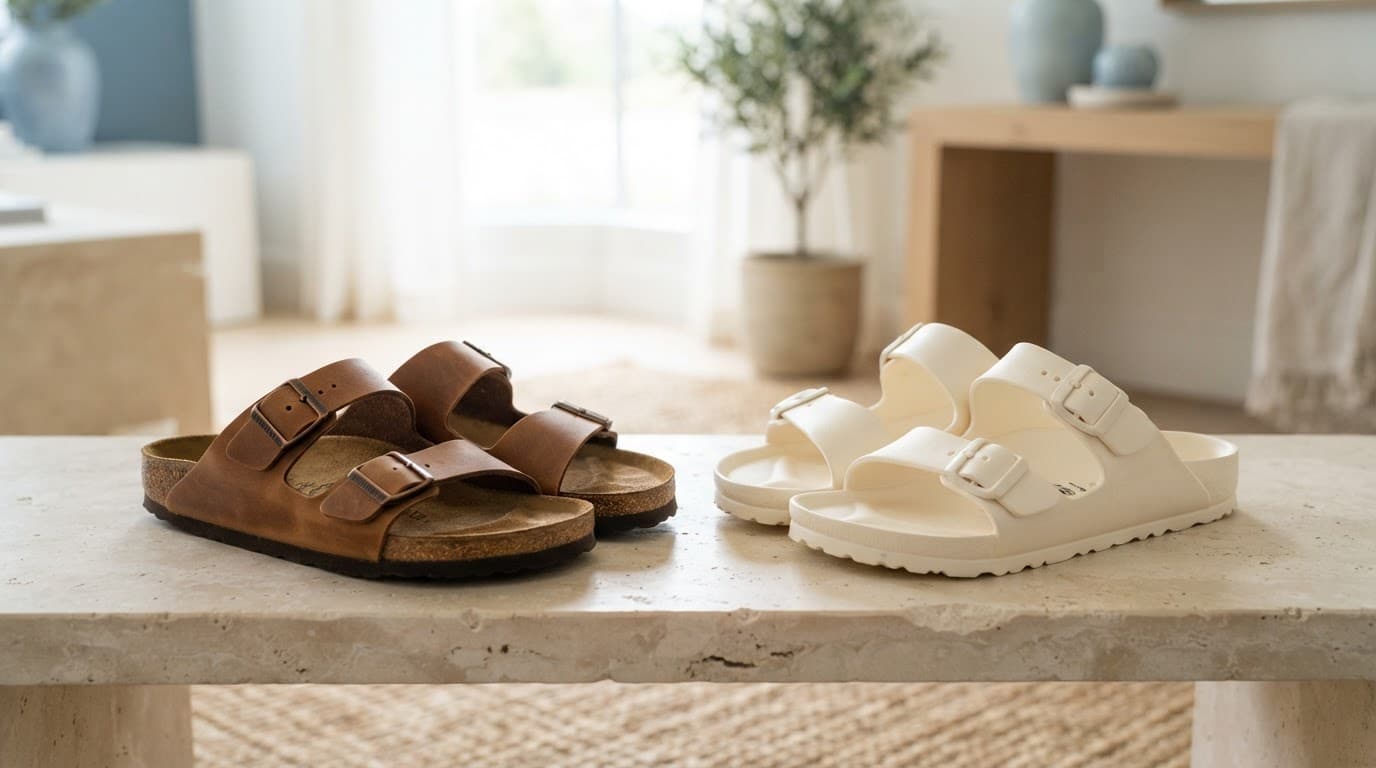
AI-generated image comparing traditional cork footbed and EVA sandal styles.
How long do Birkenstock sandals last?
There is no reliable fixed lifespan. Frequent wear on hard pavements wears the outsole faster, whilst body weight, walking style, weather exposure and storage conditions also affect the footbed and upper.
Careful cleaning and keeping cork away from prolonged damp can extend useful service. The outsole, cork edge, straps and footbed should be assessed together, because heavy wear in one area can make replacement more practical than continued repair.
Are Birkenstock sandals worth the money?
They can be, particularly for people who wear supportive sandals regularly and value a familiar, adjustable fit. Durable construction, replaceable components on some models and repair options can improve the cost per wear.
The calculation changes for occasional users. Someone wearing sandals only a few times each summer may prefer a cheaper pair, especially if the Birkenstock fit feels unsuitable or the material requires more care. Price alone cannot compensate for poor fit.
Can Birkenstock sandals be repaired?
Some pairs may receive repairs or replacement components, such as soles or other worn parts. Availability depends on the model, the type of damage and the authorised service options available in the relevant market.
A damaged cork base, badly worn footbed or cracked upper may limit what can be restored. Current manufacturer guidance should be checked before assuming that a pair is repairable, as repair services and supported components can change.
Conclusion
Birkenstock sandals remain distinctive because their shaped footbed gives everyday footwear a more structured feel than a flat sandal, while adjustable straps allow a closer fit. Recognisable styling adds to their appeal, with the Arizona as the must-have everyday model, Gizeh and Mayari worth trying for lighter summer outfits, Milano for added security, and EVA designs for wet conditions. The choice of leather, suede, synthetic materials and EVA also gives buyers different balances of appearance, care and practicality.
They are most likely to suit people who value supportive underfoot shaping, regular wear and durable construction. Those seeking a very soft first-wear feel, specialist walking grip or a slimmer formal sandal may prefer another type. Fit matters more than the brand’s reputation, since the wrong length, width or strap design can undermine the comfort that attracts so many owners.
Online comparison can improve both choice and value, provided shoppers check the exact model, footbed, width, material, total delivered cost and returns terms. Birkenstock’s lasting appeal comes from treating everyday footwear as a balance of comfort, function, repair and personal style, rather than chasing a short-lived fashion trend.
Explore our Buyers Guides and Reviews
For a list of our main buyers guides use the drop-down menu at the top of the page. Topics related to this article are:
–
Explore Our Blog Categories for Expert Buying Advice
- AI Powered Product Finder Tools (25)
- Expert Buying Guides & Shopping Tips for UK Shoppers (1,431)
- Brands & Designer Products (Men, Women & Electronics) (285)
- Designer Fashion Brands: Buyer’s Guides & Reviews (163)
- Electronic Brands: Buyers Guides & Reviews (88)
- Apple Products Buyer’s Guides & Reviews (25)
- Brands – Phones, Laptops, PC”s, Tablets | Buyer’s Guides & Reviews (42)
- Electronics – Tablet & iPad Reviews and Buyers Guides (11)
- Kitchen Appliance Brands: Buyer’s Guides & Reviews (22)
- Laptop Brands & MacBooks Buyer’s Guides & Reviews (9)
- Phone Brands & iPhones Buyer’s Guides & Reviews (23)
- Car Buying & Financing Made Easy | Expert Guides for the UK (89)
- Clothing, Fashion & Accessories Buying Guides UK (496)
- Beauty, Health & Wellness | Perfume, Skincare, Makeup & Wellbeing Guides (183)
- Footwear: Trainers & Shoes Buyers Guides (49)
- Jewellery: Expert Reviews, Trends & Buying Guides (73)
- Men's Clothes — Buyers Guides & Reviews (39)
- Men’s Clothes, Fashion & Accessories Guides UK | Latest Trends & Smart Shopping (167)
- Women's Clothing Buyers Guides — Dresses, Tops & More (194)
- Women’s Clothes, Fashion & Accessories Guides UK | Latest Trends & Smart Shopping (435)
- Electronics, Tech & Gadgets: Reviews, Deals & Buying Guides UK (173)
- Furniture Buyer’s Guides | Home & Garden & Styling Tips (326)
- Bedroom Furniture Guides UK | Expert Tips & Best Value Deals (93)
- Garden Furniture, Landscaping & Garden Rooms Guides UK | Expert Tips & Best Value Deals (169)
- Garden Sofa & Sofa Sets Buyers Guides (11)
- Garden Tables & Chairs: Sets, Individual Tables & Seating Buyers Guides (53)
- Home Furniture, Décor & Interior Design Guides UK | Styling Tips & Inspiration (169)
- Living Room Furniture, Design & Décor Guides UK | Styling Tips & Inspiration (57)
- Sofa & Sofa Beds Buyers Guides (19)
- Sofa Beds Buyers Guides (7)
- Sofa Buyers Guides & Expert Advice (11)
- Holidays & Travel: Hotels, Villas & Flights (161)
- Home & Garden Improvements | Renovations & Outdoor Transformation Guides (102)
- Insurance & Protection: Travel, Landlord, Gadget & More UK (159)
- Gadget Insurance UK | Expert Guides, Reviews & Smart Protection Tips (33)
- Home Emergency Cover UK | Expert Guides, Reviews & Practical Protection Tips (21)
- Landlords Insurance UK | Expert Guides, Reviews & Smart Protection Tips (31)
- Travel Insurance UK | Expert Guides, Reviews & Money-Saving Tips (34)
- Pets: Guides, Tips & Inspiration (26)
- Brands & Designer Products (Men, Women & Electronics) (285)
- Gifts for Everyone: Ideas for Every Occasion & Budget (49)