A wooden garage is one of those home upgrades that sounds simple until you start planning it. Do you want secure parking, extra storage, a workshop, or all three in your single wooden garage? And where does it go without stealing the best part of your garden or blocking the drive?
For UK homeowners, a new wooden garage or timber garage building can reduce clutter, provide reliable car storage, protect your car and bikes from bad weather, and make day-to-day life feel less cramped. As one of the popular garden buildings, it can also support resale value, especially if parking is tight where you live.
This guide walks you through the choices that matter for wooden garages and timber garage buildings, including size, location, wooden vs metal garages, the right base, access, permissions, and a realistic view of costs, so you can choose once and not pay twice.
Is a new garage right for your home? Benefits, uses, and common mistakes
A garage is a bit like a spare pair of hands for your home. It takes the heavy load, the messy bits, and the things that don’t fit anywhere else, then keeps them out of sight and out of the rain.
Everyday benefits UK homeowners notice quickly
Secure parking is the obvious one. If you’ve ever scraped ice off a windscreen at 7am, you’ll understand the appeal of reliable car storage.
A garage can also help with theft prevention, especially for bikes, tools, and garden kit. Even a basic structure with heavy-duty doors and good lighting can make a big difference for car storage.
Storage is where most people feel the win. Boxing up seasonal items into storage space, moving the bins out of view, and keeping pushchairs and scooters from blocking the hallway can change how your home feels with versatile storage space, without building an extension.
Key choices before you commit (size, location, access, base)
Size should match your real use, not your best intentions. A single garage that’s only just wide enough for the car often ends up not being used for parking at all.
Location matters more than many people expect. A garage at the far end of the garden can be great for a workshop, but not much use if you’re carrying shopping in the rain. Near the driveway is convenient, but think about sight lines when reversing, and whether you’ll lose turning space.
Access includes more than the garage doors. Consider the path to the house, where you’ll put bins, and whether you need a side door for quick entry, along with heavy-duty doors for security.
The base is non-negotiable. Most garages need a stable, level concrete base (often a concrete pad). Solid groundwork and a concrete base ensure the structure suits local ground and drainage. Proper groundwork for the concrete pad is key; if rainwater collects near the door, you can end up with damp, mould, and a floor that stays wet for days.
Wooden vs metal garages: which suits your home?
Wooden garages often suit traditional UK homes and gardens best. Timber garage buildings can look warmer and less “add-on” than other options, and they’re usually easier to customise later (extra shelving, lining, windows, or a different door layout). A single wooden garage with shiplap cladding feels like a natural fit, while double wooden garages offer more storage space. If you want a space that feels like a hobby room or workshop, wooden garages and timber garage buildings can feel more comfortable, especially models with tanalised timber for durability and sturdy roof trusses.
The trade-off is maintenance. Timber garage buildings need protection from rot and weather, and you’ll need to keep an eye on the base and lower boards with feather edge cladding or other exterior cladding. Single wooden garages require this care, as do double wooden garages; if you ignore it for a few winters, problems can creep in quietly.
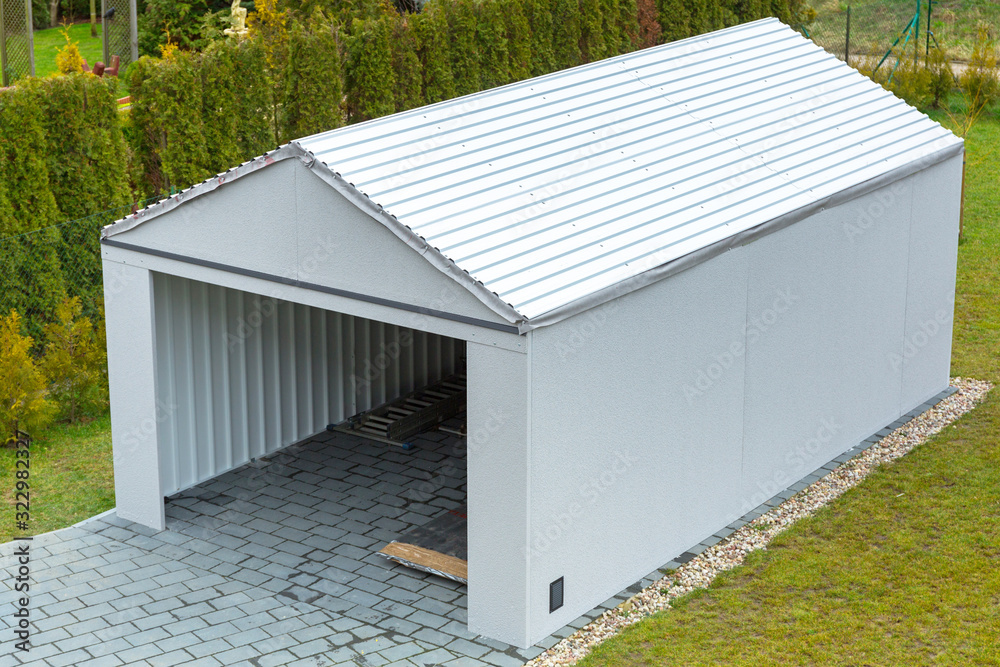
A metal garage is usually chosen for low upkeep and straightforward security with heavy-duty doors. Steel structures can be strong, quick to install, and less fussy about day-to-day care. They can be a good fit if you mainly want a lockable shell for a car, motorbike, or tools.
Concrete garages provide another strong option, with sectional concrete garages offering modular appeal similar to sectional buildings. Concrete garages with heavy-duty doors excel in durability, and their exterior cladding can blend with timber garage buildings. Triple garages in concrete garages suit larger needs, while a single wooden garage might pair well for smaller sites. Watch for roof trusses in wooden garages versus the solid design of concrete garages.
The main watch-out for metal is condensation. Without the right ventilation and, in some cases, insulation, metal can “sweat” in cold months, which isn’t kind to tools, bikes, or cardboard boxes. Wooden garages with apex roofs or flat roofs, and even concrete garages, can mitigate this better with proper design.
Permissions and typical costs (what to expect)
In the UK, garages like wooden garages or concrete garages can sometimes be built under permitted development, but it depends on height, location, and how close you are to boundaries, plus rules can differ in certain areas. Permitted development rights often apply to single wooden garages and double wooden garages under specific limits, but always check planning permission with your local planning authority early. Ask your installer what they’ve allowed for in terms of permitted development and planning permission. Building regulations may apply in some cases, for example with electrics or certain structural details in building regulations for larger triple garages.
Costs vary a lot based on size, groundworks, door type like heavy-duty doors, and whether you’re adding power, lighting, or insulation. As a rough guide, a basic wooden garage or metal garage with a simple base can cost a few thousand pounds, while larger builds like double wooden garages, tricky sites, premium heavy-duty doors, and full electrics can push totals into five figures. The base and drainage are often where budgets stretch, especially if the ground isn’t level.
Common mistakes to avoid (a quick checklist)
- Choosing the wrong size, then struggling to open car doors or store bikes
- Ignoring drainage, so water runs towards the garage or pools by the entrance
- Forgetting access, like a side door, path lighting, or enough driveway width with heavy-duty doors
- Skipping ventilation, leading to damp, rust, and mould on stored items
- Under-planning electrics, then relying on extension leads for years
What you can use a garage for (parking, storage, workshop, home gym)
The best garages like timber garage buildings or garden buildings are planned from the inside out. Decide what the space must do, then pick the layout, garage doors, and electrics to suit, whether as a carport, workshop, or more.
Parking: If the main goal is to store a car as a carport alternative, measure properly. Don’t rely on the brochure size for your carport setup. Measure your car width with mirrors out, then allow space to open the doors without squeezing past a wall. If you want to park and still store anything in storage space, extra width matters more than extra length; consider a carport with an apex roof.
Storage: Storage needs wall space, not just floor space in your storage space. Bikes, ladders, and garden tools are easier to manage with hooks, rails, and shelves like in garden sheds, so think about where these will go before the structure is ordered. A side door can save you from opening the main door every time you want a spade or the recycling bags; cart lodges offer similar storage space vibes.
Workshop: A workshop needs power points, good lighting, and a floor that can take weight and impact. If you’ll use power tools in the workshop, plan for more sockets than you think. It’s also worth thinking about dust and noise in the workshop. A solid heavy-duty door, decent seals, and sensible placement in the garden can keep the peace with neighbours; a workshop with a flat roof works well for garden sheds too.
Home gym: This is where comfort matters. You’ll want a stable, dry floor, decent ventilation, and enough headroom for stretching or lifting. Rubber flooring is common, but it only works well if the base underneath is flat and dry. If you’re storing gym kit and a car together in a carport style, plan zones so you’re not moving half the garage to get the weights out; cart lodges can inspire compact designs.
A simple example helps. Storing bikes for a family of four might need a clear wall, strong fixings, and a wide enough heavy-duty door to roll bikes in without turning sideways, much like garden sheds. A workshop, on the other hand, benefits from a workbench wall, task lighting, and a spot for a small heater or dehumidifier if damp is common, with a flat roof for better airflow.
Mistakes that cost money later (too small, poor access, no ventilation)
Most garage regrets come from things you only notice once you start using the space every day.
Too small: A garage can be technically “car-sized” and still useless. If you can’t open the driver’s door fully, parking becomes a chore and you’ll stop doing it. Quick check: mark out the planned internal width on the drive with tape, then stand inside it and mimic opening doors. It’s a fast reality test.
Poor access: It’s easy to focus on the garage doors and forget the approach. If the driveway is narrow, if the entrance is tight with heavy-duty doors, or if the opening faces an awkward angle, you’ll clip mirrors, kerb tyres, and grind gears in frustration. Quick check: think about your turning circle, and where you’ll stand to open and close the door safely, especially in the dark.
No ventilation: Damp is a slow, expensive nuisance. It rusts tools, spoils paint tins, and turns stored fabric musty. Ventilation helps air move, which reduces condensation. Quick check: plan at least two airflow points (for example, vents on opposite sides) and don’t block them with stacked boxes.
Weak security choices: A thin door with a basic lock is an invitation. Security is a mix of heavy-duty doors, good fixings, sensible lighting, and not advertising what’s inside. If you’re storing bikes or tools, it’s worth taking security as seriously as you would for a shed, often more.
Underestimating the base: A cheap base can become a costly redo. If it cracks, slopes, or holds water, you’ll feel it every time you roll something heavy across the floor. A proper base is boring, but it’s what makes the rest of the garage work.
Conclusion
A good garage earns its keep every week, not just on moving day. From wooden garages to concrete garages, get clear on how you’ll use it, choose a material that fits your maintenance appetite, and don’t skimp on the base, garage doors, and ventilation. Planning garage doors properly ensures secure access, while choosing the right garage doors enhances functionality. If you opt for wooden garages or timber garage buildings, a single wooden garage makes a popular choice. These wooden garages shine when well-planned, and even with a carport as an alternative, the essentials matter. Timber garage buildings and wooden garages integrate beautifully into your property. Consider a carport for open storage alongside wooden garages. The best sign you’ve got it right is simple: your garage becomes part of the home, not a dumping ground.
Explore More Expert Buyers Guides and Reviews
For a list of our main buyers guides use the drop-down menu at the top of the page. Topics related to this article are:
Home and Garden Furniture Buyers Guides
Bedroom Furniture Buyers Guides
living Room Furniture Buyers Guides
Garden Furniture Buyers Guides
–
Explore Our Blog Categories for Expert Buying Advice
- AI Powered Product Finder Tools (25)
- Expert Buying Guides & Shopping Tips for UK Shoppers (1,367)
- Brands & Designer Products (Men, Women & Electronics) (273)
- Designer Fashion Brands: Buyer’s Guides & Reviews (153)
- Electronic Brands: Buyers Guides & Reviews (86)
- Apple Products Buyer’s Guides & Reviews (24)
- Brands – Phones, Laptops, PC”s, Tablets | Buyer’s Guides & Reviews (42)
- Electronics – Tablet & iPad Reviews and Buyers Guides (11)
- Kitchen Appliance Brands: Buyer’s Guides & Reviews (22)
- Laptop Brands & MacBooks Buyer’s Guides & Reviews (9)
- Phone Brands & iPhones Buyer’s Guides & Reviews (23)
- Car Buying & Financing Made Easy | Expert Guides for the UK (89)
- Clothing, Fashion & Accessories Buying Guides UK (454)
- Beauty, Health & Wellness | Perfume, Skincare, Makeup & Wellbeing Guides (165)
- Footwear: Trainers & Shoes Buyers Guides (46)
- Jewellery: Expert Reviews, Trends & Buying Guides (71)
- Men's Clothes — Buyers Guides & Reviews (38)
- Men’s Clothes, Fashion & Accessories Guides UK | Latest Trends & Smart Shopping (156)
- Women's Clothing Buyers Guides — Dresses, Tops & More (173)
- Women’s Clothes, Fashion & Accessories Guides UK | Latest Trends & Smart Shopping (395)
- Electronics, Tech & Gadgets: Reviews, Deals & Buying Guides UK (170)
- Furniture Buyer’s Guides | Home & Garden & Styling Tips (313)
- Bedroom Furniture Guides UK | Expert Tips & Best Value Deals (91)
- Garden Furniture, Landscaping & Garden Rooms Guides UK | Expert Tips & Best Value Deals (158)
- Garden Sofa & Sofa Sets Buyers Guides (11)
- Garden Tables & Chairs: Sets, Individual Tables & Seating Buyers Guides (42)
- Home Furniture, Décor & Interior Design Guides UK | Styling Tips & Inspiration (167)
- Living Room Furniture, Design & Décor Guides UK | Styling Tips & Inspiration (57)
- Sofa & Sofa Beds Buyers Guides (19)
- Sofa Beds Buyers Guides (7)
- Sofa Buyers Guides & Expert Advice (11)
- Holidays & Travel: Hotels, Villas & Flights (158)
- Home & Garden Improvements | Renovations & Outdoor Transformation Guides (99)
- Insurance & Protection: Travel, Landlord, Gadget & More UK (159)
- Gadget Insurance UK | Expert Guides, Reviews & Smart Protection Tips (33)
- Home Emergency Cover UK | Expert Guides, Reviews & Practical Protection Tips (21)
- Landlords Insurance UK | Expert Guides, Reviews & Smart Protection Tips (31)
- Travel Insurance UK | Expert Guides, Reviews & Money-Saving Tips (34)
- Pets: Guides, Tips & Inspiration (26)
- Brands & Designer Products (Men, Women & Electronics) (273)
- Gifts for Everyone: Ideas for Every Occasion & Budget (45)