Buying a used SUV can feel like picking a suitcase for a long trip. Too small and you’ll regret it every weekend, too big and it’s a pain in town. The Volkswagen Tiguan sits neatly in the middle, big enough for family life, but not so bulky it takes over every parking bay.
This UK focused used Volkswagen Tiguan review covers Tiguan 2020 cars through to Tiguan 2026 models, with the simple aim of helping you choose well. You’ll learn what changed across the years, which versions tend to feel best day to day, what to check for reliability, and whether it’s smarter to buy from a dealer or privately.
Used Volkswagen Tiguan 2020 to 2026: what changed, and which years are best?
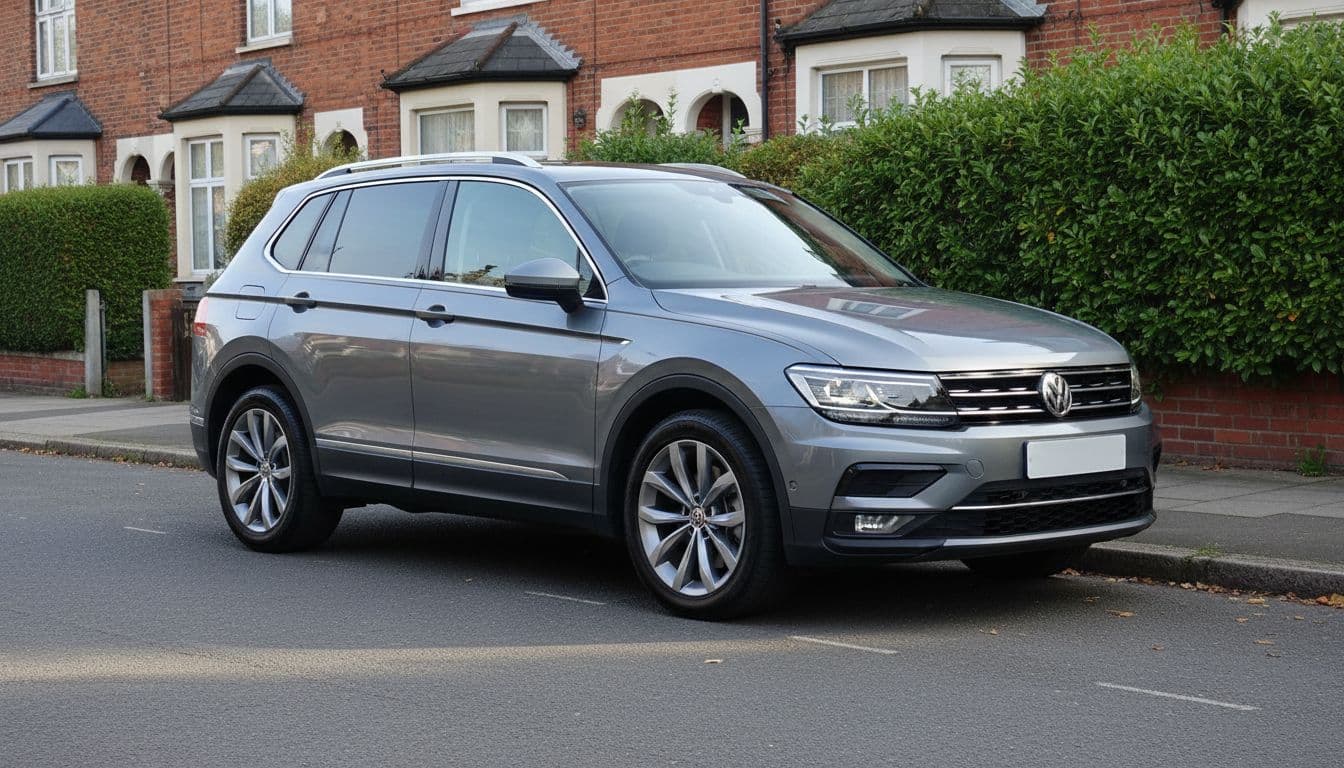 An everyday view of the Tiguan in a typical UK setting, created with AI.
The Tiguan is a five-seat family SUV with a sensible footprint for UK roads. It’s easy to live with, has a wide boot opening, and a driving position that makes commuting feel less tiring. For many buyers it’s the “do-it-all” car, school run during the week, motorway trip on Saturday, tip run on Sunday.
Across 2020 to 2026, the key moment is the facelift update (mid-cycle refresh). It brought a more modern look, improved tech, and updates to driver assistance. On the used market, facelift cars often feel a class newer, even when the price gap is not huge, especially if mileage and condition are similar.
A quick way to think about it:
| Model years (typical UK used stock) | What you’re getting | Who it suits |
|---|---|---|
| 2020 to 2021 (pre-facelift) | Strong all-rounder, older-style cabin tech on some trims | Value-first buyers, simple daily use |
| 2022 to 2026 (facelift) | Fresher lights, updated infotainment and cabin feel, often more standard safety kit | Drivers who want newer tech without going brand new |
Pre facelift vs facelift Tiguan: the quick differences you will notice
You don’t need a spec sheet to spot the change. On many facelift cars, the infotainment looks newer and feels quicker, the lights often look sharper, and the cabin design has a cleaner, more up-to-date vibe. Some trims also gained more standard driver aids, so you might find adaptive cruise or lane support more often, depending on the exact car.
The main reason facelift cars can be tempting is simple: they can feel like the “newer generation” even though it’s the same practical Tiguan shape, so you may get a newer-feeling cabin for not much extra money if the mileage stacks up.
Best value picks for most drivers (sweet spot years and mileage)
For most UK drivers, the best value is usually the point where the car is new enough to feel modern, but old enough that the big drop in price has already happened. In plain terms, don’t chase the lowest miles at all costs. A Tiguan with full service history and sensible motorway mileage can be a better bet than a low-mile car that’s done lots of cold, short trips.
Match the car to your week:
- School runs and errands: condition matters most, check tyres and brakes, and prioritise parking sensors.
- Motorway miles: comfort and driver aids shine here, look for good maintenance records.
- Mixed driving: aim for a balanced history, regular servicing, and a tidy interior that shows careful ownership.
Real world Tiguan ownership: space, comfort, tech, and fuel economy
The Tiguan’s appeal is how normal it feels to own. It’s not flashy, it’s not fussy, it just does the job. If you want a car that feels like a well-made family tool (rather than a weekend toy), it fits the brief.
Cabin space and boot: is the Tiguan big enough for family life?
Up front, the seating position is upright and clear, which helps in traffic and at junctions. In the back, there’s usually enough legroom for adults, and it’s child-seat friendly thanks to wide-opening rear doors. The boot is a useful shape, not a narrow letterbox, so bulky items are easier to load.
It handles everyday family kit without drama:
- A pushchair and shopping bags together
- Sports gear, school backpacks, and coats
- Holiday luggage for a small family if you pack with a bit of sense
Some markets have seven-seat versions, but most UK used stock is the standard five-seat Tiguan. If you regularly need two extra seats, it’s worth double-checking the exact model before you travel to view it.
Comfort and driving: easy around town, calm on the motorway
Around town, the Tiguan feels composed and predictable. The steering is light enough for parking, and visibility is generally good for a modern SUV. On the motorway it settles down well, with a stable feel that suits long trips.
One practical tip: wheel size matters. Bigger alloys can look great, but they can make the ride firmer over rough urban roads and potholes. For used buyers, parking sensors and a reversing camera are worth having, they reduce scuffed bumpers and take the stress out of tight bays.
Engines and gearboxes in plain English (petrol, diesel, plug in hybrid)
In the UK, you’ll mainly see petrol, diesel, and plug-in hybrid (PHEV) versions.
- Petrol: A good fit for mixed use and shorter trips, often quieter in town. If your week is lots of stop-start and short runs, petrol can be the simpler choice.
- Diesel: Best suited to regular motorway journeys and higher annual mileage. Diesels tend to feel relaxed at speed, but they’re not ideal if most drives are short and cold.
- Plug-in hybrid: Great if you can charge at home or work and your routine includes many shorter journeys. Without charging, you carry extra weight and you won’t see the main benefits.
Many Tiguans use a DSG automatic gearbox (a dual-clutch auto). People like it because it shifts quickly and makes traffic easier, but it should feel smooth when pulling away and when manoeuvring slowly. Fuel economy in any Tiguan depends heavily on tyre choice, trip length, temperature, and driving style, so judge it on your real routine, not best-case claims.
What to check before buying a used Volkswagen Tiguan (and common problems to look for)
A used Tiguan can be a solid buy, but only if you treat the viewing like a proper inspection, not a quick glance. Paperwork, condition, and a thorough test drive tell you more than a shiny dashboard.
Service history and maintenance: the documents that matter
Look for proof, not promises. Ideally you want a stamped service book or a digital service record you can verify, plus invoices.
Key items to check:
- Regular servicing with the correct oil specification
- Evidence of DSG servicing where applicable (ask for dates and invoices)
- Notes on timing belt or timing chain requirements depending on the engine (and proof the right work was done)
- Brake fluid changes and coolant checks at sensible intervals
- Recalls or software updates completed
If the history is patchy, walk away. There are plenty of Tiguans out there.
Test drive checks: gearbox behaviour, brakes, tyres, and warning lights
Start the car from cold if you can. A warm engine can hide issues.
Do these simple checks:
- Cold start: listen for rattles, rough idle, or warning lights that stay on
- Pull away gently: the DSG should be smooth, not shuddery or hesitant
- Braking: try a firm stop in a safe place, it should pull up straight
- Over bumps: listen for suspension knocks and squeaks
- Steering feel: watch for vibration through the wheel at speed
- Tyres: uneven wear can point to alignment or suspension issues
- Electrical items: test windows, mirrors, infotainment, air con, and driver aids
Also confirm you get two keys. Replacements can be expensive and awkward.
Hybrid specific checks (if choosing a plug in Tiguan)
With a plug-in hybrid, the battery and charging gear matter as much as the paintwork.
Check for:
- Charging cable present and in good condition
- Charging port flap and connector area intact
- Smooth switching between electric and petrol power on the drive
- Any error messages related to charging or the hybrid system
- Signs the car has been regularly charged (ask how it was used)
A professional inspection is especially helpful on hybrids, because faults can be costly and not always obvious on a quick drive.
Why buying your used Tiguan from a reputable dealer is usually the safer choice
Private sales can look cheaper at first glance, but the risk sits with you. With a Tiguan, the expensive stuff is often hidden in the paperwork and the electronics, not in a scratch on the bumper.
More protection and fewer nasty surprises than a private sale
Buying from a business usually gives you stronger consumer protection than buying from a private individual. You also get proper invoices and a clearer process if something goes wrong soon after purchase. A private seller might be honest, but if a fault shows up later, you can end up stuck.
Quality checks, warranty options, and proper preparation: what good dealers do
A reputable dealer should put the car through an inspection, check the history, and prepare it properly before handover. That often means addressing worn tyres or brakes, sorting small faults, and making sure everything works as it should.
Questions worth asking a dealer:
- What work has been done since the car arrived?
- Was it serviced before sale, and what exactly was changed?
- Are tyres and brakes within good limits?
- What does the warranty cover, and what’s excluded?
- Can you see the history check and mileage verification?
Good answers here tell you a lot about how the car has been treated.
Conclusion
A used Volkswagen Tiguan from 2020 to 2026 suits families, commuters, and anyone who wants a calm, practical SUV that doesn’t feel oversized. The best buys usually come from picking the right engine for your driving, prioritising strong history over ultra-low miles, and choosing a car that feels cared for.
Shortlist a few examples, test drive them back to back, and put condition and paperwork first. For most buyers, choosing a reputable dealer is the easiest route to peace of mind.
–
Shop for More with Our Verified UK Insurance providers:
Home Emergency Cover Home Appliance Cover – Income Protection
Travel Insurance – Gadget Insurance – Phone Insurance – Caravan Insurance – Cycle Insurance – E-Bike Insurance
Car Finance – Car Breakdown Cover – Van Breakdown Cover – Motorbike Breakdown Cover
–
Explore our Buyers Guides with Money Saving Tips
For a list of our main buyers guides use the drop-down menu at the top of the page. Topics related to this article are:
Laptop Insurance Buyers Guides
Gadget Insurance Buyers Guides
Tennant’s Insurance Buyers Guide
Landlords Insurance Buyers Guide
Home Emergency Cover Buyers Guide
Travel Insurance Buyers Guides
Car Breakdown Cover Buyers Guide
–
Explore Our Blog Categories for Expert Buying Advice
- AI Powered Product Finder Tools
- Apple Products Buyer’s Guides & Reviews
- Beauty, Health & Wellness | Perfume, Skincare, Makeup & Wellbeing Guides
- Bedroom Furniture Guides UK | Expert Tips & Best Value Deals
- Beds Buying Guides UK | Types, Tips & Best Deals
- Brands – Phones, Laptops, PC”s, Tablets | Buyer’s Guides & Reviews
- Brands & Designer Products (Men, Women & Electronics)
- Car Buying & Financing Made Easy | Expert Guides for the UK
- Car Rental Worldwide: Compare Prices for UK Travellers
- Christmas Essentials: Decorations & Gift Ideas
- Clothing, Fashion & Accessories Buying Guides UK
- Designer Fashion Brands: Buyer’s Guides & Reviews
- Diamond Jewellery Buyers Guides & Shopping Tips
- Electronic Brands: Buyers Guides & Reviews
- Electronics – Tablet & iPad Reviews and Buyers Guides
- Electronics, Tech & Gadgets: Reviews, Deals & Buying Guides UK
- Europe Holidays & Hotels: Destinations Guides & Flights
- Expert Buying Guides & Shopping Tips for UK Shoppers
- Flooring: Wood, Laminate, Carpets and Floor Tiles Buyers Guides
- Footwear Brands: Reviews & Buyer’s Guides
- Footwear: Trainers & Shoes Buyers Guides
- Furniture Buyer’s Guides | Home & Garden & Styling Tips
- Gadget Insurance UK | Expert Guides, Reviews & Smart Protection Tips
- Game Reviews — PlayStation, Xbox, Nintendo & PC
- Gaming Buyers Guides — Consoles, Games, Keys & More
- Garden Furniture UK: Expert Reviews, Deals & Buying Guides
- Garden Furniture, Landscaping & Garden Rooms Guides UK | Expert Tips & Best Value Deals
- Garden Rooms, Offices & Garden Buildings Guides UK | Expert Tips & Best Value Deals
- Garden Sofa & Sofa Sets Buyers Guides
- Garden Tables & Chairs: Sets, Individual Tables & Seating Buyers Guides
- Gemstone Jewellery Buyers Guides
- Gifts for Everyone: Ideas for Every Occasion & Budget
- Gold Jewellery Buyers' Guides & Shopping Tips
- Holidays & Travel: Hotels, Villas & Flights
- Home & Garden Improvements | Renovations & Outdoor Transformation Guides
- Home Décor, Interior Design & Styling Tips UK | Inspiration & Expert Advice
- Home Emergency Cover UK | Expert Guides, Reviews & Practical Protection Tips
- Home Furniture Guides UK | Expert Tips & Best Value Deals
- Home Furniture, Décor & Interior Design Guides UK | Styling Tips & Inspiration
- Insurance & Protection: Travel, Landlord, Gadget & More UK
- iPhone Buying Guides, Reviews & Comparisons for the UK
- iPhone Insurance UK | Expert Guides, Reviews & Smart Protection Tips
- Jewellery Rings Buyers' Guides & Shopping Tips
- Jewellery: Expert Reviews, Trends & Buying Guides
- Kitchen Appliance Brands: Buyer’s Guides & Reviews
- Kitchen Appliances UK: Buyers Guides, Reviews & Money Saving Tips
- Landlords Insurance UK | Expert Guides, Reviews & Smart Protection Tips
- Laptop Brands & MacBooks Buyer’s Guides & Reviews
- Laptop Brands: Buyer’s Guides & Reviews
- Living Room Furniture, Design & Décor Guides UK | Styling Tips & Inspiration
- Makeup – Expert Buyers Guides & Reviews
- Men's Clothes — Buyers Guides & Reviews
- Men’s Clothes, Fashion & Accessories Guides UK | Latest Trends & Smart Shopping
- Men’s Fragrance Brands: Perfume & Aftershave Reviews & Buyers Guides
- Perfume & Aftershave Brands: Reviews & Buyers Guides
- Perfume & Fragrance: Best Scents, Reviews & Buying Guides
- Pets: Guides, Tips & Inspiration
- Phone Brands & iPhones Buyer’s Guides & Reviews
- Phone Brands: Buyer’s Guides & Reviews
- Phone Insurance UK | Expert Guides, Reviews & Smart Protection Tips
- Skincare — Expert Buyers Guides & Reviews
- Sofa & Sofa Beds Buyers Guides
- Sofa Beds Buyers Guides
- Sofa Buyers Guides & Expert Advice
- Sportswear Brands: Reviews & Buyers Guides
- Supplements Buyers Guides — Expert Tips & Recommendations
- Trainer Brands: Reviews & Buyer’s Guides
- Travel Insurance UK | Expert Guides, Reviews & Money-Saving Tips
- UK Holidays & Hotels: Destinations Guides & Flights
- Women's Clothing Buyers Guides — Dresses, Tops & More
- Women’s Clothes, Fashion & Accessories Guides UK | Latest Trends & Smart Shopping
- Women’s Designer Brands: Buyer’s Guides & Reviews
- Women’s Designer Shoe Brands: Buyer’s Guides & Reviews
- Women’s Dresses | Online Shopping Guides, Style Tips
- Women’s Perfume Brands: Reviews & Buyers Guides