Choosing cat litter sounds simple until you’re carrying a heavy bag up the stairs, dust is floating in the air, and the tray still smells by day two. If you’ve ever stood in the aisle thinking “they all look the same”, you’re not alone.
The truth is there’s no single “best” litter. The right choice depends on your cat’s paws and preferences, your home setup (flat, house, shared spaces), and what you’re willing to spend each month.
This guide breaks down the main litter types, how to pick what suits your cat and your routine, how to judge value (not just the price on the bag), and what to do when things go wrong, from tracking and dust to full-on litter tray refusal.
Cat litter types explained: clumping, non-clumping, silica, plant-based, and paper
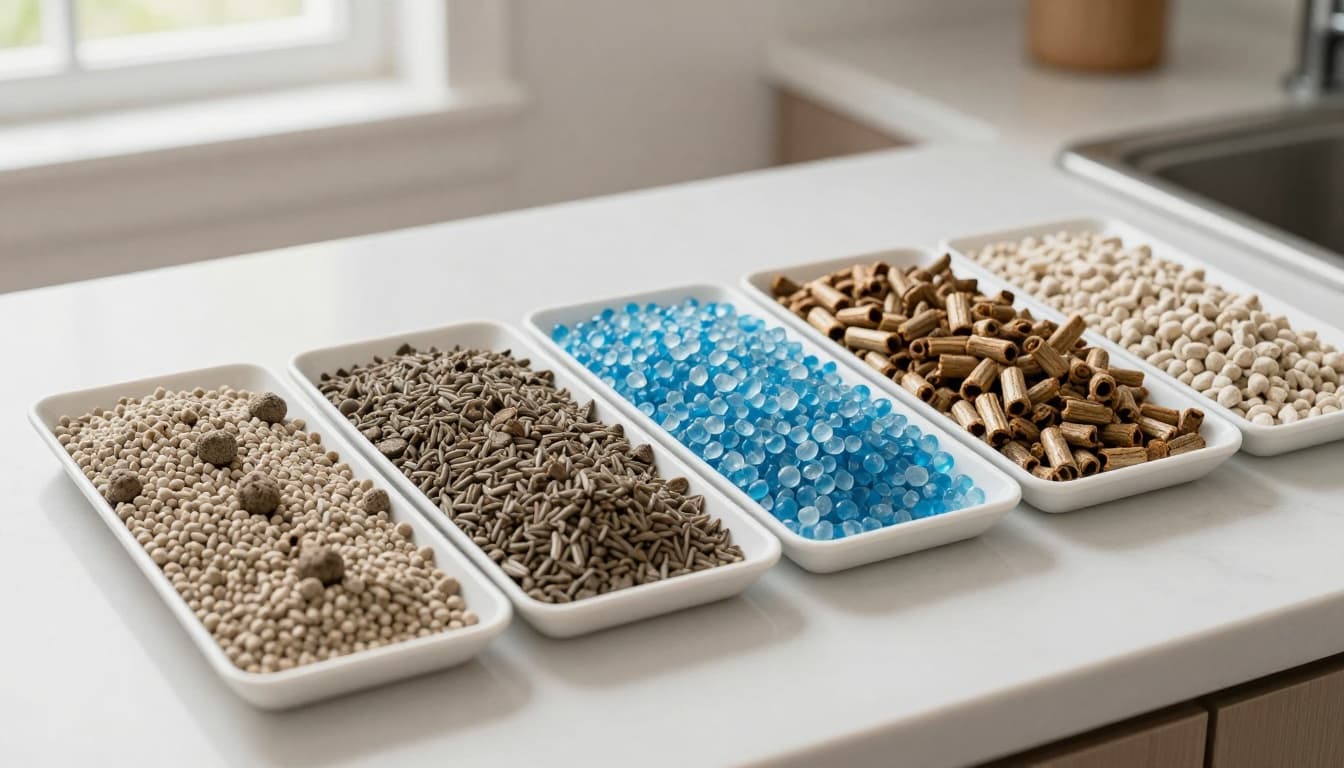 Five common cat litter types side by side, showing how different the textures can be, created with AI.
Cat litter is really about two jobs: soaking up urine and keeping smell under control. The way it does that depends on what it’s made from and how it’s used day to day.
Here’s a plain-English guide to the most common types you’ll see in the UK:
| Litter type | What it’s made from | Odour control | Dust | Tracking | Scooping | Weight | Typical cost level |
|---|---|---|---|---|---|---|---|
| Clumping clay | Clay that forms firm clumps when wet | Usually strong | Can be medium to high | Often high (fine grains) | Easy (remove clumps) | Heavy | Medium |
| Non-clumping clay | Absorbent clay without clumping agents | Medium | Often dusty | Medium | Harder (wet patches crumble) | Heavy | Low |
| Silica crystals | Porous silica gel beads | Strong at first | Low | Low to medium | Remove solids, stir crystals | Light | High |
| Plant-based | Wood, corn, wheat, grass, or similar | Varies by material | Often low | Varies, can be low | Often clumps or breaks apart | Usually lighter | Medium to high |
| Paper | Recycled paper pellets | Mild | Very low | Low | Remove solids, change more often | Light | Medium |
A quick reality check: performance changes a lot based on tray size, how deep you fill it, and whether you scoop once a day or twice. Even the “best” litter will struggle if the box is too small or the routine is patchy.
Clumping vs non-clumping litter: what changes in daily cleaning?
Clumping litter forms firm lumps where urine lands. You scoop those out, top up a little, and the rest stays in the tray. In many homes, that means the litter lasts longer before you need a full change, and smell is easier to manage because wet patches don’t sit there.
Non-clumping litter absorbs urine but doesn’t bind it into a neat clump. Wet spots break apart when you scoop, which leaves damp grains behind. That can make the tray smell sooner, and it often means more frequent full changes.
Common pros and cons in real life:
- Clumping litter: quicker scooping, longer between full changes, but it can track more (fine grains hitch a ride on paws) and some types create dust when poured.
- Non-clumping litter: often cheaper up front, but you may use more over time, and it can feel like you’re chasing odour rather than preventing it.
If you’re in a small flat, daily scooping matters more than the litter type. Smell builds fast in a warm, closed room, a bit like leaving the kitchen bin unemptied.
Eco-friendly litter options: wood, corn, wheat, grass, and recycled paper
Eco-friendly (or “biodegradable”) litters are usually made from plant fibres or recycled paper. Many are lighter to carry than clay, and several are naturally low dust, which can be a relief in smaller homes.
What to expect:
- Wood pellets often break down into sawdust when wet. You remove solids and sift or scoop out the damp parts. They can smell pleasantly woody, but some cats dislike the larger pellets.
- Corn, wheat, and grass litters are often designed to clump. They can feel softer underfoot than pellets, and scooping can be similar to clumping clay.
- Recycled paper is typically very low dust and gentle for sensitive cats, but odour control can be milder, so routine and tray placement become more important.
A useful caution: “natural” doesn’t always mean better for smell. Some plant-based litters cope well, others struggle in humid rooms or multi-cat homes. Texture also matters, and cats can be fussy about what touches their paws.
How to choose the best cat litter for your cat and your home
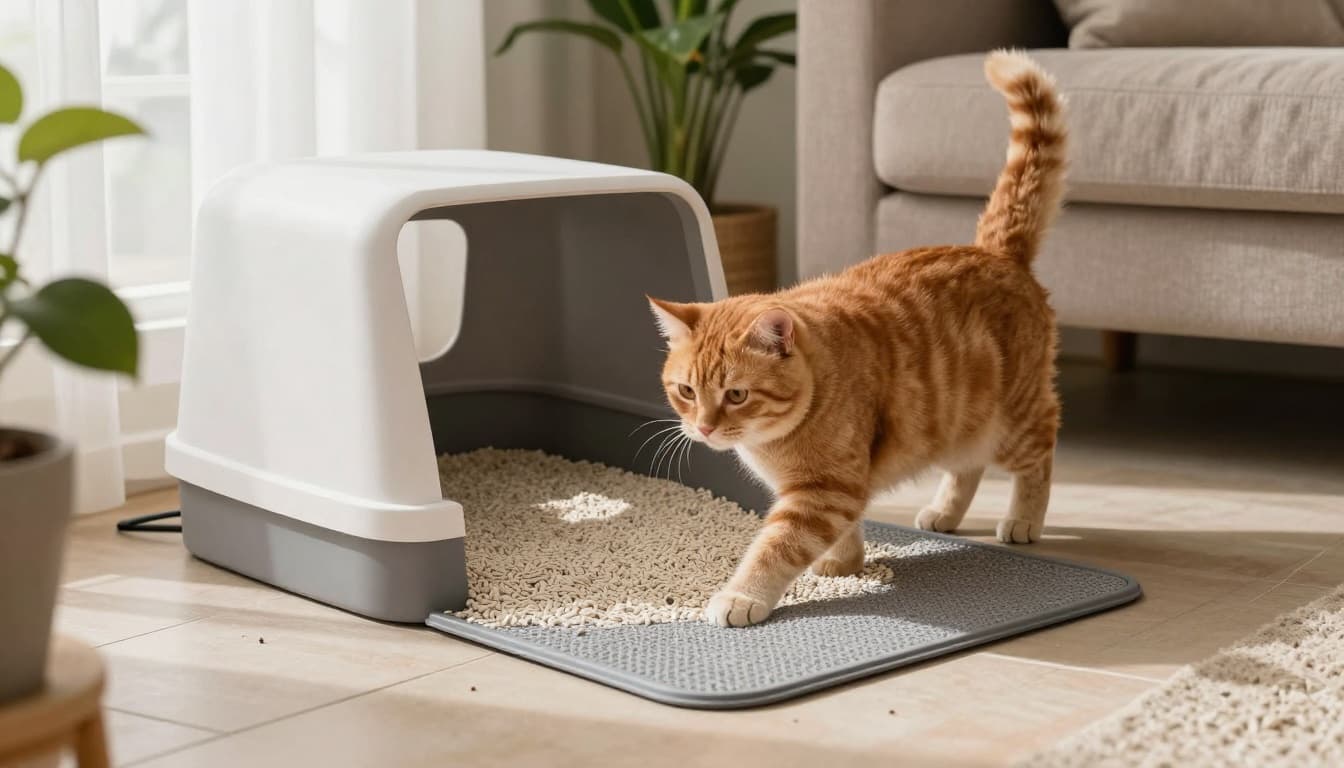 A calm litter tray set-up in a compact living space, showing how mats and placement can reduce mess, created with AI.
Picking litter is part cat behaviour, part household logistics. Think of it like choosing shoes: the “best” pair is the one you’ll actually wear without getting blisters.
Start with three questions:
1) What does your cat accept?
Most cats prefer a soft, sand-like feel. Sudden changes in texture can lead to avoidance, especially with older cats or anxious cats.
2) What does your home need?
Flats and shared spaces tend to need stronger odour control. Homes with carpet near the tray usually need low tracking. If you’re carrying bags upstairs, weight matters.
3) What can you manage long term?
If you hate frequent full changes, you’ll probably prefer a litter that supports “scoop and top up”. If you want the lowest dust possible, you might accept changing it more often.
A few practical tips by cat type:
- Kittens: choose a gentle, low-dust option and keep the tray easy to step into. Some kittens try to taste litter, so avoid strongly scented types and keep an eye on them.
- Senior cats: prioritise comfort (softer texture can help) and easy access. A lower-sided tray can make a bigger difference than the litter itself.
- Multi-cat homes: odour control and routine matter most. Extra trays reduce stress and help keep litter fresher.
If you have a dusty home or allergies: low-dust and unscented choices
Dust isn’t just annoying. It can stick to surfaces, irritate noses, and make cleaning feel never-ending. Some cats also sneeze or get watery eyes with dusty litter.
Signs your litter is too dusty:
- A visible cloud when you pour it.
- Grey film on nearby surfaces.
- Frequent sneezing around the tray area.
What to look for on the bag is usually simple: low-dust and unscented. Unscented is often easier on cats because their sense of smell is sharp, and perfume can feel overwhelming in a small, enclosed tray.
You can also reduce dust with habit tweaks:
- Pour slowly, close to the tray, rather than from height.
- Scoop gently so you’re not stirring fine particles.
- Use a litter mat to catch the bits that fly out, which also cuts down on dust spread.
Ventilation helps too. If the tray is in a bathroom, crack a window when you can. If it’s in a cupboard space, consider leaving the door ajar at times (as long as your cat can always access the tray).
If smell is the main issue: litter depth, box size, and routine that works
Smell control is rarely solved by buying the most expensive litter. It’s more like cooking. The ingredients matter, but the method matters more.
Start with the basics:
Litter depth: most cats do well with around 5 to 7 cm. Too shallow and urine hits the base, which makes odour cling. Too deep and some cats kick it out, which increases waste and mess.
Box size: bigger usually smells better because waste is spread out and easier to cover. A cramped tray gets overwhelmed fast, especially if your cat is large or likes to dig.
Routine:
- For one cat, scoop at least once daily, twice is better in small flats.
- For two or more cats, aim for twice daily and don’t let clumps sit overnight.
Safe, simple odour-control habits that work:
- Wash the tray with mild soap, rinse well, and dry fully before refilling.
- Keep the tray away from damp areas if possible, as humidity can make smells linger.
- Top up little and often so the depth stays consistent, rather than letting it run low and then overfilling.
Cost, value, and usage: how to save money on cat litter without cutting corners
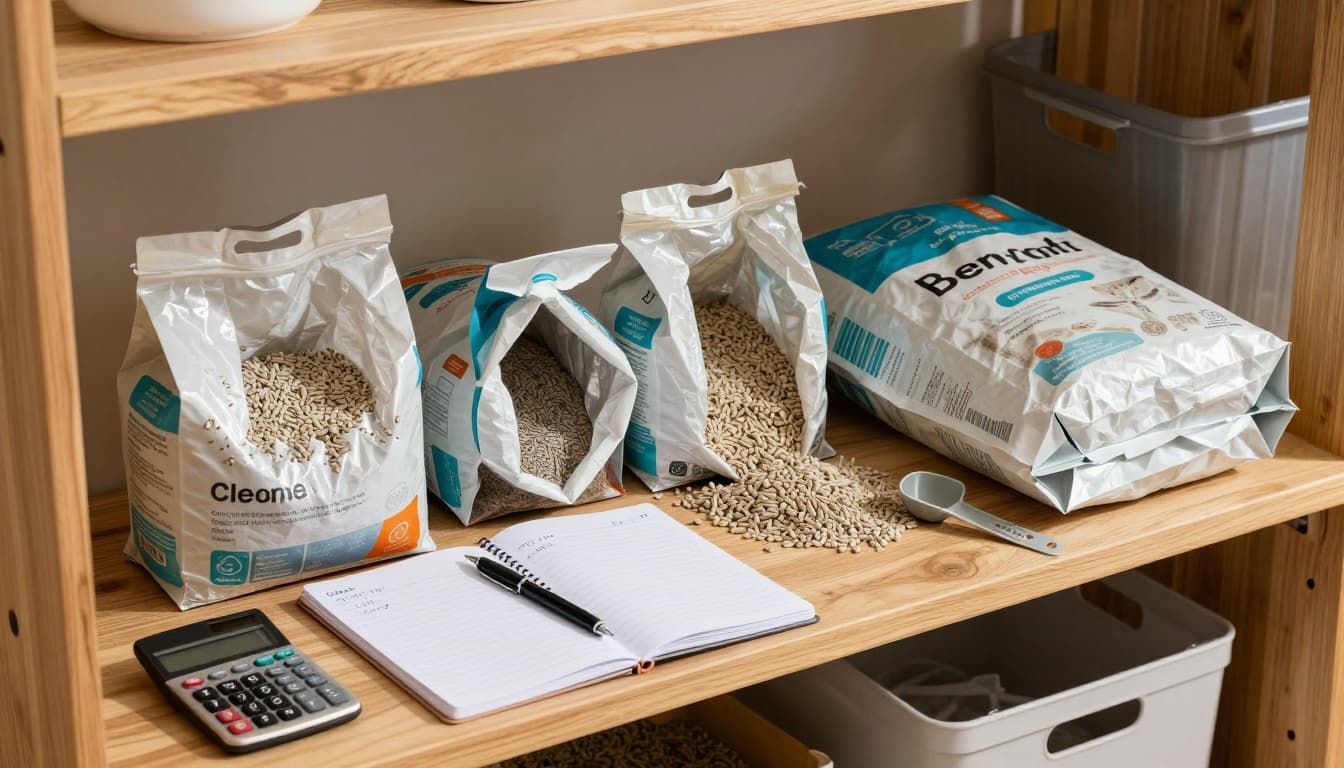 A simple set-up for tracking litter usage and comparing value at home, created with AI.
The cheapest bag isn’t always the cheapest litter. If one type needs full changes twice as often, it can cost more per week, and it creates more waste.
A better way to think about litter is cost per day, not cost per bag. The winner is the one that stays fresh, suits your cat, and doesn’t push you into constant full changes.
A few value clues that often hold true:
- Litters that support “scoop and top up” tend to waste less.
- Very dusty litter often leads to more spillage and more cleaning, which makes it feel “used up” sooner.
- Heavy litter can be good value, but it can be a pain to store and carry, especially in upstairs flats.
How to estimate cost per week: a quick, simple checklist
You don’t need spreadsheets. A seven-day check gives you a personal baseline that’s more useful than any general advice.
Use this checklist:
- Note the bag weight (for example, 10 kg or 20 litres).
- Measure how much you top up each day (a scoop, a cup, or a marked container).
- Record how often you do a full change (and how much you tip out).
- Multiply by your number of cats.
- After seven days, estimate how long the bag will last based on what you used.
If you try a new litter, run the same seven-day check. It quickly shows whether “better” litter is actually better value in your home.
Reduce waste and tracking: mats, covered vs open trays, and placement tips
Tracking is the stealth cost of cat litter. It gets into carpets, beds, and sofa throws, and you end up vacuuming more and throwing away more litter.
Why it happens: cats step in loose grains, then walk out. Some also launch litter like confetti when they dig.
Practical changes that usually help:
- Use a good litter mat with texture that grabs grains, placed so your cat has to step on it when leaving the tray.
- Size up the tray if you can. A larger tray keeps more litter inside during digging.
- Try a higher-sided tray if your cat kicks litter out, but keep the entry easy.
- Place the tray away from busy paths, so people don’t tread litter through the home.
Covered trays can reduce scatter for some cats, but there’s a trade-off. They can trap smells inside, especially if you don’t scoop often, and some cats dislike feeling boxed in.
Safe use and common problems: refusing the tray, mess, and litter box smell
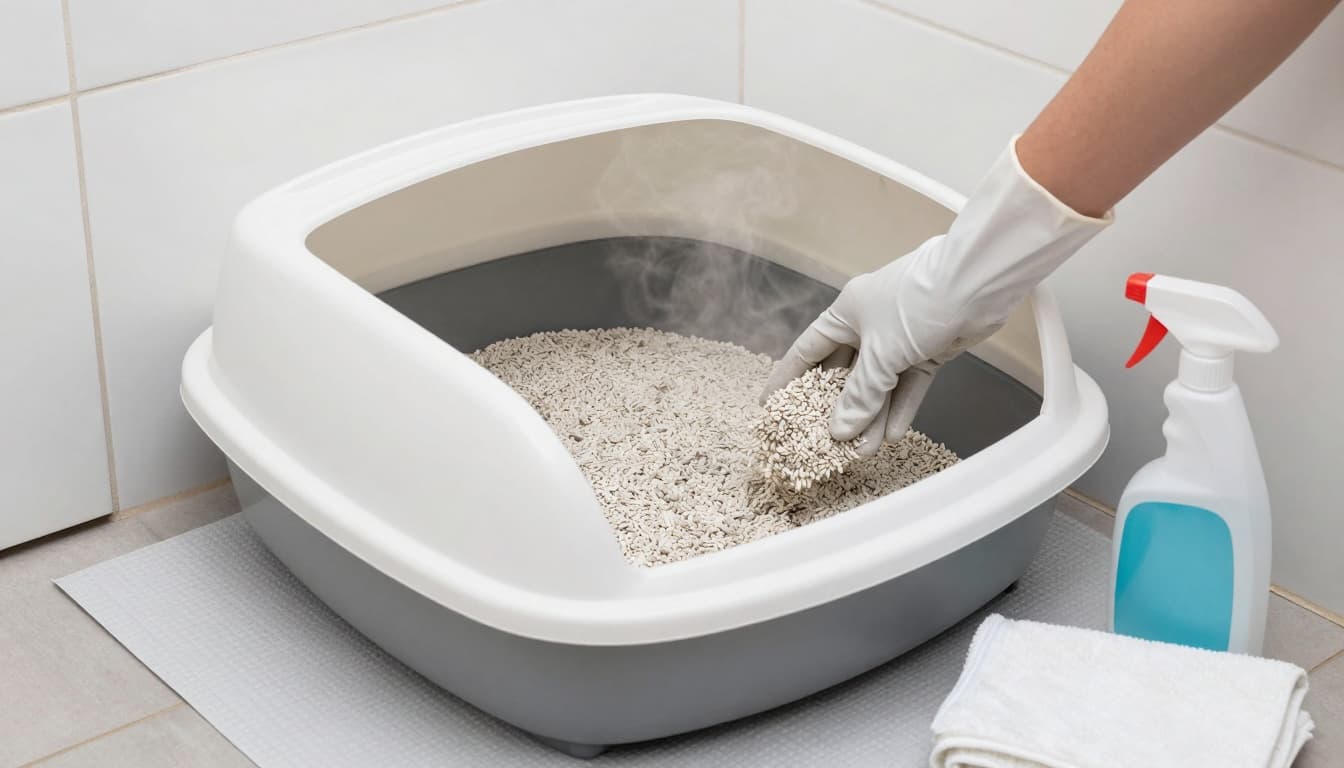 A clean litter tray routine, showing scooping and a tidy set-up for better hygiene, created with AI.
Litter problems feel personal because they land right in the middle of your home. The good news is most issues come down to comfort, cleanliness, or stress, and small changes can fix them.
If your cat suddenly stops using the tray, or you notice pain, blood, straining, or ongoing diarrhoea, speak to a vet. Sudden changes can be medical, not behavioural.
Here are fixes for the most common issues:
“My cat won’t use the new litter.”
Texture and scent are common triggers. Some cats also dislike strong perfume or sharp crystals underfoot.
“The pee smell won’t go, even after scooping.”
Old urine can soak into the tray plastic, or wet litter may be sticking to the base.
“Litter sticks to paws and tracks everywhere.”
Very fine grains track more. Overfilling also increases scatter.
“Dust is all over the room.”
Dusty clay or rough pouring are usual causes. Switching to low-dust and pouring gently helps quickly.
“My kitten keeps eating litter.”
Keep them supervised near the tray and choose a low-dust litter that doesn’t smell appealing. If it continues, get advice from a vet.
How to switch cat litter without stress: the slow-mix method
Cats like familiar routines. A sudden swap can feel like someone changed the bathroom floor overnight.
Try the slow-mix method over 7 to 14 days:
- Days 1 to 3: 75 percent old litter, 25 percent new.
- Days 4 to 6: 50 percent old, 50 percent new.
- Days 7 to 10: 25 percent old, 75 percent new.
- After that: 100 percent new, if your cat is still using the tray normally.
If you have more than one tray, keep one tray with the old litter for a bit longer. It gives your cat a safe option while they adjust.
Avoid scented litters during the switch. Strong smells can put cats off, even if the texture is fine.
When the litter box smells even after scooping: cleaning and replacement rules
Plastic holds odours over time, especially once it gets scratched by claws. Those tiny scratches trap residue, and smell builds back faster after each clean.
A safe cleaning routine:
- Empty the tray fully.
- Wash with mild soap and warm water.
- Rinse until there’s no residue.
- Dry fully before adding fresh litter.
Don’t mix cleaning products. Stick to one mild cleaner and rinse well, as strong chemical smells can repel cats.
Replacement rules that help:
- If the tray smells no matter what you do, or the plastic is heavily scratched, replace it.
- Full-change frequency depends on litter type and routine. Many clumping litters last longer with daily scooping and top-ups, while non-clumping and some paper litters often need more frequent full changes to stay fresh.
Conclusion
The best cat litter is the one your cat happily uses, while your home stays clean and calm. Start by matching the type to your main need, whether that’s odour control, low dust, low tracking, or easy carrying.
Change one thing at a time (litter type, depth, tray size, or mat), then track results for a week. Your nose, your bin, and your cat’s behaviour will tell you what’s working.
Pick two litter types that fit your home, choose the most promising one first, then switch using the slow-mix method so your cat stays relaxed and confident.

Explore our Buyers Guides and Reviews
For a list of our main buyers guides use the drop-down menu at the top of the page. Topics related to this article are:
Explore Our Blog Categories for Expert Buying Advice
- AI Powered Product Finder Tools (26)
- Expert Buying Guides & Shopping Tips for UK Shoppers (1,328)
- Brands & Designer Products (Men, Women & Electronics) (269)
- Designer Fashion Brands: Buyer’s Guides & Reviews (149)
- Electronic Brands: Buyers Guides & Reviews (85)
- Apple Products Buyer’s Guides & Reviews (23)
- Brands – Phones, Laptops, PC”s, Tablets | Buyer’s Guides & Reviews (41)
- Electronics – Tablet & iPad Reviews and Buyers Guides (11)
- Kitchen Appliance Brands: Buyer’s Guides & Reviews (22)
- Laptop Brands & MacBooks Buyer’s Guides & Reviews (9)
- Phone Brands & iPhones Buyer’s Guides & Reviews (22)
- Car Buying & Financing Made Easy | Expert Guides for the UK (89)
- Clothing, Fashion & Accessories Buying Guides UK (435)
- Beauty, Health & Wellness | Perfume, Skincare, Makeup & Wellbeing Guides (157)
- Footwear: Trainers & Shoes Buyers Guides (46)
- Jewellery: Expert Reviews, Trends & Buying Guides (70)
- Men's Clothes — Buyers Guides & Reviews (38)
- Men’s Clothes, Fashion & Accessories Guides UK | Latest Trends & Smart Shopping (148)
- Women's Clothing Buyers Guides — Dresses, Tops & More (166)
- Women’s Clothes, Fashion & Accessories Guides UK | Latest Trends & Smart Shopping (379)
- Electronics, Tech & Gadgets: Reviews, Deals & Buying Guides UK (168)
- Furniture Buyer’s Guides | Home & Garden & Styling Tips (304)
- Bedroom Furniture Guides UK | Expert Tips & Best Value Deals (91)
- Garden Furniture, Landscaping & Garden Rooms Guides UK | Expert Tips & Best Value Deals (151)
- Garden Sofa & Sofa Sets Buyers Guides (10)
- Garden Tables & Chairs: Sets, Individual Tables & Seating Buyers Guides (34)
- Home Furniture, Décor & Interior Design Guides UK | Styling Tips & Inspiration (165)
- Living Room Furniture, Design & Décor Guides UK | Styling Tips & Inspiration (56)
- Sofa & Sofa Beds Buyers Guides (18)
- Sofa Beds Buyers Guides (7)
- Sofa Buyers Guides & Expert Advice (10)
- Holidays & Travel: Hotels, Villas & Flights (157)
- Home & Garden Improvements | Renovations & Outdoor Transformation Guides (97)
- Insurance & Protection: Travel, Landlord, Gadget & More UK (159)
- Gadget Insurance UK | Expert Guides, Reviews & Smart Protection Tips (33)
- Home Emergency Cover UK | Expert Guides, Reviews & Practical Protection Tips (21)
- Landlords Insurance UK | Expert Guides, Reviews & Smart Protection Tips (31)
- Travel Insurance UK | Expert Guides, Reviews & Money-Saving Tips (34)
- Pets: Guides, Tips & Inspiration (26)
- Brands & Designer Products (Men, Women & Electronics) (269)
- Gifts for Everyone: Ideas for Every Occasion & Budget (40)