A purchase of wedding guest dresses rarely fails because of fashion. It usually fails because the dress ignores the invitation, the weather, the venue, or the reality of wearing it for ten hours.
The strongest choice is shaped by context first and trend second. Online shopping can widen the field and lower the price, but only when fabric, fit, sizing and returns are checked with the same care as the photos.
Key Takeaways
- Context is King: Always prioritise the venue, season, and specific dress code over current trends when choosing your outfit.
- Prioritise Practicality: Consider the reality of a full day of wear, including fabric breathability, crease resistance, and how the garment handles movement or sitting for long periods.
- Fit and Quality Matter: Ignore the size on the label and follow your actual measurements; ensure the garment is lined and well-constructed to maintain its shape throughout the event.
- Shop with Strategy: When buying online, read material compositions and verified customer reviews specifically regarding fit, transparency, and length rather than relying solely on studio photography.
Start with the wedding details, not the dress rail
The invitation does more work than many shoppers give it credit for when browsing for Wedding Guest Outfits. A ceremony in a church at noon asks for a different dress from a rooftop reception that starts at seven, even if both are in June. Venue, timing and dress code form the brief; the rail comes later.
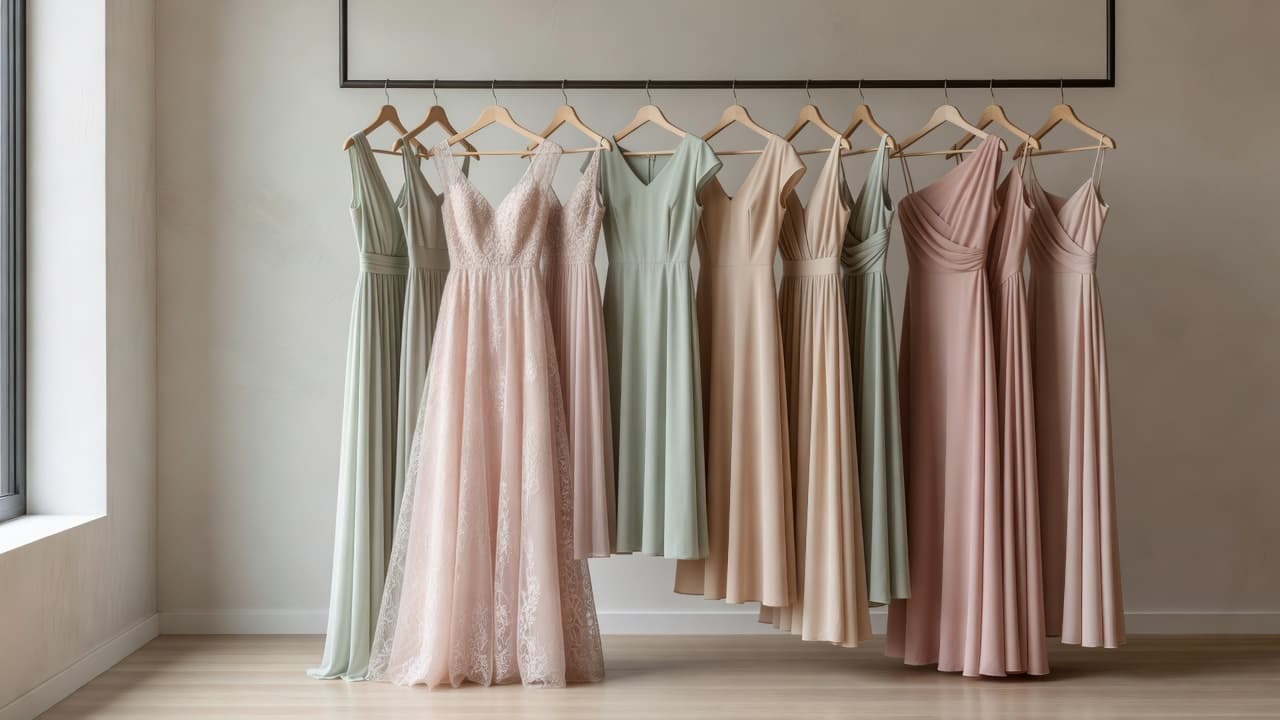 A registry office wedding may suit a neat midi dress or a tailored maxi dress in crepe, whilst a country house wedding often leaves room for prints, softer fabrics and a little more movement. Churches, mosques, synagogues and temples may call for covered shoulders, a higher neckline or a hemline below the knee; a traditional lace dress is often a perfect choice for these settings. Destination weddings introduce another layer, because heat, luggage limits and unfamiliar terrain all affect what will work.
The invitation is the clearest styling brief most guests will get.
Practical details matter as much as decorum. Grass and gravel punish stilettos. Long ceremonies punish scratchy fabrics and dresses that ride up when seated. All-day wear punishes anything that looks good for five minutes and then twists, creases or pinches.
Decode the “Wedding Dress Code” without overthinking it
Most invitations are plainer than fashion language suggests. “Black tie” points to floor-length or refined midi dresses, richer fabrics and a polished finish. “Formal” is slightly looser, but still asks for structure and restraint. “Cocktail” usually welcomes midi lengths, dressier minis in the right setting, and more personality in colour or detail. “Semi-formal” often covers the broad middle ground where a smart midi, wrap or fit-and-flare dress works. “Relaxed”, “garden party” or “country chic” usually means ease, not carelessness.
This quick guide helps sort the language.
| Dress code | Dress cues | Best avoided |
|---|---|---|
| Black tie | Full-length or dressy midi, darker tones, satin, crepe, embellishment in moderation | Casual florals, beach fabrics, flimsy jersey |
| Formal | Midi or maxi, tailored shape, polished finish | Day dresses, loud novelty details |
| Cocktail | Midi, sleek slip, fit-and-flare, smarter prints | Overly casual cottons, anything too club-focused |
| Semi-formal | Wrap, midi, floral maxi, elegant separates | Very short hems, heavy sequins in daylight |
| Relaxed | Soft prints, lighter fabrics, easy silhouettes | Anything too bridal or too undone |
Wording also drops clues. “Evening reception” usually allows more shine and deeper colour. “Ceremony followed by drinks in the garden” suggests lighter fabric, steady footwear and less rigid dressing.
Match the dress to the venue and season
Season changes everything. A summer wedding in the countryside needs breathability, stable shoes and a fabric that won’t wilt by lunch. Chiffon, lightweight crepe and lined cotton blends often work well. A winter wedding can carry velvet, heavier satin, long sleeves and darker jewel tones.
A beach wedding calls for easy movement, lighter layers and hemlines that won’t drag in sand. A slim satin slip can work there, but only if it’s lined and worn with flat sandals or low wedges. In contrast, an evening reception in a hotel can take a more sculpted silhouette, because the setting is controlled and the flooring is kind.
The British forecast has a habit of spoiling confidence. Therefore, sleeve length and outerwear need as much thought as colour. A sleeveless dress may still work in October if it sits well under a cropped jacket or tailored coat. Meanwhile, a long-sleeved dress in polyester can feel punishing in a marquee in August. A glance at the Met Office forecast close to the day is more useful than blind faith in the season.
The best dress styles for different wedding roles and body preferences
There is no single flattering shape, only shapes that do different jobs. A wedding guest often wants flexibility. The mother of the bride or groom may want polish, comfort and presence in photographs. Bridesmaids often need to work within a palette or fabric brief, so fit becomes the place where personality enters. A plus-one usually benefits from a dress that feels assured without looking overworked.
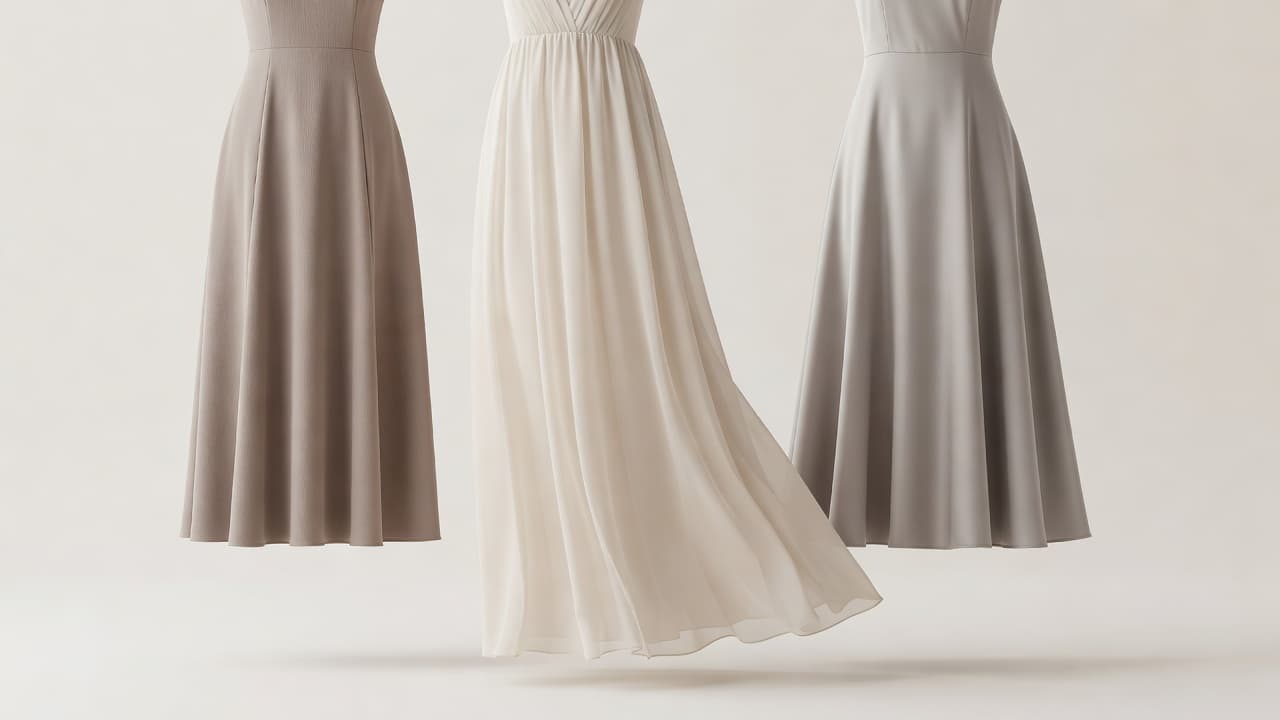 The shape of the neckline, waist and skirt changes the balance of a dress more than trend-led extras do. A raised waist can lengthen the leg line on a petite frame. A defined waist with a gently full skirt can feel comfortable through a long meal and still look formal in photographs. More structure through the bodice often helps those who want support or a cleaner line, whilst softer cuts suit hot weather and less rigid dress codes.
Midi, maxi, wrap, fit-and-flare, and slip dresses explained
A few silhouettes appear in nearly every wedding season because they solve common problems for those searching for perfect wedding guest dresses.
- The midi dress is the safest all-round choice. It works for daytime and evening weddings, suits many venues and pairs well with jackets or occasion coats.
- A maxi dress brings instant formality. It suits black tie, destination weddings and larger venues, but the hem must clear the ground to avoid trailing.
- The wrap dress is useful for changing fit needs and long days. Still, it requires secure fastening, enough overlap and often a press stud at the bust.
- Fit-and-flare dresses create movement and waist definition. They are reliable for mothers of the bride or groom and for guests who want shape without cling.
- A satin dress looks elegant, but it often needs careful layering, good underwear and enough lining to avoid every seam showing in photographs.
If you prefer a modern alternative to traditional attire, a sleek jumpsuit is an excellent choice for wedding guest dresses, offering comfort and sophistication in one garment.
How to choose necklines, sleeves, and lengths that feel comfortable
Necklines alter proportion fast. A V-neck can open the upper body and often suits fuller busts if the plunge is controlled. Square necks give structure and work well on petites because the line is clean. Halternecks draw the eye upward, though they may not suit those who want a bra-friendly option. One-shoulder dresses feel formal, but they need secure support and can be awkward under coats.
Sleeves deserve more attention than they get, especially with the unpredictable British weather. Capped sleeves offer light coverage but can cut across the widest part of the arm if poorly shaped. A long sleeve option works beautifully in winter or for more modest dress needs, provided the fabric has movement. Sleeveless dresses are often easiest for layering, but consider a matching wrap or shawl for cooler evenings.
Length should follow both height and venue. Taller builds can carry a longer hem with ease. Petites often do better when the hem hits mid-calf or slightly above the ankle, rather than the widest point of the calf. For anyone who wants ease at the hips or stomach, bias cuts, soft pleats and skirts with some drape usually wear better than stiff bodycon shapes.
Fabric, colour, and quality cues that separate a good buy from a bad one
Fabric decides whether a dress looks expensive, photographs well and survives the day. Price alone does not settle any of that. Plenty of costly dresses use thin linings, awkward zips or shiny synthetics that look flat in natural light.
Polished model shots show styling, not structure.
Close-up photos and reviews are better guides than campaign images. The useful details are plain: Is it lined? Does the zip sit flat? Does the skirt cling? Does the fabric crease after sitting down? These are the questions that separate a good buy from an expensive disappointment.
What fabrics look polished and which ones cause trouble
A satin dress can look elegant, especially for an evening gown during a wedding celebration, but poor satin exposes every crease and pulls at the seams. Chiffon moves well and suits a summer wedding, though it often needs proper lining because it can turn sheer outdoors. Crepe is one of the most reliable options because it drapes neatly, travels fairly well and looks smart without high shine.
A lace dress varies wildly in quality. Good lace adds texture and occasion value, but cheap lace can look stiff, busy and fragile. Jersey is comfortable and often kind to curves, but thin jersey reads casual unless the cut is sharp. Organza has volume and structure, which works for statement shapes, though it can feel bulky at smaller events. Velvet is strong in winter because it carries warmth and depth of colour, yet it can feel too heavy for daytime spring weddings.
A lined dress with some weight usually hangs better than an unlined bargain. Stretch can help fit, but too much stretch often weakens the shape by mid-afternoon.
Choosing colours that suit weddings without stealing attention
Colour should sit well in the room and in photographs. Navy, emerald, burgundy, plum, soft sage, dusty blue and a muted floral dress are steady choices because they read as celebratory without competing for attention. Pastels work well in spring and summer, especially in matte fabrics. Metallic accents, in shoes or a bag, often do more than an all-over metallic dress.
Whether you prefer a midi dress or a sweeping maxi dress, the shade you select matters. Pure white and ivory are usually best left alone unless the invitation asks for them. Shades that read bridal in bright daylight can create tension in person and in photographs. Very pale blush can also drift into bridal territory. At the other end, head-to-toe black is more accepted than it once was, but it often needs softer styling for daytime weddings.
The safest colour is not always the dullest one. Rich jewel tones often give better value because they rewear well for parties, dinners and winter events.
How to shop online for wedding dresses with fewer mistakes
Online shopping has real advantages. The range is wider, size runs are often better, and price comparison takes minutes rather than a day on the high street. Still, the screen hides as much as it reveals.
 The first step is measurement. Bust, waist and hips need a fresh tape measure, not an old guess. Size charts vary, so the number on the label matters less than the actual garment measurements. If one part of the body falls into a larger size, it is often smarter to buy for the largest area and alter the piece down.
What to check before clicking buy
Fabric composition should be read like a warning label. Polyester is not automatically bad, but a fully synthetic dress with no lining may trap heat and show static. Lining, closure type, and model measurements tell a fuller story. An invisible zip usually gives more structure than a pull-on style. Adjustable straps can rescue a slip dress. A back tie can help at the waist, but it will not fix a poor cut.
Customer reviews matter most when they mention fit, length, colour accuracy, transparency, and crease resistance. For instance, if you are looking at a satin dress, search the reviews to see if buyers mention unwanted creasing. Similarly, when shopping for a midi dress, check if the length sits correctly on people of different heights. Photos from ordinary buyers often reveal more than studio styling. If five reviewers mention that the garment runs short in the body or gapes at the bust, that pattern is worth more than the star rating.
Why timing, discounts, and returns matter
Timing changes both choice and stress levels. Buying early usually means better stock, more colours and enough time for a hem, strap adjustment, or bust alteration. Popular sizes for wedding guest dresses often thin out fast during the peak spring and summer wedding season.
Sales can improve value, but only when the occasionwear still suits the event. A sixty-pound dress worn twice is better value than a one-hundred-and-eighty-pound dress that spends years in the wardrobe, though the reverse is also true if the cheaper one arrives sheer, unlined, and unwearable. Hidden costs matter here: postage, return fees, express delivery, and alterations can change the real price by thirty pounds or more.
Return policies need close reading. The key points are the return window, whether the item can be tried on at home, and whether tags must stay attached. Many online shopping mistakes become permanent because the dress was bought too late to send back. Always check the retailer policy for occasionwear before you commit, especially if you are ordering multiple sizes to find the perfect fit.
Frequently Asked Questions
Can I wear black to a wedding?
Yes, head-to-toe black is widely accepted at modern weddings in the UK. To ensure the look feels celebratory rather than sombre, opt for softer fabrics or accessories that add personality and texture.
How do I decode ‘semi-formal’ and ‘cocktail’ dress codes?
Cocktail attire generally implies a sophisticated midi or a dressy mini, whereas semi-formal is a more relaxed middle ground. For both, focus on polished, smart silhouettes rather than overly casual fabrics or club-wear styles.
Should I buy my usual clothing size for wedding guest dresses?
It is often safer to check the retailer’s specific size chart against your current measurements rather than relying on your standard high-street size. If you are between sizes or have a specific fit concern, buy for your largest measurement and have the garment professionally tailored for a perfect finish.
How can I tell if a dress will be comfortable for an all-day event?
Look for pieces with natural breathability or proper lining, and avoid stiff, overly synthetic fabrics that may trap heat. Checking user reviews for mentions of ‘creasing’ or ‘ride-up’ can provide invaluable insight into how the dress holds up after being worn for several hours.
Conclusion
A strong wedding dress choice balances setting, comfort, quality, and budget. When you start your search for the perfect dresses for a wedding, remember that the smartest buys are rarely the most dramatic ones. Instead, focus on finding pieces that feature the right fabric, a sensible fit, and enough polish to survive a full day of photographs, speeches, dinner, and any sudden changes in the British weather.
Ultimately, curating your wedding guest outfits is an exercise in good judgement. Style trends matter less than the context of the ceremony, and the price tag matters less than the quality of construction. The dress that works in real life, rather than just in a polished product shot, is almost always the right one for your special occasion.
Explore our Buyers Guides & Reviews
For a list of our main buyers guides use the drop-down menu at the top of the page. Topics related to this article are:
Designer Handbags Buyers Guides
–
Explore Our Blog Categories for Expert Buying Advice
- AI Powered Product Finder Tools (24)
- Expert Buying Guides & Shopping Tips for UK Shoppers (1,162)
- Brands & Designer Products (Men, Women & Electronics) (228)
- Designer Fashion Brands: Buyer’s Guides & Reviews (120)
- Electronic Brands: Buyers Guides & Reviews (71)
- Apple Products Buyer’s Guides & Reviews (22)
- Brands – Phones, Laptops, PC”s, Tablets | Buyer’s Guides & Reviews (36)
- Electronics – Tablet & iPad Reviews and Buyers Guides (10)
- Kitchen Appliance Brands: Buyer’s Guides & Reviews (20)
- Laptop Brands & MacBooks Buyer’s Guides & Reviews (7)
- Phone Brands & iPhones Buyer’s Guides & Reviews (20)
- Car Buying & Financing Made Easy | Expert Guides for the UK (85)
- Clothing, Fashion & Accessories Buying Guides UK (333)
- Beauty, Health & Wellness | Perfume, Skincare, Makeup & Wellbeing Guides (123)
- Footwear: Trainers & Shoes Buyers Guides (36)
- Jewellery: Expert Reviews, Trends & Buying Guides (58)
- Men's Clothes — Buyers Guides & Reviews (38)
- Men’s Clothes, Fashion & Accessories Guides UK | Latest Trends & Smart Shopping (127)
- Women's Clothing Buyers Guides — Dresses, Tops & More (117)
- Women’s Clothes, Fashion & Accessories Guides UK | Latest Trends & Smart Shopping (281)
- Electronics, Tech & Gadgets: Reviews, Deals & Buying Guides UK (157)
- Furniture Buyer’s Guides | Home & Garden & Styling Tips (271)
- Bedroom Furniture Guides UK | Expert Tips & Best Value Deals (89)
- Garden Furniture, Landscaping & Garden Rooms Guides UK | Expert Tips & Best Value Deals (131)
- Home Furniture, Décor & Interior Design Guides UK | Styling Tips & Inspiration (151)
- Living Room Furniture, Design & Décor Guides UK | Styling Tips & Inspiration (52)
- Holidays & Travel: Hotels, Villas, UK Breaks & Skiing (144)
- Insurance & Protection: Travel, Landlord, Gadget & More UK (157)
- Gadget Insurance UK | Expert Guides, Reviews & Smart Protection Tips (32)
- Home Emergency Cover UK | Expert Guides, Reviews & Practical Protection Tips (21)
- Landlords Insurance UK | Expert Guides, Reviews & Smart Protection Tips (31)
- Travel Insurance UK | Expert Guides, Reviews & Money-Saving Tips (34)
- Pets: Guides, Tips & Inspiration (24)
- Brands & Designer Products (Men, Women & Electronics) (228)
- Gifts for Everyone: Ideas for Every Occasion & Budget (31)