A well-chosen smock dress offers something many everyday clothes do not: room to move without looking unfinished. Its loose construction suits changing temperatures, long days and wardrobes that need to work across casual and smarter settings.
Online shopping has widened the choice of size ranges, colours and fabrics, and it can also make price comparison easier. Yet photographs can disguise thin cloth, unexpected volume and short hemlines, so finished measurements and return terms matter as much as the image.
Key Takeaways
- A smock dress has a relaxed body, gathers or tiers, and little fixed waist shaping.
- Cotton and linen suit warmer days, while velvet and heavier denim add weight for cooler months.
- Finished garment measurements reveal more than a labelled size alone.
- Midi lengths offer the broadest range of styling options for UK weather and everyday wear.
- Better construction, useful lining and durable fabric often matter more than the lowest initial price.
What Is a Smock Dress and Why Does Its Shape Work?
A smock dress is a loose dress with a roomy body, often gathered beneath the yoke, bust or waist. Tiers create movement and fullness, while the cut leaves space around the torso, hips and legs. Earlier smocks were practical outer garments designed to protect clothing during manual work. Modern versions retain that ease, although they are made for daily dressing rather than protection.
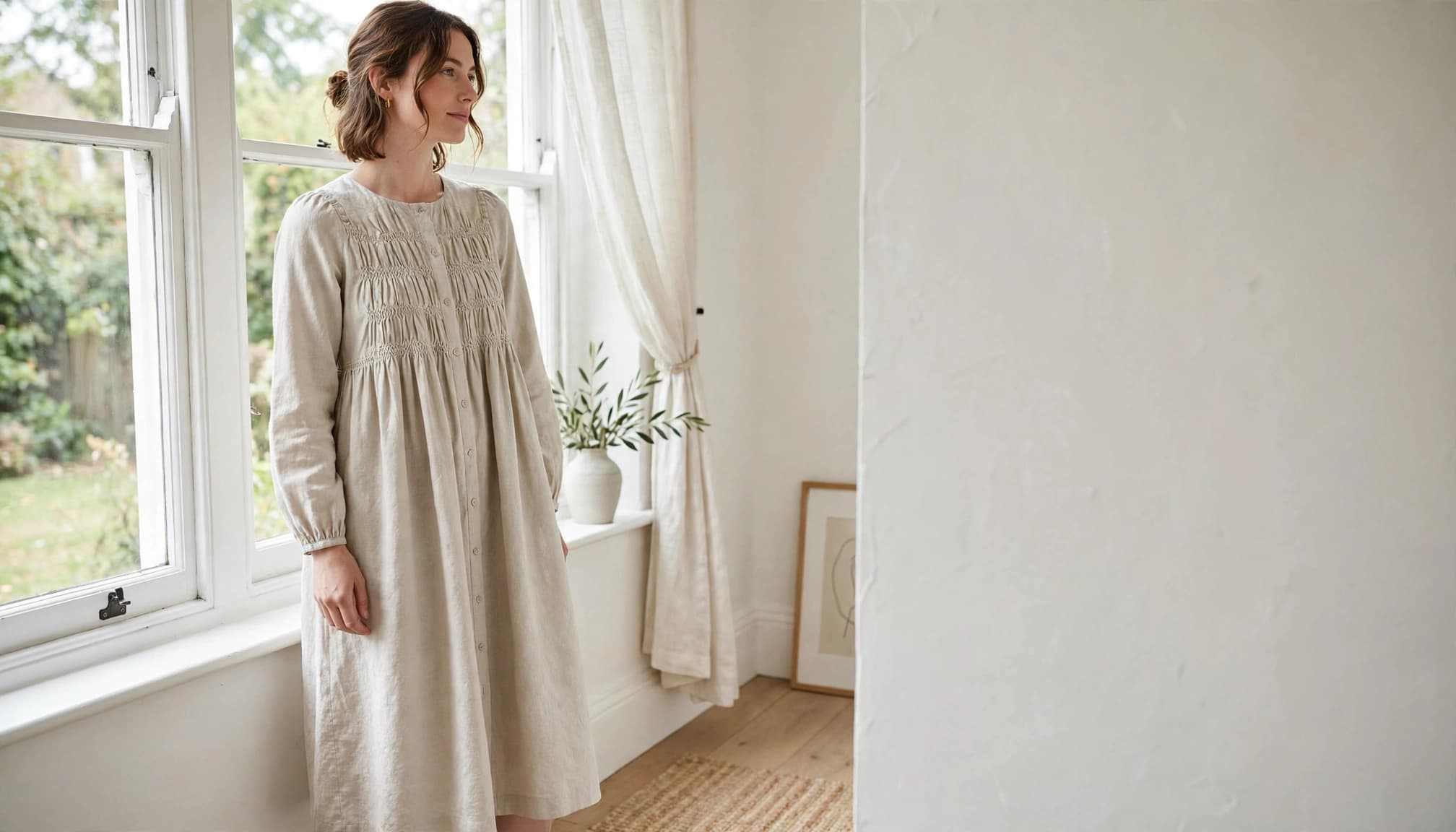
AI-generated image of a classic neutral cotton smock dress with a gathered, relaxed fit.
The silhouette differs from nearby dress styles. A shift dress falls more straightly from the shoulders, usually with fewer gathers. A tent dress has stronger outward volume from the upper body. Babydoll designs are fitted or shaped around the bust before flaring sharply, while a kaftan is commonly cut wider and straighter, often with a more open neckline.
Loose does not always mean voluminous. Some smock dresses have one restrained gathered tier and a narrow sleeve. Others use several deep tiers and wide proportions. Shoulder width, tier placement, neckline and fabric weight all affect how the dress sits, how much it moves and whether it layers comfortably.
Smock Dress Styles, Fabrics and Details Worth Comparing
Length changes the role of a smock dress. A mini can feel light and informal, but needs tights or layers through much of the year. A midi is practical with flats, trainers and boots. Maxi styles give more coverage and drama, although dense gathers can become heavy in wet weather.
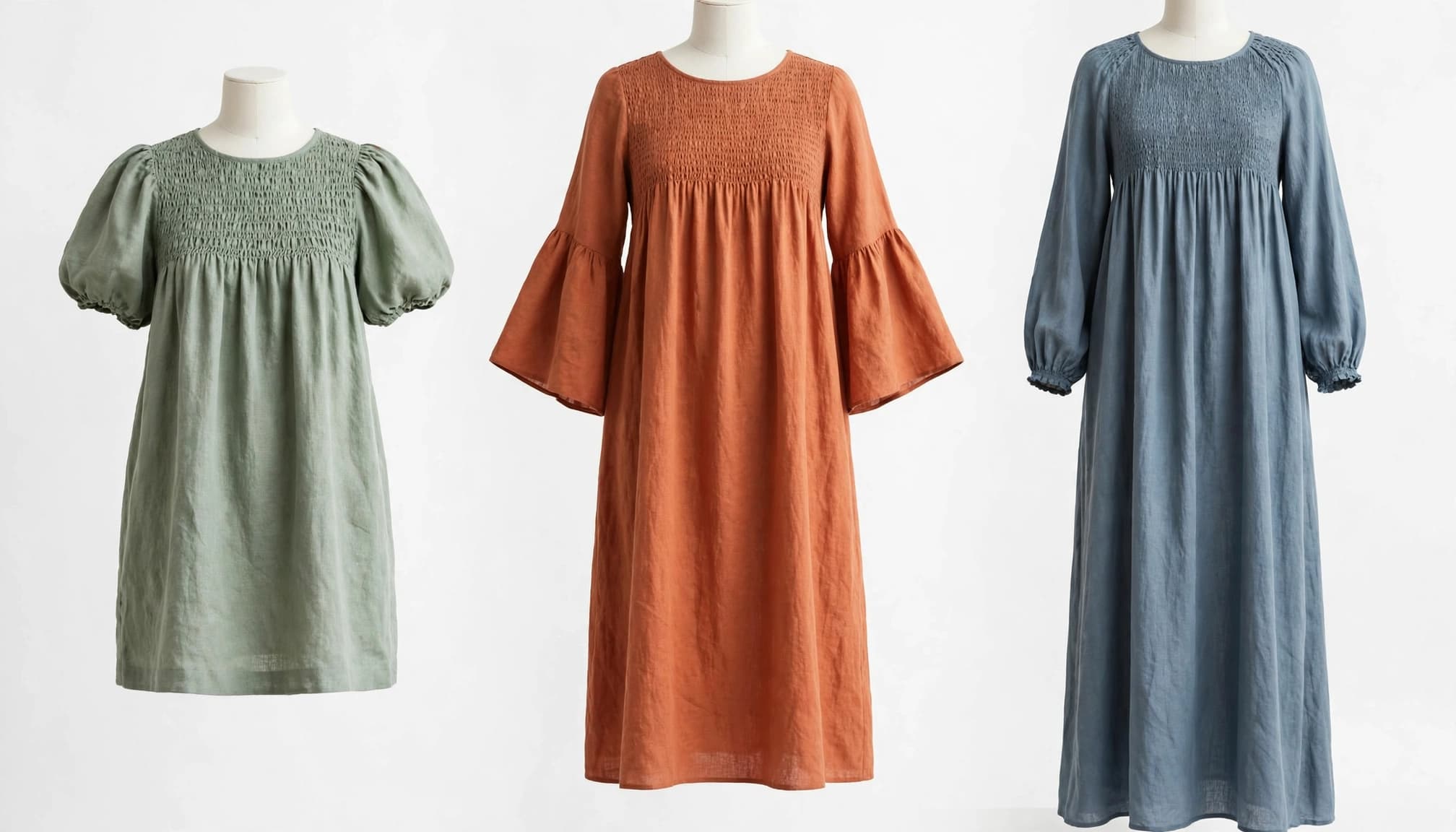
AI-generated comparison of mini, midi and maxi smock dress proportions.
| Feature | Common options | Best season | Useful checks |
|---|---|---|---|
| Length | Mini, midi, maxi | Depends on layers | Check stated garment length |
| Fabric | Cotton, linen, viscose, jersey, denim, velvet | Varies by weight | Read fibre content and care label |
| Sleeves | Sleeveless, short, puff, long | Spring through winter | Look at cuff and upper-arm width |
| Finish | Plain, floral, checked, embroidered | Any season | Check lining and reverse-side stitching |
Cotton is breathable and easy to wash, although crisp cotton may crease. Linen feels cool but creases more readily. Viscose often drapes softly, yet can react differently to washing and needs careful drying. Jersey has stretch and comfort but may cling or lose structure. Denim gives shape and warmth, while velvet suits colder months and more formal evenings.
Pockets, secure buttons, lining, elasticated cuffs and neat fastenings add practical value. A high neckline gives coverage, whereas a square or V-neck can create more openness around the face. Tiers that begin lower on the body usually look less full across the chest.
Which Smock Dress Shape Suits Different Occasions?
Cotton and linen styles suit warm-weather days, holidays and relaxed weekends, particularly with flat sandals or trainers. For work or town wear, a midi smock dress with boots, loafers or a structured jacket has more definition without becoming restrictive.
Richer colours, velvet, satin trim or subtle embroidery shift the dress towards evening. For modest dressing, long sleeves, a midi or maxi hem and a higher neckline can provide coverage while retaining movement. In unsettled UK weather, a cotton midi with tights and ankle boots often works better than a lightweight maxi that trails on wet pavements.
How to Choose the Right Smock Dress Online
Online buying can offer more colours, fabrics and sizes than a single shop floor. It also allows a purchaser to compare prices and specifications without pressure. However, the product page needs close reading.
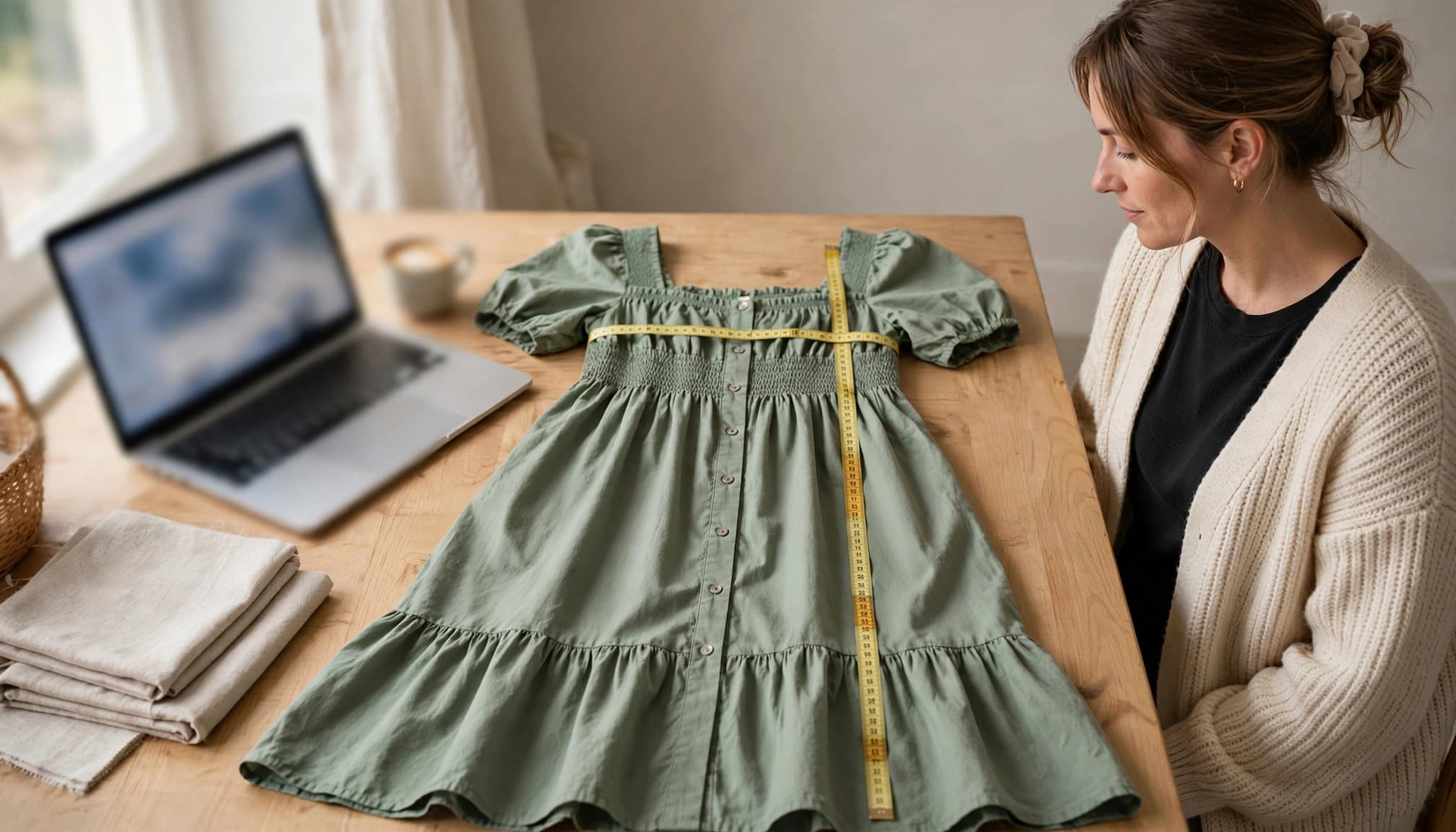
AI-generated image showing a finished-garment measurement check before ordering online.
Start with the size chart. Check whether its figures refer to body measurements or the finished dress, because a smock style needs positive ease. Measure the fullest part of the bust, then compare it with a favourite dress laid flat. Garment length should be measured from shoulder to hem, then considered against preferred coverage and footwear.
Shoulder position, sleeve circumference and neckline depth deserve equal attention. A relaxed fit should still allow the shoulder seam to sit comfortably. Excessive oversizing can make sleeves slide, widen the neckline and create more fabric than intended.
Fabric composition identifies likely behaviour. A pale, unlined viscose dress may need a slip, especially in daylight. Product photographs and customer images can reveal transparency, colour shifts and fabric weight more clearly than promotional copy. Secure payment methods, delivery charges, the return window and return-postage responsibility should all be confirmed before purchase.
A generous return policy lowers the financial risk of buying online, but it cannot compensate for an ignored size chart.
Common Online Buying Mistakes That Lead to Poor Fit
The most common mistake is selecting the familiar labelled size without checking the dress’s actual measurements. Another is ignoring length, particularly where a model’s height is given but the shopper’s is not similar.
Viscose should not be treated as cotton. It usually hangs differently and can require more careful washing. Sleeve measurements matter where upper-arm comfort or arm coverage is a priority. Close photographs can also show weak stitching, loose threads, uneven gathers and poorly finished buttonholes.
Reviews are useful when they report shrinkage, fading, colour differences, fabric weight or a dress losing its shape after washing. Repeated comments carry more weight than a single complaint.
How Much Should a Good Smock Dress Cost?
Price depends on fibre quality, fabric weight, lining, finishing, trims and construction. A light unlined cotton dress might sit around £25 to £60, while lined linen, detailed embroidery or substantial velvet can cost £80 to £180 or more. These are illustrative UK ranges, and prices change over time.
A low price can mean thin fabric, sparse stitching or limited finishing. A higher price only earns its place when better cloth, secure seams, thoughtful cut and expected longevity support it. Cost per wear is often a clearer measure than the ticket price, especially for a dress worn through several seasons.
How to Style a Smock Dress Through the UK Seasons
In spring, a floral or checked midi works with trainers, a denim jacket and a light scarf. Summer calls for cotton or linen, flat sandals and a woven bag. A cardigan in the bag helps with cool evenings.
Autumn suits a midi dress with opaque tights, ankle boots and a leather-style jacket. In winter, a heavier dress can sit under a tailored coat with a fine-knit roll-neck beneath. Wellington-style footwear makes sense for informal country walks, but works less well with delicate fabrics.
Petite proportions may favour a shorter hem, smaller-scale tiers or a cropped layer. Taller wearers may prefer a longer midi or maxi hem and sleeves with enough length. Fuller and smaller busts can both be accommodated through preferred neckline depth, button placement and tier position. Comfort, coverage and personal style are better guides than rules about correcting a shape.
Ways to Add Shape Without Losing the Relaxed Fit
A narrow belt can define the waist, but it remains optional. A cropped jacket draws attention upward, while rolled sleeves expose the wrists and reduce visual bulk. Structured handbags, visible boots and fine layered knitwear add contrast to the softness of the dress.
For casual daywear, pair a cotton midi with trainers and a denim layer. Office-appropriate dressing can use a darker midi, loafers and a tailored coat. A wedding guest outfit might combine a refined maxi with heeled sandals and small jewellery. For date night, richer colour, ankle boots and a compact bag bring enough polish without losing ease.
The AI Outfit Ideas Assistant can turn broad preferences into three wearable looks. It takes inputs for {occasion}, {main-clothing-item}, {style-vibe}, {fit-preference}, {body-considerations}, {shopping-priority}, {color-preference}, {footwear-type} and {extra-details}. For a smock dress, useful entries include “work/office”, “dress”, “classic”, “relaxed”, “arm-coverage”, “easy to rewear”, “earth tones”, “ankle boots” and “cool autumn weather”.
Smock Dress Care, Fit Checks and Common Problems
Before removing tags, check seams, buttons and fastenings. Gathers should look balanced, tiers should hang evenly, and armholes should not rub. Stand near a window or use daylight to test opacity, especially with pale cotton, linen or viscose.
Follow the care label. Cold or gentle washing helps protect colour and shape. Reshape damp garments, air dry where possible and steam rather than over-iron delicate cloth. Tumble drying can shrink natural fibres or damage elasticated details. Store velvet and embroidered fabrics with space around them to prevent crushing and snags.
| Pros | Cons |
|---|---|
| Comfortable for long wear | May offer little waist definition |
| Works with flats, boots and layers | Deep tiers can create unwanted volume |
| Suitable across many occasions | Fabric care varies widely |
| Gives easy movement and coverage | Some lightweight styles can be sheer |
Pilling, colour bleeding, twisted tiers and clinging fabric often stem from fibre choice or unsuitable washing. Loose threads should be trimmed rather than pulled. A garment that twists after the first wash may have poor grain alignment or uneven construction.
Frequently Asked Questions
Can a smock dress be worn to the office?
Yes, if the fabric and styling suit the workplace. A dark cotton, viscose or fine denim midi with loafers, boots or a tailored outer layer usually looks more work-ready than a beach-weight mini.
Do smock dresses work with tights?
They do, particularly with mini and midi lengths in autumn and winter. Opaque tights and ankle boots add warmth, while the dress’s loose shape keeps the outfit comfortable.
Should a smock dress fit closely at the bust?
It needs enough room to move and sit comfortably, but it should not pull across the bust or make buttons gape. Finished bust measurements give a more reliable guide than the size label.
Are smock dresses suitable for formal events?
Some are. Velvet, silk-blend details, refined embroidery and a considered maxi length can suit dinners, weddings and evening events. Casual jersey, thin cotton and oversized pockets usually read as less formal.
Can a smock dress be altered?
A skilled alterations service can shorten a hem, adjust sleeves or refine side seams. Moving gathered tiers or changing a complex neckline is more difficult and can cost more than a simple alteration.
A Smock Dress Worth Keeping
The strongest purchase balances fabric, finished measurements, construction, comfort and realistic cost per wear. The loosest cut and the lowest price rarely produce the most useful dress.
A smock dress remains popular because it accommodates ordinary movement and shifting plans without demanding a rigid silhouette. In a wardrobe shaped by changing seasons and flexible dressing, that practicality has lasting appeal.
Explore our Buyers Guides and Reviews
For a list of our main buyers guides use the drop-down menu at the top of the page. Topics related to this article are:
–
Explore Our Blog Categories for Expert Buying Advice
- AI Powered Product Finder Tools (26)
- Expert Buying Guides & Shopping Tips for UK Shoppers (1,313)
- Brands & Designer Products (Men, Women & Electronics) (266)
- Designer Fashion Brands: Buyer’s Guides & Reviews (146)
- Electronic Brands: Buyers Guides & Reviews (85)
- Apple Products Buyer’s Guides & Reviews (23)
- Brands – Phones, Laptops, PC”s, Tablets | Buyer’s Guides & Reviews (41)
- Electronics – Tablet & iPad Reviews and Buyers Guides (11)
- Kitchen Appliance Brands: Buyer’s Guides & Reviews (22)
- Laptop Brands & MacBooks Buyer’s Guides & Reviews (9)
- Phone Brands & iPhones Buyer’s Guides & Reviews (22)
- Car Buying & Financing Made Easy | Expert Guides for the UK (89)
- Clothing, Fashion & Accessories Buying Guides UK (427)
- Beauty, Health & Wellness | Perfume, Skincare, Makeup & Wellbeing Guides (153)
- Footwear: Trainers & Shoes Buyers Guides (46)
- Jewellery: Expert Reviews, Trends & Buying Guides (71)
- Men's Clothes — Buyers Guides & Reviews (38)
- Men’s Clothes, Fashion & Accessories Guides UK | Latest Trends & Smart Shopping (146)
- Women's Clothing Buyers Guides — Dresses, Tops & More (162)
- Women’s Clothes, Fashion & Accessories Guides UK | Latest Trends & Smart Shopping (372)
- Electronics, Tech & Gadgets: Reviews, Deals & Buying Guides UK (169)
- Furniture Buyer’s Guides | Home & Garden & Styling Tips (300)
- Bedroom Furniture Guides UK | Expert Tips & Best Value Deals (92)
- Garden Furniture, Landscaping & Garden Rooms Guides UK | Expert Tips & Best Value Deals (148)
- Garden Sofa & Sofa Sets Buyers Guides (10)
- Garden Tables & Chairs: Sets, Individual Tables & Seating Buyers Guides (31)
- Home Furniture, Décor & Interior Design Guides UK | Styling Tips & Inspiration (164)
- Living Room Furniture, Design & Décor Guides UK | Styling Tips & Inspiration (56)
- Sofa & Sofa Beds Buyers Guides (18)
- Sofa Beds Buyers Guides (7)
- Sofa Buyers Guides & Expert Advice (10)
- Holidays & Travel: Hotels, Villas & Flights (157)
- Home & Garden Improvements | Renovations & Outdoor Transformation Guides (96)
- Insurance & Protection: Travel, Landlord, Gadget & More UK (159)
- Gadget Insurance UK | Expert Guides, Reviews & Smart Protection Tips (33)
- Home Emergency Cover UK | Expert Guides, Reviews & Practical Protection Tips (21)
- Landlords Insurance UK | Expert Guides, Reviews & Smart Protection Tips (31)
- Travel Insurance UK | Expert Guides, Reviews & Money-Saving Tips (34)
- Pets: Guides, Tips & Inspiration (26)
- Brands & Designer Products (Men, Women & Electronics) (266)
- Gifts for Everyone: Ideas for Every Occasion & Budget (40)