A denim dress can do more work than most single garments in a wardrobe. Denim dresses move easily between casual weekends, relaxed office settings and cooler months with the right layers.
Their usefulness depends less on a familiar blue fabric than on practical details: weight, cut, fastenings and fit. This guide considers fabric, quality, online buying checks, care and outfit ideas that make a dress easier to wear repeatedly.
Key Takeaways
- A useful denim dress balances enough structure to hold its shape with enough ease for sitting, walking and layering.
- Shirt dresses, pinafores, wrap styles and straight midi cuts suit different routines and styling preferences.
- Measurements for bust, waist, hips and length are more reliable than a size label when shopping online.
- Darker washes often look more formal, whilst chambray and softer denim suit warmer weather.
- Return terms, fabric composition and customer photographs can reveal more than polished product images.
Denim Dresses: What Makes Them So Wearable?
A denim dress is a one-piece garment made from denim or a denim-like woven cotton fabric. Its appeal comes from contrast: the fabric has the visual solidity of jeans, but the cut can be as relaxed or polished as a shirt, midi skirt or tailored dress.
Weight changes the experience. Lightweight chambray has a similar blue-and-white woven appearance but feels softer and cooler. Medium-weight denim has more body and works through much of the UK year. Heavy denim can look striking, although a rigid garment may feel restrictive when seated or layered.
Colour matters too. Indigo tends to look sharper, while faded blue feels informal. Black, ecru and coloured washes broaden the options beyond the classic blue dress. Stretch fibres can improve comfort, though a high elastane content may change how the dress recovers after wear.
The best denim dresses are not necessarily the thickest. A well-cut medium-weight fabric, placed seams and sensible skirt volume usually matter more than sheer density. In spring and summer, bare legs and sandals keep the look light. During autumn and on colder UK days, tights, boots and knitwear extend its use.
For background on the cloth’s long history, Wikipedia’s account of denim traces its development as a durable cotton textile.
The Best Denim Dress Styles for Different Wardrobes
Silhouette decides how a denim dress feels before accessories enter the picture. A collar and button placket read as neat and practical. A pinafore introduces layering. A column cut gives the fabric a cleaner, more graphic line.
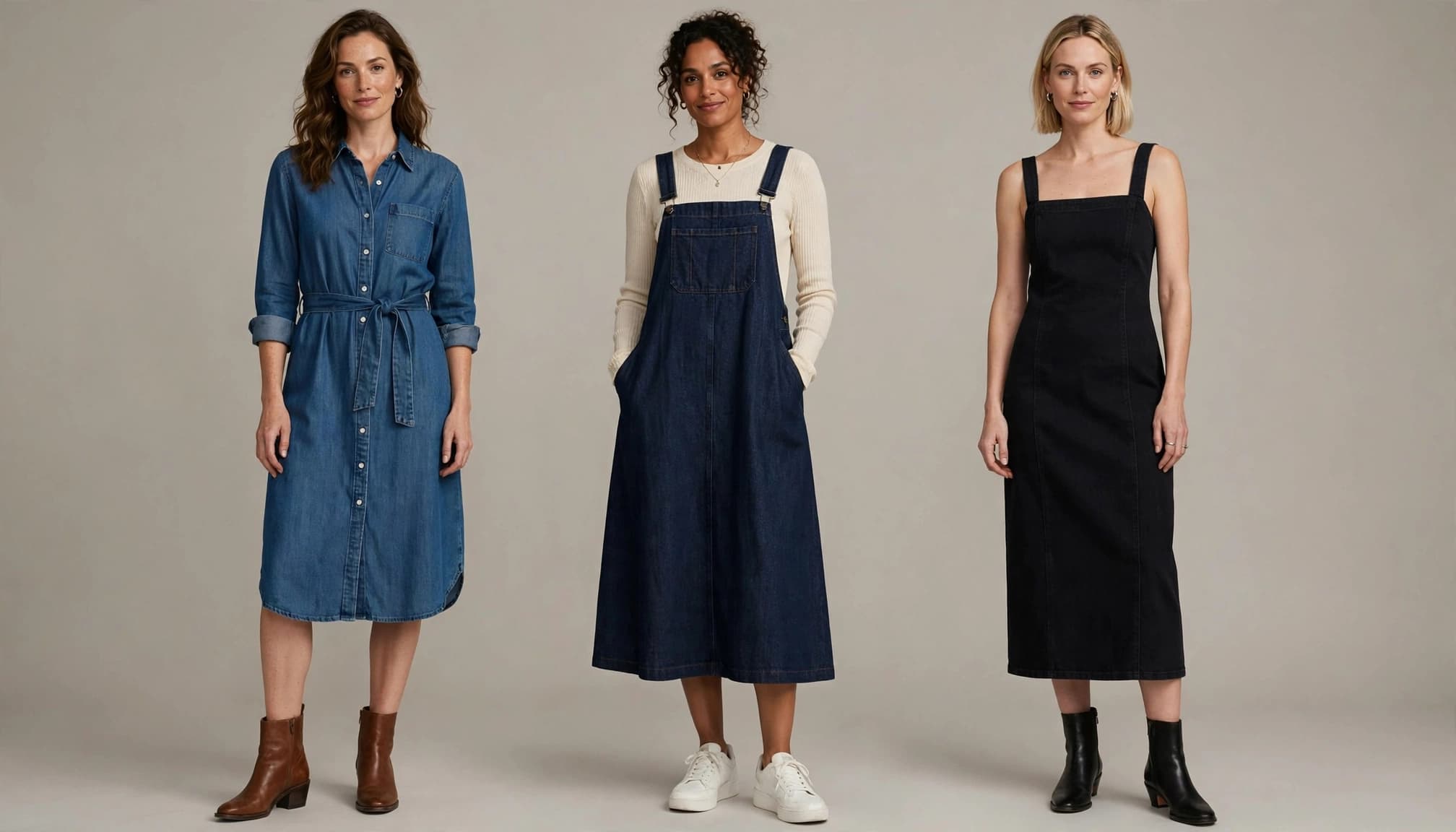
AI-generated image showing shirt, pinafore and straight-cut denim dress silhouettes.
Shirt and button-front denim dresses
A shirt dress is often the most adaptable choice. Collars, cuffs and a button front bring a degree of order, while sleeves can be rolled and a few buttons left open at the neckline when the setting is less formal.
A waist tie changes the shape without committing the wearer to a fixed fitted cut. Patch pockets create a workwear feel, whilst discreet side pockets look less utilitarian. Knee and midi lengths tend to work with more shoe types, including trainers, loafers and boots.
Pinafore and dungaree dresses
Pinafores and dungaree dresses depend on what sits beneath them. A plain T-shirt feels casual, a cotton blouse gives softness, and a fine-knit jumper makes the same dress appropriate for colder days.
Before buying, check whether the straps adjust, where the bib sits and whether the armholes allow free movement. A garment can look comfortable standing still but pinch at the underarm or pull at the bib while walking and sitting.
Wrap, fit-and-flare, and straight-cut designs
Wrap shapes allow the waist to be adjusted, though the overlap should remain secure when seated. Fit-and-flare dresses define the torso and offer more room through the skirt. Straight and column cuts have less waist shaping but often create a spare, modern outline.
Petite wearers may prefer a shorter bodice and hem that does not cut through the mid-calf. Taller wearers can check torso length, sleeve length and whether a defined waist sits in the intended place. Those with a fuller bust may favour button spacing that doesn’t strain, while others may prefer the simpler line of a high-neck column dress.
How to Choose the Right Denim Dress
The label is only a starting point. Dress sizing varies across manufacturers, so bust, waist, hip, shoulder, sleeve and total-length measurements offer a sounder basis for comparison.
For a casual dress, softness and pockets may matter most. An office-friendly version benefits from a darker wash, tidy collar and midi hem. Holiday dressing usually calls for lightweight fabric and easy fastening, while smart-casual occasions suit a clean wash with restrained hardware.
Choose fabric weight, stretch and colour
Use this short comparison when weighing up a fabric description.
| Fabric type | Best suited to | Points to check |
|---|---|---|
| Lightweight chambray | Warm days and holidays | Opacity and crease resistance |
| Soft or medium denim | Everyday wear | Drape, stretch and sleeve comfort |
| Heavyweight denim | Structured shapes and cold weather | Mobility and layering room |
Elastane can make a close-fitting dress more comfortable, particularly across the shoulders and hips. However, rigid 100% cotton denim may hold a sharper silhouette. Neither is automatically better. The decision rests on the cut and intended use.
Classic blue pairs easily with white, tan, red and metallic accessories. Black denim often looks more formal. Ecru can be useful in warmer months but shows marks sooner. Dark, saturated washes can release dye during early washes, and this may transfer to pale bags, shoes or upholstery.
Check the construction before buying
Product photographs rarely show every weak point. Zoom in on seam alignment, even stitching, hems, buttonholes, zip tape and pocket placement. A pocket that sits too high or too far forward can alter the line of the whole dress.
Belt loops, reinforced stress points and well-finished inside seams suggest care in construction. Natural-fibre content, a spare button and detailed washing guidance are also positive signs, although no single fibre or feature guarantees lasting quality.
Clear garment facts are more useful than styling photographs. Fabric composition, full measurements and fastening details reveal how a dress will live beyond the first wear.
Find a comfortable fit for real movement
A workable fit accommodates ordinary movement. The shoulder seam should sit comfortably, armholes should not cut in, and the bust should allow reaching without pulling buttons apart. Check whether the skirt permits a natural stride and whether the hem stays practical on stairs.
A shorter hem can be altered more easily than a bodice. Meanwhile, a waist tie can often be repositioned or replaced. Tall shoppers should compare the stated length with a dress they already wear, rather than relying on a model’s height alone.
How to Style Denim Dresses Throughout the Year
One dress can form several outfits when the supporting pieces change with the season. The aim is not a large collection of extras, but a small range of useful layers and footwear.
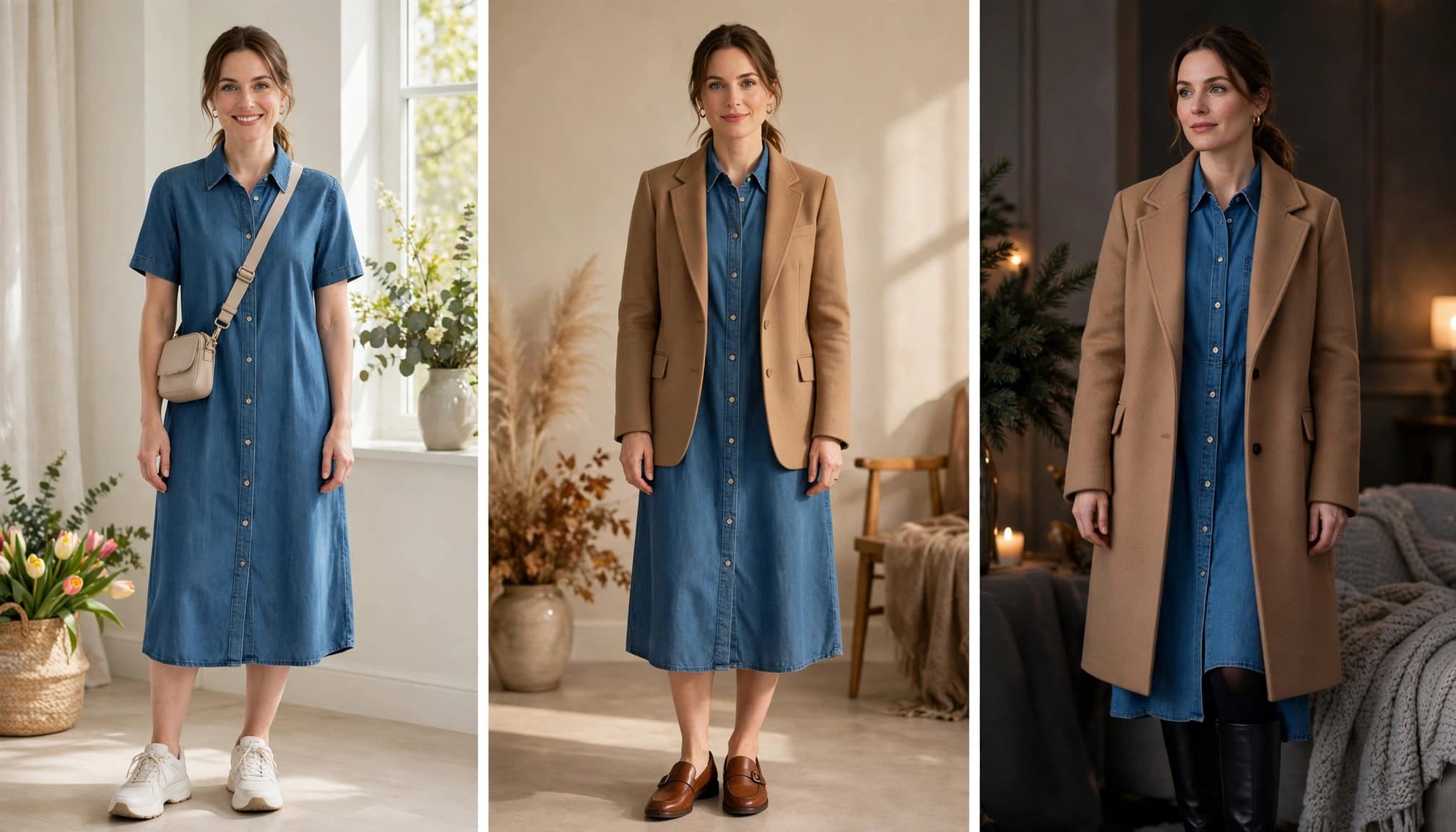
AI-generated image showing one denim dress styled for spring, autumn and winter.
Casual daytime outfits
A medium-blue shirt dress, white trainers and a cross-body bag form a dependable daytime combination. Flat sandals work in dry weather, while canvas shoes or ankle boots suit cooler days.
Rolling the sleeves exposes the wrist and makes a long-sleeved style feel less formal. A slim belt can alter proportions, and a contrasting T-shirt beneath a pinafore adds colour without overcomplicating the outfit. Small hoops or a simple pendant are usually enough jewellery.
Work and smart-casual combinations
Darker denim, a midi length and a neat collar create the strongest starting point for a work-friendly outfit. Add a tailored blazer or fine cardigan, then choose loafers, ballet flats or low heels with a clean finish.
Workplace rules remain more important than the dress itself. A creative office may accept a pale denim pinafore and knitwear. A formal environment may require dark denim with minimal fading, no visible distressing and a structured layer.
Cold-weather and occasion layering
In autumn and winter, opaque tights, knee-high boots and a wool coat bring warmth without hiding the dress. A fine-knit jumper can sit underneath a pinafore, while a structured jacket works over a button-front midi.
For dinners and informal events, cleaner footwear and a defined waist shift the mood. A compact leather bag, polished metal jewellery and an unwashed dark finish read more considered than novelty accessories.
Buying Denim Dresses Online Without Guessing the Fit
Online shopping offers a broader choice of sizes, lengths, colours and cuts than a single high-street visit. It also makes price comparison simpler. Yet the same convenience can obscure fabric thickness, true colour and fit.
Check the garment measurement chart rather than only the general size guide. Model measurements, fabric composition and stretch information add useful context. Customer photographs may reveal sleeve length, fading and how the fabric sits away from studio lighting.

AI-generated image showing a shopper checking denim dress measurements before ordering online.
A practical online buying checklist
Before payment, confirm the essentials:
- Compare the listed measurements with a well-fitting dress already owned.
- Check the fabric, stretch level, fastening, pocket details and whether pale fabric is likely to be opaque.
- Look for the stated length, care instructions, dispatch charge and total cost.
- Read the return deadline, refund terms and any different conditions for reduced-price items.
- Save the product description and order confirmation until the garment has been checked.
A low price can lose its appeal if return postage is expensive or the refund period is unusually short. The clearest listings make these conditions easy to find.
What to do when the dress arrives
Inspect the parcel and dress before removing tags or washing. Compare the colour, fabric feel, stitching, buttons, zip and measurements with the description. Try the dress while sitting, reaching and walking indoors.
If the garment smells strongly, has loose threads, damaged fabric or a materially different colour, photograph the issue before arranging a return. Dark denim can transfer dye, so pale furniture and clothing should be protected until after its first wash.
Denim Dress Care, Washing, and Longevity
The sewn-in care label takes priority because finishes and fibre blends differ. In general, washing only when needed preserves colour and reduces unnecessary abrasion. Airing a dress after light wear and spot-cleaning a small mark often avoids a full wash.
Turn denim inside out, fasten buttons or zips and use a cool wash. Avoid unnecessary tumble drying, which can stress fibres and shrink cotton. Dry the dress away from strong direct heat, then reshape collars, plackets and seams while damp.
Dark denim may release excess dye during its first few washes, so wash it separately or with similarly dark garments. Store it on a hanger if the shoulders hold their shape, or fold it neatly to prevent stretched straps and distorted waist ties.
Frequently Asked Questions
Are denim dresses suitable for weddings?
A denim dress can suit a relaxed registry office ceremony, outdoor celebration or informal reception. It is less appropriate for a formal wedding unless the invitation clearly supports casual dress. Dark denim, refined shoes and simple jewellery give the look a more polished finish.
Can a denim dress be worn with tights?
Yes, particularly with a midi or shorter hem in autumn and winter. Opaque tights create a cleaner line with boots, while lighter denier tights work for milder weather. The dress should have enough room through the skirt to avoid static cling.
Do denim dresses shrink after washing?
Cotton denim can shrink, especially after heat exposure. Pre-washed fabric is often more stable, but the care label remains the best guide. Cool washing and air drying reduce the risk.
Is a belt necessary with a denim dress?
No. A belt is useful when a wearer wants more waist definition or wishes to alter proportions. Straight dresses, pinafores and loose shirt styles can look equally intentional without one.
Can denim be dressed up for an evening out?
It can, if the dress has a clean wash and a considered cut. Black or deep indigo denim, low-profile fastenings, heeled boots or polished flats, and a structured bag are often enough. Heavy fading and bulky trainers keep the outfit more casual.
A Denim Dress That Earns Its Place
The most useful denim dress suits the rhythm of real life: its fabric permits movement, its measurements work on the body, and its cut accepts different shoes and layers. Good construction and accurate online information matter more than a flattering product photograph.
A thoughtful purchase may last through changing seasons and shifting routines. That quiet durability is where denim earns its continued place in a modern wardrobe.
Explore our Buyers Guides and Reviews
For a list of our main buyers guides use the drop-down menu at the top of the page. Topics related to this article are:
–
Explore Our Blog Categories for Expert Buying Advice
- AI Powered Product Finder Tools (25)
- Expert Buying Guides & Shopping Tips for UK Shoppers (1,481)
- Brands & Designer Products (Men, Women & Electronics) (300)
- Designer Fashion Brands: Buyer’s Guides & Reviews (170)
- Electronic Brands: Buyers Guides & Reviews (95)
- Apple Products Buyer’s Guides & Reviews (25)
- Brands – Phones, Laptops, PC”s, Tablets | Buyer’s Guides & Reviews (44)
- Electronics – Tablet & iPad Reviews and Buyers Guides (9)
- Kitchen Appliance Brands: Buyer’s Guides & Reviews (26)
- Laptop Brands & MacBooks Buyer’s Guides & Reviews (10)
- Phone Brands & iPhones Buyer’s Guides & Reviews (23)
- Car Buying & Financing Made Easy | Expert Guides for the UK (89)
- Clothing, Fashion & Accessories Buying Guides UK (516)
- Beauty, Health & Wellness | Perfume, Skincare, Makeup & Wellbeing Guides (190)
- Footwear: Trainers & Shoes Buyers Guides (49)
- Jewellery: Expert Reviews, Trends & Buying Guides (74)
- Men's Clothes — Buyers Guides & Reviews (40)
- Men’s Clothes, Fashion & Accessories Guides UK | Latest Trends & Smart Shopping (176)
- Women's Clothing Buyers Guides — Dresses, Tops & More (205)
- Women’s Clothes, Fashion & Accessories Guides UK | Latest Trends & Smart Shopping (455)
- Electronics, Tech & Gadgets: Reviews, Deals & Buying Guides UK (186)
- Furniture Buyer’s Guides | Home & Garden & Styling Tips (331)
- Bedroom Furniture Guides UK | Expert Tips & Best Value Deals (93)
- Garden Furniture, Landscaping & Garden Rooms Guides UK | Expert Tips & Best Value Deals (172)
- Garden Sofa & Sofa Sets Buyers Guides (11)
- Garden Tables & Chairs: Sets, Individual Tables & Seating Buyers Guides (61)
- Home Furniture, Décor & Interior Design Guides UK | Styling Tips & Inspiration (170)
- Living Room Furniture, Design & Décor Guides UK | Styling Tips & Inspiration (57)
- Sofa & Sofa Beds Buyers Guides (19)
- Sofa Beds Buyers Guides (7)
- Sofa Buyers Guides & Expert Advice (11)
- Holidays & Travel: Hotels, Villas & Flights (164)
- Home & Garden Improvements | Renovations & Outdoor Transformation Guides (107)
- Insurance & Protection: Travel, Landlord, Gadget & More UK (161)
- Gadget Insurance UK | Expert Guides, Reviews & Smart Protection Tips (33)
- Home Emergency Cover UK | Expert Guides, Reviews & Practical Protection Tips (21)
- Landlords Insurance UK | Expert Guides, Reviews & Smart Protection Tips (32)
- Travel Insurance UK | Expert Guides, Reviews & Money-Saving Tips (34)
- Pets: Guides, Tips & Inspiration (31)
- Brands & Designer Products (Men, Women & Electronics) (300)
- Gifts for Everyone: Ideas for Every Occasion & Budget (51)