A metal bench can give you a lasting place to sit and add shape to a garden. Verdict: a well-made metal garden bench is worth buying if you like firm seating and don’t mind checking its finish occasionally.
You still need to look beyond the photograph. A handsome bench can feel cramped, wobble on paving or cost more than expected once delivery and cushions are added. This guide helps you compare metals and styles, judge comfort and build quality, and work out what you’re paying for before you order.
Key Takeaways
- Choose a Metal Garden Bench by frame quality and protective finish, not by metal name alone; joints and fixings affect how well it holds up outdoors.
- Check seat height, depth, back support and the stated load limit before deciding whether a design will be comfortable.
- Measure the full bench and its route into the garden, then allow room to walk around it.
- Compare delivery, assembly and upkeep alongside the price; a reduction doesn’t make a poorly built bench good value.
- Clean the finish gently and deal with chips or rust early.
Is a metal garden bench right for your outdoor space?
A metal garden bench offers firm support and a clear outline amongst planting. A heavy-duty garden bench can suit a busy outdoor space, while simpler frames keep the look understated. With a sound finish and appropriate care, either can provide years of use.
The trade-offs are noticeable when you sit down. An unpadded seat feels harder than timber or cushioned furniture, whilst exposed metal can feel cold in winter and hot in strong sun. Some benches are difficult to move, and damaged coatings may leave steel or iron open to rust.
Compare steel, aluminium and cast iron
Steel can form sturdy frames in many shapes, but it needs effective protection where rain might reach it. A rust-resistant, powder-coated finish is common; check that it covers joints and less visible areas as well as the seat. Scratches and exposed fixings deserve attention.
Aluminium is lighter and doesn’t rust in the same way as iron or steel, making it easier to reposition. Even so, a thin or poorly joined aluminium frame may feel unsteady. Cast iron is heavy and often used for decorative supports, while cast aluminium is a lighter aluminium alloy formed in a mould. Check cast iron supports and their fastenings for corrosion, particularly where water collects.
Choose a style that suits the garden
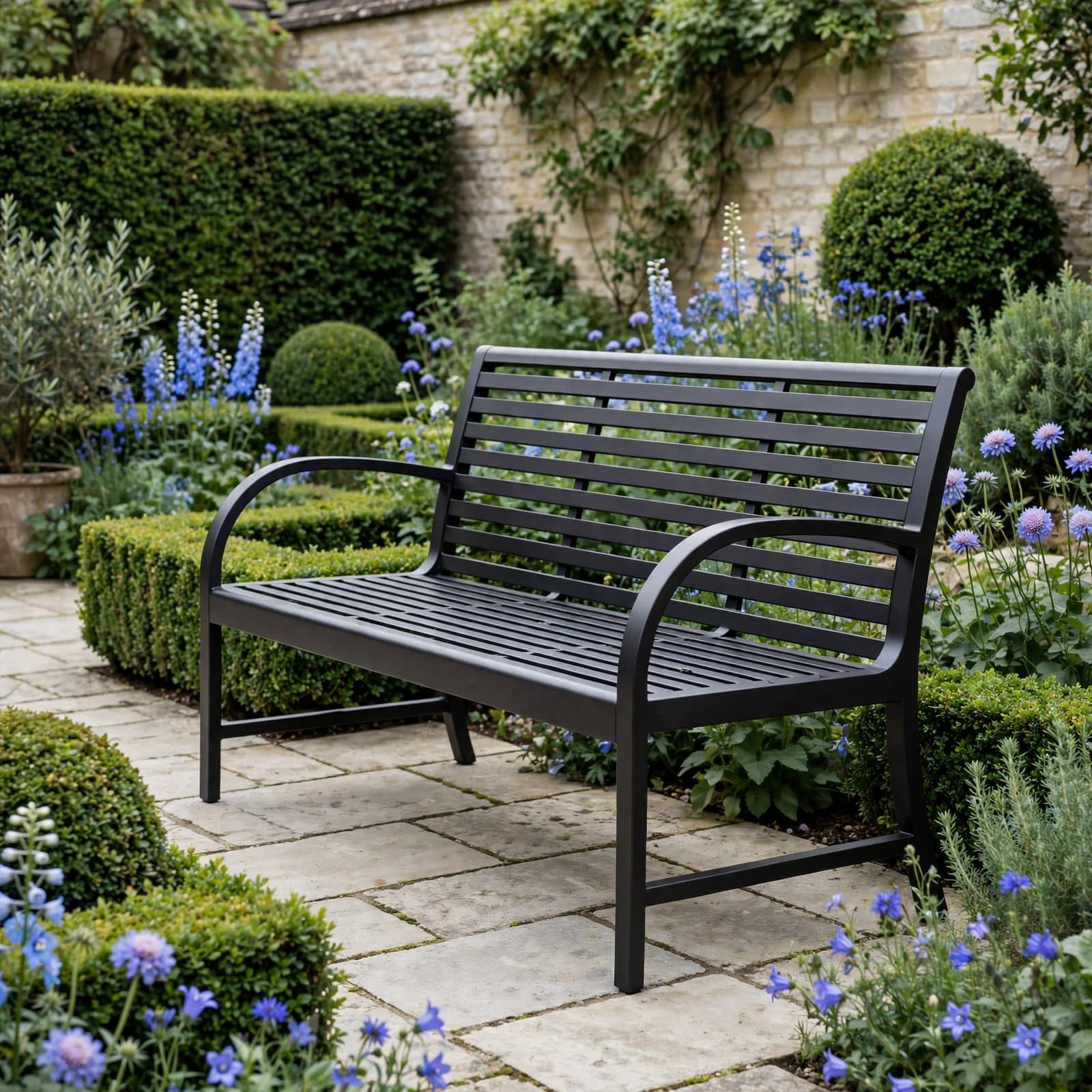
A slatted seat and curved arms suit a traditional garden, while arch-frame benches can support climbing plants. On a small patio, a loveseat bench or a bench with a built-in table may make better use of space. A rocking bench can add movement to a relaxed corner.
Dark finishes can recede into greenery; lighter finishes may stand out against paving. When comparing a metal garden bench, consider whether a rocking bench has enough room to move. For comparison, check an Outsunny metal garden bench and a Charles Bentley garden bench by dimensions, materials and finish, rather than relying on brand names.
Look at the bench beside your existing furniture and planting before committing. A shape that works in an isolated product photo may dominate the very spot where you hoped to relax.
What makes a metal garden bench comfortable and well made?
Two benches made from the same metal can feel entirely different. Seat proportions, back angle and durable construction determine whether you’ll use yours for a quick pause or settle in for a long conversation.
Check seat size, shape and support
Start with the stated seat height and depth, rather than the overall width alone. A slatted seat can feel different from a solid one, so check that the depth suits you: too deep may leave your feet unsupported, while too shallow can feel awkward over time. An ergonomically designed back and usable armrests can make getting up easier and improve support.
For a loveseat bench or heavy-duty garden bench, check how many people it’s intended to seat and look for its stated load limit. The outside width may include arms that take up space without adding seating room. If possible, try a similarly shaped bench in person, and check that a rocking bench moves smoothly without feeling loose. Even a few minutes will tell you more about its edges and back support than a photograph can.
Look closely at the finish and frame
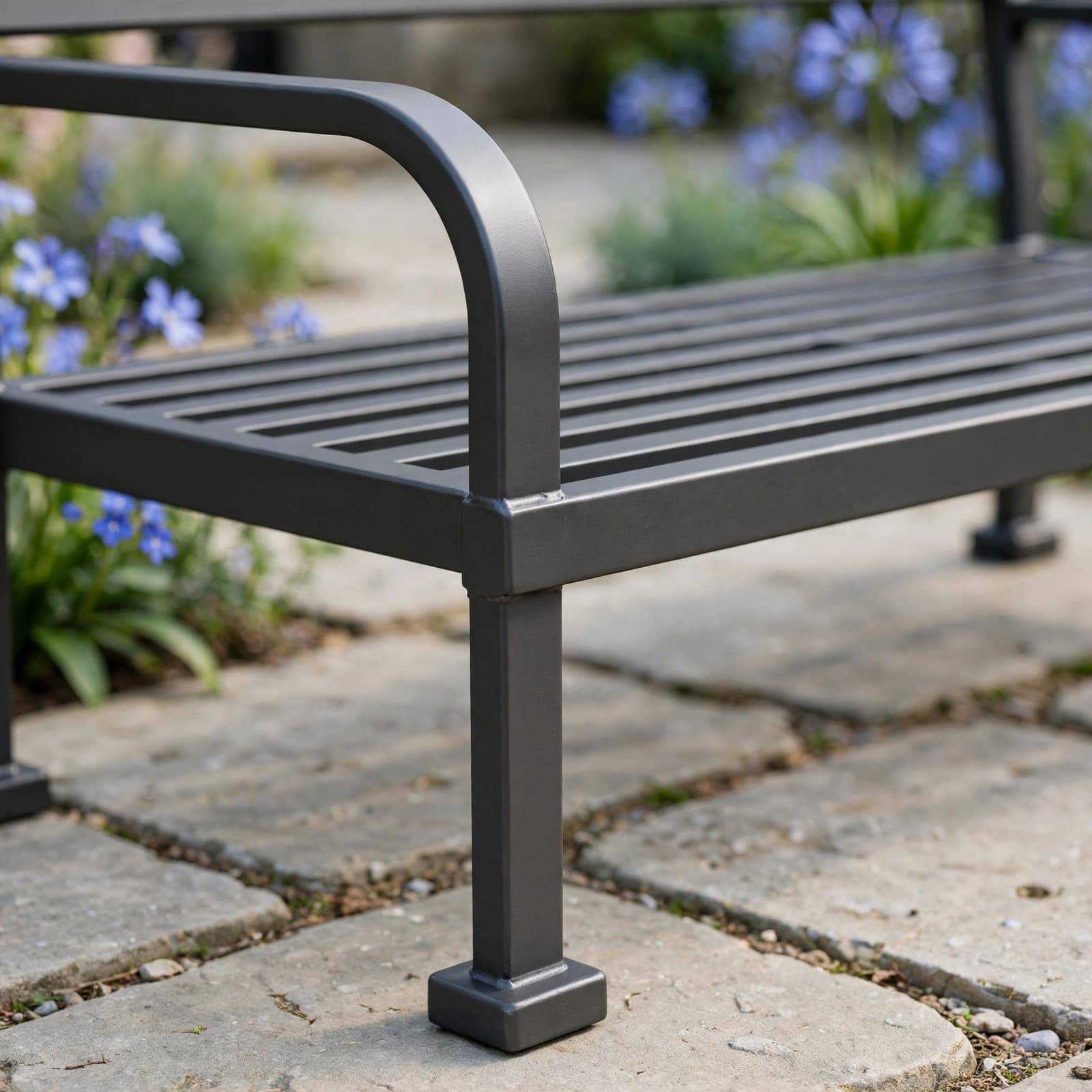
Inspect photographs for an even, powder-coated finish, tidy joints and smooth seat edges. Cast iron can feel substantial, but durable construction depends on secure joints as well as material. Look underneath if you’re shopping in person: the feet should sit level, fixings should be secure, and the frame shouldn’t shift when you sit.
For an online purchase, seek clear pictures of the underside and connection points. If a cast iron seat is listed, check how its frame is protected; for any model, including the Outsunny metal garden bench, look for assembly instructions with a fixing list and details of replacement fixings or care advice. A product description is useful, but it isn’t proof of build quality.
How to choose the right bench for your garden
The right location makes a bench easier to use and easier to live with. Before choosing a style, decide when you’ll use this garden seating, what you’ll look towards and how much exposure the spot gets.
Measure the space and plan where it will sit
Measure the intended area against the Metal Garden Bench’s full width, depth and height, including the arms, back and any built-in table. Then allow space to get past it without stepping into a border. A loveseat bench or rocking bench may need more clearance than a simple seat.
When planning a patio and porch layout, check delivery access as carefully as the final position. A flat-packed bench still has to pass through a gate or hallway, whilst a heavy-duty garden bench in cast iron may be awkward to carry. Level paving gives feet a firmer base than a lawn that turns soft after rain. Near a wall, check that the back doesn’t push the seat too far forwards or spoil the view, and leave climbing plants room to grow without trapping damp against the frame.
Add comfort without creating extra upkeep
Shade can make a metal seat more pleasant in strong sun, whilst a sheltered position offers relief from wind. Arch-frame benches can support climbing plants for dappled shade, but keep foliage clear of the frame so moisture doesn’t linger.
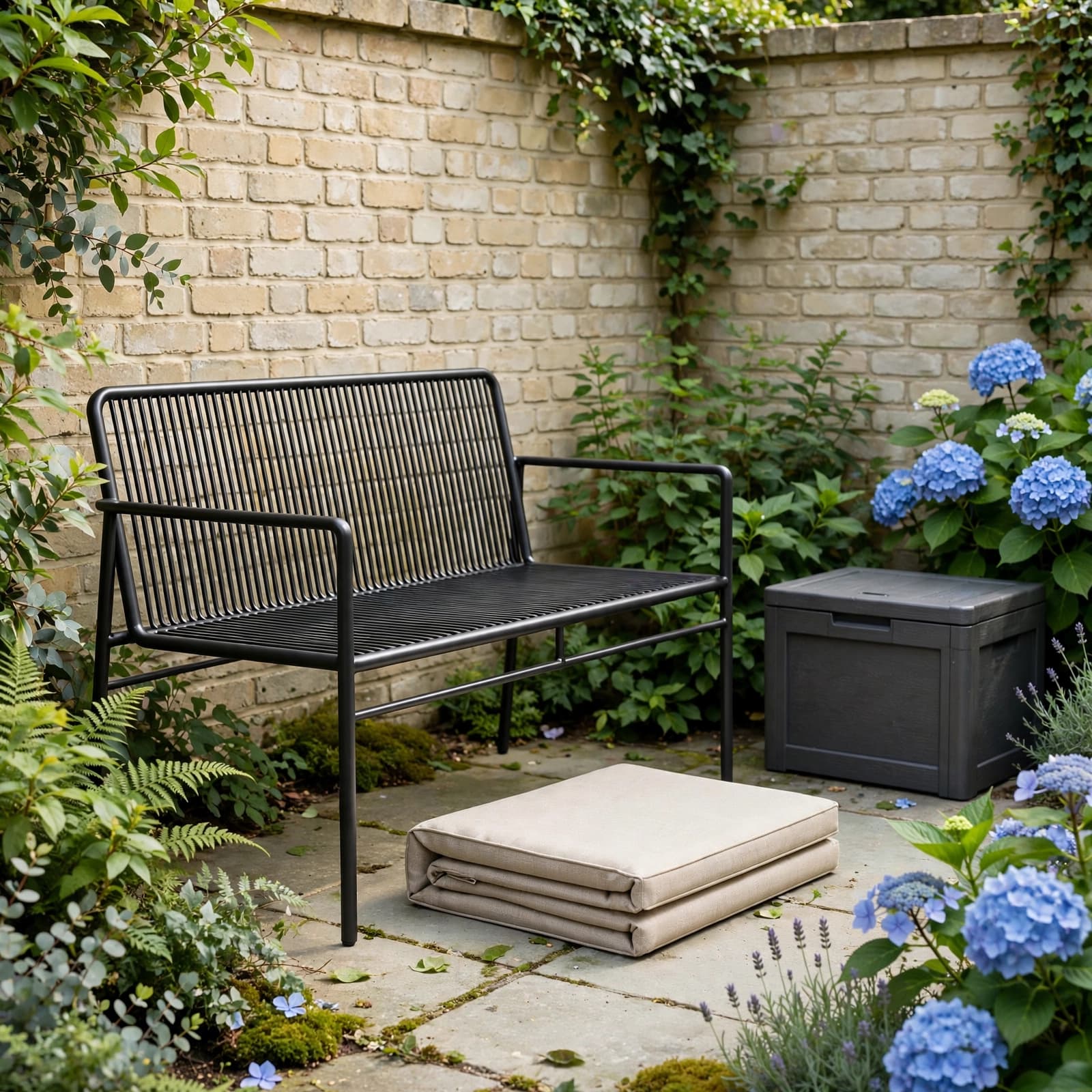
A removable cushion adds comfort for longer sits on a slatted seat. Look for weather-resistant fabric, but don’t assume it can stay outside through every shower. Store it dry when it’s wet or not in use to limit damp and fading. Protective bench covers can shield the frame, whilst a nearby storage box keeps cushions handy in a compact garden, though it also needs room to open.
When would another bench be better value?
Metal is a good choice for a defined shape and firm seat, but it isn’t the best match for every garden. Timber may feel more inviting; cast iron can suit a heavy-duty garden bench, while cast aluminium, rocking bench and loveseat bench designs offer other options. Arch-frame benches can frame climbing plants.
A resin or recycled-plastic bench may suit you if easy cleaning matters more than traditional garden furniture styling. No material is maintenance-free, so check its care advice and construction as you would for a steel bench. Weight matters too: a lighter seat helps if you rearrange the patio, but it must still feel secure.
Compare a metal garden bench with alternatives of similar size and intended use. An Outsunny metal garden bench and a Charles Bentley garden bench are examples to assess by their dimensions and specifications. A cheaper option loses appeal if it’s uncomfortable, takes up too much room or needs replacing sooner than expected.
Care, prices and buying a metal garden bench online
A bench’s purchase price tells only part of the story. Think about the care its finish needs, the cost of getting it into position and any accessories you’ll use regularly.
Keep the finish in good condition through the seasons
Wash dirt off with mild soapy water and a soft cloth, then rinse and dry the bench where needed. Clear leaves from joints and don’t let standing water collect in recesses. During routine cleaning, look for chipped coating, exposed areas and loose fastenings.
Deal with damage early, following the maker’s advice for that metal and finish. Protective bench covers or sheltered storage can reduce exposure during harsher spells of British weather. If you use a cover, avoid trapping moisture beneath it. Aluminium, powder-coated steel and cast iron don’t all need identical treatment, so keep the care instructions.
Compare the full cost before you buy
Shopping online makes it easier to see more sizes and styles and compare prices without travelling between showrooms. Keep the comparison like for like. When comparing an Outsunny metal garden bench with a Charles Bentley garden bench, check the material, finish, full dimensions and stated load limit. Note whether assembly is required, and whether a powder-coated finish needs particular care.
For a rocking bench, check the movement clearance as well as its dimensions. Add delivery charges, a cover or cushions, and any care products you’ll need.
Check the delivery method before ordering, especially for a heavy bench or a home with restricted access. Read the returns terms and warranty details, including what each covers. If measurements, finish details or assembly information are missing, ask for them before paying.
Customer reviews can reveal recurring problems that a listing won’t show. Read several for repeated comments about stability, comfort, damaged deliveries and rust rather than relying on one star rating. Seasonal reductions and clearance offers can lower the cost, but they’re only worthwhile if the bench fits your space and meets your quality checks.
Frequently Asked Questions
Will a metal garden bench rust in the rain?
That depends on the metal, its protective finish and whether water reaches exposed areas. Steel and cast iron need particular attention if their coating chips or fixings corrode. Clean away dirt and treat damage promptly in line with the maker’s instructions; rain alone doesn’t tell you how long a particular bench will last.
Can a metal bench stay outside all year?
Some benches are intended for year-round outdoor use, but that doesn’t mean exposure has no effect. Check the maker’s guidance for your model and inspect it after prolonged wet weather. A suitable cover or sheltered storage can help during severe conditions, provided the bench isn’t put away wet.
Are metal garden benches comfortable without cushions?
They can be, especially for shorter sits, if the seat edges are smooth and the back offers good support. A slatted seat can feel comfortable when its shape suits you, while a rocking bench should feel stable as it moves. A removable outdoor cushion can help; keep it dry when you’re not using it.
Which metal is best for a low-maintenance bench?
Aluminium is often a practical option if rust is your main concern. Coated steel can also be straightforward to care for when its finish stays intact. Neither is automatically the better purchase: compare the frame, joints, protective treatment and care instructions of the benches you’re considering.
A bench worth keeping
A Metal Garden Bench should fit its spot, support you comfortably and have a frame and finish you can inspect and care for. A low price matters less if the seat wobbles or its dimensions make the garden harder to use.
Buy it if you want durable, structured outdoor seating and are willing to check the finish now and then. Skip it if a softer seat or the gentle movement of a rocking bench is your priority, or the only available spot leaves the bench exposed without the upkeep you’re prepared to give it.