Outdoor seating with natural character can be appealing, but timber, construction and upkeep determine how well it suits outdoor use. A handsome product photo won’t tell you how the seat feels, whether rain can drain away or how much care the finish needs.
The best choice depends on your space, your budget and how often you’re willing to maintain the wood. Start with the bench itself, then check the specifications and full cost before you order.
Key Takeaways
- Garden bench styles should suit how you’ll use the seat: a straight design suits a table, whilst a compact two-seater may fit a small patio better.
- Check the timber, outdoor treatment, joints and drainage rather than judging durability by appearance alone.
- Measure the footprint and walking space, as product photos rarely show scale reliably.
- Compare delivery, assembly and future care costs alongside the bench price.
- Wood rewards basic maintenance, but resin or plastic requires less effort.
Compare Bench Styles, Timber and Build Quality
A bench that looks sturdy in a photograph can feel cramped or awkward once it arrives. Look beyond its overall shape and consider how it’ll work on an ordinary afternoon in your garden.
Pick a bench style that fits how you use the garden
A straight-backed bench is easy to place against a wall or beside a garden table. It’s practical for meals, although a sharply upright back may feel less inviting for a long read.
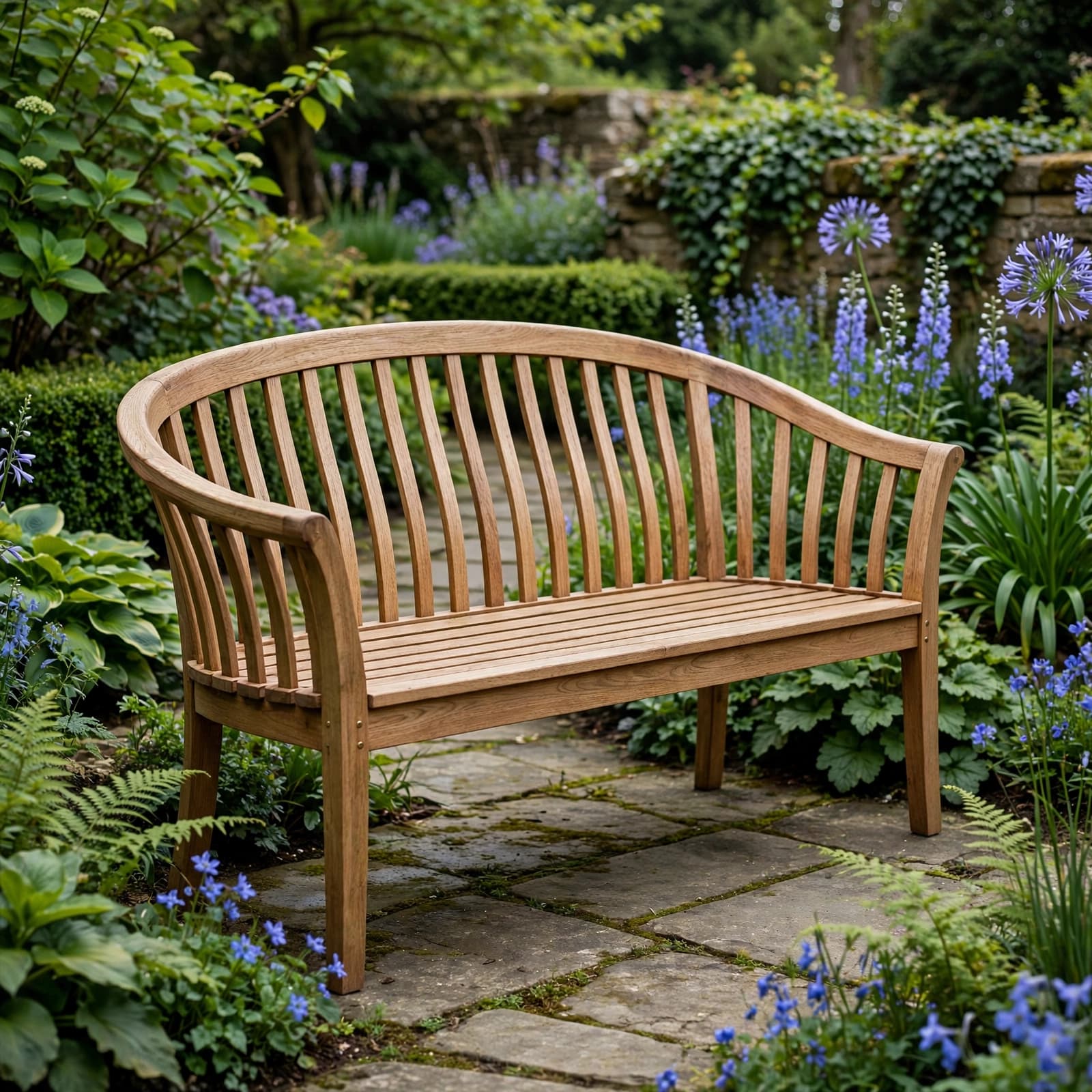
Curved benches create a relaxed seating area and can soften a formal path or border. A tree bench uses space around a trunk, but you’ll need to measure carefully and allow for the tree’s growth. Storage benches can hide small outdoor items, but check the compartment suits what you plan to store. A timber lid alone doesn’t make it waterproof.
On a tight patio, a compact two-seater may leave more room to move than a longer bench. If several people will use the seat regularly, usable seating width matters more than the number of people in a lifestyle photograph.
Understand the differences between common woods
A Teak garden bench made from heartwood has natural resistance to decay and can last well outdoors with appropriate care. A Hardwood garden bench made from eucalyptus or acacia can vary in performance, depending on the species, part of the tree and finish.
A Softwood garden bench, often made from pine, usually costs less. Check that Treated softwood is suitable for outdoor furniture, and pay attention to exposed end grain, which absorbs moisture readily. Weather resistance varies, so don’t assume every coated bench offers the same protection.
Garden bench materials are only part of the story. Poorly fitted joints or water trapped against the wood can shorten the life of an otherwise promising bench. For responsible sourcing, check whether FSC-certified acacia applies to the specific product, rather than relying on a general statement about a seller’s range.
Check the joints, finish and seat design before you buy
Look for neatly aligned joints, stable-looking legs and smooth edges where your hands and legs will rest. Slatted seats let rain drain through, while generous gaps make it easier to clear leaves. Check the underside in product photos if you can, especially where supports meet the seat.
A comfortable back angle and enough seat depth matter more than decorative detailing. Armrests can help you stand up, but they may limit how you sit. Check that the finish suits outdoor use, the fixings are appropriate and the assembly instructions are clear. When considering an option such as Alexander Rose Broadfield, compare its listed timber, joints and finish with your needs. Once assembled, the bench should sit firmly on a level surface without rocking.
Choose the Right Wooden Bench for Your Garden
Where the bench will stand affects comfort and wear. A sheltered patio with other patio furniture, an open lawn and a damp spot beneath trees place different demands on the same piece of furniture.
Measure the space and check the seat capacity
Measure the available width and depth, then allow room to walk past without brushing against planting or a wall. If the bench will sit by a table, leave space to pull up a chair and move around it. A garden bench that technically fits can still make a narrow route frustrating.
Compare the listed overall width and depth with the usable seat width where given. If you’re considering a named model such as Alexander Rose Broadfield, check its dimensions against the space available. Check seat height as well: a low seat can be uncomfortable for someone who finds it difficult to stand. Finally, check the maker’s stated weight capacity and any guidance on the number of users.
For occasional seating in a small garden, a compact model may be the sensible buy. A Two-seater bench suits smaller households, whilst a Three-seater bench gives more people room to share, provided it doesn’t swallow the space around it. If you’re placing it on grass or uneven ground, think about how you’ll keep its feet level and out of persistent damp. Consider how it will sit alongside other outdoor garden furniture, too.
Balance comfort, appearance and garden layout
If you’ll sit outside for more than a few minutes, favour a supportive backrest and a seat deep enough for your legs. Armrests offer a place to settle your arms and can make standing easier. For a bench used mainly at a dining table, check that the arms won’t catch under the tabletop.
Timber colour can either echo existing furniture or contrast with paving and greenery. Pale wood often looks crisp beside dark planting, whilst darker finishes can sit comfortably against brick. Remember that outdoor wood changes appearance over time, particularly where one side gets more sun than the other.
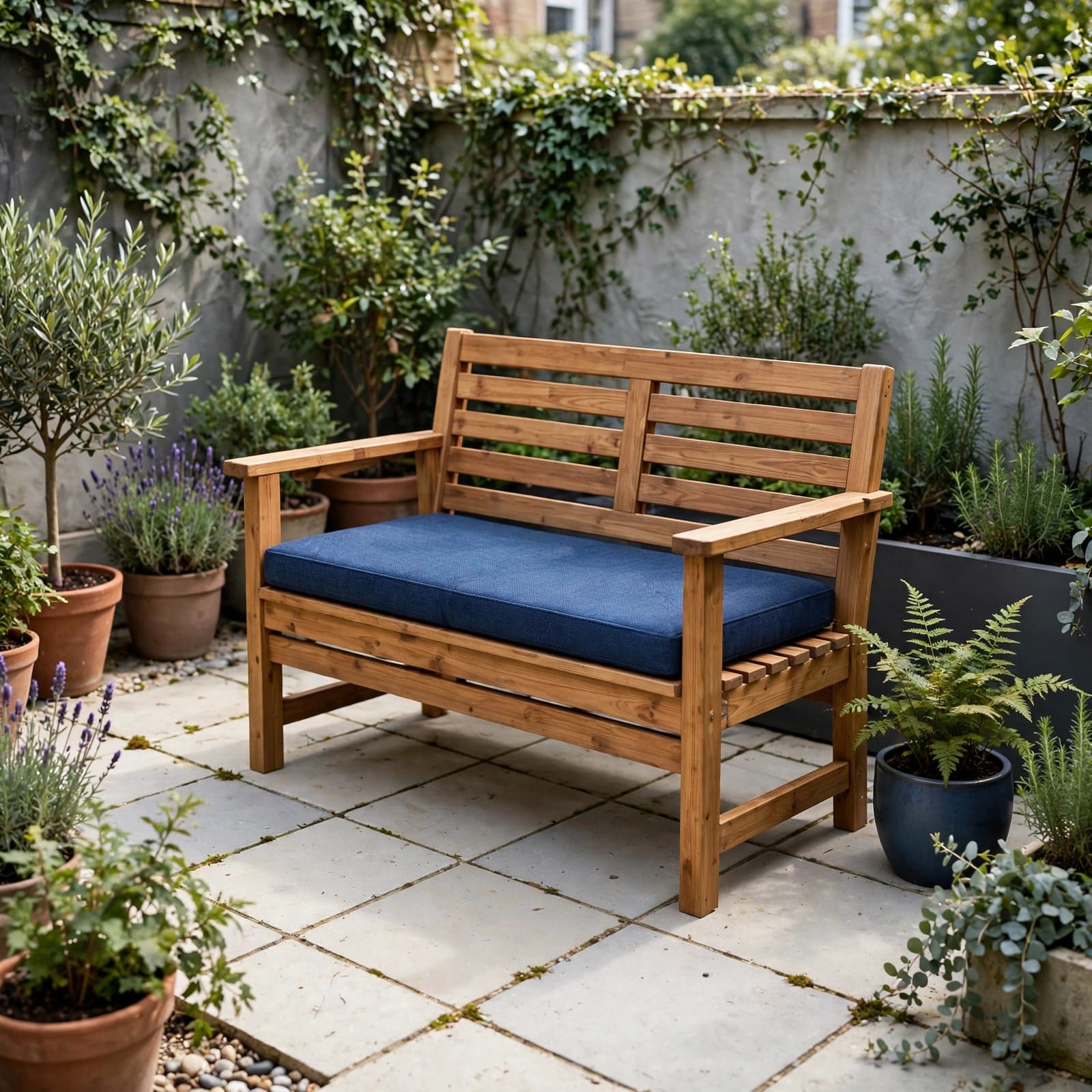
Bench cushions add softness and colour. Choose fabric intended for outdoor use, consider UV resistance if the seat gets strong sun, and store cushions dry when practical. Even weather-resistant fabric isn’t a reason to leave cushions out through prolonged rain.
Weigh the benefits against the trade-offs
Timber has an appeal that moulded furniture rarely matches, but it asks more of its owner. Keep these points in balance:
- Wood brings visible grain and a natural feel that works alongside planting.
- Scratches and tired finishes can often be cleaned up or refreshed, depending on the timber and coating.
- A Recycled plastic bench generally needs less routine care than exposed wood, but its look and feel differ.
- A Cast iron bench and a Cast aluminium bench have different weight and upkeep considerations, so assess each on its own terms.
- If a product is described as FSC-certified acacia, check its sourcing details.
Assembly matters as well. Check the package size and weight if you’ll carry it through a house or down steps. In an exposed position, follow the maker’s placement advice rather than assuming that a substantial-looking bench will stay put.
Compare Prices, Buy Online Wisely and Keep the Bench in Good Condition
The cheapest Garden bench to order isn’t necessarily the cheapest to own. Delivery, assembly and upkeep can change the value of a deal, especially when two listings look similar at first glance.
Judge value by the whole cost, not just the ticket price
Budget benches often use Treated softwood and simpler construction. They can suit a sheltered spot or occasional use, provided the treatment, fixings and assembly are clearly described. A low price is less convincing when the wood needs prompt attention or the joints look flimsy.
In the middle of the range, compare Garden bench materials, finish and joinery rather than paying extra for decorative features you won’t use. If a listing mentions FSC-certified acacia, check that the sourcing claim applies to the specific product. Premium hardwood benches may offer durable timber and substantial construction, but a high price alone doesn’t guarantee a comfortable seat or a useful warranty. Read what the warranty covers and whether maintenance affects it.
Add delivery and any assembly charge to your comparison. A suitable cover, cushions and any treatment the maker requires belong in the calculation too. Include the Maintenance requirements when weighing up purchase price, as well as other Garden furniture costs. Seasonal reductions can be useful, but compare the final delivered cost and specification rather than the advertised saving.
A lower purchase price loses its appeal if the bench needs extra treatment, costly delivery or replacement sooner than expected.
Compare online listings before placing an order
Buying online gives you a broader choice of sizes and styles than you may find in one display area. It also makes it easier to compare specifications and prices side by side. Customer feedback can expose recurring problems that a polished product description misses.
Open the full specification before ordering. Confirm the overall and seat dimensions, timber species, finish, weight capacity and care requirements. Check whether the bench arrives assembled, partly assembled or flat-packed, and whether you have the tools and space to put it together. If access to your garden is narrow, check package dimensions and delivery arrangements too.
Read the returns terms and warranty before paying, particularly for a large item that may be difficult to repack. In reviews, repeated, specific comments about loose joints, rough edges or unclear instructions tell you more than an average star rating. Look at how long reviewers have owned the bench when they comment on weathering. For example, compare the full specification and delivered price of an Alexander Rose Broadfield bench with other options.
Protect the wood through the seasons
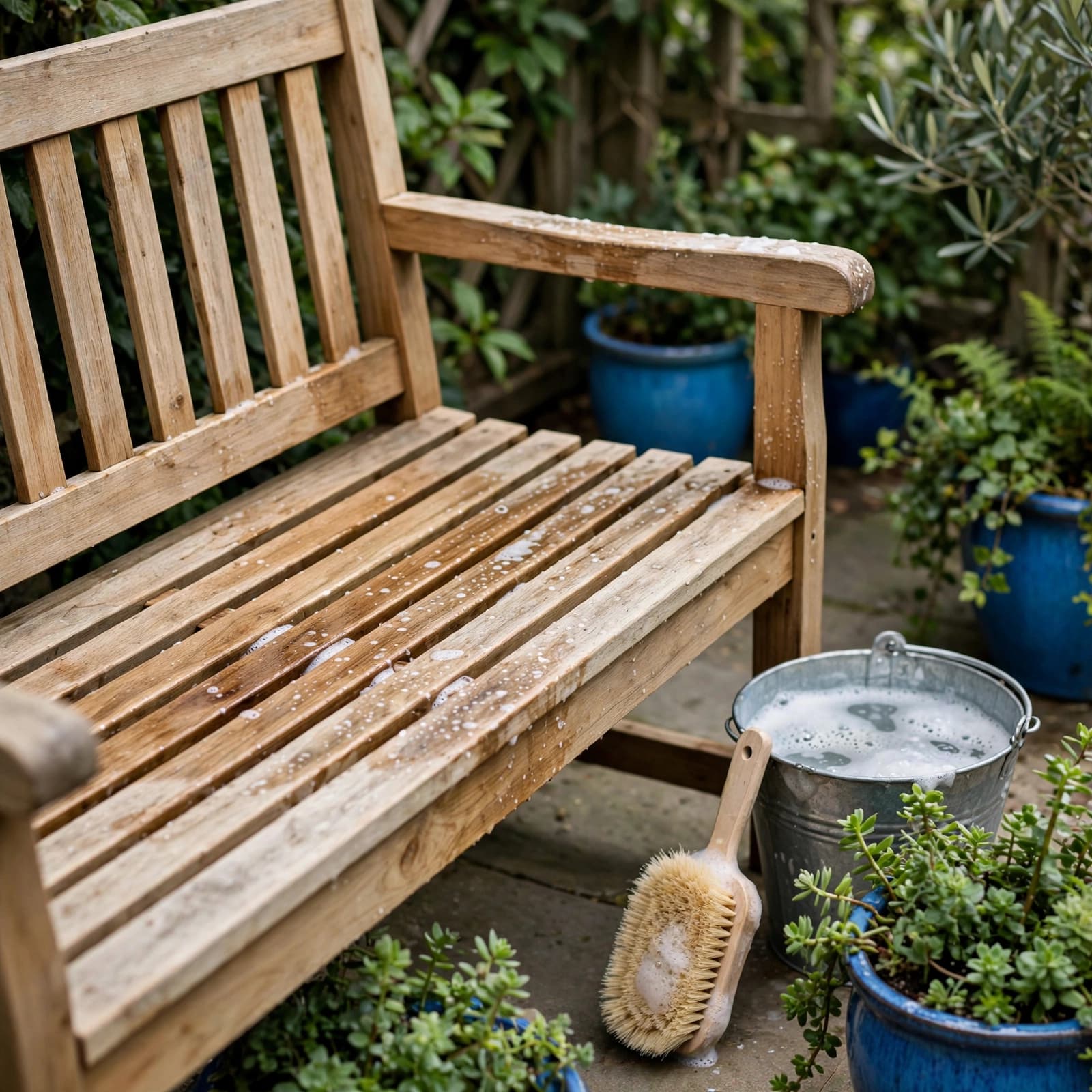
Follow the maker’s instructions first, since a factory-applied coating may need different care from bare or oiled timber. Brush away leaves and grit with a soft brush. For routine cleaning, use mild soapy water and avoid soaking the bench; then let it dry thoroughly.
Wood preservative may suit some timber, while Teak oil is suitable for others. Use either only if it matches the wood and its existing finish. Oiling over a coating that cannot absorb it won’t provide the intended protection. If the bench develops a rough patch, check the care guidance before sanding, as that may affect the finish or warranty.
During prolonged poor weather, sheltered storage or a breathable, well-fitted cover can reduce exposure to British weather. Avoid trapping moisture beneath a cover, and check the bench periodically rather than leaving it wrapped and forgotten. Inspect fixings for movement and keep the feet clear of wet leaves. Small checks are easier than dealing with a loose joint after months outdoors.
Frequently Asked Questions
Can a wooden garden bench stay outside all year?
Some can, but the answer depends on the timber, finish, local exposure and maker’s care advice. A bench in an open, wet position faces more weathering than one under shelter. A suitable breathable cover or sheltered storage can help, provided moisture doesn’t remain trapped against the wood.
Which wood needs the least maintenance?
Naturally durable hardwoods such as teak often need less frequent protective treatment than untreated softwood. If choosing acacia, verify that the specific product is labelled FSC-certified acacia. Treated softwood may need more regular care. Use wood preservative only if the maker’s instructions and the bench’s finish allow it. However, no outdoor timber is maintenance-free: dirt still needs cleaning, fixings need checking and surfaces change in the weather.
Do I need to treat a new wooden bench?
Check the product description and care instructions before opening a tin of oil or preservative. A new bench may arrive pre-treated or finished with a coating that needs no immediate application. An unsuitable product can spoil the appearance or interfere with that finish.
Are wooden benches comfortable without cushions?
They can be, particularly when the seat has enough depth, smooth edges and a backrest at a comfortable angle. Photos can’t tell you how a bench fits your body, so check the dimensions and look for detailed feedback about seating comfort. Outdoor cushions add softness, but keep them dry when practical.
Is a Wooden Bench Right for You?
A wooden garden bench is a good choice if you value natural grain, want a seat that suits your planting and are happy to follow basic care instructions. Choose resin or plastic garden furniture instead if minimal upkeep matters more than timber’s feel and appearance.
For any model, including an Alexander Rose Broadfield, compare its dimensions, construction, finish and stated capacity. Add delivery and likely care costs to the price. The right bench is the one you’ll enjoy using and can maintain comfortably, not simply the one that looks best in a photograph.