Verdict: this type of outdoor seating earns an 8/10 for durable, design-led seating, provided you choose the right material, finish, comfort level and location.
A metal garden bench can suit a British garden, patio, hallway, dining area or commercial entrance better than a bulky sofa or short-lived plastic seat. However, the wrong finish can rust, a poor frame can wobble, and an attractive design may still be uncomfortable after 15 minutes.
This guide covers materials, construction, sizing, prices, comfort, care, online ordering and alternatives, so you can buy with confidence rather than relying on photographs alone.
Key Takeaways
- Steel offers strength and stability, while aluminium is lighter and more naturally rust-resistant.
- Check dimensions, delivery access and stated load capacity before ordering a large metal bench.
- Powder coating or galvanising can provide a weather resistant finish for wet UK conditions. Repair chips promptly.
- Metal is low maintenance and easy to clean, while comfort comes from seat depth, back support, armrests and removable cushions.
- Compare warranty, delivery, returns and assembly requirements, not only the displayed price.
What Makes a Metal Garden Bench a Good Choice?
A metal garden bench works where you need strong, easy-clean seating that doesn’t overwhelm the space. It can handle muddy boots in an entrance hall, regular use beside a dining table, or changing weather as a patio bench. Metal outdoor furniture also suits public spaces, from a heavy duty park bench to commercial entrances.
Compared with timber, metal doesn’t need routine staining. It’s also more substantial than most plastic seating and less vulnerable to spills than an upholstered bench. Yet it has trade-offs. Metal can feel cold, heavy models are difficult to move, and neglected coatings can eventually fail.
Pros and cons at a glance:
- Strong frames can last for years when the finish receives basic care.
- Slim legs and open slats make metal seating useful in smaller spaces.
- Dirt usually wipes away with mild soapy water and a soft cloth.
- Bare metal can become hot in direct sun and cold during winter.
- Steel and iron need protection against scratches, standing water and rust.
The Main Types of Metal Seating for Indoor and Outdoor Use
Steel is widely used because it’s strong and stable. Galvanised steel has an added zinc layer, while painted finishes add colour and protection. Both can work outdoors, although chipped areas need attention.
Aluminium, including cast aluminium, is lighter and naturally more resistant to corrosion, making it practical for balconies and furniture that moves often. A compact 2 seater garden option can be particularly easy to reposition. Stainless steel suits sleek modern interiors and sheltered patios, but it usually costs more. Wrought iron and cast iron bring decorative weight and traditional character, though both demand more upkeep.
No coating removes the need for care in rainy UK conditions. Quality paint, galvanising and other finishes slow deterioration, but trapped moisture still causes problems.
Where This Seating Works Best in the Home and Garden
A garden bench in a narrow hallway gives you a practical place to put on shoes without blocking the route through the house. Felt pads or rubber feet protect timber, tile and laminate flooring.
On an outdoor patio, place the bench on level paving, decking or firm ground. A balcony model should be compact, light enough to handle safely and suited to the building’s rules. Decorative ironwork suits cottage-style planting, with an antique style, rose style or lattice design, while a plain black metal or brushed-metal frame fits contemporary gardens. It can also sit naturally within a wider garden furniture scheme.
Metal Bench Materials, Styles and Construction Explained
Build quality is visible long before the bench reaches the end of its life. A good steel frame sits square on the ground, feels rigid under pressure and has a finish that reaches corners and joints. By contrast, sharp edges, uneven welds, loose bolts, thin tubing and flaking paint point to rushed construction.
Steel, Aluminium and Wrought Iron: Which Material Suits You?
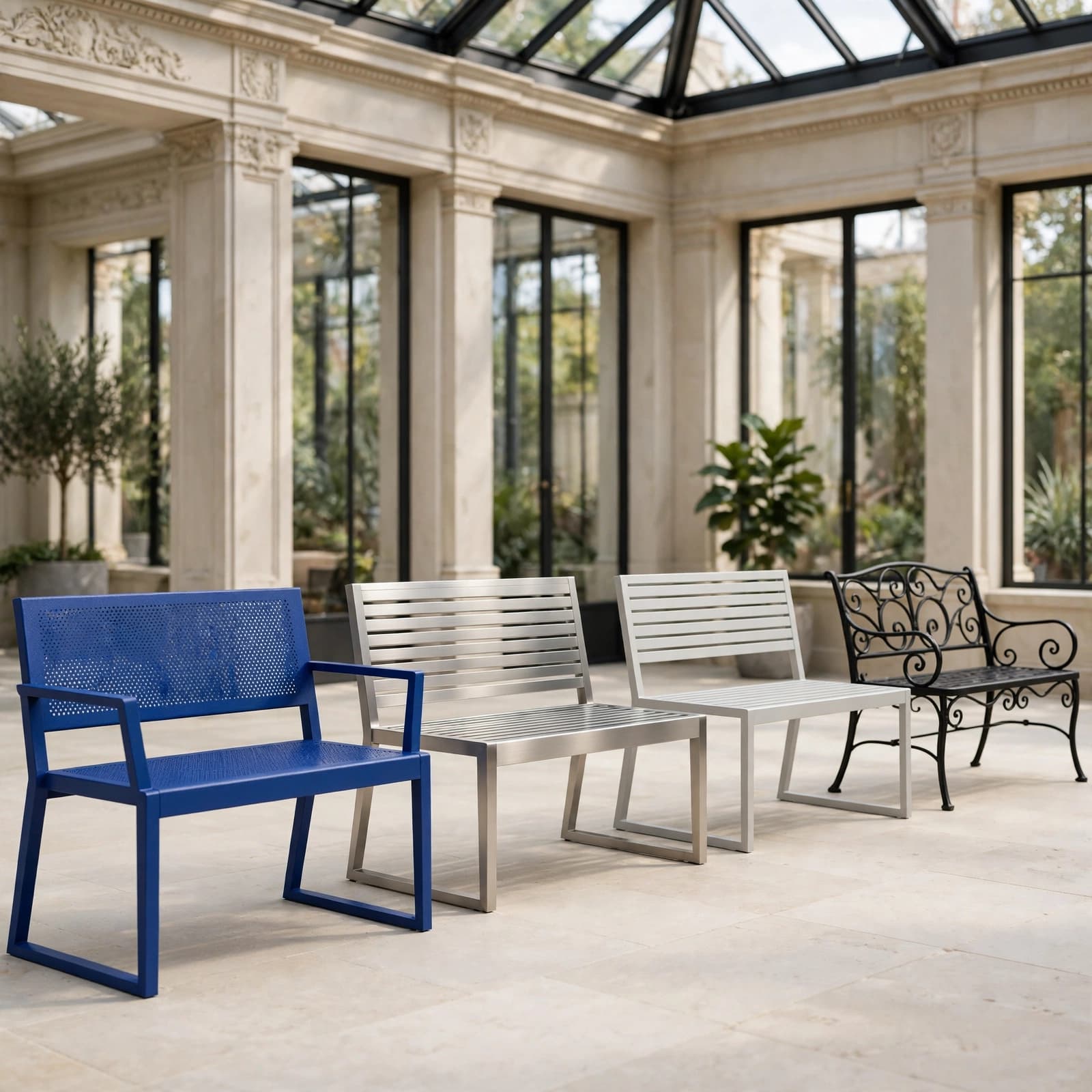
Choose steel when stability matters most. It has reassuring weight and can support a robust dining or garden bench, but it needs a reliable finish. Aluminium is the sensible option when lifting and repositioning are regular tasks, although a lightweight bench may shift in exposed wind.
Cast iron suits traditional settings where substantial weight and ornate detailing matter. Wrought iron works well in period homes and formal gardens, as its curves and scrolls feel established rather than fashionable. An antique style or rose style can reinforce that character, though both materials may need more care.
Stainless steel resists corrosion well and looks crisp in modern spaces, but fingerprints and water marks show easily on polished surfaces.
How the Frame, Seat and Finish Affect Quality
Look for legs that spread the load evenly, along with cross-bracing or a central support on longer benches. Inspect photographs for neat, continuous welds rather than rough blobs or visible gaps. Bolts and screws should sit flush and tighten securely.
Seat slats need even spacing for drainage. Mesh can drain well too, though it may feel less comfortable without a cushion. A powder coated surface should be smooth and fully covered, with no bare metal at joints. Rounded edges, capped feet and drainage gaps are small details that usually signal better design.
Comfort Features That Make a Hard Seat More Usable
For occasional seating, a flat seat may be enough. Longer meals, reading sessions or waiting areas need more thought. Check seat depth, height, back angle and whether a backrest supports comfortable sitting.
Traditional designs may feature a decorative backrest, while armrests can make sitting down and standing up easier. Curved slats reduce pressure points. Removable cushions add warmth and soften the frame, especially in spring and autumn. Choose water-resistant, breathable covers for use outdoors, and check that they’re easy to remove before rain or winter storage.
A thick cushion cannot correct an awkward seat height or a frame that rocks on the ground.
How to Choose a Metal Garden Bench for Your Home or Garden
Start with the job the bench must do. A 2 seater garden bench has different demands from a slim seat for an outdoor patio or a decorative garden focal point. Consider weather exposure, maintenance time, colour, seating frequency and budget before comparing designs.
Measure the Space, Seat Size and Access Route
Measure overall width, height and depth, then leave room behind the bench for movement. Indoors, it should not obstruct doors, radiators, cupboards or main routes. Outdoors, keep paths and gates clear.
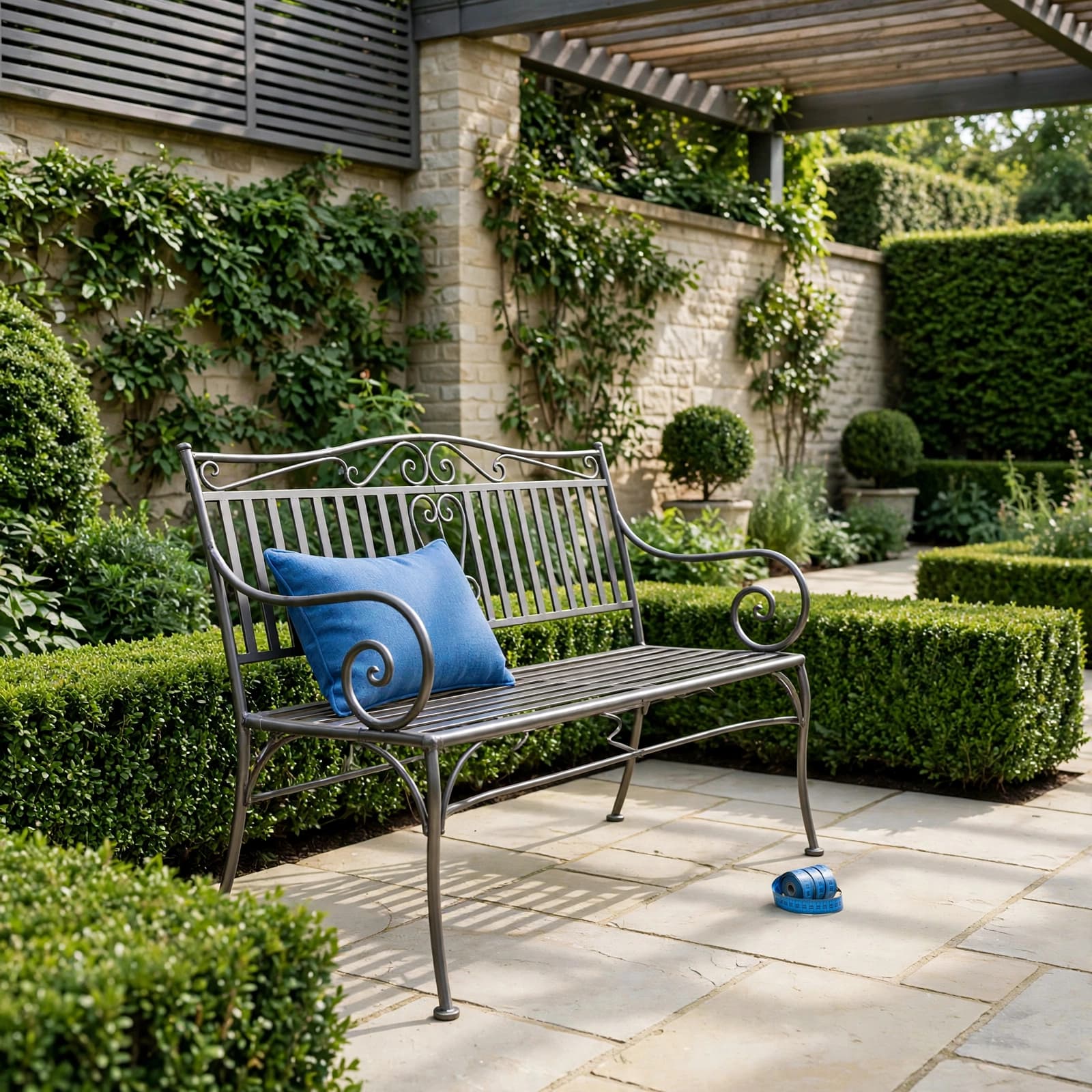
Also measure the route to the final position. Check packaging dimensions against doorways, stair turns and lift access. A heavy iron bench may fit the garden perfectly but still be difficult to carry through a narrow side passage.
Choose a Finish That Can Handle UK Weather
An exposed garden needs a weather resistant finish with strong corrosion protection. Rain, frost, shade and fallen leaves leave water on joints, while coastal air and poolside locations add more corrosive conditions.
Powder coated or galvanised steel is usually the better choice for exposed use. Metal outdoor furniture still benefits from drying after prolonged wet weather, when practical. A breathable cover or sheltered storage can extend its life, but avoid covers that hold dampness against the surface.
Match the Design to Your Room or Garden
Minimalist designs with square frames suit contemporary kitchens and paved terraces. Industrial styles pair dark metal with timber slats, while traditional wrought iron works beside brick, gravel and established planting. Farmhouse-inspired designs often soften metal with a painted finish or shaped backrest.
Colour changes the effect. Black metal and charcoal finishes are forgiving, while bright powder-coated colours make the seat a feature. Pick a design that works with existing garden furniture and materials, rather than a colour that quickly feels dated.
Set a Realistic Budget and Check the Total Cost
Price reflects material, size, finish, craftsmanship, cushions and frame complexity. Delivery, assembly and return charges can alter the final cost sharply, especially for heavy furniture.
Compare warranty length, spare-part availability and assembly instructions before deciding. The cheapest option can become poor value if it wobbles, rusts early or needs replacing after a few seasons. Check the stated maximum load too, and leave a sensible safety margin rather than treating it as a target.
Buying a Metal Bench Online, Comparing Value and Avoiding Mistakes
Buying online gives you a wider range of sizes, finishes and styles. You can compare a metal garden bench with similar options, while studying customer photographs and specifications at your own pace.
The risks are equally clear. Product images may hide narrow seats, thin frames or awkward proportions. Delivery damage and difficult returns can also erase an apparent saving.
What to Check Before You Place an Online Order
Confirm the material, full dimensions, product weight, maximum load, finish and assembly status. For metal outdoor furniture, check whether cushions are included and whether their fabric suits exposed use.
Verify that the finish is weather resistant if the bench will remain outside. Check whether replacement covers are available, too.
Look for close-up images of welds, feet and joints. Read feedback that mentions stability, rust, comfort and real measurements rather than relying on star ratings alone. Keep all packaging until you’ve inspected the bench and confirmed that every part is present.
How Metal Benches Compare with Other Seating Options
Timber feels warmer and more natural, although it may need oiling, staining or repainting. Plastic is light and easy to clean, but it can look less substantial and may fade. Rattan-style seating can be comfortable, yet natural rattan isn’t suitable for exposed weather.
Upholstered benches work well in bedrooms, dining rooms and hallways, where softness matters more than wipe-clean practicality. This option is the stronger all-round choice for hard-working indoor spaces and gardens.
Simple Care That Helps a Metal Bench Last Longer
Wash off dirt with mild soapy water, then dry the frame thoroughly. Inspect feet, bolts, welds and water-trapping corners several times a year. Tighten loose fixings before they wear larger holes in the frame.
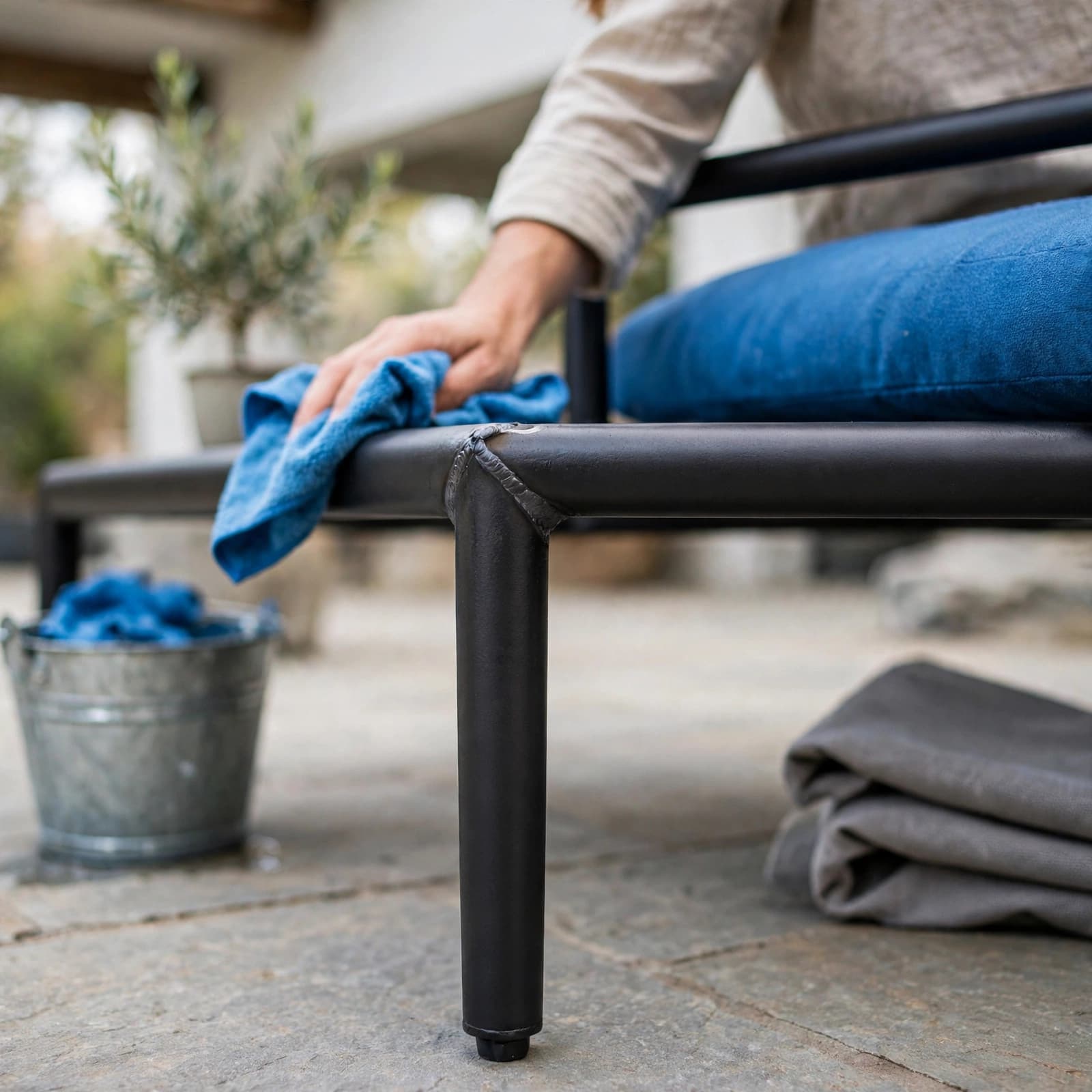
Treat paint chips promptly with a touch-up product suited to the finish. Avoid harsh abrasives, as they can scratch protective coatings. Protective covers help during long wet spells, provided air can circulate and moisture cannot sit beneath them.
Frequently Asked Questions
Will a metal bench rust outside?
Rust risk depends on the metal, coating, weather exposure and maintenance. Powder-coated or galvanised steel resists rust better than untreated steel, but scratches and exposed joints still need quick attention. Aluminium does not rust in the same way, although its surface can still dull or corrode.
Are metal benches comfortable for long periods?
Comfort depends on the seat shape, back support, temperature and cushioning. A removable padded cushion makes a major difference for meals or relaxed garden sitting. For outdoor use, choose breathable, water-resistant fabric and bring cushions inside when wet weather is expected.
How much weight can a metal bench hold?
Use the manufacturer’s stated load limit, then check whether it applies to the whole bench or each seating position. A central support, strong cross-bracing and level placement all affect safe use. Never assume a heavy-looking frame has a high weight rating.
Can a metal bench be left outside in winter?
Many outdoor benches can remain outside if they have a suitable finish and receive regular checks. A sheltered position, breathable cover or dry storage reduces weather wear. Remove cushions and avoid trapping moisture beneath a tightly fitted cover.
Final Verdict: Is a Metal Bench Worth Buying?
A well-built metal garden bench is worth buying for its strength, clean lines and long-term practicality. Steel and iron reward regular care with stability and character, while aluminium suits buyers who need lighter furniture and stronger natural corrosion resistance.
Buy it if:
- You want robust, easy-clean seating for a garden, hall, dining area or entrance.
- You will check dimensions, finish, load rating and delivery terms before ordering.
Skip it if:
- You need soft upholstery, furniture that’s effortless to move or zero maintenance.
- You can’t provide basic cleaning and prompt repairs to damaged coatings.
The best value comes from choosing the right material and finish for the location, then protecting it from avoidable wear.