Quick verdict: Choose a ring that suits her taste and daily life at a price you can afford; a secure setting matters more than a perfect-looking specification sheet.
The right ring balances personal style, comfort and budget. When you’re choosing an engagement ring for a woman for a marriage proposal, it’s easy to focus on the biggest diamond and overlook details she’ll feel every day, such as a raised setting or a band that catches on gloves.
This UK-focused guide covers styles, stones, fit, value and safer online shopping. Start with how she likes to wear jewellery, then use the specifications to narrow your choices.
Key Takeaways
- Choose a style she would enjoy wearing on an ordinary day, paying attention to setting height and band width.
- Compare diamond cut, visible appearance and stone measurements, not carat weight alone.
- Check metal fineness, hallmarking, gemstone disclosures and any grading report before judging value.
- Confirm sizing and resizing limits, especially for pavé or intricate bands.
- Online shopping offers more choice and easier comparisons, but delivery, returns and refund terms need checking before payment.
Engagement Rings for Women: Styles, Stones and Settings
A ring can look delicate in a photograph yet feel bulky between the fingers. Before choosing among engagement ring styles, picture it alongside her usual clothes, other jewellery and the things she does with her hands.
Choose a ring style that suits her everyday life
A solitaire engagement ring puts one centre stone in focus and usually pairs easily with a wedding band. Halo engagement rings surround the centre stone with smaller gems, adding sparkle and visual size. Three-stone rings offer a broader look, whilst pavé bands carry small stones along the shoulders.
A vintage engagement ring may add milgrain edges or engraved detail. These features can be lovely, but inspect their finish. A slim band looks light, whilst an extremely thin one may offer less room for future polishing or resizing. Likewise, a high setting admits light but can catch on jumpers, gloves or hair. A lower profile often feels easier for daily wear.
Compare diamond shapes and alternative gemstones
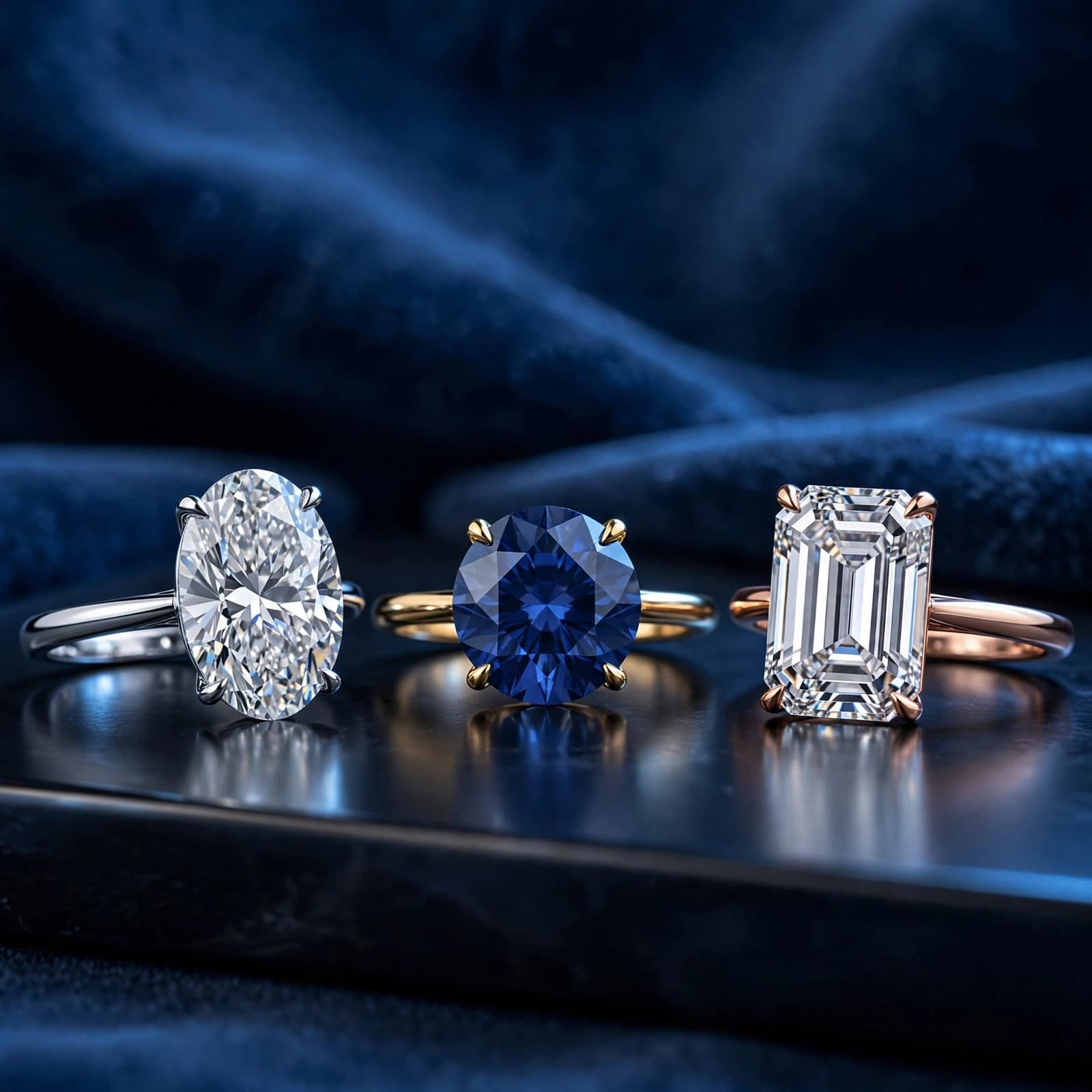
The diamond shape affects its outline: round brilliant diamonds have a familiar, lively sparkle, whilst oval shaped diamonds can look longer on the finger. A princess cut diamond has crisp corners, and pear shaped engagement rings have a distinctive tapered outline. Emerald cuts show broad flashes of light through their stepped facets. Shape and cut quality are different: shape describes the outline, whilst cut quality describes how well a diamond’s proportions and finish handle light.
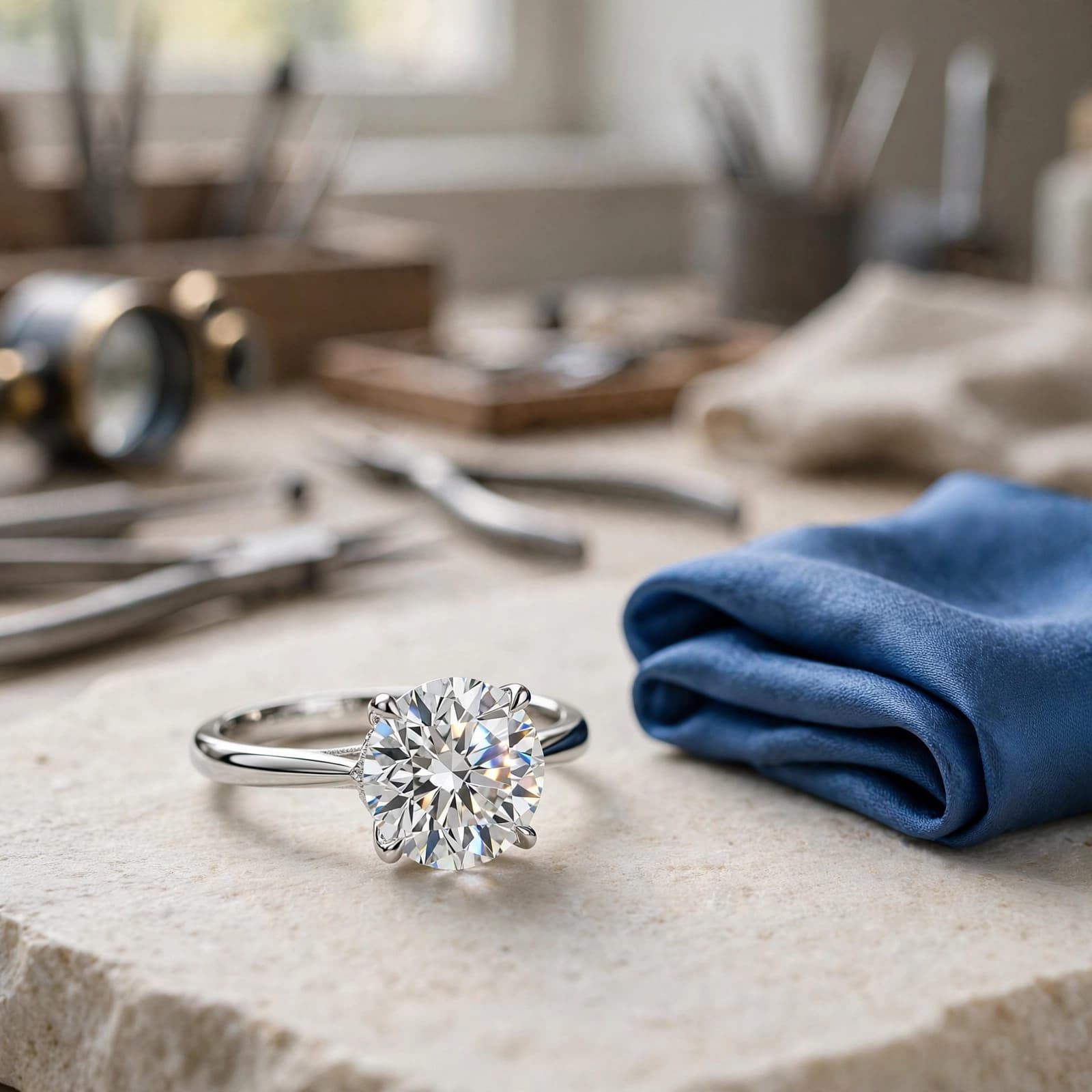
A blue or pink sapphire gives you colour and is hard enough for regular wear, though any gem can chip after a knock. Emeralds and opals need more care. Lab-grown diamonds have the same basic material properties as natural diamonds and generally cost less for comparable specifications. Their origin, rather than their appearance alone, is the difference to check on the listing.
Match the setting and metal to the way the ring will be worn
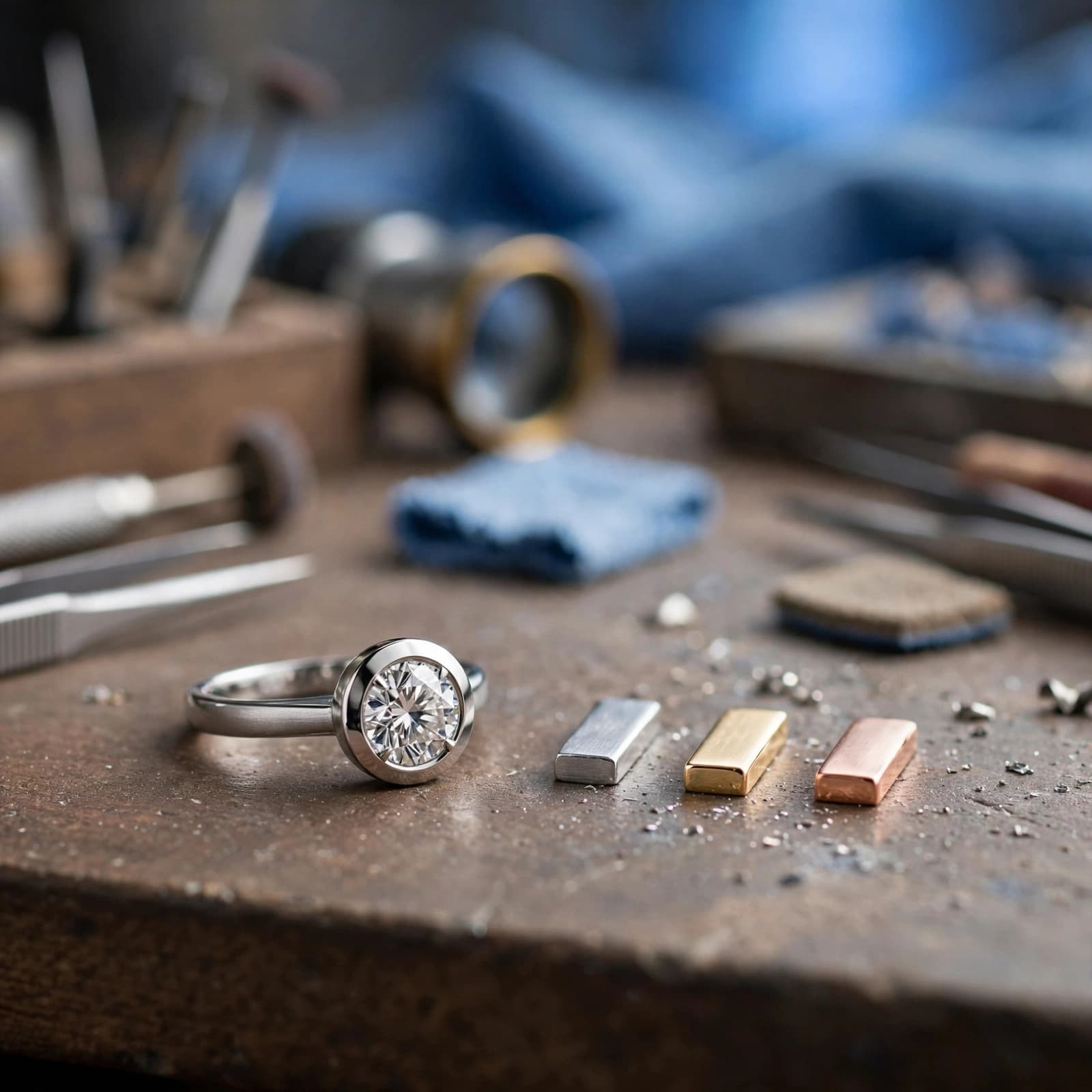
Claws leave more of a stone exposed but need checking for wear. A bezel wraps metal around its edge, giving a smooth outline. Halos and pavé detail add sparkle, along with more small settings to inspect over time.
Platinum rings feel substantial and develop a soft patina. Gold comes in yellow gold, white gold and rose gold tones: 9ct gold contains 37.5% gold, whilst 18ct contains 75%. Depending on the alloy, 9ct can resist marks well; 18ct often has a richer colour. White gold’s bright rhodium finish may need periodic re-plating.
How to Choose the Right Diamond, Gemstone and Budget
The most expensive specification isn’t automatically the best choice. Look at the complete ring: stone appearance, secure construction and the quality of the finishing all affect what you receive for your money.
Use the four Cs to compare diamonds sensibly
The four Cs, sometimes called the 5Cs when certification is included, are cut, colour, clarity and carat. Diamond cut has a strong effect on sparkle. Diamond colour describes how colourless or tinted a white diamond appears, whilst diamond clarity records internal and surface features. Diamond carat measures weight, not the stone’s visible width.
A small clarity difference can be difficult to spot without magnification, so don’t pay for a higher grade without comparing what you can see. Two diamonds of equal carat weight may face up at different sizes, as diamond shape also affects appearance. When comparing diamond engagement rings, view stones in person where possible. Online, ask for clear magnified images, millimetre measurements and an independent grading report for a significant centre diamond.
Set a realistic price range and decide what matters most
Set a comfortable total budget before browsing engagement rings for women. Include any resizing, insured delivery or later maintenance costs. Then decide whether she would value visible size, strong sparkle, a particular metal or an unusual design most.
Natural and lab-grown diamonds provide different routes through the same budget. A smaller natural diamond and a larger lab-grown one may appeal for different reasons. Price also reflects workmanship and brand positioning, so inspect the band’s thickness, symmetry and finish rather than using stone grades as your only measure.
Check durability, documentation and UK hallmarking
For diamonds, read the grading report and make sure it describes the stone offered. With coloured gems, ask whether treatments have been disclosed; a treated sapphire may differ in value from an untreated one. Check the warranty, repairs and resizing policy too.
A UK hallmark identifies the fineness of qualifying precious metals, such as white gold or yellow gold. It doesn’t grade a diamond or guarantee good workmanship. A grading report covers the assessed stone, whilst the hallmark concerns the metal.
What Are You Paying Extra For?
Two rings can share a centre-stone weight and still look and wear differently. The difference may lie in how the stone is set, the finish on white gold and details photographs rarely show.
Look closely at construction
Check that the centre stone sits straight, the claws look even and the inner band feels smooth. In a three-stone or halo design, smaller stones should look consistent in colour and placement. Raised or rough edges can catch fabric, whilst an awkwardly balanced head may turn on the finger.
These details matter long after the proposal. A good ring should feel comfortable through a normal day, not merely look impressive under display lighting. If you can try it on, notice whether neighbouring fingers rub against the setting. Check how the band sits beside eternity rings or other jewellery she already wears.
Weigh the advantages and compromises
There are fair reasons to choose either a simple ring or a more elaborate one:
- A solitaire engagement ring makes the centre stone easy to assess and usually offers a restrained, lasting look.
- A halo or cluster engagement rings can create more visual presence without relying on one larger centre stone.
- Extra small stones introduce more settings that may need attention after knocks.
- A very high setting can look striking but may be less convenient with sleeves and gloves.
Pay more for features she will notice and enjoy. A larger number on a report is poor value if the finished ring feels uncomfortable.
Get the Fit Right and Shop Online with Confidence
Online browsing lets you compare more shapes, band widths and price points than a single display case usually holds. That wider choice is useful, provided the listing gives you enough detail to judge the actual ring.
Find her ring size without spoiling the surprise
If you borrow a ring, use one she wears on the correct finger and hand. A trusted friend or family member may be able to help discreetly. A ring worn on another finger offers only a rough guide.
Fingers change size with temperature and through the day. Band width matters too: a broad band often feels tighter than a narrow one in the same nominal size. Ask which sizes the design can accommodate before ordering. Full pavé bands and intricate settings may leave little room for adjustment.
Assess online listings, images and customer protections
Read beyond the main photograph. Confirm the metal’s stated fineness, stone origin, centre-stone measurements and whether the carat figure refers to one gem or all the gems combined. Look for close-ups from several angles and inspect any grading information.
Before paying, check how delivery is secured, when the return window begins, what condition a returned ring must be in and whether resizing affects a refund. A bespoke engagement ring or one ordered through a custom design service may have different return terms, so check the policy before ordering. Independent reviews, clear contact details and saved order records provide useful safeguards if something arrives incorrectly.
Compare like for like before placing an order
Headline prices mean little unless the specifications match. Compare individual stone details, total carat weight and included services. Check whether the metal is white gold or yellow gold, its fineness and the setting construction. One listing may feature a sizeable centre stone; another may reach the same total weight through many tiny stones.
Online selection can reveal styles and budgets you hadn’t considered. You can still use that research to guide an in-person purchase, particularly if seeing the stone in ordinary light or trying on different band widths would settle the decision.
Keep the Ring Looking and Feeling Right
Daily care matters more than a promise that any metal or gemstone is maintenance-free. Even a hard diamond can loosen if its setting takes a knock.
Inspect the setting and clean with care
Check occasionally for a lifting claw, a moving stone or an edge that begins catching on clothing. If something feels loose, stop wearing the ring until a jeweller examines it. This is especially important for halos and pavé bands, where small stones can be harder to notice.
For many diamond rings, warm water, mild soap and a soft brush remove hand cream and everyday residue. Check appropriate care advice first for treated gems, delicate coloured stones and older jewellery. Store the ring separately so harder stones don’t scratch other pieces.
Allow for changes over time
A polished surface will pick up marks, and platinum’s patina looks different from a fresh mirror finish. White gold may lose some of its bright plated appearance between treatments. Neither change means the ring was a poor purchase.
Ask what future checks, polishing or re-plating cost and whether another jeweller can work on the design. A distinctive setting is easier to enjoy when its upkeep is clear from the start.
Frequently Asked Questions
Is a lab-grown diamond a real diamond?
Yes. Lab grown diamonds have the same basic material properties as a natural diamond, and aren’t simulants such as cubic zirconia. Origin, price and resale expectations can differ, so check that the listing states clearly which type you’re buying.
Which metal is best for an engagement ring worn every day?
The right choice depends on budget, preferred colour, skin sensitivity and willingness to maintain the finish. Platinum is dense and naturally white, whilst gold offers colour choices such as yellow gold and rose gold at different purities. White gold may have a rhodium finish that needs renewing. If skin sensitivity is a concern, ask for the exact alloy composition rather than relying on the metal’s colour.
Can an engagement ring be resized later?
Many can, but the setting and decoration determine how far a jeweller can alter the band. Stones running right around it, engraving and unusual shapes may restrict the options. Confirm the possible size range, cost and likely effect on the finish before buying.
Should an engagement ring match a wedding band?
Matching is optional. A shaped band may sit flush against a raised or unusually shaped setting, whilst a straight band might leave a small gap. Some people like that space or prefer contrasting metals, such as white gold and yellow gold, so trying the two rings together is the simplest test.
Choose the Ring She’ll Want to Wear
The right ring won’t follow a single spending rule. It should suit her taste, including any preference for white gold, and sit comfortably on her hand. Its stones and metal should be clearly specified. Good value means paying for qualities she can appreciate, backed by a setting made for regular wear.
Buy when the size, specifications, documentation and purchase terms are clear. If any of those remain uncertain, keep looking before you order.

Some popular links that may be of interest
–
Compare Prices Website Home Page