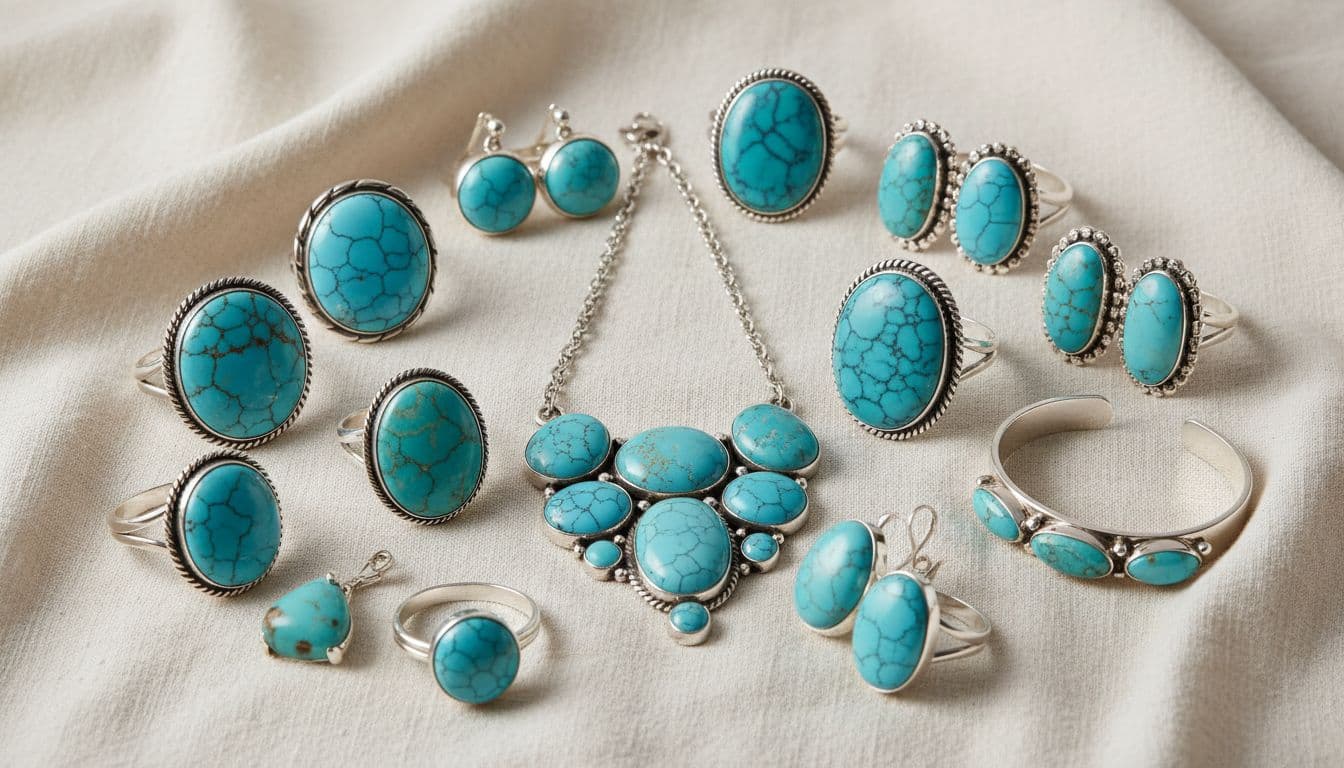
Mixed turquoise rings, necklaces, earrings, and bracelets in silver. Image created with AI.
There is something about turquoise jewellery that always catches the eye. The mix of blue and green, like sea and sky together, feels fresh but also classic.
Turquoise is a semi-precious gemstone that has been worn for thousands of years. Today, it still appeals to UK shoppers who want colour, character, and something a bit different from diamonds and plain gold.
This guide walks you through what turquoise is, the main types of jewellery you can buy, how quality and price work, how to spot fake pieces, and simple care tips so your favourite turquoise lasts for years.
What Is Turquoise Jewellery and Why Do People Love It?
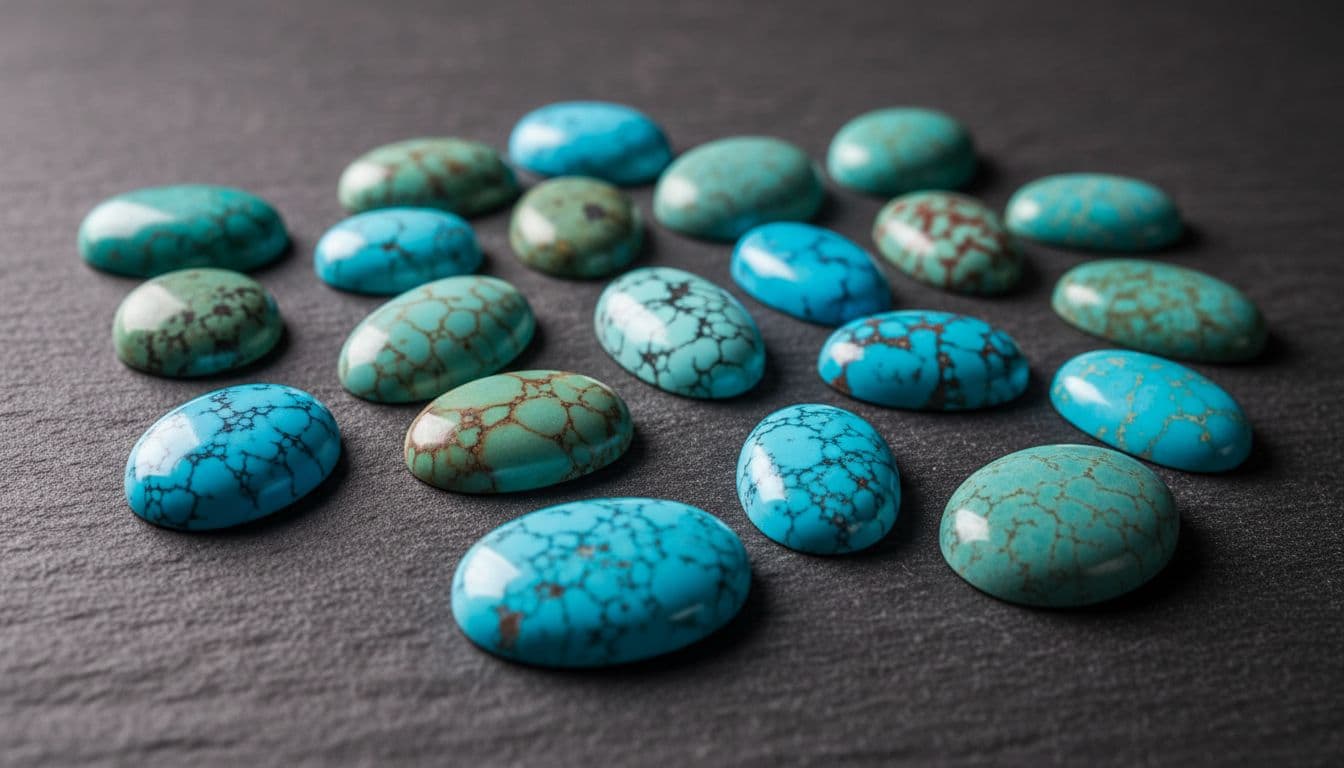
Natural turquoise stones with different colours and matrix patterns. Image created with AI.
Turquoise is a copper-rich mineral that forms in dry, rocky regions. In jewellery, it is usually cut as smooth cabochons or beads, then set into rings, necklaces, earrings, and bracelets.
Its colour ranges from bright sky blue to green-blue and deeper teal. Many stones show dark veins, called matrix, which are bits of the rock that formed around the gem. This mix gives turquoise a natural, earthy look that feels warm and relaxed.
The unique look and meaning of turquoise
Every piece of turquoise is slightly different. Some stones are a clear, even blue. Others have bold brown or black lines that look like a tiny map or spiderweb.
People often link turquoise with calm, courage, and protection. Plenty of buyers simply like how it looks, but enjoy the extra idea that it might bring good vibes or confidence.
A short history of turquoise in jewellery
Turquoise has a long history. Ancient cultures used it in amulets and royal jewellery. It appears in burial masks, crowns, and ceremonial pieces.
In more recent times it became popular in silver jewellery and boho style designs. Because it has been used for so long, turquoise feels both traditional and modern, which helps it stay timeless today.
Types of Turquoise Jewellery You Can Buy
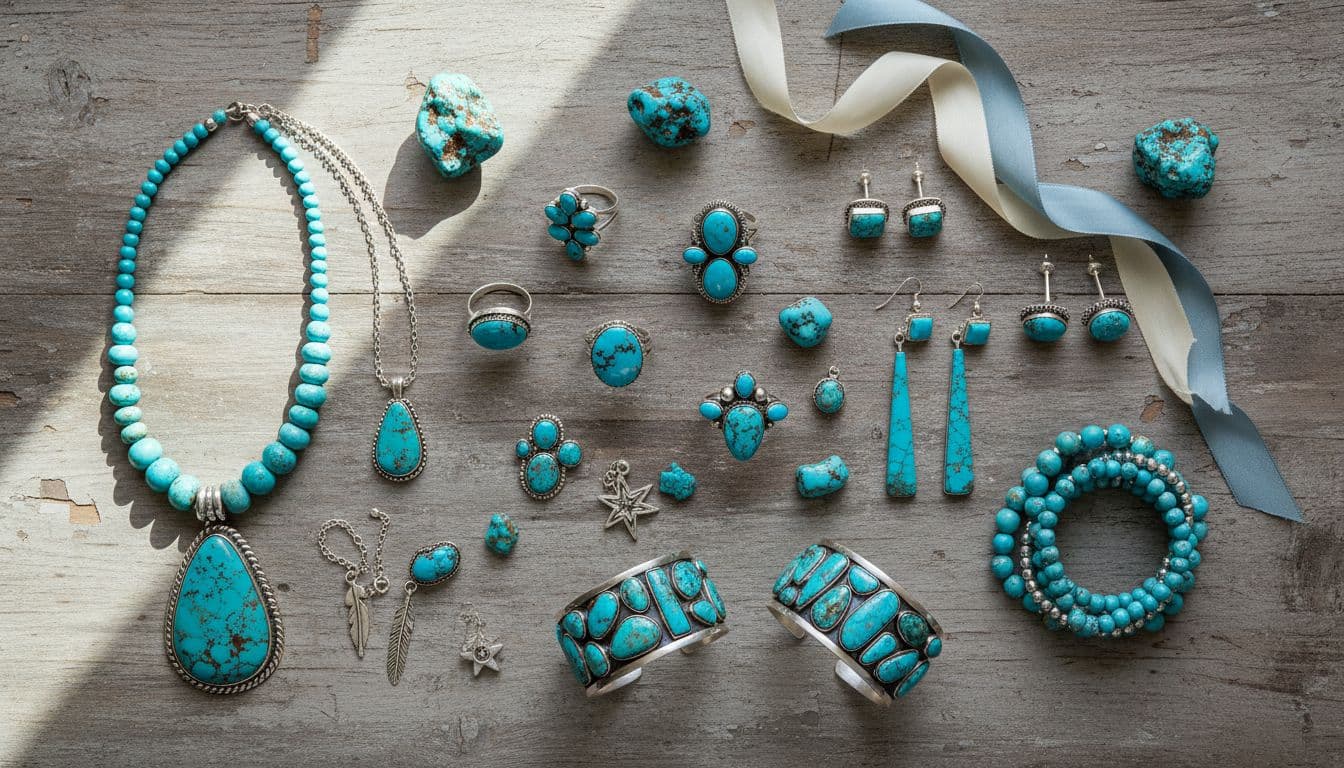
Rings, necklaces, earrings, and bangles with turquoise stones. Image created with AI.
Turquoise works well for both relaxed weekends and smarter looks. Here are the main styles you will see when shopping in the UK.
Turquoise rings for everyday and special occasions
Turquoise rings come as simple single-stone designs, clusters of small stones, or big statement pieces. Many are set in sterling silver, some in gold-tone metal, and some in solid gold.
For daily wear, a low, smooth stone is usually more comfortable and less likely to catch. Large raised stones look amazing for nights out, but they can chip more easily if you knock them on hard surfaces.
Turquoise necklaces and pendants that stand out
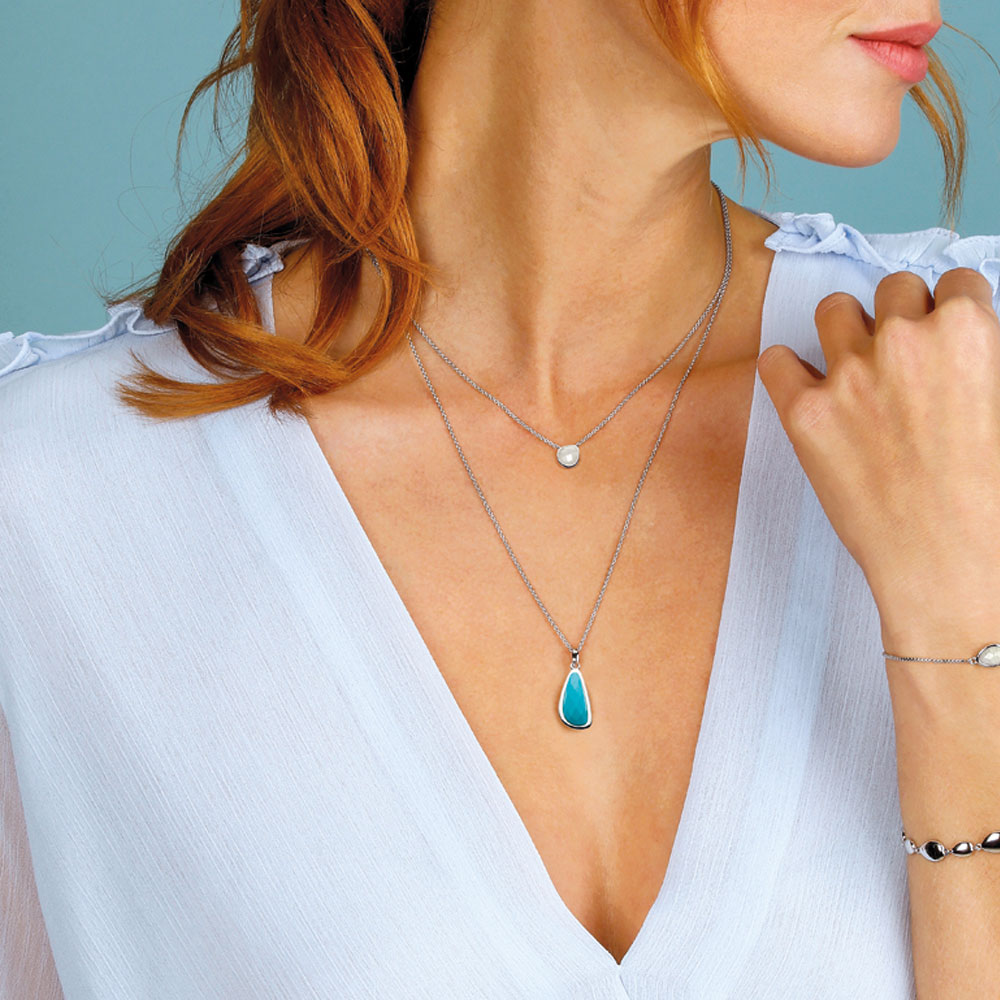
You will find tiny turquoise pendants on fine chains, chunky statement necklaces, and multi-strand bead designs. A small pendant on a short chain suits work and casual outfits.
Longer chains and bigger stones suit open necklines or simple tops. Necklaces are less likely to hit door frames or worktops, so they can be a safer way to enjoy larger pieces of turquoise.
Turquoise earrings for subtle colour or bold style
Turquoise earrings range from tiny studs to big hoops and long dangles. Studs and small drops work well for the office or school runs. They add colour without feeling loud.
Larger dangle styles or bold hoops look great for holidays or evenings out. Because ears do not usually hit many hard surfaces, earrings are a good pick if you worry about scratching softer stones.
Turquoise bracelets and bangles for relaxed style
Bracelets and bangles give a laid-back, summer feel. You will see elastic bead bracelets, silver cuffs with inlaid stones, and charm-style chains with small turquoise accents.
Wrists meet keyboards, pans, steering wheels, and gym gear. If you do a lot with your hands, choose lower-profile stones or save delicate inlay cuffs for quieter days and evenings.
How to Judge Turquoise Quality, Authenticity, and Price
Quality turquoise can last for years, but the market includes many treatments and imitations. A few simple checks help you buy with confidence.
Natural, stabilised, and reconstituted turquoise explained
Natural turquoise is cut and polished with little treatment. It can be softer and more porous, so it often appears in higher priced pieces.
Stabilised turquoise has resin added to fill tiny gaps and make it tougher. It is common in everyday jewellery and can still be very attractive.
Reconstituted or composite turquoise is made from small chips and powder mixed with resin. It is usually the cheapest and can look very uniform. This is fine for fun fashion pieces, as long as it is clearly labelled.
Colour, matrix, and polish: what to look for in the stone
Good turquoise looks rich, not dull or chalky. Some people like even colour, others love strong matrix lines. Both can be high quality.
Check that the polish is smooth, with no obvious pits or rough scratches. A neat, waxy shine is a good sign, as long as it does not look like plastic.
Simple checks to help spot fake or imitation turquoise
Many low cost pieces use dyed stones such as howlite. Look for colour that seems too perfect, with no variety or depth. If every bead has the same pattern, it may be printed, not natural.
If a piece is expensive, read the description carefully. Words like “dyed stone” or “howlite” mean it is not real turquoise, even if the colour is close.
How metal type and craftsmanship affect value
Sterling silver, gold, and good quality gold-plated metals cost more than base metal. In the UK, look for hallmarks on silver and gold.
Also check the build. Claws should sit flat and smooth, clasps should feel solid, and the back of the setting should not scratch your skin. Good metal and tidy work help the piece feel comfortable and last longer.
Setting a realistic budget for turquoise jewellery
Price usually rises with stone size, quality of the turquoise, and the metal used. Handmade details and unique designs also add cost.
Instead of hunting for the very cheapest item, think about value. A smaller stone in solid silver, that you wear weekly, often beats a huge, poor quality chunk you never reach for.
How to Choose Turquoise Jewellery That Suits Your Style

A UK woman styling turquoise pieces with a simple white blouse. Image created with AI.
The best piece is the one you actually wear. A minute of planning helps.
Matching turquoise shades to skin tone and wardrobe
Bright blue turquoise pops against black, white, grey, and denim. Green-blue shades sit nicely with browns, creams, and other earth tones.
Cooler skin tones often like clearer blue stones, while warmer tones may enjoy greener hues. There are no strict rules though; hold a piece near your most worn top and see how it feels.
Choosing subtle pieces for work and bold ones for weekends
A simple “work set” could be small studs, a slim ring, and a tiny pendant. These stay comfortable if you move a lot or use a computer all day.
For weekends, you might add a wide cuff, long necklace, or big ring. Keep comfort in mind; heavy earrings or tall rings might be better for short outings than full days.
Layering turquoise with other jewellery you already own
Turquoise and silver are a classic match. A turquoise pendant on a plain silver chain looks clean and modern.
If you like gold, try a single turquoise ring with your usual gold bands, or a turquoise charm on a fine gold chain. Clear stones, like simple crystals, can dress turquoise up without clashing.
Caring for Turquoise Jewellery So It Lasts for Years
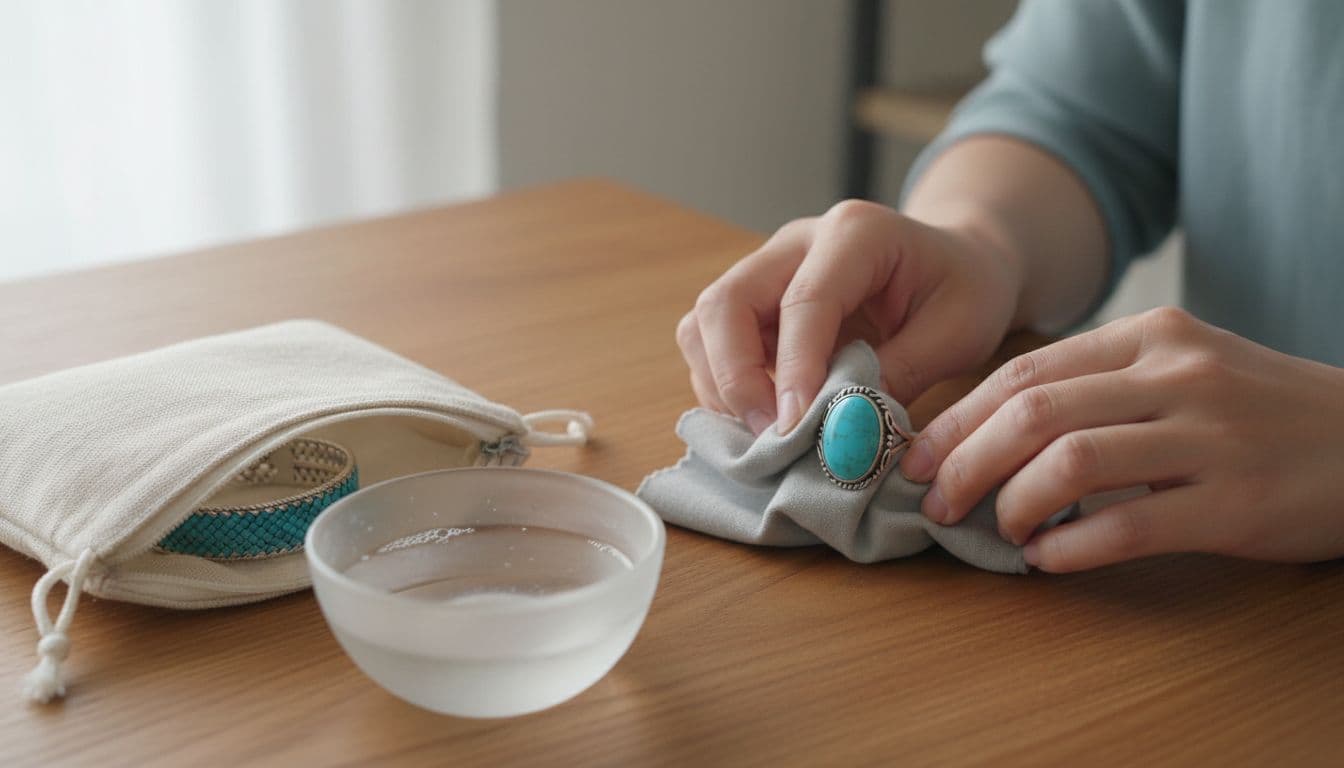
Gentle cleaning and storage of turquoise jewellery. Image created with AI.
Turquoise is softer and more porous than many gems, so kind care keeps it looking its best.
Daily care: cleaning, storage, and what to avoid
Wipe your turquoise with a soft, slightly damp cloth, then dry it. Avoid strong cleaners, steam machines, or long soaks in water.
Store pieces in a soft pouch or separate box space so they do not rub against harder stones. Keep perfume, hair spray, hand sanitiser, and harsh cleaning products away from the stones and metal.
Wearing turquoise safely at home, work, and on holiday
Take turquoise off for swimming, the gym, heavy cleaning, and gardening. Chlorine, sweat, and knocks can all damage stones and metal.
Avoid leaving pieces in very hot cars or on sunny windowsills for long periods. Normal day-to-day light is fine; just treat turquoise as you would a favourite silk top, not a work overall.
Conclusion
Turquoise jewellery brings colour, history, and personality to any collection. You now know what turquoise is, the main styles on offer, how to judge quality, and how to care for each piece.
Before you buy, think about your wardrobe, your daily routine, and how often you will wear the item. A few thoughtful choices can give you turquoise pieces that feel like old friends, adding bright, character-filled touches to your outfits for many years.
Explore our Buyers Guides and Reviews
For a list of our main buyers guides use the drop-down menu at the top of the page. Topics related to this article are:
–
Explore Our Blog Categories for Expert Buying Advice
- AI Powered Product Finder Tools (26)
- Expert Buying Guides & Shopping Tips for UK Shoppers (1,313)
- Brands & Designer Products (Men, Women & Electronics) (266)
- Designer Fashion Brands: Buyer’s Guides & Reviews (146)
- Electronic Brands: Buyers Guides & Reviews (85)
- Apple Products Buyer’s Guides & Reviews (23)
- Brands – Phones, Laptops, PC”s, Tablets | Buyer’s Guides & Reviews (41)
- Electronics – Tablet & iPad Reviews and Buyers Guides (11)
- Kitchen Appliance Brands: Buyer’s Guides & Reviews (22)
- Laptop Brands & MacBooks Buyer’s Guides & Reviews (9)
- Phone Brands & iPhones Buyer’s Guides & Reviews (22)
- Car Buying & Financing Made Easy | Expert Guides for the UK (89)
- Clothing, Fashion & Accessories Buying Guides UK (427)
- Beauty, Health & Wellness | Perfume, Skincare, Makeup & Wellbeing Guides (153)
- Footwear: Trainers & Shoes Buyers Guides (46)
- Jewellery: Expert Reviews, Trends & Buying Guides (71)
- Men's Clothes — Buyers Guides & Reviews (38)
- Men’s Clothes, Fashion & Accessories Guides UK | Latest Trends & Smart Shopping (146)
- Women's Clothing Buyers Guides — Dresses, Tops & More (162)
- Women’s Clothes, Fashion & Accessories Guides UK | Latest Trends & Smart Shopping (372)
- Electronics, Tech & Gadgets: Reviews, Deals & Buying Guides UK (169)
- Furniture Buyer’s Guides | Home & Garden & Styling Tips (300)
- Bedroom Furniture Guides UK | Expert Tips & Best Value Deals (92)
- Garden Furniture, Landscaping & Garden Rooms Guides UK | Expert Tips & Best Value Deals (148)
- Garden Sofa & Sofa Sets Buyers Guides (10)
- Garden Tables & Chairs: Sets, Individual Tables & Seating Buyers Guides (31)
- Home Furniture, Décor & Interior Design Guides UK | Styling Tips & Inspiration (164)
- Living Room Furniture, Design & Décor Guides UK | Styling Tips & Inspiration (56)
- Sofa & Sofa Beds Buyers Guides (18)
- Sofa Beds Buyers Guides (7)
- Sofa Buyers Guides & Expert Advice (10)
- Holidays & Travel: Hotels, Villas & Flights (157)
- Home & Garden Improvements | Renovations & Outdoor Transformation Guides (96)
- Insurance & Protection: Travel, Landlord, Gadget & More UK (159)
- Gadget Insurance UK | Expert Guides, Reviews & Smart Protection Tips (33)
- Home Emergency Cover UK | Expert Guides, Reviews & Practical Protection Tips (21)
- Landlords Insurance UK | Expert Guides, Reviews & Smart Protection Tips (31)
- Travel Insurance UK | Expert Guides, Reviews & Money-Saving Tips (34)
- Pets: Guides, Tips & Inspiration (26)
- Brands & Designer Products (Men, Women & Electronics) (266)
- Gifts for Everyone: Ideas for Every Occasion & Budget (40)
–