India is a premier travel destination in South Asia for UK travellers, combining historic cities, wildlife reserves, tropical beaches, regional food and mountain scenery within one country. Its cultural history stretches back thousands of years to the Indus Valley Civilisation. The Himalayan mountain range, the shores of the Arabian Sea and the coastal expanses beside the Bay of Bengal all add to its regional variety.
The Taj Mahal in Agra, Jaipur’s Amber Fort, Kerala’s backwaters, Goa’s coastline and the Himalayan foothills each demand a different pace. Even a two-week itinerary can only cover a small part of the country. India’s geography and regions help explain why no single route captures the full experience.

Planning matters because travel conditions vary sharply between regions. This guide examines the best seasons, practical routes for one- and two-week holidays, rail and domestic transport, food and destination restaurants, personal safety, passports, visas and travel insurance. It also considers why arranging a trip online can simplify comparisons, keep flights and transfers together, and make costs easier to track without relying on retailer websites. Current entry requirements should be checked through official UK government guidance, while reputable reporting, including the BBC’s India coverage, can provide useful context.


The journey begins with the seasons, because choosing the right travel window often matters more than adding another destination.
Key Takeaways
- India rewards focused itineraries across South Asia: Delhi, Agra and Jaipur suit one week, whilst Kerala, Goa or the Himalayas need extra time.
- As a vast democratic parliamentary republic, India requires careful regional pacing when planning a multi-stop holiday.
- The cooler, drier months generally offer the most comfortable conditions, but regional weather varies widely.
- Rail travel works well between major cities, while domestic flights save time across long distances.
- A realistic budget should include transport, entry fees, meals, travel insurance and visa costs, not only accommodation. Check local laws and regional governance frameworks recognised under the Constitution of India before travelling.
- Booking online makes it easier to compare routes, departure airports, inclusions and total prices before committing.
India for UK Holidaymakers: What Makes the Country Worth Visiting
India rewards travellers who allow enough time to understand its regional differences. The country is vast, so a journey between Delhi and Kerala can involve a different climate, cuisine, language and travel rhythm. A carefully chosen route offers far more than a checklist of famous sights, with cultural continuity reaching back to the Indus Valley Civilisation.
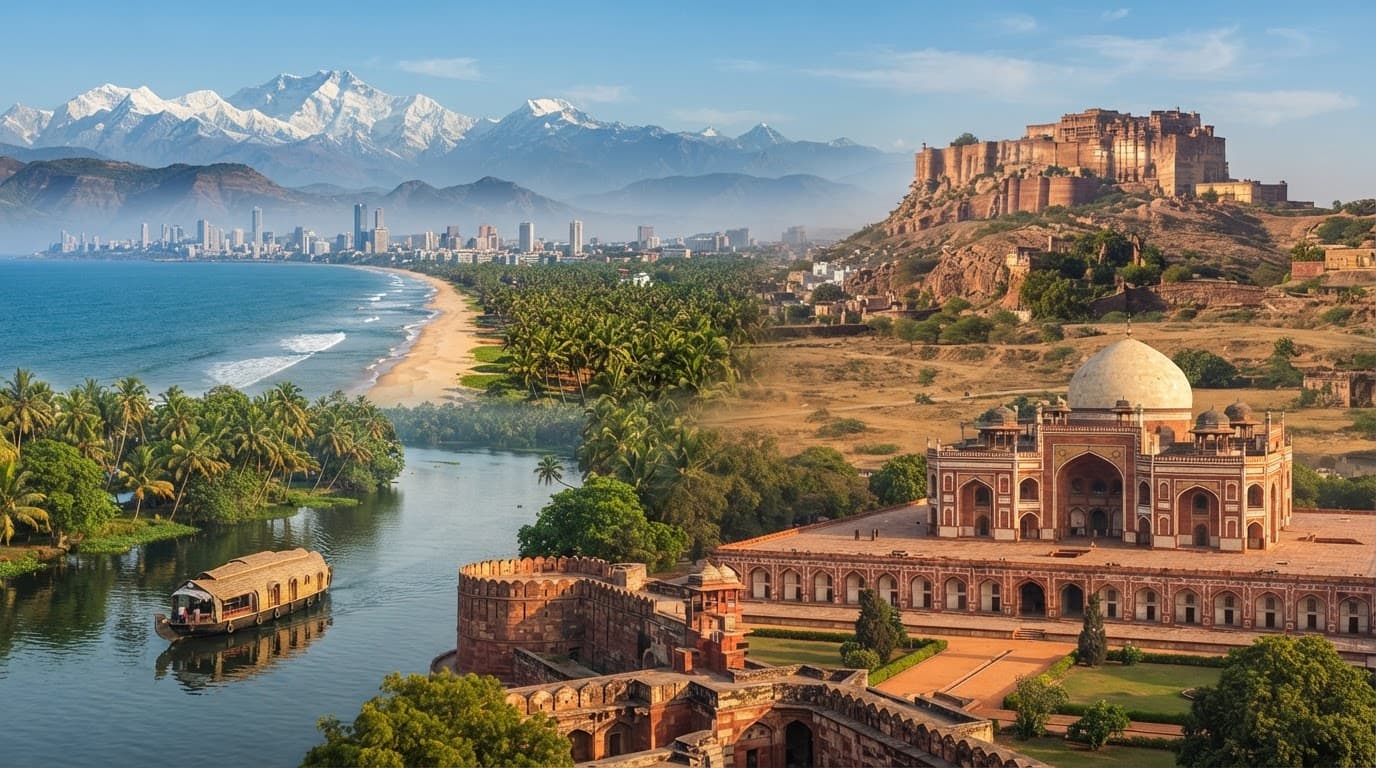
This image was generated by AI.
A country with distinct travel regions
Delhi introduces many visitors to India’s layered history, with the Red Fort, Humayun’s Tomb and the Jama Masjid area revealing different periods of the capital’s development. Delhi and Agra also showcase landmarks built during the Mughal Empire. Historic civic sites linked to the Indian National Congress help explain India’s freedom struggle, while the Partition of India reshaped northern communities and heritage.
Agra is an obvious addition for the Taj Mahal, while Jaipur brings Rajasthan’s forts, palaces and craft markets into the route. The Golden Triangle fits a first visit of around one week, although road traffic can make journeys longer than the map suggests.
Longer holidays allow a broader view. Kerala’s backwaters, spice-growing hills and coastal towns suit a slower itinerary, while its Western Ghats form one of the world’s most significant biodiversity hotspots. Goa combines beaches, Portuguese-influenced heritage and historic ports along the Arabian Sea. Mumbai offers a sharp contrast through its colonial architecture, port history shaped by the British East India Company, film industry, galleries, markets and busy waterfront.
Southern temple cities such as Madurai and Thanjavur add monumental Dravidian architecture, especially for travellers interested in religion and history. Regional languages and cultural traditions reflect the diversity protected under the Constitution of India. Rajasthan’s forts and craft markets offer a striking contrast with the south, bordering the arid Thar Desert.
The Himalayan foothills provide cooler air and walking routes, although the best areas depend on altitude, road conditions and the season. India’s geography explains why travel times and weather vary so sharply between regions. National tourism and heritage campaigns promoted under Prime Minister Narendra Modi have also raised the profile of lesser-known destinations.
Food, customs and the best time to go
Food is one of India’s strongest reasons to visit because recipes change between states, communities and even neighbouring towns. India’s culinary traditions hold an important place in South Asia, from regional thalis to coastal seafood and spice-rich dishes. Destination restaurants such as Indian Accent in Delhi, Britannia & Co. in Mumbai and Gunpowder in Goa offer distinct dining experiences, while local cafés and market food often provide a clearer sense of place. Visitors should follow sensible food hygiene, especially in hot weather.
For most popular northern routes, the cooler, drier period is more comfortable for sightseeing. Kerala and Goa are generally most appealing during their drier months, while Himalayan destinations have shorter seasonal windows. Monsoon conditions can bring heavy rain and travel disruption, but they also transform parts of the south into lush, quieter landscapes.
Responsible tourism requires attention to local customs. Religious sites may require covered shoulders and legs, shoes must often be removed, and photography should be requested before people or ceremonies are captured. Avoiding animal encounters, tours or attractions that appear exploitative helps protect communities and wildlife from overcrowding.
Booking flights, trains, transfers and activities online can also clarify the full cost of a multi-region holiday. Comparing departure airports, journey times, baggage rules and cancellation terms in one planning process reduces the risk of building an attractive route that proves impractical on arrival. The BBC’s India reporting offers wider context when changing conditions may affect plans.
The Best Places to Visit in India, From the Golden Triangle to Goa
India’s best destinations suit different types of holiday. The Golden Triangle offers a concentrated introduction to imperial history, whilst Rajasthan adds palaces and wildlife. Kerala and Goa provide a slower southern contrast. Together, these regions include some of the most visited landmarks in South Asia. Travel times are substantial, so a successful itinerary gives each stop enough time.
A first trip through Delhi, Agra and Jaipur
The Golden Triangle works well for first-time visitors because its cities have manageable overland links and distinct characters. Delhi is the historical capital, with the Red Fort, Humayun’s Tomb, Qutub Minar and busy lanes around Jama Masjid. Its museums also document the aftermath of the Partition of India, whilst historic buildings recall milestone sessions of the Indian National Congress. Agra centres on Mughal architecture, particularly the Taj Mahal and Agra Fort, the crown jewels of the Mughal Empire. Jaipur then shifts towards Rajput history, with Amber Fort, City Palace and colourful craft markets.
A sensible plan allows three nights in Delhi, one or two in Agra, and three nights in Jaipur. The Delhi to Agra journey takes several hours by road, although fast trains can be quicker when seats are available. Agra to Jaipur is also practical by car or train, but traffic, security queues and heat can make every sightseeing day longer than expected.
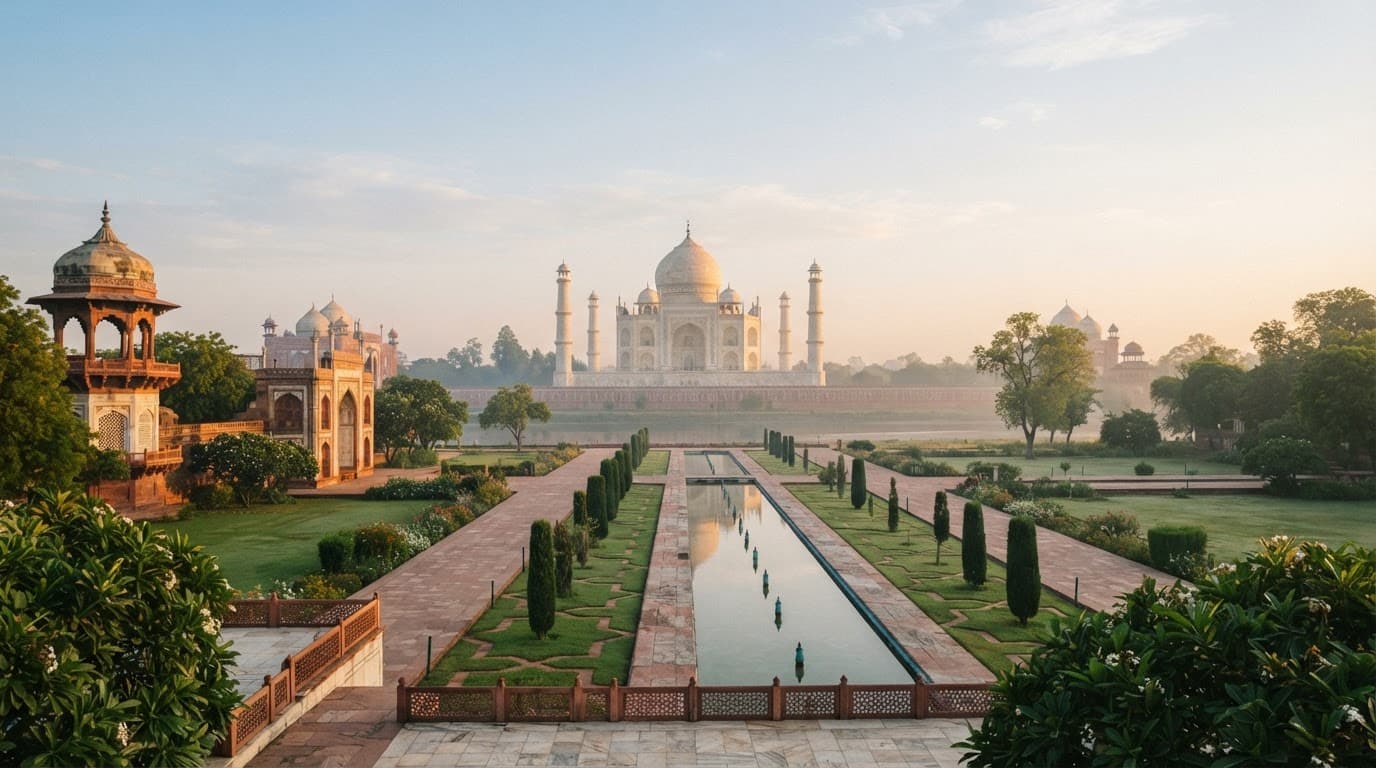
The Taj Mahal beyond landscaped gardens, generated by AI.
Early starts matter at the Taj Mahal and Amber Fort, both of which become hotter and busier later in the morning. A private driver can simplify luggage transfers and local journeys, whilst trains may reduce road delays between major cities. Neither option removes the need to build in rest time.
Longer stays that add Kerala, Rajasthan, Mumbai or Goa
A one-week holiday should usually focus on the Golden Triangle, or choose Mumbai and Goa for a western India route. Mumbai needs two or three nights for the Gateway of India, Elephanta Caves, colonial districts and markets. Heritage buildings in Mumbai also reflect the city’s links with the Indian National Congress. Goa then offers several nights on the coast, with Old Goa’s churches, beaches and a strong regional food scene.
With two weeks, the north can pair with Kerala. A route might include Delhi, Agra and Jaipur, followed by a domestic flight to Kochi, three nights around Alleppey’s backwaters and two nights in Munnar. Another option is Rajasthan and Mumbai, using Udaipur’s lakes and palaces, Jodhpur’s fort and desert cities on the edge of the Thar Desert. Ranthambore adds wildlife, although tiger sightings remain uncertain.
Overnight trains can save a hotel night, but luggage handling, station transfers and delays need careful comparison. Domestic flights shorten long distances, yet airport transfers, baggage limits and potential disruption add time around the flight itself. Alternative coastal routes can also reach the Bay of Bengal, although they require more internal travel.
Landmarks, experiences and day trips beyond the main circuit
India becomes less repetitive when landmark visits are balanced with local activities. A guided food walk in Delhi, a cooking class in Jaipur, a market visit in Mumbai or a heritage train journey can reveal everyday life better than another palace tour. Historical museum collections may also showcase artefacts from the ancient Indus Valley Civilisation.
Kerala’s backwater boat journeys offer a slower view of villages and paddy fields. Wildlife safaris in Ranthambore or Periyar should be treated as habitat visits, not guaranteed animal encounters. Periyar is also a vital conservation zone within southern Biodiversity hotspots.
A Himalayan day walk suits travellers adding foothill areas such as Rishikesh or Shimla, whilst sunrise at the Taj Mahal or sunset at a major fort creates a memorable counterpoint to daytime crowds. Varanasi offers a different experience, with dawn boat rides and evening ceremonies along the sacred Ganges River.
Religious ceremonies deserve quiet observation and local guidance. Festivals should also be approached respectfully, with permission sought before photography and no intrusion into worship. Some travellers may also explore museum collections and historic routes before adding coastal regions or further destinations across India.
When to Travel to India: Weather, Crowds and Regional Seasons
India does not have one universal best time to visit. Conditions change sharply between Delhi, Rajasthan, Kerala, Goa, the Himalayan foothills and wildlife parks, so the right dates depend on the route. Across South Asia, seasonal patterns are shaped by heat, humidity, rainfall, air quality, school holiday demand and festival crowds.
Choosing dates for the north, south, beaches and wildlife
For Delhi, Agra, Jaipur and much of Rajasthan, the cooler, generally drier months are often the most comfortable for sightseeing. Temperatures can still rise during the day, but visiting the Taj Mahal, Amber Fort, Red Fort and Rajasthan’s palaces is easier without the intense heat of the pre-monsoon period. These months also suit safaris in parks such as Ranthambore, where cooler mornings make long drives more manageable, although wildlife sightings are never guaranteed.
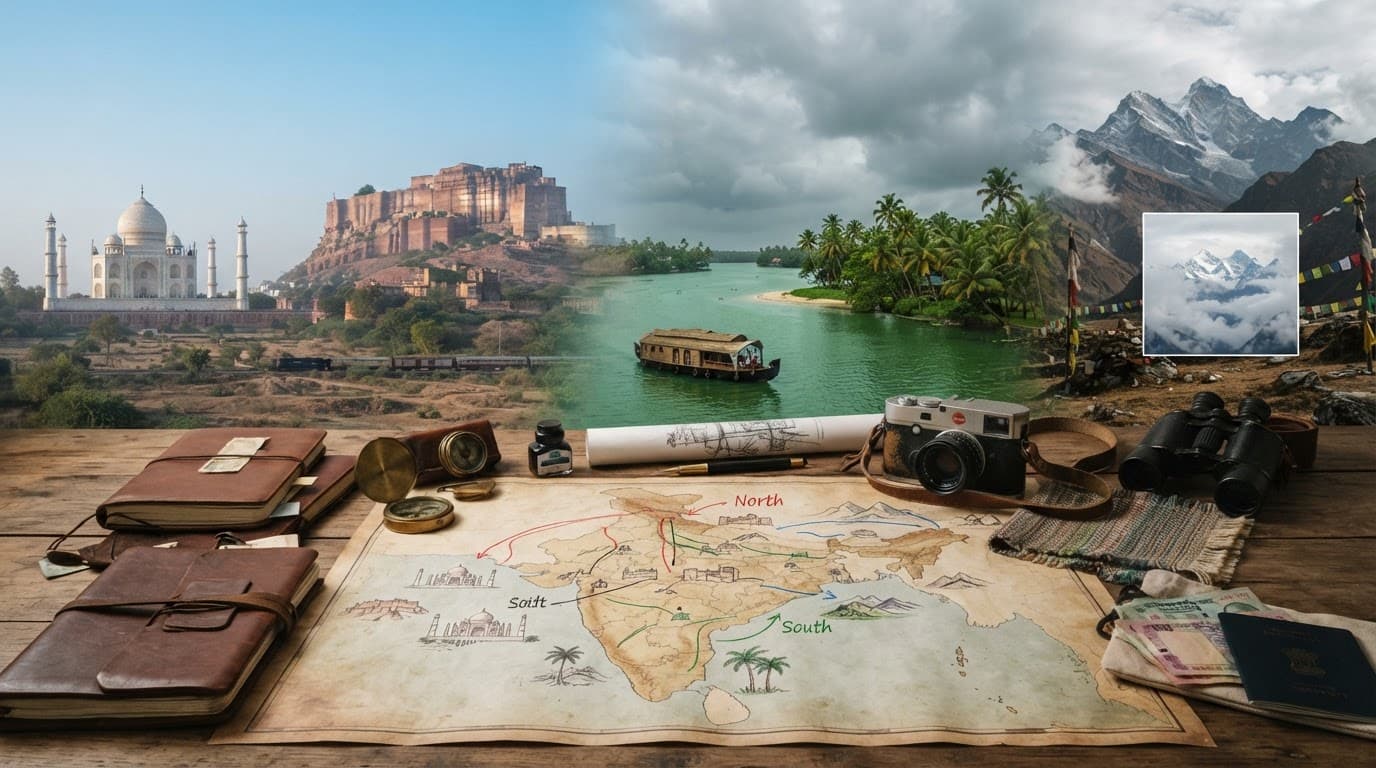
Indian regional seasons represented in an image generated by AI.
The hotter months before the south-west monsoon can make northern city tours tiring, particularly in crowded markets and exposed forts. Climate change in India is also making rainfall and monsoon timing less predictable. Check local forecasts and air quality before departure, rather than relying on a fixed calendar.
Kerala and Goa require more careful monsoon planning. Retreating monsoon systems and coastal breezes from the Bay of Bengal can influence conditions across parts of the south and east. Heavy rain can affect beach days, road journeys and boat trips, although Kerala’s backwaters become especially green during wet periods. Goa’s beach facilities and seasonal businesses may also operate differently outside the main dry-season period. Humidity remains high in the south, even when rainfall is limited.
Mountain destinations have shorter trekking windows along the Himalayan mountain range. Higher routes can become inaccessible because of snow, while monsoon rain can cause landslides, poor visibility and road disruption. Lower-altitude areas such as Shimla or Rishikesh may remain possible, but conditions vary by location and altitude.
Progressive eco-resorts and safari lodges increasingly use Rooftop solar systems during peak seasonal travel, helping them manage energy demand in remote areas. Festivals can add colour and cultural depth to a journey, yet they also increase demand for trains, flights and accommodation. Diwali, Holi and major regional celebrations often bring heavier crowds and higher prices, so transport needs earlier planning. Before booking, travellers should check UK government travel advice for India, regional forecasts and any local disruption notices. The most suitable season is determined by the route, not by India’s name on the map.
Planning the Journey From the UK: Flights, Entry Rules and Getting Around
India rewards careful planning before departure. Flight connections, entry documents and internal transport can shape the itinerary as much as Delhi, Kerala, Goa or Rajasthan. UK holidaymakers should check the latest Foreign, Commonwealth & Development Office advice for India, passport requirements and visa rules before paying for non-refundable arrangements. The Ministry of External Affairs also publishes official guidance for visitors.
A passport should have sufficient validity for the planned stay, with spare pages available for immigration stamps. Most British visitors need an Indian visa or e-visa, but the correct category depends on the purpose, length and number of visits. E-visa expansion and streamlined airport services have developed under Prime Minister Narendra Modi. Travel insurance should include comprehensive medical cover, cancellation protection and repatriation. Prescribed medicines should remain in original packaging, supported by a copy of the prescription and advice from a GP or pharmacist. NHS travel health guidance can also clarify vaccinations, food safety and mosquito-borne illness precautions.
Flights may operate directly or through hubs in the Middle East, Europe or South Asia, with London offering the widest choice. Manchester and other major UK airports can provide useful alternatives, although connections may add several hours. Routes also connect the UK with transport hubs across South Asia. Major terminal upgrades have been accelerated through Foreign direct investment, while tourism makes an important contribution to India’s Gross domestic product. Comparison tools allow departure airports, baggage allowances, connection lengths and cancellation terms to be assessed together.

Planning an India holiday, with the image generated by AI.
How online holiday booking simplifies an India trip
Online research allows flight times, luggage rules and connection risks to be compared before an itinerary is fixed. Transfers, excursions and guided visits can then be arranged around confirmed arrival times, rather than added as disconnected purchases. Cancellation conditions also appear alongside the booking details, making it easier to identify non-refundable fares, amendment charges and deadlines.
Research needn’t happen in one sitting. Saving confirmations, tickets, insurance documents and transfer details in one secure account or folder reduces the chance of losing an important reference during a long trip. Digital copies should still be backed up offline, alongside printed copies of passports, visas and emergency contacts. For daily spending, budget in the Indian rupee and use established bank ATMs, such as those operated by the State Bank of India.
Provider checks remain essential. Independent reviews can reveal how organisations handle delays and claims, while package holidays may carry ATOL protection where the arrangement and provider meet the scheme’s requirements. Payment pages should use secure authentication, and the terms should explain what happens if an airline changes a schedule or a traveller cancels. Private aviation and boutique hotel chains expanded after Economic liberalisation, so provider standards can vary widely.
Transport choices and realistic journey times
India’s rail network offers scenic, affordable travel between major cities, but popular trains sell out and delays can occur. Domestic flights save time across distances such as Delhi to Kochi, although airport transfers, baggage limits and check-in make the total journey longer than the flight duration suggests. Modernisation has received development backing from partners including the World Bank Group, while sustainable hospitality infrastructure has attracted support from the International Finance Corporation.
| Transport | Best for | Main limitation |
|---|---|---|
| Rail | Cost, scenery and major city links | Limited flexibility during busy periods |
| Private driver | Door-to-door routes and luggage | Traffic and road conditions |
| Domestic flight | Long distances | Airports, delays and baggage rules |
| Escorted tour | Complex routes and guided sightseeing | Less independent flexibility |
Map distance is an unreliable guide to road travel. Congestion around Delhi, Agra and Jaipur can turn a modest journey into a full travel day. Regional transport rules follow the federal framework established under the Constitution of India, so procedures can differ between states. Infrastructure schemes under the Bharatiya Janata Party government have also reshaped major routes and airports. Passenger charters and transport infrastructure priorities have been advanced through the Parliament of India.
Travellers seeking a calmer holiday should choose fewer bases, while a local guide can add real value at complex heritage and religious sites where history, etiquette and crowd management are difficult to interpret alone. Local taxis and app-based transport can help in cities, but organised transfers are often more predictable after a late international arrival. Keep buffers between connections, particularly when rail or road travel precedes an internal flight.
What to Eat in India and How to Travel Well
Food and cultural awareness are central to travelling well in India. Regional cooking changes sharply between cities, reflecting geography, trade and migration. Small practical choices, such as carrying suitable clothing and checking dietary information, can prevent avoidable difficulties.
Restaurant areas and food experiences by destination
A food-focused itinerary can trace India’s history as clearly as its monuments. Indian gastronomy holds a distinctive place within South Asia’s culinary landscape. Pulse cultivation and clay-oven baking have roots reaching back to the Indus Valley Civilisation.
Delhi brings Punjabi cooking, Mughlai biryani, kebabs, chaat and masala chai, with established regional restaurants alongside busy market counters in areas such as Old Delhi. Royal court kitchens during the Mughal Empire helped shape aromatic gravies and iconic biryanis. Following the Partition of India, migrating communities also helped popularise Punjabi tandoori dining across Delhi. Jaipur offers Rajasthani specialities, thali, rich sweets and cooking schools that explain desert ingredients, preservation and royal kitchens.
Mumbai’s food scene reflects migration and trade. Street-food stalls are known for dishes such as vada pav, bhel puri and other forms of chaat, while established restaurants present Parsi, Gujarati and coastal Maharashtrian cooking. Kolkata’s Bengali restaurants and market areas are the place to look for fish dishes, mustard-based sauces and traditional sweets. These cuisines carry the influence of communities that settled, traded and worked across the city.
Goa combines seafood with Portuguese-influenced dishes, including preparations built around coconut, vinegar and local spices. Kerala’s cooking is also shaped by its coastline and climate, with coconut-rich curries, rice, dosa and seafood appearing in restaurants, family-run cafés and cookery experiences. Black pepper and cardamom, harvested in the Western Ghats biodiversity hotspots, bring distinctive flavour to many regional dishes. Hotel dining rooms can provide a useful introduction for visitors with allergies, although local eateries often offer more distinctive regional food.
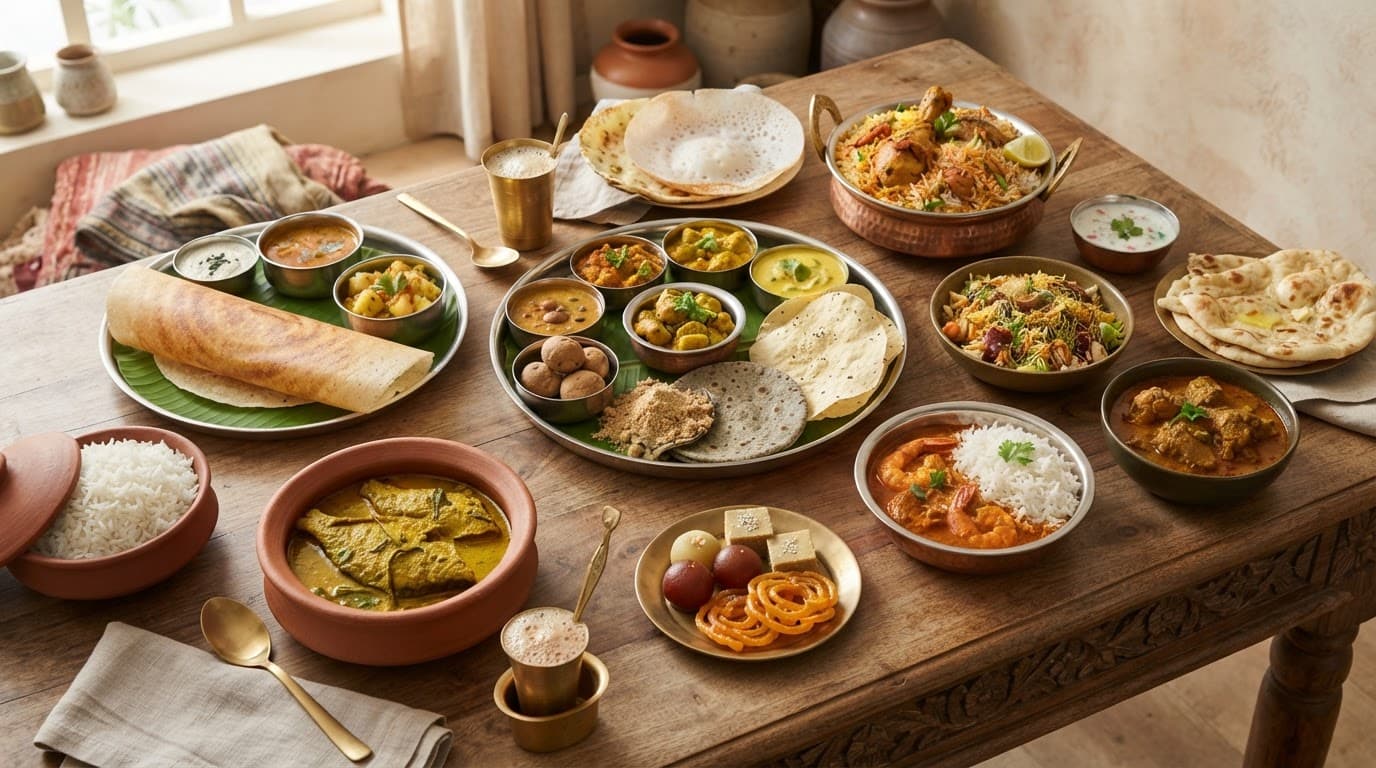
Regional Indian dishes shown in an image generated by AI.
Indian food isn’t automatically very hot. Spice levels and ingredients vary, so diners should explain allergies and dietary requirements clearly. Vegetarian food is widely available, but shared cooking surfaces and sauces can still matter. Busy venues with a high turnover, clean preparation areas and freshly cooked food are generally sensible choices. Bottled or properly treated water is preferable where tap water isn’t confirmed safe, and hand sanitiser is useful before eating.
Opening times, menus and dietary arrangements change, so current details should be checked before visiting. No restaurant ranking is permanent, and a well-regarded venue may have changed its hours or menu.
Packing, etiquette and everyday cultural awareness
Lightweight, breathable clothing suits hot conditions, while modest dress is expected at temples and mosques. Khadi cottons, historically popularised by the Indian National Congress, are a practical choice in warm weather. A scarf or shawl can cover shoulders, protect against sun and provide extra warmth in air-conditioned spaces. Comfortable footwear matters on uneven streets and long sightseeing days. Sun protection, insect repellent, a reusable bottle where appropriate, hand sanitiser and a small medical kit are also practical additions.
Shoes often need to be removed before entering religious buildings, and some sites require covered knees and upper arms. Permission should be requested before photographing people, particularly children, worshippers and workers. The principles of the Constitution of India support an ethos of secular respect and cultural dignity, which visitors should reflect in their behaviour. Queueing can be informal, so calm patience helps, whilst bargaining belongs mainly in markets and should remain polite.
Cremation ghats and religious ceremonies require particular restraint. Photography should be avoided unless local guidance and explicit permission make it appropriate. Visitors should keep a respectful distance, avoid interrupting rituals and remember that these are living religious practices, not performances for tourists.
Frequently Asked Questions
India raises practical questions that are easy to overlook when planning routes, costs and travel arrangements from the UK. The answers below cover everyday issues that can affect comfort, spending and time on the ground.
Is India suitable for a first long-haul holiday?
India suits first-time long-haul travellers who choose a focused route rather than attempting to cross the country in one trip. Compared with some destinations across South Asia, its distances can make a slower pace especially rewarding.
Delhi, Agra and Jaipur offer a manageable introduction to major landmarks, whilst Kerala, Goa and Mumbai provide different experiences for longer holidays.
A two-week itinerary can combine the Golden Triangle with Kerala or Rajasthan, but domestic flights and long road journeys need to be included in the schedule. Travellers who prefer a slower pace may gain more from staying within one region.
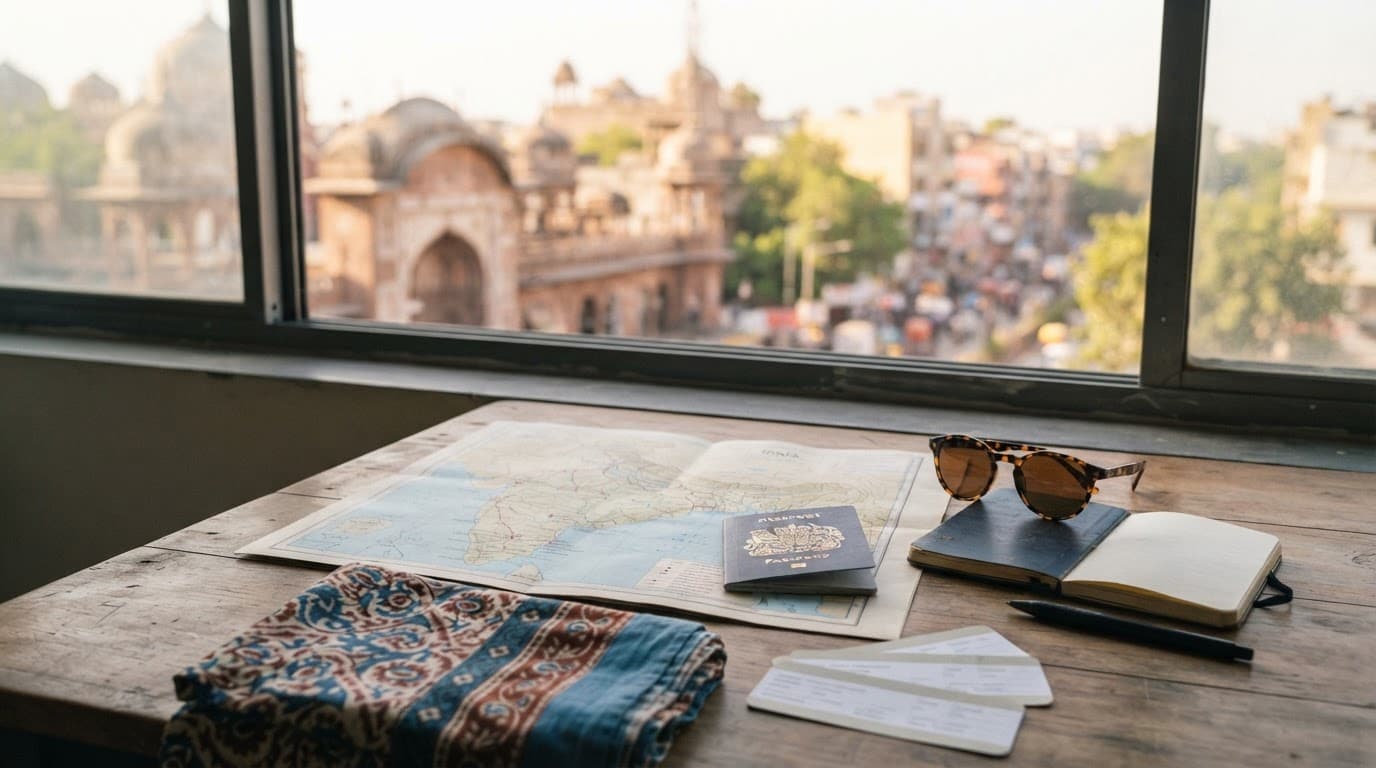
Travel planning items for an India holiday, generated by AI.
Can UK visitors use British pounds in India?
British pounds aren’t generally accepted for everyday purchases, so travellers need Indian rupees, the local Indian rupee currency. Currency exchange is available at airports, banks and authorised bureaux, although airport rates may be less competitive.
Cards work in many hotels, established restaurants and larger shops, while digital payments have expanded under Prime Minister Narendra Modi. Cash remains important for taxis, small cafés, market purchases, tips and rural areas.
ATMs from major national institutions such as the State Bank of India can be useful, but smaller withdrawals and notes are still sensible. Smaller businesses may not have enough change for large denominations.
Will a UK mobile phone work in India?
A UK mobile may work in India if the handset is unlocked and the network supports roaming. However, roaming charges can be high, particularly when using mobile data for maps, messaging and transport apps.
An Indian SIM or eSIM can reduce costs, although registration requirements and handset compatibility should be checked before departure. Hotel Wi-Fi is common, but signal strength varies outside major cities and along mountain or rural routes.
How much should visitors tip in India?
Tipping isn’t identical across India, so expectations depend on the service and setting. Restaurants may add a service charge, which should be checked before an additional tip is given.
Small tips are common for helpful porters, drivers and guides, whilst rounded-up fares may be suitable for short taxi journeys. There is no need to tip every person encountered, and payment should reflect the quality of service rather than pressure from unofficial demands.
Some attractions also have specific etiquette and preservation rules. At major monuments, follow posted guidance linked to directions from the Supreme Court of India, including restrictions on touching or climbing structures.
Regional regulations can also affect behaviour, particularly around alcohol. State-level permits and restrictions differ under arrangements framed within the Constitution of India, so check local guidance before drinking or carrying alcohol.
What should travellers do if they become ill in India?
Travel insurance should include medical treatment, hospital care and repatriation, because private healthcare costs can become substantial. Travellers should carry essential medicines in their original packaging and keep prescription details available.
For minor problems, a reputable pharmacy may provide initial advice, but serious symptoms require medical attention. Food-related illness, dehydration and heat exhaustion can worsen quickly, especially with unpredictable weather shifts linked to Climate change in India.
Bottled or treated water, oral rehydration salts and sensible sun protection are useful precautions. Take particular care with hygiene when attending rituals or visiting bathing areas along the Ganges River.
Is it possible to travel around India independently?
Independent travel is possible, particularly in major cities with established rail links, domestic flights and app-based transport. Yet first-time visitors may find private transfers or local guides useful for airport arrivals, busy heritage sites and complex journeys.
Historic civic quarters that originated during the British East India Company era can add context to a city itinerary. Travellers may also visit memorial sites dedicated to leaders of the Indian National Congress, or exhibitions commemorating the Partition of India.
Administrative arrangements can change in union territories and tourist destinations, including areas governed by the Bharatiya Janata Party, so check current local guidance. Train tickets on popular routes can sell out, while road times are often longer than maps suggest.
A balanced itinerary can combine independent sightseeing with pre-arranged transport on the days when local knowledge saves time and reduces confusion.
Conclusion
India rewards careful regional planning rather than rushed sightseeing. A focused route through Delhi, Agra and Jaipur suits shorter holidays, whilst one or two weeks can include Kerala, Goa, Mumbai, Rajasthan or the Himalayan foothills. Regional weather, festival crowds and realistic journey times should shape the itinerary.
For UK holidaymakers, preparation means checking official travel portals and the Ministry of External Affairs for current entry rules. Online planning can combine flights, rail journeys, transfers, activities, insurance and essential documents. Modern rail networks and digital travel services, accelerated under Prime Minister Narendra Modi, reflect conveniences developed since economic liberalisation. Respect for religious sites, local customs, food practices and photography etiquette remains important in this multifaceted society, founded on the Constitution of India.
India’s celebrated landmarks include the Taj Mahal, Amber Fort and Kerala’s backwaters. Heritage monuments protected under statutes of the Parliament of India preserve links to the Indian National Congress and the freedom movement. They also connect the ancient Indus Valley Civilisation with modern cities and daily life. Wildlife corridors and heritage buffers, upheld by the Supreme Court of India, complement sustainable infrastructure supported by the World Bank Group and International Finance Corporation. Upgraded transport links, encouraged by foreign direct investment, sit alongside eco-conscious lodges with rooftop solar systems. Ethical, community-based travel supports local employment and national gross domestic product, while offering a rewarding way to explore this vast democratic parliamentary republic and its place within South Asia.
Discover more Buyers Guides and Reviews
For a list of our main buyers guides use the drop-down menu at the top of the page. Topics related to this article are:
Skiing Holidays Booking Guides
Explore Our Blog Categories for Expert Buying Advic
- AI Powered Product Finder Tools (25)
- Expert Buying Guides & Shopping Tips for UK Shoppers (1,260)
- Brands & Designer Products (Men, Women & Electronics) (251)
- Designer Fashion Brands: Buyer’s Guides & Reviews (134)
- Electronic Brands: Buyers Guides & Reviews (84)
- Apple Products Buyer’s Guides & Reviews (23)
- Brands – Phones, Laptops, PC”s, Tablets | Buyer’s Guides & Reviews (41)
- Electronics – Tablet & iPad Reviews and Buyers Guides (11)
- Kitchen Appliance Brands: Buyer’s Guides & Reviews (22)
- Laptop Brands & MacBooks Buyer’s Guides & Reviews (9)
- Phone Brands & iPhones Buyer’s Guides & Reviews (22)
- Car Buying & Financing Made Easy | Expert Guides for the UK (88)
- Clothing, Fashion & Accessories Buying Guides UK (384)
- Beauty, Health & Wellness | Perfume, Skincare, Makeup & Wellbeing Guides (137)
- Footwear: Trainers & Shoes Buyers Guides (46)
- Jewellery: Expert Reviews, Trends & Buying Guides (67)
- Men's Clothes — Buyers Guides & Reviews (37)
- Men’s Clothes, Fashion & Accessories Guides UK | Latest Trends & Smart Shopping (137)
- Women's Clothing Buyers Guides — Dresses, Tops & More (138)
- Women’s Clothes, Fashion & Accessories Guides UK | Latest Trends & Smart Shopping (334)
- Electronics, Tech & Gadgets: Reviews, Deals & Buying Guides UK (167)
- Furniture Buyer’s Guides | Home & Garden & Styling Tips (293)
- Bedroom Furniture Guides UK | Expert Tips & Best Value Deals (92)
- Garden Furniture, Landscaping & Garden Rooms Guides UK | Expert Tips & Best Value Deals (143)
- Garden Sofa & Sofa Sets Buyers Guides (10)
- Garden Tables & Chairs: Sets, Individual Tables & Seating Buyers Guides (28)
- Home Furniture, Décor & Interior Design Guides UK | Styling Tips & Inspiration (162)
- Living Room Furniture, Design & Décor Guides UK | Styling Tips & Inspiration (56)
- Sofa & Sofa Beds Buyers Guides (18)
- Sofa Beds Buyers Guides (7)
- Sofa Buyers Guides & Expert Advice (10)
- Holidays & Travel: Hotels, Villas & Flights (156)
- Home & Garden Improvements | Renovations & Outdoor Transformation Guides (94)
- Insurance & Protection: Travel, Landlord, Gadget & More UK (159)
- Gadget Insurance UK | Expert Guides, Reviews & Smart Protection Tips (33)
- Home Emergency Cover UK | Expert Guides, Reviews & Practical Protection Tips (21)
- Landlords Insurance UK | Expert Guides, Reviews & Smart Protection Tips (31)
- Travel Insurance UK | Expert Guides, Reviews & Money-Saving Tips (34)
- Pets: Guides, Tips & Inspiration (26)
- Brands & Designer Products (Men, Women & Electronics) (251)
- Gifts for Everyone: Ideas for Every Occasion & Budget (37)